


















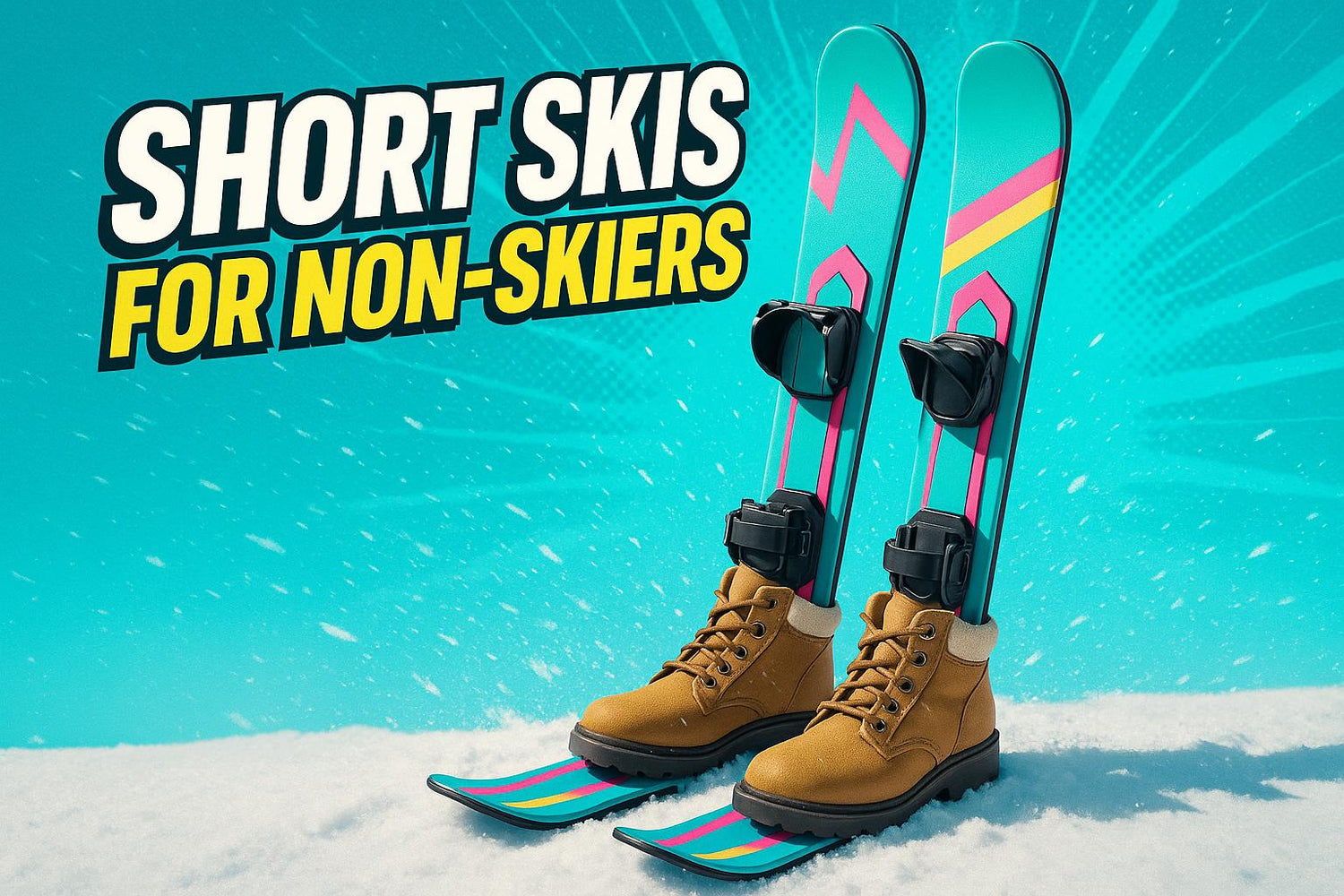
If skiing feels intimidating, short skis might just change your mind. These compact skis - ranging from 15 to 47 inches - are lighter, easier to control, and perfect for beginners. Unlike longer skis, they offer a quicker learning curve, better balance, and less bulky gear. Snowfeet’s short skis, like the Skiskates ($575) and Skiblades (starting at $635), even work with regular winter boots or snowboard boots, making them a convenient and affordable way to get started. Whether on groomed slopes, snowy trails, or even in your backyard, short skis make winter sports fun and accessible for all skill levels.
Why Choose Short Skis?
- Beginner-Friendly: Easier to turn, stop, and balance compared to long skis.
- Portable: Fits in a backpack or carry-on; no need for bulky ski bags.
- Affordable: Prices start at $250, much lower than most ski setups.
- Versatile: Great for slopes, parks, trails, or casual backyard fun.
- Boot Options: Use regular winter boots or ski/snowboard boots, depending on the model.
Popular Models
- Mini Ski Skates (38 cm): $250, works with regular boots, great for gentle slopes and trails.
- Skiblades (65 cm): $635, ideal for beginners on groomed slopes.
- Powder Skis (99 cm): $675, designed for deep snow adventures.
- Short Skis (120 cm): $775, stable for higher speeds and varied terrain.
Short skis are perfect for anyone looking to skip the steep learning curve and dive straight into winter fun. Ready to hit the slopes? Let’s go!
Short Skis vs. Traditional Skis and Snowboards
Stepping into the world of winter sports can feel overwhelming, especially when faced with rows of skis, snowboards, and other gear. Traditional skis might seem intimidating with their length, and snowboards come with a completely different stance to master. But short skis? They offer a beginner-friendly middle ground that’s easier to grasp.
Main Differences in Design and Function
Short skis stand out in a few key ways that make them a solid choice for newcomers.
First, let’s talk size. Traditional skis, like those from Rossignol or K2, are typically 63 to 75 inches long (160 to 190 cm). Compare that to Snowfeet* Skiblades, which max out at 47 inches (120 cm), or Skiskates, which are just 17 inches (44 cm). That size difference isn’t just for show - it directly impacts how they handle on the snow.
Weight is another big factor. Traditional skis are heavier, which can make them a hassle to carry and harder to control. Snowfeet* short skis, on the other hand, are lightweight, meaning less fatigue and more energy for enjoying the slopes.
Then there’s turning. With traditional skis, you need to shift your weight across a longer surface, which takes strength and precision. Short skis make this much easier. A slight lean is all it takes to carve tight, quick turns, which is a lifesaver on crowded beginner slopes.
What about snowboards? Brands like Burton or Salomon require you to ride sideways with both feet locked in, which can feel awkward at first. Many beginners spend more time trying to stand back up than actually riding. Snowfeet* short skis let you face forward and move each leg independently, which feels more natural - especially if you’ve ever ice-skated or rollerbladed.
Short skis also help with balance. Traditional skis spread your weight over a longer surface, which might seem stable but can make recovery trickier when you start to tip. Short skis keep your center of gravity closer to your feet, making them more responsive and easier to manage.
Comparison Table: Short Skis vs. Traditional Gear
| Feature | Snowfeet* Short Skis | Traditional Skis | Snowboards |
|---|---|---|---|
| Learning Curve | Quick - most beginners comfortable within hours | Steep - often requires multiple days of lessons | Moderate to steep - sideways stance takes adjustment |
| Portability | Fits in a backpack or carry-on luggage | Requires a ski bag, making transport more challenging | Bulky; needs a special bag for travel |
| Terrain Versatility | Great for slopes, parks, trails, even backyards | Best suited for groomed slopes | Primarily designed for groomed slopes and terrain parks |
| Footwear | Use regular winter boots (Skiskates) or ski/snowboard boots (Skiblades) | Requires specific ski boots | Requires specific snowboard boots |
| Turning Radius | Tight and responsive - perfect for quick turns | Wider - requires more space and refined technique | Medium - relies on heel-toe pressure shifts |
| Price Range | $250–$775 | $400–$1,200+ (plus bindings) | $300–$800+ (plus bindings) |
| Storage | Minimal space required | Demands significant storage space | Moderate storage needs |
Why Snowfeet* Is Better

When it comes to making winter sports more approachable, Snowfeet* has nailed it.
The compact size of Snowfeet* gear isn’t just convenient - it’s a game-changer. Skiskates can fit in a backpack, and even the larger Skiblades are easy to store in a closet or car trunk. You can even bring them on a plane as carry-on luggage. Traditional skis, on the other hand, require bulky bags and dedicated storage space.
Footwear is another win for Snowfeet*. Skiblades work with both ski boots and snowboard boots, offering flexibility you won’t find with most traditional gear from brands like Völkl or Head.
And Snowfeet* gear isn’t just for ski resorts. Sure, they perform great on groomed slopes, but they’re also fun on hiking trails, in snow-covered parks, or even in your backyard. Traditional skis, like those from Nordica or Fischer, are usually designed with resorts in mind, limiting their versatility.
Learning is smoother, too. With Snowfeet*, you can start with a beginner-friendly model like the 65 cm Skiblades for $635 and gradually move up to longer options (99 cm or 120 cm) as your confidence grows. Traditional skis often push beginners straight into long skis, which can make the learning process more frustrating.
Finally, let’s talk cost. Snowfeet* keeps things simple: their products, priced between $250 and $775, come ready to use. Traditional setups often require extra purchases like bindings and specialized boots, with total costs easily exceeding $1,000 before you even hit the slopes.
Snowfeet* isn’t trying to compete with traditional ski brands - they’re creating something entirely different. Their focus is on making winter sports accessible, fun, and stress-free. For beginners, that’s a breath of fresh air.
Choosing the Right Snowfeet* Short Skis for Beginners
Picking out your first pair of Snowfeet* short skis doesn’t have to be a daunting task. Snowfeet* offers a variety of models tailored to different skill levels, snow conditions, and goals. Whether you’re just starting out or planning to hit the slopes regularly, there’s a pair designed with you in mind. Let’s break down the options so you can find the perfect fit.
The Snowfeet* Product Range Explained
Each Snowfeet* model is crafted for specific users and snow conditions. Here’s a closer look at what makes each one stand out:
-
Snowfeet Mini Ski Skates (38 cm / ~15 in)
These are the smallest and most portable option, priced at $250. They’re light enough to toss in a backpack and work with regular winter boots - no need for specialized gear. Perfect for beginners or anyone looking for a casual, fun introduction to snow sports. They perform best on easy terrain like gentle slopes, snowy trails, or even your backyard. Just keep in mind, their compact size limits speed and stability on steeper runs. -
Snowfeet PRO (50 cm / ~20 in)
At $275, the PRO model offers better edge control and durability compared to the Mini Ski Skates. They’re still backpack-friendly and compatible with regular winter boots, making them a great option for beginners who want a bit more performance without diving into specialized equipment. -
Skiskates (44 cm / ~17 in)
Starting at $575, these feature a wood core for enhanced edge control and durability. Designed for slopes and terrain parks, they’re ideal for those who want to experiment with tricks or more aggressive skiing. However, they require ski or snowboard boots, which adds to the initial investment. -
Skiblades (65 cm / ~26 in)
These are a popular choice for beginners serious about learning. At just over 2 feet long, they strike a balance between control and stability, making them perfect for groomed slopes and moderate speeds. Priced at $635, they’re compatible with both ski and snowboard boots, offering flexibility as you progress. -
Skiblades (99 cm / ~39 in) and Snowfeet POWDER (99 cm / ~39 in)
Both priced at $675, these models cater to different needs. The standard 99 cm Skiblades are versatile all-mountain skis, handling a variety of terrain and speeds while maintaining the quick-turn benefits of shorter skis. The POWDER model, on the other hand, is built for deep snow, with a wider design to keep you floating on powdery trails. -
Snowfeet Short Skis (120 cm / ~47 in)
The longest option in the lineup, these skis cost $775 and are just under 4 feet long. They’re perfect for beginners gaining confidence or those looking for a stable, forgiving ride at higher speeds. While they sacrifice some of the tight turning ability of shorter models, they offer a smoother experience on varied terrain.
Matching the Right Model to Your Needs
Your choice will depend on where you plan to ski, your budget, and what kind of boots you already have. For groomed slopes and resort skiing, the 65 cm or 99 cm Skiblades are excellent picks - they’re stable, versatile, and leave room for growth. If you’re more about backcountry adventures or hiking snowy trails, the compact Mini Ski Skates or PRO models are easier to carry and still deliver plenty of fun. Planning to tackle deep powder? The POWDER 99 cm model is your go-to.
Boot compatibility is also key. If you’re not ready to invest in ski or snowboard boots, stick with the Mini Ski Skates or PRO models, which work with regular winter boots. Once you’re committed to skiing, you can upgrade to models requiring specialized footwear.
Quick Comparison Table
Here’s a handy guide to match your needs with the right Snowfeet* model:
| Your Profile | Best Snowfeet* Model | Price | Terrain | Why It Works |
|---|---|---|---|---|
| Complete beginner, no ski boots | Mini Ski Skates (38 cm) or PRO (50 cm) | $250–$275 | Gentle slopes, trails | Works with regular boots; easy to carry; low-cost entry point |
| Beginner ready for slopes | Skiblades (65 cm) | $635 | Groomed slopes, beginner terrain | Great mix of control and stability; easy to turn; room to grow |
| Former skater or rollerblader | Skiskates (44 cm) | $575 | Slopes, terrain parks | Mimics skating stance; responsive; ideal for tricks and quick movements |
| Casual skier wanting versatility | Skiblades (99 cm) | $675 | All-mountain, mixed terrain | Handles speed and varied conditions; still beginner-friendly |
| Deep snow adventurer | POWDER (99 cm) | $675 | Powder, backcountry | Wider design for floating on deep snow |
| Fast learner or frequent skier | Short Skis (120 cm) | $775 | All terrain, higher speeds | Most stable; forgiving at speed; closest to traditional skis |
Final Tips for Beginners
Your first pair of Snowfeet* doesn’t have to be your last. Many beginners start with the 65 cm Skiblades for their balance of ease and performance, then add a second pair like the Mini Ski Skates for casual outings or the 99 cm models for more challenging terrain. Since these skis are more affordable than traditional setups, it’s easy to build a collection for different conditions.
The key is to pick a model that fits your current needs and skill level. Snowfeet* designs their products to be easy to use and loads of fun, so whichever model you choose, you’re in for a great time on the snow.
How to Get Started with Snowfeet* Short Skis
So, you've got your first pair of Snowfeet* short skis. These little wonders are designed to make learning easier, even for beginners, without the steep learning curve of traditional skis. Let’s dive into what you need to know to make your first day on the slopes a fun one.
Gear Checklist for Beginners
One of the coolest things about Snowfeet* is that you don’t need a ton of specialized gear to get started. If you’re using models like the 38 cm Mini Ski Skates (starting at $250) or the 50 cm PRO (priced at $275), you can even use your regular winter boots. For the Skiskates (44 cm) or the longer Skiblades (65 cm, 99 cm, or 120 cm), ski or snowboard boots are necessary. Make sure the bindings are secure before you hit the snow.
- Footwear: If your model works with regular boots, pick insulated, waterproof hiking boots with solid ankle support. For ski or snowboard boots, make sure they fit snugly - your foot shouldn’t slide around, and your toes should just touch the front when standing upright.
- Clothing: Stick to three layers: a moisture-wicking base layer, a warm mid-layer, and a waterproof outer shell. Add in waterproof gloves or mittens, a hat or helmet liner, and a neck gaiter or scarf to stay cozy.
- Safety Gear: A helmet is non-negotiable, even for easy slopes. Look for one that meets ASTM F2040 safety standards.
- Extras: Sunglasses or goggles with UV protection, sunscreen (because snow reflects sunlight), a small backpack for snacks and water, and hand warmers if it’s chilly. Ski poles can also help with balance while you’re learning.
Once you’ve got your gear, start on flat terrain to get a feel for the skis before heading to a slope.
Learning the Basics
Begin on level ground and work your way up to a gentle, uncrowded slope. A beginner area with a slight incline is perfect.
- Putting Them On: For adjustable bindings, step in with your boot centered and tighten the straps until they’re secure but not too tight. Your toes should have just enough room to wiggle. If you’re using fixed bindings, make sure your boot clicks in firmly.
- Finding Your Balance: Stand with feet shoulder-width apart, knees bent, and practice taking small steps on flat terrain. When you’re ready, slide gently down a slight incline, keeping your weight slightly forward and your arms out for balance. If needed, use poles to push off, but avoid leaning back - it’ll throw off your balance.
- Slowing Down: To control your speed, form a wedge (also called a "pizza" or "snowplow") by angling the ski tips inward and pressing your knees inward. This creates friction to slow you down. Straighten your skis to pick up speed.
- Turning: Short skis make turning easier. To turn left, shift your weight to the right ski and angle your knees and hips left. Reverse this to turn right. Start with wide, gentle turns and gradually tighten them as you gain confidence.
- Stopping: Learn the hockey stop by turning your skis perpendicular to the slope and digging the inside edge of one ski into the snow. If that feels tricky, widen your wedge and apply more pressure until you come to a stop. It takes practice, so don’t rush.
Most beginners spend the first hour or two getting comfortable with sliding, stopping, and turning. Take your time - there’s no rush. Once you feel steady on flat terrain, move on to a gentle beginner slope.
Building Confidence on the Slopes
When you’re ready to leave the flat ground behind, short skis make stepping up to beginner runs a lot less intimidating. Their design helps you stay in control while learning new skills.
- Starting on Green Runs: Look for a green circle run - the easiest slope rating at most resorts. Focus on linking your turns smoothly and keeping your speed under control. Short skis are great for quick, sharp turns, so use that to your advantage.
- Trying Steeper Sections: As you gain confidence, test yourself on slightly steeper parts of the beginner run. Groomed trails are ideal since they’re smoother and more predictable. If you’re using the 38 cm Mini Ski Skates or 50 cm PRO, you might notice they feel less stable at higher speeds. For more stability, consider upgrading to a longer model like the 65 cm Skiblades, which balance maneuverability and control. The 99 cm or 120 cm versions provide even more stability for varied terrain.
- Practicing for Longer Sessions: Short skis are less tiring to steer compared to traditional skis, so you can spend more time practicing. Keep your knees bent, stay forward, and focus on smooth, controlled movements. Building good habits now will pay off later.
- Taking on New Challenges: Once you’re comfortable on green runs, you can try intermediate (blue square) terrain. Short skis handle these runs well and let you experiment with tighter turns and faster speeds. Take it slow and focus on control - speed will come naturally as you improve.
Short skis are all about having fun while you learn. Stick to your pace, enjoy the process, and you’ll be tackling the slopes with confidence in no time!
sbb-itb-17ade95
Maintenance, Safety, and Travel Tips
Caring for your Snowfeet* short skis is simple, and their compact size makes traveling with them a breeze. With a little regular maintenance and some basic safety practices, you’ll be set for a smooth ride all season long.
Basic Care and Maintenance
To keep your Snowfeet* performing at their best, a little routine care goes a long way. After each use, wipe them down with a dry cloth to remove any dirt or moisture. This prevents buildup that could harm the base or edges. Store your skis in a cool, dry spot - away from dampness or direct heat.
Waxing is key to keeping your skis fast and smooth. Models like the 38 cm Mini Ski Skates ($250) and 50 cm PRO ($275) benefit from regular waxing to maintain their glide. If you’ve got wood core models like the Skiskates (44 cm) or Skiblades (65 cm, 99 cm, or 120 cm), they come pre-waxed, but reapplying wax now and then will keep them in top shape.
Don’t forget about the edges! Sharpening them improves grip and control, especially on icy terrain. You can do this yourself with an edge tuning tool or take them to a ski shop for a professional tune-up. Check your bindings before every outing to ensure they’re secure and properly adjusted for your boots. If you notice wear and tear, replacement straps and parts are available on the Snowfeet* website, starting at just $6.
A little maintenance not only keeps your gear in great condition but also boosts your safety on the slopes.
Safety Tips for Beginners
Safety starts with a good helmet - make sure it fits snugly. When using Snowfeet*, keep your legs shoulder-width apart, stand upright with your weight centered, and avoid leaning back too much. Short skis don’t offer as much length for support, so posture is key. If skiing backward, shift your weight forward to stay in control.
Before hitting the slopes, practice on flat, snowy ground. Get comfortable by skating around to feel how your Snowfeet* respond. To stop, push the edges of your skis sideways to create friction, or use a heel brake if needed. Thanks to their responsive design, Snowfeet* make these moves easier to learn than traditional skis.
Familiarize yourself with U.S. resort trail markers: green circles mean beginner-friendly, blue squares are for intermediate skiers, and black diamonds indicate advanced terrain. Stick to green runs until you’re confident, then gradually take on blue runs as your skills improve.
Patience is key - building confidence and mastering your Snowfeet* takes time, so enjoy the process.
Traveling with Snowfeet*
One of the biggest perks of Snowfeet* is how easy they are to travel with. Unlike traditional skis that require bulky bags or roof racks, Snowfeet* are compact enough to fit in your car trunk, backpack, or even as carry-on luggage for flights.
"Light, compact, and ready to go. Snowfeet fit your gear, your car, and your lifestyle." – Snowfeet*
For road trips, their small size means they don’t hog space, even in smaller cars. When flying, models like the 38 cm Mini Ski Skates and 44 cm Skiskates often meet carry-on size limits, while longer models (65 cm, 99 cm, or 120 cm Skiblades) may need to be checked. To protect them, use a padded ski bag or wrap them in clothing. Always check your airline’s rules ahead of time. At home, storing them is just as easy - hang them on a wall hook, tuck them into a closet, or slide them under your bed.
"Far more portable and affordable than traditional skis or snowboards." – Uncrate
Snowfeet* make winter sports more accessible and spontaneous, whether you’re heading out for a quick mountain escape or a weekend at the ski resort.
Conclusion: The Easiest Way to Start Winter Sports
Snowfeet* short skis take the stress out of winter sports. By swapping out long, intimidating skis for a compact and beginner-friendly design, they make hitting the slopes feel way less overwhelming. From the ultra-compact 38 cm Mini Ski Skates to the steadier 120 cm models, these skis are designed to give you better control and help you build confidence fast.
One of the biggest perks? Portability. Snowfeet* are small enough to fit in a backpack or your car trunk, and some models are even carry-on friendly. This means you can plan a quick mountain getaway without lugging around bulky gear.
Snowfeet* are also incredibly versatile. You can cruise down groomed slopes, play around in snowparks, or explore off-trail terrain. Whether it's a well-maintained resort or untouched powder, these skis handle it all with ease.
Starting at just $250, Snowfeet* offer a budget-friendly alternative to traditional ski setups, which can easily cost over $500. Plus, there's no need for special boots - you can use your regular winter or snowboard boots, saving even more money. This combination of affordability and practicality makes Snowfeet* a smart choice for beginners.
Winter sports don’t have to be complicated or pricey. Snowfeet* prove that a smaller, more agile design can make learning, traveling, and enjoying snowy adventures a breeze. Whether you're a teen, middle-aged, athletic, or just starting out, Snowfeet* make it easy for anyone to glide down a mountain.
Pick your model, strap on your helmet, and head for the nearest snowy hill. The slopes are calling!
FAQs
Why are short skis easier for beginners compared to traditional skis?
Short skis, like the ones from Snowfeet, are a game-changer for anyone stepping into the world of skiing. Their compact size makes them much easier to handle, giving beginners a smoother and less overwhelming start compared to traditional long skis.
These shorter skis offer better control and stability, helping newcomers pick up the basics faster. They're lightweight and super portable too, so lugging them around is no hassle - perfect for making your first skiing adventure a breeze. Snowfeet’s Skiblades and Skiskates are thoughtfully designed to boost confidence on the slopes, letting beginners enjoy the ride without the steep learning curve that comes with traditional skiing gear.
What kind of shoes can I use with Snowfeet short skis? Do I need special boots?
Snowfeet short skis are made to fit most winter shoes or snowboard boots, meaning there's no need to splurge on special footwear. For the best results, though, it's a good idea to go with waterproof shoes that offer solid ankle support. This setup makes Snowfeet a great choice for beginners and super convenient for anyone wanting to dive into winter sports without breaking the bank on gear.
Are Snowfeet short skis suitable for all types of snow, or are certain models better for specific terrains?
Snowfeet short skis are built to handle a variety of terrains, with each model designed for specific conditions. The 44 cm Skiskates are great for groomed slopes and park skiing, offering a playful and nimble experience. The 65 cm Skiblades shine on groomed runs, delivering smooth and stable performance. If you need something more adaptable, the 99 cm Skiblades work well in mixed snow conditions, while the 99 cm POWDER model is your go-to for deep snow adventures. For an all-mountain experience, the 120 cm short skis are perfect for tackling a mix of terrains effortlessly.
These compact skis are beginner-friendly and make winter sports approachable and fun, no matter your skill level or the snow conditions.











Leave a comment
This site is protected by hCaptcha and the hCaptcha Privacy Policy and Terms of Service apply.