



















Skiing can feel intimidating for beginners. The fear of falling, struggling with gear, or losing control is real. But the right equipment can make all the difference. That’s where Snowfeet* comes in, offering compact, easy-to-use alternatives to long skis. Their Skiskates (44 cm) and Skiblades (65 cm and 99 cm) are shorter, lighter, and simpler to handle. Plus, they work with your regular winter boots - no need for expensive ski boots.
Here’s why Snowfeet* is perfect for beginners:
- Compact Size: Fits in a backpack, no bulky ski bags needed.
- Quick Learning Curve: Easier to balance and control, like skating.
- No Special Boots: Use your own winter boots instead of rentals.
- Progression Options: Start with Skiskates, then move up to Skiblades for more stability and speed.
Whether you’re hitting the slopes for the first time or looking for an easier way to learn, Snowfeet* makes skiing simpler and more fun. Forget the hassle of traditional gear - just strap in and enjoy the ride!
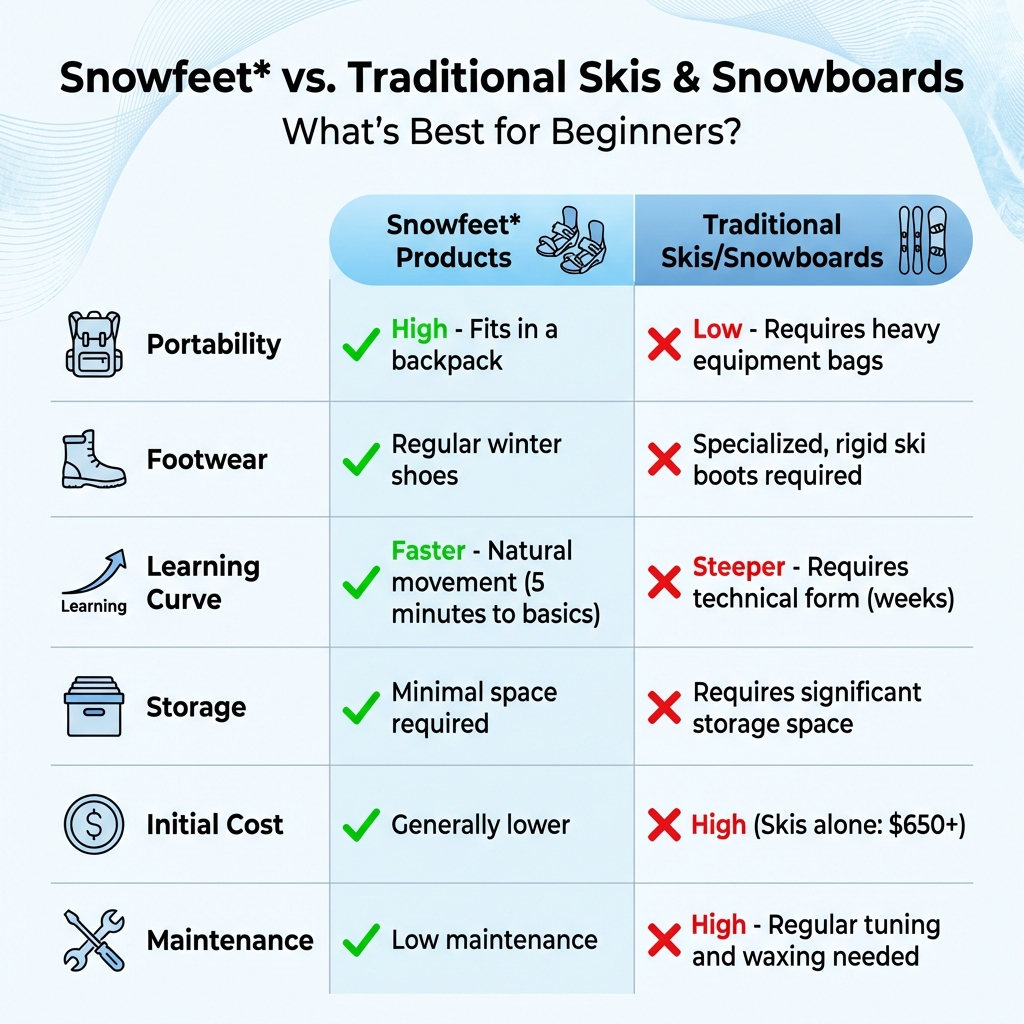
Snowfeet vs Traditional Skis: Beginner Comparison Chart
Are Short Skis Better for Beginners?
Why Snowfeet* Skiskates Work Best for Beginners
Snowfeet* Skiskates, measuring just 44 cm (17.3 inches), are a game-changer for anyone new to skiing. Unlike traditional skis that can stretch over 60 to 70 inches, these compact skates offer unmatched control right from the start. Their shorter length makes them easier to handle, helping beginners feel more confident and progress faster toward mastering the slopes.
Compact Size and Easy to Carry
Forget lugging around oversized ski bags or struggling with unwieldy equipment. Snowfeet* Skiskates are so compact they can fit into your backpack. At just 17.3 inches long - about a third of the size of standard skis - they're incredibly easy to carry. Whether you're walking through a crowded parking lot, hopping on a chairlift, or navigating the lodge, these skates make the whole experience hassle-free. Plus, their portability means you can pack them for a quick mountain getaway without worrying about roof racks or extra carriers.
But portability isn’t their only perk - they also make learning to ski much easier.
Faster Learning Curve
With Snowfeet*, beginners can pick up the basics in a single day, compared to the weeks it might take with traditional skis. The shorter length allows for quicker responses to your movements, making it easier to stay upright and balanced. Their design reduces the chances of catching an edge, which is a common frustration for new skiers. Plus, the motion feels similar to skating, something many people are already familiar with, which speeds up the learning process even more.
Works with Regular Winter Shoes
One of the best things about Snowfeet* Skiskates? You don’t need special ski boots. They’re designed to work with the winter boots you probably already own. Just lace up your boots, strap into the skiskates, and you’re ready to go. This eliminates the discomfort of rental boots and saves you time, making it even easier to enjoy your day on the slopes without extra hassle.
Moving Up to Snowfeet* Skiblades
Once you've got the hang of Skiskates, it's time to step up your game with Snowfeet* Skiblades. These come in two lengths - 65 cm (25.6 inches) and 99 cm (39 inches) - giving you more surface area for stability while keeping the easy handling that beginners love. Skiblades are the perfect middle ground between compact Skiskates and full-length skis, making it easier to build your skills without feeling overwhelmed. Let’s break down how each size can help you progress.
Skiblades (65 cm): Balance Meets Control
At just over 2 feet long, the 65 cm Skiblades strike a sweet spot between responsiveness and stability. The extra length gives you better edge contact with the snow, which means smoother turns, stronger grip, and better balance at moderate speeds. These are ideal for groomed runs and choosing your first park skis, letting you fine-tune your carving skills on green and blue slopes. Their compact design keeps things simple, so you can focus on building confidence without worrying about overly complicated gear.
Skiblades (99 cm): Ready for Bigger Challenges
If you’re ready to tackle steeper terrain, the 99 cm Skiblades are your next step. They offer more stability at higher speeds, making them great for groomed runs and snowparks. While they’re still easier to handle than traditional skis, they’re best suited for those who’ve built up some proficiency and are ready to explore tougher slopes. This longer option gives you the controlled performance you need to push past hesitation and take your skills to the next level.
Required Gear and Boot Compatibility for Snowfeet* Products
Snowfeet* products are designed to pair seamlessly with the winter boots you already own. Whether you're using Snowfeet* Skiskates or Skiblades, there's no need to splurge on specialized footwear. Just make sure your boots are waterproof and provide strong ankle support. This user-friendly setup makes it easy for beginners to hit the slopes without overcomplicating things.
Here’s a quick guide to the best boots for each Snowfeet* product.
Boot Options for Snowfeet*
For Snowfeet* Skiskates (44 cm / 17 in), any sturdy winter boots will do the trick - no need for fancy ski boots. Insulated hiking boots or high-quality snow boots work perfectly, as the bindings are made to fit standard footwear.
If you're stepping up to Snowfeet* Skiblades (65 cm / 26 in or 99 cm / 39 in), snowboard boots are your best bet. They provide better ankle support and control, which is key for a smooth ride. Look for boots that fit snugly - tight enough for control but not so tight that they cut off circulation. Waterproof, breathable materials like Gore-Tex are also a smart choice to keep your feet warm and dry during longer sessions.
Accessories to Improve Your Experience
The right accessories can make a big difference in your time on the slopes. Safety comes first, so grab a hard-shell helmet to protect your head - research shows helmets significantly lower the risk of head injuries. Add anti-fog goggles and waterproof gloves to your kit for extra comfort and visibility.
Snowfeet* also offers maintenance tools like wax (starting at $6) and replacement straps to keep your gear in top shape. For clothing, layering is key: start with thermal base layers, add a breathable mid-layer, and finish with ski pants featuring elastic cuffs to keep snow out. These small details can elevate your mountain experience and keep you comfortable all day long.
sbb-itb-17ade95
Snowfeet* vs. Traditional Skis and Snowboards: Why Shorter Skis Win for Beginners
Transporting traditional skis can be a real hassle. Think about lugging heavy, oversized bags through an airport or finding enough storage space for them at home. For beginners, this alone can make skiing feel like more trouble than it’s worth. Snowfeet* products, however, are compact enough to fit in a regular backpack. This makes them an easy, stress-free option, especially for those who are just starting out. But portability isn’t the only reason Snowfeet* stands out - it’s also about how much simpler they make learning.
Stability and Control Comparison
When it comes to stability and control, Snowfeet* has a clear edge for beginners. Traditional skis and snowboards require you to master precise techniques and maintain rigid form, which can be intimidating. Snowfeet*, on the other hand, is designed to feel natural right from the start. Their shorter length reduces leverage, making it easier to stay balanced and in control. Plus, there’s no need for expensive, stiff ski boots. Snowfeet* works with the winter shoes you already have, cutting down on both cost and complexity.
Portability and Convenience
Traditional skis not only take up a lot of space but can also be a logistical nightmare. You’ll likely need a vehicle rack or a hefty bag just to transport them. And let’s not forget the price - beginner-friendly skis like the Salomon Stance 88 W can cost about $650, and that’s before you add boots, bindings, or other gear. Snowfeet* eliminates these hurdles. They’re easy to carry, require minimal storage, and don’t demand ongoing maintenance like waxing or tuning.
Here’s a quick side-by-side comparison to sum it up:
Comparison Table
| Feature | Snowfeet* Products | Traditional Skis / Snowboards |
|---|---|---|
| Portability | High; fits in a backpack | Low; requires heavy equipment bags |
| Footwear | Winter shoes | Specialized, rigid ski boots |
| Learning Curve | Faster; natural movement | Steeper; requires technical form |
| Storage | Minimal space required | Requires significant storage space |
| Initial Cost | Generally lower | High (Skis alone can cost $650+) |
| Maintenance | Low | High; requires regular tuning and waxing |
Step-by-Step Techniques to Ski Confidently with Snowfeet*
How to Master Balance and Turns
Start by standing with your feet shoulder-width apart and keeping your knees slightly bent - this is your foundation for balance. Having boots that fit snugly and feel comfortable is key to staying in control as you glide down the slopes. If you're using familiar footwear, that's even better - it gives you a natural advantage.
Practice shifting your weight from side to side while standing still until the motion feels second nature. Snowfeet* products are lightweight, which makes it easier to maneuver and execute quick turns. To turn, lean in the direction you want to go and gently press on the inside edge of your Snowfeet*. Thanks to their front-side carving design, you can make smooth turns and stop on short skis easily. This straightforward method helps you focus on the fun instead of getting bogged down by complicated techniques, which can be a game-changer for beginners.
Once you've got the hang of balancing and turning, it's time to test your skills on some beginner-friendly terrain.
Starting on Easy Terrain
For your first runs, stick to groomed trails - they offer a steady, predictable surface that's perfect for learning. Look for a gentle slope with a slight incline to help you glide, but steer clear of icy spots or steep sections until you're feeling more confident.
Start by walking on flat ground to get used to the feel of Snowfeet* on your feet. When you're ready, give a gentle push to glide straight down short distances, keeping your weight centered. As your confidence builds, gradually increase the distance and try wide, sweeping turns. The compact design of Snowfeet* makes it less intimidating, so every small achievement feels manageable. Before you know it, you'll go from cautious beginner to someone who feels at ease on the slopes.
Practice Tips and Terrain Choices for Building Confidence
How to Progress Gradually
Once you've nailed the basics on flat ground and gentle slopes, it’s time to step things up a notch. Start by extending your runs on familiar terrain, focusing on linking your turns smoothly. With Snowfeet*, you’ll find that the learning curve is surprisingly short - most people get the hang of the basics in just 5 minutes. That’s because the movements feel a lot like ice skating or inline skating. This quick adjustment means you can move on to slightly steeper slopes much faster than with traditional skis.
When you're ready to challenge yourself, look for intermediate runs with moderate inclines. The 44 cm Skiskates are a great choice at this stage, as they help you perfect quick turns and build confidence. If you’re tackling longer runs or want more stability, upgrading to the 65 cm Skiblades can make a big difference - they’re designed to enhance carving and control. Feeling adventurous? The 99 cm Skiblades provide the versatility you need to handle advanced beginner terrain, all while keeping that playful, easy-to-control vibe that makes Snowfeet* so fun.
The key is to pick terrain that helps you practice these skills while pushing your limits just enough to keep things exciting.
Best Terrain for Learning
One of the coolest things about Snowfeet* is how portable and versatile they are, giving you plenty of options for practice. Groomed snow and smooth, packed surfaces are ideal for getting started. Luckily, most ski resorts in the U.S. welcome Snowfeet* on their standard downhill runs and snow parks, thanks to their metal ski edges that meet resort requirements.
But you’re not limited to resorts. Sledding hills are another great spot to work on balance and technique. And because Snowfeet* are compatible with regular winter boots, you can even practice on snowy hiking trails or cross-country paths. This flexibility gives you more chances to sharpen your skills outside of the usual slopes.
That said, it’s best to avoid deep powder (anything over 4 inches), steep slopes, or ungroomed terrain until you’re more experienced. Stick to well-maintained, predictable surfaces, and you’ll be building confidence in no time - all while having a blast!
Conclusion
Learning to ski doesn't have to feel overwhelming. With Snowfeet* products, you're getting gear designed to make your first snowy adventures fun and easy to handle. Their compact size gives you better control compared to traditional long skis, and the fact that you can use your regular winter boots means no need for pricey, specialized ski boots.
You can start with the 44 cm Skiskates for quick learning and easy maneuvering, or move up to the 65 cm or 99 cm Skiblades as you gain confidence. Plus, their lightweight portability is a game-changer - toss them in your bag, head to a nearby trail, or hit the slopes without lugging around heavy equipment.
Unlike traditional skis or snowboards that often come with a steep learning curve, Snowfeet* products help you get the hang of things quickly. That means less frustration and more time to simply enjoy the snow.
If you've been putting off skiing because it seems too complicated, Snowfeet* might be just what you need. They simplify your gear, build your confidence, and bring the joy back to winter sports. Forget the fear - grab a pair and rediscover how much fun playing in the snow can be!
FAQs
Can I use Snowfeet* at most U.S. ski resorts?
It’s unclear if Snowfeet* products are permitted at most U.S. ski resorts. To avoid any surprises, it’s a good idea to contact the resort you’re planning to visit and ask about their rules regarding alternative skiing equipment like Snowfeet*.
Which Snowfeet* length should I start with?
For beginners, the Snowfeet Skiskates (44 cm) are a great choice. Their compact size makes them easier to control, which is ideal for learning the basics and gaining confidence on the slopes.
What’s the safest way to stop on Snowfeet*?
To stop safely while using Snowfeet*, beginners can rely on a simple snowplow technique, much like stopping on regular skis. Angle the front tips of the Snowfeet* inward slightly, maintaining a balanced stance. Practicing this on gentle slopes is a good way to gain confidence and improve control. Always take it slow and stick to beginner-friendly slopes for a safer ride.











Leave a comment
This site is protected by hCaptcha and the hCaptcha Privacy Policy and Terms of Service apply.