



















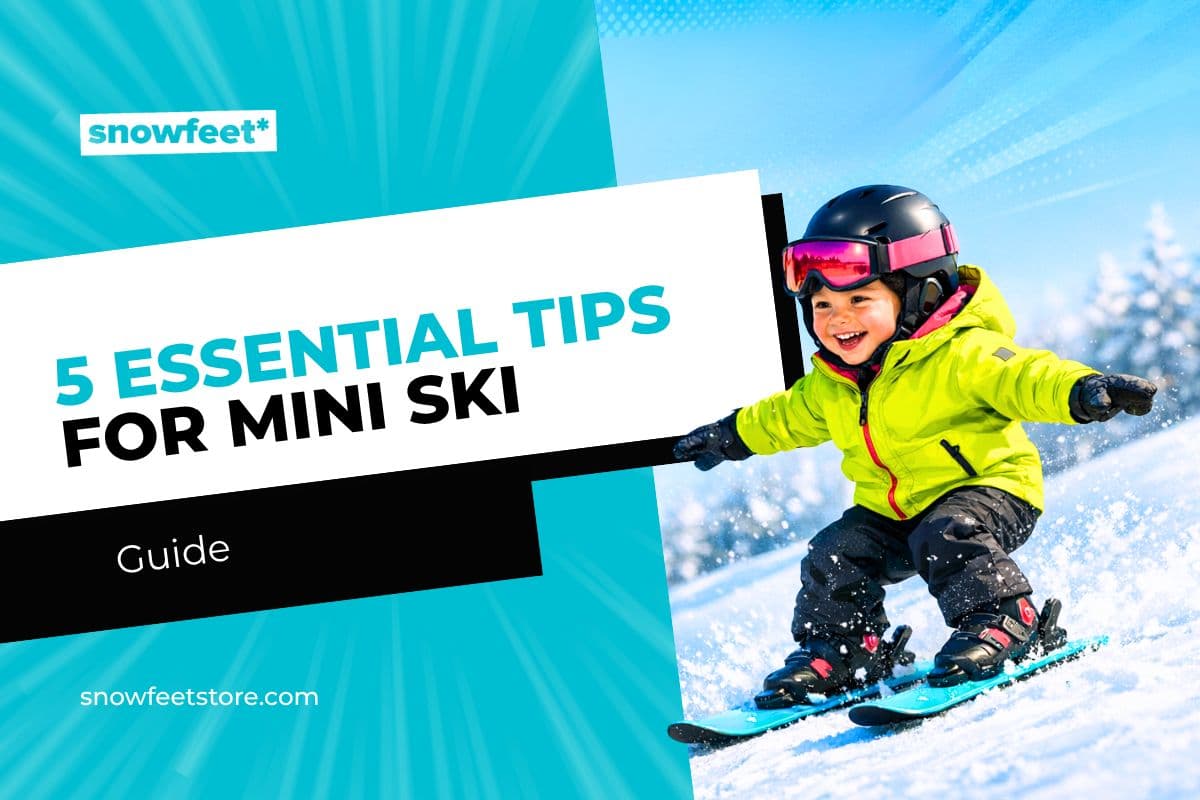
Getting kids into skiing is all about keeping it fun, relaxed, and low-pressure. Forget about perfect technique or conquering steep slopes - focus on creating a positive experience they'll want to repeat. Here’s the gist:
- Stay positive and patient: Kids pick up on your attitude. Keep it light and fun, not stressful.
- Use kid-friendly gear: Smaller options like Snowfeet Skiskates (17 inches long) are easier to handle, less intimidating, and cheaper than regular skis.
- Short sessions work best: Especially for toddlers, aim for 20–30 minutes with plenty of breaks for snacks or hot chocolate.
- Practice at home first: Let them get comfortable with their gear indoors to build confidence before hitting the snow.
- Start on flat snow: Begin with simple gliding before moving to gentle slopes.
The goal? Make skiing enjoyable so they’ll want to do it again. Snowfeet gear simplifies the process, making skiing less about hassle and more about fun.
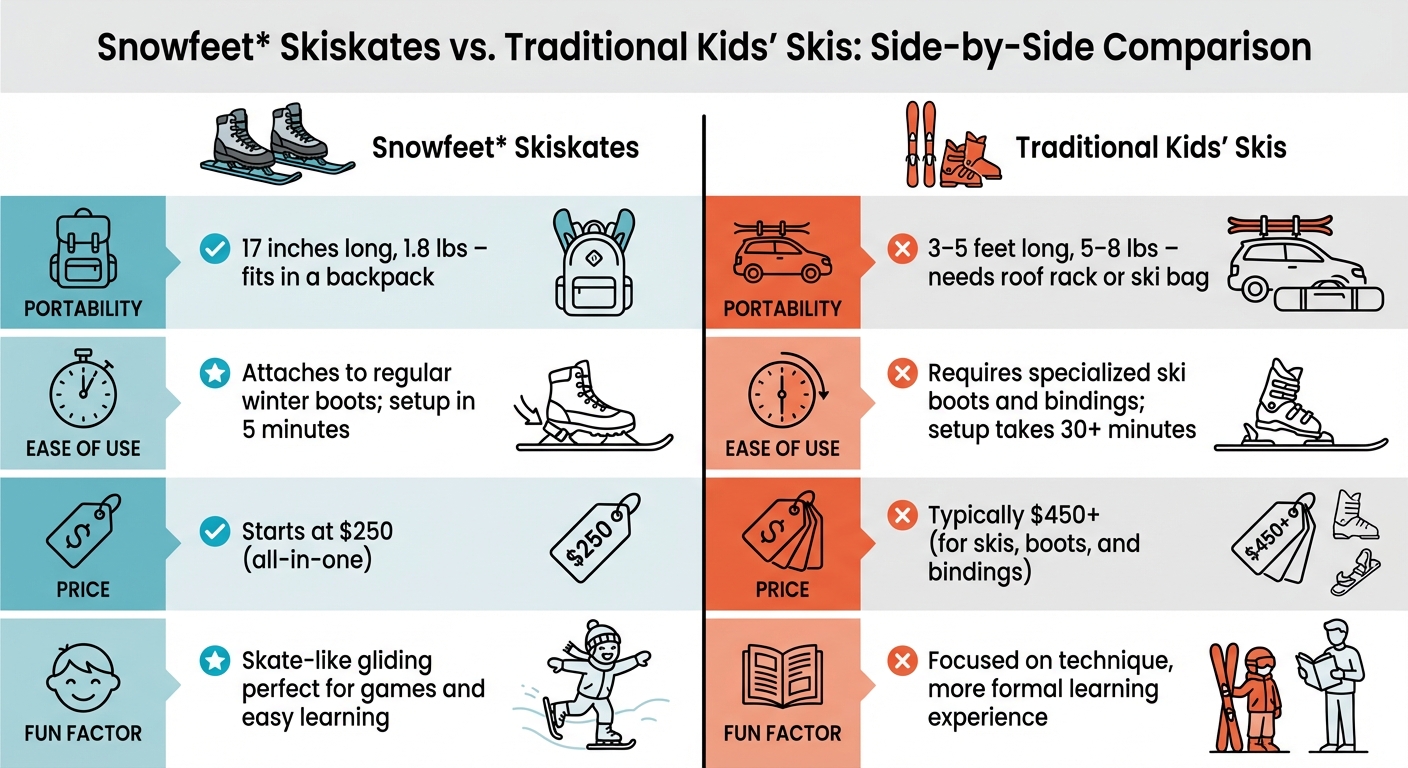
Snowfeet Skiskates vs Traditional Kids Skis Comparison
9 Lessons I’ve Learnt Helping My Son Love Skiing
Picking the Right Beginner Gear: Why Snowfeet* Works Better

When it comes to enjoying your first time on the slopes, having the right gear makes all the difference. Let’s take a closer look at why Snowfeet* stands out compared to traditional ski options.
The gear you pick can either make skiing feel like a breeze or a burden. Traditional skis are heavy, require specialized boots, and can feel like a lot to handle for beginners - especially kids.
Snowfeet* Skiskates (44 cm) and MINI KIDS* change the game. These compact options weigh less than 2 pounds per pair and are small enough to fit in a backpack. They attach to regular winter boots using adjustable straps, so there’s no need for pricey, specialized ski boots. Even better? Kids can carry and set up their own gear, making it easy to jump into the fun without delays.
Cost is another big win for Snowfeet*. Snowfeet* Skiskates start at $250, and MINI KIDS* models start at $220. Compare that to traditional kids' skis, which can cost anywhere from $300 to $500, plus an extra $150 to $300 for boots. Snowfeet* offers a simpler, more affordable way to get started - without sacrificing the fun.
Snowfeet* vs. Traditional Skis: Side-by-Side Comparison
| Feature | Snowfeet* Skiskates | Traditional Kids' Skis |
|---|---|---|
| Portability | 17 inches long, about 1.8 lbs – fits in a backpack | 3–5 feet long, 5–8 lbs – needs a roof rack or ski bag |
| Ease of Use | Attaches to regular winter boots; setup in 5 minutes | Requires specialized ski boots and bindings; setup takes 30+ minutes |
| Price | Starts at $250 (all-in-one) | Typically $450+ (for skis, boots, and bindings) |
| Fun Factor | Skate-like gliding that’s perfect for games and easy learning | Focused on technique, leading to a more formal learning experience |
The lightweight design and compatibility with regular boots make Snowfeet* a stress-free choice. And let’s be honest - less hassle means more time for fun on the slopes.
Why Short Skis Work Better for Kids
Gear that’s easy to handle makes learning way more enjoyable. At just 17 inches, Snowfeet* Skiskates allow kids aged 5–12 to see their feet while moving, which helps them feel more in control. Traditional skis, even kid-sized ones, can be 4–5 feet long, making turns awkward and increasing the chance of falling.
Short skis also help with balance by keeping the center of gravity low. Kids can stop and turn using natural movements, much like ice skating. According to PSIA-certified instructors, short skis can cut the learning curve in half. Many kids are gliding confidently after just one session. With quicker progress, there’s less frustration and more confidence, setting the stage for a fun and relaxed introduction to skiing.
Practice at Home: Building Confidence Before the Slopes
Helping kids get familiar with their gear before hitting the slopes can make a world of difference. When they practice basic movements at home, they show up feeling ready and excited rather than overwhelmed. It’s a simple way to ease any nerves and boost their confidence early on.
Get Comfortable with Winter Gear Indoors
Start by having your kids wear their winter boots and helmet around the house for 15–20 minutes at a time. Let them walk, sit, stand, and move around to get used to the added weight and bulk. This way, they’ll feel more at ease when it’s time to face the cold and tackle new terrain.
If you’ve got Snowfeet* Skiskates, you can take it a step further. Kids can strap them on indoors and practice standing in the right position on a carpet or rug. Thanks to the adjustable straps, they can use their regular winter boots for this. Encourage them to shift their weight from side to side to get a feel for balance. As Andrew Weibrecht, a two-time Olympic medalist, explains, practicing movements indoors helps kids "practice skiing movements and understand body balance". This kind of practice builds muscle memory in a safe, fall-free environment.
Once they’re comfortable indoors, they’ll be ready to take their skills to the snow.
Try Gliding on Flat Snow First
After getting the hang of things inside, the next step is practicing outdoors on flat snow. Look for a backyard or park with an open, level area. Before tackling any hills, let kids walk and glide forward on their Snowfeet* Skiskates. At just 17 inches long, the skates allow kids to see their feet and stay in control.
This flat-snow practice helps them refine their balance and ease into skating motions. They can try small shuffles, gentle pushes, or even simple balance drills while standing still. In just 20–30 minutes, most kids feel confident enough to take on a gentle slope. Snowfeet* Skiskates are designed to make this transition smooth and fun, turning practice into play and helping kids build skills naturally as they prepare for snowy adventures.
sbb-itb-17ade95
Start on Small Slopes: Ensuring the First Day Is Enjoyable
Once kids have mastered gliding on flat snow, it’s time to move to a gentle slope to practice their first turns and stops. Pick a quiet, nearby hill to keep things low-pressure and fun. This way, kids can focus on enjoying themselves without feeling overwhelmed. From there, introduce simple techniques that give them more control on these beginner-friendly slopes.
Use Gentle Hills and Simple Techniques
Stick to groomed, packed snow - this is where Snowfeet* Skiskates shine. Avoid terrain that’s steep, deep, or bumpy. Snowfeet* are designed to make learning quick and easy. Why? Because they’re “long enough to ski, short enough to skate.” Their compact size helps kids see their feet clearly and stay in control, cutting down on tip-crossing - a common issue with longer, traditional skis.
Teach them basic moves like the "pizza" for slowing down and the "hockey stop" or "heel brake" for stopping. Thanks to Snowfeet*’s lightweight design, these maneuvers are much simpler for kids to pick up. The shorter length and reduced weight make it easier for little ones to turn and stop without feeling overwhelmed.
"These ski blades are a blast to use. Super easy to control, quick to turn, and way more forgiving than traditional skis."
Add Tools and Games to Keep Kids Engaged
Once they’ve got the basics down, keep the momentum going with tools and games that make learning more engaging. Simple tools like Edgie Wedgies can help kids maintain proper form, while fun activities like "Red Light, Green Light", "Follow the Leader", or "The Airplane" encourage balance and coordination. Want to make it even more exciting? Set up a scavenger hunt with colorful cones scattered along the slope. Kids can ski toward each cone, helping them stay focused and keep their eyes forward.
"The kids had a blast with these. Everyone was asking where they got them."
Snowfeet*’s compact design and easy maneuverability make these games not just fun but also a great way to build essential skiing skills while keeping the experience playful and rewarding.
Develop Skills Through Games and Practice
Once kids have the basics down, it’s time to boost their confidence with playful challenges. Think of it as sneaking veggies into their favorite meal - fun games keep them entertained while they naturally pick up the skills needed for tackling all kinds of slopes. These activities seamlessly connect practice sessions with the thrill of actual skiing.
Games That Build Skiing Skills
Turn practice into playtime! One idea is to create a mini obstacle course using cones or natural markers on the slope. Encourage kids to weave through them - it’s a great way to practice control and turning. Another favorite? "Follow the Leader." You take the lead, and they mimic your moves, learning by doing.
For kids ready to step it up, Snowfeet* Short Skis (120 cm) are a game-changer. They’re long enough to handle varied terrain but short enough to make quick turns easy. Unlike traditional long skis, which can feel clunky when changing direction fast, these short skis let kids focus on having fun instead of struggling with their gear. This mix of playful practice and beginner-friendly equipment helps them build solid skills and a sense of independence.
"I had a lot of fun with the 99s. They are easier to turn than skis. The kids tried them as well and boasted about them." – msb1998nurse
With these game-based techniques under their belt, kids are ready to take on the slopes more independently.
Help Kids Ski on Their Own
Independence is a huge confidence booster. Start by letting your kids carry their own gear - Snowfeet* products make this easy since they’re lightweight and compact enough to fit in a backpack. On the slopes, gradually increase the distance they ski solo. This helps them build their skills while gaining a sense of freedom.
Snowfeet* products also come with simple binding systems that work with regular winter boots. This straightforward setup keeps things stress-free, letting kids manage their own gear. It’s all about making them feel like real skiers, which keeps their motivation high and their progress steady.
Conclusion: Setting Kids Up for a Lifetime of Skiing
Getting kids into skiing isn’t about nailing perfect runs - it’s about creating moments they’ll cherish. Kristina from All About Momma sums it up perfectly:
"A day out on the slopes in the snow should be a magical day and it is up to you to make sure it is enjoyable".
When the focus is on fun rather than performance, you’re giving them the best chance to fall in love with winter sports for years to come.
Snowfeet* gear makes that process easier. Their compact and lightweight designs let kids enjoy the slopes without the hassle of traditional, bulky skis. It’s all about making gliding around feel effortless.
Timing is everything, too. Keep ski sessions short - 20 to 30 minutes is ideal - and stop before they get too tired. And don’t forget this golden rule:
"A warm kid will ski longer than a cold kid".
Mix in some games, celebrate small victories (like mastering the pizza stop), and let them take charge of their gear to build confidence along the way.
Ultimately, success isn’t measured by how many runs they complete. It’s about sparking a love for the sport. Goveer puts it best:
"The goal isn't to have the most perfect ski day, but rather to teach toddlers a skill that's going to stick with them for life".
With Snowfeet*’s easy-to-use gear and a focus on short, fun-filled sessions, you’re setting your little ones up for a lifelong passion for skiing.
FAQs
What age can kids start skiing?
Kids usually start skiing between the ages of 3 and 4. Beginner-friendly gear like Snowfeet Skiskates or Snowfeet MINI KIDS is a great way to introduce them to the slopes. These options are lightweight, easy to control, and designed to make skiing feel more like play. They help kids develop balance and confidence without the pressure that can come with traditional skis or snowboards, making the experience all about fun and exploration.
Are Snowfeet* Skiskates safe for kids?
Snowfeet* Skiskates are crafted with beginners in mind, making them an exciting option for kids. Their small size and straightforward control make them less intimidating and easier to handle than traditional skis, which can help reduce the risk of accidents. While specific safety features aren't highlighted, using them responsibly - under adult supervision and with proper protective gear - can make the experience safer. Like any snow activity, sticking to safety rules is key to keeping kids safe and having fun on the slopes.
Where should my child practice first?
Start your child off in a calm, snowy spot where they can get familiar with their gear and the snow at their own pace. Let them practice walking around indoors or on flat, snowy ground - like a gentle slope or the base of the mountain. This gives them a chance to get used to the equipment and their surroundings, making skiing feel enjoyable and easy right from the beginning.











Leave a comment
This site is protected by hCaptcha and the hCaptcha Privacy Policy and Terms of Service apply.