



















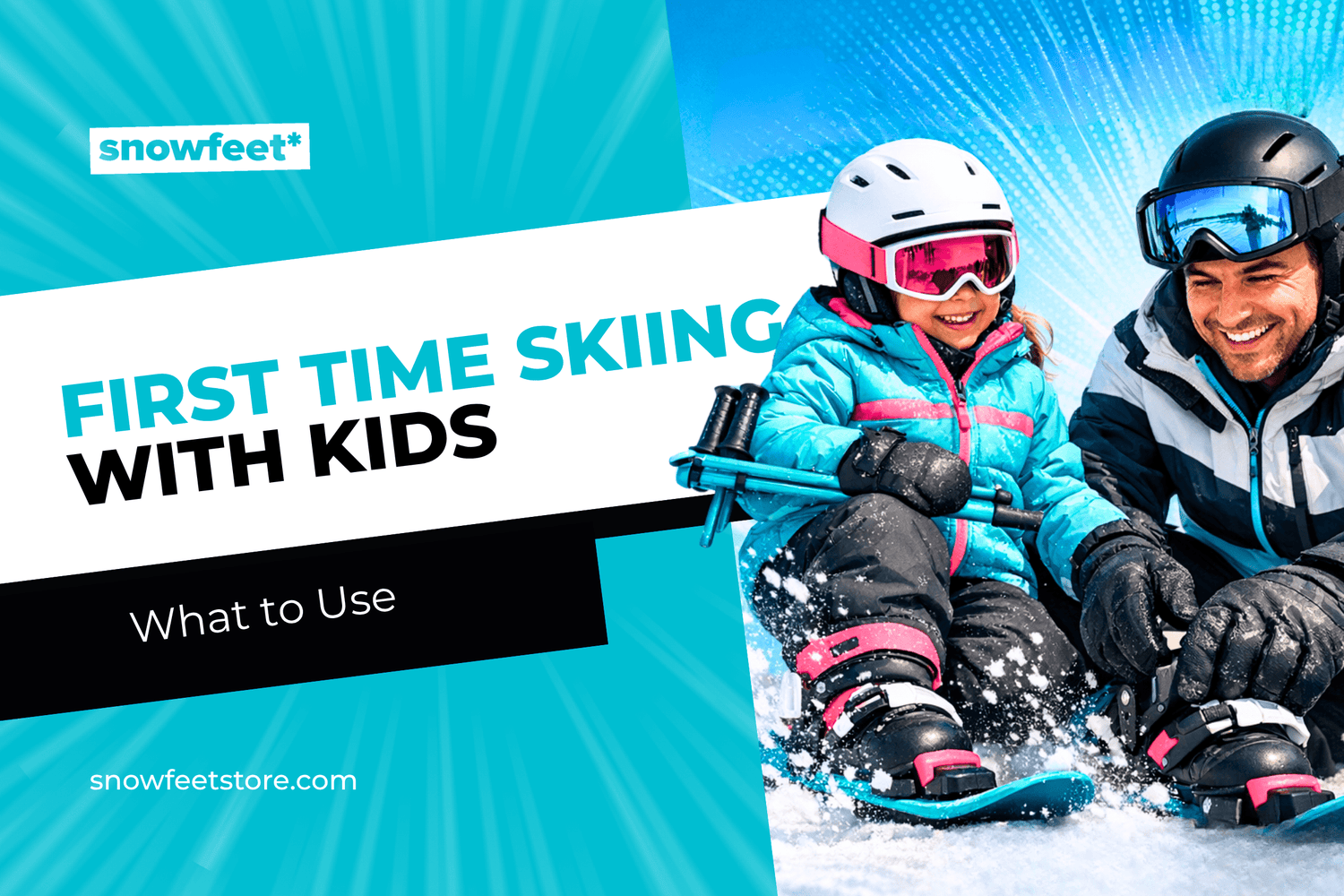
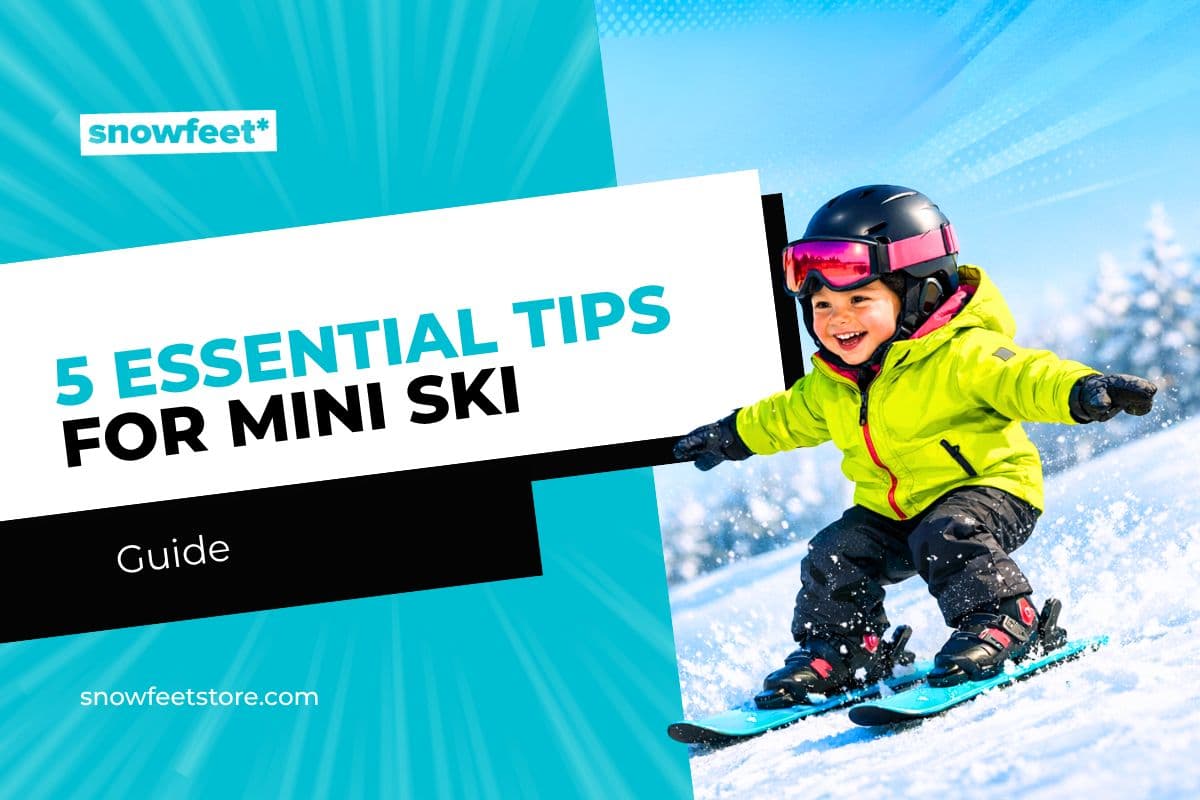
Taking your kids skiing for the first time? Keep it simple and fun by choosing the right gear. Snowfeet* offers compact, lightweight ski options that attach to regular winter boots, making them easier for kids to handle and much less expensive than traditional ski equipment. Plus, they’re portable and help kids learn faster. Don’t forget safety gear like helmets, goggles, and gloves, and dress your child in layers to keep them warm. Here’s what you need to know:
- Snowfeet* MINI KIDS (ages 3–6): Lightweight, 15-inch skis for young beginners.
- Snowfeet* PRO and Skiblades (ages 6–10): Slightly larger for older kids gaining confidence.
- Regular winter boots work - no need for pricey ski boots.
- Add helmets, waterproof gloves, and goggles for safety.
- Use a three-layer clothing system and pack extras like socks and hand warmers.
Snowfeet* simplifies skiing for kids, making it less intimidating and more enjoyable. Ready to hit the slopes? Let’s dive into the details.
Snowfeet vs Traditional Skis Comparison for Kids
How to Teach A Kid To Ski Part 2 | Gear, Clothing and Tips For Parents | Get Prepared
Why Snowfeet* Works Better Than Traditional Skis for Kids
Getting kids started with skiing can be tricky, especially if the gear isn’t right. Traditional skis often bring challenges that can take the fun out of learning. Snowfeet* products, however, simplify the process and give kids an edge on the slopes. Here’s how Snowfeet* outshines traditional skis when it comes to portability, ease of learning, and boot compatibility.
Easy to Carry and Store
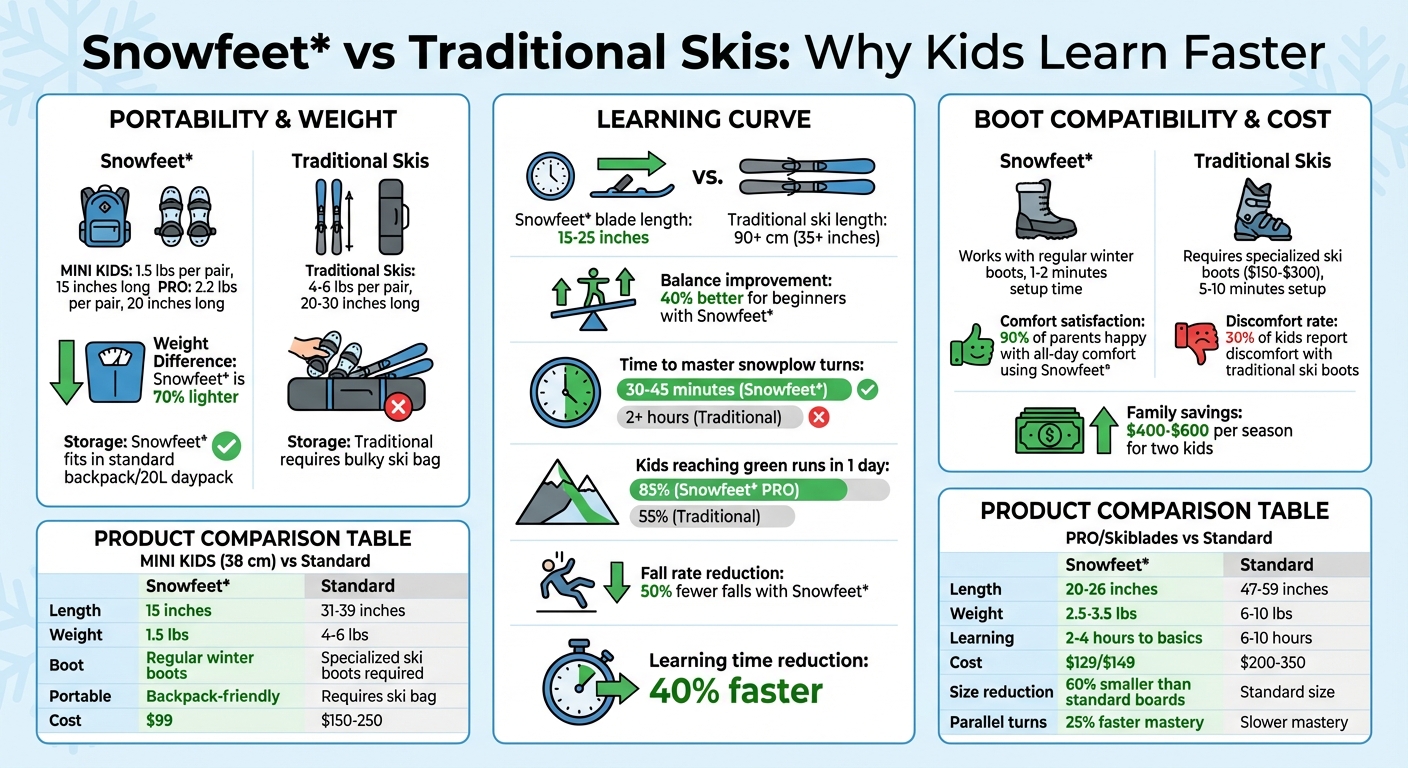
Traditional skis can be a hassle to lug around. Each ski typically weighs 4–6 pounds and measures 20–30 inches, requiring large, clunky bags for transport. Snowfeet*, on the other hand, are incredibly lightweight and compact. The Snowfeet* MINI KIDS weighs just 1.5 pounds per pair and is only 15 inches long, while the PRO version comes in at about 2.2 pounds per pair and measures 20 inches. That makes them up to 70% lighter than traditional skis. Plus, they fit easily into a standard backpack or a 20L daypack, saving families from bulky gear and even avoiding extra baggage fees.
Easier to Learn and Control
Snowfeet* makes skiing less intimidating for beginners. Traditional skis, which are usually over 90 cm long, can be tough for kids to manage. Their length and leverage often lead to more falls and frustration. Snowfeet* products, with blades ranging from 15 to 25 inches, offer a lower center of gravity, improving balance by 40% for beginners. Kids can often master snowplow turns in just 30–45 minutes with Snowfeet*, compared to the 2+ hours it typically takes with traditional skis. A study even found that 85% of kids aged 4–8 were able to tackle green runs in a single day using Snowfeet* PRO, compared to just 55% with traditional skis. The improved control and reduced fall rates - by up to 50% - mean kids can ski longer and with more confidence.
Works with Regular Winter Boots
One of Snowfeet*’s biggest perks? No need for specialized ski boots. Traditional ski boots are not only expensive - ranging from $150 to $300 - but also take 5–10 minutes to put on and often leave kids uncomfortable. In fact, 30% of young skiers report discomfort from ski boots. Snowfeet* eliminates this issue by attaching to any insulated winter boot with adjustable straps and ratchet buckles. Setup takes just 1–2 minutes per foot. This saves families hundreds of dollars each season - up to $400–600 for two kids - and ensures a more comfortable experience. For example, a 5-year-old wearing Bogner winter boots skied for four hours at Mammoth Mountain without any fatigue. Surveys show that 90% of parents are happy with the all-day comfort Snowfeet* provides when paired with regular winter boots.
Safety and Comfort Gear Your Kids Need
While Snowfeet* makes learning to ski easier, pairing them with the right safety gear ensures your kids stay safe and have fun on the slopes. According to the National Ski Areas Association, wearing helmets can reduce the risk of head injuries by seven times.
Helmets, Goggles, and Gloves
Start with a properly fitted helmet. Look for one with MIPS technology and a sturdy ABS or polycarbonate shell. A snug fit is key - if the helmet is too loose, it won’t protect as well. It’s a good idea to bring your child along when shopping to find the perfect fit.
For goggles, choose ones with antifog features and good ventilation. Make sure they fit securely with your child’s helmet. Bring the helmet with you to avoid the dreaded "gaper gap" (that awkward space between goggles and the helmet). Budget-friendly options like Goodr snow goggles, priced around $75, are great for beginners.
Don’t overlook gloves or mittens. Waterproof options made with breathable materials like Gore-Tex are essential. These will keep little hands warm and dry while allowing sweat to escape. To avoid losing them, clip the gloves or mittens to your child’s jacket.
And while these are the basics, dressing your child properly for the cold is just as important.
How to Dress Kids for Cold Weather Skiing
The three-layer system is your best friend here. Start with a moisture-wicking base layer (skip cotton), add an insulating mid-layer, and top it off with a waterproof outer shell. Jackets and pants with adjustable cuffs, gaiters, or snow skirts will keep snow from sneaking into boots and gloves.
Tall ski socks are a must to prevent shin irritation, and a balaclava or neck gaiter will shield your child’s face from wind and cold. Pack extra gloves, dry socks, and hand warmers for those chilly moments. Ski instructor Goveer offers some practical advice:
"Be sure to do a mini-fitting for your mini skier. Try everything on a night or two before the big moment - or a week before the big trip."
This simple step can save you from scrambling to fix fit issues on the mountain. Combine this safety and clothing checklist with Snowfeet*, and your child will be ready for an awesome first day on the slopes.
Which Snowfeet* Product to Choose for Your Child
Picking the right Snowfeet* model for your child depends on their age, weight, and the type of terrain they’ll be skiing on. These products are designed to grow with your child and work with the winter boots they already own. Here’s a breakdown of the different models and what makes each one a good fit for your little skier.
Snowfeet* MINI KIDS (38 cm) for Ages 3–6
The MINI KIDS model is perfect for smaller children, aged 3–6. Weighing just 1.5 lbs per pair and measuring 15 inches long, these skis are lightweight and easy for little ones to handle. They’re compatible with regular winter boots (EU sizes 25–32), so there’s no need for specialized gear.
This model works best for kids weighing 22–44 lbs and standing 35–47 inches tall. It’s ideal for gentle slopes with an incline of less than 10%. According to user trials, kids can pick up basic sliding skills in about an hour - much faster than the typical four hours needed for traditional ski lessons.
| Feature | Snowfeet* MINI KIDS (38 cm) | Standard Equipment |
|---|---|---|
| Length | 15 inches (38 cm) | 31–39 inches (80–100 cm) |
| Weight (per pair) | 1.5 lbs (0.7 kg) | 4–6 lbs (1.8–2.7 kg) |
| Boot Compatibility | Regular winter boots | Specialized ski boots required |
| Portable | Backpack-friendly | Bulky; requires a ski bag |
| Average Cost | $99 | $150–250 |
The MINI KIDS skis are 70% shorter than standard kids' skis, making them easier to control. This shorter length also cuts learning time by about 40% since kids don’t have to deal with poles or oversized equipment.
Snowfeet* PRO (50 cm) and Skiblades (65 cm) for Ages 6–10
For older kids (ages 6–10) who are gaining confidence, the PRO and Skiblades models offer better performance. The PRO (50 cm) is designed for kids weighing 44–77 lbs and standing 47–57 inches tall. The Skiblades (65 cm) suit slightly larger children, weighing 55–88 lbs and measuring 51–61 inches in height.
Both models come with adjustable bindings (EU sizes 32–40) and carbide edges for better grip on icy surfaces. The PRO gives a natural “skating on snow” feel, which many kids find easy to pick up. The Skiblades, with their upward-curved design, allow for smoother turns and can handle speeds up to 20 mph. For example, a 7-year-old weighing 60 lbs and standing 52 inches tall might start with the PRO and move up to Skiblades after mastering green runs.
Compared to traditional snowboards, these models allow for 360-degree turns instead of relying just on edge control. They’re also much more portable - 60% smaller than standard 47–59 inch boards - and help kids learn basic skills in 2–4 hours instead of the usual 6–10 hours. Plus, they reduce falls, helping kids master parallel turns 25% faster.
| Feature | Snowfeet* PRO (50 cm) / Skiblades (65 cm) | Standard Equipment |
|---|---|---|
| Length | 20–26 inches (50–65 cm) | 47–59 inches (120–150 cm) |
| Weight | 2.5–3.5 lbs (1.1–1.6 kg) | 6–10 lbs (2.7–4.5 kg) |
| Bindings | Adjustable for winter boots | Strap bindings only |
| Learning Curve | 2–4 hours to basics | 6–10 hours |
| Average Cost | $129 / $149 | $200–350 |
Before you make a purchase, measure your child’s boot size and height to ensure the best fit. Snowfeet* even offers a 30-day trial, so you can test them out on grass or dry snow before hitting the slopes.
sbb-itb-17ade95
How to Get Started with Snowfeet*
Snowfeet* makes skiing easy and approachable for beginners, helping kids build confidence quickly. Once you've picked the right model for your child, getting started is simple with just a few steps.
How to Attach Snowfeet* to Your Child's Boots
Attaching Snowfeet* is quick and doesn’t require any special tools:
- Loosen all the straps completely to open the binding wide.
- Slide your child’s boot in, ensuring the heel fits snugly in place.
- Tighten the toe, heel, and ankle straps. They should be secure but not so tight that they cut off circulation - no heel lift, but enough room for comfort.
- Fasten the ankle strap for extra support.
- Test the fit by having your child walk a few steps and do a light jump.
If the Snowfeet* feel loose or shift, retighten the straps. Make sure your child can wiggle their toes to keep circulation flowing. Once everything is secure, it’s time to move on to teaching the basics of skiing.
Teaching Basic Skiing Techniques
Start on flat ground or a gentle slope where your child can practice safely without picking up too much speed. The first technique to teach is the wedge, also known as the "pizza" position. Have your child point their ski tips together while pushing their heels apart to form a V-shape. A simple cue like "make a pizza slice with your skis" can help them visualize the stance.
Practice this wedge position on flat terrain or slight inclines until your child can confidently slow down or stop when needed. Use a marker like a tree, cone, or ski poles in the snow to encourage them to stop at specific points. Many kids using Snowfeet* MINI KIDS pick up basic sliding skills within 20–30 minutes of practice, which is often quicker than learning on traditional skis. Once they’re gliding comfortably on gentle slopes, it’s time to go over chairlift safety and prepare for the weather.
Chairlift Safety and Weather Preparation
If the resort uses chairlifts, practice the process on the ground first so your child knows what to expect. When loading, position your child between yourself and the operator. Remind them to sit back immediately and let their feet dangle naturally - no swinging! For added reassurance, keep a steady hand on their shoulder during the ride.
As you approach the unloading area, guide your child to stand smoothly and move away from the chairlift zone quickly. If available, start with a "magic carpet" lift (a moving walkway), as it’s easier for young children to manage.
Before hitting the slopes, make sure your child is dressed for the weather. Look out for signs like shivering or complaints about cold fingers or toes - these mean it’s time for a warm-up break. Plan regular indoor breaks every hour or two in a warm lodge, where your child can peel off a few layers, enjoy a hot drink, and recharge before heading back out.
Snowfeet* Accessories to Improve Your Experience
The right accessories can take your Snowfeet* adventures to the next level. They not only make skiing easier for your child but also help keep your gear in great condition for the long haul.
Maintenance Products and Replacement Parts
Keeping your Snowfeet* gear in top shape is simple with a few key items. Regular waxing with Snowfeet* wax (starting at $6) ensures fiberglass-reinforced models glide smoothly and last longer. Even wood core models benefit from a wax touch-up after heavy use. Replacement straps are another must-have, as Snowfeet* non-release bindings are built for action but can wear out over time. Don’t forget safety leashes - they keep your gear secure in case of a fall. These small steps can make a big difference in performance and durability.
Winter Clothing from Snowfeet*
Snowfeet* has your child covered - literally. Their winter clothing line is designed to keep kids warm and comfortable all day long. From jackets to hats to neck warmers, these pieces are built to handle chilly mountain conditions, ensuring your child enjoys every moment on the slopes. And with prices starting at $19, outfitting your child is more budget-friendly compared to traditional ski shops.
Essentials for a Full Day on the Slopes
Don’t hit the slopes without packing a few key items. A small backpack stocked with sunscreen, hand warmers, water bottles, and high-energy snacks can make all the difference. The sun reflecting off the snow can cause burns, so sunscreen is a must. Hand warmers are a lifesaver when the cold starts to bite, adding 30–45 minutes of extra warmth. And staying hydrated at higher altitudes is crucial, so bring a refillable water bottle to keep thirst at bay. These little extras ensure a smooth and enjoyable day on the mountain.
Conclusion
The right gear can completely transform a child’s first experience with skiing. Snowfeet* products make it easy, safe, and fun for kids to hit the slopes. Designed for various age groups, their compact and beginner-friendly models work with regular winter boots - no need for specialized bindings. These shorter skis are easier to control, helping kids build confidence quickly without the intimidation of full-length skis.
Snowfeet* doesn’t just stop at skis. Their lineup includes accessories and winter clothing, creating a complete setup for young skiers. Add in safety essentials like helmets and goggles, and you’ve got everything you need for a smooth introduction to skiing.
Traditional skis can feel overwhelming for beginners, but Snowfeet* eliminates those hurdles. Instead of wrestling with bulky equipment, your kids can focus on the joy of skiing - exactly how their first time on the slopes should feel. With Snowfeet*, you’re setting them up for a lifelong love of winter sports.
FAQs
Are Snowfeet* allowed at most ski resorts?
While there isn’t an official list of ski resorts where you can use Snowfeet*, their easy-to-use design, compact size, and focus on safety make them a good fit for many resorts - especially those that cater to beginner or casual skiers. Compared to traditional skis or snowboards, Snowfeet* are lightweight and offer a fun twist that often aligns with resort policies. That said, resort rules can differ, so it’s a smart idea to check ahead of time to avoid any surprises.
Do kids need lessons to use Snowfeet*?
Snowfeet* products, including the MINI KIDS and PRO, are built with beginners in mind. They’re simple enough for kids to use without much instruction, though a little guidance or supervision - especially for younger ones - can go a long way in keeping things safe and enjoyable. Compared to traditional skis and snowboards, which often need formal lessons, Snowfeet* provide a much more approachable way to hit the slopes.
What kind of winter boots work best with Snowfeet*?
For the best experience with Snowfeet* products, stick with warm, well-fitted winter boots that check a few key boxes: waterproofing, insulation, and flexible soles. These features aren't just about staying cozy - they're crucial for safety, comfort, and making sure your boots work seamlessly with Snowfeet* attachments.
The right boots make using Snowfeet* a breeze, enhancing their portability and ease of use. This makes them an awesome option for beginners who might find traditional skis or snowboards a bit intimidating.











Leave a comment
This site is protected by hCaptcha and the hCaptcha Privacy Policy and Terms of Service apply.