



















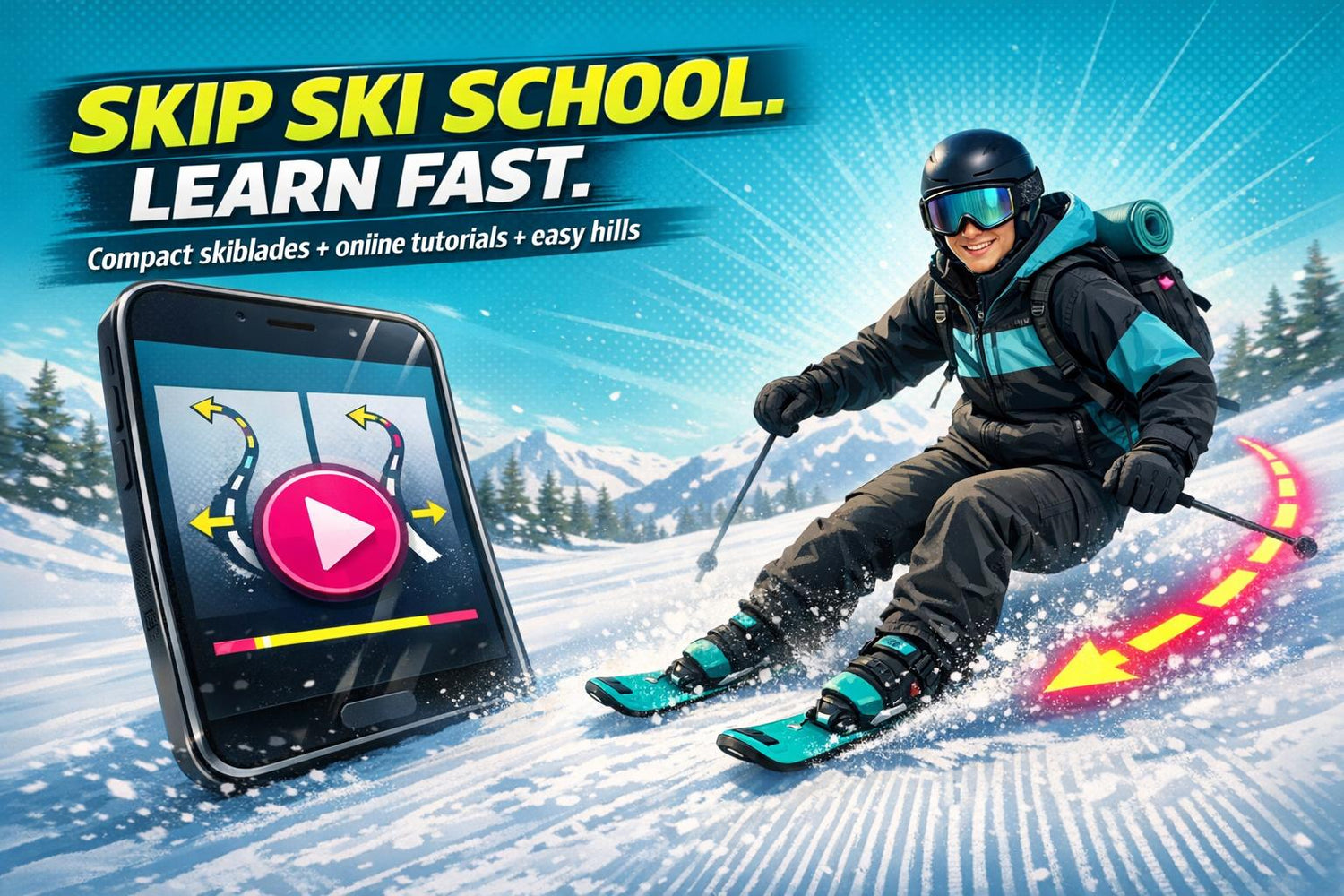
Want to learn skiing without draining your wallet on lessons? Here’s the deal: ski schools can cost nearly $2,000 a day at some resorts, and let’s be honest - those rigid schedules don’t suit everyone. Instead, you can learn on your own with gear like Snowfeet*. These compact, lightweight alternatives to bulky skis make it easier to pick up the basics and practice anywhere there’s snow.
Key Takeaways:
- Affordable gear: Snowfeet* Skiblades (65 cm) and Skiskates (44 cm) are beginner-friendly and portable.
- Practice at home: Work on balance and weight shifts before hitting the slopes.
- Start small: Use easy hills to build confidence without the pressure of big resorts.
- Free resources: Snowfeet’s YouTube channel offers beginner tutorials to guide you.
Skip the hassle of ski school and learn at your own pace with the right gear, a bit of practice, and online tips. Ready to hit the snow your way? Let’s dive in!
How to Learn Skiing Fast Without Ski School
Pick the Right Snowfeet* Gear
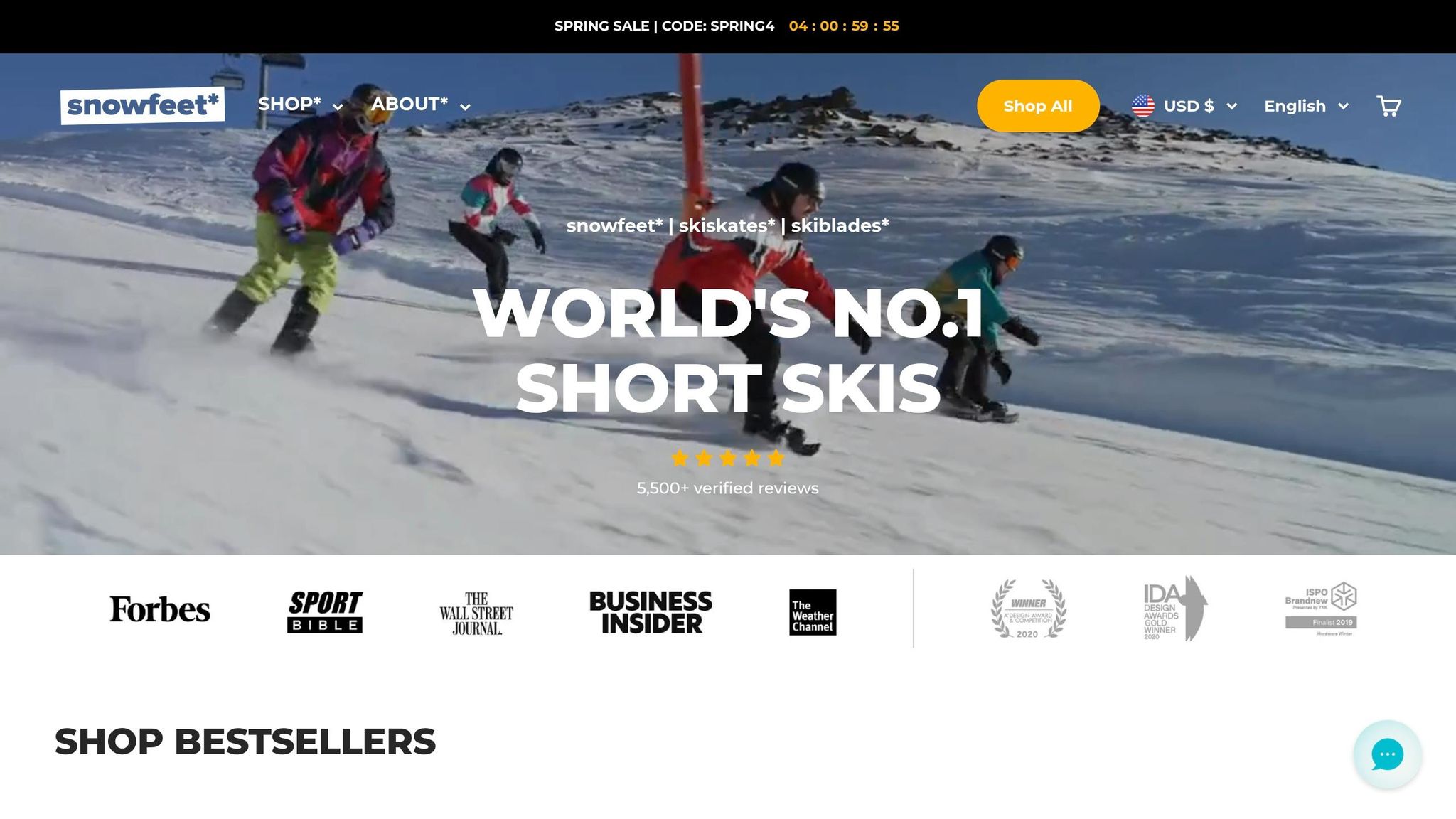
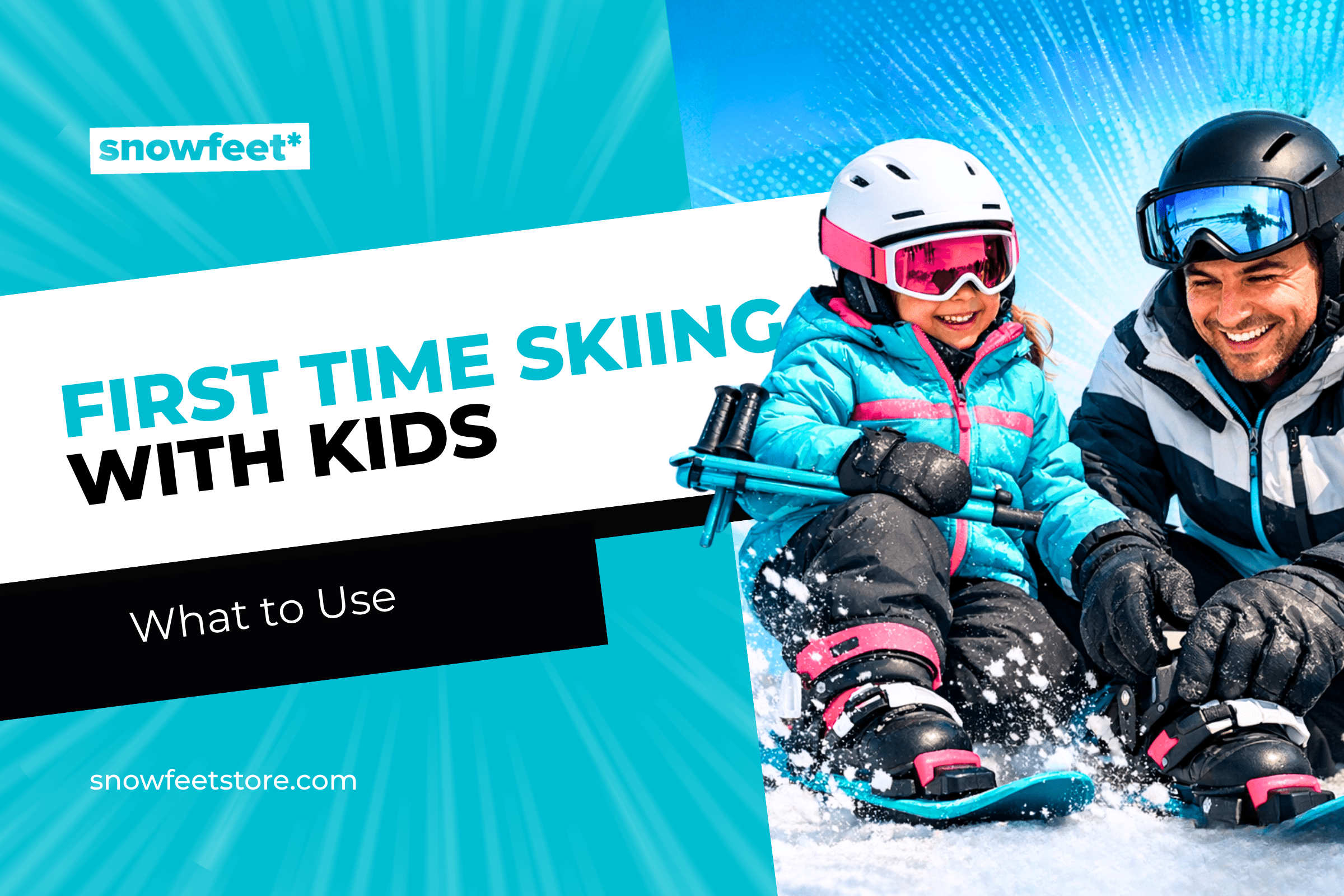
Choosing the right gear is the first step. If you're new to skiing, the Snowfeet* Skiskates (44 cm) are a great starting point. They're compact, making them easier to control and more intuitive for beginners. For those looking for a bit more carving ability, the Snowfeet* Skiblades (65 cm) are a solid choice. Their shorter length compared to traditional skis makes turning and stopping much simpler.
Another bonus? Snowfeet* gear is lightweight and fits in a backpack - no more struggling with heavy, bulky skis. Once you've picked your gear, take some time to practice the basics at home before heading to the slopes.
Practice Basic Movements at Home
Before you hit the snow, get familiar with the movements at home. Strap on your Snowfeet* gear and work on your stance: keep your feet parallel, knees slightly bent, and your weight centered. Practice shifting your weight from one foot to the other to get a feel for turning.
Steven Nyman, a World Cup winner with the US Ski Team, highlights the importance of these movements:
"A great way to teach people how to get over the outside ski, learn that proper movement in transition, movement with the core".
You don’t need fancy equipment to nail these basics - just focus on balance, weight shifts, and getting your body used to the motions.
Start on Easy Slopes
When you're ready to ski, find a gentle bunny slope or a small snow-covered hill. The great thing about Snowfeet* gear is that you don’t need a big resort; any snowy hill will work. Start with straight runs to build confidence, then slowly add in turns. Thanks to the shorter length of Snowfeet*, you'll find it easier to control your movements and make tighter turns.
Learn from Free Online Videos
Once you've practiced on easy slopes, check out the Snowfeet YouTube channel. They offer step-by-step tutorials designed specifically for their gear. You'll find everything from beginner tips to advanced carving techniques. Before your first trip, watch their videos on stopping and turning - they'll give you a solid foundation. And as you progress, you can revisit the tutorials to refine your skills.
Practice and Enjoy the Process
Learning with Snowfeet* is not only effective but also enjoyable. Take your time, try different techniques, and don’t stress about falling - it’s part of the process. The shorter gear helps beginners build confidence quickly. Celebrate small wins, like nailing a controlled stop or connecting a few turns, and gradually challenge yourself as you improve. Plus, with Snowfeet* being so portable, you can practice whenever there's snow, without the hassle of renting or carrying heavy equipment.
How to Ski in One Day | Beginner Learns Basic Turns
Snowfeet* vs. Traditional Skis
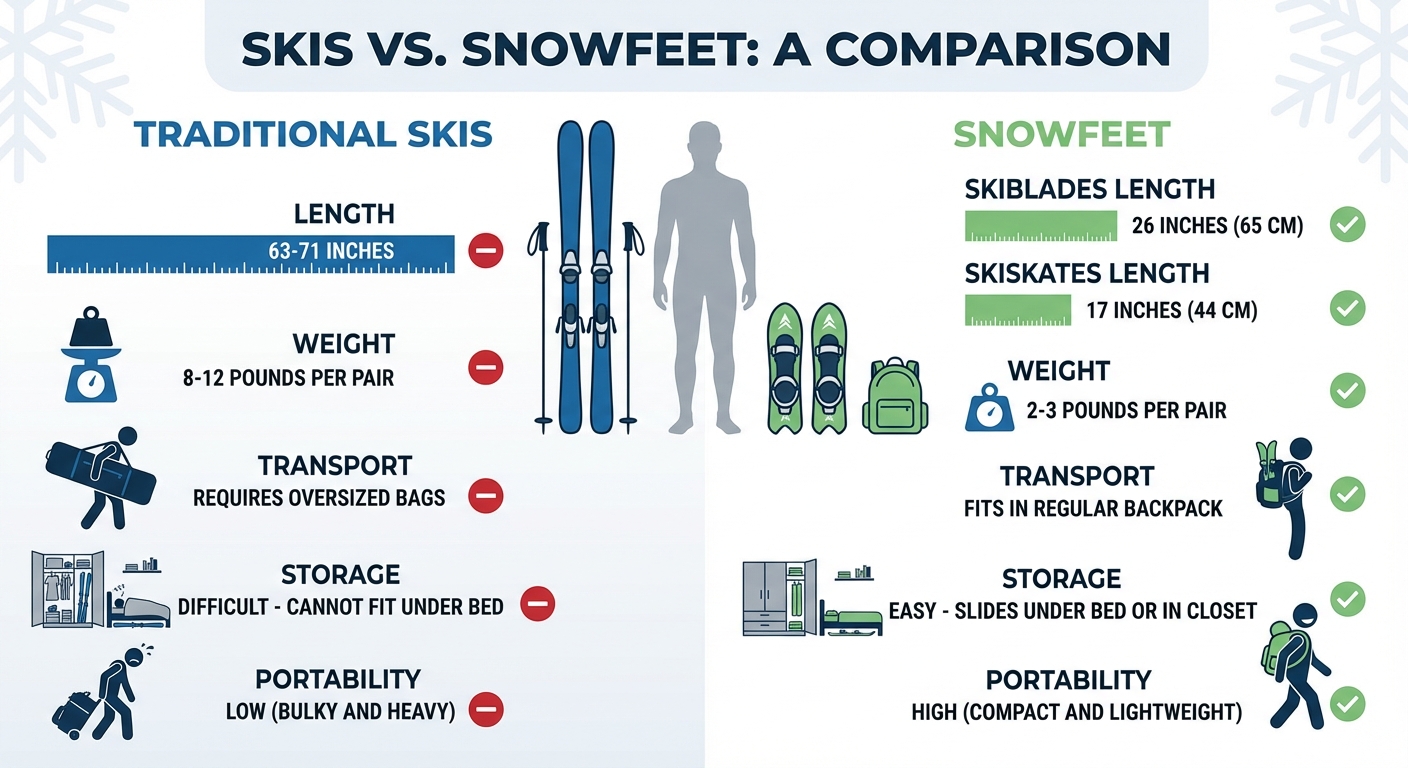
Snowfeet vs Traditional Skis: Size, Weight and Portability Comparison
Easy to Carry and Store
Traditional skis are no joke when it comes to size and weight. They’re usually around 63–71 inches long, weigh 8–12 pounds, and need oversized bags for transport. Plus, finding storage space can be a hassle - they’re not exactly “tuck under the bed” friendly. Snowfeet*, on the other hand, changes the game. Their Skiblades (26 inches) and Skiskates (17 inches) weigh just 2–3 pounds per pair. That’s light enough to toss in a regular backpack. And when you’re done? They slide neatly into a closet or under your bed. Easy access means you're more likely to hit the snow more often.
Learn Basic Skills Faster
The compact size of Snowfeet* gear isn’t just about portability - it’s also a huge help when learning. The shorter length makes turning and stopping feel way more intuitive, which means less frustration and more progress. Plus, their lightweight design reduces fatigue, letting you focus on mastering balance, edge control, and turning techniques. These are the building blocks of skiing, and they transfer seamlessly if you decide to try traditional skis later on. And since Snowfeet* works well in a variety of snow conditions, you’ll have even more chances to practice and improve.
Use on Different Types of Snow
One of the coolest things about Snowfeet* is that you’re not limited to ski resorts. Their gear works on packed snow, powder, backyard slopes, and even snowparks. Traditional skis often struggle outside groomed runs, but Snowfeet* thrives in all kinds of snowy environments. This means you can practice almost anywhere - no need for pricey lift tickets or long drives to a resort. It’s like having your own personal snow playground, no matter where winter takes you.
sbb-itb-17ade95
Getting the Most from Your Snowfeet* Gear
Making the most of your Snowfeet* gear isn't just about strapping them on and hitting the slopes. With a little care, the right clothing, and support from the community, you can speed up your learning curve - even without formal lessons.
Keep Your Gear in Good Condition
Taking care of your Snowfeet* gear is simple and pays off big time in performance and durability. After each session, rinse the bases with lukewarm water, then dry them with a microfiber cloth. This quick 5-minute step helps prevent corrosion, so your gear stays dependable whether you're carving through powder in Colorado or cruising icy trails in Vermont.
Don't skip the waxing. For smooth gliding, wax your gear every 3–5 sessions. Use a wax iron set to 110–120°F to apply a thin layer of wax, let it cool for 10 minutes, then scrape and brush. A basic $20 wax kit is all you need to do this at home. Bonus: this simple step can boost your speed by 10–15%.
- Use universal hydrocarbon wax for dry powdery snow.
- Opt for fluorinated wax on icy slopes.
- Softer waxes work best for wet spring conditions.
Don’t forget to inspect your straps and bindings weekly. Tighten loose screws with a 4mm Allen key and replace worn straps to avoid any mishaps. Store your gear in a dry spot at around 68°F to prevent warping. With these habits, you can extend your gear’s lifespan by 2–3 seasons.
Once your gear is ready, it’s time to gear up yourself.
Wear the Right Clothes
Dressing in layers is your best bet for staying comfortable while learning. Start with a moisture-wicking merino wool base layer, add an insulated fleece mid-layer, and top it off with a waterproof Gore-Tex shell. This combo keeps you warm and dry in temperatures ranging from 0–30°F, which are common at most US resorts.
Here’s what else you’ll need:
- A helmet with MIPS technology (starts at $100) for safety.
- Anti-fog goggles with category 2–3 lenses for visibility.
- Thick gloves and a neck gaiter for warmth.
- Flexible pants for easy movement.
- A down-filled jacket (550+ fill) for colder days or lighter synthetics for milder weather.
The right outfit ensures you're comfortable and ready to connect with others on the slopes.
Join the Snowfeet* Community
Learning on your own doesn’t mean you have to do it all alone. The Snowfeet* Facebook Group, with over 10,000 members, is a goldmine for tips, trip reports, and live Q&A sessions. Members often share drills and advice that can help you improve your skills up to 30% faster. You’ll also find handy resources like waxing photos, regional weather-specific clothing checklists, and solutions to common issues like loose straps on Skiskates.
For more structured help, check out the Snowfeet* YouTube channel. With tutorials that have racked up over 50,000 views, you’ll find everything from maintenance tips to progression drills like J-turns on 65 cm Skiblades. Community polls even show that 80% of users face fewer problems after following advice from fellow enthusiasts.
Conclusion
Snowfeet* gear gives you the freedom to learn skiing at your own pace, skipping the hassle of ski school. With the Snowfeet* Skiblades (65 cm) and Snowfeet* Skiskates (44 cm), you’ll enjoy better control and a quicker learning curve compared to traditional skis - no need for group lessons or strict schedules. It’s all about mastering the slopes your way.
Once you’ve honed your skills at home, take them to the mountains. The Snowfeet* YouTube channel offers free instructional videos to guide you through every step, whether you're carving through Colorado's powder or tackling Vermont's icy trails.
Don’t forget to keep your gear in top shape, dress for the weather, and connect with the growing Snowfeet* community to share tips and celebrate milestones. Grab your Snowfeet* gear and hit the slopes today!
FAQs
Is it safe to learn without ski school?
Yes, learning to ski on your own can be safe if you take the right precautions and use trustworthy resources. Gear designed for beginners, like Snowfeet Skiblades and Skiskates, can make learning easier by offering more control and a quicker learning curve. While formal lessons are helpful, plenty of beginners achieve success by combining preparation, safety practices, and step-by-step instructional videos to guide their journey.
Which Snowfeet* is best for beginners?
The Snowfeet Skiblades 65 cm* are a top pick for beginners, thanks to their user-friendly design and compact size. Their shorter length makes them easier to control, helping learners pick up skills more quickly and have more fun on the slopes. Plus, these mini skis are super portable and simpler to handle compared to traditional skis or snowboards, making them an excellent option for anyone new to snow sports.
Do Snowfeet* work at ski resorts?
Snowfeet* Skiblades, Skiskates, and mini skis are built for flexibility and convenience, making them a solid choice for most ski resorts. Their compact design and easy maneuverability make them a fun option for winter sports enthusiasts. That said, resort rules can differ, so it's smart to double-check with your chosen ski resort to see if Snowfeet* gear is permitted everywhere or if there are any restrictions.











Leave a comment
This site is protected by hCaptcha and the hCaptcha Privacy Policy and Terms of Service apply.