



















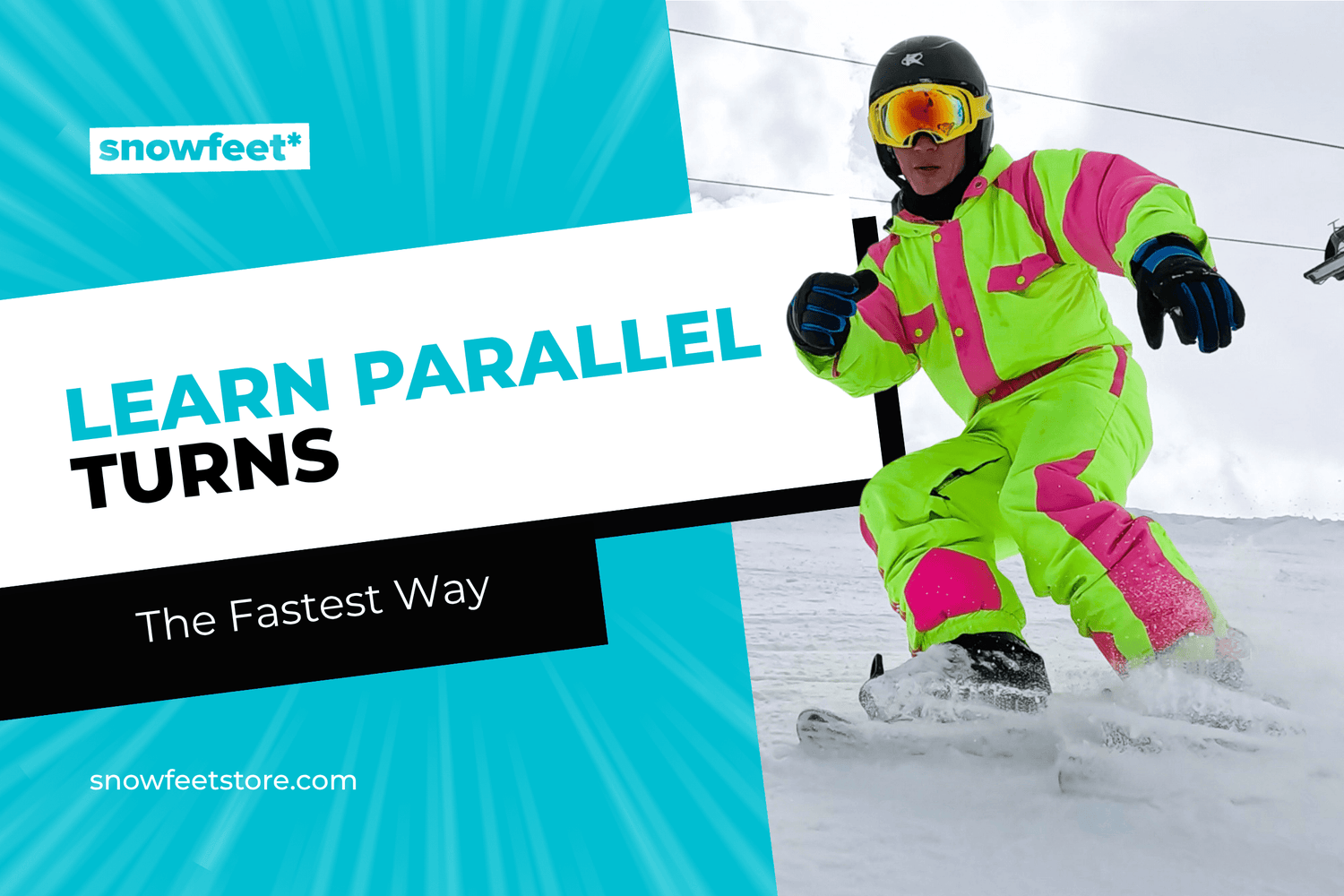
Learning parallel turns on skis doesn’t have to be a struggle. Here’s the key: short skis, like Snowfeet* Skiblades or Skiskates, make skiing easier and faster to learn compared to long skis. These shorter models are lightweight, highly responsive, and feel natural - especially if you’ve skated before. Plus, you can start mastering the basics in just minutes, no lessons required.
Why Short Skis Work Better
- Easier to maneuver: Short skis (17–47 inches) turn smoothly and require less effort.
- Faster learning curve: Avoid the long “pizza” phase and jump straight to parallel turns.
- Comfortable and portable: Works with regular winter shoes, snowboard boots, or ski boots, and fits in a backpack.
Quick Tips to Get Started
- Pick the right gear: Beginners may prefer 65 cm Skiblades ($635), while skaters might like 44 cm Skiskates ($575).
- Practice drills: Start with weight-shifting exercises and simple turns on gentle slopes.
- Focus on stance: Keep knees bent, weight centered, and skis hip-width apart.
With Snowfeet*, you’ll skip the hassle of bulky equipment and enjoy a fun, intuitive way to ski. Whether you’re a beginner or looking to refine your skills, this gear makes learning parallel turns faster and more enjoyable.
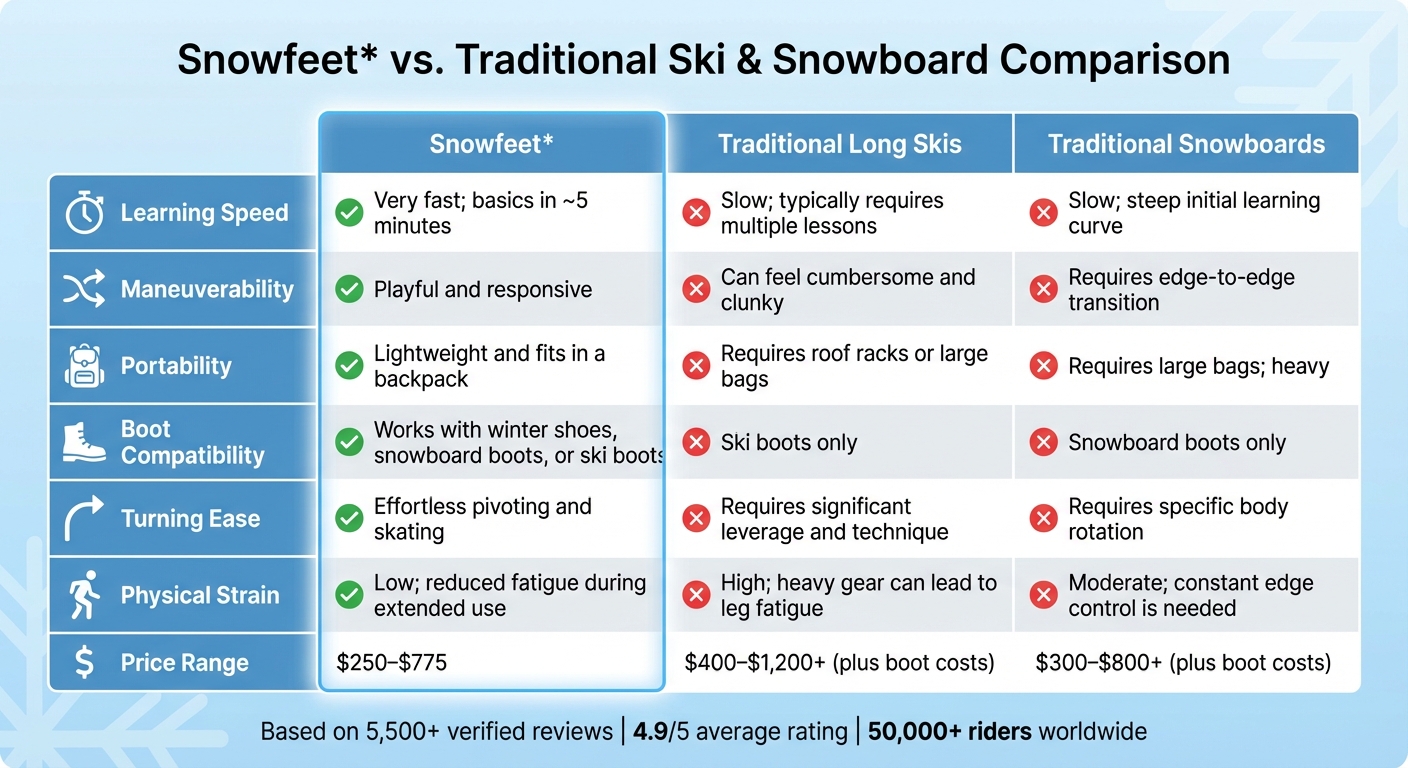
Snowfeet vs Traditional Skis and Snowboards Comparison Chart
Gear and Preparation: Getting Ready to Learn
Choosing Your Snowfeet* Model

Picking the right Snowfeet* gear is all about matching it to your skills and goals. The 99 cm Skiblades (starting at $675) are great for stability and mastering those quick parallel turns. If you’ve got some skating experience, the 44 cm Skiskates (from $575) might feel more natural. Beginners, on the other hand, might lean toward the 65 cm Skiblades (from $635) for an extra dose of stability. Compared to traditional skis (which can be 67–75 inches long), these shorter models make handling easier. With over 50,000 riders worldwide and an impressive 4.9 average rating from more than 5,500 verified reviews, Snowfeet* gear has earned its reputation for performance and ease of use. Once you’ve chosen your model, make sure your setup is dialed in for maximum control.
Setting Up Your Gear and Finding Your Stance
After picking your Snowfeet* model, it’s time to focus on your stance. A good stance is the foundation for smooth, controlled parallel turns. Here’s what to aim for:
- Keep your knees slightly bent and your shins leaning forward.
- Position your skis about hip-width apart.
- Hold your hands at waist level for balance.
- Lean your torso forward so your shoulders are slightly ahead of your hips.
Because Snowfeet* products are shorter than regular skis, staying centered over your feet is crucial. Think of it like ice skating - your weight naturally stays centered over the blades for better control. Before diving into parallel turn drills, head to a wide, gentle slope where you feel completely at ease. Whether it’s a beginner-friendly area or a mellow blue run, the goal is to fine-tune your technique without worrying about steep or intimidating terrain.
Parallel Skiing 101 - 4 Drills for Parallel Turns
4 Drills to Master Parallel Turns
Using the nimble design of Snowfeet* gear, these drills can quickly sharpen your parallel turning skills.
Drill 1: Lifting the Uphill Ski
Find an easy slope and start with gentle turns. At the end of each turn, lift the tail of your uphill ski and lightly tap it on the snow. This action shifts your weight onto the downhill ski and helps align both skis parallel. Thanks to Snowfeet*’s maneuverability, this movement feels smooth and intuitive. Keep repeating this on each side until bringing your skis parallel becomes second nature. This drill also lays the groundwork for mastering weight transfer, which is key for side slipping.
Drill 2: Side Slipping with Parallel Edges
Move to a moderate slope and position your skis parallel across the fall line, keeping them hip-width apart. Relax your feet and shins to release the edges, allowing you to slide sideways. To control your speed, roll both skis back onto their edges at the same time - Snowfeet*’s metal edges provide excellent grip for this. Practice sliding and stopping until you feel confident. This skill is crucial for initiating smooth parallel turns.
Drill 3: Diagonal Traverses and Half Turns
Ski diagonally across the slope with your skis parallel, then execute a controlled half-turn to switch directions. The 99 cm Skiblades are designed to give you precise control and quick turning ability. Focus on making smooth, arcing C-turns rather than abrupt movements. Start by keeping a slight wedge and bringing your skis parallel toward the end of each turn. As you get more comfortable, try matching your skis earlier in the turn. This gradual approach helps you build the coordination needed for full parallel turns. Once you’re comfortable with the basics, use these techniques to make fluid stops and directional changes.
Drill 4: Linking Parallel Stops and J-Turns
Now, put everything together. Begin with a parallel turn, then perform a hockey stop by turning both feet simultaneously and evenly distributing your weight. From the stopped position, release your edges and make a J-shaped turn in the opposite direction. Snowfeet*’s lightweight and responsive design makes these movements feel as smooth as transitioning on ice skates. If linking turns feels tricky, focus on perfecting one turn at a time. These drills, when combined, help you tap into the full capabilities of Snowfeet*, giving you the confidence and control to tackle the slopes like a pro.
sbb-itb-17ade95
Why Snowfeet* Beats Traditional Skis and Snowboards for Learning
When it comes to mastering parallel turns, the gear you choose can make all the difference. Traditional skis and snowboards often demand extensive lessons, but Snowfeet* simplifies the process with just a quick 5-minute learning curve. Let’s dive into what makes Snowfeet* stand out.
Key Benefits of Snowfeet* Short Skis
The compact size of Snowfeet* is a game-changer. With lengths ranging from 44 cm (about 17 inches) to 120 cm (around 47 inches), these short skis are designed to reduce fatigue and give you greater control. For example, the 99 cm Skiblades are lightweight, which means less strain on your legs during longer practice sessions. This makes it easier to focus on learning rather than battling heavy equipment.
What really sets Snowfeet* apart is how natural they feel, especially for anyone familiar with ice skating or inline skating. The movement feels intuitive, helping you bypass the long snow plow phase that’s typical with traditional skiing. Instead, you’ll find yourself transitioning to parallel turns much faster.
Another big advantage is the forgiving design. With traditional skis, turning often requires precise technique and significant leverage. Snowfeet*, on the other hand, responds to even slight movements, making it easier to correct mistakes and stay in control. This responsiveness has earned Snowfeet* glowing reviews - more than 5,500 verified users have rated them an impressive 4.9 out of 5 stars.
And here’s the kicker: Snowfeet* fits in a backpack. Unlike traditional skis that require roof racks or large storage bags, these short skis are easy to carry and store. They’re also compatible with regular winter shoes, snowboard boots, or ski boots, so there’s no need for rigid alpine ski boots. Whether you’re on groomed slopes, hiking trails, or even sledding hills, Snowfeet* gives you plenty of opportunities to practice those parallel turns.
Comparison Table: Snowfeet* vs. Traditional Ski and Snowboard Brands
Here’s a side-by-side look at how Snowfeet* stacks up against traditional skis and snowboards:
| Feature | Snowfeet* | Traditional Long Skis | Traditional Snowboards |
|---|---|---|---|
| Learning Speed | Very fast; basics in ~5 minutes | Slow; typically requires multiple lessons | Slow; steep initial learning curve |
| Maneuverability | Playful and responsive | Can feel cumbersome and clunky | Requires edge-to-edge transition |
| Portability | Lightweight and fits in a backpack | Requires roof racks or large bags | Requires large bags; heavy |
| Boot Compatibility | Works with winter shoes, snowboard boots, or ski boots | Ski boots only | Snowboard boots only |
| Turning Ease | Effortless pivoting and skating | Requires significant leverage and technique | Requires specific body rotation |
| Physical Strain | Low; reduced fatigue during extended use | High; heavy gear can lead to leg fatigue | Moderate; constant edge control is needed |
| Price Range | $250–$775 | $400–$1,200+ (plus boot costs) | $300–$800+ (plus boot costs) |
With over 50,000 riders around the world backing its benefits, Snowfeet* has proven itself as a top choice for quick and easy learning. As Andrew B. put it:
"These skiblades are so much fun and easy to control. Never going back to regular skis".
Conclusion: Learn Parallel Turns Faster with Snowfeet*
Learning parallel turns doesn’t have to be a slow or frustrating process. With Snowfeet* products, you can skip the lengthy snow plow phase and start carving smooth, controlled turns almost immediately. Whether you go for the compact 44 cm Skiskates, the 99 cm Skiblades, or the 120 cm Short Skis, their maneuverability and responsiveness offer an edge over traditional ski setups.
Using the drills mentioned earlier - like lifting the uphill ski, side slipping, and linking J-turns - becomes much simpler with Snowfeet* gear. Their responsive design means you can focus on improving your technique instead of wrestling with your equipment. This makes the learning process smoother and helps you refine your form faster.
Snowfeet* also shine when it comes to affordability and convenience. Priced between $250 and $775, they’re a budget-friendly alternative to traditional ski setups, which often start at $400 and can climb well over $1,200 - excluding boots. Plus, their lightweight and compact design makes them easy to carry in a backpack, so you can practice anywhere from groomed slopes to hiking trails or even your neighborhood sledding hill.
Whether you’re brand new to skiing or looking to sharpen your skills, Snowfeet* offers an accessible and fun way to break down barriers to learning. They’re forgiving, easy to use, and designed to build confidence quickly. Experts agree - they make hitting the slopes intuitive and enjoyable.
FAQs
Which Snowfeet* model is best for learning parallel turns?
The shorter Snowfeet models - like the 65 cm, 99 cm, or 120 cm Skiblades, and the 44 cm Skiskates - are ideal for learning parallel turns. These compact skis are perfect for beginners and intermediate riders because they’re easier to handle and offer better control. That means you can pick up parallel turns much faster. Unlike traditional skis or snowboards, Snowfeet products make the learning process simpler and more beginner-friendly.
Do I need ski boots, or can I use winter shoes?
You don’t need traditional ski boots to enjoy Snowfeet products. Both Snowfeet Skiblades and Skiskates are made to work with your regular winter shoes or boots. This makes them a great option for beginners or anyone looking for a simpler way to hit the slopes. Unlike traditional skis, which require pricey, specialized boots for proper control and safety, Snowfeet focuses on comfort and convenience. So, you can dive into snow sports without the hassle - or the weight - of ski boots.
Can I learn parallel turns without lessons on Snowfeet*?
Yes, you can absolutely learn parallel turns on your own using Snowfeet*. These short skis and skiblades are built for easy control and smooth handling, making them a great option for beginners and intermediate skiers. With some practice, focusing on drills and maintaining proper posture (as demonstrated in tutorials), you can improve your skills independently. While lessons can be helpful, the design of Snowfeet makes it easier to pick up parallel turns with consistent effort and good technique.











Leave a comment
This site is protected by hCaptcha and the hCaptcha Privacy Policy and Terms of Service apply.