



















Teaching kids to ski in 2026 is easier than ever, thanks to lightweight gear like Snowfeet* Skiblades and Skiskates and playful learning methods. These shorter skis (44–65 cm) are easy to control, helping kids avoid common frustrations like crossed tips and awkward falls. Here’s the quick rundown:
- Start at home: Practice balance and walking in ski boots indoors or on flat surfaces like carpet or grass.
- Use the right gear: Snowfeet* products are compact, light (1–2 lbs), and allow kids to move naturally, making skiing feel like walking or skating.
- Keep it fun: Turn lessons into games like "Red Light, Green Light" or "Follow the Leader" to teach stopping and turning.
- Safety first: Invest in a helmet, UV goggles, and waterproof clothing to keep kids warm and protected.
With this approach, many kids as young as three can ski independently on beginner slopes in just a few days. The key? Keep it playful, use the right equipment, and celebrate small wins.
For gear options, check out Snowfeet MINI KIDS and other beginner-friendly products at snowfeetstore.com.
Getting Ready Before the First Ski Trip
Practice at Home First
Your living room or backyard can be a great place to start preparing for the slopes. Have your child practice balancing and walking around in their ski boots indoors. This helps them get used to the feel of the boots. Once they’re comfortable, take it up a notch by practicing outdoors. Start with one ski at a time - this makes it easier for them to learn how to handle the equipment without feeling overwhelmed. Flat surfaces like grass or carpet work best for these early steps.
Another helpful tool for home practice is the Edgie Wedgie. This handy little device connects the tips of your child’s skis, making it easier for them to form the wedge - or "pizza" - shape that’s key for stopping. You can even practice the snowplow technique on carpet! The key here is to go at your child’s pace. There’s no need to rush through these basics - let them build confidence one step at a time.
Once they’ve mastered these fundamentals, it’s time to gear up for outdoor adventures.
What Gear Your Child Needs
Before heading to the mountain, make sure you’ve got all the essentials. Start with a certified helmet - it’s not just for safety; it’s also warmer than a regular hat. Add UV-protection goggles, waterproof insulated gloves, and moisture-wicking, waterproof outerwear. Staying dry is crucial because wet clothes can quickly lead to your child getting cold - and that’s a fast track to losing interest in skiing.
When it comes to skis, consider Snowfeet* Skiblades (65 cm/26 in) or Skiskates (44 cm/17 in). These shorter, ultra-light skis are much easier for kids to handle than traditional ones. They’re light enough for your child to carry on their own, and their compact size reduces the chances of crossed tips - a common issue with longer skis that can lead to falls. Plus, they’re super easy to transport and perfect for indoor or backyard practice. Unlike traditional skis that require more technical skills, Snowfeet* products let kids move naturally, almost like walking, which helps them learn faster.
Teach kids Skiing the RIGHT way!
Picking the Best Equipment for Young Skiers
Snowfeet vs Traditional Skis Comparison for Kids
Why Snowfeet* Works Best for Kids

Once you've prepared at home, the next step is finding the right equipment. Snowfeet* gear is designed to make learning to ski easier and more enjoyable for kids, keeping things simple and fun.
The main issue with traditional skis? They're too long and heavy for smaller bodies, which often leads to crossed tips and balance struggles. Snowfeet* Skiblades (65 cm/26 in) and Skiskates (44 cm/17 in) solve these problems with their lightweight, compact design.
Weighing just 1–2 lbs per pair compared to the 4–6 lbs of traditional skis, Snowfeet* gear is easy for kids to carry themselves. This builds their independence and confidence. Plus, the shorter length eliminates tip-crossing, so kids can focus on having fun instead of wrestling with oversized equipment.
"Snowblades are much shorter and lighter, making it easier for kids to learn to turn, stop, and control their speed." - Snowfeet Team
The compact design encourages natural movements, similar to walking or skating. Most kids can pick up the basics in just 1–2 days - much faster than the 3–5 days it often takes with traditional skis.
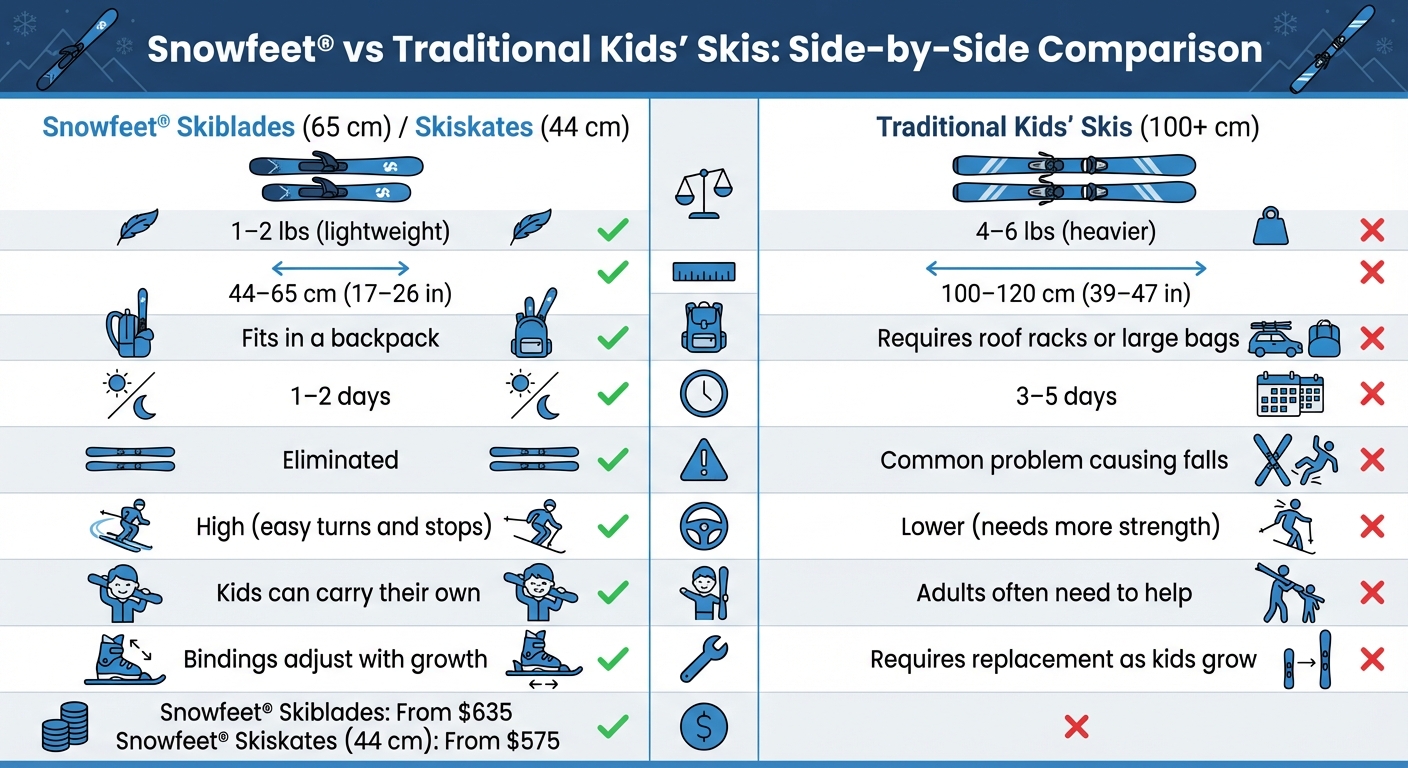
Snowfeet* vs. Traditional Skis: Side-by-Side Comparison
Here’s a quick look at how Snowfeet* stacks up against traditional kids' skis:
| Feature | Snowfeet* Skiblades (65 cm) / Skiskates (44 cm) | Traditional Kids' Skis (100+ cm) |
|---|---|---|
| Weight | 1–2 lbs (lightweight) | 4–6 lbs (heavier) |
| Length | 44–65 cm (17–26 in) | 100–120 cm (39–47 in) |
| Portability | Fits in a backpack | Requires roof racks or large bags |
| Learning Time | 1–2 days | 3–5 days |
| Tip Crossing | Eliminated | Common problem causing falls |
| Ease of Control | High (easy turns and stops) | Lower (needs more strength) |
| Carrying | Kids can carry their own | Adults often need to help |
| Adjustability | Bindings adjust with growth | Requires replacement as kids grow |
Another bonus? Snowfeet* gear comes with adjustable bindings, so you won’t need to replace it every year as your child grows. Traditional skis, on the other hand, often need professional remounting or complete replacement, which can cost hundreds of dollars over time. Snowfeet* Skiblades start at $635, and the 44 cm Skiskates are priced from $575. It’s a smart investment that can last for multiple seasons.
sbb-itb-17ade95
How to Teach Your Child to Ski: Step-by-Step
Keep It Fun and Positive
Ski lessons don’t have to feel like boot camp! Kids learn best when they’re enjoying themselves, so focus on turning practice into play. Try games like "Red Light, Green Light" to teach stopping or "Follow the Leader" to help them copy your turns and body movements. These games make learning feel natural and keep the mood light.
Skip the poles for now. Without them, kids can concentrate on balance and finding their center of gravity. If you’re using Snowfeet* gear, the lightweight design makes it even easier for kids to balance. It’s kind of like skating or walking - it feels familiar and helps them adjust quickly. Once they’re comfortable, you can move on to teaching basic gliding and stopping skills.
Start with Gliding and Stopping
After some fun warm-up games, it’s time to dive into the basics: gliding and stopping. Begin on flat terrain and let your child "walk" around in their Snowfeet*. This helps them get used to the feel of the gear, which mimics the motion of ice skating. Once they’re steady, encourage them to try longer glides by gently guiding them or giving a little push on a mild slope.
Stopping is the next big skill. Teach them the "pizza" or wedge position - toes pointed inward, heels pushed outward. This move is simpler with Snowfeet* Skiblades or Skiskates since there’s no extra length to trip them up. Practice this wedge shape on a gentle slope, and once they can stop while gliding, they’re ready to tackle easy hills.
Move to Easy Slopes
When they’ve nailed the basics, it’s time to hit the bunny hill. Start with small slopes that have magic carpets or rope tows. These beginner-friendly lifts make things less intimidating and let kids focus on enjoying the ride. Early runs should be all about confidence-building, not perfection. Snowfeet* gear makes this stage easier, too - its short, intuitive design helps kids control their speed and start making simple turns.
Keep an eye out for signs of tiredness, and don’t overdo it. Short sessions of 30–45 minutes work best to keep them engaged. Celebrate every little win - it’ll keep their excitement high and make them eager to come back for more.
Keeping Kids Safe on the Slopes
Teaching Kids Basic Slope Safety
Safety on the slopes doesn’t have to feel like a chore for kids - it’s all about keeping things simple and fun. Teach your child the basics: controlling speed, watching out for other skiers, and sticking to beginner-friendly runs. Remind them to always yield to skiers ahead, check uphill before starting, and avoid stopping in the middle of trails where they might be hidden from view.
You can turn safety lessons into fun activities. For instance, play a "ski patroller" game where older kids help younger ones pick up fallen gear, or try "formation skiing" to practice keeping safe distances and regrouping. Introducing trail markers - green for easy runs, blue for intermediate, and black for advanced - helps kids understand the importance of staying within their ability level.
To support safe learning, Snowfeet* gear offers a compact design that reduces momentum during falls, making it easier for kids to stay in control. Combine these safety tips with properly fitted gear to ensure a secure experience on the slopes.
Using the Right Safety Gear
Knowing the rules is only half the battle - having the right safety gear is just as critical. A helmet that fits well can reduce the risk of severe head injuries by 51–60%. Make sure the helmet sits level on your child’s head, about an inch above the eyebrows, and stays snug as they move. Pair it with UV-protective goggles to shield their eyes from snow glare and improve visibility in changing light.
Boots are another key piece of the puzzle. They should fit snugly but be comfortable, with about 1–2 finger-widths of space behind the heel and toes that lightly touch the front while still being able to wiggle. Encourage your child to practice walking and jumping in their boots at home to get used to the feel. Don’t forget waterproof gloves or mittens (swap them out if they get wet to prevent frostbite) and sunscreen to protect any exposed skin.
Bindings are often overlooked but are vital for safety. A professional should adjust them based on your child’s weight and height to ensure they release properly during a fall. Ill-fitting gear is linked to 20–30% of beginner injuries, so getting the right fit is essential. Snowfeet* products are designed to work seamlessly with standard ski boots, offering a lightweight option that reduces frustration and helps kids stay safe and confident on the slopes.
Conclusion: Setting Your Child Up for Skiing Success
Helping kids learn to ski can be a smooth and enjoyable process with the right preparation, patience, and gear. Start at home - have your child practice walking around in their ski boots to get used to the feel of the equipment. By the time you hit the slopes, they'll already have some confidence. Keep those first sessions short, focus on having fun rather than getting everything right, and use games like "Follow the Leader" or "Simon Says" to make the experience playful and exciting. This foundation lays the groundwork for choosing the right gear.
Speaking of gear, it’s key to making skiing easier and more fun for young learners. Snowfeet* offers products like Skiblades (65 cm/26 in) and Skiskates (44 cm/17 in), which are specifically designed with kids in mind. Their compact, lightweight design makes it easier for children to control their movements, maintain balance, and learn to turn with less effort. Plus, they’re portable, so getting to and from the slopes is a breeze.
With proper instruction and a step-by-step approach, many kids as young as 3 years old can ski independently on beginner slopes within just a few days. Success comes from building confidence gradually - starting with flat-ground practice, moving to simple gliding, and eventually tackling gentle slopes. Celebrate every small win, take frequent breaks, and ensure safety by using helmets and goggles that fit well. Combining this fun, play-based method with Snowfeet*’s kid-friendly gear creates a safe and positive learning environment.
Check out snowfeetstore.com to see the full range of Snowfeet* products tailored for young beginners. From Snowfeet* MINI KIDS to beginner-friendly Skiblades, you’ll find lightweight and portable options that turn learning into an adventure your child will look forward to every time.
FAQs
What age can kids start skiing?
Children can begin skiing as early as 4 years old, which is often seen as a great age to introduce them to the slopes. Gear like Snowfeet Skiblades and Skiskates is specifically designed with young beginners in mind. These shorter and lighter options make it easier for kids to learn, ensuring a safer and more enjoyable experience. They’re perfect for helping little ones gain confidence and have fun while picking up the basics of skiing.
Should my child use Snowfeet* or regular skis first?
For beginners, especially kids, Snowfeet* products like Skiblades or Skiskates are a fantastic way to get started. They’re easy to use, lightweight, and much simpler to control, which helps children develop balance and confidence more quickly than traditional skis. While longer skis are ideal for mastering advanced techniques, starting with Snowfeet offers a fun and low-pressure way to ease into skiing. Plus, it makes switching to full-sized skis feel like a natural next step.
Do Snowfeet* work with my kid’s ski boots?
Snowfeet* products work seamlessly with regular winter boots, eliminating the need for specialized ski boots. Their lightweight and shorter design make them much easier to manage than traditional skis, which is a big plus for kids learning the ropes. This compatibility with standard winter footwear means children can enjoy skiing without requiring extra gear, making the experience both fun and hassle-free.













Leave a comment
This site is protected by hCaptcha and the hCaptcha Privacy Policy and Terms of Service apply.