



















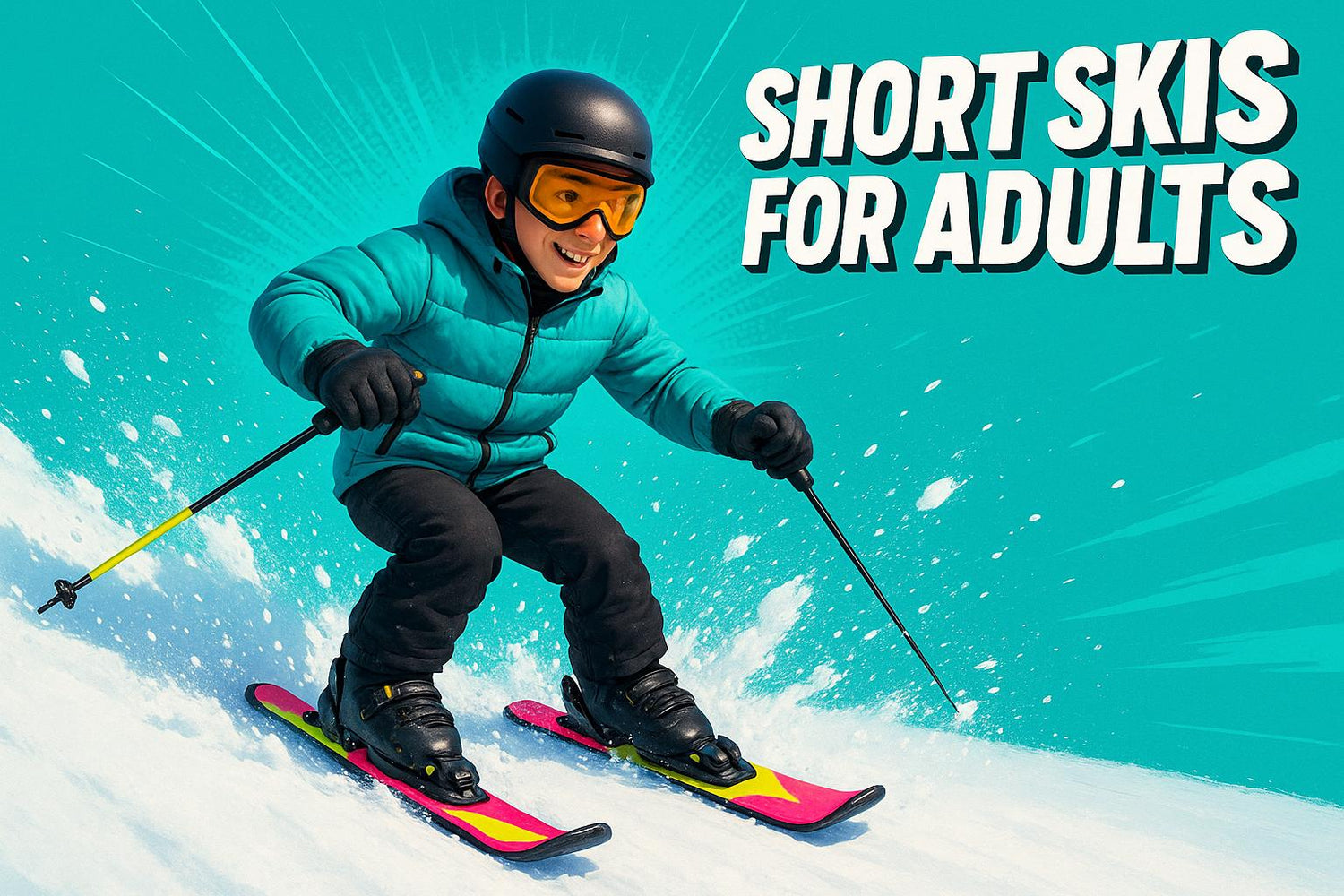
Learning to ski as an adult can feel daunting, but short skis are making it easier than ever. Unlike long skis, which are heavy and harder to control, short skis are lightweight, responsive, and beginner-friendly. Brands like Snowfeet offer skis as short as 17 inches, designed to help you turn, stop, and balance with less effort. They’re perfect for building confidence and enjoying the slopes without the intimidation of bulky gear.
Key Benefits of Short Skis:
- Easier control for faster learning.
- Lightweight and portable - fits in a backpack!
- Compatible with standard ski or snowboard boots (no need for extra gear).
- Great for beginners, kids, and even seniors.
Snowfeet’s models range from 44 cm to 120 cm, catering to different skill levels and preferences. Whether you’re cruising easy trails or trying tricks in the park, short skis make skiing more accessible, fun, and less tiring. Ready to hit the slopes? Short skis might just be the boost you need to start your skiing journey.
Are Short Skis Better for Beginners?
Main Benefits of Learning to Ski with Short Skis
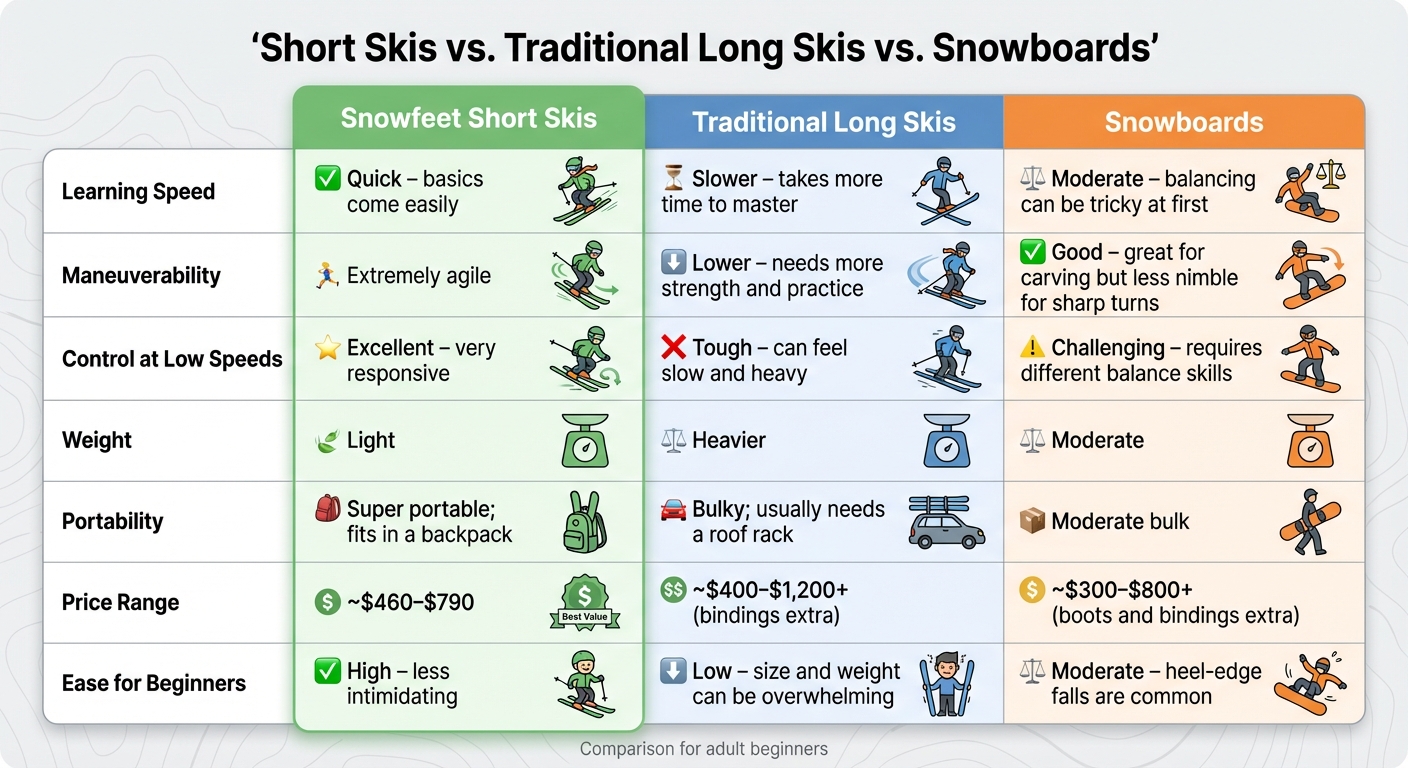
Short Skis vs Traditional Long Skis vs Snowboards Comparison Chart
Better Control and Faster Learning
Short skis can make learning to ski a lot easier and quicker. With lengths ranging from about 17 to 47 inches for Snowfeet* models, they’re much simpler to handle than traditional skis, which are typically 5 to 6 feet long. Their compact size allows for faster responses to your movements, making it easier to master essential skills like turning, stopping, and keeping your balance.
Snowfeet* short skis are designed with a soft, forgiving flex that helps smooth out turns and reduces the chances of catching an edge. The wider waist adds extra stability, which is especially helpful for beginners.
As the team at Snowfeet puts it:
"They're lighter, easier to control, so it's simpler for beginners to turn and stop. They require less effort, boosting your confidence and balance quickly. Snowfeet skis make learning more fun!"
– Snowfeet Store
These features set Snowfeet* short skis apart from traditional equipment, as outlined below.
Short Skis vs. Traditional Long Skis and Snowboards
Here’s a quick comparison of Snowfeet* short skis with traditional long skis and snowboards:
| Feature | Snowfeet* Short Skis | Traditional Long Skis | Snowboards |
|---|---|---|---|
| Learning Speed | Quick – basics come easily | Slower – takes more time to master | Moderate – balancing can be tricky at first |
| Maneuverability | Extremely agile | Lower – needs more strength and practice | Good – great for carving but less nimble for sharp turns |
| Control at Low Speeds | Excellent – very responsive | Tough – can feel slow and heavy | Challenging – requires different balance skills |
| Weight | Light | Heavier | Moderate |
| Portability | Super portable; fits in a backpack | Bulky; usually needs a roof rack | Moderate bulk |
| Price Range | ~$460–$790 | ~$400–$1,200+ (bindings extra) | ~$300–$800+ (boots and bindings extra) |
| Ease for Beginners | High – less intimidating | Low – size and weight can be overwhelming | Moderate – heel-edge falls are common |
These qualities not only make short skis easier to use but also help build confidence as you learn.
More Confidence and Comfort for Adult Learners
Short skis are great for easing fears of falling. They let you stop quickly and make precise turns, which naturally boosts your confidence and comfort on the slopes.
Another perk? They’re less physically demanding. Traditional long skis can wear out your legs and joints quickly, but Snowfeet* short skis are lighter and less tiring, letting you enjoy longer sessions on the mountain. Many U.S. resorts, like Vail, Park City, and Breckenridge, have beginner-friendly trails that pair perfectly with the agility of short skis.
Customer Daniel Siouffi summed it up beautifully after trying Snowfeet* products:
"Your product is indeed the best and thank you for allowing me to rediscover the joy and happiness of skiing with such ease and with so much control."
– Daniel Siouffi, Snowfeet Customer
How to Choose the Right Snowfeet* Short Skis

Snowfeet* Short Ski Models Explained
Snowfeet* has four main models, each tailored to different skill levels and riding preferences. Let’s break them down:
- 44 cm Skiskates ($460): These are the shortest and offer a skate-like experience. Designed for use with snowboard bindings, they’re perfect for riders who love agility and performing tricks.
- 65 cm Skiblades ($520): These strike a balance between skiing and skating. As Snowfeet* describes, they’re "long enough to ski, short enough to skate", making them great for tricks, jumps, and twists on slopes or in snow parks. You can choose between ski bindings or snowboard bindings.
- 99 cm Skiblades ($560): Known as "the ultimate skiboards", these are long enough for deep carving while still offering freedom of movement. They handle powder better than shorter models and come with three binding options: standard ski bindings, pro ski bindings, or snowboard bindings.
- 120 cm Short Skis ($760): The longest in the lineup, these are built for riders who want an incredible carving experience. They come exclusively with pro ski bindings and are designed for regular ski boots. At nearly 4 feet long, they’re still shorter than traditional skis (which are usually 5–6 feet), giving you better control without sacrificing performance.
Each model has customer ratings between 4.9 and 5.0 stars, so you’re in good hands no matter which one you pick.
Now, let’s look at how Snowfeet* bindings make these skis even more versatile.
Bindings and Boot Compatibility
One of the standout features of Snowfeet* skis is their compatibility with boots you probably already own. Unlike traditional ski gear that often requires pricey, specialized boots and bindings, Snowfeet* products are designed to work with standard footwear. This can save you hundreds of dollars while making the setup much simpler.
Here’s a quick breakdown of binding options by model:
- 65 cm Skiblades: Available with ski bindings or snowboard bindings.
- 99 cm Skiblades: Offers three choices - standard ski bindings, pro ski bindings, or snowboard bindings.
- 120 cm Short Skis: Comes with pro ski bindings designed for regular ski boots.
The adjustable bindings are also beginner-friendly, offering softer flexibility to make learning easier. Snowfeet* keeps things simple and affordable, so you can focus on enjoying the slopes.
With bindings sorted, let’s talk about picking the right size for your needs.
Size Guide for Adults
Choosing the right size depends on your goals on the mountain. Here’s how the different lengths stack up:
- 44–65 cm (17–26 inches): These shorter models are highly maneuverable, making them ideal for beginners or anyone focused on tricks and snow park fun.
- 99 cm (39 inches): A versatile option that balances carving ability and agility. It’s great for riders who want to explore powder and still pull off some tricks.
- 120 cm (47 inches): Perfect for those who prioritize carving and want a ride that feels closer to traditional skiing but with better control.
Unlike traditional skis, height and weight aren’t as critical with short skis. However, here’s a general guideline:
- Riders over 200 lbs (91 kg): The 99 cm or 120 cm models provide more stability.
- Riders under 150 lbs (68 kg): The 44 cm or 65 cm models are easier to handle.
Ultimately, it’s all about matching the ski length to your style. Go shorter for tricks and learning, or longer for carving and tackling varied terrain. Pick the one that suits your vibe on the slopes!
sbb-itb-17ade95
How to Learn Skiing Faster with Short Skis
First Day Tips for Short Ski Beginners
When you’re starting out with short skis, the key is to focus on balance and getting used to the feel of having skis strapped to your feet. Begin on flat ground with your skis positioned shoulder-width apart and parallel. Practice small jumps while keeping the skis flat - this helps you get a sense of their weight and how they respond beneath you.
Before you even start sliding, work on body movement. Try twisting your hips, knees, and feet to one side while counter-balancing with your upper body and arms. This exercise can even be done at home to help improve core control. Once you’re on the snow, you’ll find that the shorter length of Snowfeet* skis makes these movements feel more intuitive and less intimidating compared to traditional long skis.
When it’s time to start moving, stick to a gentle green run or a flat area. Keep your knees bent to absorb any bumps and maintain control. If you feel yourself losing balance, lean slightly forward and extend your arms for stability. Thanks to their shorter length, Snowfeet* skis allow for quicker edge-to-edge transitions and easier pivoting, helping you pick up basic turns faster than you would on longer, traditional skis. Once you’re comfortable with the basics on easier terrain, you’ll naturally feel ready to tackle more challenging runs.
How to Progress During Your First Season
After building a foundation on your first day, short skis make it easier to advance from green to blue runs. Snowfeet* skis are designed to make progression feel seamless and enjoyable. Their lighter weight and greater maneuverability allow you to practice key skills like turning, balancing, and speed control without feeling overwhelmed. For adults, this means mastering these techniques faster than with traditional skis.
The forgiving flex and nimble design of Snowfeet* skis also help make turning smoother and reduce the risk of catching an edge, which can often lead to falls. As you gain confidence, you’ll likely want to explore different types of terrain. By mid-season, many beginners using Snowfeet* skis feel ready to try small park features or venture onto varied slopes - often much sooner than they would with standard skis. Consistent practice and gradually challenging yourself with steeper runs will help you improve steadily.
Safety Gear for Beginners
Even though Snowfeet* short skis provide better control and are lighter than traditional skis, wearing the right safety gear is still essential. Always wear a helmet to protect your head in case of falls. Goggles or sunglasses are a must to shield your eyes from glare and wind, and don’t forget sunscreen - UV rays reflecting off the snow can be intense.
Dress in layers to stay warm and dry. A waterproof jacket, pants, thermal underwear, and gloves are all good choices. Moisture-wicking socks will keep your feet comfortable throughout the day. Make sure your ski boots fit well and provide solid support. Snowfeet* bindings are designed with a softer flex and lower release settings to reduce injury risk for beginners.
"Mini skis are an excellent option for beginners because they're easier to control than long skis. Their shorter length makes turning and stopping a lot simpler, which allows new skiers to focus on mastering the basic techniques without feeling overwhelmed." - Snowfeet Team
While Snowfeet* short skis naturally reduce speed and offer enhanced control, which lowers the risk of injury compared to traditional skis, wearing proper gear is still critical as you learn and progress.
Practical Benefits of Short Skis for U.S. Skiers
Easy to Carry and Travel With
Snowfeet* short skis, ranging from just 17 to 47 inches, make traveling with ski gear a breeze. Their small size eliminates the headaches of lugging around bulky traditional skis, making them perfect for road trips or flights to ski destinations.
"Another major perk is that short skis are lightweight and easy to carry. If you've ever struggled with hauling heavy, bulky skis around the mountain, you'll appreciate how easy it is to slip a pair of short skis into a backpack and hit the trail." - Snowfeet Team
Unlike traditional skis from brands like Rossignol or K2 - which often require roof racks or oversized luggage - Snowfeet* short skis fit easily into most car trunks. For skiers flying to hotspots like Colorado or Utah, this compact design can save you $50–$150 in airline baggage fees.
This portability doesn’t just make life easier - it also keeps your wallet happy.
Cost Breakdown: Snowfeet* vs. Traditional Ski Gear
Skiing doesn’t have to break the bank. A Snowfeet* 100 CM Fiberglass model with bindings costs $420*, while a traditional Rossignol Experience 76 Ci goes for $499.95. That’s an upfront savings of nearly $80.
The savings don’t stop there. Traditional skis typically require specialized ski boots, which can add $150–$300 to your expenses. Snowfeet* bindings, on the other hand, are compatible with both standard ski boots and snowboard boots. If you already own boots, you can skip that extra cost entirely. Plus, since these skis don’t require poles, you’ll save an additional $30–$60 compared to a conventional setup.
In short, Snowfeet* short skis offer a budget-friendly way to hit the slopes without compromising on performance.
Best U.S. Terrains and Conditions for Short Skis
Snowfeet* short skis are tailor-made for groomed runs, which are a staple at many U.S. ski resorts. Whether you’re tackling smaller hills in the Midwest or heading to big-name destinations like Vail or Park City, these skis excel on well-maintained slopes. They’re also a hit in terrain parks and for freestyle skiing, making them a favorite for park and urban skiers.
For beginners, local hills and small ski areas are ideal. These spots often have gentle slopes and smaller vertical drops, providing a more relaxed and affordable environment for learning . Plus, they tend to be less crowded than major resorts, giving new skiers plenty of space to practice their turns.
Conclusion: Why Snowfeet* Short Skis Are Best for Adult Beginners
Starting to ski as an adult doesn’t have to feel overwhelming. Snowfeet* short skis make the process easier by offering quicker learning, better control, and a confidence boost compared to traditional skis. With lengths ranging from 17 to 47 inches, they’re easier to maneuver, and their soft flex combined with a wider waist provides the stability beginners need to improve faster. Plus, Snowfeet* bindings are super versatile - they work with both ski boots and snowboard boots, so you don’t have to splurge on specialized footwear if you already have some.
Independent ski guides back this up, pointing out that shorter skis are easier to handle and turn, especially for beginners who need that extra control. Customers seem to agree, with high ratings highlighting how simple and reliable Snowfeet* products are to use.
Whether you’re cruising down groomed trails at a big resort or practicing on your local hill, Snowfeet* short skis are built for adult learners. They’re lightweight, practical, and designed to make your first ski season fun and stress-free. This combination of ease and performance makes them an excellent choice for anyone just starting out.
Ready to hit the slopes? Check out the full Snowfeet* lineup to find the perfect match for your skill level and budget. Your skiing adventure starts here!
FAQs
Why are short skis the best choice for adults learning to ski?
Short skis are a fantastic option for adults who are just starting out with skiing. Why? They’re light, simple to handle, and way easier to maneuver compared to the longer, traditional skis. Their smaller size means you don’t have to work as hard to turn, making it easier to build confidence and actually enjoy the process of learning.
For beginners, short skis take a lot of the fear out of skiing. They help with balance and make it quicker to pick up the basics. Plus, they’re super convenient - carrying them around is a breeze compared to lugging long skis. If you’re after a fun, low-pressure way to dive into skiing, short skis are a perfect choice!
Can short skis handle different types of terrain?
Sure thing! Short skis are a fantastic option for tackling all kinds of terrain - whether you're cruising groomed slopes, hitting the terrain park, exploring trails, or even messing around in the snowy patch behind your house. Thanks to their compact size and lightweight build, they’re super easy to control, giving you the confidence to handle different conditions with ease.
Unlike longer, traditional skis that are often designed for specific purposes like carving up groomed runs, short skis offer a level of agility and quick-turning ability that stands out. This makes them a solid pick for beginners looking to learn the ropes and experienced skiers who want a playful, adaptable ride.
How do I pick the right size short skis for skiing as an adult?
When picking out short skis, think about your height, skill level, and what you want to get out of skiing. Shorter skis (usually between 65-99 cm) are a fantastic option for beginners. Why? They're easier to control, simpler to turn, and much lighter to carry around. For example, Snowfeet offers lightweight, portable designs that are great for learning or just enjoying casual runs on the slopes.
If you're more experienced or want something that feels steadier at higher speeds, consider slightly longer short skis - around 120 cm. These give you a bit more stability while still being compact and manageable.
Snowfeet short skis are all about combining control, portability, and fun. They're an awesome choice for adults who are either new to skiing or just want a hassle-free alternative to traditional skis.












Leave a comment
This site is protected by hCaptcha and the hCaptcha Privacy Policy and Terms of Service apply.