



















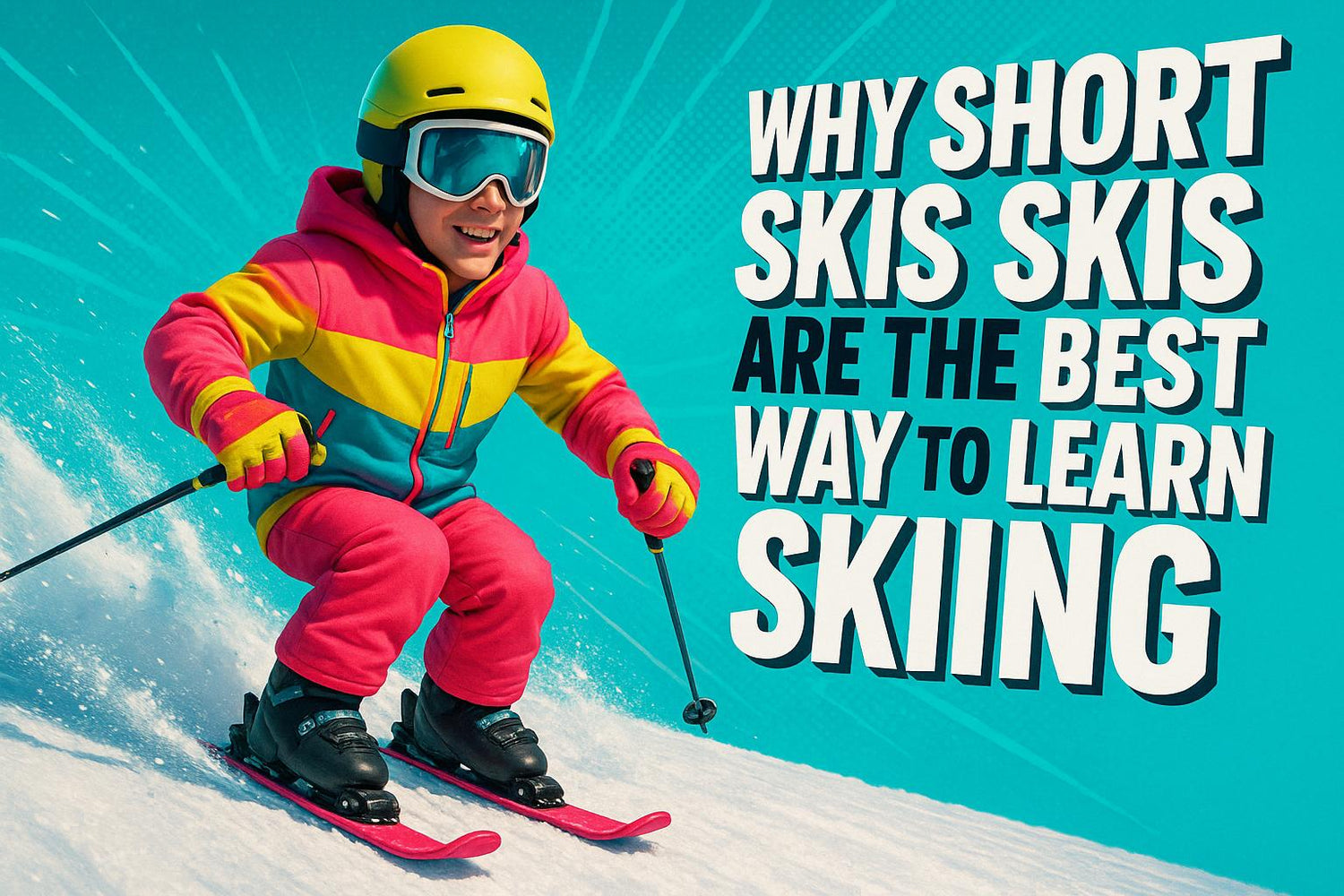
When you're learning to ski as an adult, short skis can make the process way easier (and a lot less frustrating). Here's why:
- Easier to Control: Short skis are lighter and less clunky, making turns and stops feel more natural.
- Less Fatigue: With less weight to manage, your legs won’t tire out as quickly, so you can practice longer.
- Fewer Falls: They’re more stable and forgiving, helping you stay balanced even if you wobble.
- Faster Progress: You can focus on mastering the basics - like turning and stopping - without struggling with heavy, oversized gear.
- Convenient: Many short skis, like Snowfeet models, are compact enough to fit in a backpack and work with regular winter boots.
Long skis? They’re great for advanced skiers, but for beginners, they can feel overwhelming - harder to control, more tiring, and less forgiving. Short skis let you skip the steep learning curve and start having fun right away. So, if you’re looking to hit the slopes without the stress, short skis might just be your new best friend. :)
Are Short Skis Better for Beginners?
The Difficulties of Learning to Ski as an Adult
Learning to ski as an adult isn’t as simple as strapping on skis and hitting the slopes. Unlike kids, adults tend to overthink risks, recover more slowly from falls, and often have limited time to practice. Add long skis into the mix, and things get even trickier. Let’s break down why long skis can make learning to ski even harder.
Why Long Skis Are Tough for Beginners
Long skis may look sleek, but for beginners, they’re a challenge to handle. Their extra length makes controlling them much harder, especially when you’re still figuring out the basics like shifting your weight and managing edges. Instead of smooth, easy turns, longer skis demand more effort and precision to maneuver.
And if your balance wobbles? Recovering on long skis can feel like trying to catch a falling tree - it’s not easy. This can lead to hesitation, which only slows your progress and builds frustration.
The Physical Toll of Standard Skis
Long skis aren’t just harder to control - they’re heavier, too. Every movement takes more energy, which means your legs tire out faster. That extra weight can turn what should be a fun day on the slopes into a series of short, exhausting runs.
Because of this, you might find yourself needing more breaks, cutting into your practice time. On the other hand, shorter skis - like Snowfeet* - are lightweight and easier on your body. With less strain, you can ski longer, practice more, and improve faster.
Limited Time to Learn
Most adults don’t have endless days to dedicate to skiing. Whether it’s a once-a-year vacation or a few weekends here and there, the time you spend on the slopes is precious. Long skis, with their steep learning curve and physical demands, can eat into that limited time.
Shorter skis, however, are designed to make learning quicker and less tiring. They let you focus on building confidence and skills instead of struggling with your gear. Snowfeet* products are specifically crafted to help you make the most of your time on the mountain, so you spend more moments skiing and fewer moments frustrated.
In short, learning to ski as an adult is challenging enough without equipment holding you back. Choosing the right gear can make all the difference - and that’s where Snowfeet* steps in.
How Short Skis Fix These Problems
Tackling these skiing challenges often comes down to having the right gear, and that's where Snowfeet* comes in. Their short skis are designed to be easier to handle, requiring less strength and precision, making them perfect for adult beginners.
Better Balance and More Confidence
Snowfeet* short skis completely change how you interact with the snow. Unlike traditional skis that can stretch over 5 feet long, Snowfeet* Skiblades measure just 65 cm (about 26 inches) or 99 cm (about 39 inches). This compact size puts control directly beneath your feet, giving you a much steadier foundation.
With shorter skis, you can make quick adjustments as needed. If you start to wobble, you’re not fighting against the leverage of long skis. The smaller turning radius also makes it easier to navigate around other skiers, avoid obstacles, and correct your path on the fly. All of this helps build confidence, even if you're just starting out.
Less Joint Pain and Tiredness
Another big plus? Snowfeet* short skis are lighter than traditional long skis, which means less strain on your body. They reduce the physical effort needed to control your movements, so you can ski longer without wearing yourself out.
Turning and carving feel smoother too, with less pressure on your knees. This is especially helpful for beginners trying to develop muscle memory. With Snowfeet* Skiblades or Skiskates, you can spend more time practicing without feeling drained, helping you improve faster.
Learn the Basics Faster
Let’s face it - most adults don’t have endless time to dedicate to learning a new sport. Snowfeet* short skis make it easier to pick up the fundamentals quickly. Since they’re easier to balance and control, you can focus on key skills like weight shifting, edge control, stopping, and turning.
Instead of wasting time recovering from falls or struggling to stay upright, you can dive right into practicing turns and building your technique. This faster learning curve is a game-changer for anyone with limited time on the slopes.
Easy to Carry and Store
Practicality matters, too. Snowfeet* Skiblades, at just 65 cm, can fit into a backpack or the trunk of your car. Even the longer Snowfeet* Short Skis, at 120 cm (about 47 inches), strike a great balance between performance and portability.
This convenience means you’re more likely to bring your gear along for quick trips, giving you more opportunities to hit the slopes and sharpen your skills.
More Fun at Comfortable Speeds
Snowfeet* short skis are all about controlled, moderate speeds, which is exactly what beginners need. You don’t have to race down the mountain to enjoy yourself. Skiing at a comfortable pace lets you soak in the experience, try out different terrains, and steadily build your confidence.
And let’s be honest - when you’re having fun, you’re more likely to keep practicing. That extra time on the snow translates to faster improvement.
Snowfeet* short skis solve the biggest hurdles adults face when learning to ski. They’re lightweight, responsive, and easy to transport, making them ideal for beginners. With their thoughtful design, Snowfeet* makes skiing approachable and fun, setting you up for success on the slopes. Now, it’s time to figure out which Snowfeet* model is right for you.
sbb-itb-17ade95
Snowfeet* Short Skis vs. Standard Long Skis and Snowboards

When picking gear to learn skiing or snowboarding, Snowfeet* short skis stand out for their easy control, balance, and comfort.
Key Differences for Beginners
Traditional long skis, typically measuring between 5'3" and 6'3" (160–190 cm), can feel overwhelming for someone just starting out. In comparison, Snowfeet* Skiblades come in much smaller sizes - 26 inches (65 cm), 39 inches (99 cm), or 47 inches (120 cm). This compact size puts control right under your feet, making it easier to turn quickly and smoothly. Long skis, on the other hand, require more thought and planning to navigate turns.
Snowboards are shorter than long skis, but they come with their own learning curve. Both feet are fixed on one board, which means you need to master edge control to stay balanced. Snowfeet* short skis, however, give you the freedom to move each foot independently, making it easier to adjust your balance.
The smaller size of Snowfeet* also reduces physical strain, which is a big plus for adult beginners. They’re lightweight and super portable - some models, like the 65 cm Skiblades, can even fit into a large backpack. This makes them much easier to travel with and store compared to traditional long skis or snowboards.
Here’s a quick side-by-side comparison to highlight the differences:
Comparison Table
| Feature | Snowfeet* Short Skis | Traditional Long Skis | Snowboards |
|---|---|---|---|
| Length | 26–47 inches (65–120 cm) | 63–75 inches (160–190 cm) | 47–63 inches (120–160 cm) |
| Ease of Learning | Very easy to pick up | Takes more time to adapt | Moderate; extra skills needed |
| Maneuverability | Quick and responsive | Limited by longer length | Less agile due to fixed stance |
| Weight | Extremely lightweight | Heavier | Bulkier |
| Portability | Fits in a backpack or trunk | Requires roof rack/large car | Needs a special bag |
| Boot Compatibility | Works with winter shoes, ski boots, and snowboard boots | Only compatible with ski boots | Only compatible with snowboard boots |
| Price Range | $250–$775 | $400–$1,200+ (with bindings) | $300–$900+ |
This table makes it clear how Snowfeet* short skis solve many of the challenges beginners face. Unlike traditional long skis or snowboards, which are better suited for seasoned riders, Snowfeet* are designed to make learning easier and more enjoyable. They let you focus on having fun and building confidence on the slopes without the usual hurdles.
Picking the Right Snowfeet* Short Skis for Beginners
Choosing your first pair of short skis doesn’t have to be complicated. Snowfeet* has designed their lineup to address key beginner concerns like balance, physical strain, and portability. The right choice comes down to where you’ll ski, how comfortable you are on snow, and the type of experience you’re after. With several options tailored to different needs, Snowfeet* makes it easy to find a setup that suits your style.
Your Skill Level and Comfort
If you’re just starting out, the Snowfeet Mini Ski Skates (38 cm) are a great option. These compact skis attach to regular winter boots, making them ideal for sledding hills, snowy trails, or even your backyard - assuming there’s enough snow. For a more traditional skiing feel, check out the Skiblades (99 cm). These offer a nice balance of stability and maneuverability, perfect for moderate speeds and quick turns on groomed slopes.
Got experience with ice skating or rollerblading? You might prefer the Skiskates (44 cm). These are super responsive and work especially well on groomed runs or in snow parks, giving you that quick, sharp control you’re used to.
Terrain and Snow Type
Where you plan to ski plays a big role in picking the right model. Most U.S. ski resorts maintain groomed runs - those smooth, packed trails that are perfect for most Snowfeet* models. On these runs, the Skiblades (99 cm) or the Snowfeet Short Skis (120 cm) are solid choices, offering a smooth ride and reducing the learning curve.
For powder days, when the mountain is covered in fresh, soft snow, the Snowfeet POWDER (99 cm) is the way to go. Designed with a wider profile, this model stays on top of fluffy snow instead of sinking. It’s a great pick for resorts in areas like Colorado, Utah, or the Pacific Northwest, where powder is more common.
If you’re more into spontaneous outings - think sledding hills, cross-country trails, or local slopes - the compact models like the Snowfeet Mini Ski Skates (38 cm) or Snowfeet PRO (50 cm) are perfect. Their portability means you can toss them in a backpack or your car trunk and be ready whenever the snow calls.
Boot Options and Fit
One of the best things about Snowfeet* is their flexibility when it comes to boots. Unlike traditional setups from brands like Rossignol or K2, which often require specialized (and pricey) boots, Snowfeet* products work with a variety of boot types.
For example, both the Snowfeet Mini Ski Skates (38 cm) and Snowfeet PRO (50 cm) attach directly to your everyday winter boots. This means you can hit the snow without needing to invest in additional gear. Plus, all major Snowfeet* models come with adjustable bindings that fit both ski boots and snowboard boots, giving you the freedom to try different setups without committing to expensive purchases.
Just make sure your boots provide solid ankle support and have a firm sole. This is crucial for maintaining control during turns and stops. Boots designed for active snow use are your best bet - casual winter boots might not cut it when it comes to performance and safety.
Conclusion: Why Snowfeet* Short Skis Are the Best Option for Adults Learning to Ski
Adult beginners face some pretty unique challenges when learning to ski, and the right gear can make all the difference. Heavy, bulky skis can feel like a battle from the start, but Snowfeet* short skis offer a smarter, more user-friendly alternative. They tackle the common hurdles - like weight, rigidity, and control - head-on, making the learning process smoother and way less intimidating.
The lightweight, compact design of Snowfeet* short skis is a game-changer. They’re easier to handle, give you better control, and help you build confidence faster. That means fewer falls, less frustration, and more fun right out of the gate. Plus, they solve practical problems that traditional ski brands like Rossignol or K2 often overlook. Their small size makes them super easy to pack - whether it’s in your car trunk or a backpack - and they don’t require you to splurge on specialized ski boots. You can use them with your regular winter boots or snowboard boots, saving you both money and hassle.
And let’s not forget the fun factor. Snowfeet* skis aren’t just about learning - they’re about enjoying the ride. Whether you’re carving smooth turns on the Skiblades (99 cm) for $540, tackling deep powder with the Snowfeet POWDER (99 cm) for $540, or zipping around on local hills with the Mini Ski Skates (38 cm) for $250, these skis turn every run into an adventure. They’re playful, versatile, and perfect for quick turns and tricks that keep things exciting.
If you’re an adult looking to dive into skiing without the stress, cost, or bulk of traditional gear, Snowfeet* short skis are the way to go. They make skiing easier, more accessible, and - most importantly - more fun. So, why not hit the slopes with gear that’s designed to help you love every moment? Snowfeet* has you covered.
FAQs
Why are Snowfeet short skis better for adults learning to ski compared to traditional long skis?
Snowfeet short skis are a great pick for adult beginners because they’re easier to handle, lighter to carry, and help you pick up skiing skills faster than traditional long skis. Their smaller size makes them much less intimidating, which is perfect if you’re just starting out. And here’s a bonus: you can use them with regular winter boots - no need to invest in special ski boots.
Another big plus? They’re super portable and convenient. Snowfeet options like Skiblades (available in 65 cm, 99 cm, and 120 cm) or Skiskates (44 cm) are small enough to toss into a backpack. This makes them ideal for quick getaways or casual ski days. They’re designed to make skiing fun and easy, giving beginners the confidence to hit the slopes right away. If you want to learn quickly and enjoy a more approachable intro to skiing, Snowfeet short skis are a solid choice!
Can I use my regular winter boots with Snowfeet short skis, and how will it impact my skiing experience?
Yes, you can use your regular winter boots with Snowfeet short skis, and that’s a game-changer. Unlike traditional skis that demand heavy, pricey ski boots, Snowfeet are built to work perfectly with the winter boots you already own. This makes them super convenient and way easier to get started with - especially if you’re new to skiing.
Sticking with your own boots doesn’t just save you some cash; it also means you’ll be more comfortable since you’re already used to how they fit. And let’s be honest, it’s nice to skip the hassle of dealing with clunky, complicated gear. With Snowfeet, you can hit the slopes faster and focus on the fun part - gliding down the snow!
Why are Snowfeet short skis perfect for adults who don’t have much time to learn skiing?
Snowfeet short skis are a fantastic option for adults who don’t have hours to spend mastering traditional long skis. Why? They’re lightweight, easy to control, and much quicker to get the hang of. Thanks to their compact design, they’re super maneuverable, which means even beginners can feel confident on the slopes sooner.
Take models like Skiblades (available in 65 cm, 99 cm, and 120 cm) or Skiskates (just 44 cm long) - these are not only fun to use but also incredibly portable. Unlike bulky skis or snowboards, they’re a breeze to carry and require less physical effort. That means you can focus on enjoying your time on the mountain instead of wrestling with heavy gear. Perfect for quick trips or spontaneous outings!











Leave a comment
This site is protected by hCaptcha and the hCaptcha Privacy Policy and Terms of Service apply.