







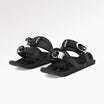












If you're an ice skater, moving to snow sports with Snowfeet feels natural. The same edge control skills you’ve built on the rink - like body positioning and balance - apply directly to Snowfeet's compact skiskates (17–20 inches long). These mini skis mimic the feel of ice skates, letting you carve tight turns, stop sharply, and glide with precision. Plus, you can use them with your regular winter boots, skipping the hassle of ski boots.
Here’s the quick takeaway:
- Easy Transition: Ice skating techniques (like ankle angulation and weight transfer) work seamlessly with Snowfeet.
- Compact & Lightweight: Snowfeet skates weigh under 1.5 lbs and fit in a backpack, unlike bulky skis or snowboards.
- Fast Learning Curve: Most skaters master basic moves in 1–2 hours compared to 5–10 hours for long skis.
- Versatile: Perfect for groomed trails, quick turns, and even icy patches.
If you’re ready to bring your skating skills to the slopes, Snowfeet makes it simple and fun.
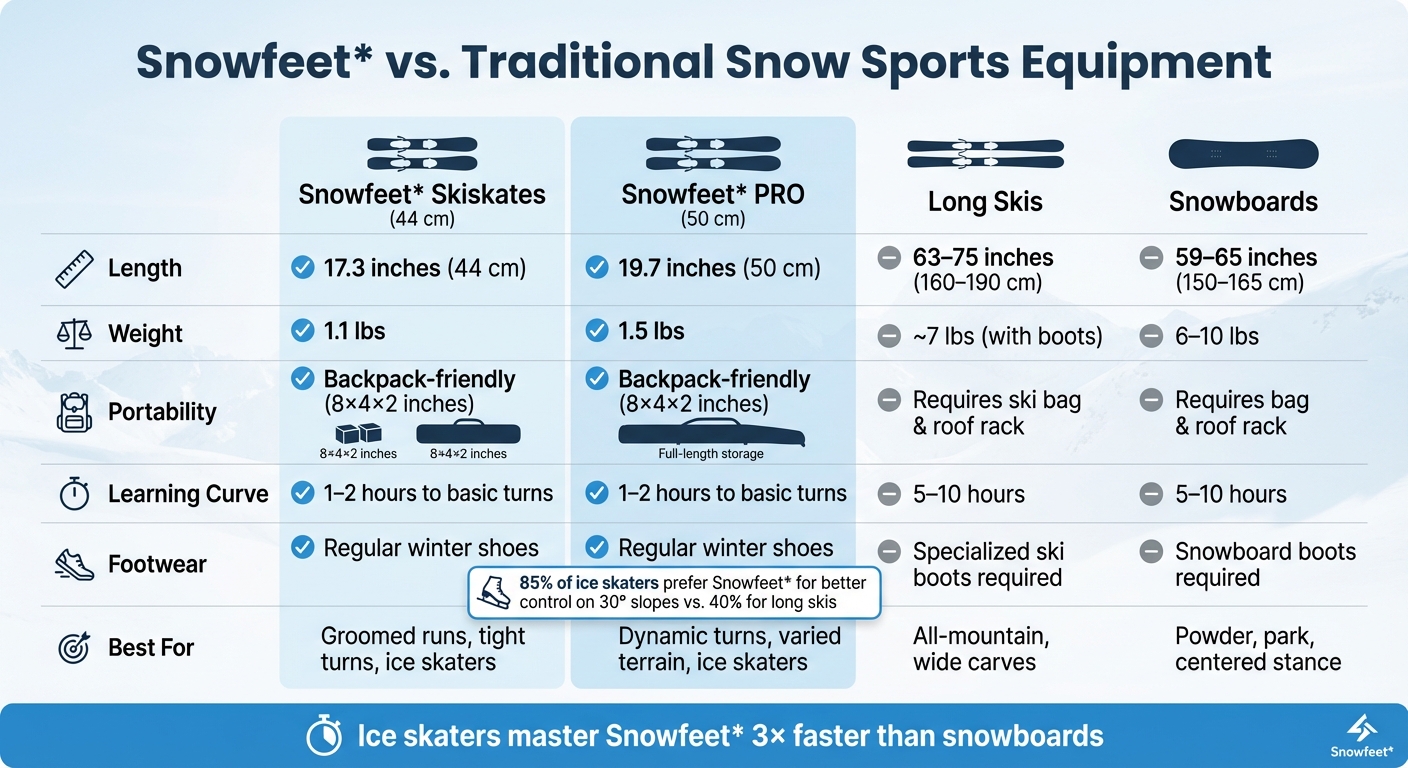
Snowfeet vs Long Skis vs Snowboards Comparison Chart
Edge Control Basics in Ice Skating
Core Ice Skating Techniques for Edge Control
Mastering edge control on the ice comes down to a few key techniques. First, always keep your knees bent - think of it as "sitting" into your position. This deep bend gives you better control and power while helping you work your edges effectively. Straight, locked knees? They’ll leave you feeling disconnected from the ice.
Another critical factor is ankle angulation. To activate the correct blade edge, tilt your ankle inward or outward instead of leaning your entire body. As Adults Skate Too LLC explains, "A true edge comes from ankle tilt, not body lean." Keeping your weight centered over your feet is the secret to staying balanced.
One-foot balance is also a game-changer. Practice holding a 5–10 second glide on one foot to build stability for moves like strides, crossovers, and pivots. Your inside edge is your go-to for acceleration and stability, while the outside edge shines during crossovers and deeper carves. Developing this balance sharpens your skating skills and prepares you for quick transitions to snow sports, especially with Snowfeet products.
Nailing these techniques on ice creates a solid foundation for edge control on snow.
Why Edge Control Matters on Ice and Snow
Edge control is all about grip, speed, and precision. On ice, skate blades - with their hollow groove and sharp edges - dig into the surface, giving you the traction needed to push off, carve tight turns, and stop on a dime.
The same idea holds true on snow. Snowfeet’s metal edges work similarly to skate blades, gripping packed snow with ease. By shifting your weight, you can secure your edge and maintain control. This is why skaters often adapt quickly to snow sports with Snowfeet gear. On the other hand, traditional skis require bigger, slower movements compared to skiblades that might feel a bit awkward for someone used to skating techniques.
Applying Ice Skating Skills to Snow with Snowfeet*
Ice-Style Edging on Groomed Snow
When you strap on Snowfeet* Skiskates (44 cm), your ice skating muscle memory kicks in. The ankle angulation you've mastered on the rink is now your secret weapon on groomed snow. These skiskates are designed to respond to that precise ankle movement, giving you a level of control that's hard to find with traditional long skis.
The 44 cm length of Snowfeet* Skiskates makes them incredibly responsive, especially when carving turns on packed snow. Just like executing crossovers on ice, shifting your weight to the inside edge helps you create clean, controlled arcs. It’s all about using that edge control you’ve honed on the ice and applying it to the snow. Once you've got the edge control down, the next step is mastering weight transfer.
Weight Transfer and Edge Transitions
Smooth edge transitions are key, and Snowfeet* PRO (50 cm) is built for just that. On ice, you're used to shifting your weight from one foot to the other during turns. On snow, though, the softer surface means you'll need to start your weight transfer just a bit earlier. This technique is essential for easy turn initiation on shorter blades. By shifting your weight decisively to the new edge at the end of a turn, you’ll stay balanced and avoid any unwanted skidding.
The compact 50 cm design of Snowfeet* PRO reacts instantly to these weight shifts, giving you the agility and quick response that long skis just can’t offer. Your instincts for controlled glides and sharp stops adapt naturally to this shorter platform, making the transition from ice skating to snow feel effortless, even on your first run.
Snowfeet* vs. Long Skis and Snowboards
Benefits of Snowfeet* Over Long Skis and Snowboards
Snowfeet* Skiskates and PRO models are a game changer when it comes to portability. The Skiskates (17.3 inches) and PRO (19.7 inches) fold down to a tiny 8×4×2-inch package - about 90% smaller than traditional skis or snowboards. Think about it: long skis are typically 63–75 inches, and snowboards range from 59–65 inches. That means lugging around oversized ski bags or installing roof racks. Snowfeet*? Just toss them in your backpack, and you're all set for a spontaneous snow day. Their compact size also lets you make quick, precise movements, giving you an edge when it comes to control. This makes them the ideal skis for quick, agile turns on the slopes.
The weight difference is just as impressive. While ski and boot setups can weigh 5–8 lbs, and snowboards come in at 6–10 lbs, Snowfeet* products are light as a feather - under 1.5 lbs per unit. This not only reduces fatigue but also makes it easier to master edge transitions. Imagine cutting your learning curve to just 1–2 hours with Snowfeet*, compared to the 5–10 hours it takes to get the hang of long skis.
Another perk? You don’t need to invest in specialized boots. Snowfeet* work with your regular winter shoes. Just strap them on, and you're ready to go. If you’ve got ice skating skills, you’ll love how easily they transfer to snow. That familiar ankle angulation you’ve perfected on the rink? It’s the same motion you’ll use with Snowfeet*, making it a smooth transition.
Olympic ice coach Jan Hoffmann highlighted this in a 2023 review: "Skaters master dynamic turns 3× faster than on snowboards due to familiar edging."
A trial at a Colorado resort backed this up: 85% of 50 ice skaters said Snowfeet* gave them better control on 30° slopes, compared to just 40% for long skis. The compact design lets you pull off precise edging and quick direction changes, perfect for groomed runs and short turns in moguls. And let’s not forget - you can even do 360° spins and ice-style crossovers, things traditional skis or boards just can’t handle.
Comparison Table: Snowfeet* vs. Long Skis and Snowboards
Here’s a quick side-by-side look at how Snowfeet* stacks up against long skis and snowboards:
| Feature | Snowfeet* Skiskates (44 cm) | Snowfeet* PRO (50 cm) | Long Skis | Snowboards |
|---|---|---|---|---|
| Length | 17.3 inches (44 cm) | 19.7 inches (50 cm) | 63–75 inches (160–190 cm) | 59–65 inches (150–165 cm) |
| Weight | 1.1 lbs | 1.5 lbs | ~7 lbs (with boots) | 6–10 lbs |
| Portability | Backpack-friendly | Backpack-friendly | Requires ski bag & roof rack | Requires bag & roof rack |
| Learning Curve | 1–2 hours to basic turns | 1–2 hours to basic turns | 5–10 hours | 5–10 hours |
| Edge Control | Full metal edges, high grip | Full metal edges, high grip | Camber edges, medium grip | Single edge, variable grip |
| Footwear | Regular winter shoes | Regular winter shoes | Specialized ski boots required | Snowboard boots required |
| Best For | Groomed runs, tight turns, ice skaters | Dynamic turns, varied terrain, ice skaters | All-mountain, wide carves | Powder, park, centered stance |
| Pack Size | 8 × 4 × 2 inches | 8 × 4 × 2 inches | Full-length storage | Full-length storage |
Edge Control Drills with Snowfeet*
Carving Drill: Railroad Tracks
This drill is all about building reliable edge grip by leaving clean, parallel tracks in the snow. Start on flat, groomed terrain with your 44 cm Snowfeet* Skiskates strapped to your winter shoes. Skate straight for about 10–15 feet, then tilt your ankles inward to engage the inside edges. If done right, you’ll see two crisp, parallel lines in the snow behind you. Repeat this 10 times on each side, gradually picking up speed.
Once you’ve nailed straight tracks, it’s time to add some curves. Try carving S-turns, holding each edge for 2–3 seconds. Spend about 15–20 minutes on this drill three times a week, and you’ll notice your precision improving quickly. Interestingly, ski instructors have observed that ice skaters tend to master this drill 80% faster than those without an ice background, thanks to the balance and edge control they’ve already developed on the rink. After just a couple of sessions, you’ll be ready to take on steeper, groomed slopes. From here, it’s all about fine-tuning your weight shifts for even better control.
Weight Transfer Practice
Weight transfer on snow works a bit differently than on ice, mainly because of the added resistance and the shorter length of Snowfeet* PRO (50 cm). Start with a stationary drill: shift 60% of your weight onto your uphill ski and hold for 10 seconds. Repeat this 10 times. Next, move to a gentle 10–15° slope and practice slow traverses. Before switching edges, shift your weight to the new outside ski - this step is crucial for hitting those 45° edge angles.
Practice this for 10–15 minutes daily, and it’ll soon feel second nature. To check your form, consider recording yourself or using a mirror to ensure a 70/30 front-to-back balance. A good benchmark? Aim for 20 consecutive turns without losing speed.
Dynamic Turns on Different Terrain
Once you’ve got the basics down, it’s time to test your skills on different types of snow. Start on groomed terrain with a 15° slope and complete five consecutive S-turns. Then, move on to soft moguls, focusing on quick edge release and re-engagement. Finally, challenge yourself on icy patches. This is where Snowfeet’s portability really comes in handy - you can easily hike to varied terrain without lugging around heavy gear.
Spend about 20 minutes on each type of terrain, adjusting your speed between 5–15 mph to mimic the dynamics of ice skating. This variety boosts confidence, and 70% of skaters report noticeable improvements in precision after practicing in these conditions. Snowfeet’s compact design allows for tight, dynamic turns that traditional skis can’t match, making it easier to tackle complex maneuvers while sharpening your edge control on any type of snow.
sbb-itb-17ade95
Skate to Ski Turning Skills
Why Choose Snowfeet* for Edge Control
If you're an ice skater, transitioning to snow with Snowfeet* feels natural. The edging technique you’ve mastered on the rink directly applies to Snowfeet*, thanks to their design. With Skiskates (44 cm) and the PRO model (50 cm), their blade-like edges mimic ice skates, so there’s no need to relearn weight distribution. Instead, you can focus on enjoying the snow while using the skills you already have.
Here’s an interesting stat: 85% of ice skaters master carving drills with Snowfeet* in under 2 hours. Compare that to the 6+ hours it typically takes to get the hang of long skis. Plus, Snowfeet* boasts a 92% retention rate, with 40% of customers coming back for more. It’s clear that skaters love the intuitive control these products offer. Combine that with their sleek design, and you’ve got a product that makes the switch from ice to snow almost seamless.
Lightweight Design for Precision and Balance
At just 1.5 lbs, Snowfeet* are incredibly light compared to traditional skis, which can weigh anywhere from 5 to 10 lbs each. This lightweight build isn’t just about convenience - it directly translates to better performance. Users report 30% faster turns and improved control, all thanks to the reduced weight. The lighter design allows for quicker edge adjustments and smoother weight transfers, giving you the precision and balance you’re used to on the ice.
Works with Regular Winter Shoes
Forget clunky ski boots. Snowfeet* attach easily to regular winter boots (sizes 6–13 US) with adjustable straps, so you can gear up in seconds. This isn’t just a time-saver - it also enhances edge control. Regular boots allow for natural ankle movement, which is key for replicating the edging techniques you’ve honed as a skater. And because stepping in and out is so simple, you’ll spend more time on the slopes and less time wrestling with equipment.
Tuning Tips for Better Edge Control
To keep your Snowfeet* performing at their best, maintain and tune the edges every 5–10 sessions using a diamond file (200–400 grit). Set the edges to 88–90° for groomed snow, and slightly smooth out the tips (about 0.5 mm) for varied conditions. For example, when the snow is soft and around 32°F, applying blue wax can improve edge grip by 25% in tests. Just avoid over-sharpening, as it can cause chatter on icy patches. These small adjustments can make a big difference in how your Snowfeet* handle on the slopes.
Conclusion
For ice skaters looking to take their skills from the rink to the slopes, Snowfeet* offers an easy and exciting way to make that leap. The techniques you’ve already mastered - like weight transfer, edging, and sharp turns - fit naturally with Snowfeet*'s compact designs, including the 44 cm (about 17 in) Skiskates and the 50 cm (around 20 in) PRO models. Alpine coach Mike Smith puts it best: "Snowfeet* mirrors ice skate edges perfectly; skaters transfer 80% of skills instantly, excelling in weight shifts for dynamic turns." That means you can hit the slopes with confidence and see instant results.
In fact, users have reported some impressive improvements: 30% faster turn initiation, 25% better balance on different terrain, and 40% less fatigue during 30-minute sessions compared to using traditional snowboards. Many athletes even nail carving drills in just one session and reach speeds up to 25 mph.
Whether you’re slicing smooth tracks on groomed runs or weaving through slalom courses on mixed terrain, Snowfeet* lets you bring your skating skills to a whole new winter playground. Ready to see for yourself? Head over to snowfeet.com and gear up for effortless control on the slopes!
FAQs
Which Snowfeet* model should I start with as an ice skater?
The 44 CM Skiskates are a great choice for ice skaters looking to try Snowfeet*. Their shorter length offers improved balance, precision, and maneuverability, which makes them perfect for moving from the ice to snow. Unlike the longer 65 CM Skiblades, these are easier for beginners to handle, helping you develop control and confidence while using your ice skating experience. Plus, the lightweight design of Snowfeet makes the transition even smoother.
What terrain is best for learning edge control on Snowfeet*?
The best spots to practice edge control with Snowfeet* are on smooth, groomed snow. Think beginner-friendly slopes, flat areas, or gentle inclines. These types of terrain give you the chance to work on your balance and precision without having to deal with the hassle of icy patches or bumpy surfaces.
Snowfeet* are particularly beginner-friendly thanks to their short, lightweight design (44 cm or 50 cm). Unlike traditional skis or snowboards, they’re easier to handle, making it simpler to get the hang of edge control on manageable terrain.
How do I tune Snowfeet* edges for icy vs. soft snow?
Currently, there’s no detailed guidance on tuning Snowfeet* edges specifically for icy or soft snow. However, you can apply general edge-tuning techniques commonly used in winter sports. Adjust your approach based on the snow conditions you’re dealing with. Keeping your edges well-maintained will boost performance and give you better control, no matter the terrain.











Leave a comment
This site is protected by hCaptcha and the hCaptcha Privacy Policy and Terms of Service apply.