



















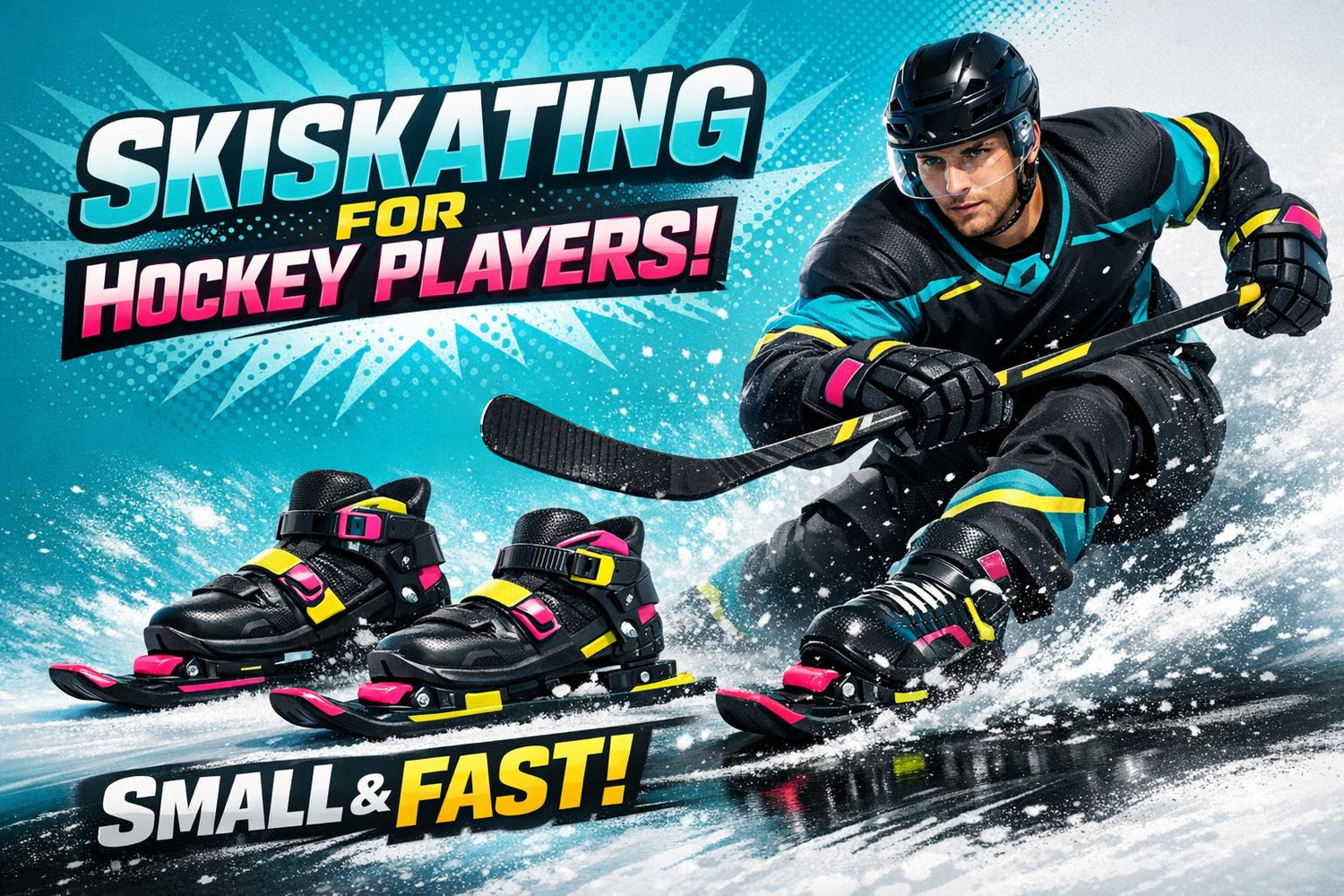
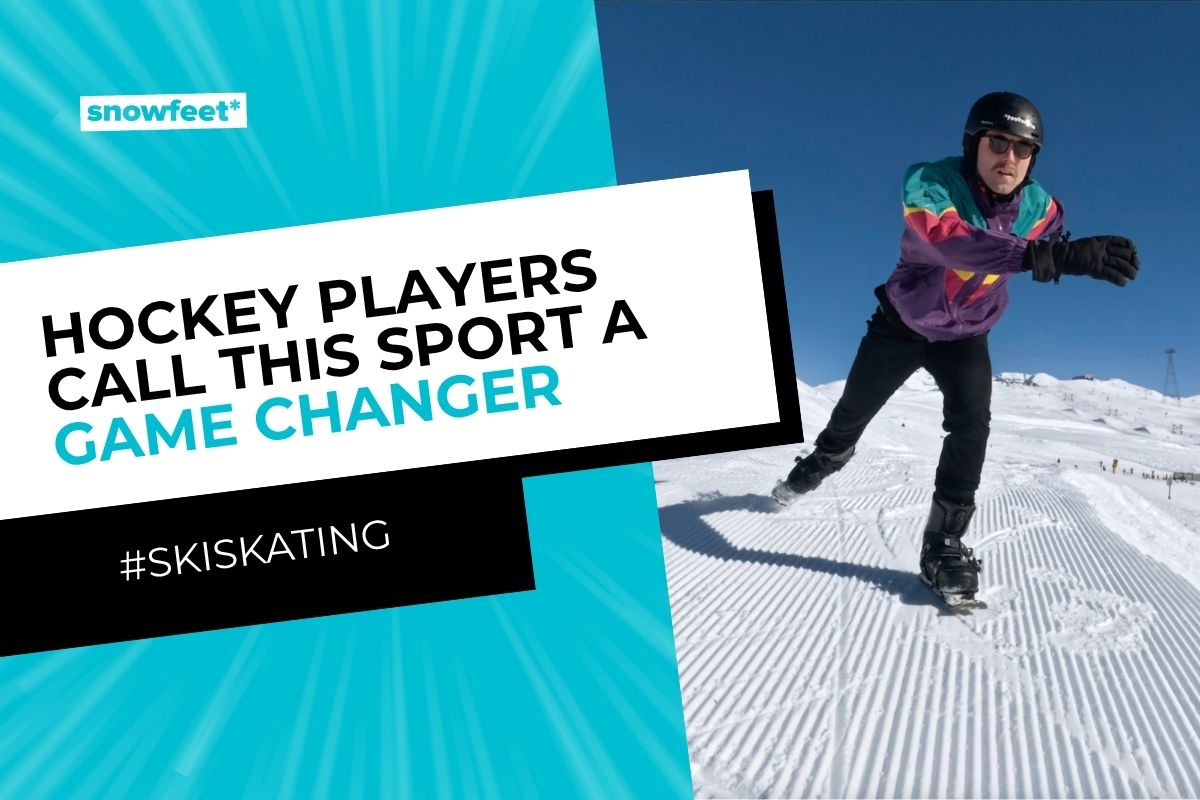
Looking to up your hockey game this winter? Skiskating is the off-ice training tool you didn’t know you needed. Think of it as ice skating… but on snow. Using compact 44 cm skiskates (like Snowfeet* Skiskates), hockey players can mimic skating motions, practice hockey stops, and build lower-body strength - all while enjoying snowy slopes. It’s fast, portable, and feels a lot like being on the ice. Plus, no bulky skis or snowboard gear required.
Why Skiskating Works for Hockey Training:
- Realistic Motion: Side pushes and stops feel just like ice skating.
- Strength & Agility: Targets the same muscles used in hockey games.
- Speed Match: Skiskating speeds (10–20 mph) mirror hockey gameplay.
- Portable Gear: Toss them in a backpack - no roof racks or oversized bags.
If you’re tired of lugging long skis or want a workout that directly translates to your on-ice performance, give skiskating a shot. It’s like hockey practice, but way more fun in the snow.
The First Standard to DOWNHILL SKATING
Why Snowfeet* Skiskates Beat Traditional Skis and Snowboards
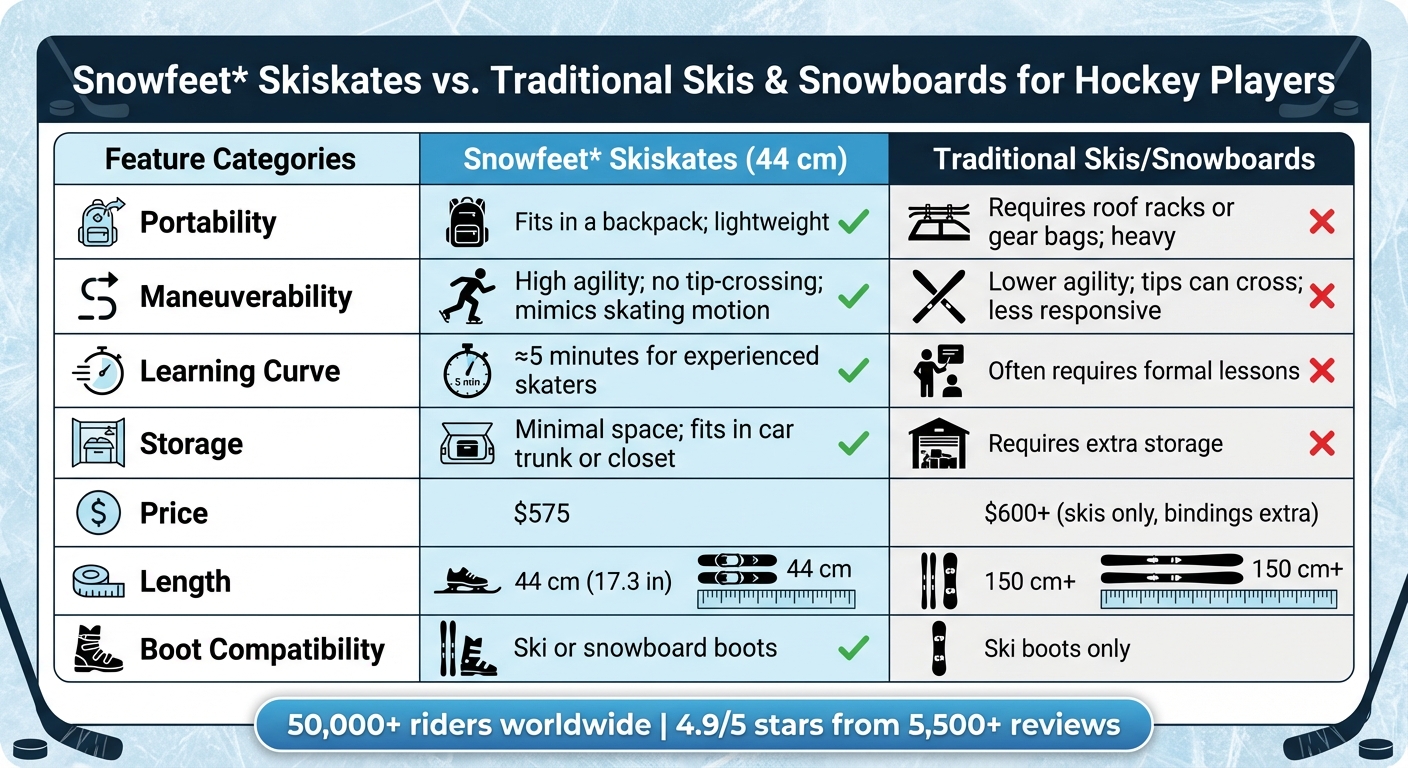
Snowfeet Skiskates vs Traditional Skis and Snowboards Comparison Chart
Snowfeet* Skiskates vs. Traditional Skis and Snowboards
Traditional skiing and snowboarding gear isn’t exactly hockey-player friendly. Long skis - usually over 150 cm - force you into a forward-leaning position, which is the opposite of the lateral movement hockey demands. Snowboards? They lock both feet together, making the independent leg motion needed for hockey-style skating impossible. That’s where Snowfeet* Skiskates come in. At just 44 cm (17.3 in), these compact skates fit snugly into a standard backpack and offer precise metal-edge control for sharp stops and quick turns. No more lugging around bulky skis or dealing with roof racks - just toss your Skiskates in your bag and you’re ready for the slopes, trails, or even a sledding hill.
Here’s a quick comparison of Snowfeet* Skiskates and traditional skis or snowboards:
| Feature | Snowfeet* Skiskates (44 cm) | Traditional Skis/Snowboards |
|---|---|---|
| Portability | Fits in a backpack; lightweight | Requires roof racks or gear bags; heavy |
| Maneuverability | High agility; no tip-crossing; mimics skating motion | Lower agility; tips can cross; less responsive |
| Learning Curve | Minimal learning curve (≈5 minutes for experienced skaters) | Often requires formal lessons |
| Storage | Minimal space; fits in a car trunk or closet | Requires extra storage |
This unmatched agility means you can pull off faster, more controlled moves with ease.
"Far more portable and affordable than traditional skis or snowboards." - Uncrate
Snowfeet* Skiskates Features for Hockey Players
Snowfeet* Skiskates aren’t just compact - they’re designed with hockey players in mind. That 44 cm length? It’s no accident. It’s carefully crafted to mimic the dynamics of hockey skating, offering the perfect balance of stability and speed while avoiding the tip-crossing issues that plague longer skis during quick turns. Made from fiberglass-reinforced materials and featuring adjustable bindings, they fit boot sizes ranging from 6–13 US (38–47 EU).
What’s more, these skates support the mechanics of hockey skating. They encourage a centered or slightly back-weighted stance, similar to what you’d use on the ice, rather than the forward-leaning posture typical of longer skis. This alignment not only improves balance but also helps maintain an athletic posture, which can directly enhance your performance on the ice. Add in sharp metal edges for hockey stops and quick direction changes, and it’s no wonder over 50,000 riders worldwide trust Snowfeet*. With a stellar 4.9 out of 5-star rating from more than 5,500 verified reviews, it’s clear these skates are a game-changer for hockey enthusiasts.
Using Your Hockey Skills on Snowfeet* Skiskates
Tap into your hockey skills when using Snowfeet* Skiskates - it’s a natural transition!
Edge Control Techniques on Snow
Switching from ice to snow with Snowfeet* Skiskates feels surprisingly familiar. Your hockey edge control instincts carry over seamlessly because the movement is similar to the side-to-side push you already know from skating. Unlike traditional skiing, you’ll keep a centered or slightly back-weighted stance instead of leaning forward.
To engage the metal edges on snow, roll your ankles, keep your legs shoulder-width apart, bend your knees, and shift your weight in the direction you want to go. One key adjustment: avoid putting pressure on your toes. Without long ski tips, leaning forward can throw you off balance. Instead, focus on keeping your weight over the middle or back of your feet for better control.
"The best way to start your ride is to skate like a hockey player." - Snowfeet Team
For added stability, especially at higher speeds, use a staggered stance - placing one foot slightly ahead of the other. This technique, already second nature to hockey players, helps maintain balance and control on snow, just like on the ice. With this approach, you’ll be ready to tackle dynamic stops and sharp turns with confidence.
Hockey Stops and Quick Turns
Let’s talk about stopping. The hockey stop on Snowfeet* Skiskates works just like it does on ice. Push the metal edges sideways to create friction, but make sure to distribute your weight evenly across both feet for a smooth, controlled stop.
"You can brake the same way that you stop with skis or ice skates, by pushing the edges of your Snowfeet* sideways to create the necessary friction." - Snowfeet Team
Quick turns are equally intuitive. Tilt the skiskates onto their edges and shift your body in the direction you want to go. Thanks to their compact 44 cm length, Snowfeet* Skiskates are incredibly agile - no worries about crossing tips or dealing with bulky, awkward movements. Start practicing on flat, groomed terrain to get a feel for how they respond before tackling steeper slopes. And don’t forget to keep those metal edges sharp! A sharpening stone or professional tuning will make all the difference in maintaining precision and control.
Training Drills: Improve Agility, Balance, and Power
Snowfeet* Skiskates transform winter landscapes into a playground for building agility, balance, and power. With their compact 44 cm design and hockey-inspired movement, they’re perfect for honing on-ice skills.
Quick Footwork Drills
To sharpen your footwork, focus on drills that emphasize edge control and speed. Set up cones on groomed snow and practice sharp power turns and quick exits - moves that mimic real game scenarios. One great example is the Circle Agility Drill: sprint to the top of a circle, then backtrack to its left side while keeping your eyes on a central cone. This drill improves multi-directional speed and reaction time. Another fun option is the Czech Race, where you and a partner sprint full-speed to a designated point, like a puck or cone. It’s a great way to practice speed and backchecking under pressure.
"True hockey speed is comprised of two parts: Skating Power and Foot Speed. A player will not reach his or her full skating potential until he or she gets good at both." - Jeremy Weiss, Weiss Tech Hockey
Snowfeet* Skiskates’ compact design gives you better control than traditional long skis, making it easier to weave through cones and execute sharp cuts. Start with cones spaced farther apart on flat terrain, and as you gain confidence, tighten the spacing for a more intense challenge.
Stability and Balance Exercises
Training balance on snow brings a whole new level of difficulty compared to ice. Begin with a staggered stance to maintain stability, and try single-leg hops in different directions - forward, lateral, and medial. These hops are excellent for building ankle stability, which is key for edge control. Keep your legs shoulder-width apart and bend your knees to lower your center of gravity. This positioning enhances the quick lateral movements that are so important in hockey.
For an added challenge, venture onto uneven terrain like moguls or forest paths. Focus on keeping your weight centered over the middle or back of your feet instead of leaning forward onto your toes. This technique not only feels natural for hockey players but also helps prevent the forward falls that are common with long skis. Strengthening your balance this way sets you up for explosive lower-body power.
Lower-Body Power Exercises
Building on balance drills, you can use uphill sections as resistance training to develop leg strength. Striding uphill is a fantastic way to improve explosive power, which translates directly into faster acceleration on the ice. Groomed slopes are ideal for practicing uphill power strides, as they mimic the lateral push of a hockey stride. Plus, the lightweight and portable Snowfeet* Skiskates are easy to carry in a backpack, so you can tackle fresh terrain for sprint intervals anytime.
Short-distance acceleration drills are another great option. Groomed snow’s reduced friction compared to ice allows you to focus on explosive starts and quick transitions. Try power stops by pushing the metal edges of the skiskates sideways into the snow - this engages your lower body and mirrors the deceleration strength you need during games.
sbb-itb-17ade95
Snowfeet* Skiskates (44 cm): Product Details and Pricing
Product Features and Specifications
The Snowfeet* Skiskates (44 cm) come packed with practical features in a compact, easy-to-carry design that fits right into your backpack. Built with a sustainable wood core, these skiskates are designed for sharp carving and precision control - perfect for hockey players looking to master quick cuts and sudden stops. At just 44 cm long, they allow you to use the same sideways pushing motion as you would on ice, making the transition to the slopes seamless, even on your first try.
They're compatible with both ski and snowboard boots, giving you flexibility and comfort on the slopes. The pre-waxed sintered base ensures you get maximum speed on groomed trails, while regular edge maintenance keeps the performance top-notch. With a growing community of over 50,000 riders worldwide, this 44 cm model has earned its reputation as a dependable training tool.
"The best way to start your ride is to skate like a hockey player." - Snowfeet Team
These features make Snowfeet* Skiskates a fantastic choice, offering impressive performance at a fraction of the hassle compared to traditional setups.
Price Comparison with Traditional Options
Snowfeet* Skiskates are not just about performance; they’re also a smart investment. Priced at $575, they deliver professional-grade functionality and unmatched portability, making them a strong alternative to traditional skis. By blending the agility of hockey training with the thrill of winter sports, Snowfeet* offers a cost-effective and convenient solution. Here’s how they measure up:
| Feature | Snowfeet* Skiskates (44 cm) | Traditional Skis |
|---|---|---|
| Price | $575 | $600+ (skis only, bindings extra) |
| Length | 44 cm | 150 cm+ |
| Portability | Fits in a backpack | Requires roof rack or large bag |
| Learning Time | 5 minutes for skaters | Multiple lessons often needed |
| Boot Compatibility | Ski or snowboard boots | Ski boots only |
Thanks to their compact size, you can say goodbye to roof racks and oversized bags. Despite their small frame, the wood core construction rivals the quality of premium traditional skis. For hockey players aiming to boost their agility and power during the off-season, the $575 price tag offers a high-performance option without the bulk and inconvenience of standard skis.
Recommended Gear and Why to Avoid Long Skis
Accessories for Snowfeet* Skiskates
Taking care of your Snowfeet* Skiskates is crucial if you want them performing at their best. A quick daily swipe of liquid wax on the base keeps snow from sticking and ensures a smooth, fast glide - think of it like keeping your ice skates sharp. Speaking of sharp, don’t forget to regularly touch up the metal edges with a stone or tuner. This keeps your skiskates ready for those tight hockey stops and sharp maneuvers.
If you’re rocking larger snowboard boots, it’s smart to have spare toe straps handy to keep everything snug and secure. The versatility of Snowfeet* Skiskates really shines here - they pair perfectly with snowboard boots for solid ankle support on groomed runs, or waterproof winter hiking boots for exploring off the beaten path. No need to splurge on pricey, specialized ski boots. With the right care and the right gear, you’ll be ready to glide wherever the snow takes you.
Why Long Skis Don't Work for Hockey Players
Long skis - those over 150 cm - just don’t cut it for hockey players. They’re heavy, clunky, and built for wide, sweeping turns. That’s the opposite of the quick, lateral moves you need in hockey. Short skis, like the 44 cm Snowfeet* Skiskates, are a game-changer. They’re lightweight, easy to handle, and let you move freely, making them perfect for hockey-style training.
Another downside of long skis? They force you into a forward-leaning position, which throws off your balance. Snowfeet* Skiskates keep you centered and in control. Plus, their compact size means no more dealing with tangled tips or struggling with roof racks and oversized ski bags. Just toss them in your backpack and you’re good to go. Simple, portable, and built for action - that’s what makes them a win.
Conclusion: Improve Your Winter Training with Snowfeet* Skiskates
Stay sharp and ready for the rink all winter long. Snowfeet* Skiskates offer a smart way to keep your hockey skills in top form, even when the ice rinks are closed or overcrowded. With their 44 cm design, these skiskates replicate the side-push motion and weight distribution you rely on during games, helping you build muscle memory that translates directly to better on-ice performance.
What makes them a game-changer? Their compact size fits perfectly into your training routine, letting you practice essential skills like hockey stops, sharp turns, and lateral movements. These aren’t just fun to use - they actively work your core and stabilizing muscles in ways that longer skis simply can’t. By mirroring the natural movements of hockey, they help you maintain proper form and technique, no matter the season.
For hockey players serious about staying ahead during the off-season, Snowfeet* Skiskates are the ultimate training tool. Designed for speed, precision, and fun, they’ll keep you moving and improving all winter. Don’t let the off-season slow you down - step up your training and take your skills to the next level with Snowfeet* Skiskates.
FAQs
How can Snowfeet Skiskates help hockey players improve their performance on snow?
Snowfeet Skiskates are a fantastic tool for hockey players aiming to sharpen their skills off the ice. These lightweight, 17-inch skiskates let you glide over snow with the kind of quick, precise turns and smooth control that mirror the agility and balance hockey demands. Plus, their use of familiar ski boot bindings makes switching from ice to snow feel effortless.
What’s more, skiskating with Snowfeet gives your lower body a serious workout, boosting muscle endurance and stability - both of which are key for improving your on-ice game. Unlike bulky skis or snowboards, their compact design gives you the freedom to move naturally, making them an ideal training companion for hockey players looking to stay in top form all winter long.
Are Snowfeet Skiskates a good choice for beginners?
Snowfeet Skiskates are a fantastic option for beginners. Thanks to their small size and lightweight build, they’re much easier to manage than traditional skis or snowboards. Plus, there’s no need to invest in special boots - you can strap them onto your regular winter footwear.
These skiskates offer a fun and easy way to dive into snow sports. They’re perfect for boosting your confidence and sharpening your balance. Whether you’re completely new to winter activities or switching over from ice hockey, Snowfeet Skiskates let you enjoy the slopes without feeling intimidated.
Why are Snowfeet Skiskates easier to carry than traditional skis?
Snowfeet Skiskates pack a lot of punch into their tiny frame. At just 17 inches (44 cm) long, they’re a far cry from traditional skis, which typically stretch between 5 and 6.5 feet (150 to 200 cm). Thanks to their compact size, these skiskates can easily slide into a backpack or small bag. Need to toss them in your car trunk? No problem - they fit without a fuss. Forget about lugging around those long, clunky ski bags; these are all about keeping things simple.
Their lightweight design makes them a dream to transport. Whether you’re a hockey player or just someone who values portability, Snowfeet Skiskates deliver on convenience. Say goodbye to the hassle of hauling heavy, oversized gear. With these skiskates, you’re free to hit the slopes without the extra baggage - literally.











Leave a comment
This site is protected by hCaptcha and the hCaptcha Privacy Policy and Terms of Service apply.