



















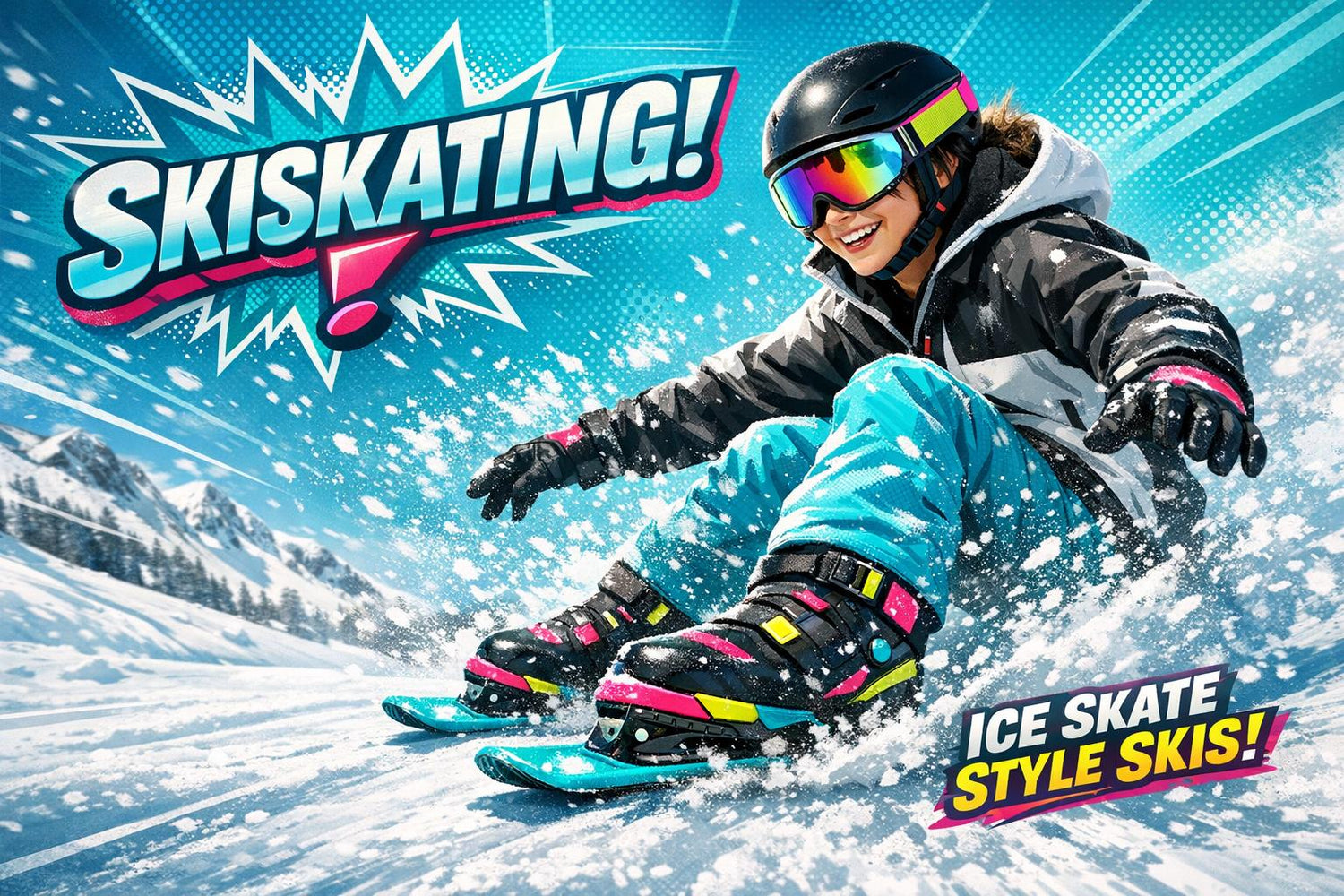
Skiskating is making waves in 2026 as the newest winter sport that combines the glide of skiing with the movement of ice skating. Forget heavy skis and clunky boots - this sport uses compact gear, like 15- to 20-inch mini skis, that fit in a backpack and attach to your regular winter or snowboard boots. It’s easy to learn (most pick it up in 5–30 minutes), affordable (starting at $190), and works on slopes, trails, or even your backyard.
Why People Love Skiskating:
- Portable: Fits in a backpack, unlike bulky skis.
- Affordable: Costs less than traditional ski setups.
- Simple to Learn: Perfect for beginners and freestyle enthusiasts.
- Versatile: Works on groomed slopes, snow parks, hiking trails, and more.
Snowfeet*, the leading brand, offers models ranging from 38 cm to 99 cm, catering to all skill levels. Whether you’re carving on groomed runs or pulling off tricks in a snow park, skiskating is a fun, lightweight alternative to traditional skiing. With over 50,000 riders worldwide and stellar reviews, it’s clear this sport is here to stay.
What Is Skiskating?
Skiskating is a winter sport that blends the movement of ice skating with the glide of skiing. Instead of the usual long skis, you use compact 15- to 20-inch skis that attach directly to your winter or snowboard boots. This setup lets you glide, carve, spin, and even ride backward on snow - kind of like ice skating, but on a snowy surface.
The sport has come a long way, with brands like Snowfeet* leading the charge in making it more popular. By 2026, over 50,000 people worldwide had taken up skiskating, thanks to their innovative designs.
How Skiskating Combines Skiing and Skating
What makes skiskating so fun is how naturally it mimics skating movements, but on snow. Picture yourself standing with your feet shoulder-width apart, knees slightly bent, and your weight balanced - or shifted back onto your heels - just like inline or ice skating. This stance gives you the freedom to push off, carve tight turns, jump, and even pull off tricks that are tough to do with traditional skis.
Stopping is pretty easy, too. You can pull off a "hockey stop" by turning your feet sideways to the slope, or rely on the built-in heel brake that many Snowfeet* models include.
"As a pro skater the feeling of rollerblades on my feet is the feeling of being at home... Snowfeet happened... I can rip all of my inline tricks on these!"
– Logan @xskyskaterx, Professional Skater
The thoughtful design and engineering behind Snowfeet* skiskates make them a game-changer for winter sports enthusiasts.
Features That Make Snowfeet* Skiskates Stand Out
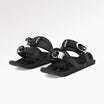
Snowfeet* takes skiskating to the next level with gear that’s versatile, portable, and built to last. Their skiskates are made from tough fiberglass composites, and the metal edges ensure precise carving and secure stops on groomed slopes. Premium models, like the 44 cm Skiskates, even feature a wood core similar to high-performance skis.
One of the best parts? These skiskates are compatible with regular winter or snowboard boots. The adjustable bindings fit US sizes 6–13 (EU 38–47), so you don’t need to deal with clunky rental boots.
Their compact size - ranging from 38 cm to 50 cm - makes them easy to pack into a standard backpack, so you can bring them along without any hassle. Plus, they meet standard safety requirements, which means most ski resorts allow them on the slopes.
Snowfeet* has also earned some serious accolades. They were a finalist at ISPO, the world’s largest sports equipment trade show, and won the A'design competition, a prestigious global design contest. With prices starting at $190 for the basic 38 cm model and going up to $590 for the professional 44 cm wood core version, there’s an option for every budget and skill level.
Snowfeet*: Portable Winter Sports Gear
Tired of wrestling with oversized ski gear on public transit or cramming long skis into your car? Snowfeet* might just be your new winter go-to. These skiskates, measuring only 15 to 20 inches, are a game-changer compared to traditional skis that often exceed 59 inches. They’re small enough to fit neatly into a standard backpack, making them a breeze to carry wherever your winter adventures take you.
What’s even better? You don’t need special boots. Snowfeet* are designed to work with your regular winter boots, making them super convenient for on-the-go fun.
"Far more portable and affordable than traditional skis or snowboards." - Uncrate
Snowfeet* aren’t just about portability - they’re versatile too. While traditional skis are best suited for groomed slopes, these skiskates are ready for almost any terrain. Whether you’re exploring forest trails, hiking paths, sledding hills, or even your own backyard, Snowfeet* deliver. And yes, they can handle professional ski slopes too. With integrated metal edges for control and built-in heel brakes for added safety, they’re built for both precision and agility, even in tight spots.
Snowfeet* Models: From 44 cm to 99 cm
Snowfeet* has created a range of models to cater to different riding preferences and skill levels. From the super-compact 44 cm Skiskates to the longer 99 cm Skiblades, there’s something for everyone - whether you’re after portability or a faster ride on varied terrain. Plus, all models are compatible with standard ski or snowboard boots, making them a flexible option for winter sports enthusiasts.
Snowfeet* Mini Ski Skates (44 cm): Small, Lightweight, and Travel-Friendly
At just 44 cm (about 17 inches), the Mini Ski Skates are billed as the "world's shortest skis". Their compact size makes them easy to pack into a regular backpack, which is great if you’re traveling and don’t want to deal with bulky gear. Despite their small size, they pack a punch with features like a sustainably sourced wood core (handcrafted in Europe), metal edges for control, and graphite bases for speed. They shine on groomed slopes and in terrain parks, where they let you glide and perform tricks much like ice skates - only on snow.
"In my opinion, Skiskates is the best product for slopes we developed so far. I love how easy they are to ski and skate and how many different kinds of tricks I can perform without much effort."
- Zbyněk, Founder, Snowfeet*
These skates have a stellar 5.0/5 rating based on 111 reviews and are priced between $490 and $590. Most users report being able to get the hang of them in just five minutes. For those looking for even more control and balance, the Snowfeet* PRO offers an upgraded experience.
Snowfeet* PRO (50 cm): More Stability and Versatility
If you want a bit more stability without sacrificing portability, the PRO model is a solid pick. Adding just 6 cm in length, it offers better balance and control, thanks to its fiberglass-reinforced core. This design also makes the PRO lighter and tougher, so it can handle more than just slopes - it’s great for hiking trails, sledding hills, and even backyard fun. A built-in heel brake adds an extra layer of control.
"If you are a blader or rollerskater get [the 50 cm PRO]. They have ribs in the middle that feel more like wheels... If you are normally a skier get the SKISKATES [44 cm]."
- Logan @xskyskaterx, Professional Skater
With over 2,260 reviews and a 4.9/5 rating, the PRO model is priced between $207 and $299. It’s a fantastic option for beginners who want something easy to learn but versatile enough to grow with them.
Longer Models (65 cm and 99 cm): Built for Speed and Powder
For those who crave the feel of traditional skiing, Snowfeet* offers longer models. The 65 cm and 99 cm versions share the same high-quality wood core and metal edges as the shorter options but are designed for different conditions. The 99 cm model, in particular, excels in powder, handling up to 10 cm of snow with ease. It also delivers enhanced stability, making it ideal for aggressive carving.
The 65 cm model starts at $550, while the 99 cm version is priced at $590. Both models boast perfect 5.0/5 ratings from users. With over 50,000 Snowfeet riders around the globe, these longer skis prove that compact designs can still deliver on performance, whether you’re carving down a slope or floating through fresh powder.
Skiskating vs. Regular Skiing and Snowboarding
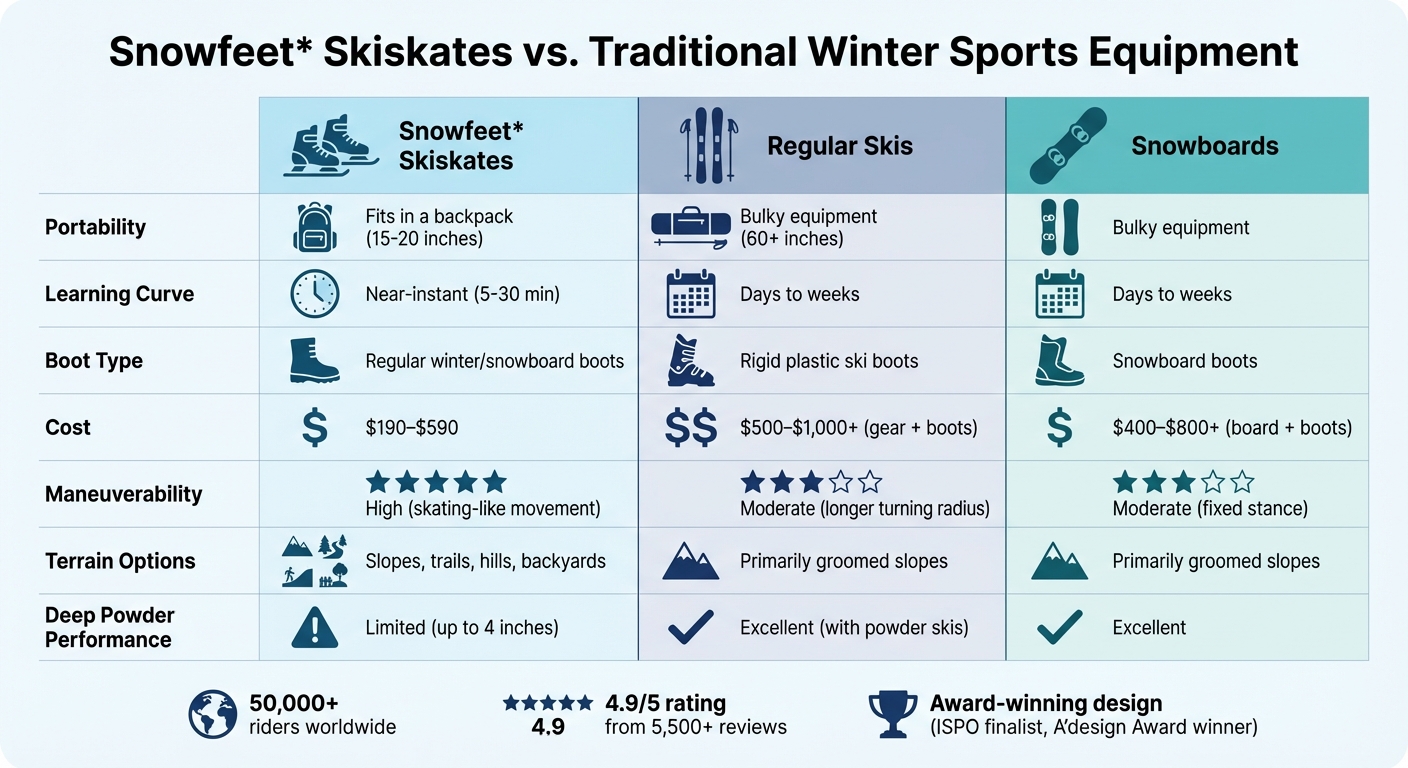
Snowfeet Skiskates vs Traditional Skis and Snowboards Comparison Chart
Let’s face it - traditional skis and snowboards can be a pain to lug around. They’re heavy, take up a ton of space, and don’t exactly scream "convenience." Enter Snowfeet* - a lighter, faster, and way more portable alternative that’s turning heads in the winter sports world.
Why Snowfeet* Outshines Long Skis
Snowfeet* aren’t just easier to carry - they’re designed to make your time on the slopes smoother and simpler. First off, portability is a game-changer. Measuring just 17–20 inches, Snowfeet* fit neatly into a backpack. That means no more dealing with roof racks, oversized ski bags, or awkwardly hauling heavy gear. Compare that to traditional skis, which are typically over 60 inches long and a storage nightmare.
Another big win? Snowfeet* are incredibly easy to learn. Their intuitive design eliminates common beginner frustrations like "tip crossing", which lets you hit the slopes with confidence almost right away.
And here’s the kicker: you don’t need specialized ski boots. Snowfeet* work with your regular waterproof winter boots or snowboard boots. This makes it super convenient to switch from skiing to walking around the resort - no clunky boot changes required. Plus, you’ll avoid the physical strain of dragging around traditional ski gear.
Comparison Table: Snowfeet* vs. Regular Skis and Snowboards
| Feature | Snowfeet* Skiskates | Regular Skis | Snowboards |
|---|---|---|---|
| Portability | Fits in a backpack | Bulky equipment | Bulky equipment |
| Learning Curve | Near-instant | Requires days to weeks | Requires days to weeks |
| Boot Type | Winter boots or snowboard boots | Rigid plastic ski boots | Snowboard boots |
| Cost | $190–$590 | $500–$1,000+ (gear + boots) | $400–$800+ (board + boots) |
| Maneuverability | High (skating-like movement) | Moderate (longer turning radius) | Moderate (fixed stance) |
| Terrain Options | Slopes, trails, hills, backyards | Primarily groomed slopes | Primarily groomed slopes |
| Deep Powder | Limited (up to 4 inches) | Excellent (with powder skis) | Excellent |
Now, Snowfeet* might not be your go-to for deep powder or extreme slopes, but they’re perfect for groomed runs, terrain parks, and even backyard fun. They’re less hassle, more freedom, and way more affordable. With over 50,000 riders worldwide and a stellar 4.9/5 rating from 5,500+ verified reviews, it’s clear that skiskating isn’t just a quirky trend - it’s shaking up the winter sports scene in a big way.
Where Can You Use Snowfeet*?
Snowfeet* shine when it comes to flexibility. Unlike traditional skis, which are mostly for groomed resort trails, these compact wonders open up a world of possibilities. From official ski slopes to your own backyard, Snowfeet* are ready to tackle a variety of terrains.
On groomed slopes and in snowparks, Snowfeet* truly come alive. Their metal edges grip packed snow, giving you precise control for carving and managing speed. Plus, their small size makes freestyle tricks feel effortless. One rider even compared it to "rollerskating at a skate park, but better!"
But Snowfeet* aren't limited to ski resorts. They’re great for hiking trails, forest paths, and even sledding hills. Thanks to their short length - just 17–20 inches - they work on trails where long skis would be a hassle. Imagine hiking up a snowy trail and then sliding back down - it’s a fun, low-key way to enjoy winter, whether you're with family or just playing around in your backyard after a snowstorm.
That said, there are a few limitations to keep in mind. Snowfeet* handle light powder up to about 4 inches (10 cm) without a hitch. But in deeper powder, their smaller surface area makes it tough to stay afloat. Similarly, they’re not ideal for extremely steep slopes or rough, ungroomed terrain filled with bumps and holes. For those situations - or if you’re dealing with deep snow - consider Snowfeet*’s longer models for better performance.
Before hitting the slopes, it’s a good idea to check your resort’s equipment rules. Treat Snowfeet* as you would regular skis to stay within guidelines. Most ski resorts allow them since they meet safety standards with their metal edges, but confirming ahead of time can save you a headache. And the best part? Snowfeet* let you enjoy winter fun without needing pricey lift tickets.
sbb-itb-17ade95
Best Conditions for Snowfeet*
Snowfeet* work best on groomed and packed snow - those smooth, well-maintained slopes and trails you find at ski resorts. This type of surface gives you the stability and resistance needed for carving, controlling your speed, and even pulling off tricks. Think of it like rollerskating on a freshly paved road compared to trying it on gravel. Packed snow is where these mini skis show off their full potential.
When it comes to powder, there are limits. Snowfeet* handle powder up to about 4 inches (10 cm). Anything deeper, and you'll need longer models for better floatation. If you're planning to ride in deeper powder, check out options like the 99 cm Skiblades, which are designed to keep you afloat more effectively.
Thanks to their metal edges, Snowfeet* offer excellent control on icy, hard-packed surfaces. Regular waxing is key to maintaining speed and preventing snow from sticking. Unlike traditional skis, which can feel bulky on firm snow, these compact skates excel at precise edge control, making carving and stopping feel as natural as skating on ice.
That said, avoid steep or uneven terrain. With a short base length - usually under 20 inches (50 cm) - you'll need to pay extra attention to your front-to-back balance on bumpy surfaces. If you hit rough patches, leaning back slightly and lifting your toes can help keep the tips from digging in. These conditions create a great learning and riding experience for all skill levels, as outlined below.
Terrain Recommendations by Skill Level
Beginners should stick to flat areas, local sledding hills, or easy blue runs at ski resorts. These spots let you get the hang of balancing without worrying about steep slopes. Beginner-friendly models are designed for slower, more controlled rides. Even your backyard after a snowfall or the neighborhood sledding hill can be a perfect place to start - no need for a lift ticket.
Intermediate riders will feel right at home on groomed slopes, red runs, and narrow hiking trails. At this stage, models like the 44 cm Skiskates or 50 cm PRO offer the control you need for carving on packed snow while staying lightweight and portable. Snow parks also become an option, with the compact size making tricks and jumps feel more intuitive.
Advanced skiskaters can take on terrain parks, moguls, steep groomed slopes, and forest paths. Models like the 44 cm PRO or 99 cm Skiblades are built for aggressive riding, jumps, and more technical challenges. However, even for advanced riders, deep powder over 4 inches is still tough terrain for the shorter models.
| Terrain Type | Suitability | Recommended Skill Level |
|---|---|---|
| Groomed Ski Slopes | Ideal | Intermediate to Advanced |
| Packed Snow Trails | Ideal | All Levels |
| Snow Parks | Excellent | Intermediate to Advanced |
| Sledding Hills / Backyards | Excellent | Beginners |
| Light Powder (<4 inches) | Limited | Intermediate to Advanced |
| Deep Powder (>4 inches) | Poor / Not Recommended | Not Recommended |
| Extremely Steep Slopes | Not Recommended | Not Recommended |
Getting Started: Sizing, Fit, and Boot Compatibility
When choosing your gear, the first step is matching the boots to the right model. Snowfeet* offers two main options: the 38 cm and 50 cm models, which work with winter shoes or snowboard boots - no need to invest in pricey ski boots. On the other hand, the Skiskates (44 cm) are designed for more serious riders and require either traditional ski boots or snowboard boots. Let’s break down the details on sizing and fit.
The standard Snowfeet* models are adjustable to fit US sizes 6–13 (EU 38–47), making them a great option for most adults. These models come with tool-free bindings for convenience. For younger riders or those with smaller feet, the Snowfeet* Mini fits EU sizes 27–38 (US Kids 10 to Adult 6) and is priced at $199. If Skiskates are more your style, the ski boot version accommodates US sizes 4.5–14.5 (EU 36–49), while the snowboard boot version fits US sizes 6–14.5 (EU 38–49).
Binding type is another key factor to consider. The Basic model, priced at $190, works well with winter shoes but isn’t the best choice for snowboard boots. For more versatility, the Standard ($250) and Pro X ($290) bindings include extra straps and better adjustability, making them compatible with both winter shoes and snowboard boots. If you have smaller adult feet, snowboard boots can provide a more secure fit.
"I wore them with my men's size 9.5 US snowboarding boots, and they fit comfortably and securely."
- Chan Saelee, Verified User
Your choice of model should also depend on your riding plans. If you're heading to groomed slopes or terrain parks, the Skiskates (44 cm) paired with ski or snowboard boots are the way to go. For forest trails or sledding hills, the shorter Snowfeet* models (38 cm or 50 cm) are ideal - they’re lightweight, flexible, and easy to carry. Beginners might find the 50 cm model or the Carbon Fiber edition of the 38 cm model more forgiving, as they offer a slower, more controlled ride - perfect for learning.
Getting the right fit and boots isn’t just about comfort; it’s about improving your performance and enjoying the ride. Snowfeet* makes it easy to find the perfect setup for your adventures.
Choosing the Right Snowfeet* Model
Picking the perfect Snowfeet* model comes down to your skill level, the terrain you’ll be tackling, and your riding background. If you’re just starting out, the 38 cm Mini Ski Skates are a solid choice. For extra control, check out the Carbon Fiber Edition - it offers a smoother, more manageable ride. Intermediate riders, on the other hand, might lean toward the 50 cm model. It strikes a great balance between stability and portability, making it a versatile option.
Once you’ve built up some confidence and want to take on more serious slopes, the 44 cm Skiskates are worth considering. Designed with a wood core similar to professional skis, these skates are made for groomed runs and terrain parks. They’re ideal for carving, tricks, and jumps, offering speed and responsiveness that make them a thrill to ride.
For those chasing speed or deeper snow adventures, the 65 cm and 99 cm models are your go-to options. The 65 cm Skiblades combine the best of skis and skates, while the 99 cm model is built for high-speed carving and performs like traditional short skis. The longer length gives you the stability you need for aggressive riding and powder-filled runs.
Your riding background also plays a big role in your decision. Inline skaters or rollerbladers might feel more at home with the 38 cm or 50 cm models, thanks to their ribbed design that mimics the feel of wheels. Skiers, on the other hand, will likely gravitate toward the 44 cm Skiskates or the longer Skiblades, which allow for drifting and carving like regular skis. As professional skater Logan (@xskyskaterx) puts it:
"If you are a blader or rollerskater get THESE ONES [Snowfeet 38/50 cm]. They have ribs in the middle that feel more like wheels... If you are normally a skier get the SKISKATES. They have no ribs and feel more like skis."
Choosing the right model not only enhances your ride but also highlights the portability and ease that make Snowfeet* so fun to use. Once you’ve settled on a model, it’s time to think about boots and bindings to complete your setup.
Boot and Binding Compatibility
Getting the right boots and bindings is key to unlocking the full potential of your Snowfeet*. For the 38 cm and 50 cm models, regular winter shoes fit just fine. But if you’re eyeing the 44 cm Skiskates or the longer models, you’ll need ski or snowboard boots for a secure fit.
Bindings are another important piece of the puzzle. The Basic binding ($190) is designed exclusively for winter shoes, while the Standard ($250) and Pro X ($290) bindings offer extra straps and adjustability, making them compatible with both winter shoes and snowboard boots.
The type of boots you choose depends on your riding style. Snowboard boots are more flexible and great for tricks, plus they’re easier to walk in. Ski boots, on the other hand, provide more stability and control, especially on steep slopes. If you have smaller feet, snowboard boots often offer a snugger fit, particularly with the shorter models.
Pairing the right boots and bindings with your Snowfeet* model ensures you’ll get the best performance and control out of every ride.
Design and Materials: What Makes Snowfeet* Different
Award-Winning Design and Materials
Snowfeet* crafts its gear with top-tier materials designed for both performance and durability. The shorter models, measuring 38 cm and 50 cm, are handmade in Europe using fiberglass-reinforced polyamide. This material keeps them lightweight while ensuring they can handle plenty of wear and tear. For the 44 cm Skiskates and longer models, Snowfeet* uses a certified sustainable wood core with cap construction, similar to what you’d find in professional-grade downhill skis.
Each model comes packed with high-performance features. Steel edges provide precise control, while the graphite or sintered bases ensure you glide smoothly at high speeds. A protective topsheet adds extra durability, and for beginners looking for a bit more balance, the Carbon Fiber Edition offers enhanced stability. This thoughtful construction ensures that every ride feels safe, smooth, and exhilarating - qualities that riders have come to depend on.
Patents and Industry Recognition
Snowfeet*’s innovative designs haven’t gone unnoticed. The company holds patents for its unique approach to winter sports gear, and their efforts have earned significant industry recognition. Snowfeet* was a finalist at ISPO, the world’s largest sports equipment trade show, and has taken home prestigious awards like the A'design Award and the IDA (International Design Awards). These accolades aren’t just for show - they highlight how Snowfeet* is reshaping the way we think about winter sports equipment.
In November 2023, Snowfeet* launched a Kickstarter campaign to fund their new Snowfeet Pro model. By January 2024, the campaign had raised over $100,000 to kickstart production. With more than 50,000 riders worldwide and over 5,500 verified reviews averaging 4.9/5 stars, Snowfeet* has built a loyal community that values the quality and innovation behind their gear.
Why Skiskating Is Growing in Popularity
Who Is Skiskating For?
Skiskating is catching on with people of all ages - from kids as young as 5 to folks well into their golden years. If you’ve got experience with ice skating, hockey, or rollerblading, you’ll likely pick up the movement quickly - it’s a natural transition.
One big reason for its growing popularity? It’s much easier on the wallet compared to traditional skiing. Forget expensive lift tickets or costly gear. With Snowfeet*, you can hit the slopes of your local sledding hill, explore hiking trails, or even carve turns in your own backyard - no need for pricey resort passes.
Skiskating has also piqued the interest of ski instructors, who love the agility it provides when teaching kids. Freestyle fans are getting in on the action too, using skiskates to pull off tricks like 360s, 720s, and even riding backward in snow parks. And because skiskates are so compact, you can toss them in a regular backpack - no more dealing with bulky ski bags or roof racks, making spontaneous winter outings a breeze.
This versatility and accessibility have positioned Snowfeet* as a driving force in the skiskating movement.
Snowfeet*: Leading the Category
Snowfeet* has taken skiskating to the next level. As a global leader in the short skis category, they’ve attracted over 50,000 riders and boast 5,500 verified reviews with an impressive 4.9/5 rating. Recognized with awards from ISPO, A’design, and IDA, the company isn’t just selling gear - they’re on a mission to make skiskating a mainstream winter sport. Their ultimate goal? Olympic recognition.
FAQs
Why is skiskating easier to learn than traditional skiing?
Skiskating is a breeze compared to traditional skiing, thanks to Snowfeet Skiskates. These mini skis are ultra-short (just 44 cm), super lightweight, and incredibly easy to use. They strap right onto your winter boots - no need for clunky gear like poles, bindings, or full-length skis. Their compact design makes balancing and turning feel a lot like ice skating, so you can start gliding and carving almost immediately.
Traditional skiing often means spending time mastering tricky techniques like edge control and weight shifting. Snowfeet Skiskates skip all that complexity. Their shorter length makes learning straightforward, so you can hit the slopes with confidence and start having fun from the get-go.
What makes Snowfeet* gear different from traditional ski equipment?
Snowfeet* gear brings a whole new twist to winter fun with its ultra-short, 17-inch skiskates. Forget the bulky skis and heavy boots - you just strap these onto your regular winter shoes or snowboard boots (sizes 6–13 US) using the adjustable, tool-free bindings. That’s right, no need for specialized ski boots! Plus, they’re super lightweight and easy to carry, making them perfect for anyone looking to dive into winter sports without the hassle.
What sets Snowfeet* skiskates apart? They come with metal ski edges that give you great control and let you stop on a dime. Whether you’re carving down slopes, gliding along trails, or just exploring, their compact design makes it all feel smooth and effortless. Their small size also means quicker turns, more agility, and a shorter learning curve - ideal for anyone looking to shake up their usual skiing routine.
Can you use skiskates in deep powder snow?
Skiskating with Snowfeet Skiskates works best on groomed slopes or packed snow. While they can handle a variety of terrains, they're not ideal for deep powder. For the smoothest ride, stick to well-maintained trails or firmer snow surfaces.











Leave a comment
This site is protected by hCaptcha and the hCaptcha Privacy Policy and Terms of Service apply.