







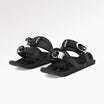












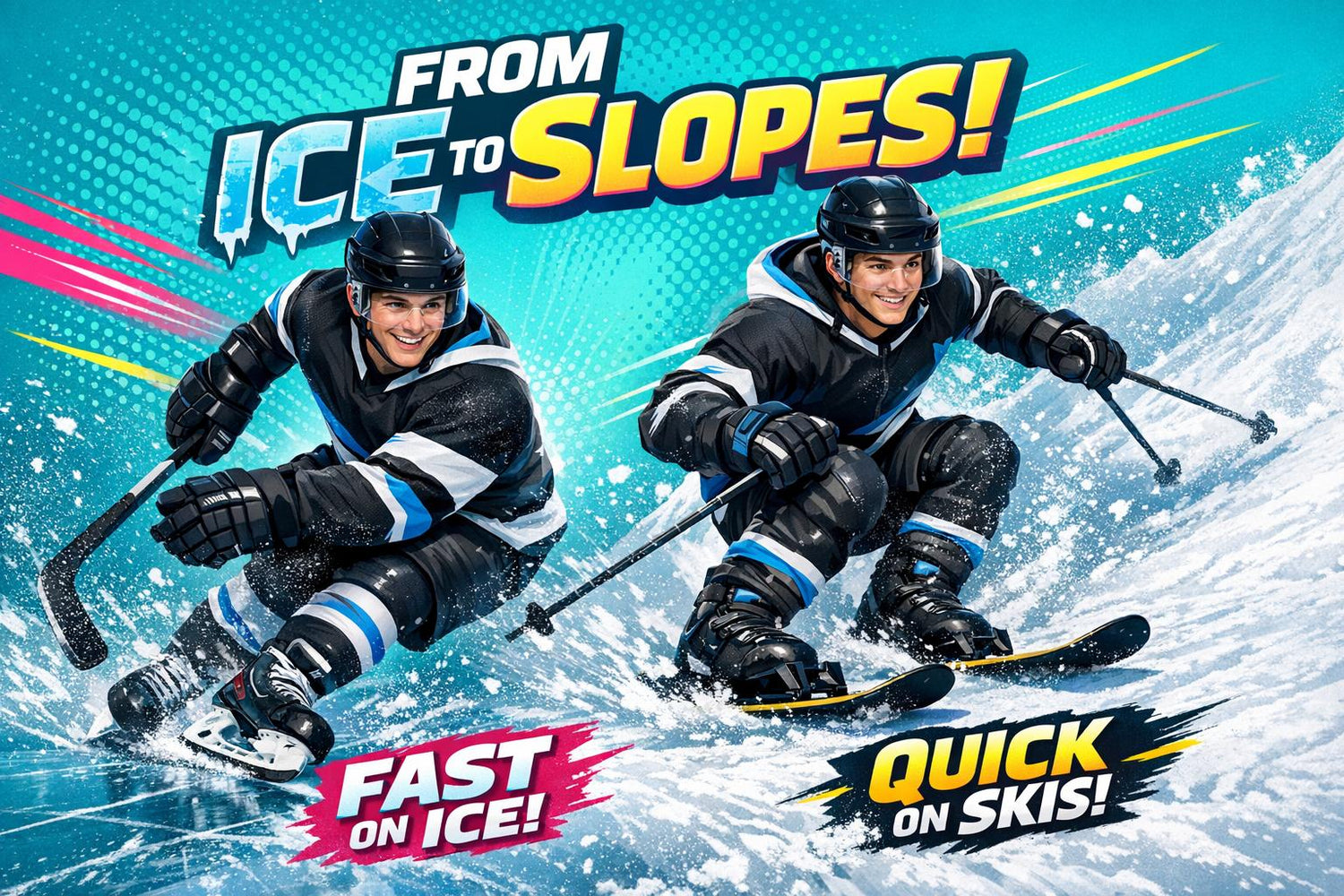
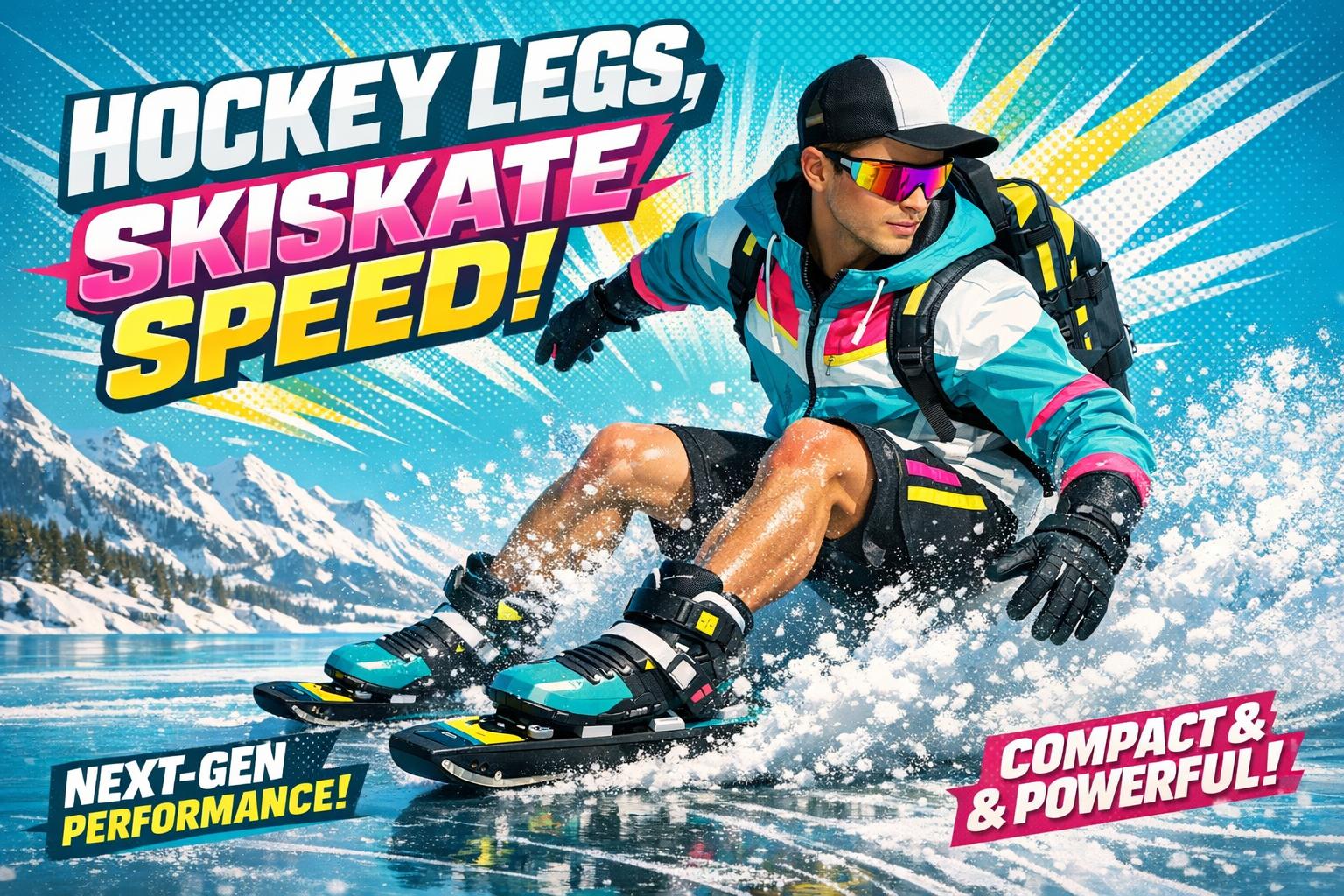
Hockey players crush it when it comes to picking up skiskating. Why? Their ice-skating skills translate almost perfectly to the slopes, especially when using compact gear like Snowfeet Skiskates. These 17-inch mini skis feel more like skates than traditional skis, making the switch simple and fast - most hockey players get the hang of it in just five minutes.
Here’s why skiskating clicks for them:
- Familiar Movements: The side-to-side push and hockey stop are the same as on ice.
- Compact Gear: At 44 cm (17 inches), Snowfeet Skiskates are lightweight and easy to control - no clunky, long skis.
- No Bulky Boots: They attach to regular winter boots, skipping the stiff, restrictive ski boot hassle.
Traditional skiing, on the other hand, can feel awkward for hockey players. Long skis and forward-leaning techniques don’t match their ice-skating habits, making the learning curve steeper. Snowfeet Skiskates solve this by letting hockey players use their existing skills to glide, stop, and turn with ease.
With over 50,000 users and a 4.9/5-star rating, it’s clear skiskating is gaining momentum. Whether you’re hitting groomed slopes or snowy trails, these skates make snow sports way more accessible - and fun.
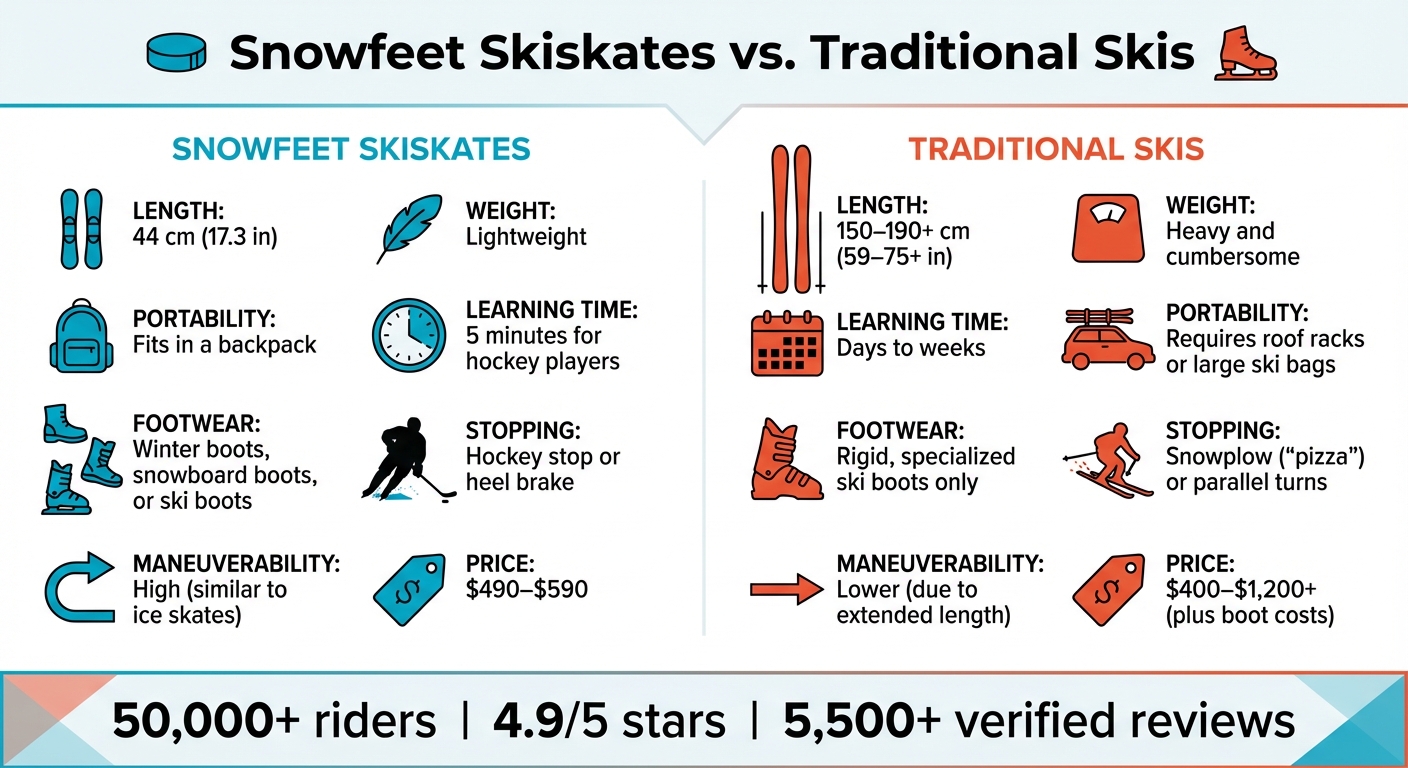
Snowfeet Skiskates vs Traditional Skis Comparison for Hockey Players
Hockey Player Tries Snowfeet* Skiskates | See What He Thinks | Skiboards | Short Ski | Mini Ski
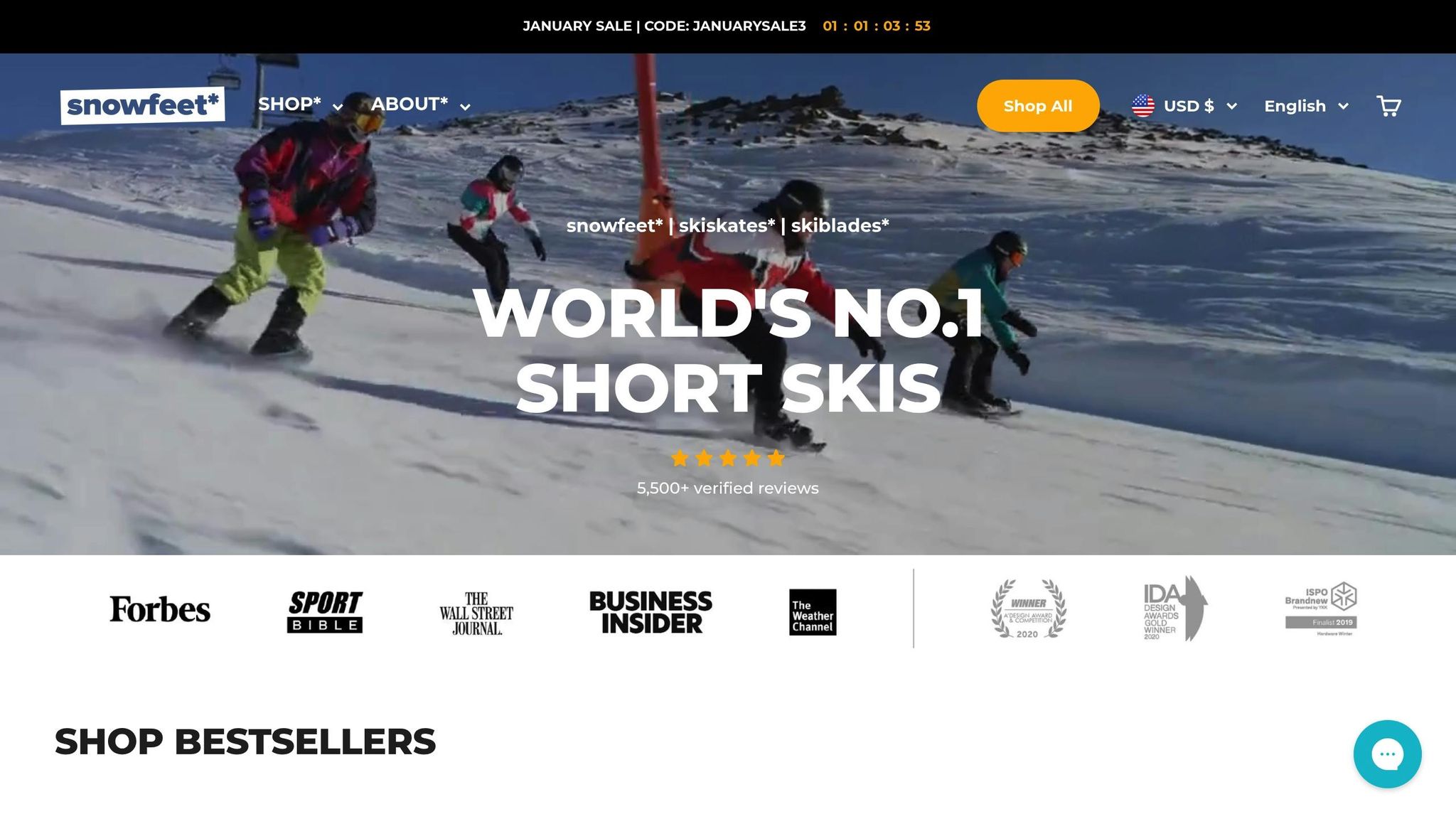
Problems Hockey Players Face with Traditional Skiing
Hockey players often find that their ice skills don’t translate well to traditional skiing. The techniques and equipment that make them excel on the ice can actually work against them on the slopes. The gear is different, the techniques are unfamiliar, and the learning curve can be steep. These challenges make alternatives like skiskating a more natural fit for hockey players.
The Challenge of Long Skis
Traditional skis are much longer and heavier than hockey skates. This extra length demands a completely different technique. On the ice, hockey players keep their weight centered or slightly back. But with skis, you’re expected to lean forward, which can throw off their balance entirely. For someone used to the quick, controlled movements of hockey, this shift feels awkward and unnatural.
Then there’s the issue of agility. Hockey players rely on quick pivots and sharp stops, but traditional skis - with all that extra material - make those moves nearly impossible. Instead of the swift, precise control they’re used to, they’re left wrestling with bulky equipment that feels anything but intuitive.
Stiff and Bulky Gear
Another big hurdle? The gear. Traditional ski boots are stiff and restrict ankle movement. For hockey players accustomed to the freedom of motion in their skates, this can feel incredibly limiting.
"You are able to move freely as opposed to wearing heavy clunky skis." – Snowfeet
On top of that, skiing comes with a lot of logistical headaches. The heavy gear requires roof racks, extra storage space at resorts, and time spent adjusting bindings. It’s not just a physical adjustment - it’s a hassle to transport and manage all that equipment. These challenges make the transition from ice skating to traditional skiing feel like a chore, which is why many hockey players are drawn to simpler, more accessible options like Snowfeet* Skiskates.
How Snowfeet* Skiskates Solve These Problems
Snowfeet* Skiskates tackle the challenges of traditional skis by letting you channel your ice-skating skills directly onto the snow. At just 44 cm long, these skates let you use the same quick turns, sharp stops, and edge control that hockey players and ice-skaters already know by heart.
Direct Skill Transfer from Hockey to Skiskating
There’s almost no learning curve here - you're not picking up a new sport; you’re just taking what you already know and applying it to a snowy slope. Start just like you would on ice: push sideways and shift your weight. As the Snowfeet Team puts it, "The best way to start your ride is to skate like a hockey player."
Stopping? Use your hockey stop technique - distribute your weight evenly and angle the edges. Turning is just as intuitive: tilt the skates to their edges and let your body naturally follow, just like you would on ice. Even your stance stays familiar: legs shoulder-width apart, knees slightly bent, and your weight centered over or just behind your feet.
"It is very easy for hockey players, ice-skaters, and roller-bladers, since it is very similar to skating." – Snowfeet Team
The adjustable metal edges give you precise control, whether you’re tuning them at home or taking them to a ski shop. Plus, their lightweight, compact design keeps your movements free and unrestricted.
Key Features of Snowfeet* Skiskates
Snowfeet* Skiskates combine intuitive handling with smart engineering to enhance your performance. At 44 cm (17.3 in) long, they’re compact yet powerful and start at $575. Built with a lightweight wood core, they fit standard US shoe sizes 6–13 (EU 38–47) and work with your own waterproof winter or snowboard boots - no need for stiff ski boots that limit ankle movement.
Perfect for groomed slopes, trails, and snow parks, these skates are small enough to toss in a backpack. They’re easy to adjust on the go, with simple bindings you can tweak at home. Keep them in top shape with regular waxing to smooth the base and drying the metal edges after use. With a 5.0/5 rating and a learning time of just five minutes, it’s clear why Snowfeet* Skiskates are a game-changer for snow enthusiasts.
sbb-itb-17ade95
Snowfeet* Skiskates vs. Traditional Skis
Benefits of Snowfeet* Skiskates
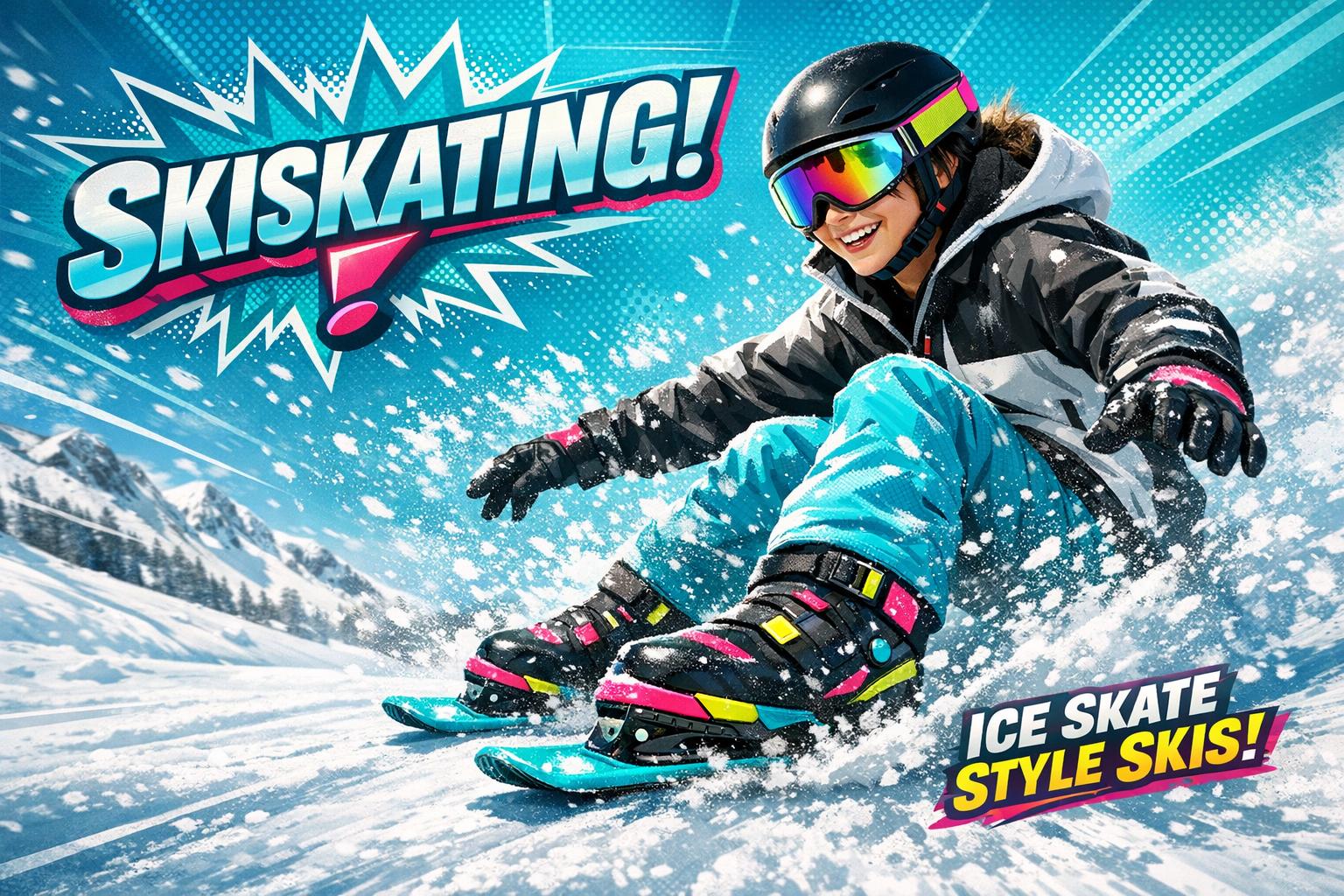
For hockey players, Snowfeet* Skiskates offer a game-changing alternative to traditional skis. These compact skates, measuring just 44 cm (17.3 inches), bring the agility of ice skating to the slopes. They allow for tight turns, backward riding, spins, and even jumps - all without the hassle of long, bulky skis. Plus, they’re incredibly portable. You can toss them in a backpack and head out to remote trails or backcountry spots without needing roof racks or oversized ski bags.
Another bonus? You don’t need specialized ski boots. Snowfeet* Skiskates work with your regular waterproof winter boots or snowboard boots, giving you more flexibility and comfort. If you’re a hockey player, you’ll love how easy it is to transfer your skating skills to the slopes. Moves like the hockey stop and your natural skating stride translate seamlessly, cutting out the need for lengthy lessons.
These skates aren't limited to groomed slopes either. You can use them on hiking trails, sledding hills, or even cross-country paths. They strip away the bulk and restrictions of traditional skis, offering a level of freedom and performance that’s hard to beat. For hockey players, Snowfeet* Skiskates solve many of the challenges they face when transitioning to skiing.
Comparison Table: Snowfeet* Skiskates vs. Traditional Skis
| Feature | Snowfeet* Skiskates | Traditional Skis |
|---|---|---|
| Length | 44 cm (17.3 in) | 150–190+ cm (59–75+ in) |
| Weight | Lightweight | Heavy and cumbersome |
| Portability | Fits in a backpack | Requires roof racks or large ski bags |
| Learning Time | About 5 minutes for hockey players | Days to weeks |
| Footwear | Compatible with winter boots, snowboard boots, or ski boots | Requires rigid, specialized ski boots |
| Stopping | Hockey stop or heel brake | Snowplow ("pizza") or parallel turns |
| Maneuverability | High - similar to ice skates | Lower, due to extended length |
| Price | $490–$590 | $400–$1,200+ (plus boot costs) |
Hockey Players Using Snowfeet* Skiskates in 2026
What Hockey Players Say About Snowfeet* Skiskates
For hockey players, Snowfeet* Skiskates feel like second nature. The movements closely mimic what they're used to on the ice, making the transition to snow a breeze. By early 2026, over 50,000 riders and more than 5,500 verified reviews have given these skiskates an impressive 4.9/5-star rating overall, with 96% of users awarding five stars to the 44 cm model.
"These felt so familiar to skating but on snow! I instantly picked it up when I first hit the slopes without any difficulty. If you are a casual ice skater or hockey player, these will easily accommodate you with a very low learning curve."
– Jonjon, Hockey Player
Hockey players praise how naturally the skiskates replicate the mechanics of ice skating. The side push-off, the trusty hockey stop for speed control, and the front-to-back balance they've mastered on the rink all come into play seamlessly. Testimonials like Andrew B.'s echo this ease of adaptation, highlighting how Snowfeet* Skiskates bridge the gap between ice and snow sports. These glowing reviews underscore why skiskating is quickly gaining traction among winter sports enthusiasts.
Skiskating's Growing Popularity in 2026
Fueled by hockey players' enthusiasm, skiskating is emerging as a distinct winter sport. The skills honed on the rink translate effortlessly to the slopes, making it a natural fit for players. What started as a recreational activity is now gaining serious momentum, with some even envisioning skiskating as a future Olympic event.
The appeal lies in its simplicity and versatility. Snowfeet* Skiskates are compact, compatible with most boots, and allow for a wide range of tricks and maneuvers. As Snowfeet* founder Zbyněk put it:
"In my opinion, Skiskates is the best product for slopes we developed so far. I love how easy they are to ski and skate and how many different kinds of tricks I can perform without much effort."
With social media amplifying its reach and winter sports communities embracing the trend, skiskating is carving out its niche in 2026. Snowfeet* continues to lead the charge, combining innovative design with proven performance to grow a community that's redefining snow sports.
Conclusion
Hockey players have a lot to gain with Snowfeet* Skiskates. At just 44 cm long, these skates are compact enough to fit in a backpack, making them a hassle-free alternative to traditional skis that often require roof racks or extra storage.
What’s even better? If you’re already comfortable on the ice, you’ll pick up skiskating in no time - most hockey players master it in about five minutes. Familiar moves like side pushes and hockey stops translate seamlessly, so there’s no steep learning curve.
Another perk? Forget the rigid boots that come with traditional skis. Snowfeet* Skiskates pair with ski or snowboard boots, offering a much more comfortable experience. And thanks to their lightweight design, you can pull off smooth spins, jumps, and even ride backward with ease.
With a global community of over 50,000 riders and a stellar 4.9/5-star rating from more than 5,500 verified reviews, it’s clear why these skiskates are a favorite among hockey players. They’re simple, effective, and just plain fun.
FAQs
Why do hockey players learn to use Snowfeet Skiskates faster than traditional skis?
Hockey players pick up Snowfeet Skiskates much faster than traditional skis, and it’s easy to see why. These compact skates, just 17 inches long, are designed to mimic the mechanics of hockey skating. Players can stick to their familiar shoulder-width stance and slightly bent knees - just like they do on the ice. Compare that to traditional skis, which are longer and require a more awkward, toe-heavy balance. The learning curve? Way steeper.
Snowfeet Skiskates also shine when it comes to sharp turns and edge control. Their short metal edges make quick pivots feel second nature, much like hockey moves. Traditional skis, on the other hand, demand a wider stance and slower, more deliberate movements - not exactly ideal for someone used to zipping around the rink.
What’s more, Skiskates are lightweight, easy to carry, and work great on groomed slopes or lift-accessed trails. For hockey players itching to dive into winter sports without losing their agility or control, these skates are a game-changer.
Why do hockey players find skiskating easier to learn than skiing?
Hockey players tend to pick up skiskating pretty quickly, and it’s no surprise why - it taps into the same skills they already use on the ice. Balance, edge control, and agility? Check. Snowfeet Skiskates are designed with these abilities in mind. They’re compact and lightweight, much like hockey skates, and their shorter length makes quick turns and precise edge work a breeze. Plus, the push-and-glide motion of skiskating feels a lot like skating on ice, so the transition feels smooth and natural.
Now, compare that to traditional skiing. Longer skis, a wider stance, and a completely different weight distribution can throw hockey players off their game. But with Snowfeet Skiskates, you can stick to the skating techniques you already know, making them a perfect option for hockey players who want to dive into winter sports without starting from scratch. It’s intuitive, fun, and just feels right.
Can you use Snowfeet Skiskates on different types of snow?
Snowfeet Skiskates are built to handle all kinds of snow surfaces, whether you're cruising down groomed slopes, tackling small jumps, navigating bumpy trails, or gliding through light powder. Their versatility makes them a great fit for most winter adventures.
That said, if you're planning to take on extremely steep slopes or deep powder, traditional skis or snowboards might be the way to go. Snowfeet Skiskates really shine when it comes to compact and moderately challenging terrain, offering a fun and unique way to enjoy the snow.











Leave a comment
This site is protected by hCaptcha and the hCaptcha Privacy Policy and Terms of Service apply.