







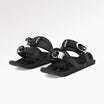












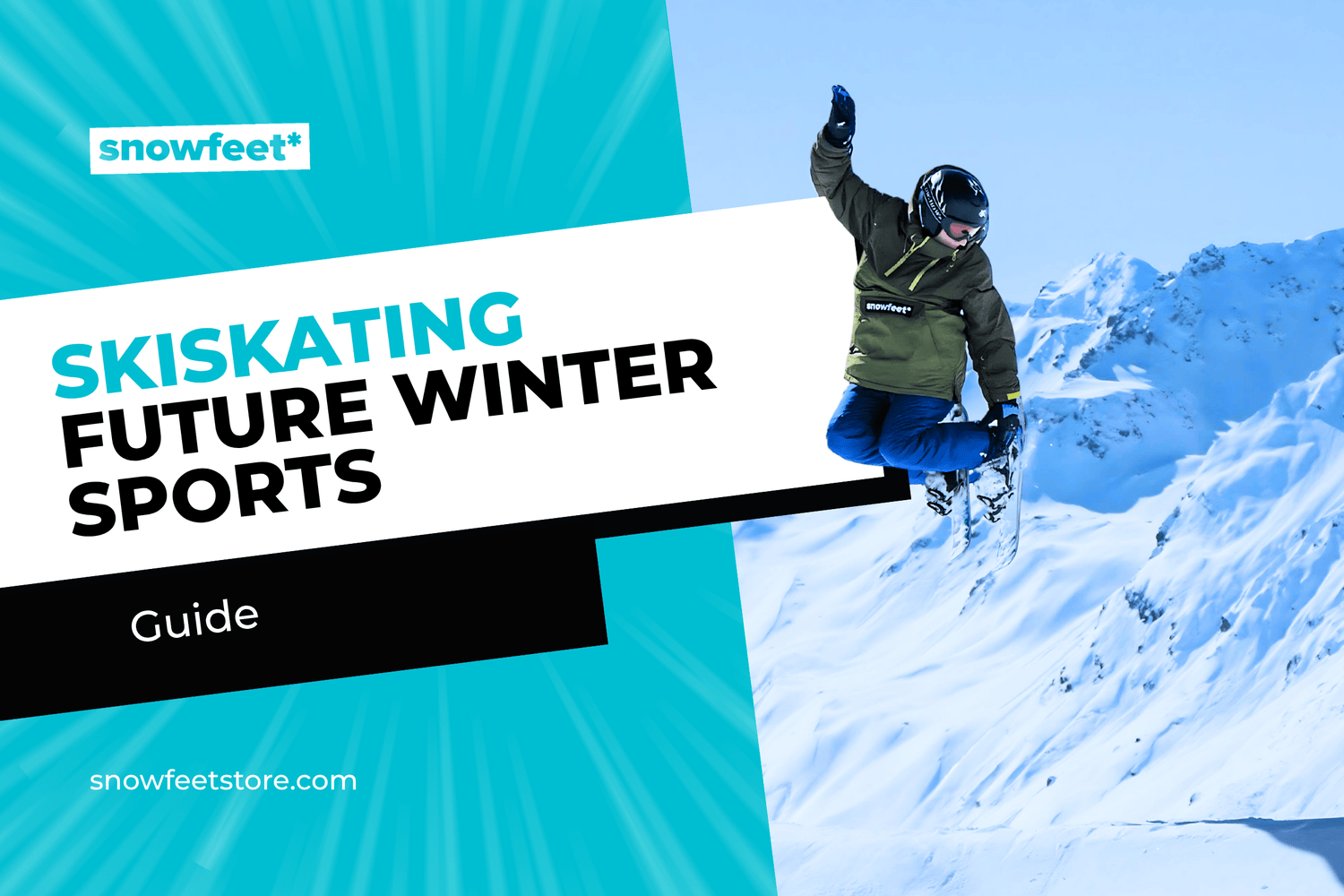
Skiskating is shaking up winter sports. It’s a mix of skiing and skating that’s lightweight, easy to learn, and much cheaper than skiing or snowboarding. Instead of bulky skis or boards, you strap on short skiskates or skiblades that attach to your regular winter boots. The result? A fun, portable way to glide on snow without the hassle of traditional gear.
Here’s why skiskating is making waves:
- Easy to Learn: Most people can pick it up in under an hour.
- Affordable: Skiskates start at $199 - way less than skis or snowboards.
- Portable: They’re small enough to fit in a backpack.
- No Special Boots: Use your regular winter or snowboard boots.
Skiskating works great on groomed slopes, trails, or even your backyard. Companies like Snowfeet are leading the charge with compact, durable skiskates that make winter sports more accessible and fun for everyone. Ready to ditch the heavy gear and try something new? Skiskating might just be your next winter obsession.
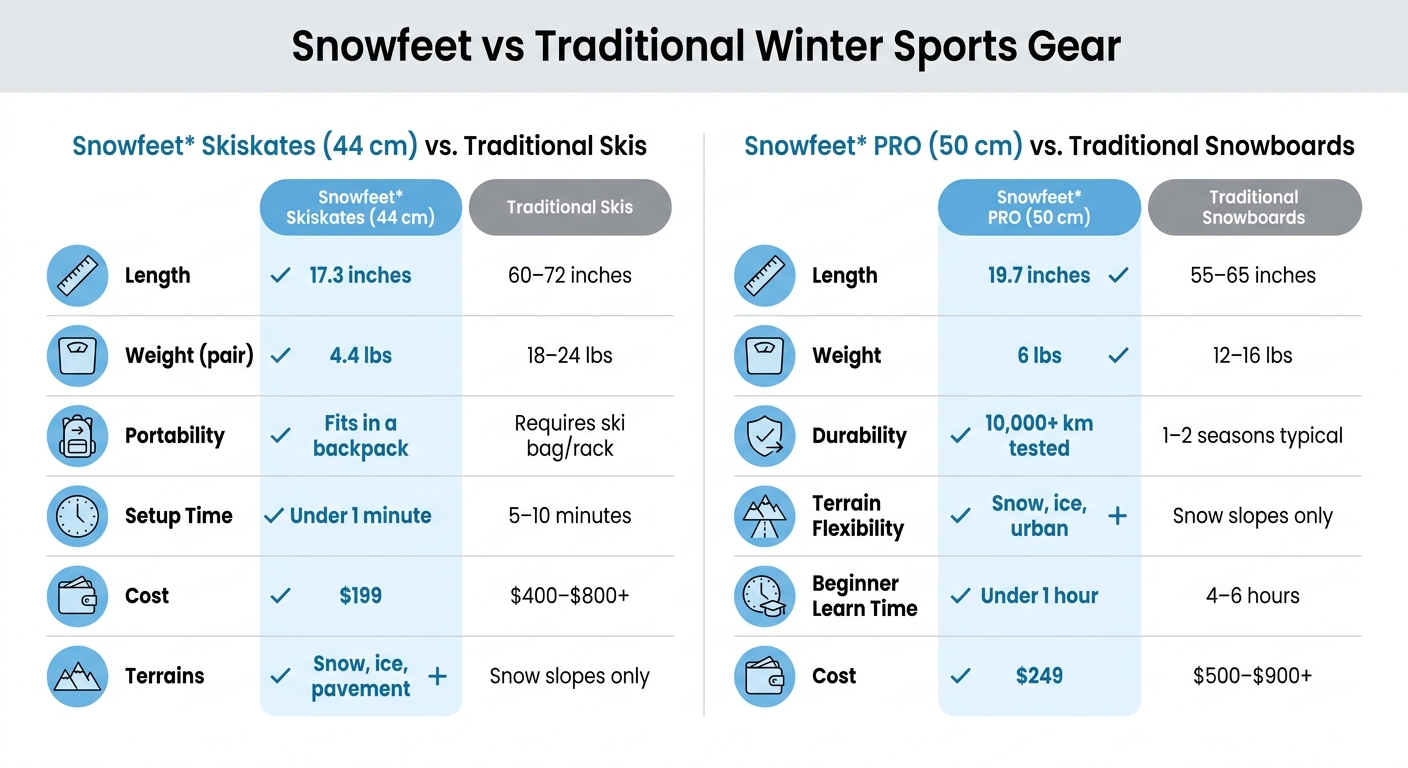
Snowfeet Skiskates vs Traditional Ski and Snowboard Gear Comparison
Is Skiskating the next big winter sport? | Snowfeet*
sbb-itb-17ade95
The Problem: Limitations of Traditional Skiing and Snowboarding
Traditional skiing and snowboarding have their fans, but they come with some pretty big hurdles. From bulky gear to steep learning curves and hefty price tags, these challenges can scare off beginners or even make seasoned enthusiasts think twice about hitting the slopes. It’s no wonder people are looking for easier, more accessible options.
Heavy Equipment and Transportation Hassles
Let’s face it - traditional ski and snowboard gear isn’t exactly travel-friendly. Skis and snowboards are long, narrow, and awkward to carry around, even though their design is all about performance. Add heavy, rigid ski boots into the mix, and just walking to the lodge can feel like a workout. Transporting all this gear - whether through an airport or in a packed car - is a real pain. And then there are the bindings. Ski bindings are built to release during a fall, while snowboard bindings come with bulky back plates and strap systems. All of this adds up to a lot of hassle before you even get to the fun part.
A Tough Start for Beginners
Learning to ski or snowboard isn’t exactly a walk in the park. Skiing might be a little easier to pick up because the forward-facing stance feels more natural. Snowboarding, on the other hand, throws you into a sideways stance that’s anything but intuitive. It takes a full-body motion to get the hang of it, and that can mean a lot of falls - and frustration - along the way. For many beginners, the combination of physical challenges and the financial commitment can feel overwhelming.
High Costs of Gear
Let’s talk money. Getting into skiing or snowboarding isn’t cheap. A beginner ski setup - skis, boots, bindings, and poles - can set you back anywhere from $500 to $1,200. Snowboard setups aren’t much better, with starter kits ranging from $400 to $800. And ski boots? They’re particularly pricey because they need to fit perfectly for both comfort and performance. As Retrospec puts it:
"Ski boots are notoriously expensive, often uncomfortable, and much harder to walk in".
For families or casual skiers, these costs can quickly add up. Many face the tough decision of shelling out for new gear or dealing with the risks of buying used skis. Either way, it’s a big financial leap before you even hit the slopes. It’s clear that traditional winter sports could use a more budget-friendly, beginner-friendly alternative.
What is Skiskating? A New Approach to Winter Sports
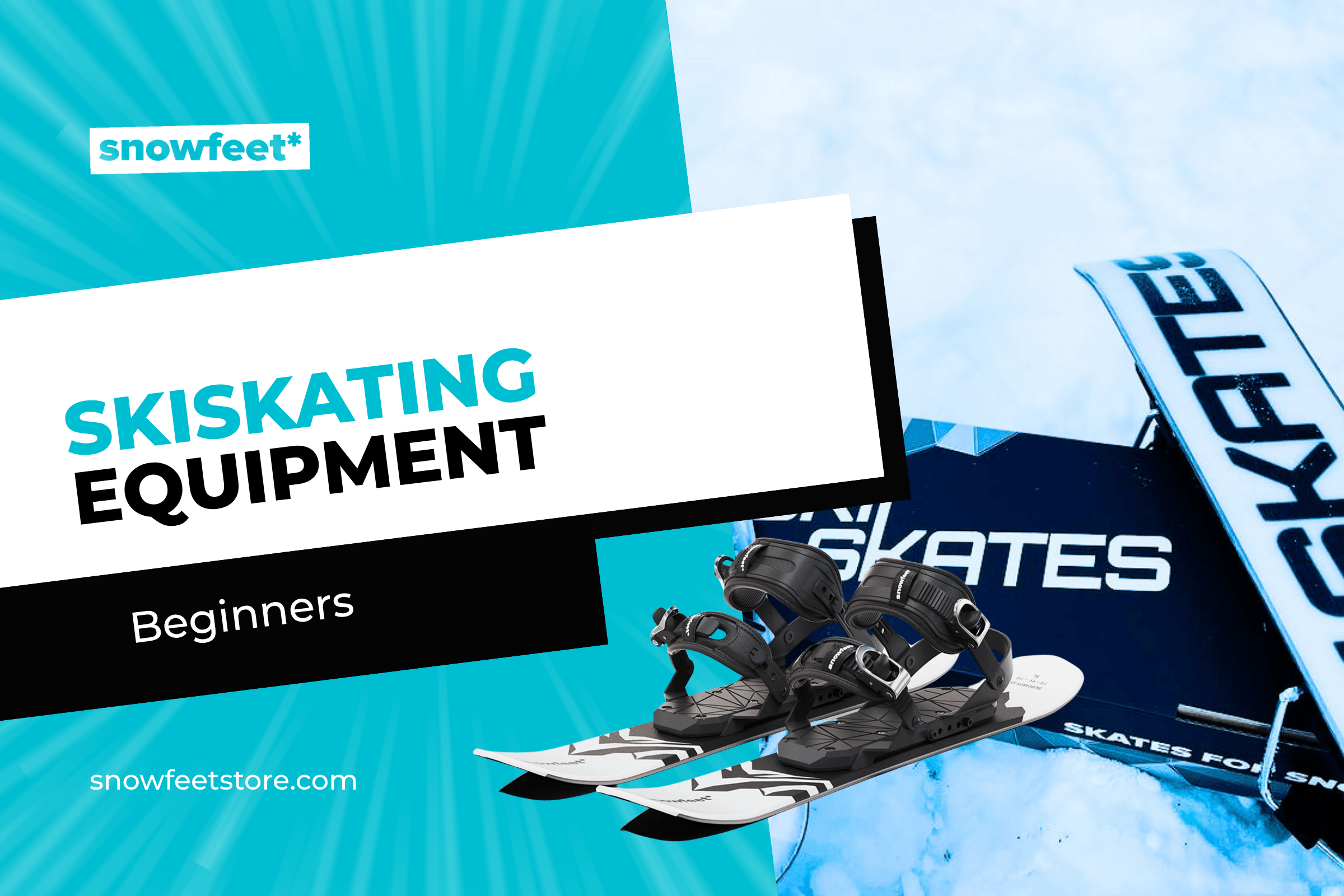
Skiskating blends skiing and skating into a fun, snow-specific activity. Instead of using traditional skis or snowboards, you strap on short, portable skates that attach to your regular winter or snowboard boots. These skates, typically 17 to 20 inches long (about 44–50 cm), are lightweight and compact enough to fit in a backpack.
What makes skiskating stand out is how it simplifies winter sports. No more dealing with the hassle of lugging around long skis or wearing stiff, uncomfortable ski boots. Skiskating offers a streamlined, easy-to-use alternative. Curious about how it works? Let’s break it down.
How Skiskating Works
Skiskating combines the techniques of skiing and skating. Like skiing, you have two separate planks under your feet, letting you balance and shift your stance with ease. But because skiskates are much shorter than regular skis, they feel more natural - almost like oversized ice skates designed for snow. Plus, the forward-facing position aligns your body in a way that feels ergonomic and intuitive from the get-go.
The short length of skiskates makes turning a breeze, helps you navigate tight spaces, and makes recovering from small slips easier compared to traditional skis. Forget about poles! You can keep moving by using a simple skating motion. And since skiskates attach to your regular winter boots, you avoid the discomfort and clunkiness of hard-shell ski boots.
Skiskating for Beginners and Experienced Users
One of the best things about skiskating is how accessible it is. Beginners find it easy to get the hang of, thanks to the natural, forward-facing stance that helps with balance. On the other hand, seasoned winter sports fans love the agility and versatility skiskating offers.
For advanced users, skiskating opens up a world of possibilities. The compact gear is perfect for everything from backyard fun and hiking trails to terrain parks and weaving through tight tree runs. Its portability and ease of use make it a great option for anyone looking to shake up their winter sports routine. Skiskating truly offers something for everyone.
Snowfeet* Products: A Better Alternative to Traditional Gear
Snowfeet* has taken the accessibility of skiskating to the next level with gear that challenges the norms of traditional skiing and snowboarding. Their two standout products - the Snowfeet* Skiskates (44 cm) and Snowfeet* PRO (50 cm) - offer impressive performance in a compact, travel-friendly design, breaking free from the bulky and expensive constraints of traditional winter sports gear.
Snowfeet* Skiskates (44 cm) vs. Traditional Skis
Snowfeet* Skiskates are just 17.3 inches long and weigh only 4.4 lbs per pair. Compare that to traditional skis, which are typically 60 to 72 inches long and weigh between 18 and 24 lbs. The compact size of the skiskates means they can easily fit into a backpack - no need for roof racks or oversized ski bags.
| Feature | Snowfeet* Skiskates (44 cm) | Traditional Skis |
|---|---|---|
| Length | 17.3 inches | 60–72 inches |
| Weight (pair) | 4.4 lbs | 18–24 lbs |
| Portability | Fits in a backpack | Requires ski bag/rack |
| Setup Time | Under 1 minute | 5–10 minutes |
| Cost | $199 | $400–$800+ |
| Terrains | Snow, ice, pavement | Snow slopes only |
With a price tag of $199, Snowfeet* Skiskates cost less than half the price of entry-level skis - and that’s before you even consider the cost of boots and bindings. Plus, their versatility shines through as they can be used on snow, ice, and even pavement. Whether you're in Denver or a mountain town in Colorado, these skiskates can keep up year-round.
While Snowfeet* Skiskates are all about convenience and versatility, Snowfeet* PRO takes things up a notch for those who crave performance.
Snowfeet* PRO (50 cm) vs. Traditional Snowboards
The Snowfeet* PRO is designed for riders who want more from their gear. Measuring 19.7 inches and weighing just 6 lbs, these skiskates are built to last. They’ve been tested for over 10,000 km of riding - equivalent to about five years of regular use - compared to the typical 1–2 seasons you’d get from a traditional snowboard. Thanks to features like a reinforced aluminum chassis and carbide ice tips, the PRO avoids common issues like delamination and cracking that plague conventional boards.
| Feature | Snowfeet* PRO (50 cm) | Traditional Snowboards |
|---|---|---|
| Length | 19.7 inches | 55–65 inches |
| Weight | 6 lbs | 12–16 lbs |
| Durability | 10,000+ km tested | 1–2 seasons typical |
| Terrain Flexibility | Snow, ice, urban | Snow slopes only |
| Beginner Learn Time | Under 1 hour | 4–6 hours |
| Cost | $249 | $500–$900+ |
One of the standout features of the PRO is its beginner-friendly design. Most people can master linked turns in under an hour, thanks to its push-glide motion and low center of gravity. At $249, it’s a fraction of the cost of a full snowboard setup.
Snowfeet* products have struck a chord with users, earning over 5,000 reviews on Amazon in the US, with an average rating of 4.8 out of 5 stars. Many reviewers describe them as a "game-changer" for simplifying winter sports while maintaining excellent performance. With their innovative approach, Snowfeet* is making high-performance skiskating more accessible and enjoyable for everyone.
Why Skiskating is Changing Winter Sports
Growing Interest and Olympic Potential
Winter sports in the U.S. are evolving, with a noticeable shift toward gear that's more accessible and inventive. The market is expected to grow at a 4.1% annual rate through 2031, with mass-market products now accounting for over 68% of skiing and snowboarding revenue. Leading this change is Snowfeet*, a brand with a bold vision of bringing skiskating to the Olympics. They challenge the old notion that short skis vs. long skis for stability and speed, promoting shorter skis as a way to bring more fun and freedom to the slopes. And with snowboarding participation rising from 7.1 million in 2018 to 7.6 million in 2020, it’s clear that the appetite for fresh winter sports experiences is growing fast.
At the same time, innovations like Salomon’s Brigade INDEX helmet and Black Crows’ Ghost Resort collection show the industry’s focus on lightweight, eco-friendly, and high-performance gear. Skiskating fits right into this trend with its portable and versatile design. These shifts in the market are paving the way for a sport that's not only inventive but also far more accessible.
More Fun and Easier Access for Everyone
Skiskating builds on these innovations by offering real benefits for users. One major perk? It removes many of the barriers tied to traditional gear. Ski boots, for example, are stiff and awkward to walk in, while snowboarders often have to unstrap their back foot for lifts and struggle on flat terrain. Snowfeet* gear works with regular winter boots, making movement on flat surfaces much easier.
The learning curve is another game-changer. Snowboarding can take days of falls to get the hang of, and skiing often takes years to master. But skiskating is intuitive - it mimics the motion of ice or inline skating. Most people can pick up linked turns within an hour. As described in the Snowfeet Store FAQ:
"I believe most skiers would enjoy skiing with 100 cm short skis much more than with long ones because it's easier, less restricting, and much more fun".
Snowfeet* products also solve the logistical headaches of traditional winter sports gear. Their compact size means you can carry them in a backpack, and you’re not limited to ski resorts. You can use them on sledding hills, hiking trails, cross-country paths, or even in your backyard. Plus, with prices starting at $199 - far less than the $400–$800+ you’d spend on traditional setups - skiskating makes winter sports more affordable and accessible to a wider audience.
Conclusion: Getting Started with Skiskating
Tired of lugging around heavy skis, paying steep prices, and struggling through long learning curves? Snowfeet* offers a fresh alternative with speed, control, and fun - minus the hassle. Their Mini Ski Skates (38 cm) start at just $250, a fraction of what traditional ski setups cost.
Skiskating is beginner-friendly, making those first runs surprisingly manageable. The learning curve is on par with traditional skiing or ice skating, so most people pick it up quickly. As Snowfeet explains:
"Not really, it is actually pretty easy. It is the same as learning to ski or skate. It takes some time but you will definitely have a lot of fun."
You can master linking turns in under an hour - far quicker than with traditional gear. For your first outings, stick to groomed trails and steer clear of steep slopes or deep powder. Wear waterproof shoes with strong ankle support, and pre-adjust your bindings at home using a screwdriver. Keep your weight centered over the middle or back of your feet - not your toes - for better balance. This simplicity doesn’t just make skiskating easy - it transforms your entire winter experience.
One of the best things about skiskating? Its flexibility. You’re not tied to pricey resorts. Your backyard, a nearby sledding hill, or even a cross-country trail can become your new playground. Snowfeet* gear is compact and easy to carry, turning almost any location into a winter wonderland. Whether you opt for the 44 cm Skiskates or the 50 cm PRO, you’re in for an affordable and exciting way to enjoy the season.
Winter sports are changing, and skiskating is at the forefront. The question is: are you ready to embrace the future of winter fun?
FAQs
Can I use skiskates at ski resorts?
Yes, you can use skiskates at many ski resorts, but it all comes down to the resort's rules. Some places might have restrictions or even ban skiskates on certain slopes or areas. To avoid any surprises, it’s a good idea to reach out to the resort ahead of time and confirm their policy on skiskates.
What terrain is skiskating best for?
Skiskating shines on firm, snowy surfaces that are simple to move across. It's perfect for beginner-friendly slopes, leisurely snow-covered paths, or any spot where being lightweight and easy to handle matters. This makes it an excellent choice for anyone looking for a fun and approachable winter activity.
Are skiskates safe for beginners?
Yes, skiskates work well for beginners. Thanks to their small size and lightweight build, they’re easier to handle, which helps newcomers gain confidence quicker than with traditional skis or snowboards. Snowfeet* skiskates, in particular, are designed to be beginner-friendly. They offer a good mix of stability and adaptability on different snowy surfaces, making them a solid pick for anyone just starting out in winter sports.











Leave a comment
This site is protected by hCaptcha and the hCaptcha Privacy Policy and Terms of Service apply.