



















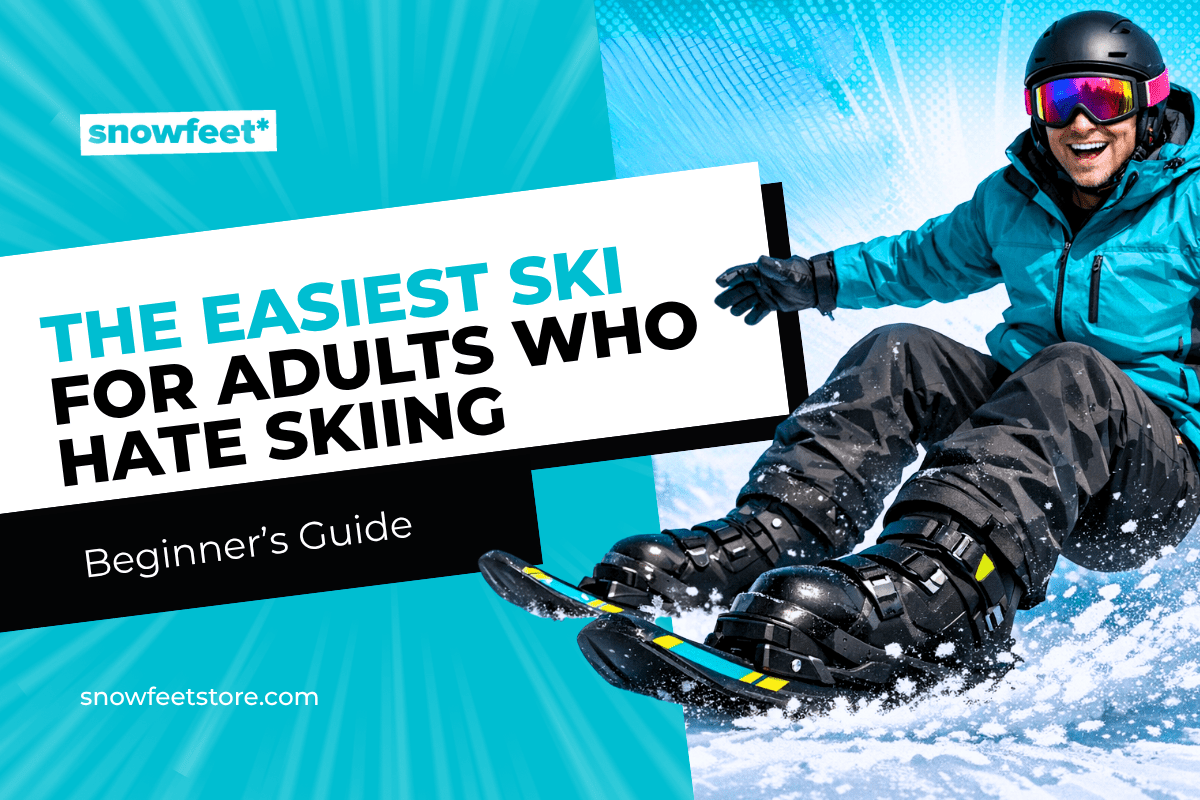
If skiing feels like a hassle - too expensive, too hard to learn, or just plain uncomfortable - there’s a simpler way to enjoy the slopes. Snowfeet* offers compact, easy-to-use gear like Skiskates (44 cm) and Skiblades (65–120 cm) that fit in your backpack and work with regular winter or snowboard boots. They’re lightweight, affordable, and take minutes to master, making them perfect for anyone who wants to skip the frustration of traditional skis.
Why People Are Switching:
- Cost: Skip the $1,000+ price tag for ski gear. Snowfeet* starts at $250.
- Convenience: No bulky equipment - carry them in a backpack.
- Ease of Use: Learn in minutes, not days. Great for beginners or casual riders.
- Comfort: Use your regular winter shoes or snowboard boots.
With over 50,000 users worldwide and a 4.9/5-star rating from 5,500+ reviews, Snowfeet* is changing how adults enjoy winter sports. Ready for a simpler, fun way to hit the snow? Let’s break it down.
Why Many Adults Avoid Traditional Skiing and Snowboarding
Snowfeet vs Traditional Skis: Cost and Features Comparison
Expensive Equipment and High Costs
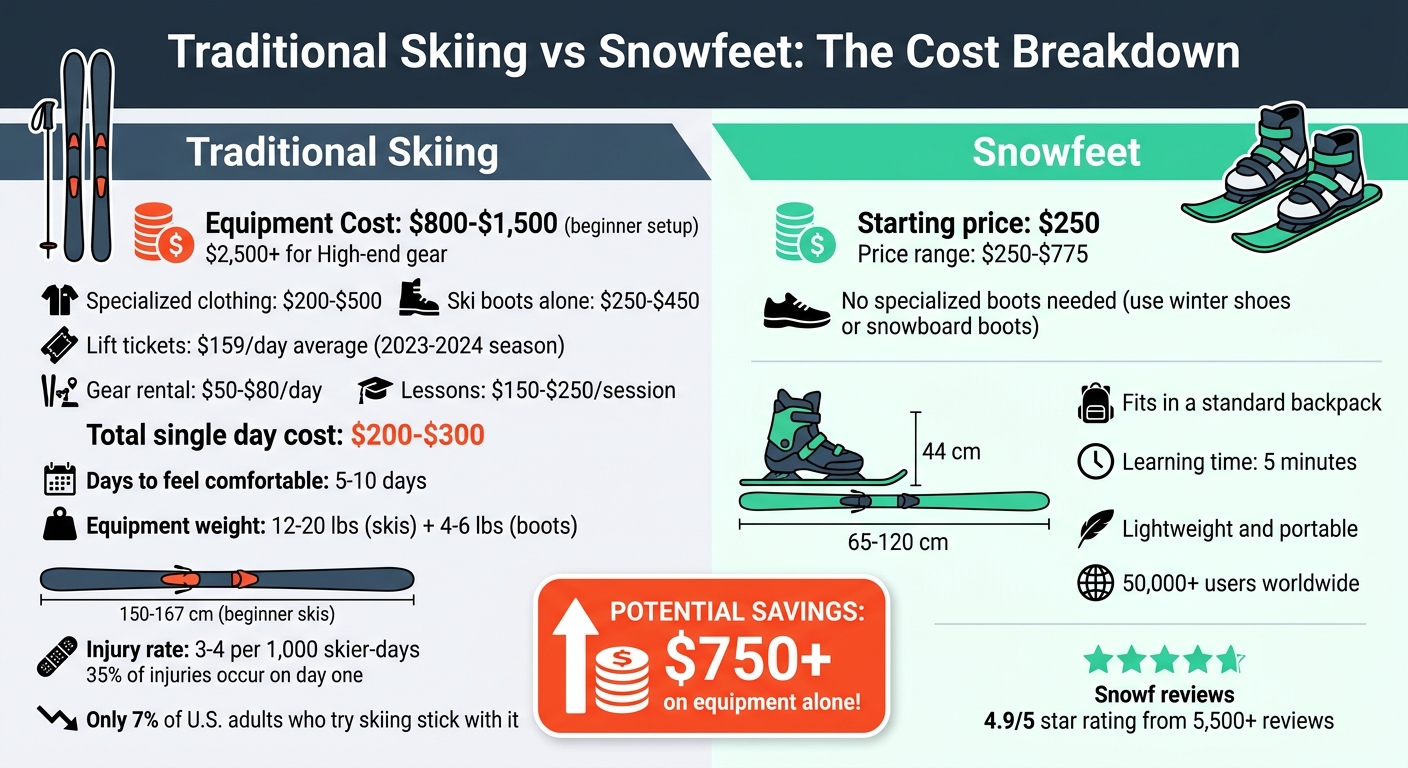
For many adults, the cost of getting into skiing or snowboarding can feel like a mountain in itself. A basic beginner setup - skis, boots, bindings, and poles - typically runs between $800 and $1,500. If you’re eyeing high-end gear, you’re looking at over $2,500. And that’s just the start. Add in specialized winter clothing, which can set you back another $200–$500, and the initial investment starts to snowball.
Then there are the ongoing costs. Lift tickets alone average $159 per day during the 2023–2024 season in the U.S. Renting gear? That’s another $50–$80 per day. Lessons? Expect to pay $150–$250 for a session. When you add it all up, a single day on the slopes can easily cost $200–$300. For adults who only hit the slopes occasionally, these expenses pile up fast - especially since it often takes 5–10 days of practice just to feel comfortable on intermediate runs.
On top of the financial burden, the physical hassle of traditional gear can be a dealbreaker. Skis weigh between 12–20 pounds, boots add another 4–6 pounds, and then there are the poles. Transporting and storing all this bulky equipment is no small task. One user even pointed out how much more comfortable snowboard boots are compared to traditional ski boots, which are infamous for their stiffness and discomfort.
When you combine the costs, gear hassle, and other challenges, it’s easy to see why some adults hesitate to dive into traditional skiing or snowboarding.
Difficult Learning Process and Injury Risks
Even if you can manage the costs, the steep learning curve of skiing and snowboarding is another big hurdle. Techniques like edge control, weight distribution, and turning don’t come naturally to most people. It often takes 5–10 days of lessons to get the hang of it - a tough ask for busy adults who want to enjoy themselves right away.
Then there’s the risk of injury, which is enough to make some people think twice. First-time skiers and snowboarders face injury rates of 3–4 per 1,000 skier-days, with 35% of those injuries happening on day one. Common issues include knee sprains for skiers and wrist fractures for snowboarders. The rigid boots and heavy equipment can also put extra stress on your joints, increasing the perceived risk.
With so many barriers - cost, complexity, and safety concerns - it’s no wonder only about 7% of U.S. adults who’ve tried skiing or snowboarding stick with it. For many, the challenges outweigh the fun, leading them to explore simpler and safer winter activities instead.
Snowfeet* Skiskates: The Simplest Alternative for Beginners
What Makes Snowfeet* Skiskates Different
If traditional skiing seems too expensive or complicated, Snowfeet* Skiskates might be exactly what you need. Measuring just 44 cm long, these skates are way smaller than beginner skis, which are usually 150–167 cm long. Plus, they’re so compact you can toss them into a regular backpack - no need for roof racks or oversized ski bags.
Here’s the best part: you can use them with your everyday winter shoes or snowboard boots. Forget about spending $250 to $450 on ski boots. Just strap on the adjustable bindings (a screwdriver is all you need to tweak the fit at home), and you’re all set.
Worried about learning how to use them? Don’t be. According to Snowfeet Store:
"It is actually pretty easy. It is the same as learning to ski or skate. It takes some time but you will definitely have a lot of fun".
If you’ve tried ice skating or rollerblading, you’ll pick this up quickly. The movement feels natural - keep your legs shoulder-width apart, bend your knees slightly, and shift your weight toward the middle or back of your feet. Unlike traditional skiing, there’s no need to lean forward over your toes. And stopping? That’s a breeze, thanks to the built-in heel brake.
With all these perks, it’s easy to see why Snowfeet* Skiskates stand out. Let’s compare them directly to traditional skis.
How Snowfeet* Skiskates Compare to Traditional Skis
Traditional skiing can be pricey and tough to master, but Snowfeet* Skiskates offer a simpler, more affordable option. Here’s how they stack up:
| Feature | Snowfeet* Skiskates | Traditional Beginner Skis |
|---|---|---|
| Length | 44 cm | 150–167 cm |
| Footwear | Regular winter shoes or snowboard boots | Specialized ski boots ($250–$450) |
| Portability | Fits in a standard backpack | Requires roof racks or large ski bags |
| Learning Curve | Beginner-friendly and intuitive | More technical; involves carving and flex |
| Maintenance | Low (dry edges, occasional waxing) | High (frequent waxing, tuning, edge repairs) |
| Weight | Lightweight | Heavy, often reinforced with metal cores |
The price difference is another big win for Snowfeet* Skiskates. A basic setup for traditional skis, including skis and boots, costs between $700 and $1,300. With Skiskates, you skip the need for pricey boots altogether. For casual skiers who only hit the slopes a few times each winter, this can mean saving a lot of money.
Snowfeet* Skiblades: Short Skis for All Skill Levels
Snowfeet* Skiblades take the simplicity of Snowfeet* Skiskates up a notch, offering a slightly longer option that’s just as easy to use as traditional skis. They come in three lengths - 65 cm, 99 cm, and 120 cm - so you can pick what feels best for your skill level and the type of terrain you’re planning to conquer.
These Skiblades are also compatible with snowboard boots via a snowboard binding option. That means you get the comfort of soft boots and the freedom to move around the resort without hassle.
Rick Paris from The Short Ski Shop puts it perfectly:
"The shorter the ski, the quicker you'll gain confidence - especially if you're unsure of your ability."
For beginners and those sticking to moderate speeds, the 65 cm or 99 cm models are solid choices. If you’re more experienced or tackling steeper slopes, the 120 cm option is the way to go.
Using Skiblades on Different Terrains
Snowfeet* Skiblades are built to handle a range of terrains. The 65 cm model shines in snowparks and on groomed slopes, making it a great pick for carving and trying out tricks. For powder or backcountry adventures, the 99 cm and 120 cm models provide better flotation in deep snow.
Every model comes with high-quality metal edges for excellent grip on icy or hard-packed surfaces. Their parabolic shape and narrow waist make carving on groomed runs feel smooth and precise. Plus, their short length makes them easier to maneuver through moguls and uneven terrain compared to longer skis.
With a turning radius as tight as 6.2 meters, Skiblades allow for quick, controlled turns, offering agility that traditional skis just can’t match.
Skiblades vs. Traditional Snowboards and Skis
Here’s how Snowfeet* Skiblades stack up against traditional gear:
| Feature | Snowfeet* Skiblades (65–120 cm) | Traditional Skis/Snowboards |
|---|---|---|
| Length | 65–120 cm | 150–180 cm (skis); 140–165 cm (boards) |
| Weight | Lightweight and easy to carry | Heavy and bulky |
| Turning Radius | As low as 6.2 m for quick turns | 14–22 m; less agile |
| Learning Curve | Quick progress - hours, not weeks | Steeper; often takes weeks to master |
| Boot Compatibility | Works with snowboard or ski boots | Requires stiff, traditional ski boots |
| Portability | Fits in a backpack or small car | Needs roof racks or large bags |
| Maneuverability | High - great for bumps and varied snow | Lower; can feel clunky for beginners |
Traditional skis used to measure 180–210 cm, and even today’s rentals are around 150–180 cm. That extra length can make turning tricky, especially on steep or uneven terrain. Skiblades, on the other hand, offer better control in tough snow conditions and bad weather.
Rick Paris puts it simply:
"Improving with blades isn't magic; it's simply about using the right tool. Why use a fork for soup when a spoon works better?"
With over 5,500 verified reviews and an average rating of 4.9 out of 5 stars, Snowfeet* Skiblades aren’t just a fun gimmick - they make winter sports more approachable and enjoyable for everyone.
sbb-itb-17ade95
Why Adults Are Switching to Snowfeet*
Building Confidence and Having More Fun
Snowfeet* is helping adults tackle the challenges of traditional skiing while boosting their confidence on the slopes. Brad Tolin shares his experience:
"These ski blades are a blast to use. Super easy to control, quick to turn, and way more forgiving than traditional skis. I felt comfortable on them within just a few runs."
Andrew B. echoes this sentiment:
"These skiblades are so much fun and easy to control. Never going back to regular skis."
With a learning curve of just five minutes, Snowfeet* lets you hit the slopes and have fun almost immediately - no costly lessons required. Nathan F. captures the excitement perfectly:
"Absolute game-changer! They're light, fast, and incredibly fun to ride."
Practical Advantages for Winter Activities
Snowfeet* not only boosts confidence but also offers practical perks that make winter activities more enjoyable. Their compact size means they can fit in a backpack, eliminating the hassle of roof racks or oversized ski bags. Vanessa from the UK sums it up:
"Easily one of the best purchases I have ever made to date."
Another standout feature is their compatibility with snowboard bindings, allowing you to wear comfortable snowboard boots or even regular winter shoes. This means you can walk around the resort without dealing with stiff ski boots. MindySue, who tried the 99 cm model, shares:
"I had a lot of fun with the 99s. They are easier to turn than skis."
Snowfeet* also stands out for their versatility. Whether you're on groomed slopes, hiking trails, sledding hills, or even your backyard, they make winter sports accessible and fun for everyone.
Conclusion
Snowfeet* is shaking up winter sports by making them more accessible and less complicated. For adults put off by the expense and hassle of traditional skiing, Snowfeet* offers a budget-friendly alternative, with prices ranging from $250 to $775 - much lower than the $1,000+ often required for standard ski setups.
What sets Snowfeet* apart is their simplicity. They're compact, work with your regular winter boots, and take just five minutes to learn. Gone are the days of dealing with stiff ski boots, oversized gear, and pricey lessons. As Uncrate notes, they're "far more portable and affordable than traditional skis or snowboards".
User reviews highlight how Snowfeet* blends fun with practicality. With over 5,500 verified reviews and an impressive 4.9/5 star rating, it's clear that Snowfeet* offers a fun, approachable way to enjoy the slopes. Whether you go for the 44 cm Skiskates for quick, sharp turns or the 99 cm Skiblades for a smoother, carving experience, you're choosing gear that prioritizes enjoyment over frustration.
If traditional skiing hasn't been your thing, Snowfeet* could be the game-changer you need. They're versatile enough for groomed slopes, hiking trails, sledding hills, or even your backyard. Say goodbye to the hassle of conventional skiing and hello to a new way to embrace winter fun with Snowfeet*.
FAQs
Are Snowfeet* allowed at most ski resorts?
Most ski resorts allow Snowfeet products since they’re seen as an alternative to traditional skis. That said, policies can differ from one resort to another. To avoid any surprises, it’s smart to check the rules at your destination before hitting the slopes with them.
Which length should I choose: 44 cm Skiskates or 65/99/120 cm Skiblades?
Choosing between _Snowfeet Skiskates (44 cm)_* and Skiblades (65, 99, or 120 cm) comes down to your experience and what kind of ride you're after.
The 44 cm Skiskates are a great pick for beginners or anyone who wants something compact, lightweight, and super easy to handle. They're all about keeping things fun and simple without much hassle.
On the other hand, Skiblades come in longer lengths (65, 99, or 120 cm), which provide better stability and control. These are better suited for more experienced users or for those looking to cover longer distances comfortably.
What safety gear should I wear with Snowfeet*?
For a safe and fun time using Snowfeet*, make sure to gear up with a helmet, wrist guards, and knee pads. These basics will help keep you protected while you enjoy the excitement and flexibility of Snowfeet* products.











Leave a comment
This site is protected by hCaptcha and the hCaptcha Privacy Policy and Terms of Service apply.