



















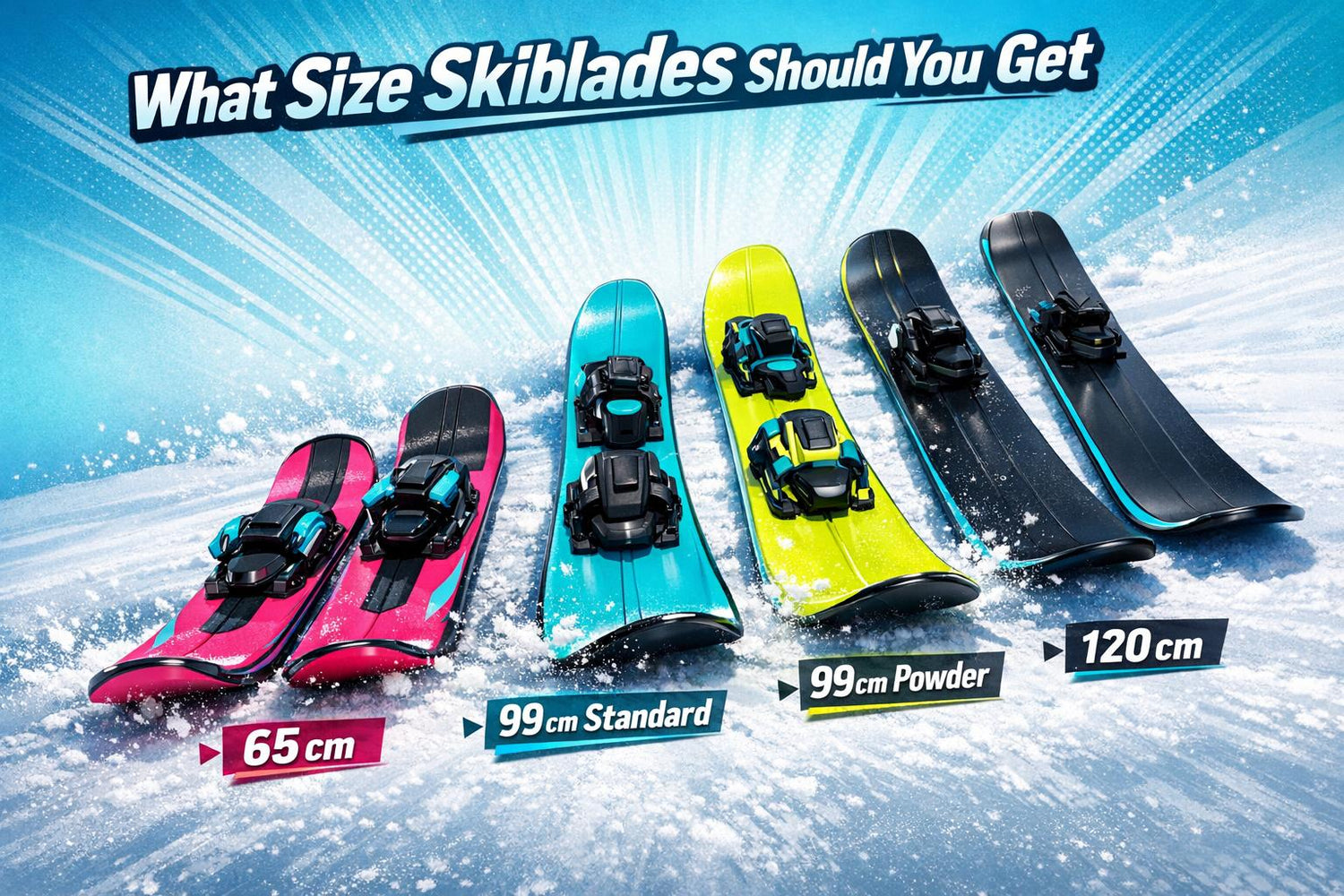
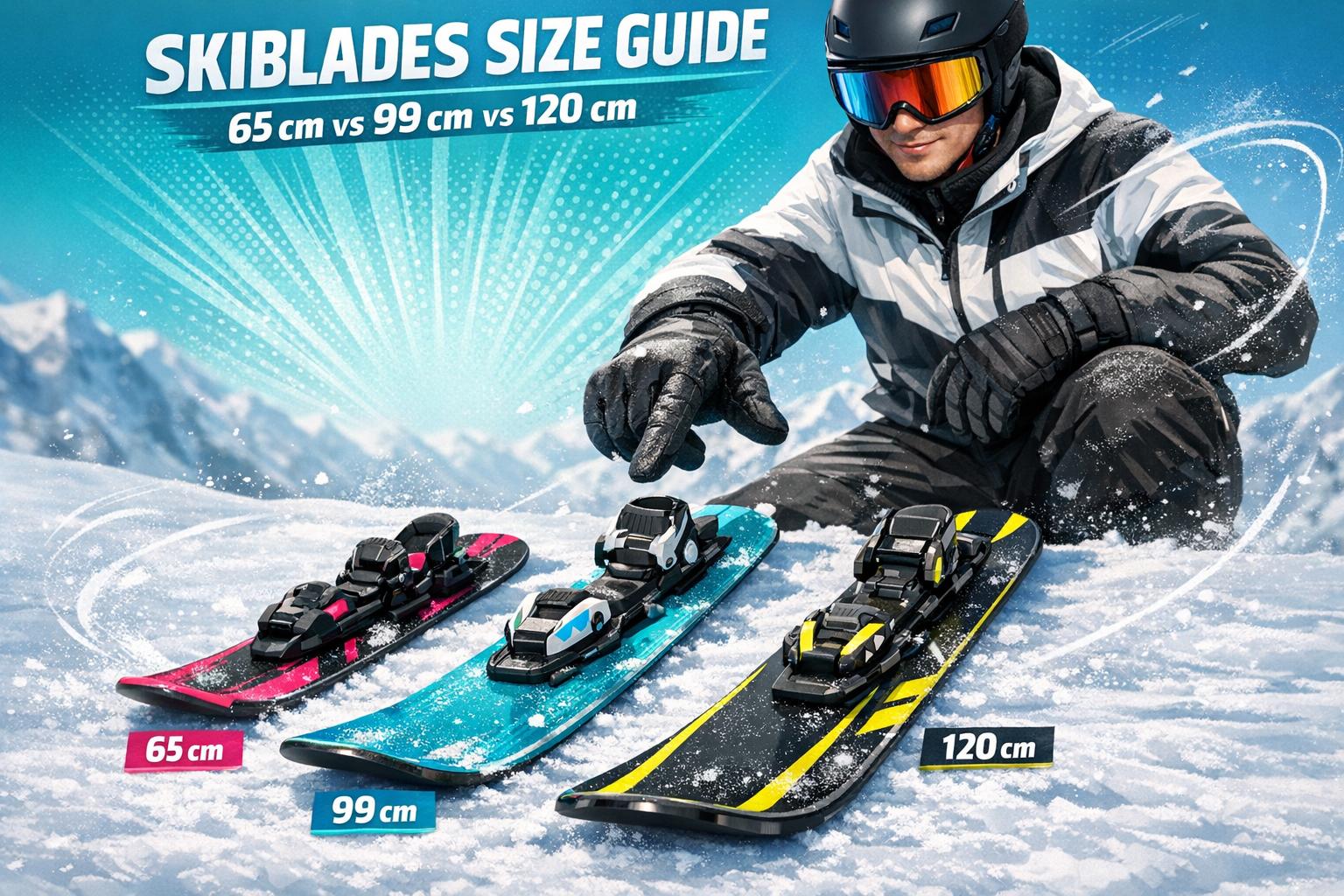
Choosing the right skiblade size depends on your skill level, preferred terrain, and riding style. Here’s a quick breakdown:
- 65 cm: Great for beginners or trick enthusiasts. These are lightweight, easy to control, and super portable. Best for groomed slopes, terrain parks, and tight spaces. Not ideal for deep powder or high speeds.
- 99 cm: A solid all-rounder. Perfect for all skill levels, offering a balance of control and stability. Works well on groomed runs, parks, and light powder.
- 99 cm Powder: Built for deep snow and powder. Offers better flotation in powder but sacrifices some speed on hard-packed trails.
- 120 cm: Best for carving and stability at higher speeds. Feels closer to skiing but with more control. Ideal for groomed runs, but not great for tricks or portability.
Quick Comparison
| Size | Best For | Pros | Cons | Price |
|---|---|---|---|---|
| 65 cm | Tricks, beginners, tight spaces | Lightweight, easy to control, portable | Less stable at speed, not for powder | $635 |
| 99 cm | All-mountain, all skill levels | Balanced performance, versatile | Not as good in deep powder | $590 |
| 99 cm Powder | Powder, off-piste, mixed conditions | Great in deep snow, stable | Heavier, slower on hardpack | $690 |
| 120 cm | Carving, higher speeds, groomed runs | Stable, smooth turns, more control | Less nimble, heavier | $775 |
Think about where you’ll ride most and what matters to you - maneuverability, stability, or powder performance. Then, pick the size that fits your needs.
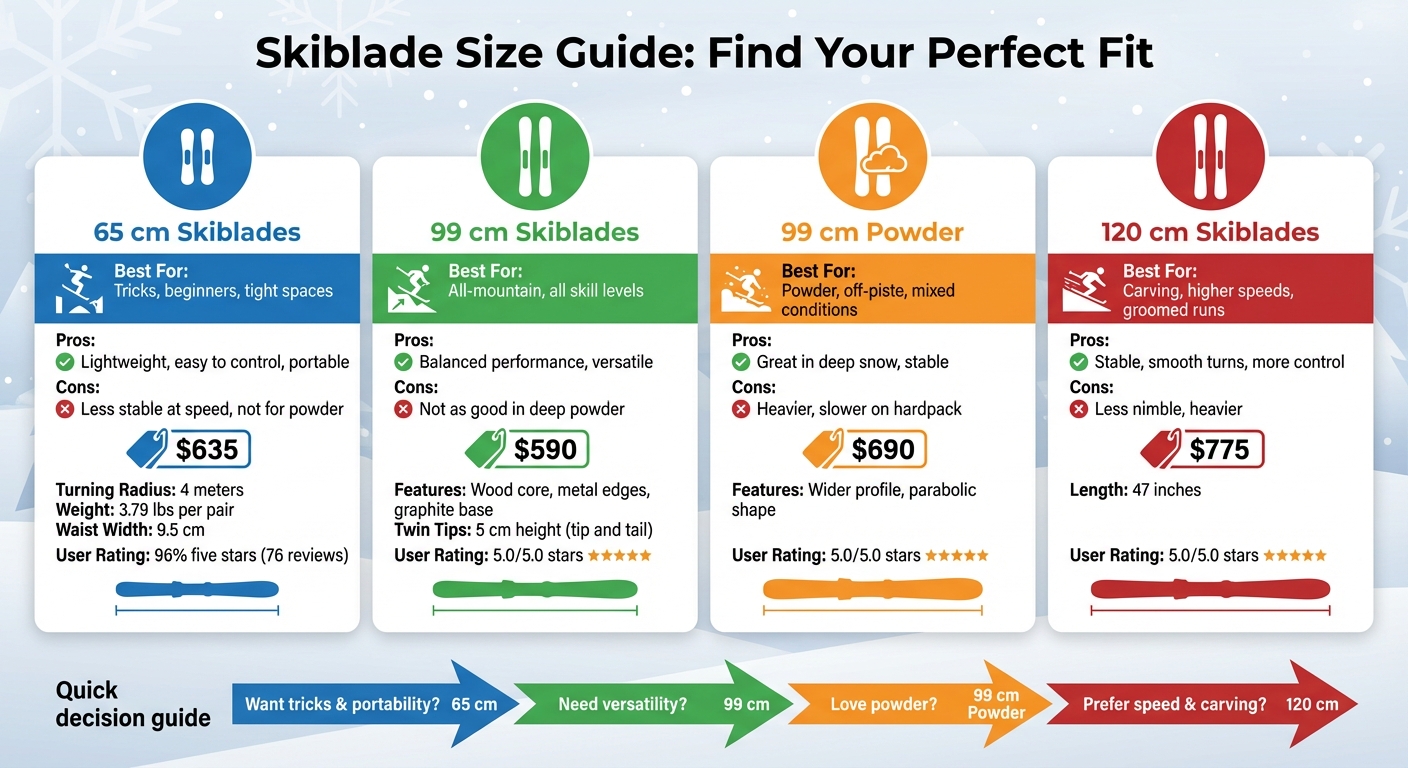
Skiblade Size Comparison Chart: 65cm vs 99cm vs 120cm Features and Specifications
1. Snowfeet* Skiblades 65 cm
Skill Level
The 65 cm skiblades are a fantastic choice for both beginners and experienced skiers. For beginners, their shorter length makes them much easier to control compared to traditional skis. You can turn and stop with ease, which helps build confidence quickly. With a tight 4-meter turning radius - much sharper than the 12–20+ meter radius of regular skis - these skiblades are incredibly responsive. Even ski instructors often use them for teaching kids. Weighing just 3.79 lbs per pair (bindings included), they’re also light enough to reduce strain on your joints.
Now, let’s dive into how these features translate to different terrains.
Terrain Type
These skiblades are perfect for groomed slopes and terrain parks. Their narrow 9.5 cm waist width and deep parabolic side cut allow for precise carving on hard-packed snow. At just 65 cm long, they’re nimble enough to tackle moguls, bumps, and even tight tree runs. As one user, Tripp, shared:
They maneuver as easily as skates, but are surprisingly fast down the mountain. The most fun was weaving through the woods.
While they can handle light powder, they’re not designed for deep, uncompacted snow.
Performance Characteristics
Built for precision, the 65 cm skiblades offer impressive edge grip and versatility. They feature metal edges and a wood core, giving them excellent control on icy or hard-packed surfaces. The asymmetrical twin tips make them great for riding both forward and backward, which is a big plus for tricks, spins, and jumps in the park. Jan from Snowfeet* puts it best:
65 cm is the sweet spot - quick to learn, fast on groomers and super agile even between trees.
With glowing reviews - 96% of users gave them five stars out of 76 reviews - these skiblades are praised for their sharp edge-to-edge responsiveness, which feels more like skating than traditional skiing.
Intended Use
Thanks to their lightweight and compact design, these skiblades are ideal for groomed runs, park sessions, and quick trail adventures. Their small size means you can easily pack them in a backpack, making them far more convenient than lugging around full-length skis. Priced at $635, they’re a budget-friendly alternative to a full ski setup and open up terrain that longer skis struggle to handle.
Even better, they’re compatible with both ski boots (sizes 36–49 EU) and snowboard boots (sizes 38–49 EU). For tricks and comfort, snowboard bindings or ski bindings are great choices depending on whether you prioritize tricks or stability.
sbb-itb-17ade95
2. Snowfeet* Skiblades 99 cm
Skill Level
These 99 cm skiblades are a game-changer for anyone looking to mix things up on the slopes. Unlike traditional skis that range from 160–180 cm, these compact blades deliver agility and control in spades. They’re a fantastic choice for everyone - whether you’re just starting out or you’ve been skiing for years. Beginners will appreciate how lightweight and responsive they are, while seasoned pros will love the precise handling and stability. Thanks to a sustainable wood core and metal edges, they’re built to perform on all types of snow. As one happy user, Nat, shares:
These mini-skis are light, stable and with excellent grip on every snow. Perfect for fast carving and fluid turns, they adapt to all levels.
This versatility makes them a solid pick for riders of all abilities.
Terrain Type
These skiblades shine on groomed slopes and in terrain parks, where their parabolic shape makes carving smooth, effortless turns a breeze. Their compact design is also a huge plus for tackling moguls or navigating tighter areas where traditional skis can feel unwieldy. If you’re planning to dive into deep powder, though, you might want to check out the Powder model. It’s still 99 cm but features extra width, giving you better flotation in soft snow.
Performance Characteristics
Speed and responsiveness are at the core of these skiblades, thanks to a graphite base that keeps things fast and sharp. The asymmetrical twin tips, with 5 cm height at both the tip and tail, make them perfect for riding forward or backward - ideal for tricks, spins, and freestyle fun. Plus, they’re easier on your knees and ankles compared to heavier skis, which is a huge bonus if you’re spending long days on the mountain. Starting at $590, the standard model comes with your choice of bindings: simple ski boot bindings, pro ski boot bindings, or snowboard boot bindings.
Intended Use
Whether you’re carving down groomed runs, hitting jumps in the park, or exploring off-trail, these skiblades are built for fun. Their compact size makes them super portable - just toss them in a backpack, and you’re good to go. Unlike traditional ski or snowboard gear, they’re all about playfulness and freedom. With a perfect 5.0/5 star rating from users, they’ve earned high praise for being easy to control while still packing enough surface area to handle serious performance demands.
3. Snowfeet* 99 cm Powder
Skill Level
The Powder model is designed to suit everyone - from absolute beginners to seasoned experts. Its 99 cm length makes it much easier to control compared to traditional skis, which typically range from 150–180 cm and can feel intimidating. As Jenn K., a verified user, shares:
I'm a SUPER-SUPER beginner and started my learning process with the Skiblades. They are a blast! I find that shorter skis are a much easier learning experience.
For experienced riders, these skiblades are perfect for tricks, jumps, and sharp turns, whether you're in a snow park or carving through deep powder. Their construction features a certified sustainable wood core, metal edges, and graphite bases, which deliver a balance of speed, precision, and durability. Plus, their lightweight design reduces strain on your knees and ankles, especially during long sessions. With a flawless 5.0/5 star rating, they've earned praise from all skill levels, proving their versatility on various terrains.
Terrain Type
Unlike the standard 99 cm model, which is ideal for groomed slopes, this powder version is tailored for deep snow. Its wider profile and parabolic shape are built for deep powder and off-piste terrain, ensuring excellent flotation so you stay on top of the snow rather than sinking. But these skiblades aren't limited to powder - they perform well on groomed slopes and hard-packed snow too. This versatility makes them a solid choice for mixed conditions. Whether you're weaving through tree lines or gliding through untouched snow, the 99 cm length offers agility that traditional long skis just can't match.
Performance Characteristics
This model is all about flotation and maneuverability. The wider design, combined with 5 cm tip and tail heights and a camber shape, makes turning smooth and responsive in deep snow. While they don't match the top speeds of traditional skis, their control and agility in challenging conditions more than make up for it. As Mike E., a verified user, points out:
PLEASE NOTE that these are not as fast as regular skis. If you like to bomb runs as fast as possible, you'll want longer skis. For everything else, these are absolutely incredible.
The graphite base still provides decent speed, but the real standout is how easily you can navigate tight spots and powdery terrain.
Intended Use
The Powder model shines in off-piste adventures, backcountry terrain, and deep powder. They're also a hit in snow parks, offering the stability you need for landing jumps without the bulk of traditional skis. At $690, they come with customizable binding options - choose between simple ski boot, pro ski boot, or snowboard boot bindings. The snowboard boot option is a standout for comfort, letting you skip the stiffness of ski boots altogether. And thanks to their compact 99 cm size, they’re portable enough to fit in a backpack, making them far easier to transport than traditional ski setups.
4. Snowfeet* Skiblades 120 cm (approximately 47 inches)
Skill Level
The 120 cm skiblades are designed to cater to both beginners and seasoned skiers. If you're new to skiing, the longer length offers better stability, making it easier to handle turns without feeling overwhelmed by the bulk of standard long skis. For experienced skiers, these skiblades provide the speed and carving precision you’re looking for, all while being lightweight and easy to maneuver. Taller riders will also appreciate the extra surface area, which adds a layer of control.
Terrain Type
Perfectly suited for groomed and packed snow, these skiblades shine on icy runs, making them a great pick for fast, controlled carving. They offer decent flotation in light powder but aren’t built for deep backcountry adventures like the Powder variant. If you stick to resort trails and want a ski that’s smooth and responsive on hardpack, this model is a solid choice. Its versatility on different terrains makes it a reliable option for a range of conditions.
Performance Characteristics
Featuring a smart wood core design, these skiblades strike a balance between stability and lightweight performance. They grip well and allow for smooth, fluid turns, reducing fatigue compared to heavier traditional skis. While they may not hit maximum speeds, they excel in control and carving. Users have rated their performance highly, with an impressive 5.0/5.0 star rating.
Intended Use
Priced at $775, the 120 cm skiblades are built for downhill runs and fast carving on groomed slopes. They come with two binding options: ski boot bindings (sizes 4.5–14.5 US) or snowboard boot bindings (sizes 6–14.5 US), giving you flexibility based on your footwear preference. Their compact size, under 4 feet, makes them easy to transport. Compared to traditional long skis, this model offers a familiar feel with improved agility and control - perfect for skiers transitioning to shorter equipment or those who value maneuverability without sacrificing performance.
How to choose Snowfeet* Snowblades | Skiblades | Skiboards | Short Ski
Pros and Cons of Each Size
Here’s a quick breakdown of what each Snowfeet* skiblade model brings to the table - perfect for matching your gear to your terrain or riding style. Whether you're into park tricks, carving groomers, or floating through powder, there's a size for you.
The 65 cm skiblades are all about portability and maneuverability. You can toss them in your backpack and enjoy their skating-like feel, making them a standout for tricks. On the flip side, they demand solid balance and aren’t the best choice for high-speed runs or deep powder.
The 99 cm skiblades are the go-to for versatility. They balance stability and agility, making them beginner-friendly and great for all-around use. That said, they don’t quite match the Powder model’s flotation in deep snow.
Speaking of flotation, the 99 cm Powder skiblades are built for soft snow. Their wider design keeps you gliding through powder, but they sacrifice some responsiveness on hardpack compared to the standard 99 cm.
Finally, the 120 cm skiblades are for those who want stability and carving precision. They feel closer to traditional skis and shine at higher speeds on groomed slopes. The trade-off? They’re heavier and less nimble for tricks.
| Size | Pros | Cons | Best For |
|---|---|---|---|
| 65 cm | Super portable; great for tricks; skating-like maneuverability | Requires strong balance; less stable at speed; limited in deep powder | Terrain parks, forest trails, experienced skaters |
| 99 cm | Balanced performance; beginner-friendly; versatile across terrains | Not ideal for deep powder; less playful than the 65 cm | All-mountain skiing, groomed runs, all skill levels |
| 99 cm Powder | Excellent in soft snow; stable off-piste; retains short-ski agility | Heavier than standard 99 cm; slower on hardpack | Powder days, backcountry, off-piste adventures |
| 120 cm | High-speed stability; great for carving; familiar for traditional skiers | Heaviest option; less portable; not ideal for tricks | Groomed runs, high-speed carving, ski converts |
Each model offers a unique riding experience, so you can pick the one that suits your style - whether it’s pulling off tricks, cruising through powder, or carving up the slopes. Snowfeet* skiblades make it easy to tailor your setup to your adventure.
Conclusion
Choosing the right skiblade size boils down to your riding style and the terrain you love most. If you’re all about agility and love hitting terrain parks, the 65 cm skiblades are your go-to for tight turns and tricks. For a versatile option that shines on groomed runs, carves beautifully, and handles park laps with ease, the 99 cm skiblades are a solid pick. Powder enthusiast? The 99 cm Powder model keeps you floating effortlessly while still offering the nimbleness of short skis. And if you’re transitioning from traditional skis or crave stability for high-speed carving, the 120 cm skiblades deliver a smooth, controlled ride with more maneuverability than longer skis.
Compared to traditional skis from brands like Rossignol or K2, Snowfeet* skiblades bring something extra to the table. They’re lighter, easier to carry, and much simpler to control. Beginners, in particular, will find that short skis are easier to learn on due to their forgiving nature - no steep learning curve or rigid stance required, like with snowboarding or full-length skis.
Think about what matters most to you: agility for tricks, stability for carving, floating through powder, or tearing up groomed runs. Your answers will point you to the perfect pair of skiblades.
FAQs
How do I choose between 65 cm, 99 cm, and 120 cm skiblades?
Choosing the right skiblade size comes down to your skill level, the type of terrain you enjoy, and how you plan to use them. Here’s a quick breakdown:
- 65 cm skiblades: Perfect for beginners, kids, or anyone looking to pull off tricks. Their short length makes them super agile and easy to control.
- 99 cm skiblades: A solid all-rounder. These work well for carving, tackling powder, and general all-mountain adventures.
- 120 cm skiblades: These feel closer to traditional skis, offering more stability. However, they sacrifice some of the nimbleness that shorter skiblades provide.
Snowfeet* skiblades are a great choice across the board. They’re lightweight, portable, and user-friendly, making them suitable for all experience levels.
Should I get the 99 cm Powder model if I mostly ride groomed runs?
If groomed runs are your go-to, the 99 cm Powder model might not be your best bet. For better control and agility on those smooth, packed slopes, shorter skiblades - like the 65 cm ones - are a smarter choice. While the 99 cm model handles carving and powder well, the smaller 65 cm size shines when it comes to quick turns and precision on groomed terrain.
What bindings should I choose: ski boots or snowboard boots?
Choosing the right boots for skiblades comes down to your skill level and how you like to ride.
- Ski boots are the top pick for Snowfeet skiblades. They give you better control, precision, and ankle support, which is perfect for carving turns and picking up speed.
- Snowboard boots, on the other hand, are all about comfort and flexibility. They’re great for a more laid-back ride but don’t offer the same level of precision as ski boots.
If you’re aiming for the best performance, ski boots are generally the way to go.











Leave a comment
This site is protected by hCaptcha and the hCaptcha Privacy Policy and Terms of Service apply.