




















When it comes to short skis, terms like skiboards, skiblades, and snowblades often get tossed around. Here’s the deal: they’re all short skis, but each has slight differences in design and purpose. Picking the right one depends on your skills, style, and terrain preferences. Here’s a quick breakdown:
- Skiboards: Wider, twin-tip skis (75–135 cm) designed for freestyle and all-mountain skiing.
- Skiblades: Shorter (60–120 cm), agile, and perfect for quick turns and tricks.
- Snowblades: Originally a brand name, now used interchangeably with skiblades, but often narrower.
Snowfeet* takes short skis to the next level with three sizes:
- 65 cm: Great for tight turns and tricks, using snowboard boot bindings.
- 99 cm: A balance of control and agility for all-mountain use.
- 120 cm: Longer for smooth carving and better stability in deeper snow.
What sets Snowfeet* apart? They’re lightweight, portable (fit in a backpack!), and work with snowboard boots or ski boots, depending on the model. Plus, they’re super easy to learn - most people get the hang of it in just 5 minutes.
Quick Comparison:
| Model | Length | Best For | Boots | Terrain |
|---|---|---|---|---|
| Snowfeet* 65 cm | 26 in | Tricks, tight turns, freestyle | Snowboard or winter | Parks, groomed slopes |
| Snowfeet* 99 cm | 39 in | All-around skiing | Snowboard or winter | Groomed runs, powder, parks |
| Snowfeet* 120 cm | 47 in | Smooth carving, stability | Ski boots | Groomed runs, deeper snow |
| Traditional Skis | 63–71 in | Speed, advanced skiing | Ski boots | Groomed runs, backcountry |
If you want short skis that are easy to carry, flexible with boot options, and fun for various terrains, Snowfeet* has you covered. Prices start at $170, making them an affordable and hassle-free way to enjoy the slopes.
Snowfeet* Snowblades | Skiboards | Skiblades | Short Skis - Complete Guide | All you need to know
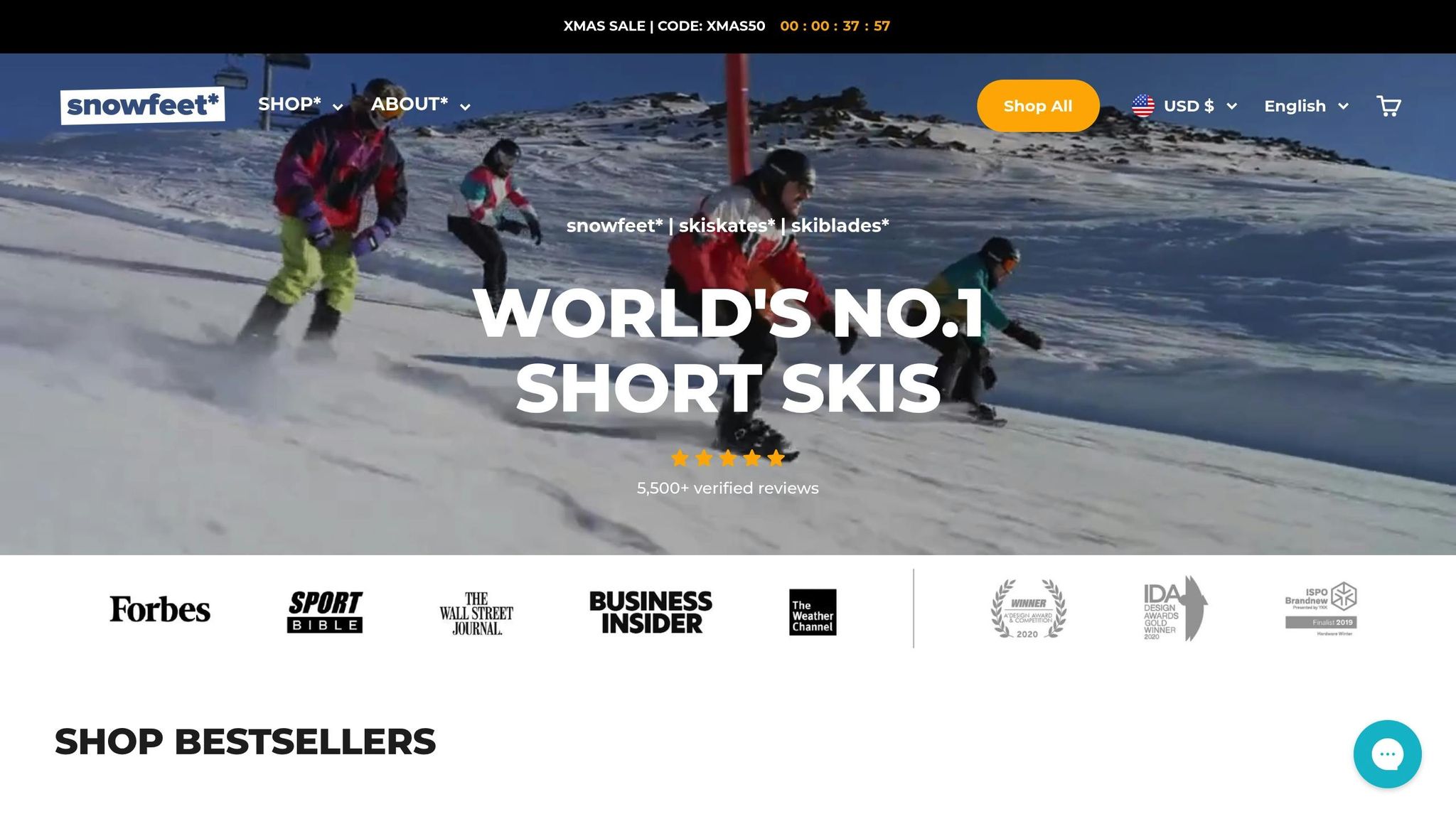
Skiboards, Skiblades, and Snowblades: What Each Term Means
The terms skiboards, skiblades, and snowblades often get tossed around as if they mean the same thing. But each one actually points to slightly different designs. Let’s break it down and see how they differ - and where Snowfeet* fits into the picture.
What Are Skiboards?
Skiboards are a mix of ski and snowboard features. They’re usually wider and have a twin-tip design, making them great for all-mountain and freestyle skiing. Their length typically falls between 75 and 135 cm.
What Are Skiblades?
Think of skiblades as the shorter sibling of skiboards. They range from 60 to 120 cm and are all about quick, precise movements. Their name hints at their rollerblade-like agility, making them perfect for tight turns and a skate-like feel. While many traditional brands stick to longer skis, skiblades stand out for their unmatched maneuverability. Snowfeet* takes this concept a step further with its 65 cm skiblades, offering incredible agility and portability in one compact package.
What Are Snowblades?
Snowblades started as a brand name but eventually became a catch-all term for shorter, nimble skis, especially in Europe. Some skiing pros make a distinction: skiboards are often wider and may have wooden cores, while snowblades are narrower and feel closer to traditional skis. That said, most riders use the terms interchangeably.
How Snowfeet* Products Compare to Other Short Skis
Snowfeet* has made a name for itself in the short ski market by offering three distinct lengths: 65 cm (about 26 in), 99 cm (around 39 in), and 120 cm (roughly 47 in). Each size is crafted with a specific purpose in mind. These aren't just shrunken versions of regular skis - they're built with modern materials to ensure they're fun and easy to use on all kinds of terrain.
One standout feature is the binding compatibility. The 65 cm and 99 cm models are designed to work with snowboard boot bindings, so you can skip the stiff, traditional ski boots. On the other hand, the 120 cm model uses Pro ski bindings for those who prefer a more classic skiing experience. All three options are lightweight and compact enough to fit in a backpack, making them far more portable than traditional skis. This combination of portability and binding versatility ensures that each model delivers a unique performance tailored to different skiing styles.
Snowfeet* Skiblades (65 cm): Built for Quick Turns
The 65 cm skiblades are all about agility and speed. They’re perfect for tight turns, quick maneuvers, and pulling off tricks in terrain parks. Their small size makes them incredibly nimble, which is great for navigating moguls, trying out ski-skating, or just having a blast on groomed slopes. Beginners will love how lightweight and responsive they are, turning every run into a fun, playful experience [9].
Snowfeet* Short Skis (99 cm): Versatility at Its Best
The 99 cm model offers a sweet spot between stability and agility. Often nicknamed the "ultimate skiboards", they shine on groomed runs, handle jumps in snow parks, and even perform well in powder. With just enough length for precise control but still short enough for quick turns, these skis are incredibly versatile. Whether you're carving down trails, hitting terrain parks, or exploring hiking paths, this model can handle it all [9].
Snowfeet* Long Short Skis (120 cm): A Taste of Traditional Skis
If you’re looking for something that feels closer to traditional skis, the 120 cm option is your go-to. These skis offer a smooth carving experience while keeping the ease and fun that short skis are known for. Their wider base and extra length provide more support, making them an excellent choice for beginners transitioning from longer skis or for anyone wanting better performance in powder and on steeper slopes. They give you the stability of traditional skis without the hassle of lugging around equipment over 160 cm long.
sbb-itb-17ade95
Side-by-Side Comparison: Key Features and Performance
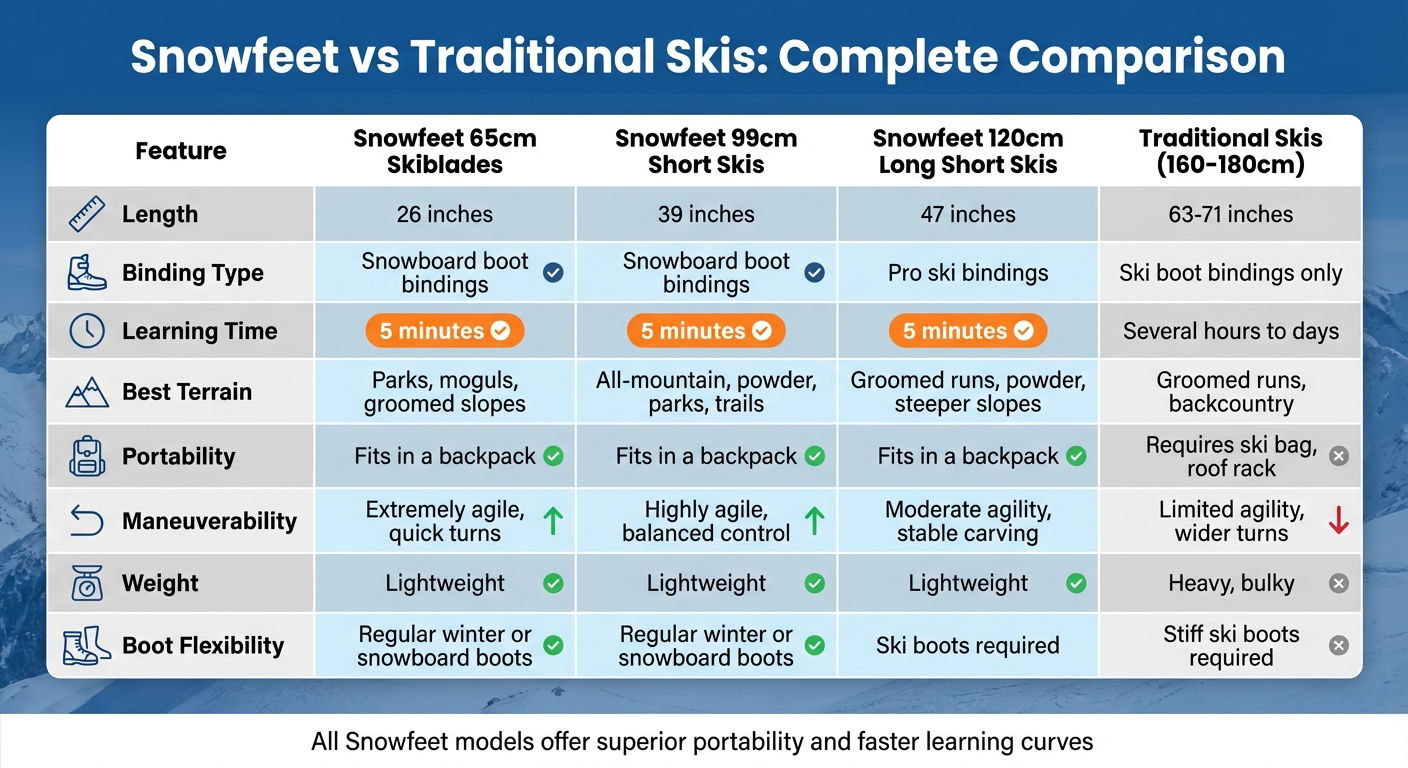
Snowfeet Short Skis vs Traditional Skis Comparison Chart
Snowfeet* offers three distinct models, each tailored to different riding styles, and they’ve nailed it when it comes to portability, binding options, and ease of use. These compact skis bring a fresh twist to the slopes, outperforming traditional skis in convenience and accessibility.
One of their standout features? The super quick learning curve. Most people can pick up Snowfeet* in just 5 minutes - no lessons, no hassle. That’s a huge win compared to traditional skis or snowboards, which often take hours (or even days) of practice to get comfortable. Plus, their compact size makes them easy to toss in a backpack, and they’re compatible with various boot types. This means you can hit the slopes without the usual bulk or complexity.
Here’s a quick look at how Snowfeet* stacks up against traditional skis:
Feature Comparison Table
| Feature | Snowfeet* 65 cm Skiblades | Snowfeet* 99 cm Short Skis | Snowfeet* 120 cm Long Short Skis | Traditional Skis (160-180 cm) |
|---|---|---|---|---|
| Length | 26 inches | 39 inches | 47 inches | 63–71 inches |
| Binding Type | Snowboard boot bindings | Snowboard boot bindings | Pro ski bindings | Ski boot bindings only |
| Learning Time | 5 minutes | 5 minutes | 5 minutes | Several hours to days |
| Best Terrain | Parks, moguls, groomed slopes | All-mountain, powder, parks, trails | Groomed runs, powder, steeper slopes | Groomed runs, backcountry |
| Portability | Fits in a backpack | Fits in a backpack | Fits in a backpack | Requires ski bag, roof rack |
| Maneuverability | Extremely agile, quick turns | Highly agile, balanced control | Moderate agility, stable carving | Limited agility, wider turns |
| Weight | Lightweight | Lightweight | Lightweight | Heavy, bulky |
| Boot Flexibility | Regular winter or snowboard boots | Regular winter or snowboard boots | Ski boots required | Stiff ski boots required |
Snowfeet* models are all about versatility. Unlike traditional skis, which are often specialized for specific conditions - like groomed runs or powder - Snowfeet* can handle a wide range of terrains. From parks and slopes to hiking trails and even your backyard, they’re built to adapt. The 99 cm model, in particular, shines as an all-around option, offering the kind of performance that would typically require owning multiple pairs of traditional skis.
This combination of versatility, portability, and ease of use makes Snowfeet* a standout choice for anyone looking to try short skis.
How to Choose the Right Short Ski
Choosing the right short ski boils down to two key things: your skill level and the type of terrain you plan to ride. Snowfeet* simplifies this process with three distinct lengths that cater to a wide range of abilities and conditions. Unlike traditional skis, which often require different models for specific terrains, Snowfeet* offers a versatile lineup that works across various scenarios - all in one range.
Picking Based on Experience Level
Your skill level is a major factor in deciding which Snowfeet* model fits you best.
- Beginners: The Snowfeet* Skiblades (65 cm, about 26 inches) are the shortest and easiest to control. Their compact size makes them perfect for learning the basics, tackling flat terrain, or experimenting in parks.
- Intermediate Riders: The Snowfeet* Short Skis (99 cm, about 39 inches) strike a balance between agility and stability. They’re a great choice for green, blue, and red runs, offering enough control to boost confidence while still being versatile.
- Advanced Skiers: Your choice depends on your riding style. If you’re into tricks and tight maneuvers in terrain parks, the lightweight 65 cm Skiblades are incredibly responsive. For a mix of groomed runs and playful riding, the 99 cm Short Skis are a solid all-around option. And for higher speeds and carving on varied terrain, the 120 cm Long Short Skis (about 47 inches) bring stability and a more traditional ski feel, while still being easier to handle than full-length skis.
Picking Based on Terrain and Riding Style
The terrain you plan to ride also plays a big role in choosing the right model.
- 65 cm Skiblades: These shine in freestyle environments. They’re ideal for quick turns, terrain parks, and moguls, offering freedom and control on varied features.
- 99 cm Short Skis: Perfect for groomed slopes, they allow for quick edge-to-edge transitions. They also perform well as an all-mountain option, offering sufficient support for powder and versatility across different conditions.
- 120 cm Long Short Skis: Best for carving and speed, these excel on groomed runs and provide better flotation and stability in deep snow compared to the shorter models.
The beauty of Snowfeet* is their versatility. Traditional skis often tie you to specific terrain types, meaning you’d need multiple pairs for different conditions. With Snowfeet*, you’re covered whether you’re hitting the terrain park in the morning or cruising through powder later in the day.
Conclusion: Why Snowfeet* Offers the Best Short Ski Experience
Snowfeet* has taken the concept of short skis - like skiboards, skiblades, and snowblades - and elevated it into something more versatile and exciting. With options ranging from 65 cm to 120 cm (about 26 to 47 inches), they’ve designed gear that caters to different riding styles and skill levels, making it easy for anyone to find their perfect fit.
What makes Snowfeet* stand out? Portability and versatility. Unlike traditional skis that require bulky equipment, Snowfeet* products are compact and work seamlessly with standard winter or snowboard boots. That means you can hit the slopes without hauling around oversized gear. With over 50,000 riders worldwide and recognition as an innovation finalist at ISPO, they’ve proven that smaller skis can still pack a punch.
"Far more portable – and affordable – than traditional skis or snowboards." - Uncrate
The real game-changer here is freedom. Traditional skis often come with limitations - bulky gear, high costs, and terrain-specific designs. Snowfeet* flips the script, offering gear that’s lighter, easier to learn, and more affordable. Starting at just $170 (compared to $500+ for traditional skis), their products deliver the performance of full-length skis with unmatched maneuverability. Plus, with thousands of reviews averaging 4.9 to 5.0 stars, it’s clear that riders love the experience.
Whether you’re carving groomed runs, hitting terrain parks, or exploring backcountry trails, Snowfeet* gives you the flexibility to ride your way. It’s not just gear - it’s a smarter, more fun way to enjoy winter sports.
FAQs
What’s the difference between skiboards, skiblades, and snowblades?
Skiboards, skiblades, and snowblades all belong to the short ski family, but they each bring something a little different to the table. Skiboards are wider, twin-tipped, and take cues from snowboards, making them fantastic for freestyle tricks and creative moves. On the other hand, snowblades - also known as skiblades - are narrower, typically measuring 70 to 100 cm in length, and are perfect for carving and making quick, sharp turns.
What sets these short skis apart from traditional skis and snowboards is how much easier they are to control. This makes them a hit with both beginners and seasoned riders. Snowfeet takes it a step further with their lightweight, portable gear. With options like 65 cm, 99 cm, and 120 cm lengths, their products are designed to deliver top-notch performance while being super easy to carry. It’s a win-win for anyone wanting to hit the slopes without lugging around heavy equipment.
Are Snowfeet products easier to learn than traditional skis?
Yes, learning to use Snowfeet is a breeze compared to traditional skis. Thanks to their small size and lightweight build, they’re much easier for beginners to handle. Balancing, turning, and stopping feel more natural, so you can spend less time figuring things out and more time enjoying the ride. Plus, they’re designed to work with your regular winter boots - no need for bulky, specialized gear.
Whether you’re just starting with winter sports or want a simpler option than skiing, Snowfeet make it easy to hit the slopes and have fun without the steep learning curve.
What is the best Snowfeet model for beginners?
The Snowfeet Basic is a great pick for beginners. It’s user-friendly, works well with standard winter or snowboard boots, and is super versatile. Its straightforward design makes learning easy while still delivering plenty of fun.
If you’re starting out with winter sports and want something lightweight, portable, and a blast to use, the Snowfeet Basic is a solid option to kick things off.













Leave a comment
This site is protected by hCaptcha and the hCaptcha Privacy Policy and Terms of Service apply.