



















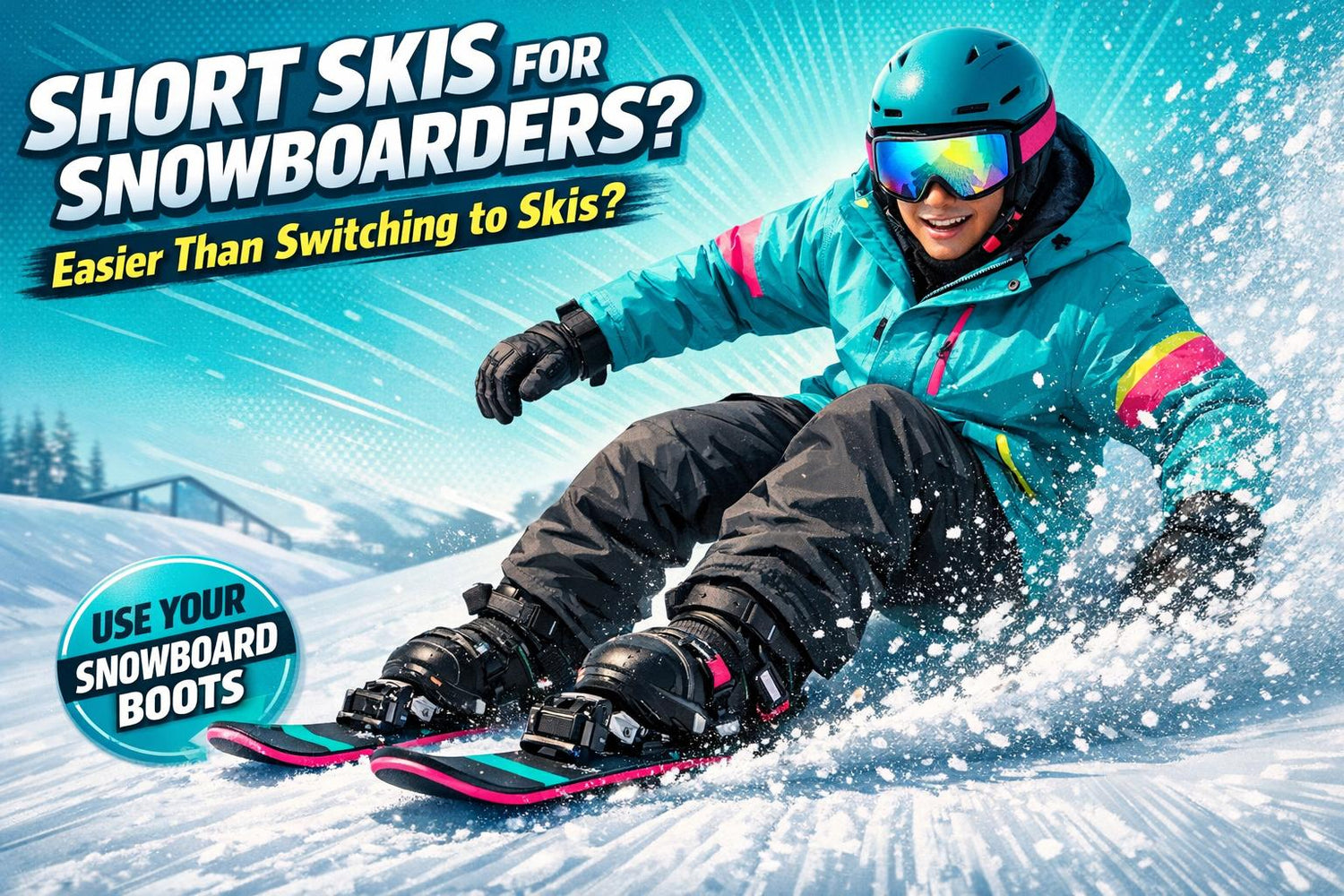
Switching from snowboarding to skiing doesn’t have to be intimidating. Short skis, like Snowfeet Skiskates and Skiblades, offer a simpler, faster way to get started compared to long skis. Here’s why they work so well:
- Quick Learning Curve: Most snowboarders can figure out short skis within minutes - no lessons required.
- Use Your Snowboard Boots: No need to buy ski boots, saving you money and hassle.
- Compact and Portable: Short skis fit in a backpack, making them easy to carry.
- Familiar Feel: The stance and turning motions are similar to snowboarding, making the transition smoother.
- Affordable: Starting at $275, these are a budget-friendly way to try skiing.
Short skis are best for groomed runs, beginner zones, and terrain parks. While short skis vs. long skis differ in deep powder and high-speed stability, short skis are a fun, simple option for snowboarders curious about skiing. Whether you’re aiming for tricks, cruising, or carving, there’s a short ski option for you.
Why Snowfeet* Skiskates and Snowfeet PRO Work Well for Beginners
How These Short Skis Feel Familiar to Snowboarders
Snowboarders often find Skiskates and Snowfeet PRO easy to pick up because their design feels a lot like snowboarding. At 17 inches (44 cm) and 20 inches (50 cm) long, these skis keep your weight centered right under your feet, avoiding the balance struggles that come with traditional skis.
The stance also feels natural. Your feet stay about hip- to shoulder-width apart, similar to how you'd stand on a snowboard. Turning? It's the same heel-to-toe motion you're already used to. Plus, the Snowfeet PRO has a snowboard-inspired baseplate that gives you better grip and makes turning even easier. Most riders can handle basic S-turns and control their speed in just one session. This thoughtful design makes transitioning from snowboarding to skiing feel smooth and instinctive.
"Super easy to control, quick to turn, and way more forgiving than traditional skis." - Brad Tolin
And it’s not just about the familiar stance - these short skis are also incredibly easy to carry around.
Portability and Convenience
Thanks to their compact size, Skiskates and Snowfeet PRO fit into any standard backpack. Forget about lugging around ski bags or dealing with roof racks. Getting to and from the slopes is a breeze.
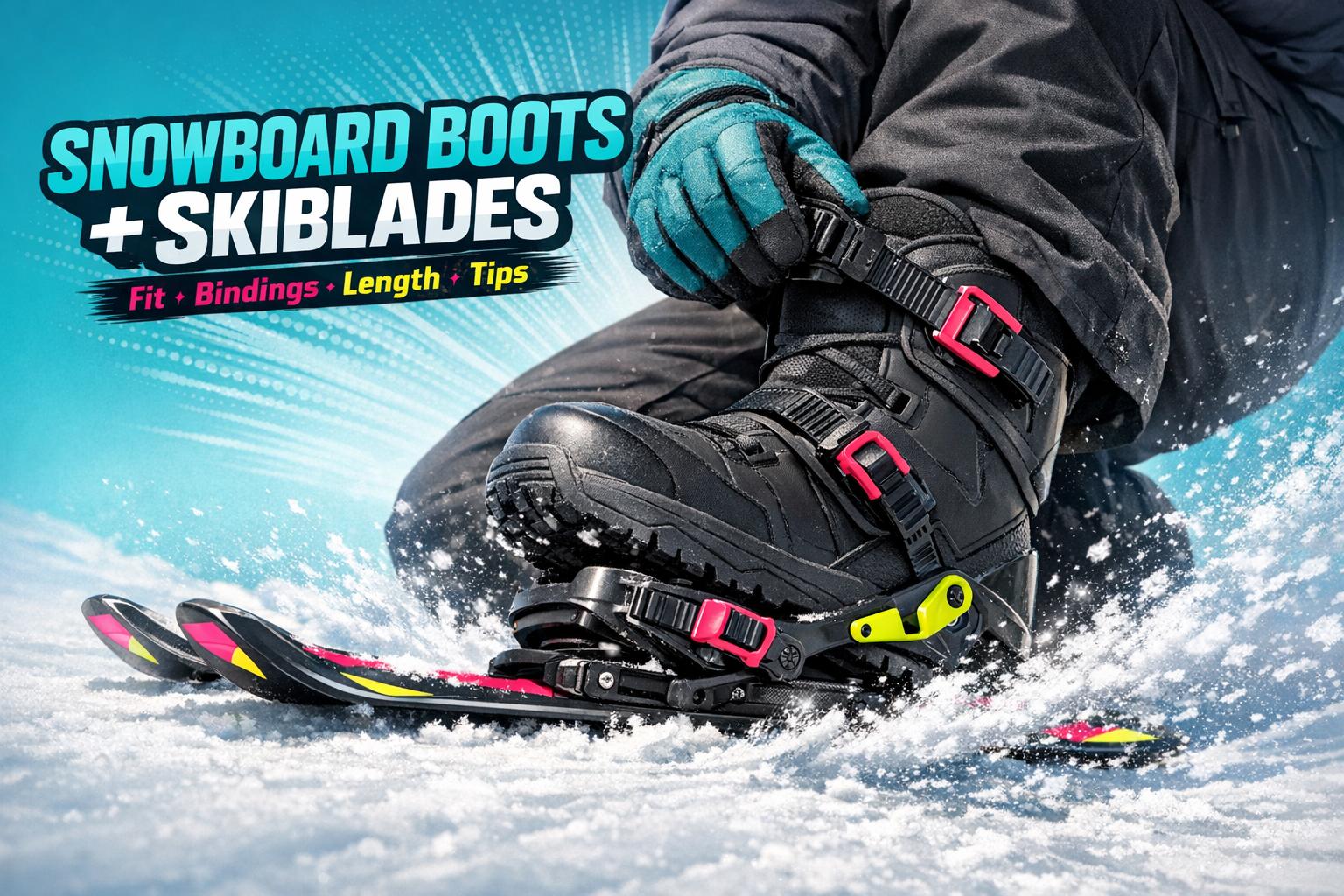
Another perk? No need for ski boots. You can use your snowboard boots, saving you both money and hassle. A traditional ski setup - skis, boots, and bindings - can cost $600–$800 or more for adults in the U.S. In comparison, Snowfeet PRO starts at $275, and Skiskates at $575, and you’re already using boots you own.
"A lot easier to haul around the hills & on vacation than traditional skis! I got the snowboard binding version, so super comfortable in my snowboard boots." - heyjerz, Verified User
This portability pairs perfectly with their performance on the right terrain.
Best Terrain for Skiskates and Snowfeet PRO
These short skis shine on groomed green and blue runs, beginner zones, and terrain parks. Smooth, packed snow gives you predictable grip and makes it easy to control your speed - ideal for learning. In terrain parks, their compact size is a bonus for tackling boxes, small rails, and rollers, which snowboarders are often familiar with.
One thing to keep in mind: stick to packed or groomed snow when starting out. Deep powder and steep, icy slopes are better suited to longer skis, which offer more edge contact and grip at higher speeds. But for a typical day at a U.S. resort - think groomers, park laps, and casual cruising - Skiskates and Snowfeet PRO are a great fit. This versatility makes it even easier for snowboarders to adapt and enjoy the experience.
Snowboarder tries Snowfeet* | Which Snowfeet* Short Ski is the Best? | Snowblades 44, 65, 99 Review
Snowfeet* Skiblades: A Middle Ground Between Skiskates and Long Skis
Snowfeet* Skiblades strike a balance between the playful feel of Skiskates and the performance of traditional long skis (around 170 cm). Available in three lengths - 65 cm, 99 cm, and 120 cm - they cater to a variety of riding styles and preferences. Let’s dive into how each size fits different needs.
Stability and Maneuverability Across Skill Levels
Like the Skiskates and Snowfeet PRO, Skiblades build on snowboard-inspired techniques. The 65 cm model ($635) delivers a skate-like, playful vibe, the 99 cm version ($675) offers a versatile, balanced experience, and the 120 cm option ($775) provides more stability and speed for those craving a compact ski-like feel.
The 99 cm Skiblades are a sweet spot for snowboarders transitioning to skis. They’re nimble enough for quick turns on busy slopes but stable enough for carving groomed blue runs. On the other hand, the 120 cm Skiblades handle choppy snow with ease and are perfect for riders who prioritize speed and stability, though they require a bit more effort to pivot.
"I had a lot of fun with the 99s. They are easier to turn than skis." - MindySue, Verified User
These Skiblades are ideal for snowboarders because they rely on familiar edge control and pressure techniques. Without the swing weight of long skis, your ankle and knee movements translate into quick, precise turns.
Here’s a closer look at where each model stands out.
Where Skiblades Perform Best
The 99 cm and 120 cm Skiblades shine on groomed blue and black runs, maintaining smooth carves without chatter. For terrain park enthusiasts, the twin-tip design of the 65 cm and 99 cm models makes switch riding, spins, and small jumps feel intuitive - especially for those already comfortable with park features.
In light powder - just a few inches of fresh snow - the wider waist and rocker-inspired design of the 99 cm and 120 cm models provide enough float for playful side laps off groomed trails. While they’re versatile on resort terrain, they’re best suited for groomers and light off-piste adventures rather than deep backcountry powder. If your typical day involves groomed runs, some park laps, and a little off-piste, the 99 cm or 120 cm Skiblades will likely cover all your needs.
| Skiblade Length | Best Rider | Top Use Cases |
|---|---|---|
| 65 cm | Beginners, freestyle-focused riders | Terrain parks, low-speed fun, tricks |
| 99 cm | Progressing snowboarders, all-around riders | Groomed runs, carving, light park laps |
| 120 cm | Advanced riders seeking more speed/stability | Blue/black groomers, light powder, varied terrain |
sbb-itb-17ade95
Short Skis vs. Long Skis: Key Differences for Snowboarders
Short Skis vs. Long Skis: The Snowboarder's Switching Guide
Easier Turns and a Faster Learning Curve
If you're a snowboarder thinking about trying skiing, traditional long skis (over 170 cm) can feel like a challenge. Their length can make quick turns and agility harder to achieve. That’s where Snowfeet* short skis come in. Designed for fast, responsive edge control, their shorter length eliminates the extra swing weight, making movements feel natural and intuitive. When you shift your weight, your feet follow instantly - no overthinking required.
"These ski blades are a blast to use. Super easy to control, quick to turn, and way more forgiving than traditional skis."
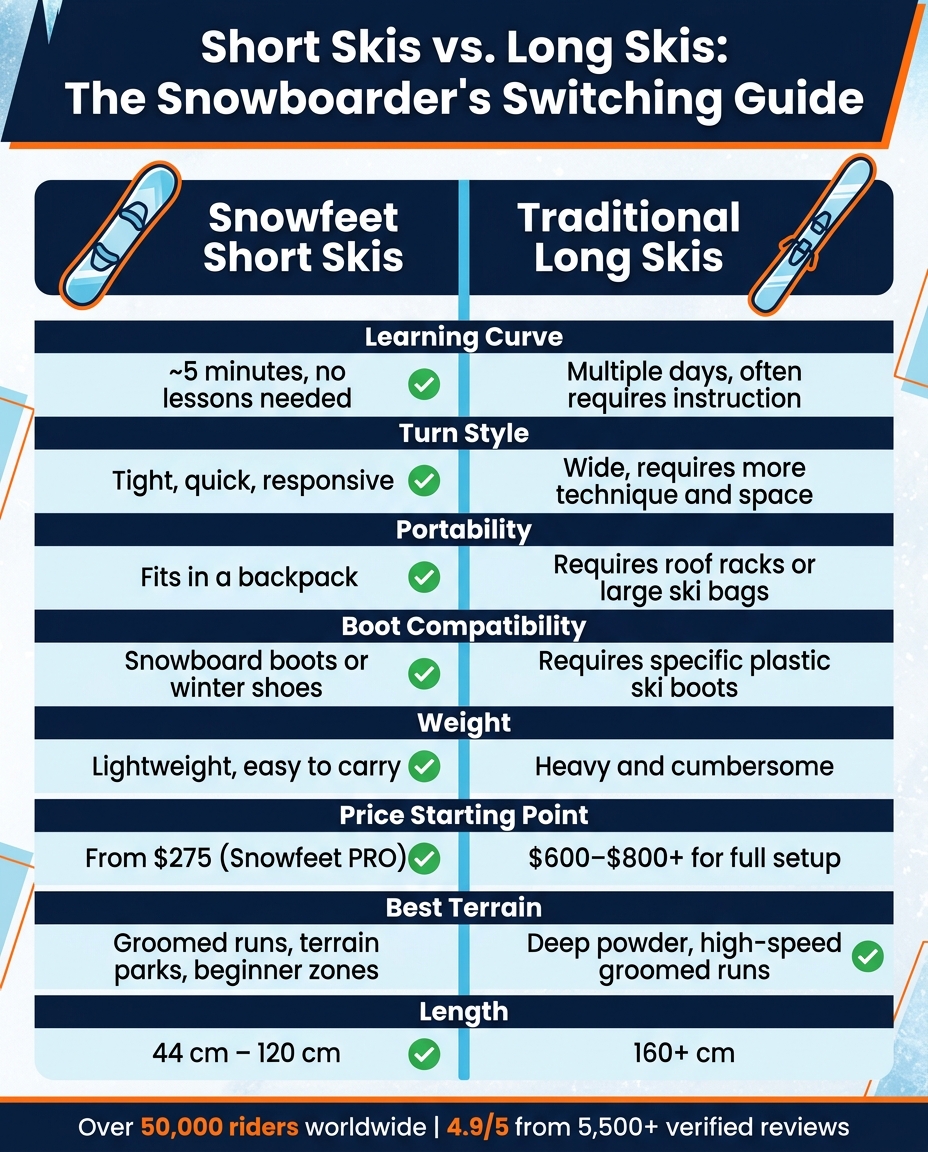
What’s even better? You can get the hang of Snowfeet* in just about five minutes, no lessons needed. Compare that to the days of practice and instruction often required with traditional skiing, and the difference is clear.
And it’s not just about performance. Snowfeet* short skis are also unbeatable when it comes to convenience.
Easier to Carry and Store
One of the standout perks of Snowfeet* short skis is how portable they are. Even the 120 cm model is compact enough to fit in a backpack. That means no more struggling with roof racks, bulky ski bags, or navigating crowded lodges with unwieldy equipment. Their smaller size makes them perfect for exploring narrow hiking trails, weaving through tight tree runs, or strolling through busy resort paths.
Let’s break it down:
| Feature | Snowfeet* Short Skis | Traditional Long Skis |
|---|---|---|
| Learning Curve | ~5 minutes, no lessons needed | Multiple days, often requires instruction |
| Turn Style | Tight, quick, responsive | Wide, requires more technique and space |
| Portability | Fits in a backpack | Requires roof racks or large ski bags |
| Boot Compatibility | Snowboard boots or winter shoes | Requires specific plastic ski boots |
| Weight | Lightweight, easy to carry | Heavy and cumbersome |
These differences make short skis an obvious choice for snowboarders eager to try skiing without the steep learning curve or heavy gear. However, long skis still have their moments.
Where Long Skis Still Have an Edge
While short skis shine in agility and ease, long skis do perform better in certain snow conditions. On groomed runs at higher speeds, long skis are more stable and absorb vibrations more effectively. And when it comes to deep powder, the larger surface area provides better float and stability compared to shorter skis.
That said, these advantages come with trade-offs. Long skis are heavier, harder to carry, and require specific ski boots. They also demand more technique and space for turning, which can be a hurdle for those new to skiing. For most snowboarders just starting out, these conditions are rare. Snowfeet* short skis, with their easy handling, compatibility with snowboard boots, and lightweight design, remove the usual barriers and make skiing accessible and fun for almost anyone.
Which Snowfeet* Product Fits Your Switch from Snowboarding?
Snowboarders have different goals when transitioning to skiing - whether it’s nailing park tricks or carving up groomed runs. Picking the right Snowfeet* product can make the switch smoother and more fun, while still keeping that snowboarding vibe alive.
For Quick Learning and Tricks: Skiskates and Snowfeet PRO
If you’re looking for a fast learning curve and love the playful side of snowboarding, Skiskates (44 cm) and Snowfeet PRO (50 cm) are great options. Their compact size makes it easier for intermediate riders to control their speed and link turns - sometimes within just a couple of runs. Plus, these shorter designs make trying tricks like small jumps or 180s feel natural, especially if you’ve got years of snowboarding under your belt.
One big bonus? The Snowfeet PRO works with your existing boots, so there’s no need to invest in new footwear. Skiskates, on the other hand, are built for speed and durability, with a stellar 4.9/5 rating from 123 reviews.
As Snowfeet* founder Zbyněk explains:
"In my opinion, Skiskates is the best product for slopes we developed so far. I love how easy they are to ski and skate and how many different kinds of tricks I can perform without much effort."
With these products, you’ll get the speed, control, and fun you’re used to, making it easier to ski confidently - even if you’re just starting out.
For More Control Across Different Runs: Skiblades
If your main goal is all-mountain control, Skiblades are a solid choice. The 99 cm model is a versatile option that handles groomed blue and black runs, light bumps, and changing snow conditions with ease. For tighter turns and tree runs, the 65 cm version offers a more playful ride, while the 120 cm model gives you extra stability for higher speeds and steeper slopes.
Here’s the cool part for snowboarders: both the 65 cm and 99 cm Skiblades can be paired with snowboard bindings for short skis, so you can stick with the boots you already own.
When Long Skis Might Still Make Sense
Traditional long skis (usually 160+ cm) offer that classic skiing experience, but they require more technique and practice. While they shine in deep powder and at race-level speeds, they come with a steeper learning curve and require specialized ski boots. For most snowboarders looking for a fun and forgiving way to transition, Snowfeet* products are a much easier and more practical option.
| Product | Length | Best For | Boot Compatibility |
|---|---|---|---|
| Snowfeet* Skiskates | 44 cm | Tricks, park, fast learning | Winter boots / snowboard boots |
| Snowfeet* PRO | 50 cm | Casual riding, portability, beginners | Universal (shoes or boots, sizes 6–13 US) |
| Snowfeet* Skiblades | 65 cm / 99 cm / 120 cm | All-mountain control, carving | Ski or snowboard bindings available |
| Traditional long skis | 160+ cm | Classic ski performance, deep powder | Requires specific ski boots |
Conclusion: Why Short Skis Are the Better Choice for Snowboarders
Switching from snowboarding to skiing doesn’t have to feel like starting over. With Snowfeet* short skis, the transition is smoother - no stiff ski boots, a friendlier learning curve, and none of the hassle of lugging around bulky gear. Over 50,000 riders worldwide and a stellar 4.9/5 rating from more than 5,500 verified reviews highlight just how much winter enthusiasts are loving this approach. Plus, you can use your existing snowboard boots to get started - how convenient is that?
What really sets Snowfeet* apart is its simplicity. You can use your snowboard boots, and when you’re done shredding for the day, the whole setup fits neatly into a backpack. Short skis combine the ease of snowboarding with the thrills of skiing, giving you the best of both worlds without the usual compromises.
Whether you’re into park-style tricks, casual cruising, or carving up the whole mountain, there’s a Snowfeet* product for you. Skiskates and skiblades offer different benefits: skiskates are perfect for freestyle fun, Snowfeet PRO is great for laid-back laps, and skiblades are ideal for all-mountain adventures. With Snowfeet* continuing to expand its lineup, now’s the perfect time to see what these short skis can bring to your mountain days.
FAQs
Which Snowfeet* length should I start with?
For a smooth learning curve and great control, go with the 44 cm Snowfeet*. This size is ideal for beginners, making it easier to master balance and maneuvering quickly.
Are short skis safe at higher speeds?
Short skis, like Snowfeet products, focus on giving you more agility and control, especially in tight spaces or quick turns. On the other hand, longer skis - those you'd find with traditional brands - are better suited for maintaining stability at higher speeds. That said, short skis can be perfectly safe when used by skilled skiers who know their boundaries and adjust their technique to match the skis' unique characteristics.
Are Snowfeet* allowed on lifts and runs at resorts?
Most resorts permit the use of Snowfeet on lifts and runs. However, resort policies can vary, and some may have specific restrictions for gear like Skiblades or similar equipment. It’s always a good idea to check with the resort ahead of time to make sure you’re following their rules.











Leave a comment
This site is protected by hCaptcha and the hCaptcha Privacy Policy and Terms of Service apply.