



















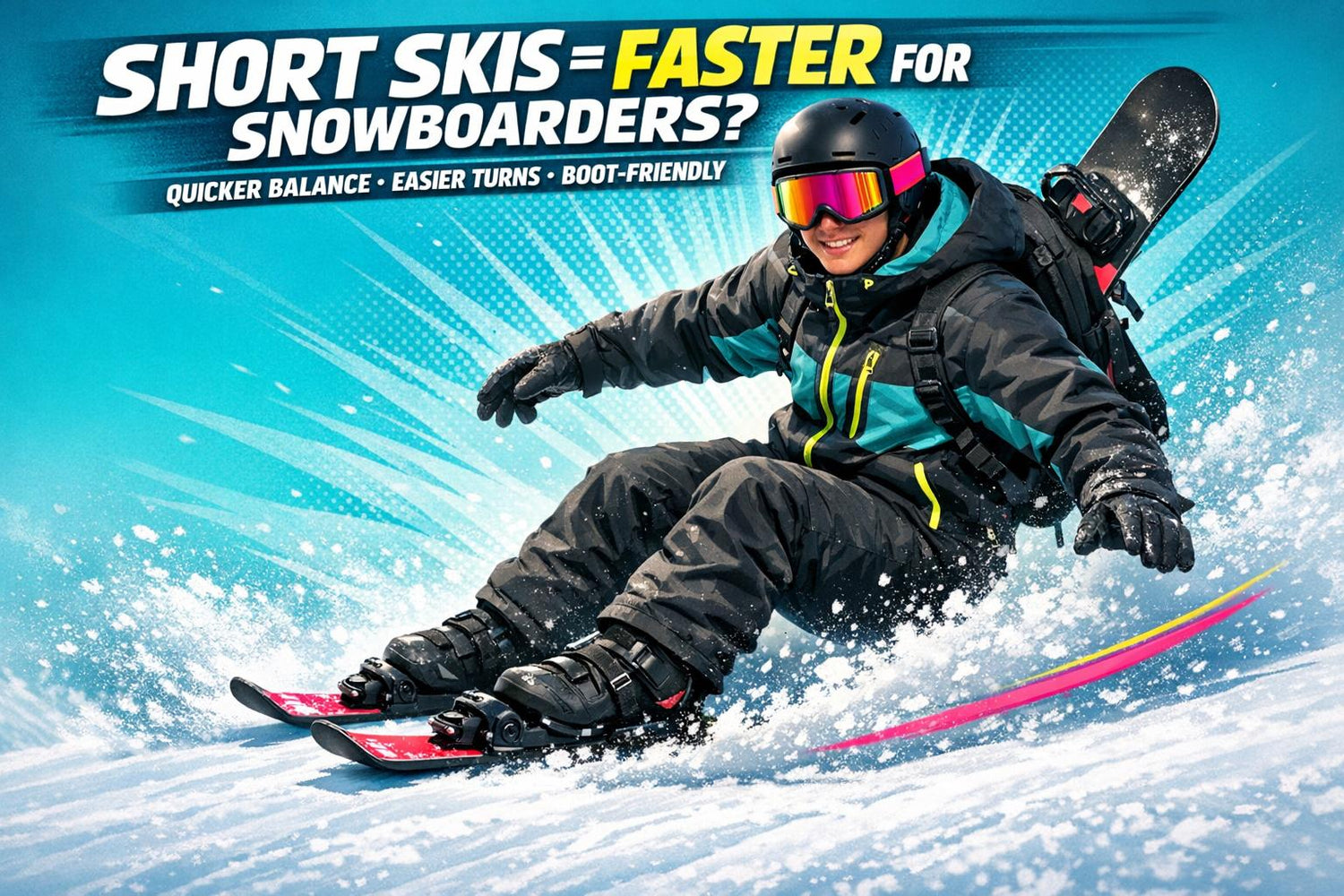
Switching from snowboarding to skiing? Short skis might be your best bet. They’re easier to control, less tiring, and even work with snowboard boots. Unlike long skis, which demand precise technique and balance, short skis feel natural for snowboarders. Here's why:
- Easier to balance: Short skis forgive mistakes and don’t punish a backseat stance.
- Faster learning curve: Most snowboarders can handle basic turns and stops on short skis in just a day.
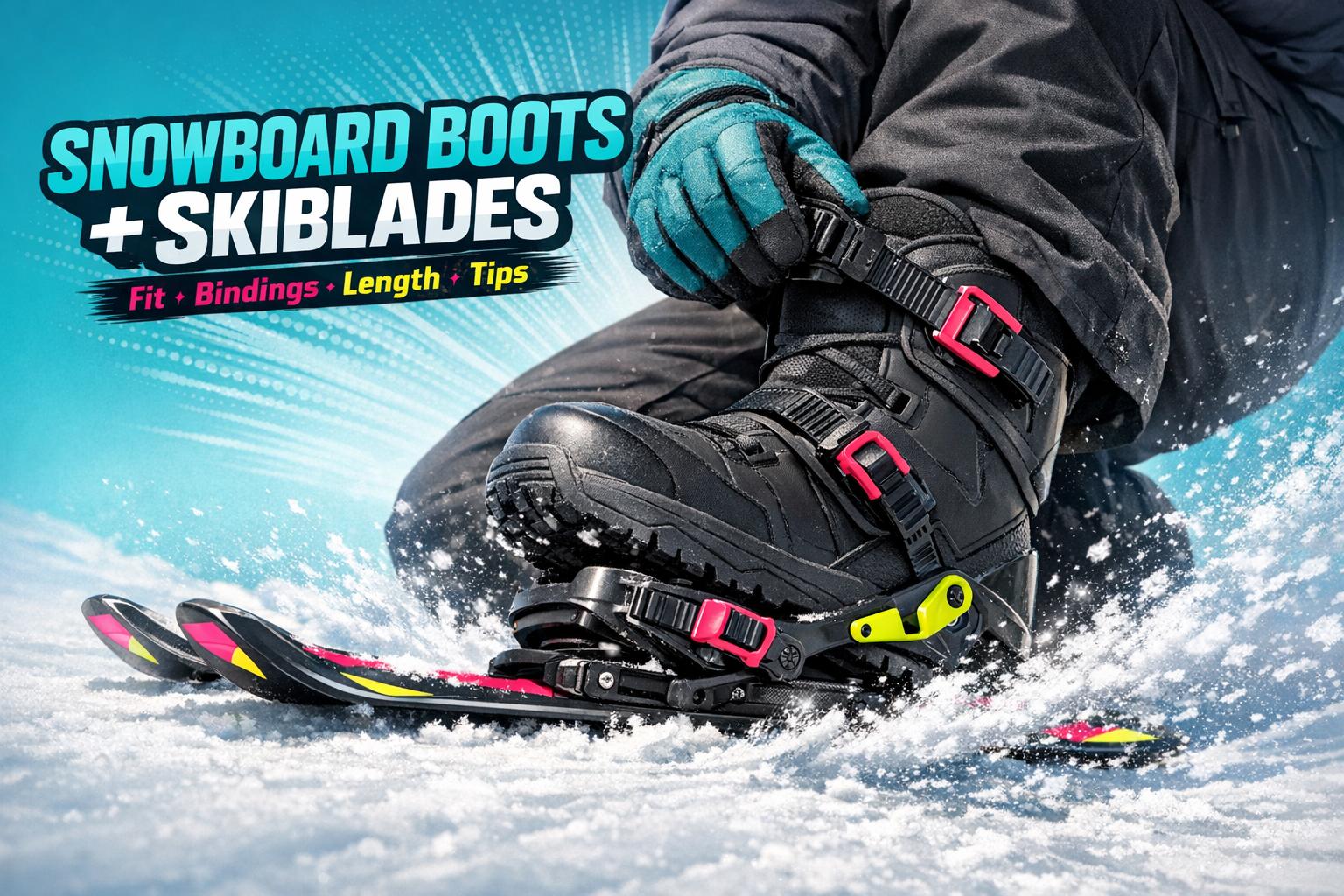
- Compatible gear: Some short skis, like Snowfeet Skiblades, work with your existing snowboard boots.
- Lightweight and portable: At just 65 cm, they’re easy to carry and handle.
If you’re curious about skiing but don’t want the hassle of long skis, short skis offer a smoother, more fun way to start.
How Snowboard Skills Carry Over to Short Skis and Long Skis
Snowboard Techniques and How They Apply
If you've spent time on a snowboard, you already know the importance of edge pressure for controlling speed and carving turns. That same skill translates well to Snowfeet* short skis, where edge-to-edge transitions happen quickly and with minimal effort. Why? The shorter length means less leverage is needed. As The Ski Monster explains:
"Shorter skis are always quicker and easier to initiate a turn on for a given ski."
Now, when it comes to traditional long skis (think 170 cm or longer), edge control requires more precision. The additional length acts like a lever, making turns feel slower or even awkward unless your timing is spot on. This difference highlights how snowboarders need to adjust their technique, especially when it comes to body position and balance.
Body Position and Balance Differences
Snowboarders often lean into a "backseat" stance, which works fine on a board but spells trouble on long skis. That rearward position can cause the ski tips to chatter and lose stability. On the flip side, Snowfeet* short skis are much more forgiving. They let you ease into the independent, parallel stance that skiing demands without punishing slight mistakes.
Because of their compact size and lighter weight, Snowfeet* short skis make it easier to find your balance compared to long skis, which require precise hip alignment and steady forward pressure. Here's how the two stack up:
| Balance Factor | Snowfeet* Short Skis | Traditional Long Skis |
|---|---|---|
| Backseat forgiveness | High | Low |
| Forward pressure required | Minimal | Consistent and precise |
| Edge-to-edge speed | Fast and nimble | Slower, more effort |
| Fatigue over a full day | Lower | Higher |
Learning Steps for Snowboarders on Each Ski Type
The differences in technique and balance also affect how snowboarders learn to ski. With Snowfeet* short skis, most snowboarders can pick up basic turns and stops on their first day. That’s because the movement feels similar to skating, making the transition less intimidating. Long skis, however, require building new muscle memory and mastering forward pressure, which can take more time and effort.
As The Ski Monster puts it:
"Longer skis reward strong technique and forward pressure. But if balance or stamina fade, they can be harder to manage than a slightly shorter ski."
For snowboarders looking for a smoother transition, Snowfeet* short skis offer a simpler, less tiring way to get started. They let you focus on enjoying the ride without worrying too much about perfect form right away.
Ultimate Short Skis for Any Mountain ⛷️🤩
Short Skis vs. Long Skis: Learning Curve Side by Side
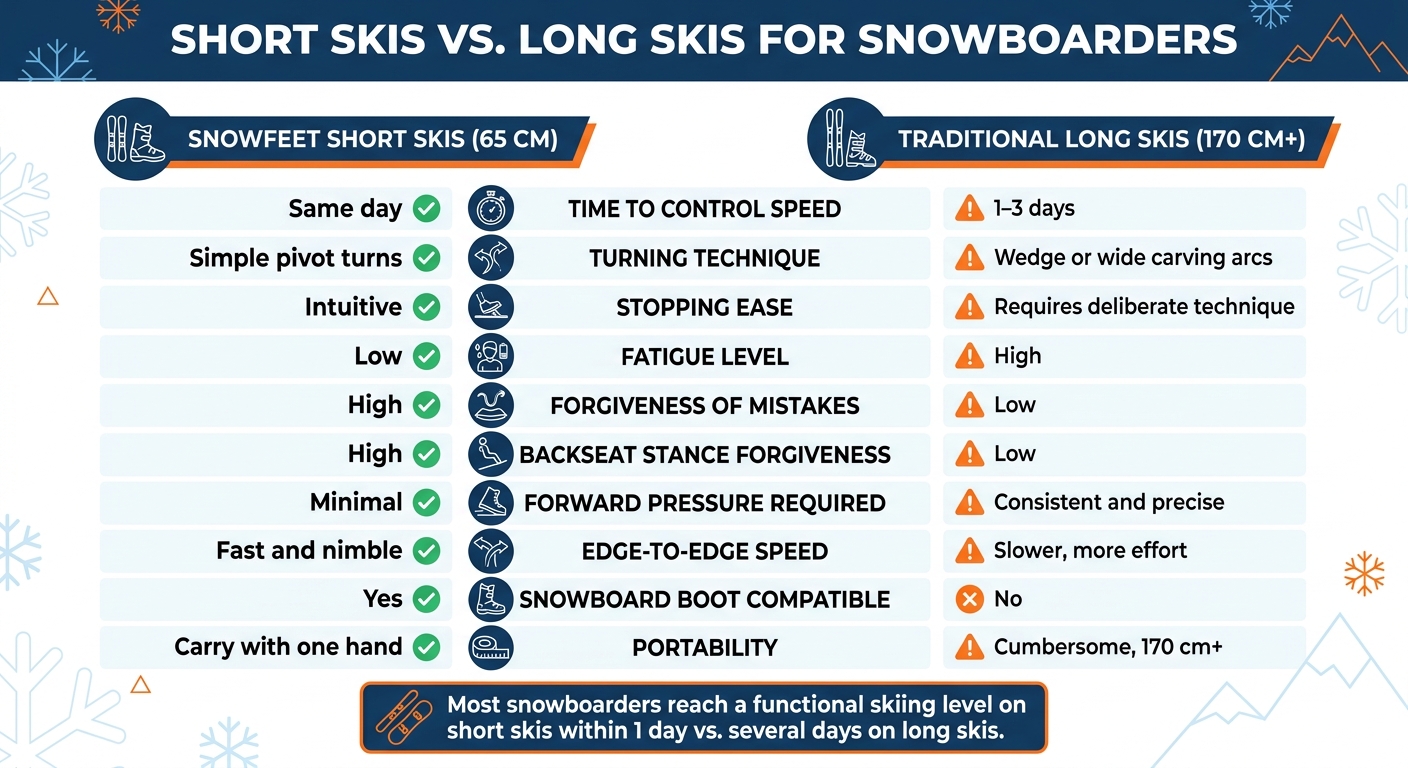
Short Skis vs. Long Skis for Snowboarders: Learning Curve Comparison
Balance and First Runs
The first time you hit the slopes, finding your balance can feel like a challenge. With traditional long skis - usually 170 cm or more - you’ll need to focus on precise weight distribution and maintaining forward pressure to stay in control. On the other hand, 65 cm Skiblades are lightweight and compact, making them easier to handle. Their shorter length naturally keeps your feet centered, which can ease some of that initial nervousness and help you focus on getting comfortable instead of worrying about balance.
Once you’ve got your balance down, the differences in turning and stopping become even more noticeable.
Turning, Stopping, and Speed Control
When learning on long skis, most beginners start with the wedge technique (a.k.a. the pizza stance). This involves pointing the ski tips together to slow down or stop. While it works, it takes time to master and can feel clunky at first.
With Snowfeet* short skis, things are a bit simpler. Their compact design makes quick pivot turns and smooth transitions feel more natural, similar to how snowboarders move. Stopping is easier too - the responsiveness of these skis lets you control your speed and stop with less effort. This intuitive design means you’ll pick up the basics faster, setting you up for a smoother and quicker learning experience.
How Long It Takes to Feel Comfortable on Each
Thanks to their balance and turning advantages, Snowfeet* short skis dramatically cut down the time it takes to feel confident on the slopes. While traditional long skis can take several days to get the hang of, most people using Snowfeet* short skis reach a functional level within just one day. Verified buyers of the 65 cm Skiblades consistently rave about how quickly they start having fun, earning them a perfect 5.0/5 rating.
| Learning Factor | Snowfeet* Short Skis | Traditional Long Skis |
|---|---|---|
| Control Speed | Same day | 1–3 days |
| Turning technique | Simple pivot turns | Wedge or wide carving arcs |
| Stopping ease | Intuitive | Requires deliberate technique |
| Fatigue | Low | High |
| Forgiveness of mistakes | High | Low |
sbb-itb-17ade95
Why Snowfeet* Short Skis Work Better for Snowboarders
Easy to Carry and Handle
Snowboarders know the struggle of lugging around traditional long skis. With lengths often exceeding 170 cm, standard skis are not only cumbersome but also require stiff, separate ski boots. Just getting from your car to the lift can feel like a mini workout.
Enter Snowfeet* short skis. At just 65 cm, these Skiblades are a game changer. You can carry them with one hand, making them super convenient. As verified buyer Brad Tolin put it:
"Also a big plus - they're lightweight and much easier to carry around than full-size skis."
This portability makes your day on the slopes way more enjoyable and keeps the experience closer to the simplicity snowboarders love.
A Feel That Matches Snowboard Riding
Snowboarders are all about flow and responsiveness. Long skis, on the other hand, can feel stiff and require a steep learning curve to master. They don’t offer that playful ride right out of the gate.
Snowfeet* short skis, however, are built for fun. Their compact size delivers a lively, skate-like feel perfect for spins, jumps, and tricks. At 65 cm, the Skiblades mimic the sensation of skating on snow, giving snowboarders the freedom to carve and play from the very first run. Brad Tolin shared:
"They're great for carving and navigating crowded slopes without feeling bulky."
That kind of movement is something you just won’t get with a pair of 170 cm skis.
Boot Compatibility and Lower Cost to Get Started
Snowfeet* short skis also win big when it comes to gear compatibility and affordability. They’re designed to work with your existing snowboard boots. Both the 65 cm and 99 cm Skiblades come with snowboard bindings that fit US sizes 6–14.5 (EU 38–49), meaning there’s no need to shell out for stiff alpine ski boots.
This compatibility saves you a lot of money. Traditional skiing often requires renting or buying separate ski boots, which can quickly add up. With Snowfeet*, all you need are your trusty snowboard boots. Prices for the short skis start at $635 for the 65 cm Skiblades, while the 100 cm Fiberglass Core model starts at $499.
| Model | Length | Starting Price | Snowboard Boot Compatible |
|---|---|---|---|
| Skiblades | 65 cm | $635 | Yes |
| Skiblades | 99 cm | $675 | Yes |
| Short Skis (Fiberglass Core) | 100 cm | $499 | Not specified |
| Short Skis | 120 cm | $775 | No |
With their portability, snowboard-like feel, and compatibility with your existing boots, Snowfeet* short skis make it easy for snowboarders to dive into skiing without breaking the bank.
Conclusion: The Faster Path for Snowboarders
Key Takeaways
If you're a snowboarder thinking about giving skiing a shot, the type of gear you pick can make or break your experience. Long skis require precise forward pressure and solid technique. If you lean back too much on these, you'll end up with chatter and a loss of control - not fun.
Short skis, on the other hand, are a game-changer. They're more forgiving when your balance isn't spot-on, less tiring over a full day, and way easier to turn and control. This is especially true on groomed trails or in snow parks. For snowboarders, this means less hassle with gear and more time enjoying the slopes. It’s all about finding the gear that matches your riding style and keeps the fun factor high.
Why Snowfeet* Is the Right Choice
Here’s where Snowfeet* short skis really shine. These mini skis are designed to work with snowboarders' natural movements. Their compact size and compatibility with snowboard boots mean no awkward gear swaps or extra costs, which takes a lot of the stress out of trying skiing for the first time.
The 65 cm Skiblades hit a sweet spot: "long enough to ski, short enough to skate." They offer a hybrid experience that feels intuitive for snowboarders. Plus, with solid user reviews backing up their performance, it’s clear they deliver results.
If you're a snowboarder curious about skiing but not ready to dive into a full traditional setup, Snowfeet* offers a smart, approachable way to make the leap.
FAQs
Are short skis safe at higher speeds?
Short skis can be safe at higher speeds, but only if you stay in control. That said, they tend to be less stable and can vibrate more compared to longer skis. Longer skis are typically better for maintaining stability when you're flying down the slopes. Always factor in your skill level and the conditions before pushing short skis to higher speeds.
Which Snowfeet* length should snowboarders choose?
Snowboarders looking to make the switch to short skis should check out Snowfeet Skiblades in either the 65 cm or 99 cm lengths. These shorter skis are much easier to handle, giving snowboarders better control and helping them adjust to skiing faster. They're a great pick for anyone wanting a smoother transition from snowboarding to skiing.
Can I use Snowfeet* on all resort terrain?
Snowfeet* products, such as Skiblades and Skiskates, perform great on groomed snow, slopes, snow parks, and even narrow trails. However, they’re not meant for deep powder terrain. Thanks to their compact size and easy maneuverability, they’re perfect for most resort settings.











Leave a comment
This site is protected by hCaptcha and the hCaptcha Privacy Policy and Terms of Service apply.