



















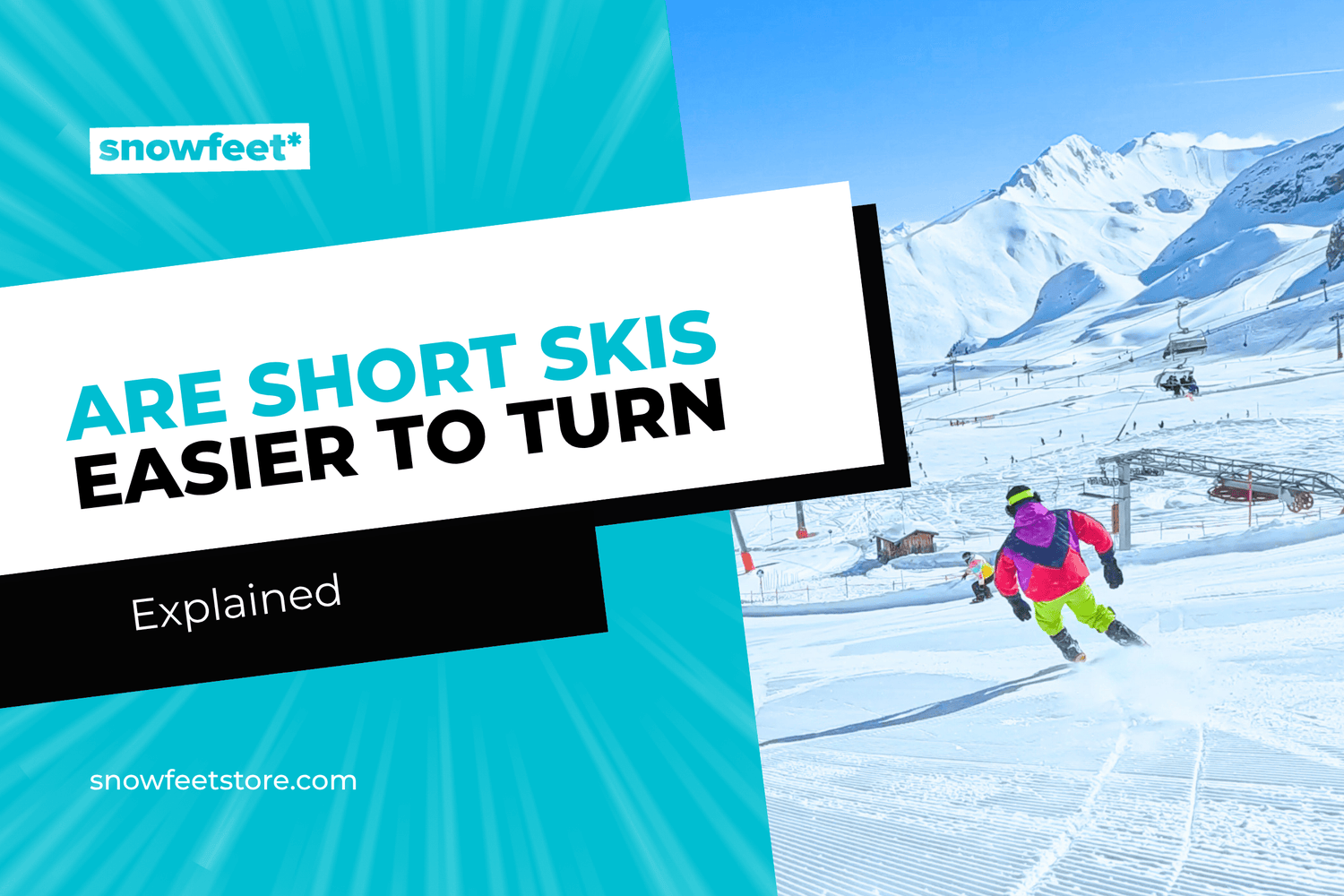
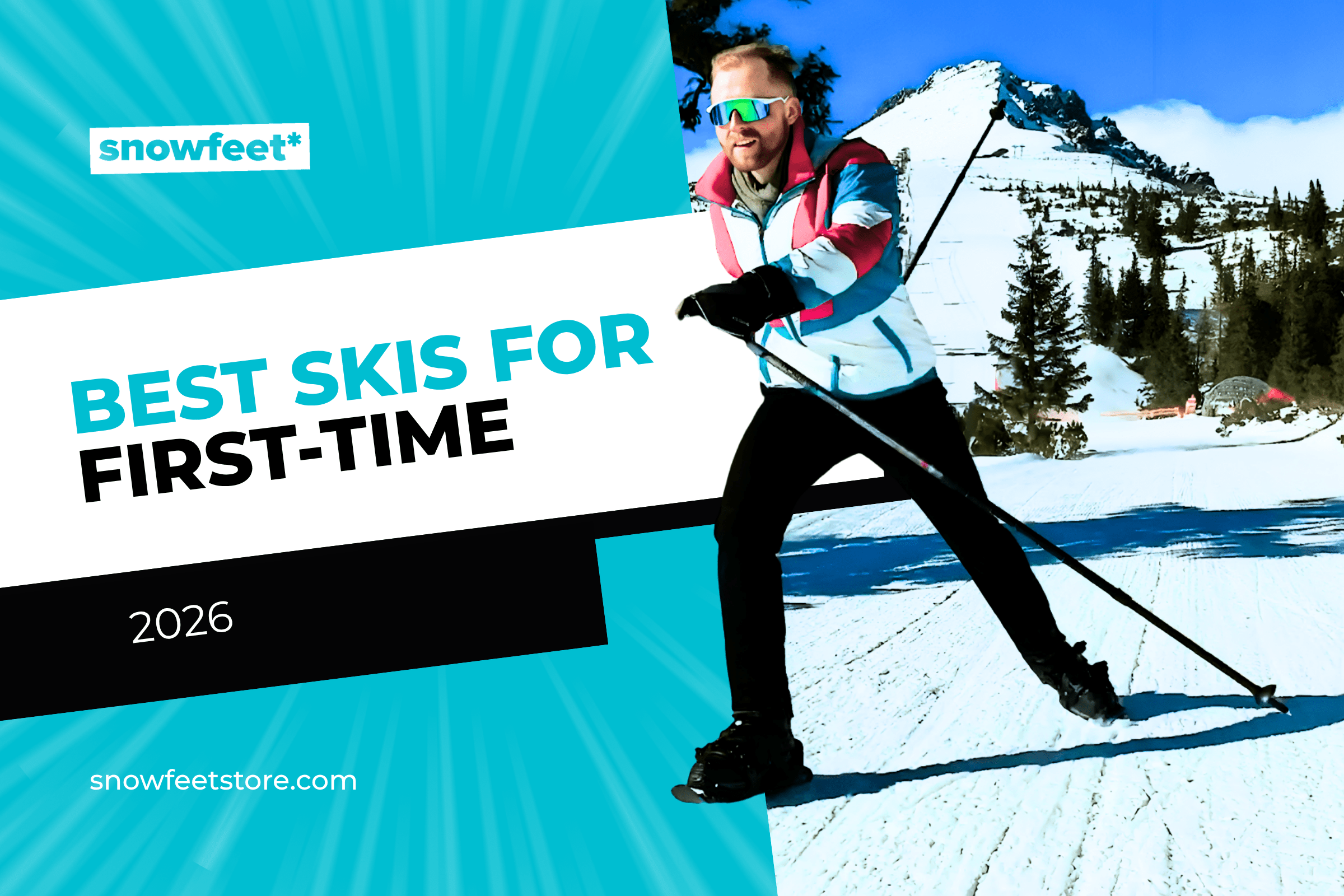
If you’re wondering whether short skis are easier to turn, here’s the quick answer: Yes, they are. Short skis, like Snowfeet* Skiblades, make turning faster and less tiring compared to longer skis. They’re lightweight, compact, and perfect for tight spaces like tree runs, moguls, or crowded slopes. Whether you’re a beginner or an advanced skier, shorter skis can make your time on the slopes more fun and less exhausting.
Key Takeaways:
- Turning: Short skis turn faster and with less effort than long skis.
- Control: They’re easier to handle, especially for beginners or in tricky terrain.
- Portability: Short skis are lightweight and simple to carry or store.
- Terrain: Great for tight spaces but less stable at high speeds or in deep powder.
- Skill Levels: Ideal for all levels, but advanced skiers may miss the stability of longer skis at higher speeds.
Quick Comparison:
| Feature | Short Skis (Snowfeet Skiblades) | Long Skis |
|---|---|---|
| Turning Speed | Faster | Slower |
| Stability at Speed | Lower | Higher |
| Weight | Lightweight | Heavier |
| Best Terrain | Tight spaces, parks, moguls | Open slopes, deep powder |
| Learning Curve | Easier for beginners | Requires more skill |
Short skis are a solid choice if agility and ease of use are your top priorities. But if you’re chasing high-speed stability or love carving through deep powder, long skis might still be your go-to. Let’s break it all down in detail below.
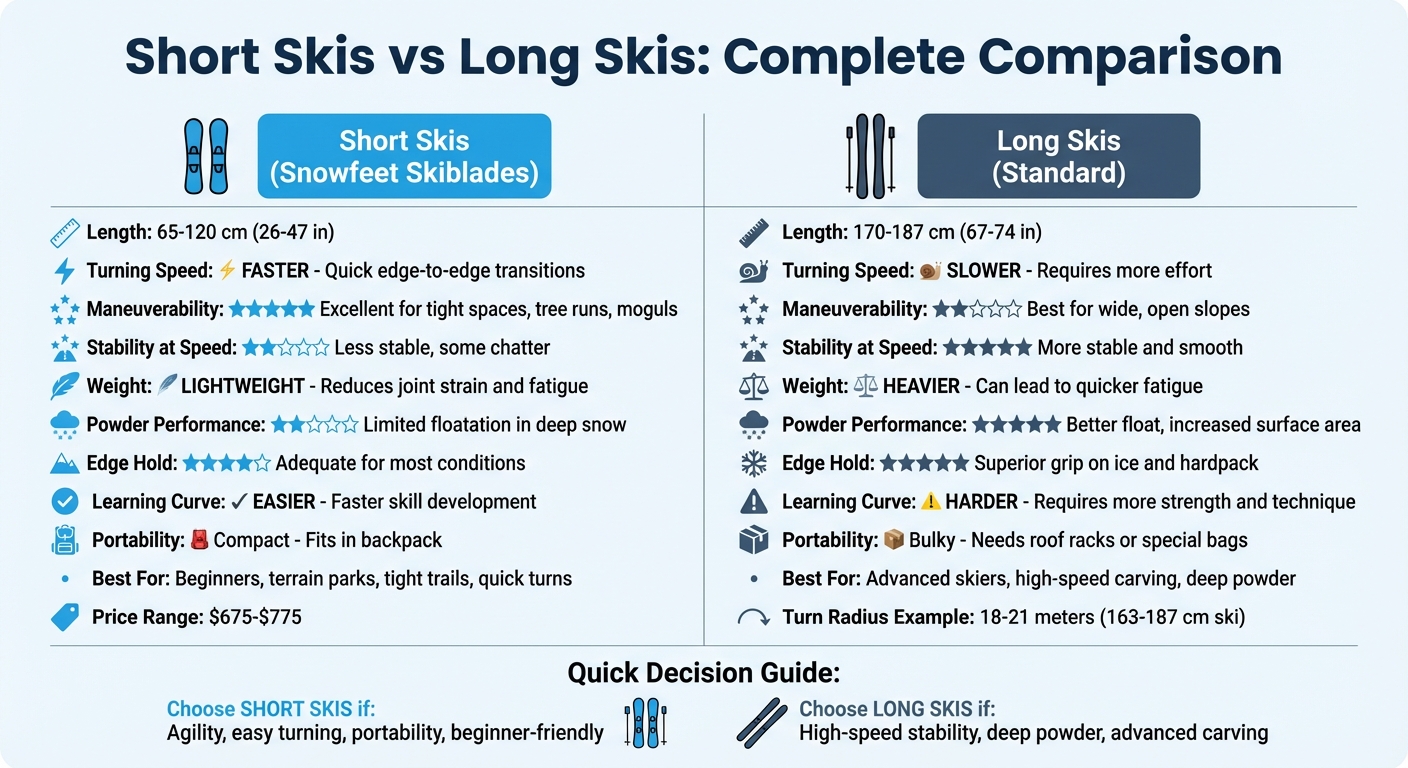
Short Skis vs Long Skis Comparison Chart
1. Snowfeet* Skiblades (65 cm [26 in], 99 cm [39 in], 120 cm [47 in])
Turning Maneuverability
Snowfeet* Skiblades are all about quick, sharp turns. The 65 cm (26 in) skiblade is perfect for tight spaces - whether you're maneuvering through crowded slopes or weaving between trees. Compared to traditional 170 cm (67 in) skis, these shorter blades make pivoting feel almost effortless. The 99 cm (39 in) and 120 cm (47 in) options provide a bit more stability without sacrificing the ability to switch directions quickly. They’re built for smooth transitions that won’t leave your legs burning.
This agility gives you an edge in handling all kinds of terrain.
Control and Stability
Despite their compact size, Snowfeet* Skiblades offer impressive control. The 65 cm model shines in parks and on groomed trails, where quick movements are key. The 99 cm Skiblades (starting at $675) strike a great balance between agility and stability, making them a solid choice for all-mountain adventures. If you’re looking for speed and the ability to tackle mixed terrain, the 120 cm Short Skis (priced at $775) are your go-to. They’re quicker to turn than traditional skis but still provide the stability you need for fast-paced runs. Thanks to their durable build, these skiblades stay steady even during sudden shifts in balance.
Performance Across Skill Levels
These skiblades cater to everyone - from first-timers to seasoned pros. Beginners will love how the shorter length makes turning feel natural right from the start. For intermediate skiers, they’re a great tool for perfecting edge control and technique without the hassle of managing bulky skis. Advanced riders, on the other hand, will appreciate how easy it is to make those quick, precise turns that demand fast balance adjustments. The added agility makes them an exciting option for anyone looking to elevate their skiing game.
Portability and Convenience
One of the standout features of Snowfeet* Skiblades is how easy they are to carry around. The 65 cm model is lightweight and compact enough to toss in a bag, stash in a locker, or fit into a car trunk without a hassle. Even the larger 99 cm and 120 cm versions are far easier to transport than traditional skis, making them a great choice for skiers who value convenience - whether you’re heading out for a spontaneous day on the slopes or dealing with limited storage space in the city.
2. Standard Long Skis
Turning Maneuverability
Standard long skis lean heavily into stability, but they’re not exactly built for quick, sharp turns. With lengths ranging from 67 to 74 inches (170–187 cm), these skis are designed for wide, sweeping turns. For instance, a 187 cm freeride ski typically has a turn radius of 21 meters, while a shorter 163 cm version offers a tighter 18-meter radius. This focus on smooth, stable turns means they lack the nimble, quick-turn capability of Snowfeet* Skiblades.
Control and Stability
When it comes to stability and edge hold, long skis shine. Their extended length translates to a longer effective edge. To put it in numbers, a 187 cm ski boasts an effective edge of 1,470 mm, which is 230 mm longer than that of a 163 cm ski (1,240 mm). The added weight also plays a role - 1,996 g for the longer ski versus 1,585 g for the shorter one - providing better edge grip but requiring more effort to maneuver.
"Longer skis give more stability and more confidence at speed." - Lucy Higgins, Author and Former Editor-in-Chief at Backcountry Magazine
Performance Across Skill Levels
Long skis aren’t exactly beginner-friendly. They need more skill and strength to handle, making them a go-to choice for advanced skiers who hit the slopes 20 or more days a year. For experts, the stability on steep terrain and better float in powder are big perks. However, the extra length and weight can lead to quicker leg fatigue compared to shorter skis. So, while long skis deliver when it comes to grip and stability, they can’t match the quick, agile turns of Snowfeet* Skiblades.
sbb-itb-17ade95
Pros and Cons
Choosing between short skis and traditional long skis comes down to understanding what works best for your skiing style. Here's a side-by-side comparison of Snowfeet* Skiblades (short skis) and standard long skis to help you weigh the options:
| Feature | Snowfeet* Skiblades (Short Skis) | Standard Long Skis |
|---|---|---|
| Turning Speed | Faster, with quick edge-to-edge transitions | Slower turns that demand more effort |
| Maneuverability | Excellent for tight spaces like tree runs and moguls | Best for wide, open slopes |
| Stability at Speed | Less stable, with some chatter in variable conditions (though you can handle high speeds with the right technique) | More stable and smooth at higher speeds |
| Weight & Fatigue | Lightweight, reducing strain on joints and legs | Heavier, which can lead to quicker fatigue |
| Powder Performance | Limited floatation in deep snow; not ideal for open bowls | Better float thanks to increased surface area |
| Edge Hold | Adequate for most conditions but struggles on ice | Superior grip on icy and hardpacked terrain |
| Learning Curve | Easier for beginners; faster skill development | Requires more strength and refined technique to excel |
| Portability | Compact and fits in a backpack easily | Bulky; often needs roof racks or special bags for transport |
Snowfeet* Skiblades shine in scenarios where agility is key - think tight trails, terrain parks, or areas requiring quick directional changes. On the other hand, long skis are the go-to for high-speed carving and deep powder days. For skiers over 45 or those looking to reduce joint strain, the lighter weight of Snowfeet* Skiblades can make a big difference in reducing fatigue.
Conclusion
Our tests across various ski lengths and conditions back up these findings. Short skis like Snowfeet* Skiblades, with their compact length and tighter turn radius, make edge-to-edge transitions quicker and turning less demanding compared to traditional long skis. If agility tops your priority list over straight-line speed, these skis are a solid choice.
For beginners, the 65 cm (26 in) or 99 cm (39 in) Snowfeet* Skiblades provide an easy way to step into skiing. Their lightweight build and responsive feel help new skiers gain confidence and pick up turning techniques faster than they might with heavier, full-length skis.
Intermediate skiers will find the 99 cm (39 in) or 120 cm (47 in) models to be a sweet spot. These sizes balance quick maneuvering - great for weaving through trees or hitting terrain parks - with enough stability for cruising groomed runs. Plus, the lighter swing weight means less fatigue during extended sessions, letting skiers focus on refining their skills.
For advanced skiers, these skiblades shine in technical terrain. Navigating moguls, threading through tight chutes, or making rapid transitions feels smoother and more precise. While they might not offer the same high-speed stability or float in deep powder as traditional skis, the trade-off is worth it for those seeking sharp control and a playful, dynamic ride. This trend reflects the growing interest in gear that prioritizes agility and ease of use.
FAQs
Which Skiblade length (65, 99, or 120 cm) should I choose?
Shorter Snowfeet Skiblades make turning a breeze. The 65 cm option is the easiest to maneuver, making it perfect for beginners or those who love quick, sharp turns. The 99 cm length strikes a balance between stability and control, making it a solid choice for intermediate riders. For those seeking stability at higher speeds, the 120 cm skiblades are ideal, though they trade off some agility. Pick the length that matches your experience and riding style.
Do short skis feel unstable at higher speeds?
Short skis, such as Snowfeet* Skiblades, offer impressive agility and make turning a breeze. Their compact size allows for quick, precise movements, which is perfect for navigating tight spots or making sharp turns. While they might not feel as steady at higher speeds compared to longer skis, their exceptional control and responsiveness more than make up for it. Both beginners and seasoned skiers often appreciate how these short skis enhance their ability to maneuver with ease and confidence.
Can Skiblades handle ice or hardpacked snow?
The information available doesn’t directly confirm how Skiblades, such as Snowfeet, handle ice or hardpacked snow. That said, short skis are typically built to offer better control and agility. How well they perform in these conditions will largely depend on the skier's skill and technique.












Leave a comment
This site is protected by hCaptcha and the hCaptcha Privacy Policy and Terms of Service apply.