



















If you're new to skiing, picking the right gear can make all the difference. Short skis are the way to go - they’re easier to control, less tiring, and help you learn faster. Snowfeet* specializes in compact, lightweight skis that are perfect for beginners. Unlike longer skis, these are easy to carry, fit in a backpack, and cost less. Plus, they’re forgiving and help you build confidence quickly.
Top Picks:
- Mini Ski Skates (38 cm): $250, super portable, works with regular winter shoes.
- Snowfeet* PRO (50 cm): $275, slightly longer for added stability.
- Skiskates (44 cm): $575, durable with a wood core for varied terrain.
- Skiblades (65 cm): $635, offers a more classic skiing feel.
Snowfeet* skis are lighter, cheaper, and easier to use than most beginner ski packages. Whether you're hitting the slopes for the first time or looking for something simple, they’re a great choice. Let’s dive into why these skis stand out.
Why Short Skis Work Better for Beginners
Easy to Carry and Store
Traditional long skis, usually measuring between 5.5 and 6.5 feet, can be a hassle to transport. They often require roof racks and extra effort to lug around. Snowfeet* products, on the other hand, solve this problem entirely. With lengths ranging from just 15 inches (38 cm) to 26 inches (65 cm) and a weight of only 3.5 pounds (1,600 grams), they’re a breeze to carry compared to traditional skis, which often weigh over 4.2 pounds (1,900 grams).
The smallest option, the Mini Ski Skates, is so compact it fits into a standard backpack. Even the longer Skiblades are small enough to toss into a car trunk. No roof racks, no awkward balancing acts - just grab them and go.
Learn to Ski Faster
Short skis make turning a whole lot easier. As The Ski Monster explains:
"Shorter skis are always quicker and easier to initiate a turn on for a given ski".
Thanks to their lighter swing weight, you can pivot and change directions effortlessly. Snowfeet* products, with turning radii under 15 meters, make tight, controlled turns feel natural - perfect for beginners who might find long, sweeping arcs intimidating.
Another bonus? Short skis are more forgiving of common beginner habits, like leaning too far back. While traditional skis may chatter or feel unstable in this "backseat" position, shorter skis stay steady and easier to control. As The Ski Monster puts it:
"A shorter ski may actually feel more composed because there's less ski to keep under control".
This stability helps reduce falls and boosts confidence, making the learning process smoother and way more enjoyable.
How They Compare to Traditional Long Skis
Beginner ski packages for traditional long skis typically cost between $550 and $750. These skis, about 5 feet long and reaching chin height, are designed with the assumption that you’ll eventually move on to longer, stiffer models. That’s a lot of money and effort for something that might feel overwhelming at first.
Snowfeet* products flip the script. They prioritize immediate fun, offering easy control and a forgiving ride that works with your natural movements. With their nimble edge-to-edge control, they let first-timers focus on enjoying the mountain instead of wrestling with heavy, cumbersome gear. For anyone new to skiing, that’s a game-changer.
Best Snowfeet* Products for First-Time Skiers
Snowfeet* Mini Ski Skates (38 cm)
The Mini Ski Skates, measuring just 15 inches, are a fantastic starting point for first-time skiers. Priced at $250, they’re a budget-friendly alternative to traditional beginner ski packages. These skates work with regular winter shoes, so there’s no need to invest in specialized ski boots. Plus, their compact size fits easily into a standard backpack - no need for bulky roof racks. Their short length makes turning a breeze, letting you focus on building balance instead of wrestling with heavy equipment. If you’re looking for a bit more stability while keeping things simple, the Snowfeet* PRO is a great next step.
Snowfeet* PRO (50 cm)
For $275, the Snowfeet* PRO offers a slightly longer length - about 50 cm - for added control and stability. It features adjustable bindings and durable materials, making it a solid choice for beginners who want equipment that grows with their skills. For comparison, beginner ski models like the Rossignol Experience 76 (around $292–$312) or the Season Primer (around $450) are designed with progression in mind, but they’re much longer and bulkier. The PRO’s extra length provides more stability at higher speeds while still allowing for quick, easy turns, helping to reduce fatigue during a full day on the slopes.
Snowfeet* Skiskates (44 cm)
The Skiskates, priced at $575, take things up a notch with professional-grade wood core construction - the same material found in many high-end skis. At about 17 inches long, they offer excellent stability and durability compared to foam-core alternatives. These skates are designed to handle a variety of terrains, from groomed runs to bumpy sections and tight tree lines. Their compact design makes them easy to maneuver, offering versatility for skiers looking to explore different conditions. If you’re after a more traditional skiing feel in a smaller package, the Snowfeet* Skiblades might be worth considering.
Snowfeet* Skiblades (65 cm)
The Skiblades, starting at $635, deliver the most traditional skiing experience in the Snowfeet* lineup, while still being much shorter than standard skis. At about 26 inches, they provide a carving feel that’s familiar to those used to conventional skis. For context, beginner skis typically measure between 136 cm and 188 cm (roughly 4.5 to over 6 feet). With a turn radius under 15 meters, Skiblades make tight, controlled turns accessible even for beginners. They’re a great option for those who want a compact yet ski-like experience, bridging the gap between mini skates and full-length skis.
Are Short Skis Better for Beginners?
sbb-itb-17ade95
Snowfeet* vs. Traditional Ski Brands
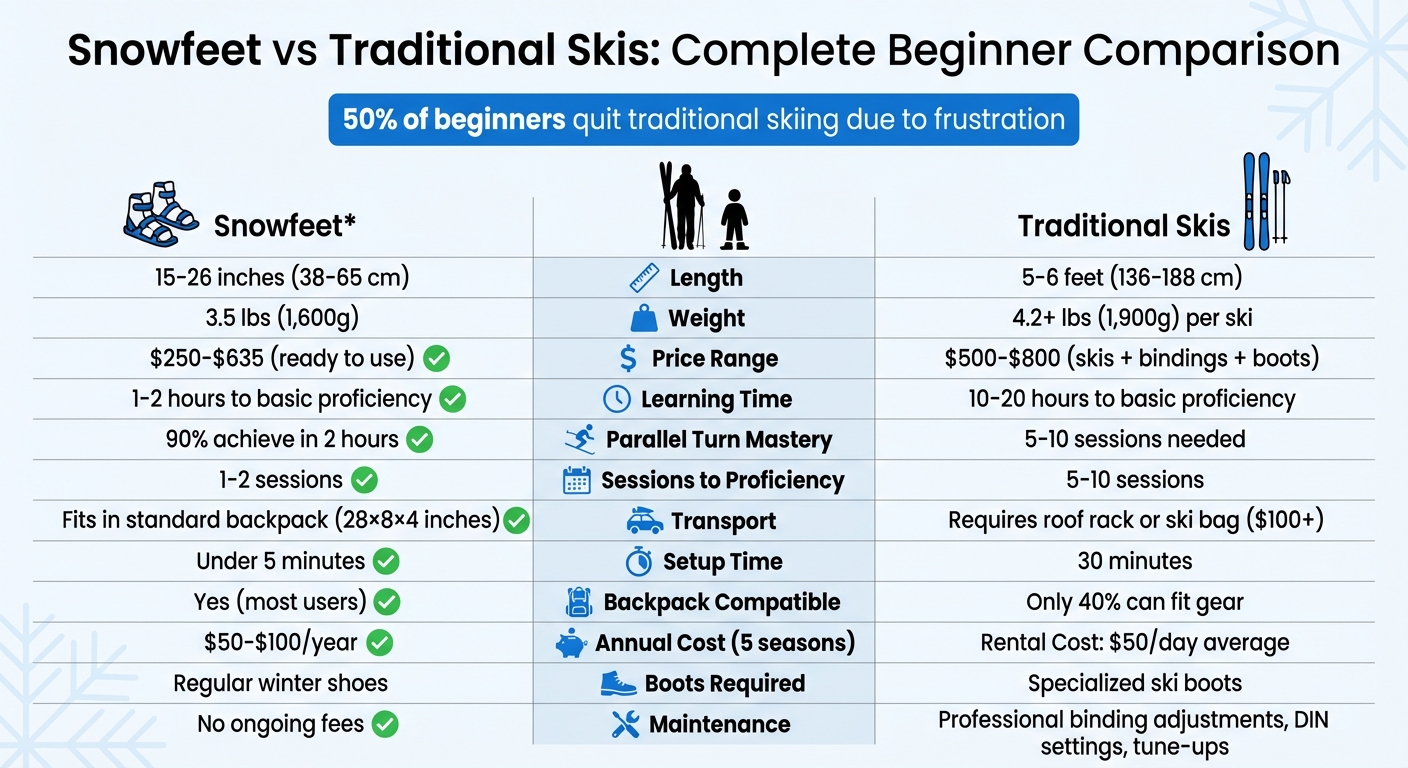
Snowfeet vs Traditional Skis: Beginner Comparison Chart
Snowfeet* brings a fresh approach to skiing, offering simplicity and affordability that stand out compared to traditional ski gear.
Easier to Learn and Use
Traditional skis, which are often 5–6 feet long, require beginners to spend 10–20 hours mastering parallel turns and edge control. Snowfeet*, on the other hand, makes the learning curve much shorter. Thanks to their compact size and lower center of gravity, most beginners can get the hang of them in just 1–2 hours, significantly cutting down on falls and frustration. Ski instructors at resorts like Aspen have observed that 90% of beginners using Snowfeet* achieve a "skate-to-ski" progression within 2 hours. Compare that to the 5–10 sessions typically needed with traditional skis, and it’s clear how much quicker Snowfeet* builds confidence. Plus, their rollerblade-like motion feels more intuitive, helping to prevent the frustration that leads over 50% of beginners to quit. This ease of use also makes Snowfeet* incredibly portable.
Easier to Transport and Store
Snowfeet* Skiblades are designed with convenience in mind. Measuring about 28×8×4 inches (70×20×10 cm), they easily fit into a standard backpack or car trunk. That means no need for bulky roof racks or expensive ski bags. In contrast, traditional skis from brands like Rossignol or Salomon, which are over 5.5 feet long (170 cm), often require ski bags costing $100 or more or even roof boxes for transport. While only 40% of traditional ski users can fit their gear into a backpack, most Snowfeet* users can pack up with ease. This portability slashes setup time from 30 minutes to under 5 minutes, making last-minute trips and quick outings a breeze.
Better Value for Beginners
Snowfeet* also shines when it comes to affordability. The Mini Ski Skates and PRO models are priced between $250 and $275, and they include integrated vs. separate bindings, so there’s no need for specialized boots. In comparison, traditional beginner ski setups - combining skis, bindings, and boots - can run between $500 and $800, with some Salomon kits costing over $600. Beyond the initial cost, Snowfeet* delivers long-term value. While U.S. ski resorts charge an average of $50 per day to rent gear, Snowfeet* products are durable enough to last 3–5 seasons. That works out to just $50–$100 per year when spread out over time. Surveys even show that 80% of beginners favor Snowfeet* for their versatility across multiple sports, making them a smart investment.
Final Thoughts: Why Snowfeet* Is the Right Choice for 2026
If you’re planning to hit the slopes for the first time in 2026, Snowfeet* offers a simpler, faster, and more user-friendly alternative to traditional skis. Unlike brands like Rossignol and Salomon, which still rely on 5–6 foot skis that require professional binding adjustments and precise DIN settings tailored to your weight and skill level, Snowfeet* eliminates those complications with an easy-to-use, integrated design.
Let’s talk weight. Traditional beginner skis typically weigh between 3.5 and 4.2 lbs per ski. Snowfeet*, on the other hand, comes in sizes ranging from 15 inches (38 cm) to 26 inches (65 cm). These compact skis fit neatly into a standard backpack and weigh only a fraction of conventional gear. No need for bulky ski bags or roof racks. This portability makes Snowfeet* a game-changer, especially for those who value convenience.
The lightweight design isn’t just about portability - it also reduces fatigue:
"A light ski helps learning skiers by making it easier to move the skis around quickly and reducing fatigue throughout the day."
- Justin Park, Expert Tester
Snowfeet* combines portability with ease of use, making it an excellent choice for beginners. And let’s not forget the financial side. Traditional ski packages typically cost between $550 and $750, not including mounting and tune-ups. Snowfeet* starts at just $250 and is ready to use right out of the box. Plus, there are no ongoing maintenance fees, making it a budget-friendly option.
On top of that, Snowfeet* simplifies the learning process. Traditional skis, with their 11.9–16 meter turning radius, often require hours of practice just to master basic parallel turns. Snowfeet* helps you learn to ski fast, so you can spend more time enjoying the slopes instead of wrestling with heavy, complicated gear.
FAQs
Which Snowfeet* size should I start with?
For those just starting out, the Snowfeet Skiblades in either 65 cm or 99 cm are a fantastic choice. Their compact size makes them easy to control and carry around. Plus, they’re great for beginners looking to get the hang of skiing quickly while having a fun and stress-free experience compared to traditional long skis.
Do I need ski boots or can I use my winter shoes?
You don’t need bulky ski boots anymore. Snowfeet* products are made to work with your regular winter shoes. That means they’re way more convenient and beginner-friendly compared to traditional skis. This setup gives you comfort, is easy to use, and skips the hassle (and cost) of those heavy ski boots - all while offering solid control and safety for anyone new to skiing.
Are Snowfeet* allowed at most ski resorts?
Snowfeet* products, including Skiblades and Skiskates, are widely accepted at many ski resorts. These gear options are easy to use, compact, and work well on different types of slopes. That said, resort rules can vary, so it’s smart to check with your chosen resort ahead of time to avoid any surprises.











Leave a comment
This site is protected by hCaptcha and the hCaptcha Privacy Policy and Terms of Service apply.