



















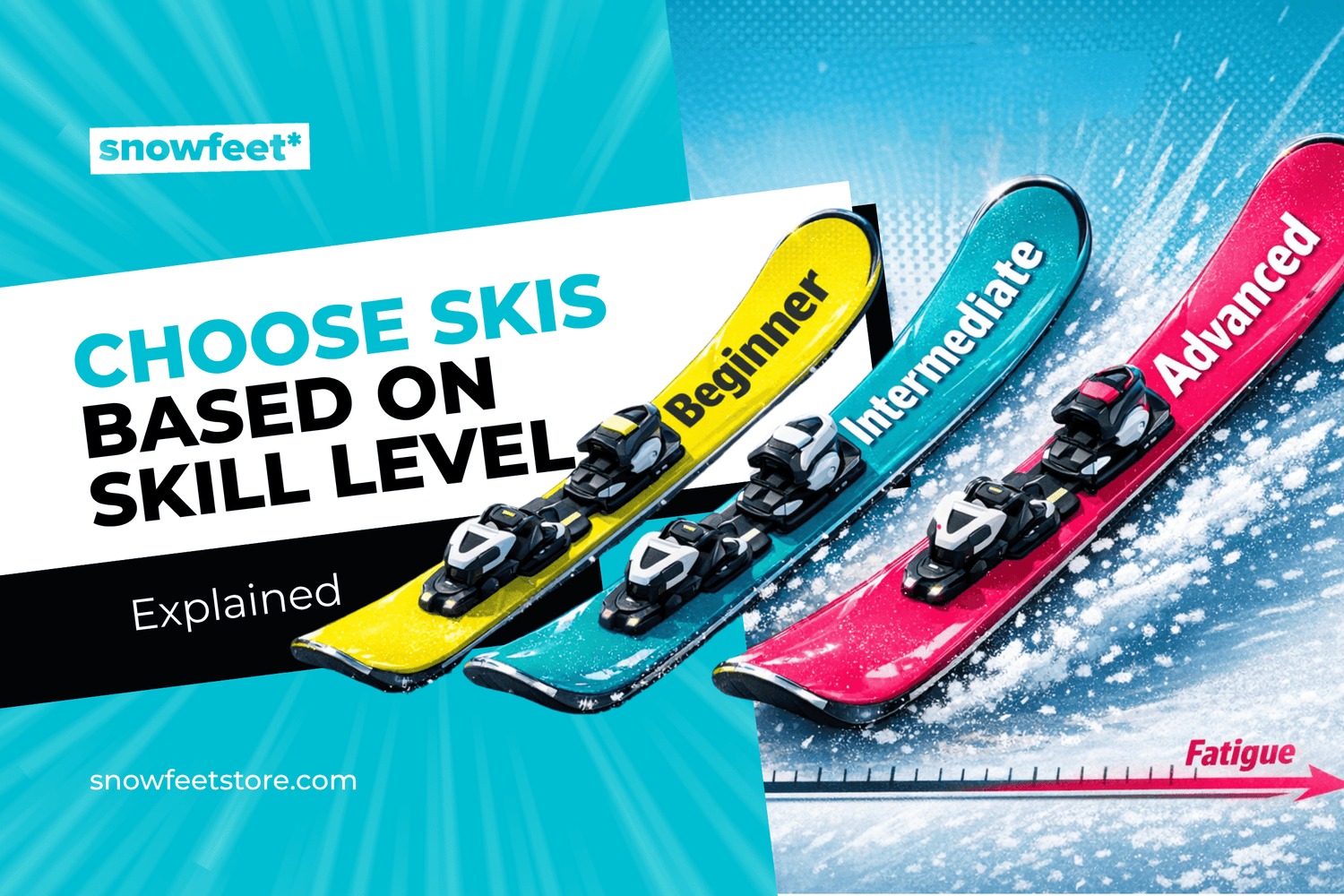
Picking the right skis can feel overwhelming, but here’s the secret: ski length matters more than you think. Short skis are easier to control, less tiring, and more beginner-friendly than longer ones. Even advanced skiers love them for their quick turns and agility.
Key Takeaways:
- Short skis (like Snowfeet* models) are great for all skill levels.
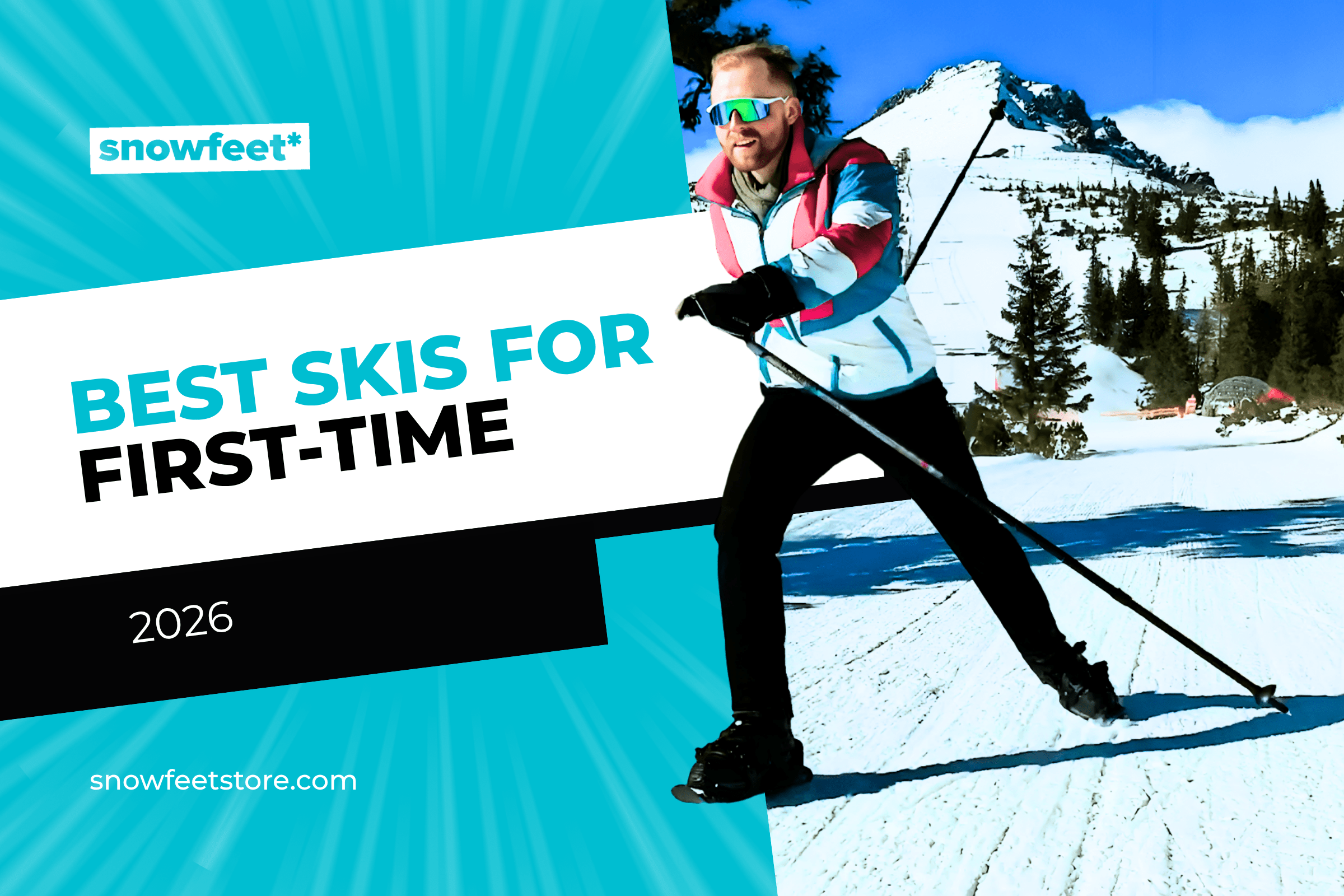
- Beginners should look at 38 cm Mini Ski Skates or 50 cm PRO for easy learning.
- Intermediate skiers can progress with 44 cm Skiskates or 65 cm Skiblades.
- Advanced riders will enjoy the precision of 99 cm Skiblades or the versatility of 120 cm Short Skis.
Whether you're a first-timer or a pro, Snowfeet* offers options that make skiing simpler, more fun, and less physically demanding. Let’s dive into the details to find your perfect match.
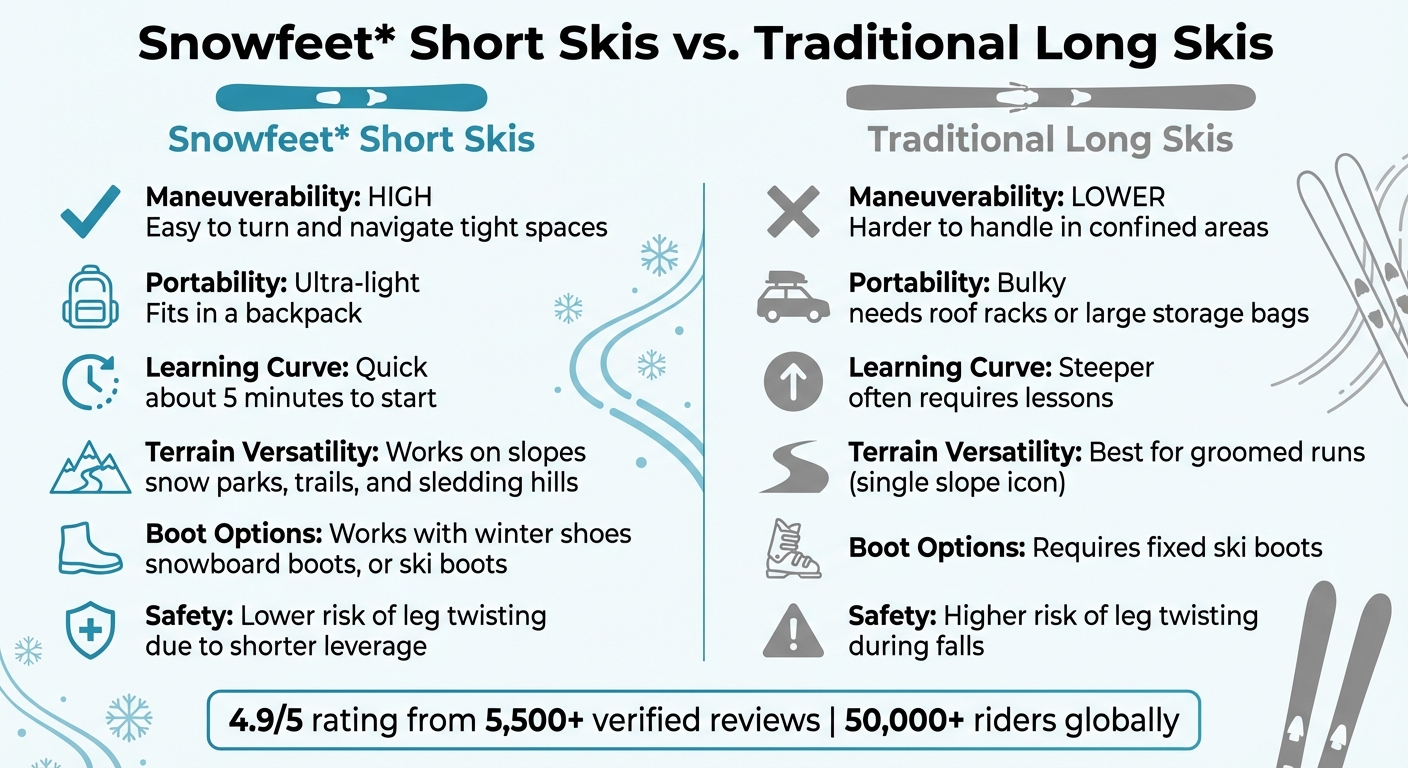
Snowfeet Short Skis vs Traditional Long Skis Comparison Chart
How To Choose Skis
How Ski Length Relates to Skill Level
The length of your skis can make or break your experience on the slopes. It affects how quickly you progress and how much energy you expend. Traditional advice leans toward longer skis (reaching up to your chin) for their stability and speed. But here's the catch: longer skis require more strength and technical skill to control. For beginners, this can mean a steeper learning curve, as long skis demand constant forward pressure to execute turns. On the other hand, shorter skis offer greater agility, which can benefit skiers of all levels. Lucy Higgins, Editor and Writer at Renoun, puts it this way:
Slightly shorter skis can feel more forgiving, given they're lighter to maneuver and quicker edge to edge.
This difference in control and effort explains why shorter skis often provide a better experience, especially for skiers still honing their technique.
Benefits of Short Skis for All Skill Levels
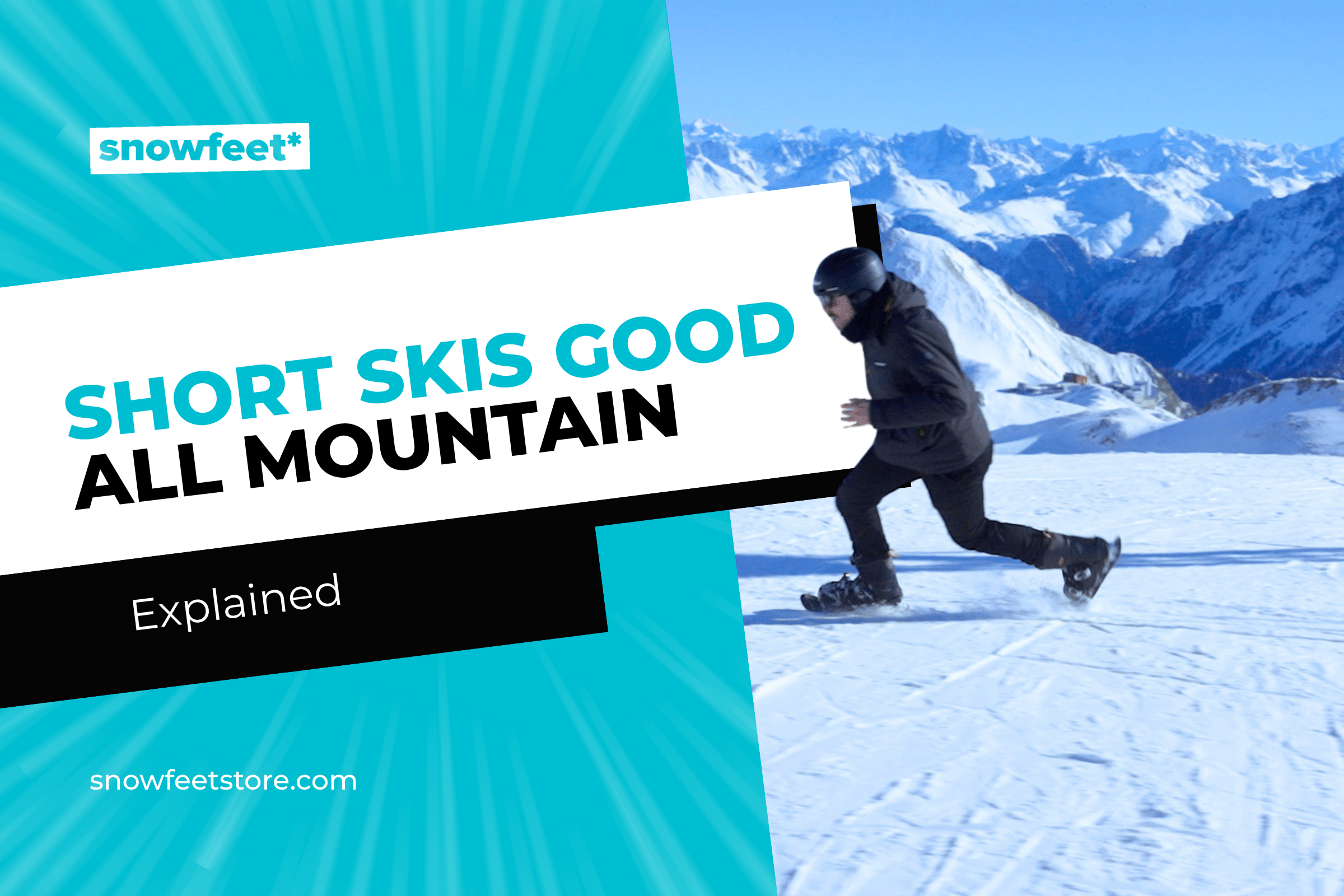
Short skis come with a host of perks that longer skis just can’t match. For starters, they make turning a breeze. You’ll spend less energy pivoting and more time enjoying the ride. Plus, their lighter weight means you’re less likely to feel wiped out after a long day on the mountain - perfect for those learning new skills or simply looking to ski longer.
Fatigue is a natural part of skiing, but shorter skis help you stay in control even when you’re tired. When exhaustion sets in, many skiers fall into a "backseat" stance. With long skis, this can lead to chatter and a loss of control. Shorter skis, however, remain steady and easier to manage. As The Ski Monster explains:
A shorter ski... may actually feel more composed because there's less ski to keep under control.
This added stability is a game-changer when conditions aren’t perfect or your form slips. Whether you’re weaving through crowded slopes, navigating tight trees, or trying tricks in the terrain park, shorter skis respond quickly to your movements. Snowfeet* designs their skis with this in mind, offering lengths that make skiing intuitive and fun, no matter your skill level.
While shorter skis shine in many scenarios, longer skis come with their own set of challenges.
The Truth About Longer Skis
The ski industry has long promoted longer skis as the go-to for stability and performance. But here’s the reality: they only feel stable if you’re constantly applying forward pressure to their tips. The moment your technique wavers - which happens to everyone, especially beginners and intermediates - longer skis become harder to control.
Sure, long skis have their place. They perform well in wide-open bowls or deep powder. But for the typical skiing day - with groomed runs, mixed snow conditions, and busy slopes - shorter skis are simply more practical. They’re easier to turn, require less effort, and help you conserve energy. Longer skis, on the other hand, can leave your legs burning and your ski sessions cut short. For those still mastering the sport, the extra length can feel like an invitation to lose control.
Snowfeet* addresses these challenges by offering skis ranging from 38 cm to 120 cm. These shorter lengths strike a balance: nimble and forgiving, but still capable of handling a variety of terrains and conditions with confidence.
Best Snowfeet* Products for Beginners
Starting out in skiing can feel overwhelming, especially with traditional long skis that demand precision from the get-go. Snowfeet* simplifies things with products tailored for beginners, making it easy to hit the slopes without the steep learning curve.
No need to splurge on pricey ski boots or wrestle with complicated bindings. Snowfeet* Mini Ski Skates and PRO models work with regular winter boots, helping you focus on learning the basics while keeping things fun and hassle-free. Let’s break down these two beginner-friendly options. Many consider these skiblades the best kept secret for beginners due to their ease of use.
Snowfeet* Mini Ski Skates (38 cm)
The Mini Ski Skates are a fantastic choice for first-timers. At just 38 cm long and weighing under 2 lbs per pair, they’re lightweight and super responsive - perfect for getting the hang of balance and weight distribution.
One standout feature is the universal binding system. Adjustable Velcro straps make it easy to secure them over any firm-soled winter boot, fitting US men's sizes 7–13 and women's sizes 8–14. Priced from $250, they’re an affordable way to get started. Beginners can practice on flat terrain or gentle slopes, mastering the basics like gliding and stopping. Plus, the integrated heel brake or a simple hockey stop makes learning to control your speed a breeze.
Snowfeet* PRO (50 cm)
If you’re ready to take things up a notch, the Snowfeet* PRO offers a bit more stability and control. At 50 cm long, they give you about 20% more surface area than the Mini Ski Skates, helping with smoother edge transitions and weight shifts. This makes it easier to try basic parallel turns while still feeling manageable for a beginner.
Each PRO ski weighs around 2.2 lbs and features a fiberglass-reinforced polyamide core with aluminum edges for better grip on groomed trails. Many users report faster progress - up to 50% quicker - compared to traditional skis. For an even better experience, applying wax and maintaining edges before hitting the slopes can improve speed and glide.
The Snowfeet* PRO is ideal for beginners looking to grow into more advanced skills. With a 4.9/5 star rating from over 5,500 reviews and a community of 50,000+ riders, it’s clear these skis deliver both fun and progress for new skiers.
Best Snowfeet* Products for Intermediate Skiers
Once you've got the basics down, it's time to step up your game and explore more exciting terrain. Intermediate skiers need gear that balances agility with control - something that reacts quickly to your movements but also provides the stability you need for carving and handling changing conditions. Unlike traditional long skis, which can feel clunky and limit experimentation, Snowfeet* products are designed to help you progress with their agile, responsive design.
At this level, you're ready to move past the beginner-friendly slopes. You're looking for gear that lets you confidently take on groomed trails, experiment in snow parks, and handle varied terrain. These Snowfeet* models are perfect for upgrading your skiing experience.
Snowfeet* Skiskates (44 cm)
If you're ready to take your first big step into intermediate skiing, the Skiskates are an excellent choice. They combine the quick responsiveness of ice skates with the performance of skis, making them ideal for skiers who want to stay light and nimble on the slopes. At 44 cm, these skiskates are longer than the Mini Ski Skates, giving you more control, but still short enough to allow for quick turns, smooth landings, and easy navigation through tight spaces.
Built with a durable wood core, these skiskates are lightweight yet stable, giving you the confidence to try new tricks or explore terrain parks. Starting at $575, they’re a great option for intermediates looking to sharpen their skills. Their forgiving length helps absorb bumps while still offering solid edge control for carving on groomed runs. With Skiskates, you get a playful ride that blends the agility of skating with the thrill of skiing.
Snowfeet* Skiblades (65 cm)
For those who want to refine their carving and explore more challenging terrain, the 65 cm Skiblades are a top pick. These skiblades are designed to offer better balance and stability compared to shorter models, making them ideal for carving on groomed runs and tackling snow parks. With a 5.0/5 star rating from verified users, they’re a favorite among intermediate skiers.
The added length provides extra stability during aggressive carving, helping you feel more in control as you push your limits. Starting at $635, these skiblades are versatile enough for a variety of skiing styles. Choose ski boot bindings for a faster, more aggressive ride, or snowboard bindings for added comfort and flexibility in the park.
"These skiblades are so much fun and easy to control. Never going back to regular skis." - Andrew B.
Intermediate skiers love how natural progression feels with the 65 cm Skiblades. Unlike traditional long skis, which can be unforgiving, these skiblades are easier to manage, letting you focus on improving your technique instead of wrestling with your gear. Whether you're perfecting your carving, exploring the park, or tackling steeper slopes, the Skiblades provide the control and confidence to keep advancing. They’re a great choice for skiers looking to elevate their skills and prepare for more advanced challenges.
sbb-itb-17ade95
Best Snowfeet* Products for Advanced Skiers
So, you've nailed the basics and are ready to tackle steep slopes, deep powder, and high-speed runs. Snowfeet* has got you covered with products that combine performance, agility, and fun - without the bulk of traditional long skis. Designed specifically for advanced skiers, these models thrive on challenging terrain, whether you're carving up groomed runs or exploring backcountry powder. With over 50,000 riders globally and a stellar 4.9/5 rating from 5,500 verified reviews, Snowfeet* proves that shorter skis can pack a serious punch.
Here’s a closer look at the top picks for advanced skiers, each tailored to different needs.
Snowfeet* Skiblades (99 cm)
The 99 cm Skiblades are perfect for those who crave sharp carving without the heft of traditional skis. Starting at $608 for the wood core version (or $464 for fiberglass flex core), these skiblades excel on groomed slopes, in snow parks, and even in light powder. Their compact length requires precise balance for deep carving, sharpening your technique with every turn. No wonder they boast a perfect 5.0/5 user rating.
"These ski blades are a blast to use. Super easy to control, quick to turn, and way more forgiving than traditional skis." – Brad Tolin
While longer skis might offer a bit more stability at very high speeds, the 99 cm Skiblades stand out as one of only two Snowfeet* models compatible with standard release ski bindings (sizes 4.5–14.5 US). For advanced riders pushing their limits, ski boot bindings are recommended for maximum control and power transfer.
Looking for something built for deep snow? Check out the next option.
Snowfeet* POWDER (99 cm)
Heading into backcountry or tackling deeper snow? The POWDER model is your go-to. While shorter Snowfeet* models (under 65 cm) handle light powder up to about 4 inches, the 99 cm POWDER is built for more serious conditions. Priced from $675, it shares the same length as the standard Skiblades but includes key upgrades, like enhanced rocker and width, to boost flotation and handling in powder. It’s lightweight, easy to maneuver, and perfect for weaving through trees or navigating tight backcountry trails. Plus, it’s compatible with standard release ski bindings for added safety and control.
Need even more stability for high-speed carving? There’s a longer option up next.
Snowfeet* Short Skis (120 cm)
For skiers who want a balance between the stability of traditional skis and the agility of shorter ones, the 120 cm Short Skis are the ultimate choice. At $775, they’re the longest in the Snowfeet* lineup and are ideal for advanced riders who love high-speed carving on groomed runs. These skis deliver a feel similar to traditional long skis, making them great for aggressive, "Super G" style turns. They also perform well in powder, offering extra surface area for better flotation.
"Only trade-off is at higher speeds, where longer skis still feel more stable - but for overall fun and maneuverability, these are hard to beat." – Brad Tolin
Like the 99 cm models, the 120 cm Short Skis work with standard release ski bindings, and ski boot bindings are recommended for a faster, more aggressive ride. To keep them performing at their best, regular waxing of the wood core is a must. For advanced skiers seeking a mix of stability, convenience, and fun, this model is a fantastic pick.
Snowfeet* vs. Traditional Long Skis: A Direct Comparison
If you've ever used traditional long skis (usually 160–180 cm for adults), you know they can be bulky and a hassle to store. Snowfeet* short skis flip the script entirely. They’re lighter, more agile, and easier to turn. Plus, they’re compact enough to fit in a backpack. With over 50,000 riders globally and an impressive average rating of 4.9/5 from more than 5,500 verified reviews, Snowfeet* proves that smaller skis can pack a punch. However, it's important to understand the trade-offs of shorter skis regarding speed and stability.
The difference is clear once you hit the slopes. Traditional skis are built for carving at high speeds on groomed runs. They work great on wide-open slopes but can feel clunky in tight spaces. Snowfeet*, on the other hand, come in lengths ranging from 38 cm to 120 cm, offering a much tighter turning radius. This makes them perfect for quick, precise turns and technical terrain. Beginners can usually get the hang of them in just five minutes, unlike traditional skis, which often require a steeper learning curve.
Another standout feature? Snowfeet* models are incredibly portable and compatible with various types of winter footwear. Options like the Mini Ski Skates (38 cm) and PRO (50 cm) can fit into a standard carry-on bag, making them a breeze to travel with. This portability opens up a world of possibilities - ski slopes, snow parks, hiking trails, or even your local sledding hill. These practical benefits align with the consistent praise Snowfeet* receives from its users.
"Short skis provide more fun and freedom of movement, they are playful, responsive, lightweight on your feet, easier to stop, and for many skiers easier to ride as opposed to cumbersome long skis." – Snowfeet*
Comparison Table: Snowfeet* Short Skis vs. Traditional Long Skis
Here’s a quick breakdown of how Snowfeet* stacks up against traditional skis:
| Feature | Snowfeet* Short Skis | Traditional Long Skis |
|---|---|---|
| Maneuverability | High – easy to turn and navigate tight spaces | Lower – harder to handle in confined areas |
| Portability | Ultra-light and fits in a backpack | Bulky; needs roof racks or large storage bags |
| Learning Curve | Quick – about five minutes to start | Steeper – often requires lessons |
| Terrain Versatility | Works on slopes, snow parks, trails, and sledding hills | Best for groomed runs |
| Boot Options | Works with winter shoes, snowboard boots, or ski boots | Requires fixed ski boots |
| Safety | Lower risk of leg twisting due to shorter leverage | Higher risk of leg twisting during falls |
Snowfeet* offers a fresh take on skiing, combining fun, flexibility, and convenience in a way traditional skis just can’t match.
How to Size and Fit Your Snowfeet* Products
Getting the right fit for your Snowfeet* is simple. Unlike traditional skis that need exact boot sizes and binding adjustments, Snowfeet* come with adjustable bindings that fit a variety of footwear. No need to spend extra on pricey ski boots!
The best footwear for Snowfeet*? Winter hiking boots. They’re a favorite because their high-cut design supports your ankle, and their stiff soles give you the stability you need on the slopes. Plus, waterproof options like GORE-TEX help keep your feet warm and dry. Already have snowboard or ski boots? Those work great too, giving you even more options.
Once you’ve picked the right boots, it’s time to pick the perfect short ski length. This depends on your skill level, height, and weight. Skiers generally fall into one of three categories: Type I (beginners who take it slow), Type II (average skiers), and Type III (confident, aggressive skiers). If you’re just starting out, shorter models like the 38 cm Mini Ski Skates or 50 cm PRO are ideal. More experienced riders might prefer longer options like the 99 cm or 120 cm models.
Once you’ve got your Snowfeet*, just strap in, tighten the bindings, and you’re ready to hit the snow - no complicated setup required!
Conclusion
Picking the right skis doesn’t have to be complicated. Whether it’s the ultra-compact 38 cm Mini Ski Skates for beginners or the 120 cm Short Skis that advanced skiers love, Snowfeet* has something tailored to your skill level and riding style.
Snowfeet* products are all about simplicity and convenience. Forget about pricey ski boots or tricky binding setups - just strap these onto your winter hiking boots, and you’re ready to go. They’re lighter, easier to handle, and far more forgiving than traditional bulky skis. That means less fatigue and more time carving up the slopes.
And don’t think short skis are just for newbies. Advanced skiers can enjoy their precision and control, especially in tight spots like moguls or weaving through trees. Plus, modern ski tech ensures these shorter skis stay stable even at higher speeds. Whether you’re learning the ropes or taking on challenging runs, Snowfeet* proves short skis can do it all.
Check out the full lineup of Snowfeet* products to find your match. From the playful Mini Ski Skates to the versatile 99 cm skiblades, Snowfeet* makes hitting the slopes easier and more fun - no matter where you are on your skiing journey.
FAQs
How do I choose the right Snowfeet* length for my height and weight?
When picking the right Snowfeet length, think about your height and weight - just like you would with regular skis. A good rule of thumb is to choose a length that falls somewhere between your chin and the top of your head.
- If you're a beginner or on the lighter side, go for a shorter length (around 65 cm). Shorter Snowfeet give you better control and are easier to handle.
- If you're more experienced or heavier, a longer length (up to 120 cm) might be a better fit. Longer options offer more stability and can handle a wider range of terrain.
Finding the right balance will make your experience smoother and more enjoyable!
Can I use Snowfeet* with regular winter boots, and which boots work best?
Snowfeet* works with most regular winter boots, thanks to its adjustable bindings that fit US sizes 6-13. For the best experience, go for sturdy, insulated boots that provide solid ankle support. Unlike traditional skis or snowboards that often require specialized footwear, Snowfeet* makes it easy to hit the slopes with the boots you probably already own. It’s a convenient choice for beginners and casual users alike.
Are short skis safe and stable enough for fast runs and powder?
Short skis, like Snowfeet's skiblades, can be a safe and stable choice for fast runs and powder - if you're an experienced skier who knows the right techniques. Sure, longer skis naturally provide more stability and better floatation at high speeds, but Snowfeet’s products are all about control, safety, and versatility. That’s why they’re a great fit for beginners and intermediate skiers looking to build confidence.
For advanced powder enthusiasts, longer skis tend to be the go-to. However, Snowfeet stands out for its maneuverability and how easy it is to use, making it a solid option for those who value agility over size.











Leave a comment
This site is protected by hCaptcha and the hCaptcha Privacy Policy and Terms of Service apply.