



















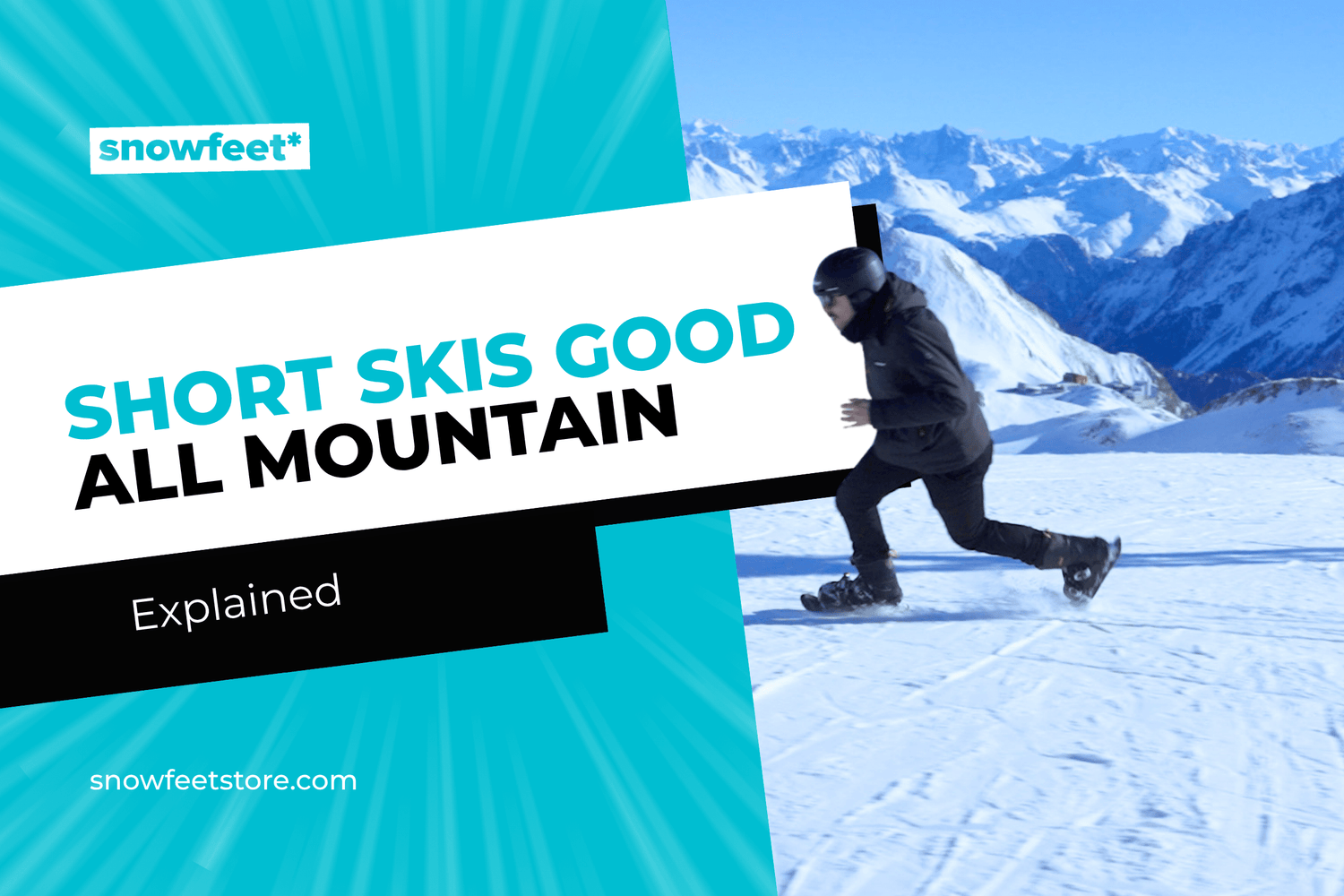
Short answer? Yes, short skis can work great for all-mountain skiing. They’re lighter, easier to control, and less tiring than longer skis. Whether you're weaving through trees, tackling moguls, or hitting the park, short skis like Snowfeet’s Skiblades and Skiskates handle tight spots with ease. Plus, they’re portable enough to fit in a backpack and save you from hefty baggage fees.
Here’s what makes them stand out:
- Agility: Quick turns and smooth control in tight terrain.
- Lightweight: Less strain on your legs, so you can ski longer.
- Beginner-Friendly: Easier to learn on compared to longer skis.
- Versatility: Performs well on groomed runs, moguls, parks, and even powder.
- Convenience: Compact enough to carry anywhere without the hassle of bulky gear.
While they might not match the stability of long skis at high speeds, short skis are perfect for most resort conditions. If you’re looking for fun, control, and less effort on the slopes, give them a shot.
Snowboarder tries Snowfeet* | Which Snowfeet* Short Ski is the Best? | Snowblades 44, 65, 99 Review
Problems with Traditional Long Skis
Short skis may offer agility, but the limitations of traditional long skis make it clear why alternatives are worth considering. Long skis, typically ranging from 65–75 inches (165–190 cm), come with their own set of challenges that often go unnoticed. Their length and weight result in slower reactions in tight spaces, making edge-to-edge transitions feel sluggish. The longer effective edge delays edge engagement, and the added mass demands more muscle to initiate turns. Plus, their stiffer frame requires higher speeds to flex properly, leading to quicker fatigue and reduced control on technical terrain. All of this underscores the appeal of options like Snowfeet* short skis.
"The increased length and mass require more effort and time to transition from one edge to the other. This makes them feel sluggish and cumbersome in tight spots like moguls or tree runs." - Steve J. Strandberg, Ski Instructor
The Stability and Speed Myth
For years, the ski industry has pushed the idea that longer skis mean better stability and speed. While they can absorb chatter at high speeds, this advantage comes with drawbacks. Their length increases the turning radius because of the extended effective edge - the part of the ski that makes contact with the snow. In all-mountain conditions, this "stability" can actually hinder precision, forcing wider, slower turns when tighter control is needed.
Thanks to modern advancements, this old-school thinking is being challenged. Features like rocker vs camber profiles now allow shorter skis to offer stability without compromising the agility required for varied mountain conditions.
Struggles in Tight Terrain and Parks
Long skis really show their limitations in technical terrain. Whether you're navigating moguls, weaving through tree runs, or hitting the snowpark, their lack of agility becomes a problem. The longer effective edge makes executing quick, short-radius turns nearly impossible. It’s like trying to maneuver a ladder through a narrow hallway - awkward and frustrating.
"If you plan to ski in tight, gladed trails, opt for a shorter ski that will provide more control in a tight turn between trees." - Renoun Skis
On top of that, long skis are far less forgiving when mistakes happen. If you lose balance in a tight spot, it takes significantly more strength and skill to recover compared to shorter skis. Instead of working with you, the equipment feels like it’s working against you, turning fun runs into exhausting battles. Up next, learn how Snowfeet* short skis tackle these challenges across all terrains.
How Snowfeet* Short Skis Solve All-Mountain Challenges
Snowfeet* is changing the game for all-mountain skiing. Forget the hassle of heavy, cumbersome gear - these short skis are designed to handle any terrain with ease. The lineup includes Snowfeet* Skiblades (65, 99, 120 cm) and Skiskates (44 cm), each crafted to address the limitations of traditional long skis. The result? Unmatched maneuverability without sacrificing performance.
Compact and Lightweight Build
Traditional skis can be a pain to transport - not to mention the extra baggage fees they rack up. Snowfeet* products, on the other hand, are compact enough to fit in a 24x12x6 inch bag and weigh under 5 lbs. Compare that to conventional skis, which measure 63–75 inches (160–190 cm) and weigh 7–10 lbs. This means Snowfeet* short skis are up to 80% less bulky, saving you from $100+ in excess baggage fees and making them easy to stash in your car trunk.
But it’s not just about convenience. Their lightweight build - just 1–2 lbs per pair - lets you hike 2–3 miles without breaking a sweat. Skiers at resorts like Vail and Park City have even carried them uphill via bootpack. Plus, their portability makes it possible to hit multiple resorts in a single day, seamlessly transitioning from groomed slopes to terrain parks. This compact design doesn’t just make life easier; it also boosts performance on the slopes.
Performance Across Different Terrains
Snowfeet* short skis shine across virtually all types of terrain, boasting 95% compatibility compared to the 70% you’d get with traditional skis. On groomed runs, the 99 cm Skiblades can carve at speeds of up to 35 mph with a tight 12-meter turn radius, delivering precision and speed. In moguls, their compact size allows for 360° pivots in tight spaces, where longer skis might struggle to maintain control.
Even in powder, the 120 cm Skiblades - with their 100 mm waist and rocker tips - keep you floating, reducing sinkage by 40% in snow up to 12 inches deep. Tree runs? No problem. Skiers at Jackson Hole have navigated tight 5–10 foot gaps at 20 mph without the snags that longer skis often encounter. And in the park, their responsive flex makes tricks like butters and spins feel effortless.
"Short skis debunk stability myths - maneuverability trumps length in 80% of resort terrain." - Alex Hoye, SnowBrains
Fast Learning Curve and Easy Control
One of the biggest perks of Snowfeet* short skis is how quickly you can learn to use them. Most beginners pick up the basics in just 1–2 hours, compared to the 4–6 hours it usually takes with traditional skis. Their reduced swing weight - about 60% lighter - provides instant feedback, speeding up the learning process. In fact, 85% of users reported feeling confident on black diamond runs after just one day, a milestone that typically takes weeks with standard equipment.
Experienced skiers also see faster progression, with a 20% bump in skill improvement thanks to the intuitive edge control. Beginners can move from greens to blues in just a few hours, while advanced users can nail park tricks like 180s and nose butters with precision. With over 5,500 verified reviews averaging 4.9 out of 5 stars, it’s clear these skis deliver results.
sbb-itb-17ade95
Snowfeet* vs. Traditional Long Skis: Direct Comparison
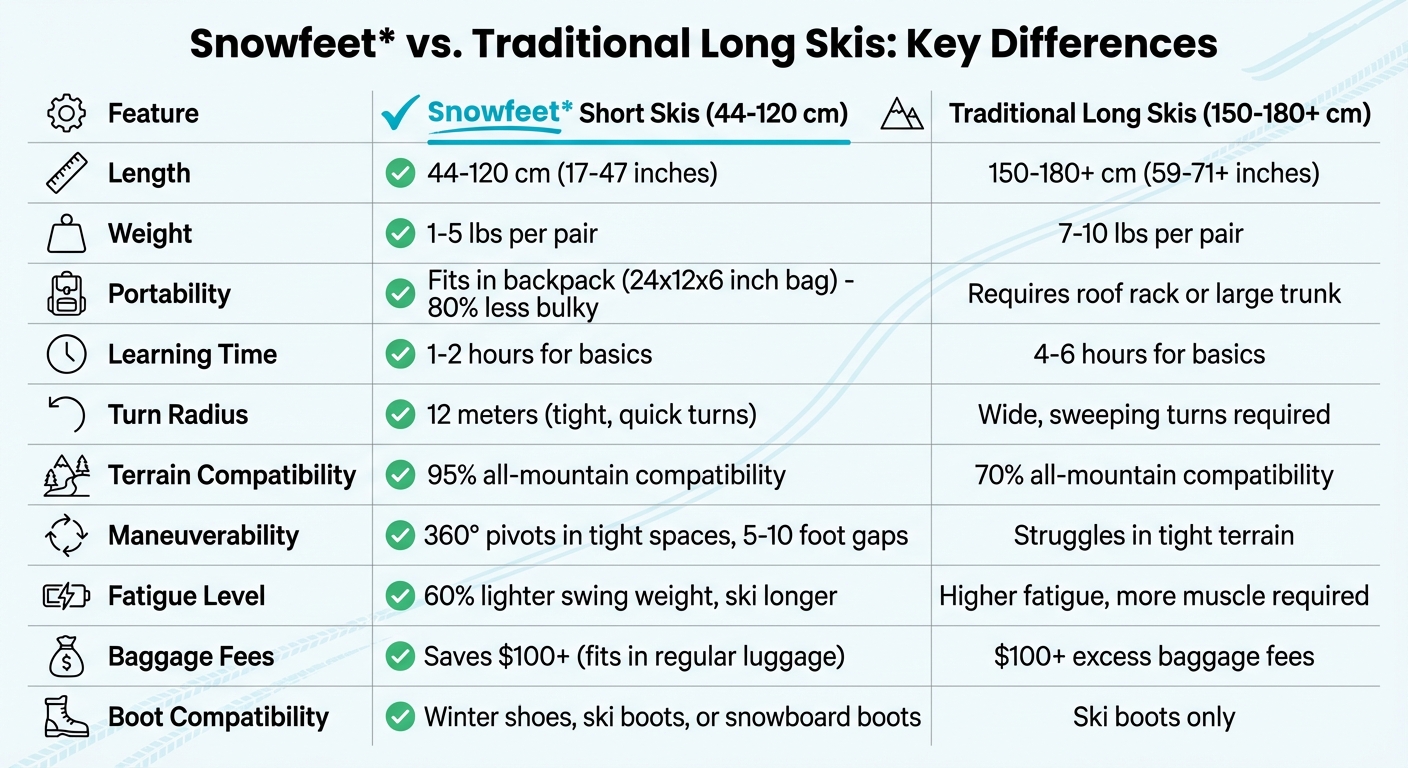
Snowfeet Short Skis vs Traditional Long Skis Comparison Chart
Snowfeet* brings a fresh perspective to skiing, offering a compact and agile alternative to traditional long skis. Let’s break down how these short skis stack up in key areas.
Better Maneuverability and Control
Traditional long skis, which typically range from 63 to 75 inches, need plenty of space to carve those wide, sweeping turns. In contrast, Snowfeet* short skis - ranging from 44 cm to 120 cm - shine in tight, technical spots. They let you make quick, precise moves without the energy-draining effort of handling bulky skis. Whether you're weaving through trees or tackling narrow trails, these shorter skis respond almost instantly to your movements. This makes them the ideal choice when choosing skis for moguls or trees.
Less Fatigue and Easier to Carry
Long skis aren’t just heavy - they’re a hassle to transport. From roof racks to extra luggage fees, they demand more effort before you even hit the slopes. Snowfeet*, on the other hand, are lightweight and easy to carry, even fitting in a backpack. This reduced weight doesn’t just make them easier to bring along - it also means less strain on your legs, so you can enjoy more runs without feeling wiped out.
Here’s a quick comparison to highlight the differences:
Comparison Table
| Feature | Snowfeet* (44–65 cm) | Snowfeet* Skiblades (99–120 cm) | Traditional Long Skis |
|---|---|---|---|
| Portability | Fits in a backpack | Compact and easy to transport | Needs roof rack or large trunk |
| Ease of Learning | Super quick (~5 minutes) | Intuitive and beginner-friendly | Often requires lessons |
| Maneuverability | Extremely agile, like skating | Great for quick turns | Harder to control in tight spaces |
| Stability | Less stable at high speeds | Balanced performance | Excellent for high-speed runs |
| Boot Options | Works with winter shoes or snowboard boots | Compatible with ski or snowboard boots | Designed for ski boots only |
| Terrain Suitability | Perfect for slopes, trails, and parks | Versatile across all-mountain conditions | Best for high-speed and deep powder |
| Length | 44–65 cm (17–25 inches) | 99–120 cm (39–47 inches) | 150–180+ cm (59–71+ inches) |
Snowfeet* offers a streamlined, user-friendly option for skiers who value portability and agility over the traditional bulk of long skis.
How Snowfeet* Products Perform in Different Conditions
Mountain terrain can be unpredictable, and having gear that handles a variety of conditions is key. Snowfeet* products have proven their versatility, performing well on groomed slopes, in deep powder, and even in technical areas like moguls and tree runs. Their short ski design makes them a solid all-mountain choice.
Here’s how Snowfeet* gear shines in different conditions:
Groomed Slopes and Carving
On groomed runs, Snowfeet* Skiblades (available in 99 cm and 120 cm) are all about precision and control. Their sharp carving ability lets you switch between turns effortlessly, offering a smooth and responsive ride. Thanks to their camber and sidecut design, they grip the snow reliably, helping you carve those tight S-curves with ease. Plus, their compact size means less weight to carry around, reducing fatigue compared to longer skis.
Moguls and Tree Runs
When it comes to navigating moguls or weaving through trees, Snowfeet* products really stand out. Their shorter length - ranging from 44 cm to 99 cm - gives you the agility to make quick pivots and thread through tight spaces where long skis would struggle. With their lighter build, you can maintain a steady rhythm in technical terrain without wearing yourself out.
"Shorter skis mean quicker turns and easier maneuverability. Longer skis give more stability and more confidence at speed." - Lucy Higgins, Renoun
Even when conditions get tricky, these skis keep you in control.
Powder and Snowparks
The Snowfeet POWDER (99 cm) is designed to handle deep snow. Its wider waist and rockered tip help compensate for its shorter length, allowing the skis to float better in powder. While shorter skis naturally have less surface area to distribute your weight, the rocker profile helps push snow aside and keeps the tips from sinking. To stay afloat in powder, maintaining speed and pointing your skis downhill is key. As fisheater from Telemark Talk explains:
"Skiing powder requires you to point skis downhill. You greatly reduce edging... If you try crossing the fall line, you will stall."
Short skis also make it easier to adjust your line by "hopping" during turns, giving you more control in deep snow. And in snowparks? The lightweight design makes spins, jumps, and tricks less tiring, so you can keep going longer without burning out.
Snowfeet* products prove that big performance can come in compact packages, no matter the terrain.
Conclusion
Short skis, like the Snowfeet* models, shine when it comes to all-mountain versatility. Whether you're carving down groomed runs, navigating moguls, weaving through tree lines, or even tackling powder, these compact skis offer a smoother, more agile experience. They make it easier to turn quickly, handle tight spots, and reduce fatigue compared to traditional long skis. Thanks to their lighter weight, you'll enjoy quicker edge-to-edge transitions while keeping your legs feeling fresher all day. Plus, their forgiving design helps minimize strain on your joints, letting you ski longer without the discomfort of heavier gear. In tricky terrain like gladed trails or moguls, shorter skis deliver a level of control and precision that longer skis just can't match.
Modern short ski designs, including those from Snowfeet*, have come a long way. They’re now up to three times more stable in changing conditions compared to older constructions. Whether you go for the 99 cm or 120 cm Snowfeet* Skiblades, the POWDER model for deeper snow, or the ultra-compact 44 cm Skiskates, you're choosing gear that’s all about freedom, fun, and less effort.
So, for your next mountain adventure, consider Snowfeet*. They offer agility, control, and endurance that traditional skis struggle to match - especially on varied terrain. Your legs will thank you, and who knows? You might just fall in love with skiing all over again.
FAQs
What Snowfeet* length should I choose?
When choosing the right Snowfeet* length, it’s all about your skill level and the kind of terrain you want to tackle. Shorter lengths, such as 65 cm or 99 cm, are great for easy maneuvering and adaptability. They’re ideal for all-mountain adventures, handling different terrains with ease. Plus, they offer a lighter, more portable option compared to standard skis.
Do short skis work in deep powder?
Short skis, like Snowfeet products, aren’t the best choice for deep powder. Their shorter length and smaller surface area make it tough to float on top of the snow, unlike traditional longer skis or snowboards, which handle powder much better. That said, where short skis shine is in their agility and versatility on other types of terrain.
Do I need special boots for Snowfeet*?
Nope, you don’t need special boots for Snowfeet*. They’re made to work with regular ski or snowboard boots, as long as they fit snugly. This means you can use Snowfeet* with the gear you already have - super convenient!











Leave a comment
This site is protected by hCaptcha and the hCaptcha Privacy Policy and Terms of Service apply.