







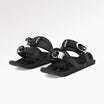












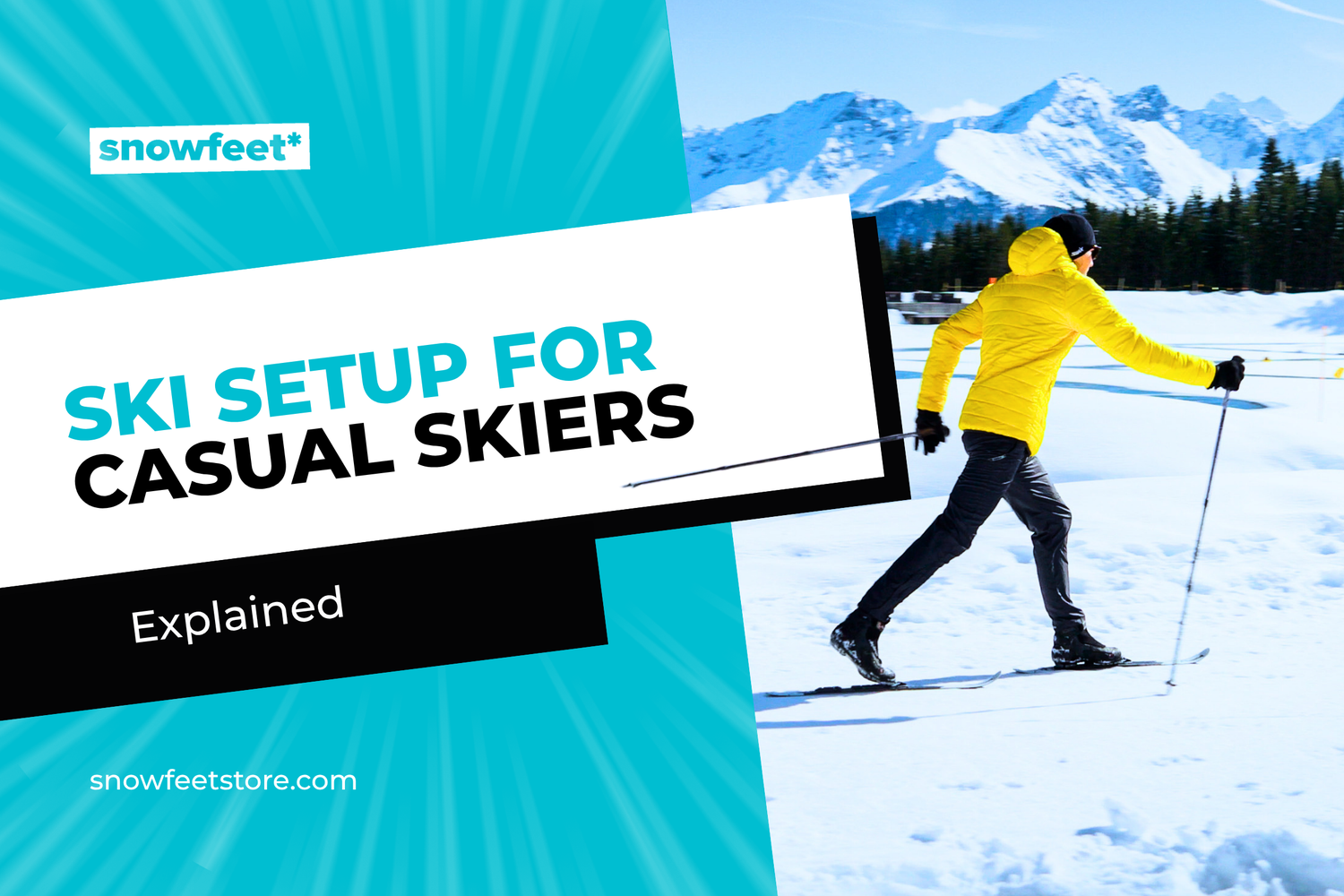
If you’re a casual skier, you don’t need long, heavy skis that demand expert skills. Instead, lightweight, shorter options like Snowfeet Skiblades (65 cm) or Skiskates (44 cm) are perfect for fun, easy skiing. They’re compact, fit in a backpack, and work great on groomed runs or snow parks. Traditional skis, like the Rossignol Experience 82 Ti or Salomon QST 94, may offer stability but can be bulky, harder to control, and require more effort - ideal for advanced skiers, not beginners.
Key Takeaways:
- Snowfeet Skiblades (65 cm): Easy to carry, responsive, and beginner-friendly. Priced at ~$635.
- Snowfeet Skiskates (44 cm): Ultra-portable, playful, and great for crowded slopes. Priced at ~$474.
- Traditional Skis (Rossignol, Salomon, Dynastar): Better for experienced skiers but require extra gear, space, and skill. Prices range from $550–$1,050.
Snowfeet products are a hassle-free, all-in-one option for those who ski a few times a season. If you're just starting out, check out this short skis buyer's guide to find your perfect pair. Skip the bulky gear and enjoy the slopes without the learning curve.
Are Short Skis Better for Beginners?
1. Snowfeet* Skiblades (65 cm)
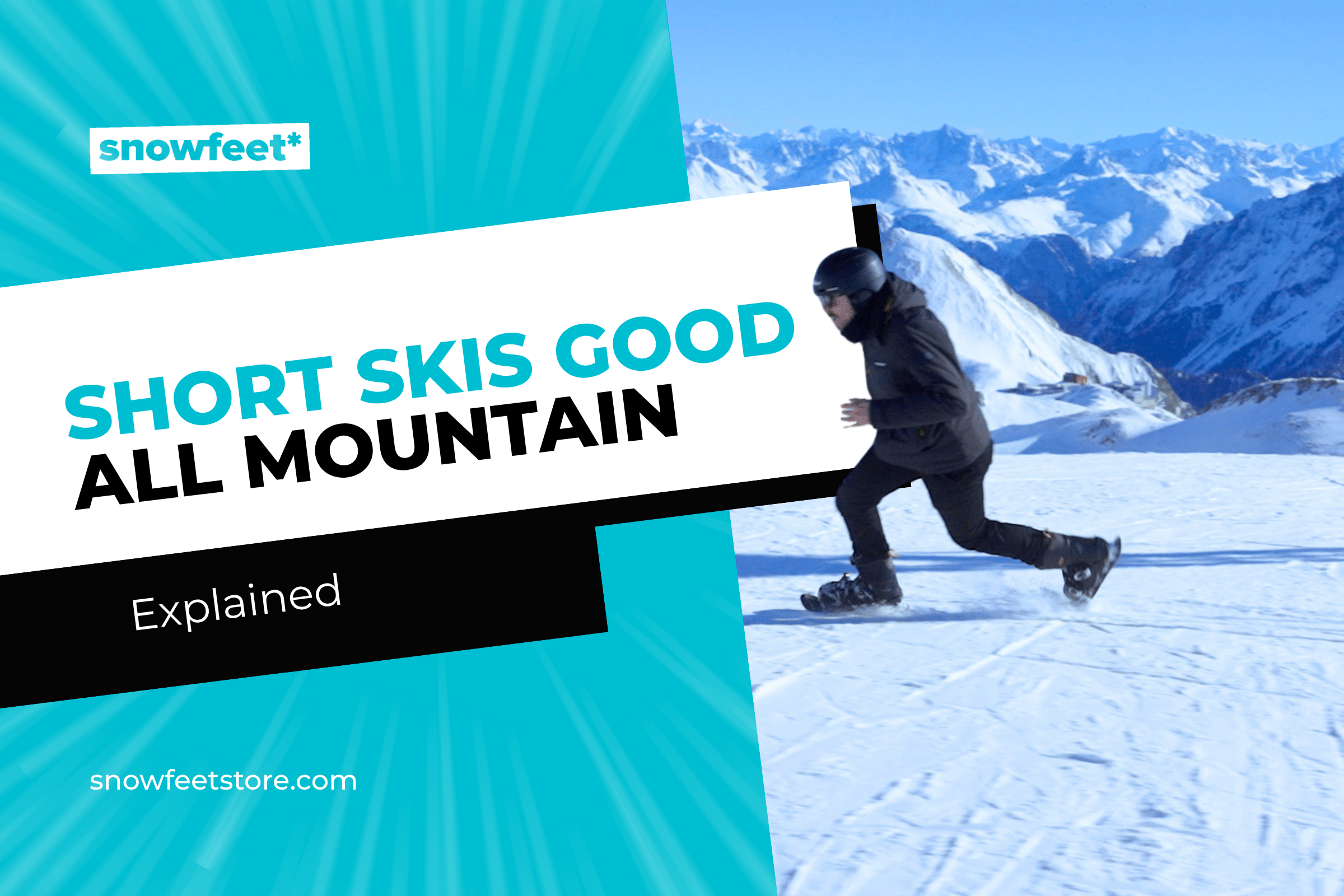
The Snowfeet Skiblades (65 cm) are perfect for skiers looking for a hassle-free, fun experience. At just 65 cm long, these skiblades offer a skating-like feel that's easy to pick up. In fact, many consider skiblades for beginners to be the sport's best-kept secret. They’re priced at $635 and come with bindings, so you won’t need to worry about buying extra gear like you would with traditional skis.
Portability
Thanks to their compact size, these skiblades are incredibly easy to carry. They fit neatly into a regular backpack, so you can leave behind those bulky rooftop cargo boxes or oversized ski bags that come with standard skis. This portability makes last-minute ski trips a breeze - no wrestling with cumbersome 6-foot skis required.
Control
Their short length makes them super responsive, allowing for quick pivots, sharp stops, and smooth direction changes. The skate-style bindings work with regular winter or snowboard boots, making them a great choice for skiers who want to focus on having fun rather than lugging around heavy gear.
Terrain Suitability
These skiblades shine on groomed slopes, where their precision and control let you carve clean turns and enjoy playful, controlled runs. While they’re not designed for deep powder, they’re ideal for green and blue runs at your local resort, which is where most casual skiers spend their time anyway.
2. Rossignol Experience 82 Ti
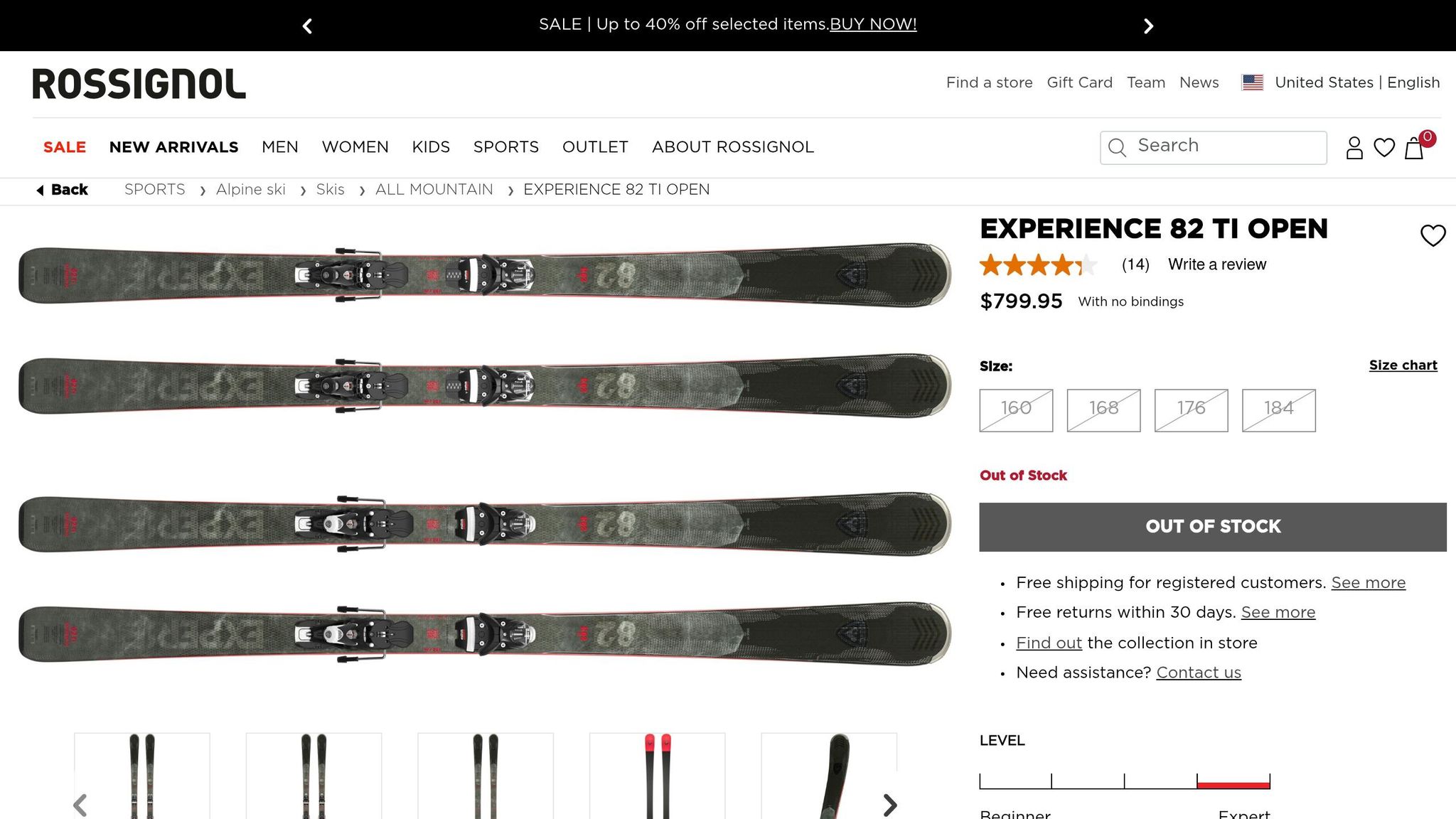
The Rossignol Experience 82 Ti takes a more traditional approach to skiing, offering a solid option for recreational use. However, for casual skiers, it doesn’t quite match the simplicity and convenience of Snowfeet’s ultra-portable design.
Portability
Traditional skis like the Experience 82 Ti come with some logistical challenges. Transporting them often requires extra gear, like rooftop cargo boxes, which can make spontaneous trips a bit of a hassle. In contrast, Snowfeet’s compact design is much easier to grab and go.
Control
Rossignol has integrated its Air Tip technology to reduce swing weight and improve maneuverability. This feature does make the Experience 82 Ti more responsive than older models. However, the ski’s longer length still demands advanced skills and stronger leg control. Unlike Snowfeet, which offers quick and playful responsiveness, the Experience 82 Ti requires refined technique, making it less beginner-friendly.
Terrain Suitability
The Experience 82 Ti is built for all-mountain performance, handling a mix of groomed runs and light powder with ease. But for casual skiers who stick to green and blue runs, its versatility may feel less relevant. Snowfeet’s shorter, more nimble design provides a simpler, more enjoyable experience for those who prefer familiar terrain. For riders seeking ease and fun over technical mastery, Snowfeet clearly stands out.
3. Salomon QST 94
The Salomon QST 94 is a standout option in the all-mountain ski category, designed for versatility and an enjoyable experience across various terrains. Updated for the 2026/2026 season, its 94 mm waist width strikes a balance that works well for intermediate and casual skiers. Many describe it as an "easy-to-handle" choice that won't leave you second-guessing your purchase.
Portability
One of the challenges with traditional skis like the QST 94 is transportation. You’ll need extra gear like a roof rack or cargo box to haul them around. On the other hand, Snowfeet* offers a compact alternative that fits conveniently in a car trunk, making spontaneous trips to the slopes much simpler. This portability gives Snowfeet* a clear edge for skiers who prioritize convenience.
Control
The QST 94 performs well on firm snow, offering a stable and playful ride. However, its traditional design doesn’t deliver the quick, skate-like responsiveness that Snowfeet* promises. For casual skiers who value effortless control, the QST 94 might feel a bit slower to react compared to the instant feedback of Snowfeet*. This difference in control could also influence how each option fits into your budget and skiing style.
Price
When it comes to cost, the QST 94 sits in the $550 to $750 range for a package that includes bindings. Keep in mind, there are also extra mounting fees to factor in. In contrast, Snowfeet* offers an all-in-one system that skips these additional costs, making it a more affordable and straightforward choice for casual skiers. If simplicity and value are high on your list, Snowfeet* might be the better fit.
4. Snowfeet* Skiskates (44 cm)
Snowfeet* Skiskates at 44 cm offer a compact and portable way to hit the slopes. Forget about the hassle of storing or transporting bulky skis - these skiskates fit neatly into your car trunk or even a carry-on bag. As Brad Tolin put it:
Also a big plus - they're lightweight and much easier to carry around than full-size skis.
Portability
Measuring just 44 cm, these skiskates redefine convenience. They’re perfect for city dwellers using public transit, those with limited storage space, or anyone who wants a no-fuss way to enjoy skiing. Whether you're tucking them into a closet or carrying them to the slopes, their compact size makes life easier. Plus, they’re compatible with both ski boots and snowboard boots, giving you added flexibility.
Control
One of the standout features of Snowfeet* Skiskates is their quick responsiveness. Their shorter design allows for sharp turns and easy navigation, even on crowded slopes. Many users find them intuitive, especially if they’ve dabbled in ice skating or inline skating. Andrew B. summed it up nicely:
These skiblades are so much fun and easy to control. Never going back to regular skis.
While they do require slightly more balance from front to back compared to traditional skis, the learning curve remains manageable, especially for resort skiing.
Terrain Suitability
These skiskates are best suited for groomed runs and snow parks, where they truly excel. They handle light powder (up to about 4 inches) with ease and are versatile enough for hiking trails or sledding hills. However, for deep powder or challenging, uneven terrain, longer skiblades might be a better fit. Their design stays true to Snowfeet's focus on simple, enjoyable skiing.
Price
The Snowfeet* 44 cm Skiskates (Wood Core) are priced at $474, down from $505. While they might cost more than basic traditional skis, they’re an all-in-one package - no need for extra bindings or mounting fees. With a perfect 5.0/5 rating and the brand itself holding a 4.9/5 score from over 5,500 verified reviews, it’s clear they’re a hit. As Uncrate noted:
Far more portable and affordable than traditional skis or snowboards.
For casual skiers who value convenience and fun over speed, these skiskates deliver a fantastic balance of practicality and performance.
sbb-itb-17ade95
5. Dynastar M-Cross 78
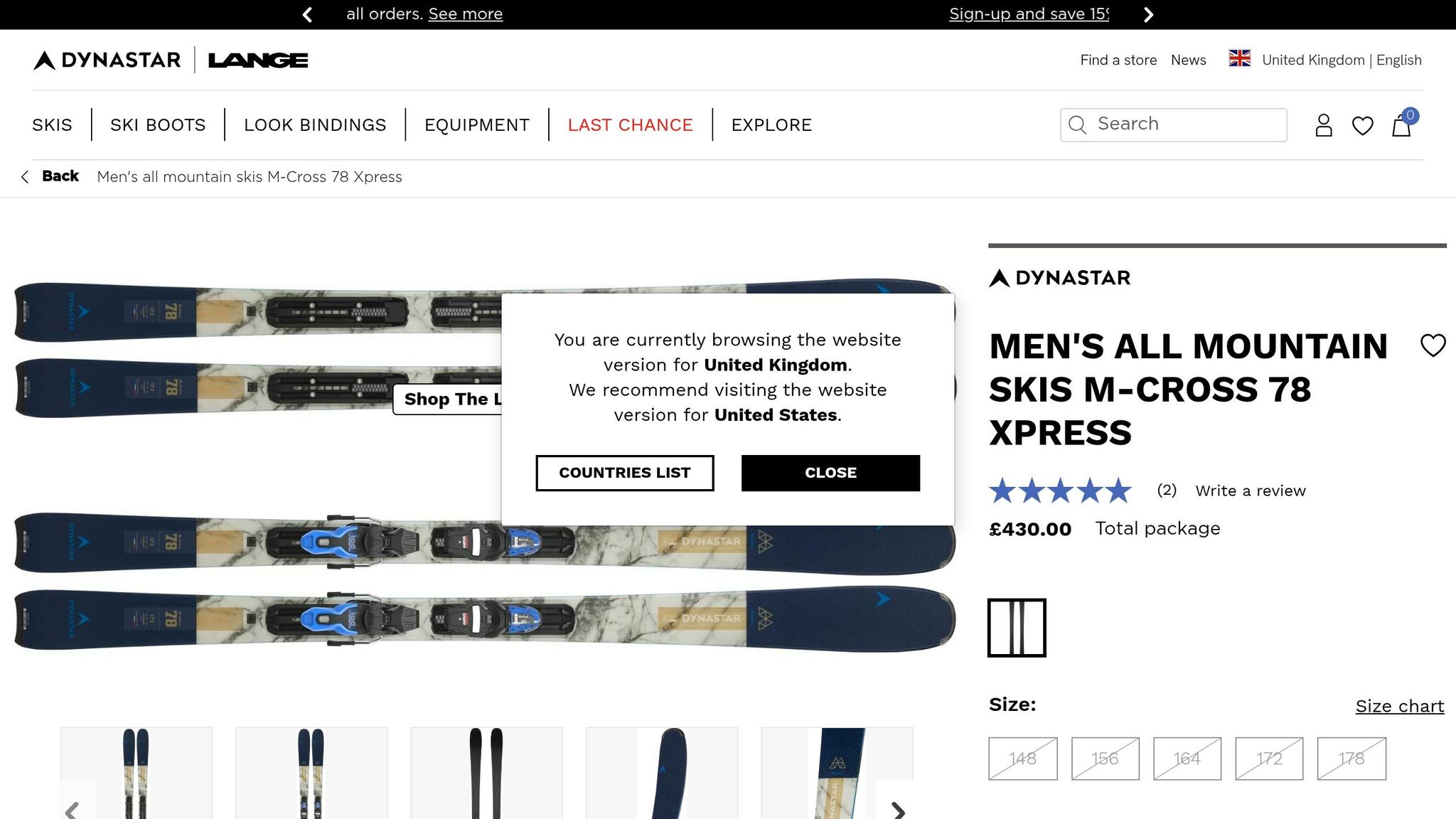
The Dynastar M-Cross 78 is a classic all-mountain ski, tailored for hardpack and firm snow with its 78 mm waist. It’s a solid choice for groomed runs, but its longer length and traditional design make it less portable and nimble compared to the ultra-compact Snowfeet* options.
Portability
At 66 to 72 inches long, the M-Cross 78 requires a roof rack or a dedicated ski bag for transport. In contrast, Snowfeet* Skiskates, which measure just 44 cm, can easily fit into a carry-on bag. While traditional skis use lightweight materials like wood laminates, they still take up significantly more space and demand more effort to carry than Snowfeet*'s compact, all-in-one designs.
Control
The M-Cross 78 offers dependable edge control, thanks to its rockered tips and tails combined with camber underfoot. According to Switchback Travel, intermediate skis strike a balance: "strong enough for carving but reasonably light and easy to control". However, while these longer skis provide stability at higher speeds, they can’t match the quick, effortless maneuverability of Snowfeet* products.
Terrain Suitability
The M-Cross 78 shines on hardpack, with its 78 mm waist excelling at on-piste carving. However, it struggles in deeper powder, where narrow skis often get bogged down. For casual skiers who want to explore a variety of terrains - whether groomed runs, snow parks, or light powder - Snowfeet* Skiblades (available in 99 cm or 120 cm lengths) offer more versatility without being limited to groomed conditions.
Price
Intermediate skis like the M-Cross 78 typically cost between $500 and $800. For instance, the Rossignol Experience 78 Carbon is priced around $450, including bindings as a "Hot Buy." While the M-Cross 78 is competitively priced within the traditional ski market, Snowfeet* products stand out as an all-in-one solution, combining portability and ease of use. This makes Snowfeet* an appealing choice for casual skiers looking for a simpler, more convenient option. Up next, we’ll take a closer look at the Rossignol Sender Soul 92 to further explore these differences.
6. Rossignol Sender Soul 92
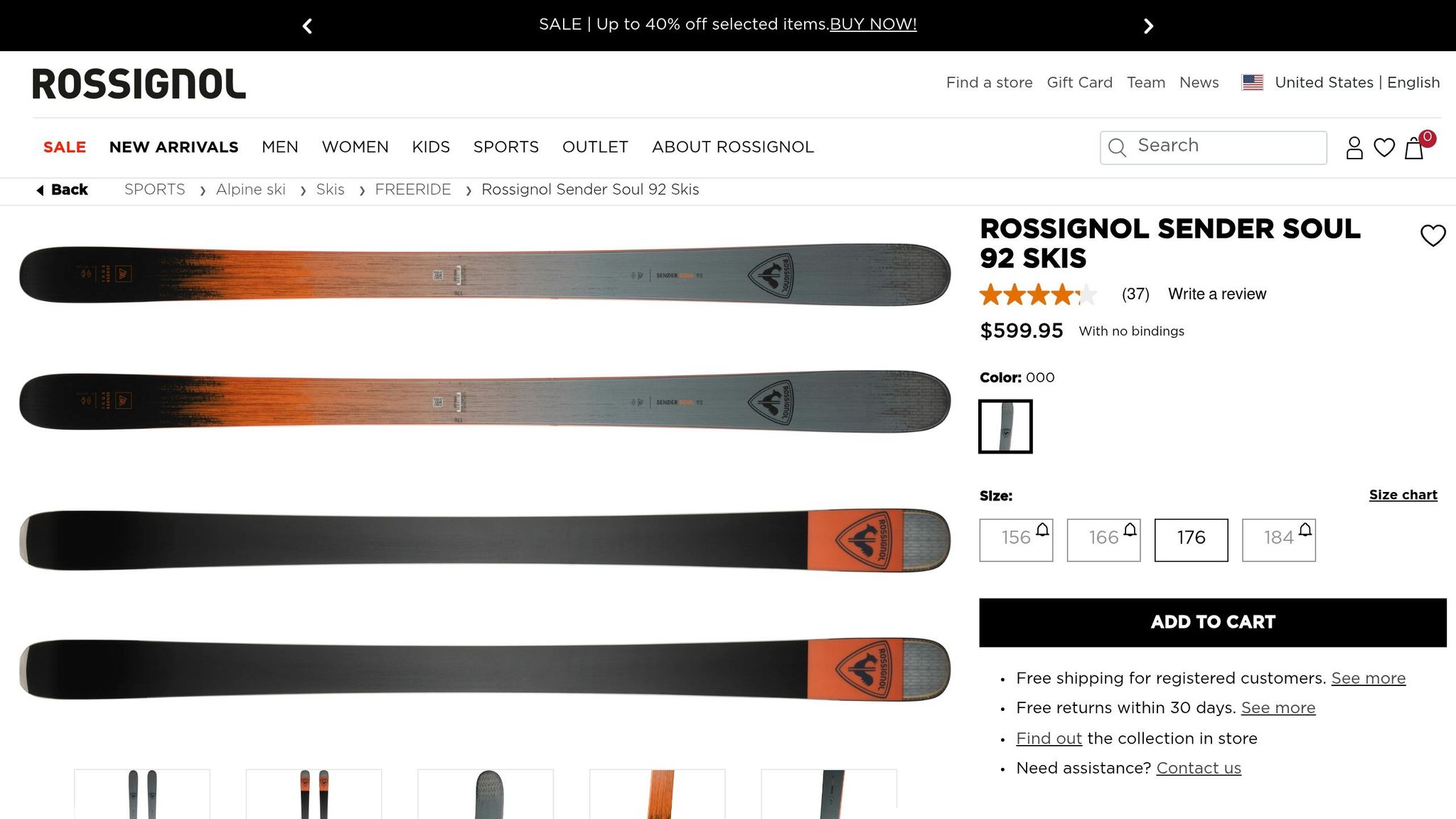
The Rossignol Sender Soul 92 is a freestyle all-mountain ski designed for intermediate skiers who want a playful yet versatile experience. With a 92 mm waist and length options ranging from 156 to 180 cm (about 61 to 71 inches), it performs well on groomed runs, park features, and even light powder. But how does it compare to Snowfeet* products in terms of portability, control, terrain versatility, and price? Let’s break it down.
Portability
Traditional skis like the Sender Soul 92 require extra gear and are far from compact. Measuring 61–71 inches, they need bulky transport solutions and definitely won't fit in your carry-on. Snowfeet* products, on the other hand, are all about convenience. Snowfeet* Skiskates can fit into a backpack, while their Skiblades (ranging from 65 cm to 120 cm) are small enough to store in most cars without any special equipment. This makes Snowfeet* a clear winner for those prioritizing portability.
Control
The Sender Soul 92 features Air Tip technology and a progressive rocker, earning it a solid 4.7/5 control rating. However, its longer design means it requires more technical skill to handle, especially on turns with a 16 to 18-meter radius. Snowfeet* products, on the other hand, are designed for ease of use. Their skate-like setup offers immediate control without the need for poles, making them ideal for casual users or those new to skiing.
Terrain Suitability
When it comes to terrain, the Sender Soul 92 shines on groomed runs and park features, and it handles light powder (8–10 inches) without much trouble. However, its longer length makes it less agile in tight spaces like tree runs or narrow trails. Snowfeet* products, with their compact design, excel in these areas. They’re built for versatility, performing well on snow parks, hiking trails, and more confined spaces where traditional skis might struggle.
Price
Cost is another area where Snowfeet* products stand out. The Sender Soul 92 starts at around $700 and can go up to $1,050 when you include bindings. Add another $200–$300 for bindings, and the price climbs even higher. In contrast, Snowfeet* Skiskates start at approximately $213, and their Skiblades cost around $567. For casual skiers or those on a budget, Snowfeet* offers a much more affordable option.
Up next, we’ll dive into the pros and cons of these options to help you decide which is the better fit for your needs.
Pros and Cons
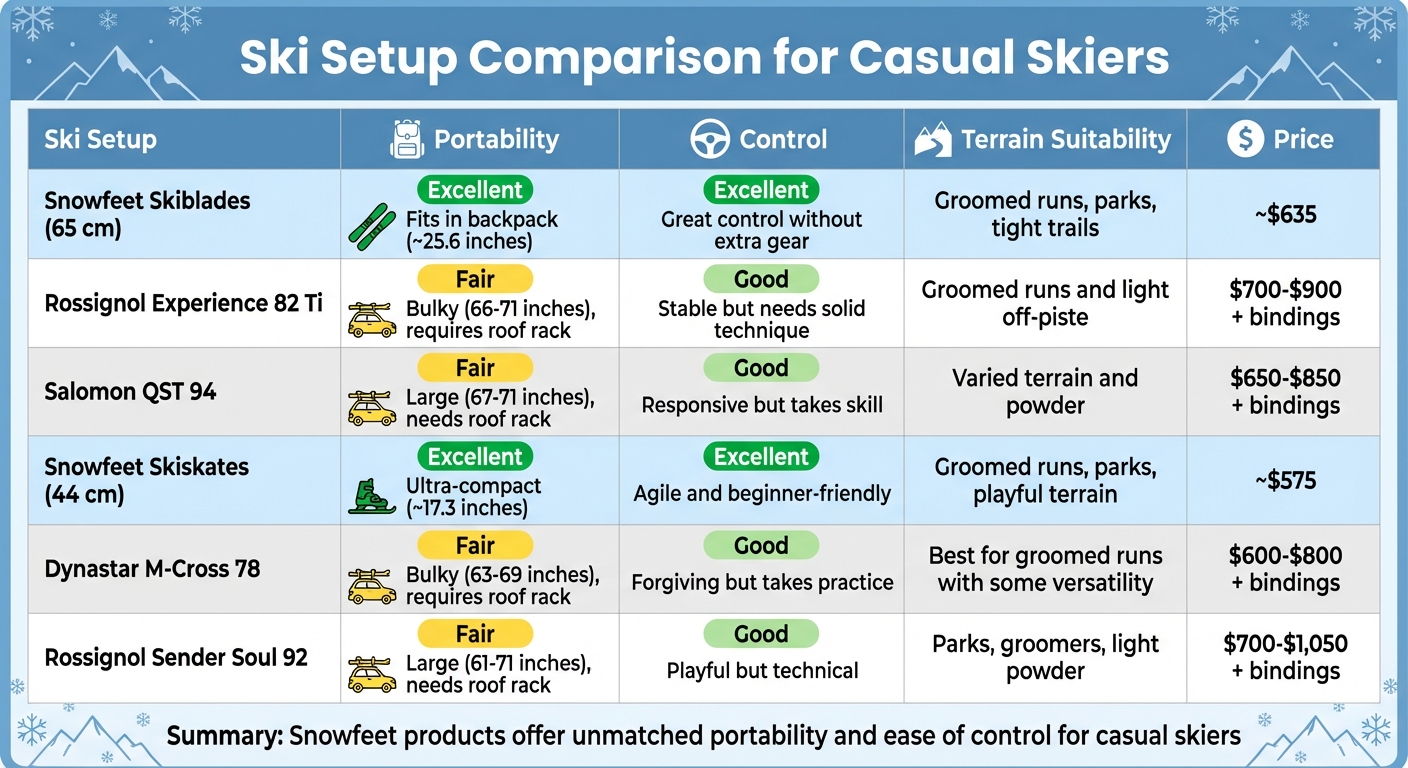
Ski Setup Comparison: Snowfeet vs Traditional Skis for Casual Skiers
Here's a handy breakdown of the key pros and cons for each ski setup. This table highlights important factors like portability, control, terrain suitability, and price.
| Ski Setup | Portability | Control | Terrain Suitability | Price |
|---|---|---|---|---|
| Snowfeet Skiblades (65 cm) | Excellent – Small enough to fit in a backpack (~25.6 inches) | Excellent – Great control without needing extra gear | Perfect for groomed runs, parks, and tight trails | ~$635 |
| Rossignol Experience 82 Ti | Fair – Bulky (66–71 inches), requires a roof rack | Good – Stable but needs solid technique | Works well on groomed runs and light off-piste | $700–$900 + bindings |
| Salomon QST 94 | Fair – Large (67–71 inches), needs a roof rack | Good – Responsive but takes skill | Ideal for varied terrain and powder | $650–$850 + bindings |
| Snowfeet Skiskates (44 cm) | Excellent – Ultra-compact (~17.3 inches) | Excellent – Agile and beginner-friendly | Great for groomed runs, parks, and playful terrain | ~$575 |
| Dynastar M-Cross 78 | Fair – Bulky (63–69 inches), requires a roof rack | Good – Forgiving but takes practice | Best for groomed runs with some versatility | $600–$800 + bindings |
| Rossignol Sender Soul 92 | Fair – Large (61–71 inches), needs a roof rack | Good – Playful but technical | Suitable for parks, groomers, and light powder | $700–$1,050 + bindings |
Summary:
Comparing skiblades vs. skiskates shows that Snowfeet products stand out for their unmatched portability and ease of control. They’re a fantastic pick for casual skiers who want something lightweight, responsive, and hassle-free. Unlike traditional skis, Snowfeet gear skips the need for bulky transport solutions and extensive technique, especially since skiblades are designed for simplicity, making them a clear winner for those who value convenience and fun on the slopes.
Conclusion
If you're a casual skier, you probably want gear that's easy to carry, straightforward to use, and doesn’t break the bank. Traditional long skis from brands like Rossignol, Salomon, and Dynastar often require a steeper learning curve and come with extra costs for bindings and mounting.
That’s where Snowfeet* products come in. Snowfeet* Skiblades (65 cm) and Skiskates (44 cm) are compact, beginner-friendly options that fit in a backpack and come with built-in bindings. Their shorter length makes turning and stopping easier, helping new skiers build confidence quickly. Plus, their portability and all-in-one design mean fewer expenses and less hassle.
Unlike traditional skis, which often require piecing together a setup, Snowfeet* offers a simple, cost-effective alternative. For recreational skiers, it’s a smart way to spend more time enjoying the slopes and less time dealing with gear.
FAQs
Are Snowfeet* easier to learn than traditional skis?
Snowfeet* products, such as Skiblades and Skiskates, are crafted with beginners in mind, making them much easier to pick up than traditional skis. Thanks to their shorter length and lightweight build, they’re simpler to control and balance on. This means casual skiers can maneuver more intuitively without the struggle that often comes with handling long skis. The design helps beginners gain confidence faster, making it easier to enjoy the slopes right from the start.
Which is better for me: Skiblades (65 cm) or Skiskates (44 cm)?
Both Snowfeet Skiblades (65 cm) and Skiskates (44 cm) bring their own perks to the slopes, but Skiblades often come out on top for casual skiers. Their longer length means better stability and control, making them a solid choice for beginners or those navigating various terrains. On the other hand, Skiskates are shorter, which makes them super portable and easy to carry around. However, that shorter length can feel a bit less steady, especially for folks just starting out. If you're after a smoother and more confident ride, Skiblades might be the better pick compared to traditional skis or snowboards.
What boots and bindings are compatible with Snowfeet*?
Snowfeet* are built with adjustable bindings that work seamlessly with ski or snowboard boots. They’re designed to fit most sizes, accommodating footwear ranging from US size 6 to 13 (EU size 38 to 47). This makes them a flexible option for a wide range of users, offering both convenience and ease of use.











Leave a comment
This site is protected by hCaptcha and the hCaptcha Privacy Policy and Terms of Service apply.