
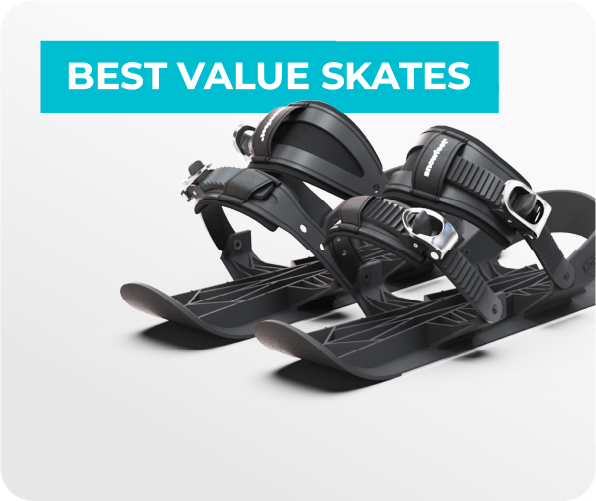
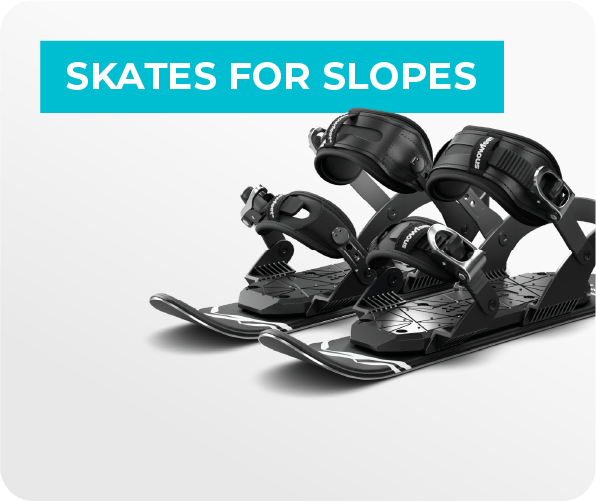
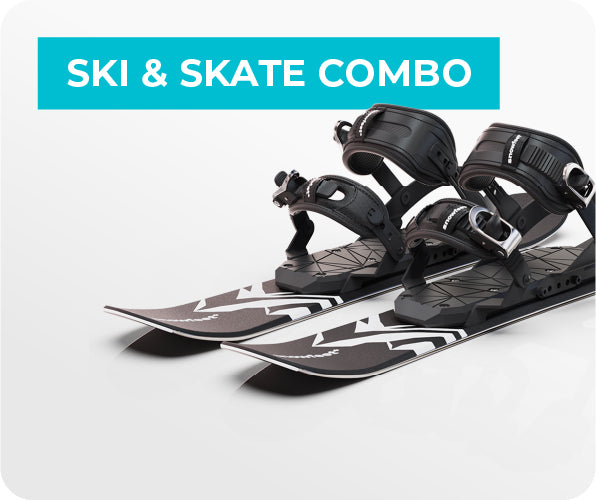
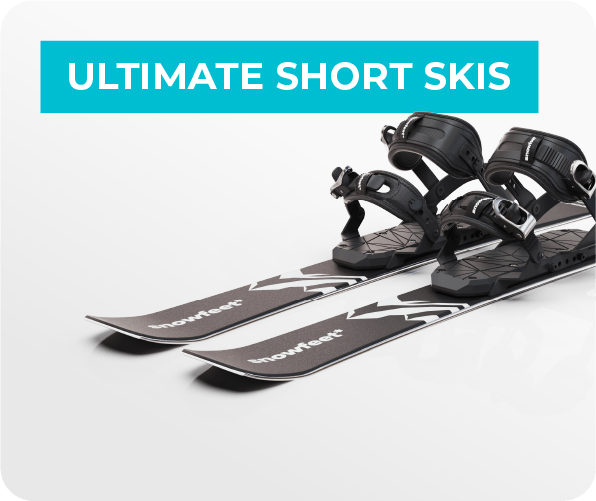
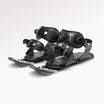
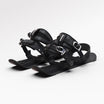
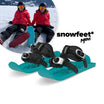
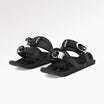
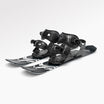
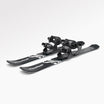
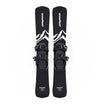
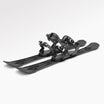
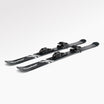
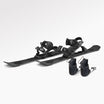
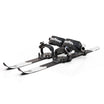
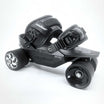
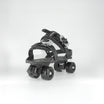
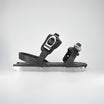
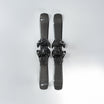
When it comes to skiing, control is everything. The right skis can make all the difference between an enjoyable day on the slopes and an exhausting struggle. Short skis, like those from Snowfeet*, are designed to be easier to handle compared to longer skis. They’re lighter, more responsive, and require less effort to turn - making them ideal for beginners and seasoned skiers alike.
Here’s why short skis stand out:
- Easier turning: Shorter length means quicker, tighter turns.
- Less fatigue: Lighter weight reduces strain over a full day.
- Beginner-friendly: Simpler to learn on and more forgiving of mistakes.
- Versatile: Great for tight trails, moguls, and even freestyle tricks.
- Portable: Compact enough to fit in a backpack.
If you’re tired of the challenges that come with longer skis - like difficulty turning, extra weight, and quicker fatigue - short skis could be a game-changer. Models like Snowfeet* Skiskates (44 cm) or Skiblades (65 cm) offer agility and precision, while their 99 cm and 120 cm versions blend stability with control. Whether you’re navigating steep slopes or carving through powder, these skis make skiing smoother and more fun.
Problems with Controlling Long Skis
When it comes to skiing, control is everything. And long skis? Well, they come with their own set of challenges. Even seasoned skiers can struggle with the added strain and reduced responsiveness that longer skis bring to the table.
Hard to Turn on Tight Trails and Steep Slopes
Long skis can be a real headache on narrow trails or steep slopes. Their extra length builds up momentum, which makes it harder to carve those smooth, flowing S-turns. Instead, you’re often stuck with abrupt, jerky Z-shaped turns. On steep terrain, gravity ups the ante, putting even more stress on your knees and spine. This can leave you fighting for balance, with your joints taking the brunt of the effort.
Tough for Beginners to Handle
If you're new to skiing, long skis can feel like wrestling a stubborn mule. They’re stiffer because of their length, which makes them harder to flex and control. As ski expert Will Chaltas from Renoun explains:
"The ski feels like it's fighting you - hard to bend, tiring your legs, or punishing mistakes".
This stiffness can make beginners feel out of control, leading them to ski defensively - leaning back and tensing up. That posture throws off balance and makes everything harder. For this reason, most instructors suggest starting with skis about 4 inches (10 cm) shorter than your height. Shorter skis are easier to turn and much more forgiving as you learn the ropes.
Drains Your Energy Over a Full Day
Long skis also have a knack for wearing you out. Their extra weight and wider turn radius demand more effort, leaving your legs feeling like jelly by midday. Renoun’s research backs this up:
"Because longer skis typically weigh more and create longer turns, they can tire legs quicker than shorter options".
And let’s not forget the constant adjustments you need to make when navigating trees, moguls, or tight trails. By the end of the day, fatigue sets in, your technique starts to falter, and the risk of injury climbs. As Filippo Chiani points out:
"Fatigue is one of the biggest contributors to injury, and as you tire, your technique can break down, making it harder to manage the forces acting on your body".
These challenges underline why some skiers are turning to innovative designs, like those offered by Snowfeet*, to make the slopes more manageable.
Design Features That Improve Control
When it comes to ski control, three key design elements take center stage: length, weight, and shape. These factors work together to influence how easily you can turn, how much effort it takes, and how responsive your skis feel underfoot.
How Ski Length Affects Turning
Ski length plays a major role in how well you can maneuver on the slopes. Shorter skis, for example, have turn radii under 16 meters (about 52 feet), making them perfect for quick, tight turns. On the other hand, skis with a turn radius over 22 meters (roughly 72 feet) are designed for wide, sweeping carves. This makes shorter skis a go-to choice for navigating tight spots like moguls or tree runs, as they require less effort to turn and allow for faster pivots.
Rockered skis - those with an upward curve at the tips and tails - add another layer of maneuverability. Even if they’re slightly longer than traditional camber skis, their shorter effective edge (the part of the ski that contacts the snow) makes them easier to handle in tricky terrain. Along with length, the ski’s weight also plays a big part in how easily you can control them.
Why Lighter Skis Are Easier to Handle
The weight of your skis directly impacts how much energy you’ll need to control them. Lighter skis are easier to maneuver, which is especially helpful in soft snow or powder where constant adjustments are the name of the game. Over a long day on the mountain, lighter skis can also reduce fatigue, helping you maintain proper technique.
To achieve this balance, manufacturers often use advanced materials like Titanal - a lightweight aluminum alloy. This keeps the skis light without sacrificing stability or responsiveness. But there’s more to ski control than just length and weight. The ski’s flex and design features round out the equation.
Flex, Sidecut, and Rocker Design
The flex pattern of a ski is crucial for its responsiveness. Softer skis are easier to turn and more forgiving when you’re dealing with bumps or uneven terrain. As Wagner Skis puts it:
"A softer ski will be easier to initiate into and release from turns, and will feel more forgiving in bumps".
Designers often build skis with a stiffer section underfoot and softer tips and tails, creating smoother transitions when turning. The sidecut - the difference in width between the tip, waist, and tail - also plays a big role. A deeper sidecut results in a shorter turning radius, making the ski feel more nimble.
Torsional stiffness, or how resistant the ski is to twisting, affects how precise your turns will be. As Wagner Skis explains:
"Torsional stiffness - determined by structural layers like fiberglass or metal - affects carveability and precision when turning".
For all-mountain skis, waist widths between 80–110 mm strike a great balance for quick edge-to-edge transitions, especially on groomed trails. But it’s all about finding the right balance. If a ski is too stiff, it can feel exhausting and unresponsive. If it’s too soft, you might lose stability. As Wagner Skis points out:
"A ski that's too stiff will tire you out and feel unresponsive. A ski that's too soft will be overpowered and make you feel like you're 'going over the handlebars'".
Snowfeet* takes all these design principles into account to deliver skis that feel agile and controlled, no matter the conditions.
How Snowfeet* Short Skis Deliver Better Control
Snowfeet* short skis are all about giving you more control on the slopes. Designed with specific purposes in mind, each model focuses on making skiing easier and more enjoyable. Let’s break down how these skis enhance control in their own unique ways.
Snowfeet* Skiskates (44 cm): Built for Agility
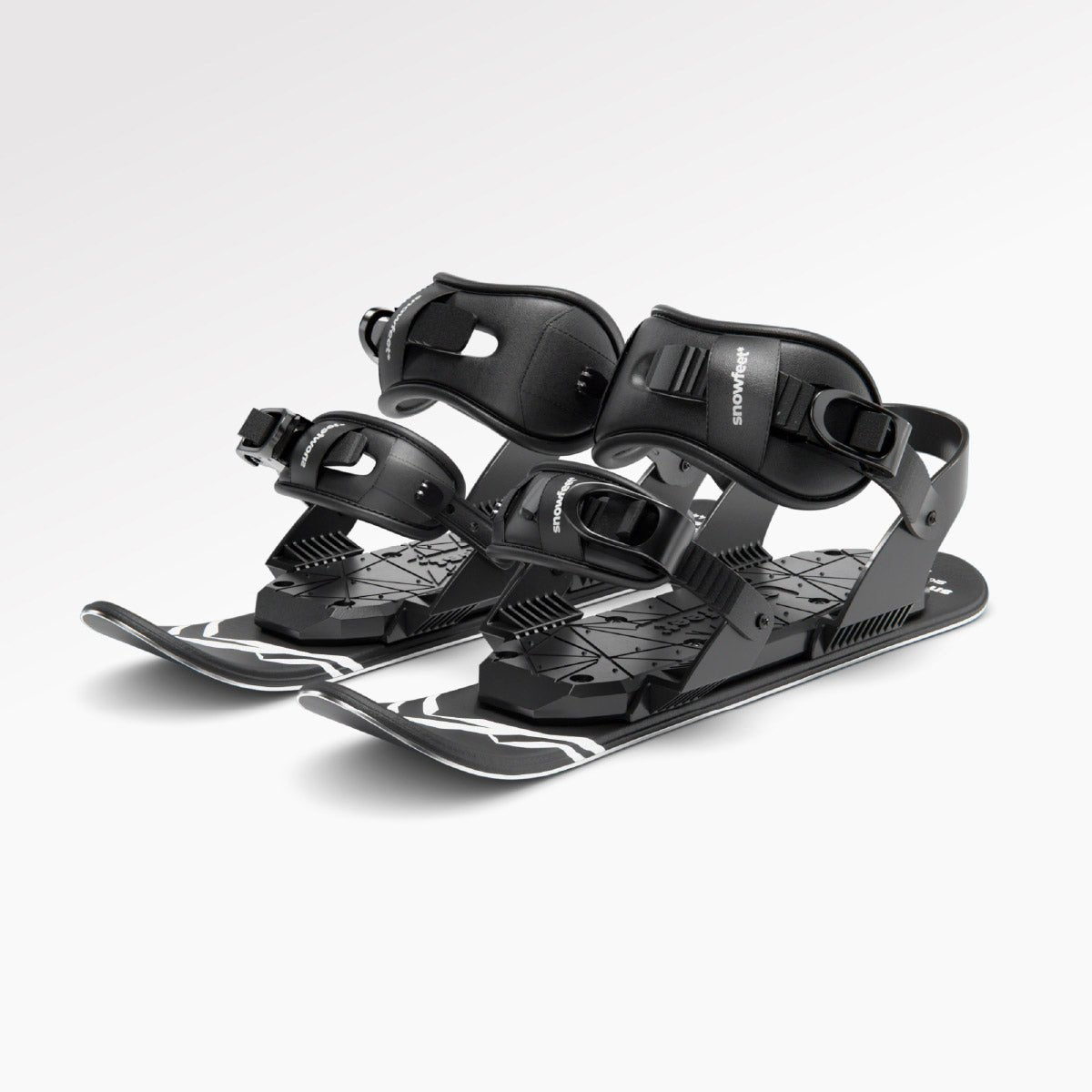
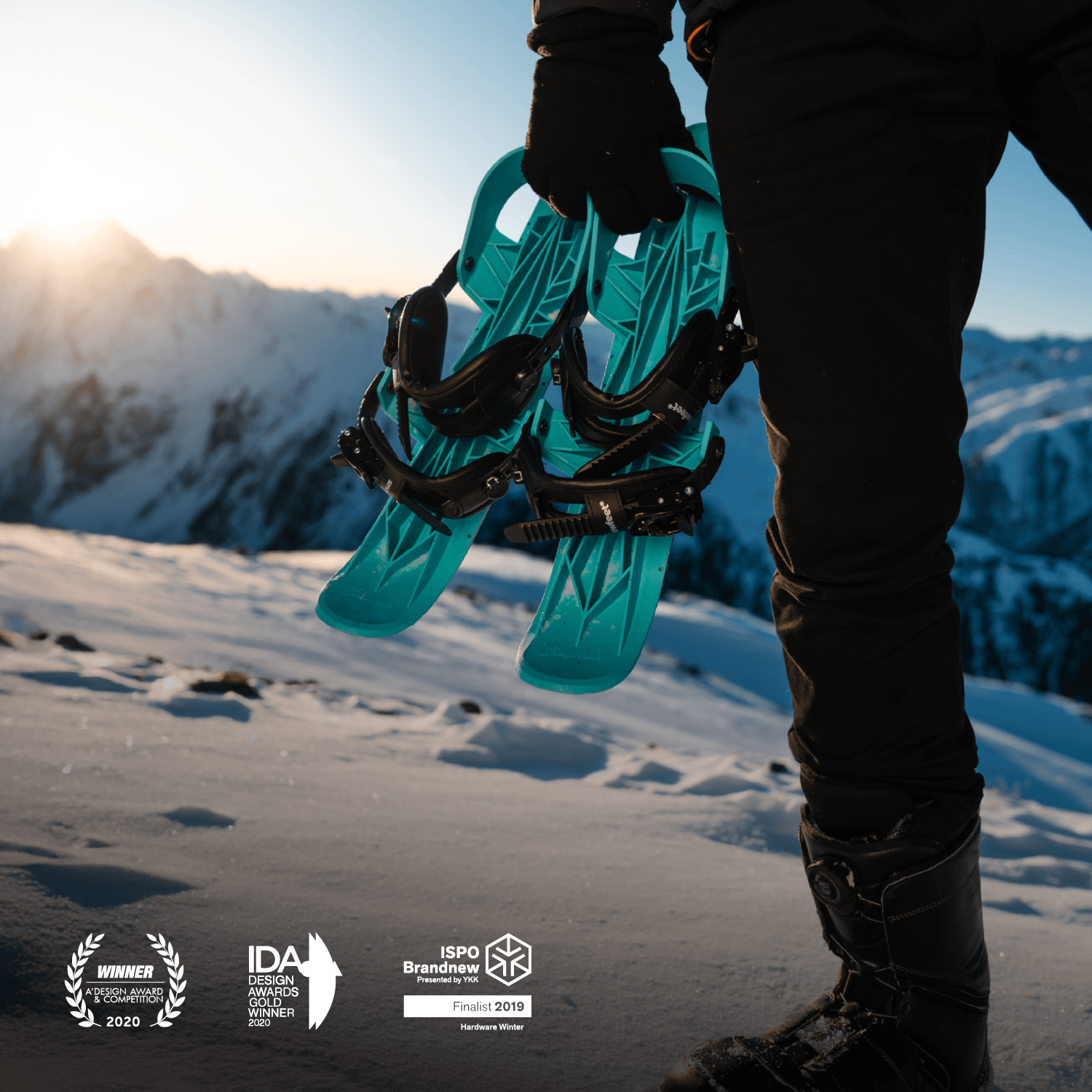
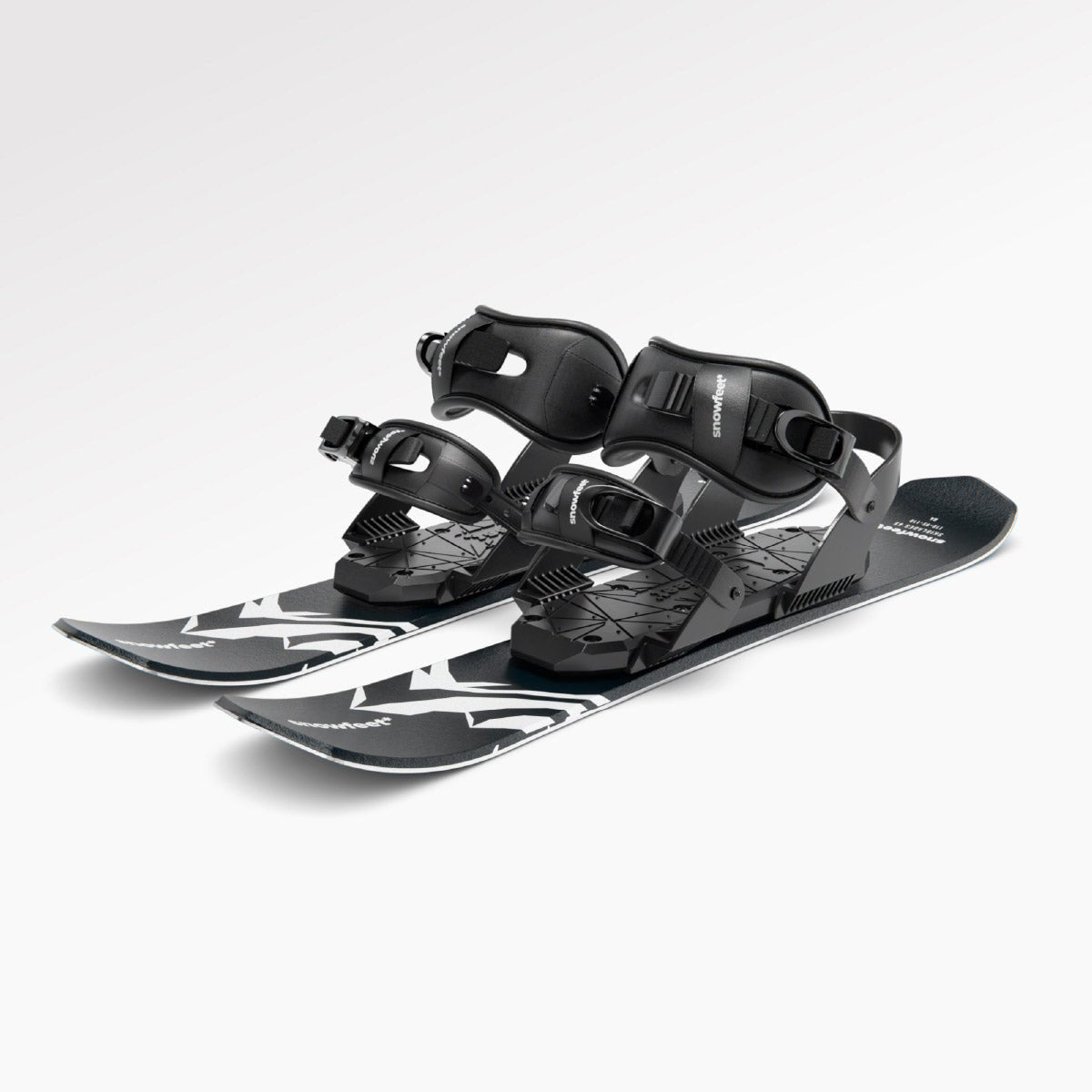
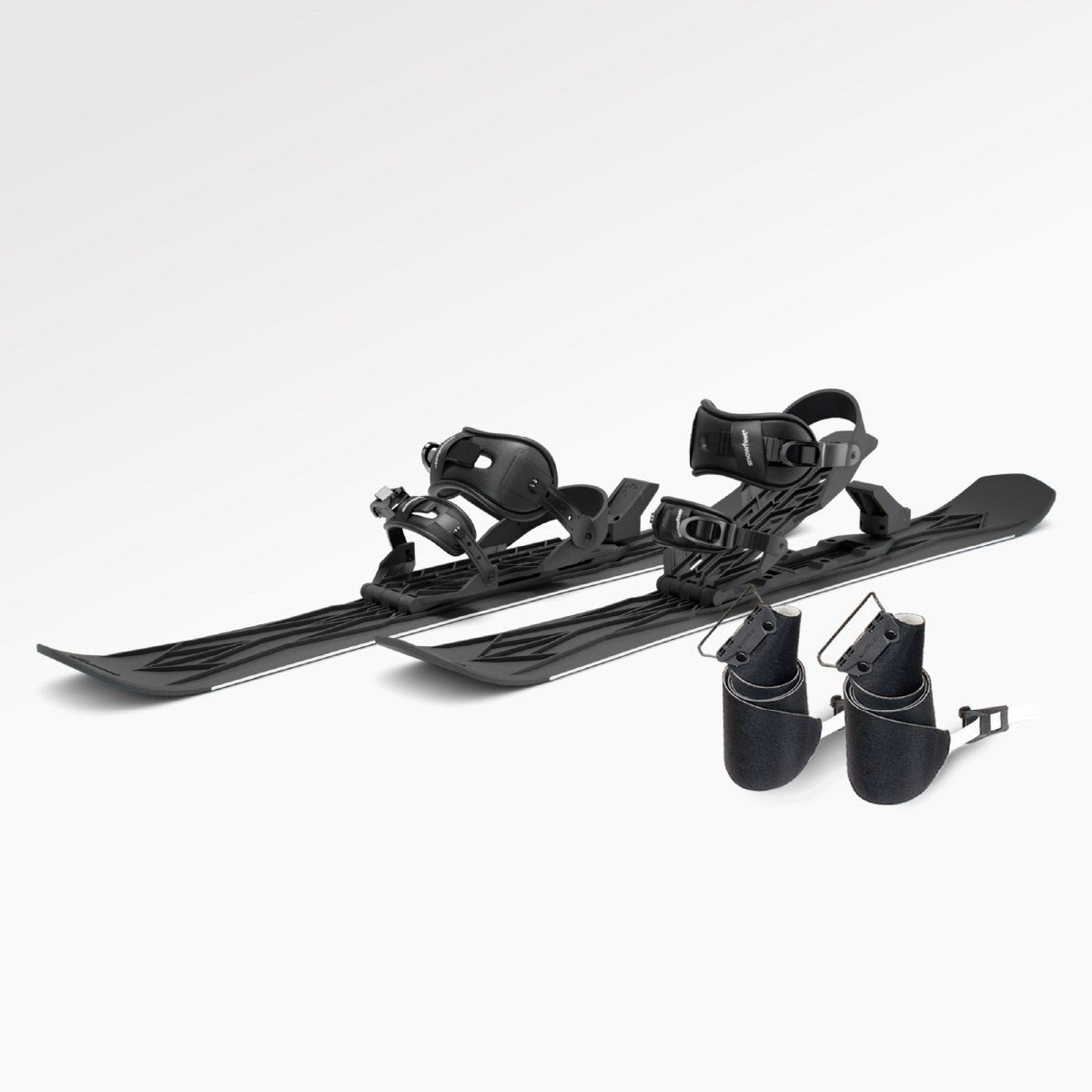
These tiny skis, just 44 cm long and weighing 1.5–2 lbs per pair, are a game-changer for quick and precise movements. Thanks to their lightweight wood-core construction and compact size, turning becomes almost effortless. They lower your center of gravity and reduce inertia, making tight turns - like 180-degree pivots in moguls or tree runs - feel like second nature. Compare that to trying the same on 170 cm skis, and the difference is night and day.
Beginners often pick up turning in just 1–2 sessions instead of taking weeks to learn. The flexible wood core helps absorb shocks, while the rocker tip and tail make these skis versatile for everything from beginner slopes to powder and even urban snowparks. Plus, they’re small enough to fit in a backpack, making them super convenient to carry.
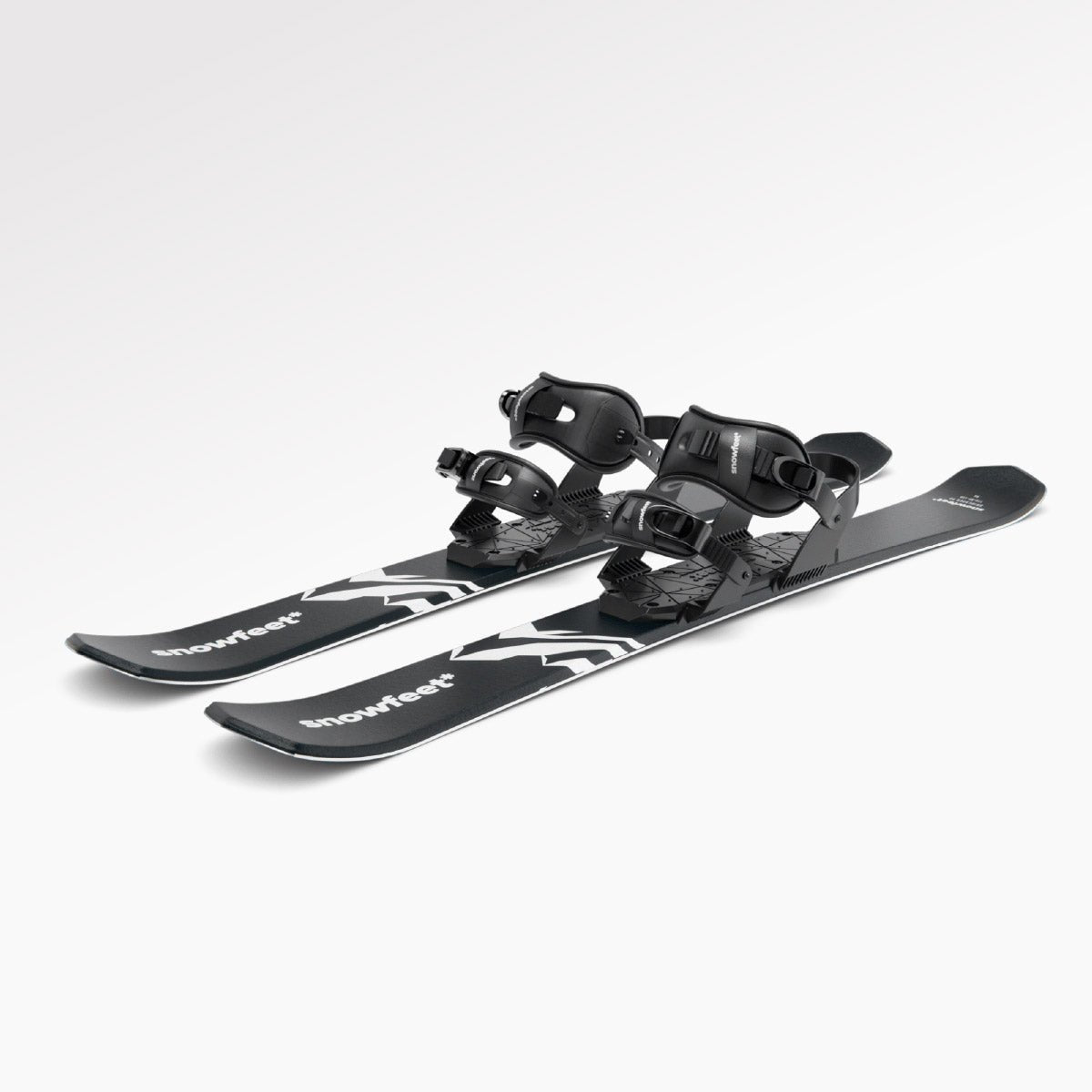
Snowfeet* Skiblades (65 cm): Precision for Carving and Tricks
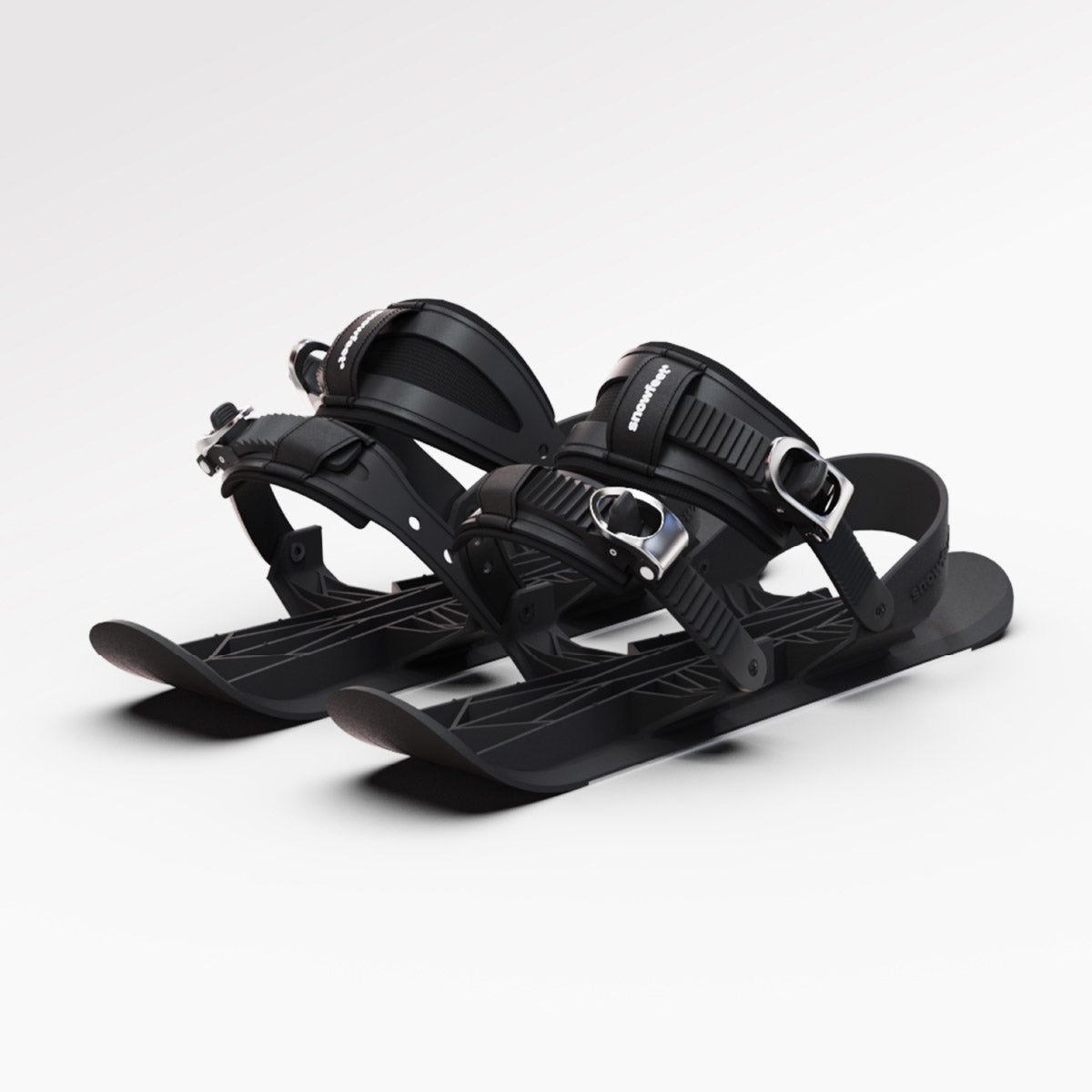
At 65 cm, Skiblades are all about precision. With a deeper sidecut radius (10–12 meters), they’re designed to carve smooth, clean arcs even at speeds of up to 30 mph. Experienced skiers report 20–30% faster turn initiation, which makes them perfect for groomed runs where sharp edge angles are key.
Their short length also makes them ideal for tricks in the snowpark. The low swing weight makes spins, butters, and jibbing easier. And when it’s time to move between the lift and the park, you can easily carry them under your arm or strap them to your backpack. These skis strike a perfect balance between carving precision and freestyle fun.
Snowfeet* 99 cm and 120 cm Models: A Blend of Stability and Agility
Looking for the best of both worlds? The 99 cm and 120 cm models combine stability with agility. The 99 cm version offers a 14-meter sidecut for nimble carving, while the 120 cm model, with its wider base (100 mm underfoot), provides better float in powder and stability at speeds over 40 mph.
Tests show that these skis require 40% less energy to turn compared to traditional 170 cm skis. Weighing only 4–6 lbs per pair (versus 8–12 lbs for regular skis), they’re easier to maneuver and less tiring to use. Whether you're gliding through deep powder or speeding down groomed trails, they deliver excellent performance without wearing you out.
Together, these Snowfeet* models redefine what control and efficiency mean on the slopes, offering a fresh alternative to traditional long skis. Whether you're a beginner or an expert, there’s a model designed to make your skiing experience smoother and more fun.
sbb-itb-17ade95
Snowfeet* vs. Traditional Long Skis
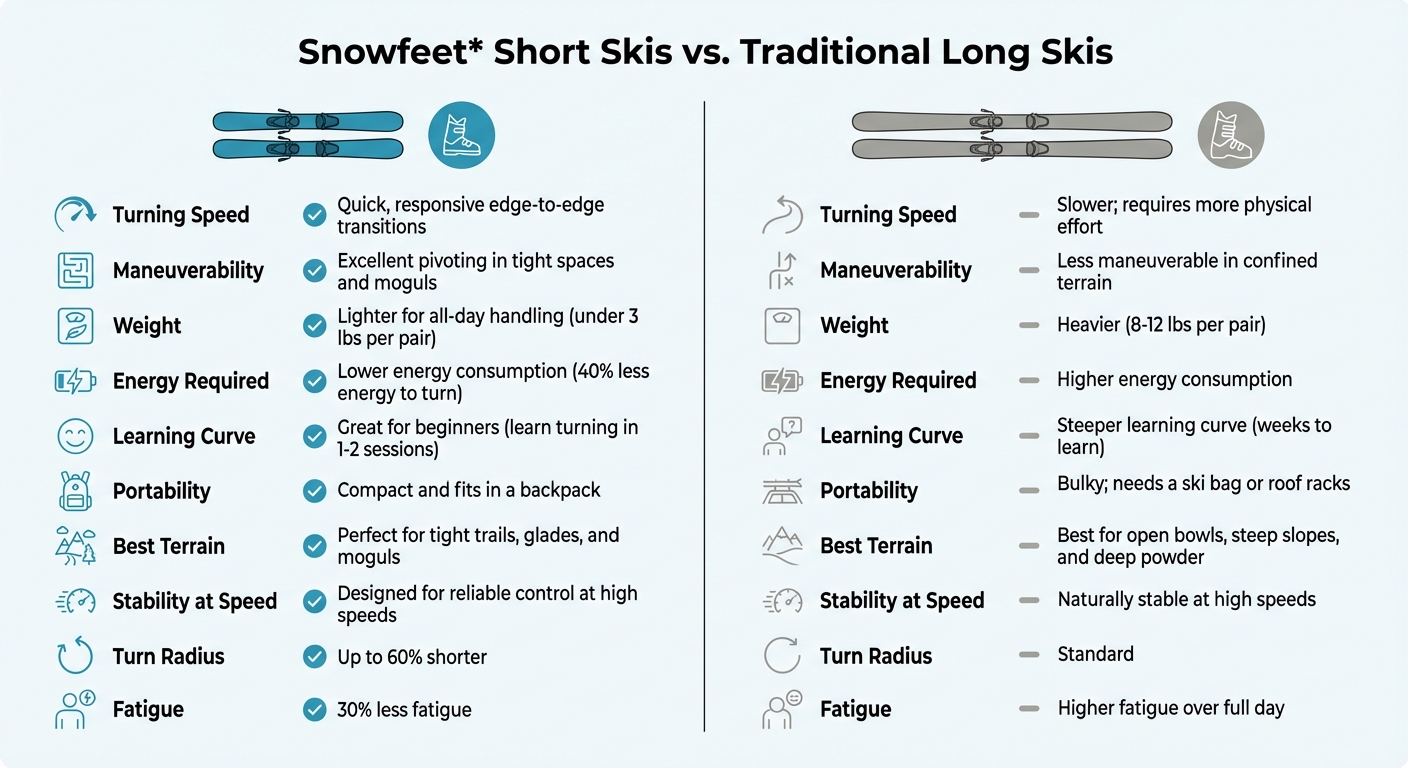
Snowfeet Short Skis vs Traditional Long Skis Comparison Chart
When comparing Snowfeet* short skis to traditional long skis - which usually measure between 63 and 67 inches (160–170 cm) - the difference in control and ease is striking. Snowfeet* short skis provide far greater agility and require less physical effort. As Lucy Higgins, Editor and Writer, explains:
"Because longer skis typically weigh more and create longer turns, they can tire legs quicker than shorter options".
Thanks to their compact design, Snowfeet* models excel in control and efficiency. For instance, the 44 cm Skiskates are perfect for quick turns in tight spots like moguls or tree runs, which can be a real challenge on traditional skis. The 65 cm Skiblades make sharp, precise carving a breeze, with faster turn initiation compared to standard skis. Meanwhile, the 99 cm and 120 cm models strike a balance between stability and ease, reducing the effort needed for turning. And because Snowfeet* skis are lighter, they’re much easier to handle throughout the day. Here’s a quick breakdown comparing the two:
Comparison Overview
| Feature | Snowfeet* Short Skis | Traditional Long Skis (63–67 inches) |
|---|---|---|
| Turning Speed | Quick, responsive edge-to-edge transitions | Slower; requires more physical effort |
| Maneuverability | Excellent pivoting in tight spaces and moguls | Less maneuverable in confined terrain |
| Weight | Lighter for all-day handling | Heavier |
| Energy Required | Lower energy consumption | Higher energy consumption |
| Learning Curve | Great for beginners | Steeper learning curve |
| Portability | Compact and fits in a backpack | Bulky; needs a ski bag or roof racks |
| Best Terrain | Perfect for tight trails, glades, and moguls | Best for open bowls, steep slopes, and deep powder |
| Stability at Speed | Designed for reliable control at high speeds | Naturally stable at high speeds |
Snowfeet* short skis clearly shine when it comes to convenience and versatility. Their portability alone is a huge win - you can toss them in a backpack and head to the slopes without the hassle of ski bags or roof racks. For those who want a smoother learning curve, less fatigue, and more control in varied terrains, Snowfeet* short skis deliver benefits that traditional long skis just can’t match.
Conclusion
Snowfeet* takes slope control to a whole new level. If you're tired of wrestling with heavy, cumbersome traditional skis that leave you drained and struggling with tight turns, it might be time to rethink your setup. Snowfeet* short skis tackle the common challenges of long skis - like slow turning, excess weight, and steep learning curves - with their compact, user-friendly designs that give you control right from your first run.
Whether you're eyeing the 44 cm Skiskates for quick park runs, the 65 cm Skiblades for precise carving, or the 99 cm and 120 cm models for a blend of stability and precision, each option offers serious perks. We're talking up to 60% shorter turning radius and 30% less fatigue, thanks to their ultra-lightweight design - each pair weighs under 3 lbs. That means faster transitions, smoother control, and an overall experience that traditional long skis just can't compete with.
On top of performance, Snowfeet* shines in convenience and affordability. Their compact size fits right into a backpack, so you can skip the hassle of bulky ski bags or roof racks. And with prices ranging from $250 to $775, you're getting gear that makes skiing easier and more fun for everyone, from first-timers to seasoned pros.
So, why wait? Pick your Snowfeet* short skis today and discover how they can transform your time on the slopes. Effortless control and endless fun are just a pair of skis away!
FAQs
How do I choose the right Snowfeet* length?
When picking the right Snowfeet*, think about your skill level, size, and how much maneuverability you want. If you're just starting out or love making quick, sharp turns, go for shorter options like the 65 cm Skiblades. On the other hand, if you're after more stability at higher speeds, the 120 cm Skiblades are a better fit. For a mix of control and versatility, the 99 cm Skiblades strike a great balance. Thanks to their compact design, Snowfeet are easier to learn and manage than traditional skis or snowboards.
What boots and bindings work with Snowfeet*?
Snowfeet* products work with standard snow boots, attaching securely with adjustable straps or bindings, much like those used on skis or snowboards. The big difference? You don’t need any special boots or bindings, which makes them a more flexible and hassle-free option.
Are short skis stable enough at speed and in powder?
Short skis, like the ones from Snowfeet, are designed for agility, simplicity, and all-around versatility. They’re perfect for playful skiing and those who enjoy quick, sharp turns. While longer, traditional skis excel in stability at high speeds and handle deep powder better thanks to their larger surface area, Snowfeet’s short skis shine when it comes to control. They’re especially great for beginners or casual skiers who value maneuverability more than speed or powder performance.


Leave a comment
This site is protected by hCaptcha and the hCaptcha Privacy Policy and Terms of Service apply.