



















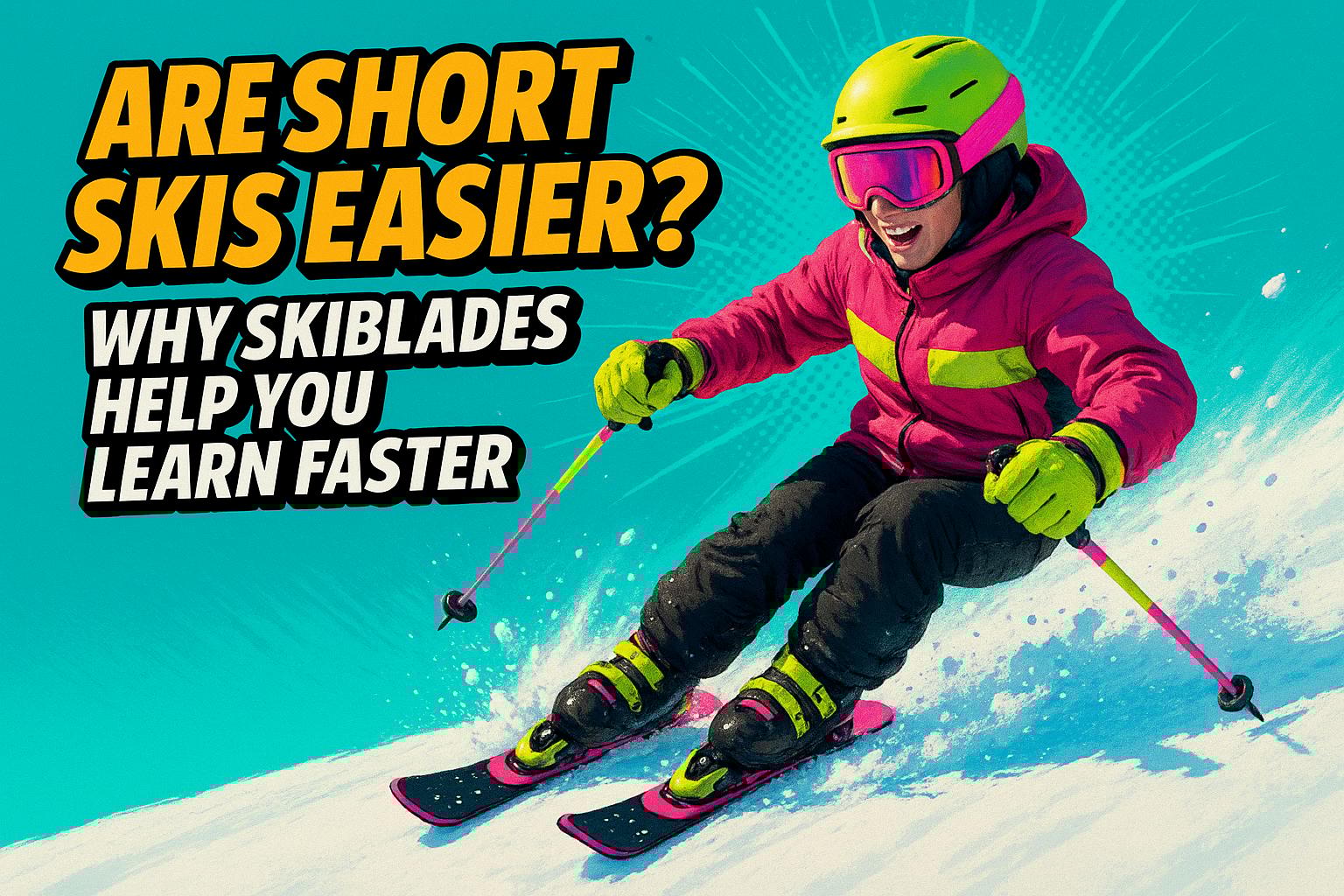
Looking to hit the slopes without feeling overwhelmed? Short skis might be your best bet. Here’s why they’re ideal for beginners:
- Easier control: Short skis make turning and stopping simpler, helping you build confidence faster.
- Lightweight and portable: Some models fit in a backpack and work with regular winter boots - no need for heavy, expensive gear.
- Fewer falls: They’re designed to reduce edge-catching, making your first runs safer and more fun.
Snowfeet* leads the pack with beginner-friendly options starting at $250. Whether you’re after compact Mini Ski Skates or versatile Skiblades, there’s a model for every skill level. Ready to learn faster and enjoy skiing more? Let’s dive in.
Are Short Skis Better for Beginners?
Short Skis vs. Traditional Long Skis: What Beginners Need to Know
Let’s build on why short skis can totally change the game for beginners. When you compare them to traditional long skis, the differences are pretty striking. Long skis, like those from well-known brands such as Rossignol, are designed for stability and speed. But for someone just starting out, they can feel like a lot to handle. Short skis, on the other hand, are all about making those first days on the slopes smoother and more fun.
Easier Control and Faster Learning
The standout feature of short skis? They make learning so much easier. Long skis require more effort and balance, which can be tricky for beginners. Take the Rossignol Experience 76 Ci, for example. It’s marketed as a beginner-friendly ski and costs $499.95. But as professional ski instructor Quincy Young from Tahoe, California, explains:
"They are very reactive and will do exactly what you tell them to do. You don't have to be perfectly balanced on these skis to feel in control".
That said, long skis often have a wider turn radius and can feel sluggish at slower speeds, making them less forgiving for someone still figuring things out.
Short skis, like those from Snowfeet*, flip the script. According to Snowfeet*:
"With short skis, turning becomes a breeze", offering rapid turns and improved control ideal for learning.
This means you can pivot more easily and worry less about catching an edge - two big confidence boosters when you’re just starting out.
Portability and Easy Transport
Let’s talk about convenience. Traditional skis can be, well, a bit of a pain to lug around. They’re long, heavy, and require specialized boots that add even more bulk to your gear. Short skis? They’re lightweight, compact, and can even fit in your backpack or car trunk - no need for roof racks or oversized ski bags.
What really makes Snowfeet* stand out is their simplicity. Their skis attach directly to regular winter shoes or snowboard boots, so you don’t need the specialized (and often pricey) ski boots that traditional skis demand. As Snowfeet* puts it:
"You don't need ski boots or any other heavy and expensive equipment".
One happy customer, Chan Saelee, shared their experience:
"I wore them with my men's size 9.5 US snowboarding boots, and they fit comfortably and securely".
This portability, combined with affordability, makes short skis a no-brainer for many beginners.
Why Snowfeet* Beats Traditional Ski Brands
Snowfeet* is all about making skiing more accessible. The numbers speak for themselves. Traditional skis like the $500 Rossignol Experience 76 Ci require specialized boots, while Snowfeet* Mini Ski Skates cost $250 and work with the footwear you already own. That’s a win for your wallet and your convenience. Plus, Snowfeet* models are more forgiving, so:
"You're less likely to catch an edge or lose balance".
Verified buyer Brina Wyss summed it up perfectly:
"I love that the Mini Skis work with snowboard boots! I had the best time this winter playing on them. I ride them in the Terrain Parks and it's just like Rollerskating at a skate park, but better!".
With short skis, you can jump straight into the fun without the steep learning curve that traditional skis often demand. For beginners, that’s a total game-changer.
Snowfeet* Product Guide: Which Short Skis to Buy
Now that you understand why short skis are a great choice for beginners, let’s dive into which Snowfeet* model might be the perfect fit for you. Each option caters to different skill levels, from first-timers looking for an easy way to learn to those ready to take on more advanced challenges. Plus, these models are budget-friendly compared to traditional ski gear from big names like Rossignol or Salomon. Below, we break down four Snowfeet* options to help you find your match.
Snowfeet* Mini Ski Skates (38 cm): Compact and Beginner-Friendly
If you’re just starting out and want something super simple, the Mini Ski Skates are a great choice. At only 38 cm long and priced from $250, they’re the smallest and most portable skis in the lineup. Made with fiberglass and equipped with adjustable bindings that fit regular winter boots, you won’t need to invest in specialized ski boots. They’re small enough to fit in a standard backpack, making them incredibly convenient.
These skis feel like ice skating or hockey - just on snow. Without the hassle of bulky gear, you can glide and turn with ease, which is a huge confidence boost for beginners. If you’re ready for a bit more support and performance, there’s another option to consider.
Snowfeet* PRO (50 cm): A Step Up for Beginners
Looking to take your skills to the next level? The PRO model, at 50 cm and starting at $275, offers a sturdier build and adjustable bindings for added durability. Designed to work with ski or snowboard boots, these bindings provide better ankle support, giving you extra stability on the slopes.
The slightly longer length allows for sharper turns and smoother handling on tougher terrain, while still being easy for beginners to control. It’s the perfect middle ground for those wanting to push their limits without feeling overwhelmed.
Snowfeet* Skiskates (44 cm): Versatile and Fun
For those who want a bit more flexibility, the Skiskates are a fantastic option. At 44 cm and starting at $460 (regularly $490), these skis feature a wood core construction, offering a solid and responsive ride. With an impressive 4.9/5 rating, they perform well across different types of slopes, giving you plenty of options.
These skis are more robust than the Mini Ski Skates, making them ideal for exploring everything from groomed trails to terrain parks. If you’re looking for a single pair of skis that can handle a variety of conditions, the Skiskates are a great pick. They’ll help you build confidence while keeping the learning process smooth and fun.
Snowfeet* Skiblades (65 cm, 99 cm, 120 cm): Precision for Progressing Beginners
When you’re ready to move from basic control to carving turns, the Skiblades lineup is the way to go. Available in three lengths - 65 cm, 99 cm, and 120 cm - these skis feature a wood core construction, offering enhanced stability and support while remaining beginner-friendly.
- The 65 cm Skiblades start at $520 (regularly $550) and are perfect for quick, tight carving turns. They’re lightweight and easy to maneuver, making them a favorite for beginners who want to improve quickly. They also boast a 5.0/5 rating.
- The 99 cm Skiblades, priced at $560 (regularly $590), provide more control and perform well in varied conditions, including powder. They strike a great balance between accessibility and performance, earning a 5.0/5 rating.
- The 120 cm Skiblades, at $760 (regularly $790), are the longest in the range. They deliver maximum stability and control for downhill skiing, making them ideal for those ready to push their boundaries. Despite their length, they’re still beginner-friendly and come with a 5.0/5 rating.
These Skiblades offer a smooth transition from short skis to more traditional, longer skis, giving you the control and freedom to keep progressing on the slopes. Whether you’re carving tight turns or tackling steeper runs, they’re designed to grow with your skills.
sbb-itb-17ade95
How to Choose Short Skis: Key Specs for Beginners
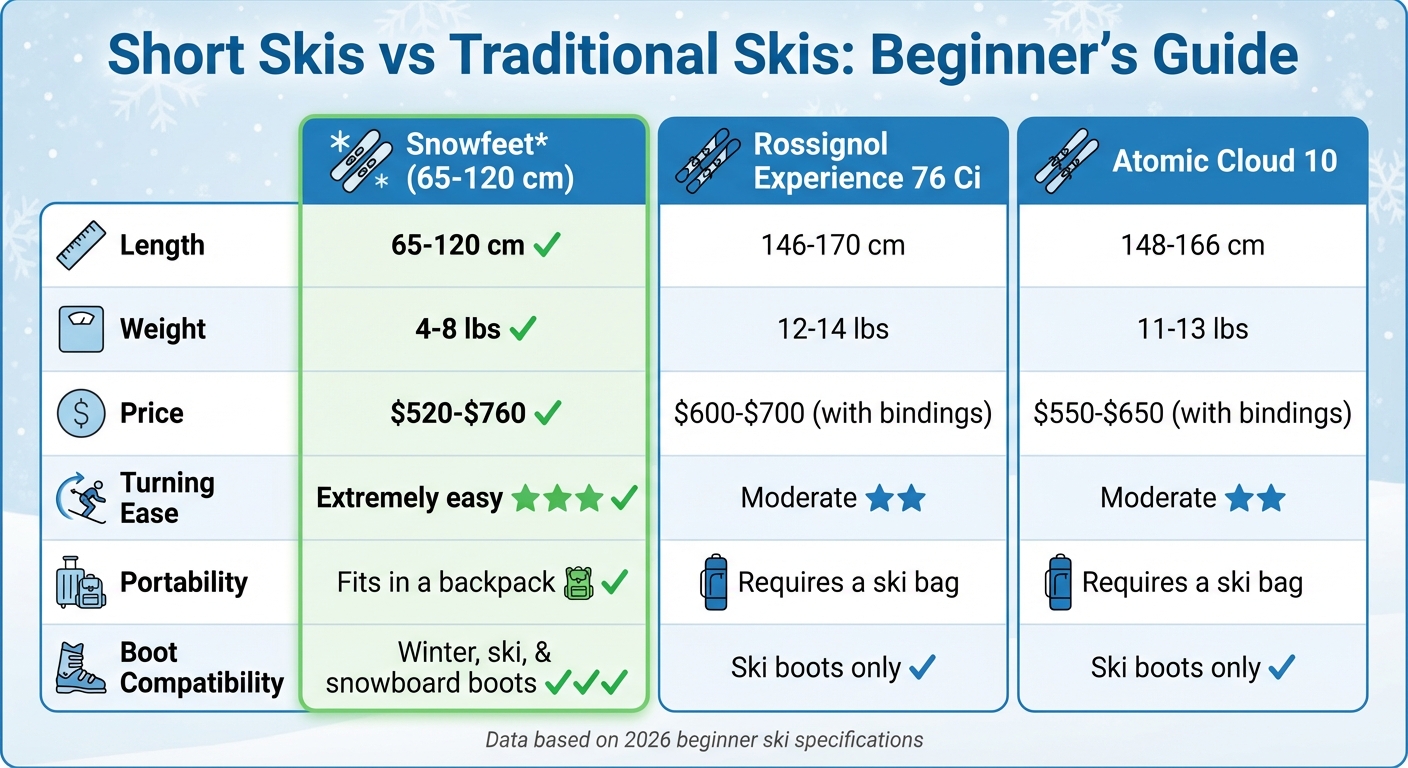
Snowfeet Short Skis vs Traditional Skis Comparison for Beginners
When picking out short skis, focus on a few essential factors: length, weight, bindings, and boot compatibility. Snowfeet* models are packed with beginner-friendly features, making them a great choice for newcomers to the slopes. Let’s break down what makes these skis stand out.
Length and Weight: Finding the Perfect Fit
Shorter skis are a beginner’s best friend. They’re easier to control and make turning a breeze. A good rule of thumb? Look for skis that hit somewhere between your chin and the top of your head. Mini skis, measuring under 100 cm, are especially beginner-friendly. Snowfeet* offers a range of sizes, from 65 cm to 120 cm, catering to skiers at various skill levels.
If you’re just starting out, Snowfeet* Mini Ski Skates (38 cm) and Skiskates (44 cm) are ultra-compact options that can even fit in a backpack. As you gain confidence, you can move up to their Skiblades (65 cm, 99 cm, and 120 cm), which provide more stability without losing their easy-to-handle feel. Unlike traditional skis, Snowfeet* models are designed to be lightweight and portable, so you can skip the bulky ski bags.
Bindings and Boot Compatibility
Bindings play a huge role in your skiing experience, especially as a beginner. Softer, more forgiving bindings are ideal - they’re easier to manage and lower the chance of injuries if you make a mistake. As the Snowfeet Team explains:
"Beginners should choose bindings with softer flexibility because they're easier to handle and reduce the risk of getting hurt if they make mistakes. These bindings are forgiving and have lower release settings, making it simpler to remove boots when necessary".
Snowfeet* takes this advice to heart with bindings that prioritize safety and ease of use. Even better, their skis are compatible with the boots you probably already own - whether they’re standard winter boots, snowboard boots, or ski boots. The 65 cm and 99 cm Skiblades come with options for both ski and snowboard bindings, while the 120 cm Skiblades feature Pro ski bindings for a step up in performance.
Snowfeet* vs. Traditional Skis: A Quick Comparison
Here’s a side-by-side look at how Snowfeet* stacks up against traditional skis:
| Feature | Snowfeet* (65-120 cm) | Rossignol Experience 76 Ci | Atomic Cloud 10 |
|---|---|---|---|
| Length | 65-120 cm | 146-170 cm | 148-166 cm |
| Weight | 4-8 lbs | 12-14 lbs | 11-13 lbs |
| Price | $520-$760 | $600-$700 (with bindings) | $550-$650 (with bindings) |
| Turning Ease | Extremely easy | Moderate | Moderate |
| Portability | Fits in a backpack | Requires a ski bag | Requires a ski bag |
| Boot Compatibility | Winter, ski, & snowboard boots | Ski boots only | Ski boots only |
The comparison speaks for itself. Snowfeet* skis are lighter, easier to carry, and more beginner-friendly than traditional options. Plus, the ability to use them with your existing boots means you can hit the slopes without investing in extra gear. They’re a perfect choice for anyone looking to learn quickly and avoid the hassle of heavy, cumbersome equipment.
Snowfeet* Accessories and Care Tips
Accessories for Care and Performance
Taking care of your Snowfeet* skis is easier than you might think. A quick waxing routine can improve glide and keep snow from sticking. Snowfeet* even offers liquid wax starting at just $6, and some models, like the Carbon Fiber Edition, come with free wax included.
Keeping the metal edges sharp is key for better control. You can use Snowfeet*'s sharpening stone or take them to a ski service shop for edge maintenance. After each use, make sure to dry the edges thoroughly to avoid rust. For long-term storage, wiping the edges with oil adds an extra layer of protection.
If you need to adjust the fit, replacement straps are available to accommodate different boot sizes. For users of the Snowfeet* PRO who wear larger snowboard boots, you can add extra front toe straps for a snugger fit. The adjustable bindings are simple to tweak at home - just grab a screwdriver. These straightforward care tips will help you get the most out of your Snowfeet* on the slopes.
Winter Clothing and Gear Options
To make the most of your Snowfeet* experience, pairing them with the right winter gear is a must. Snowfeet* offers winter clothing and accessories starting at $19. Layering is essential: start with a moisture-wicking base layer, add an insulating mid-layer like fleece or a puffy jacket, and finish with a waterproof shell.
Good socks make a big difference. Choose moisture-wicking ski socks made of wool or synthetic materials to keep your feet warm and prevent bunching. Waterproof gloves or mittens are also a must - mittens are warmer, but gloves give you better dexterity. Don’t forget a helmet that works well with your goggles, and consider adding a light beanie or balaclava underneath for extra warmth. Since Snowfeet* attach to any winter shoes or snowboard boots, make sure your footwear is waterproof and provides solid ankle support.
Sizing Guide for US Beginners
Snowfeet* are designed to fit comfortably for a wide range of US shoe sizes, making them beginner-friendly. The standard models - 38 cm, 50 cm PRO, and 44 cm Skiskates - fit US sizes 6–13. For smaller feet, like kids' sizes starting at size 10 up to adult size 6, the Snowfeet* MINI is the way to go.
If you’re considering Skiskates, there’s even more flexibility. The snowboard boots version fits US sizes 4.5–14.5, while the ski boots version works for sizes 5–14.5. Thanks to adjustable bindings, you can fine-tune the fit to make sure everything feels just right. With the proper size and gear, you’ll be ready to hit the snow with confidence.
Conclusion: Why Snowfeet* Is the Top Choice for New Skiers
If you're new to skiing, Snowfeet* short skis make getting started a whole lot easier. They’re lightweight, simple to use, and far more manageable than traditional long skis. That means you can focus on building confidence and mastering balance without feeling overwhelmed by bulky gear. And honestly, who wouldn’t want that kind of head start?
On top of being beginner-friendly, Snowfeet* models are budget-conscious. They’re priced competitively compared to traditional ski brands, and customers clearly love them - ratings consistently land between 4.9 and 5.0 out of 5 stars. One customer, Daniel Siouffi, summed it up perfectly: Snowfeet* lets skiers "rediscover the joy and happiness of skiing with such ease." That simplicity and joy are what make these skis stand out.
Another big plus? Snowfeet* skis are super portable. They’re small enough to toss in a backpack, car trunk, or even your checked luggage. Plus, they work with your regular winter boots or snowboard boots, so you can skip the hassle (and expense) of buying specialized ski boots. Whether you’re grabbing the ultra-compact 44 cm Skiskates for quick turns, the versatile 99 cm Skiblades for smooth carving, or the 120 cm Short Skis for steady progression, there’s a model that fits your needs perfectly.
With Snowfeet*, you’ll pick up the basics faster, enjoy the slopes sooner, and keep the whole experience fun and relaxed. It’s skiing made simple - and that’s exactly what every beginner needs.
FAQs
Why are short skis a great choice for beginners compared to traditional skis?
Short skis are a great choice for beginners. They’re lighter, easier to handle, and much more forgiving than traditional long skis. Their smaller size makes turning and stopping feel like a breeze, which helps new skiers build confidence on the slopes.
Snowfeet products, such as Skiblades and Skiskates, take these perks up a notch. They’re super portable, incredibly easy to maneuver, and make learning to ski a lot more fun. Unlike clunky traditional ski gear, Snowfeet’s short skis simplify the experience, making skiing feel less intimidating and way more enjoyable for first-timers.
Why are Snowfeet* short skis a better choice for beginners than traditional skis?
Snowfeet* short skis are a great choice for beginners because they’re light, compact, and simple to use. This design makes it easier to learn the basics and build confidence on the slopes. Unlike traditional long skis, Snowfeet* are much easier to handle, so turning, stopping, and navigating feel less like a workout. Instead of wrestling with heavy gear, beginners can focus on having fun and enjoying the ride.
Another big plus? Portability. Snowfeet* short skis are small enough to toss in a backpack and don’t require any fancy, expensive ski boots. They work with your regular winter boots, which means no extra gear to lug around. It’s a hassle-free way for beginners to dive into skiing without the usual bulk or cost of traditional equipment.
What is the best Snowfeet* model for a complete beginner to skiing?
If you're just starting out with skiing, the Snowfeet Skiskates (44 cm) might be your new best friend. Thanks to their compact design, they're super easy to maneuver, making it less intimidating for beginners to get the hang of things on the slopes.
Another bonus? They're lightweight and easy to carry around, which means less hassle when you're heading to or from the mountain. These skiskates offer a fun and laid-back way to dip your toes into the world of skiing without the challenge of managing traditional long skis. Perfect for learning the basics while enjoying yourself!











Leave a comment
This site is protected by hCaptcha and the hCaptcha Privacy Policy and Terms of Service apply.