




















Looking to get started with skiing without the bulk and hassle of long skis? Short skis, ranging from just 38 cm to 120 cm, are perfect for beginners. They’re lightweight, easy to control, and work great with regular winter or snowboard boots. Plus, they’re super portable - no need for expensive transport gear or specialized boots.
Why short skis are great for beginners:
- Easier to learn: Shorter length means quicker turns and less effort.
- More stable: A wider base helps prevent falls.
- Convenient: Fits in a backpack or car trunk, unlike longer skis.
- Affordable: Starting at $250, they’re budget-friendly compared to standard gear.
Snowfeet’s short skis, including Mini Ski Skates (38 cm), Snowfeet PRO (50 cm), and Skiblades (65–99 cm), offer options for every skill level. Whether you’re hitting groomed slopes or your backyard after a snowstorm, these skis make learning fun and simple.
Want less stress and more fun on the snow? Snowfeet short skis are your go-to choice for an easy, enjoyable start.
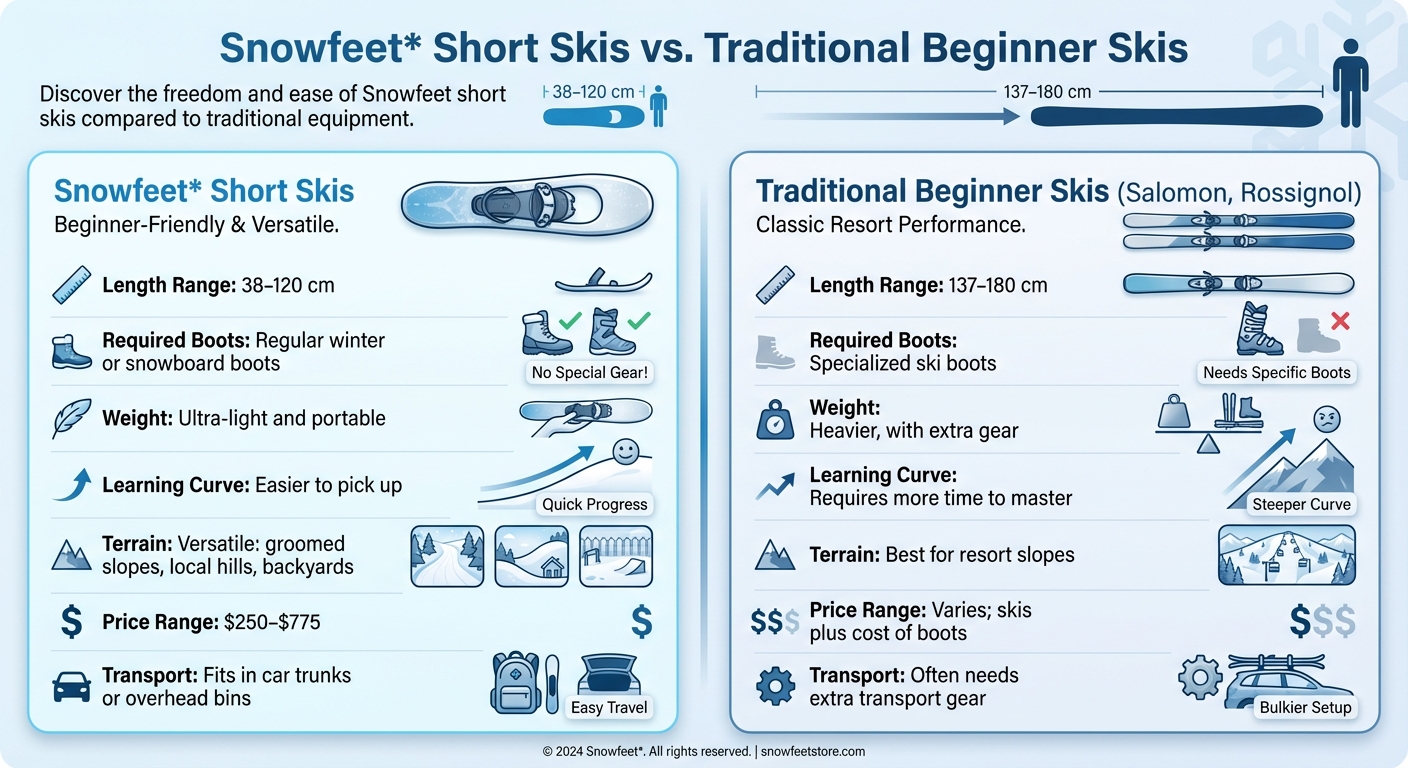
Snowfeet Short Skis vs Traditional Skis Comparison Chart for Beginners
Are Short Skis Better for Beginners?
What to Look for When Buying Your First Short Skis
When it comes to short skis, features like length, flex, and width play a huge role in how they perform. Snowfeet* has designed its gear specifically with beginners in mind, making it easier to gain confidence on groomed trails. Here’s what you need to know before picking out your first pair.
Length and Flex: Finding the Right Fit
Short skis are a game-changer for beginners because they make turning so much easier. Snowfeet* offers a variety of lengths, ranging from compact 38 cm mini ski skates to 120 cm skiblades. If you’re looking for maximum maneuverability, the 38 cm and 50 cm models are perfect. On the other hand, the 65 cm and 99 cm skiblades provide added stability for carving, all without the heft of traditional 160–190 cm skis.
Flexibility is another thing to consider. Experts often suggest softer, more forgiving skis for those just starting out. Why? They’re easier to turn and help cushion small mistakes. Snowfeet* uses materials like fiberglass-reinforced polyamide and wood cores to create skis that feel smooth and manageable at slower speeds.
Width matters too. Narrower skis are better for edge control, especially on groomed runs where most beginners spend their time. According to REI, skis with waist widths up to about 90 mm are ideal for learning proper carving technique. Snowfeet* short skis are designed with this in mind, offering a stable yet nimble platform for new skiers.
Now, let’s dive into where these skis shine.
Where You Can Use Them: From Ski Slopes to Your Backyard
One of the coolest things about Snowfeet* short skis is their versatility. Unlike traditional skis that are mostly limited to resort runs, these can handle everything from groomed slopes to your local sledding hill. The 38–50 cm skiskates are especially great for groomed snow and light powder (up to about 4 inches deep). This means you’re not stuck buying expensive lift tickets - you can enjoy snowy hills nearby, go for winter hikes, or even have fun right in your backyard after a snowstorm.
Boot Options and Easy Transport
Convenience is key when you’re starting out, and Snowfeet* makes things simple. Their short skis attach directly to your regular winter or snowboard boots. No need to splurge on specialized ski boots - just make sure your boots are sturdy, waterproof, and provide solid ankle support. Secure them properly, and you’re good to go.
Transporting these skis is a breeze too. A 99 cm Snowfeet* ski is about one-third the length of a standard 180 cm ski. That means it can fit in a backpack, your car trunk, or even in the overhead bin on a plane. Traditional skis just can’t compete when it comes to portability.
Snowfeet* Short Skis vs. Traditional Skis: Side-by-Side Comparison
When you're shopping for skis, you'll quickly notice a big difference in size and requirements between traditional skis and Snowfeet* short skis. Traditional skis from brands like Salomon and Rossignol typically range from 137–180 cm in length and require specialized ski boots, which can add a hefty cost. Snowfeet* short skis, on the other hand, are much shorter, ranging from 38–120 cm, and work seamlessly with your regular winter boots or snowboard boots - saving you both money and hassle. For beginners, this shorter, lighter option is a game-changer. As REI’s buying guide mentions, shorter skis are easier to turn and less intimidating for new skiers. Snowfeet* takes this idea to the next level, offering a fun, beginner-friendly experience without the steep learning curve.
Here’s a quick breakdown of how Snowfeet* short skis stack up against traditional beginner skis:
| Feature | Snowfeet* Short Skis | Traditional Beginner Skis (Salomon, Rossignol) |
|---|---|---|
| Length Range | 38–120 cm | 137–180 cm |
| Required Boots | Regular winter or snowboard boots | Specialized ski boots |
| Weight | Ultra-light and portable | Heavier, with extra gear |
| Learning Curve | Easier to pick up | Requires more time to master |
| Terrain | Versatile: groomed slopes, local hills, backyards | Best for resort slopes |
| Price Range | $250–$775 | Varies; skis plus cost of boots |
| Transport | Fits in car trunks or overhead bins | Often needs extra transport gear |
Traditional skis definitely have their strengths - especially if you're planning to take lessons at a resort and eventually explore deeper powder or higher speeds. Brands like Salomon are great for skiers looking to progress over time. But if your goal is to dive into skiing without breaking the bank or complicating things, Snowfeet* short skis are an easy choice.
Mini Ski Skates (38 cm): Compact and Perfect for Beginners
The 38 cm Mini Ski Skates are Snowfeet*’s smallest option, and they’re perfect for total beginners. At just over a foot long, they’re so compact they can fit in your backpack. They attach directly to your regular winter boots, so you can head to any snowy hill without needing extra gear.
What makes these skates stand out is how natural they feel. Unlike traditional skis, there’s no awkward shuffling or heavy equipment to manage. The ultra-short design allows for easy movement, making it simple to practice basic stopping and turning techniques. Whether you’re on a gentle slope or just having fun in your backyard after a snowfall, these skates make skiing approachable and enjoyable. They’re best suited for groomed snow, so they’re ideal for casual outings rather than resort-level skiing.
Snowfeet* PRO (50 cm): Step Up Your Game
If you’re ready for a bit more performance, the Snowfeet* PRO at 50 cm offers a great next step. Priced at $275, these short skis come with adjustable bindings to grow with your skills. They’re sturdier than the Mini Ski Skates and designed to handle more aggressive turns and varied terrain.
The PRO model is perfect for learning techniques like carving without dealing with the bulk of traditional skis. Its shorter length means less weight to manage, giving you better control and helping you focus on mastering edge control and precision.
Skiblades (65 cm and 99 cm): Advanced Control and Versatility
For those who want a skiing experience closer to traditional models but without the extra length, Snowfeet*’s Skiblades are a fantastic option. Available in 65 cm and 99 cm lengths, these models are built with wood cores and high-quality materials. The 65 cm version starts at $635, while the 99 cm model is priced at $675.
The 65 cm Skiblades are great for snowparks and groomed slopes, offering quick, responsive turns. The 99 cm option provides more stability at higher speeds and performs well across different snow conditions. Both models are designed for excellent edge grip and carving, making them a solid choice for beginners who want to refine their skills. Expert guides often recommend shorter skis with narrower waist widths (up to 90 mm) for learning carving techniques, and these Skiblades fit the bill perfectly. They’re easier to control than full-length skis, giving you confidence as you improve.
Snowfeet* short skis are all about making skiing fun, accessible, and easy to learn. Whether you’re just starting out or looking for a more portable alternative to traditional skis, there’s an option here for every beginner.
sbb-itb-17ade95
Accessories and Care for Your Snowfeet* Short Skis
Keeping your Snowfeet* short skis in great shape is a breeze. Unlike traditional skis that often need pricey professional maintenance, Snowfeet* products are designed for easy at-home care. With just a little attention, you can keep them performing at their best. Plus, this low-maintenance approach makes them perfect for beginners who want to spend more time on the slopes and less time worrying about upkeep.
How to Maintain Your Short Skis
- Waxing: For top performance, apply wax regularly. Wood-core Skiblades come pre-waxed, but fiberglass-reinforced models like Mini Ski Skates and Snowfeet* PRO need a bit more attention. A quick coat of liquid wax - available at Snowfeetstore.com or most ski shops - will do the trick.
- Edge Care: After each use, dry the metal edges to prevent rust. If you're storing them for a while, wipe the edges with a little oil to keep them in good shape. For sharpening, use a stone from Snowfeetstore.com or visit a ski service shop.
- Bindings: Adjusting the bindings is simple and can be done at home with a screwdriver. For smaller boots, use the appropriate strap hole. If you're using larger snowboard boots, you might need to swap out the front toe straps - extra straps are available at Snowfeetstore.com.
Handy Accessories for New Skiers
The right accessories can make your skiing experience even better while extending the life of your gear. Snowfeetstore.com offers a range of affordable add-ons to keep you prepared:
- Replacement Straps: Always good to have on hand, starting at just $6. These come in handy if your current straps show signs of wear.
- Liquid Wax: Perfect for maintaining that smooth glide on the slopes.
- Winter Clothing: Stay warm and comfortable with jackets and hats designed specifically for short-ski users. Prices start at $19.
And here’s a bonus: Snowfeet* short skis are so compact, they fit right into a backpack. No need for bulky transport gear - just pack your essentials and hit the slopes.
Conclusion: Why Snowfeet* Is the Best Choice for Beginners
If you're just starting out with winter sports, Snowfeet* short skis make everything simpler. Unlike traditional skis that can take days to master, most beginners are gliding around in just minutes. The learning curve is practically non-existent compared to the long lessons (and frustrations) often required with regular skis.
Another huge plus? They're super portable. Snowfeet* are small enough to toss in a backpack, so you’re not stuck lugging around heavy gear. This flexibility means you’re not limited to pricey ski resorts - you can enjoy them on sledding hills, hiking trails, or even your own backyard.
And let’s talk about performance. These shorter skis are much easier to handle. Turning and stopping feel intuitive because they don’t demand as much strength. Traditional skis, on the other hand, can feel awkward and clunky. With Snowfeet*, you get smooth, agile movement. As one user, Sophia Kane, shared:
"I hate getting stuck on a hill in skis because they're so long and bulky. Since these are shorter, you can just skate right up" - Sophia Kane.
What’s more, they’re incredibly versatile. Whether you’re cruising groomed slopes, hitting snow parks, or exploring backcountry trails, Snowfeet* adapt to all kinds of terrain. Plus, they don’t require specialized ski boots. With over 5,500 verified reviews averaging 4.9 out of 5 stars, it’s clear that beginners find Snowfeet* easier, safer, and way more fun than traditional skis. All these features make Snowfeet* a standout choice for anyone new to the slopes.
FAQs
What makes Snowfeet short skis better for beginners compared to traditional skis?
Snowfeet short skis are a game-changer for anyone new to skiing. Unlike traditional skis, which can be bulky and intimidating, these compact skis (measuring just 38–99 cm) are lightweight and ultra-portable. You can even toss them into a backpack - try doing that with a pair of 160–180 cm traditional skis! Plus, you don’t need to invest in heavy boots or bindings. Snowfeet work with regular winter shoes, snowboard boots, or ski boots, saving you a small fortune on gear.
For beginners, the real magic lies in how easy they are to control. Turning and stopping with Snowfeet can be mastered in just a few hours, not weeks. They’re forgiving, making them perfect for gentle slopes or weaving through lift lines without stress. And let’s talk price: starting at around $150, they’re a wallet-friendly alternative to traditional ski setups, which often cost over $700.
If you’re after something portable, affordable, and beginner-friendly, Snowfeet short skis might just be your perfect match.
How do I choose the right length and flex for short skis?
Choosing the right short skis comes down to a mix of factors: your height, weight, skill level, and the terrain you're planning to tackle. For beginners, shorter skis are the way to go - they're much easier to handle. A simple rule? Look for skis that hit somewhere between your chest and chin. Snowfeet offers options ranging from 15 inches to 47 inches, with the 26-inch skiblades being a solid choice for most newcomers. They’re compact enough to control easily but still versatile for different terrain. If you’re taller, heavier, or after more speed and stability, the 39-inch or 47-inch models might be a better fit.
Another thing to think about is flex - basically, how stiff the skis are. Softer flex is great for beginners since it’s more forgiving and easier to turn, while stiffer flex offers better control and power, which advanced skiers will appreciate. Snowfeet has something for everyone: the 26-inch skiblades have a beginner-friendly flex, the 39-inch models are a balanced option for all-around use, and the 47-inch skis are stiffer, catering to experienced riders.
Compared to traditional skis, which can be over 67 inches long and quite heavy, Snowfeet’s short skis are lightweight, easy to carry, and work with regular winter boots. They’re a practical choice that doesn’t skimp on performance. Just pick the right length and flex for your needs, and you’ll be ready to hit the slopes with confidence!
Can I use my regular winter boots with Snowfeet short skis, or do I need special ski boots?
You can absolutely use your regular winter boots with Snowfeet short skis! These skis are built to pair effortlessly with standard winter boots, as well as snowboard or ski boots. That means no need to splurge on special footwear. It’s a super convenient option, especially for beginners, letting you save both time and money while still enjoying a snug and comfy fit.












Leave a comment
This site is protected by hCaptcha and the hCaptcha Privacy Policy and Terms of Service apply.