



















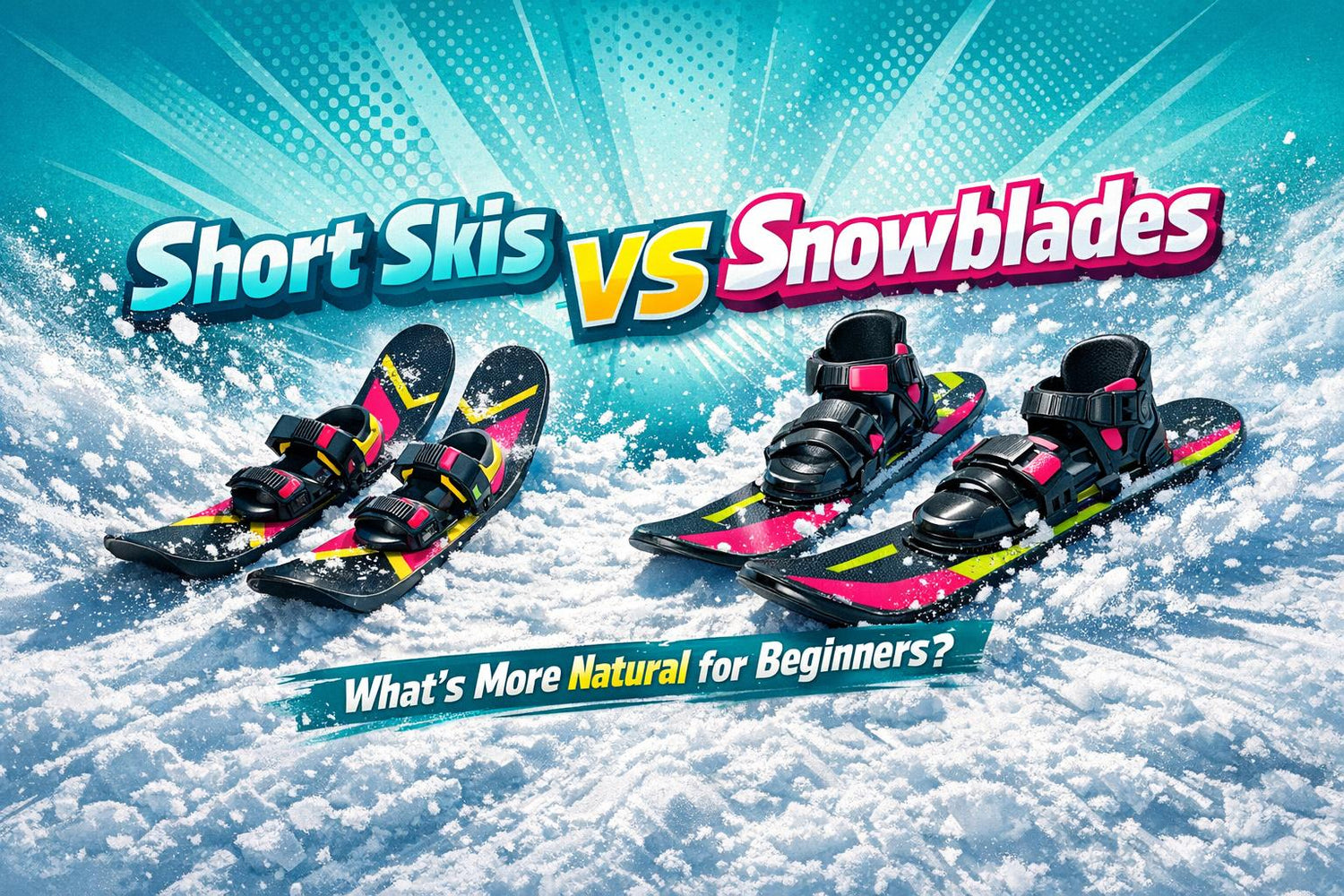
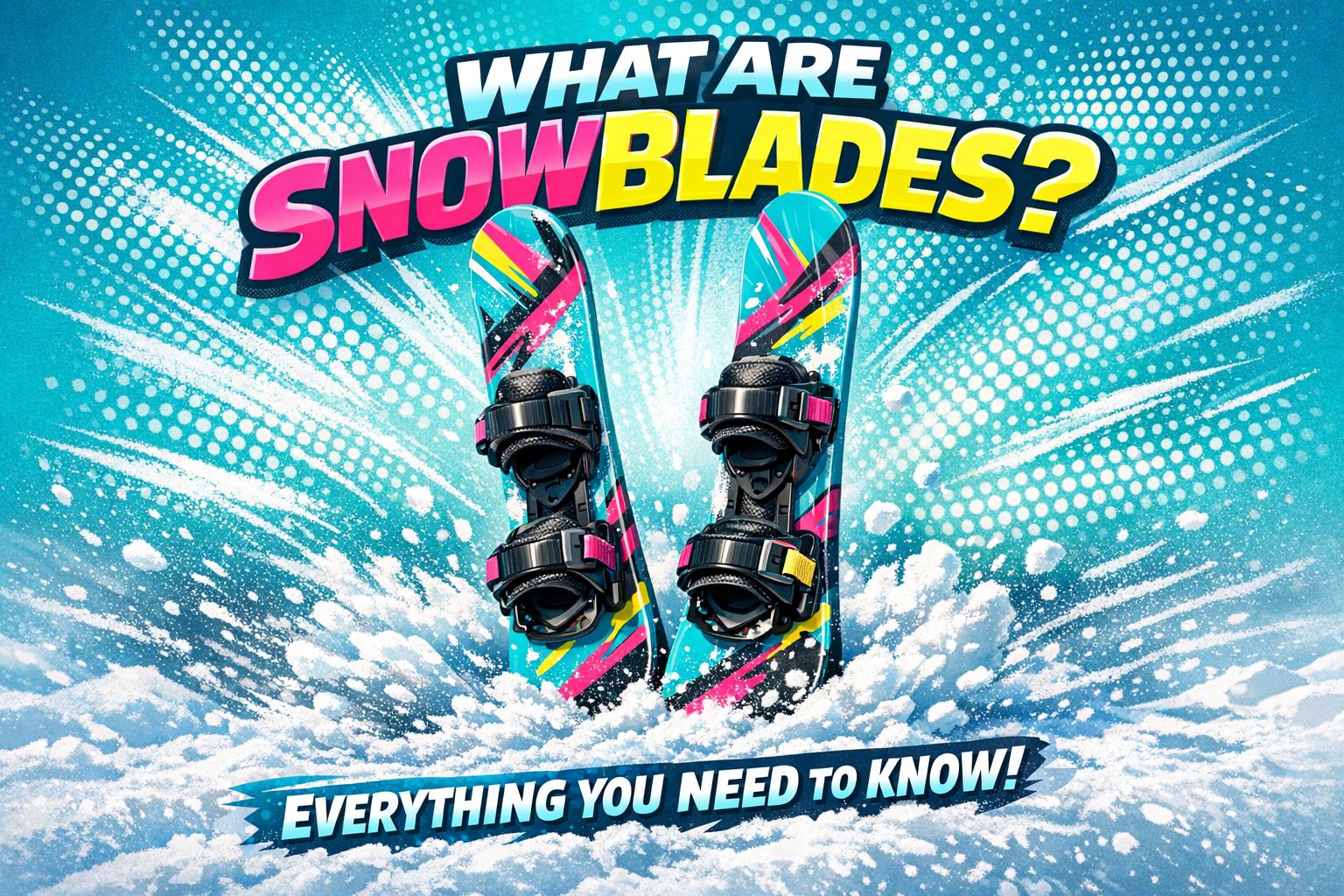
Short skis and snowblades are great options for beginners looking for easier, more fun ways to hit the slopes. Here’s the quick rundown:
- Short skis (39–47 inches): Offer more stability, smooth turns, and a carving feel. Ideal for those who want a controlled experience similar to traditional skiing.
- Snowblades (15–26 inches): Smaller, lighter, and more playful. Perfect if you’ve got experience with skating or want a quick, responsive ride.
Both options are easier to learn than long skis, but your choice depends on your background and preferences. Snowblades feel more like skating, while short skis offer a middle ground between traditional skis and beginner-friendly gear.
Quick Tip: If you're completely new to sliding sports, go for short skis (39–47 inches). They’re more stable and forgiving for first-timers. If you’re into skating or hockey, snowblades (15–26 inches) will feel natural and fun.
Now, let’s dive into the details to help you decide which is right for you!
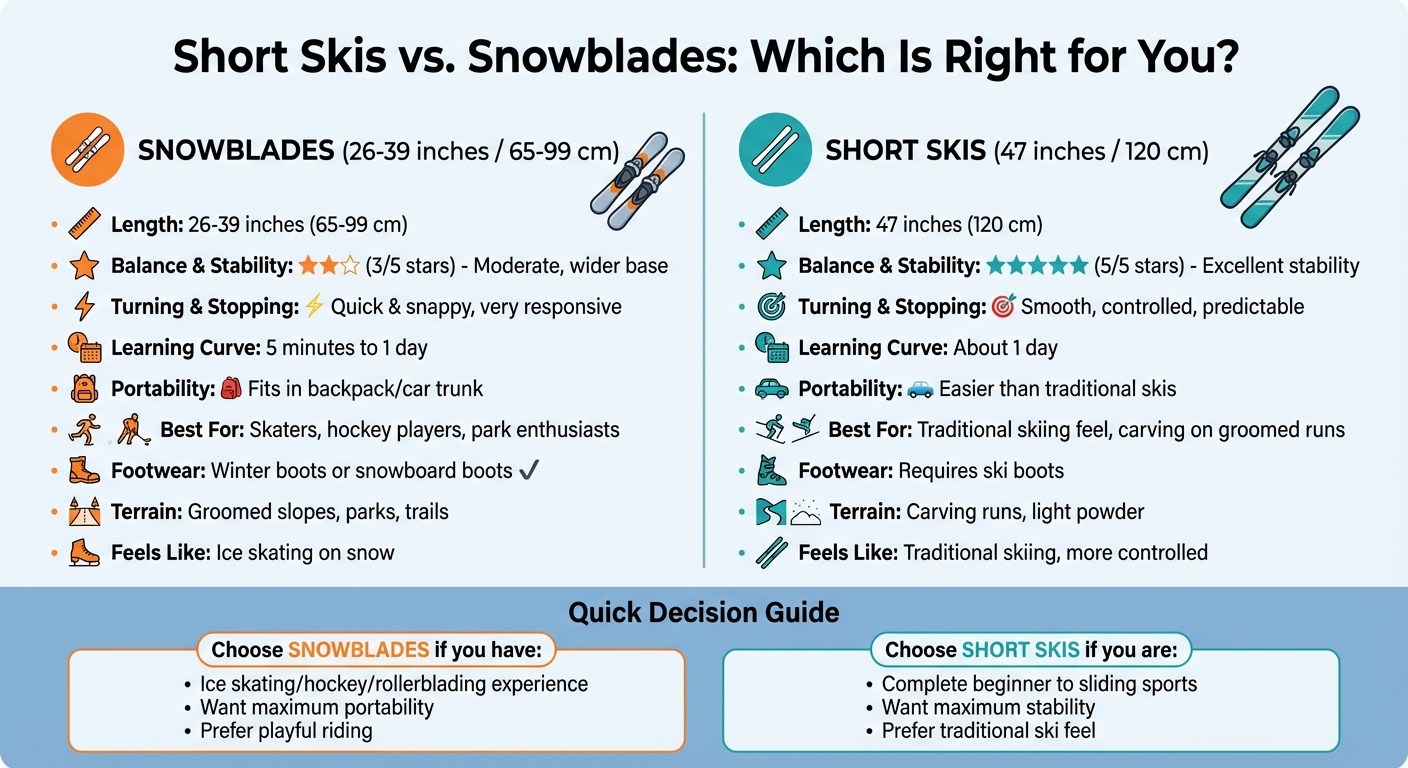
Short Skis vs Snowblades Comparison Chart for Beginners
How Short Skis and Snowblades Feel on Snow
Balance and Stability
Short skis, ranging from 39 to 47 inches (99–120 cm), provide a solid and stable base, making them a great choice for beginners. On the other hand, ultra-short options like Snowfeet's 15-inch (38 cm) or 17-inch (44 cm) Skiskates require precise balance to master. For those just starting out, the 39-inch (99 cm) Snowfeet Skiblades strike a nice balance - they’re wide enough to feel steady but short enough to make turning easier. It’s best to steer clear of models under 35 inches (90 cm) since they can be tricky to balance on. If you're new to this, using poles for your first few runs can give you that extra bit of support. This stable setup makes turning and stopping feel natural and smooth.
Turning and Stopping
Short skis and snowblades are much easier to maneuver compared to traditional skis. Snowfeet products, in particular, make stopping a breeze with their sharp edge control, whether you’re doing a hockey stop or using the heel brake. If quick turns are your thing, the 26-inch (65 cm) Snowfeet Skiblades are a great pick. For more support during carving or controlled stops on steeper slopes, the 39-inch (99 cm) and 47-inch (120 cm) models are better suited.
"Going fast I was in complete control of every move, turns, and stops." - Daniel Siouffi, Verified User
Snowfeet gear is known for its quick response. Unlike traditional skis from brands like Salomon or Rossignol, which require more technique and strength, Snowfeet equipment reacts instantly to your movements. This makes them a favorite for beginners looking for an easier entry into the world of skiing.
Which Feels More Natural Based on Your Background
Your past experience plays a big role in deciding whether short skis or snowblades will feel more natural to you. If you’ve got a background in ice hockey, ice skating, or rollerblading, ultra-short options like Snowfeet’s 17-inch (44 cm) Skiskates will feel second nature. The motion closely mirrors skating on snow.
"You have to keep the front-back balance, so it feels very natural to those who play ice hockey, ice skate, or even use inline skates." - Snowfeet Team
For snowboarders, Snowfeet models with snowboard boot bindings are a great option. They offer a familiar, comfortable fit and allow for more flexibility to try tricks. If you’re completely new to sliding sports, the 39–47 inch (99–120 cm) Snowfeet Skiblades are the way to go. They provide the stability you need to build confidence without the steep learning curve of traditional skis.
| Your Background | Best Snowfeet Option | Why It Works |
|---|---|---|
| Hockey, Ice Skating, Rollerblading | 17–20 inch (44–50 cm) Skiskates | Mimics the skating movement you already know |
| Snowboarding | 26–39 inch (65–99 cm) with snowboard bindings | Familiar boot feel, great for tricks |
| No Sliding Sports | 39–47 inch (99–120 cm) Skiblades | Maximum stability; easiest to balance |
Learning Speed and Beginner Control
Faster Learning with Shorter Equipment
When it comes to learning, shorter skis and snowblades are a game-changer for beginners. Most people can master them in just a day, compared to the weeks it typically takes with traditional skis. Snowfeet* users often highlight how easy it is to pick up, thanks to their clever design - "long enough to ski, short enough to skate". With sizes ranging from 15 inches (38 cm) for Mini Ski Skates to 47 inches (120 cm) for short skis, these options let you focus on balance and movement without wrestling with the bulk of standard skis.
If you’ve got experience with ice skating or rollerblading, ultra-short models around 39 inches (99 cm) will feel surprisingly familiar. They offer a skating-like experience that makes learning feel natural. For total beginners, though, models in the 39-inch (99 cm) to 47-inch (120 cm) range are ideal. They strike a great balance between maneuverability and stability, especially on green and easy blue slopes. This quick learning curve means fewer early frustrations and a smoother start to your skiing journey.
Avoiding Common Beginner Mistakes
Mastering shorter skis quickly also helps dodge many of the classic beginner pitfalls. Long skis often lead to problems like crossing tips or catching edges - issues that Snowfeet* gear is designed to avoid.
One common mistake is leaning too far back on traditional skis, which throws off your balance and makes turning a nightmare. Snowfeet* short skis encourage a centered stance, which feels more natural and keeps you in control. Plus, their lightweight construction reduces fatigue, so you can practice longer without wearing yourself out.
Control on Easy Slopes
Once you’ve got the basics down, Snowfeet* really shines on easy slopes. Whether you’re on green or blue runs, these short skis and snowblades give you precise control. Managing your speed is straightforward - just align the tips and apply edge pressure. This is much easier to do with shorter equipment. Stopping is also a breeze, whether you’re using a hockey stop or the heel brake found on some models.
"Going fast I was in complete control of every move, turns, and stops." - Daniel Siouffi, Verified User
Unlike traditional skis, which often require a lot of strength to maneuver, Snowfeet* responds almost instantly to your movements. This quick responsiveness boosts your confidence and helps you progress faster, making it easier to go from a first-timer to a comfortable skier on U.S. resort green and blue runs.
Portability, Practicality, and Footwear Options
Compact and Lightweight Design
Unlike traditional skis that demand roof racks or special car setups, Snowfeet* gear is designed to be compact and easy to carry. Whether it's the Mini Ski Skates (15 inches) or the Short Skis (47 inches), these options fit conveniently into a backpack or car trunk. For example, the Mini Ski Skates at 15 inches (38 cm) and Ski Skates at 20 inches (50 cm) are small enough to toss in a backpack. Even the larger models, like the Skiblades (26–39 inches or 65–99 cm) and Short Skis (47 inches or 120 cm), are compact enough to fit in your trunk without a hassle.
This portability is a game-changer, especially for beginners heading to local hills or resorts via public transit. Imagine hopping on a bus or train with your gear in a backpack - no awkward struggles with oversized equipment. And once you're on the slopes, the lightweight design means a more enjoyable and stress-free experience.
Footwear Compatibility
One of the standout features of Snowfeet* gear is its compatibility with everyday winter boots. Unlike traditional ski brands like Rossignol or Salomon, which generally require specialized boots, Snowfeet* uses adjustable strap bindings that fit regular waterproof winter boots. This eliminates the need for expensive, dedicated ski boots and makes it easier for families to share gear. The bindings accommodate shoe sizes ranging from US 6 to 13, making it a practical option for a wide range of users.
For those who already own ski boots or prefer them, Snowfeet* offers models with standard ski boot bindings as well. This flexibility means you’re not tied to a single system. In comparison, traditional skis often require specific boots that are not only pricey but also uncomfortable for walking. Snowfeet* simplifies the process, offering a more user-friendly experience both on and off the slopes.
Easier to Use in Everyday Situations
Traditional ski boots can feel clunky and restrictive. With Snowfeet*, you can wear your comfy winter or snowboard boots, allowing you to move naturally through parking lots, lift lines, and lodge hallways.
"I love how easy it is to put snowboard boots on and walk with them, they don't hurt like ski boots, and I feel more flexible during the ride." - Snowfeet Team
The shorter length of Snowfeet* gear also makes it easier to handle. You’re less likely to bump into people or equipment while moving around, and getting on and off chairlifts becomes a breeze. For beginners, this means a smoother, less stressful day on the mountain, so you can focus on enjoying the ride.
sbb-itb-17ade95
Terrain Options and Skill Development
Performance on Different Terrain Types
Snowfeet* gear shines when it comes to versatility across various terrains, all while keeping things simple and fun. Let’s start with groomed slopes. The Skiblades (26–39 inches [65–99 cm]) and Short Skis (47 inches [120 cm]) are built for precision. They deliver solid edge control and quick, snappy turns, especially on green and blue runs. Compared to traditional skis, these shorter lengths make carving feel natural and manageable, giving you a great foundation to build your skills.
In the snowpark or on beginner features, Snowfeet* gear truly stands out. The compact Mini Ski Skates (15 inches [38 cm]) and Skiblades are lightweight and easy to maneuver, making them perfect for trying out small tricks like surface spins or tiny hops. Their shorter design offers a forgiving platform, which is ideal for first-timers testing out boxes or small jumps. On the other hand, traditional park skis - like those from Armada or Line - are often 63–71 inches (160–180 cm) long. That extra length can feel clunky and intimidating for beginners.
When you venture into light powder or off the groomed trails, Snowfeet* gear adapts well, though it has its limits. Ultra-short models might struggle a bit in deeper snow, but the 39-inch (99 cm) Skiblades or 47-inch (120 cm) Short Skis provide better stability and float in a few inches of fresh powder. These mid-length options strike a nice balance - they’re short enough for easy handling but long enough to reduce the chance of sinking or tip diving when conditions get softer.
Growing Your Skills with Snowfeet*
One of the coolest things about Snowfeet* is how it supports your progress as you improve. Beginners can start with the 26–39 inch (65–99 cm) Skiblades, which are great for learning the basics like turning and stopping. As your confidence grows, you can move on to the Mini Ski Skates or the 47-inch (120 cm) Short Skis. This gradual progression means you don’t need to jump straight into full-length skis, which often require advanced techniques. Instead, you can stick with Snowfeet* and upgrade within their lineup, making the most of your investment.
Snowfeet* vs. Traditional Ski and Snowboard Brands
Here’s where Snowfeet* really sets itself apart from traditional ski and snowboard gear.
Brands like Salomon, Fischer, and Head design their skis for high-speed runs and deep powder. While great for experts, these longer skis - typically 63–75 inches (160–190 cm) - can be tough for beginners. They demand more leg strength and can feel unwieldy at slower speeds. Snowfeet* sidesteps this issue with shorter, more responsive designs that make turning and control far easier. Instead of wrestling with bulky gear, you can focus on refining your technique.
Compared to snowboards from brands like Burton or Ride, Snowfeet* gear has its own advantages. It handles flat terrain and narrow paths with ease, thanks to independent foot movement that’s similar to ice skating or inline skating. This design helps beginners pick up the basics faster. In fact, many people can link turns confidently on Snowfeet* in just a few hours - something that often takes much longer with traditional snowboards. It’s a faster, smoother learning curve that keeps the fun front and center.
Snowboarder tries Snowfeet* | Which Snowfeet* Short Ski is the Best? | Snowblades 44, 65, 99 Review
Conclusion: Which Option Is Right for You?
Let’s break down the essentials: balance, learning speed, and portability. These factors can help you decide which option best matches your beginner skiing needs.
Comparison Table: Short Skis vs. Snowblades
Both short skis and snowblades make skiing more beginner-friendly compared to traditional long skis, but they cater to slightly different styles. Here’s a quick side-by-side comparison:
| Feature | Snowblades (26–39 inches / 65–99 cm) | Short Skis (47 inches / 120 cm) |
|---|---|---|
| Balance & Stability | Moderate – wider base provides solid support | Excellent – great front-to-back stability |
| Turning & Stopping | Quick, snappy turns; very responsive | Smooth, controlled turns; predictable |
| Learning Curve | Basics mastered in 5 minutes to 1 day | About 1 day to get comfortable |
| Portability | Compact, lightweight, fits in a car trunk | Easier to carry than traditional skis |
| Best For | Skaters, hockey players, and park enthusiasts | Skiers wanting a carving feel on groomed runs and light powder |
| Footwear Options | Works with winter or snowboard boots | Requires ski boots for safety |
| Terrain Versatility | Great for groomed slopes, parks, and trails | Ideal for carving runs and light powder |
This table highlights why Snowfeet* is often the go-to choice for beginners.
Why Snowfeet* Works Best for Beginners
Snowfeet* stands out for its beginner-friendly design and versatility. With options ranging from ultra-compact Mini Ski Skates (as small as 15 inches/38 cm) to short skis (up to 47 inches/120 cm), there’s something for everyone. Mid-range models like the 26-inch (65 cm) Skiblades are lightweight, easy to control, and reduce leg fatigue during long days on the slopes. Their wider base ensures better balance, making them perfect for building confidence.
Another bonus? Snowfeet* eliminates the hassle of traditional ski boots. Many models work with your regular winter boots or snowboard boots, so you can skip the discomfort of rigid ski boots.
What’s even better is the progression path Snowfeet* offers. You’re not just buying gear you’ll outgrow in one season. As your skills improve, you can move from smaller models to larger ones like the 39-inch (99 cm) Skiblades or 47-inch (120 cm) Short Skis. This smooth transition keeps the fun going while helping you grow as a skier. For beginners looking for an easy, natural introduction to skiing, Snowfeet* takes the intimidation out of the equation and makes hitting the slopes a joy from day one.
FAQs
Are short skis or snowblades more stable for beginners?
Short skis are a breeze to handle, making them perfect for quick, sharp turns. But here's the trade-off: they can feel a bit shaky at higher speeds because of their slimmer design. For beginners, this means they’re easier to learn on, but there might be some wobbling as they build up confidence.
Now, let’s talk about Snowfeet’s snowblades. These are built with beginners in mind. Thanks to their wider base and low-flex construction, they offer a solid and steady ride, especially at the moderate speeds most beginners stick to. This mix of easy maneuverability and added stability gives new riders a smoother, more secure experience. It’s like having a pair of skis that feel supportive and natural from the very first run.
Why might snowblades feel more natural than short skis for beginners with skating experience?
If you’ve ever laced up skates - whether for ice or pavement - snowblades (also called skiblades or skiboards) might feel like second nature. Snowfeet’s snowblades are built to attach to regular winter boots and replicate the side-to-side weight-shifting motion you’d use in hockey or ice skating. This makes them a fantastic option for former hockey players or ice skaters, who often find themselves gliding with confidence on their very first run.
For those familiar with roller-skating or inline-skating, snowblades offer a similar vibe. Their short, lightweight design makes quick turns and sharp carving feel natural, using the same ankle flex and leg movements you’d rely on while cruising on pavement. Bottom line? If you’ve got any skating experience under your belt, snowblades are easier to master than traditional short skis, thanks to their more intuitive, skate-like motion.
Do I need special boots to use Snowfeet gear?
Nope, you don’t need fancy ski boots to use Snowfeet gear! They’re designed to work seamlessly with your regular winter boots or even snowboard boots. This makes them super convenient, especially for beginners who aren’t ready to splurge on pricey, specialized footwear.
Being able to use everyday boots means you can get out on the slopes comfortably and hassle-free, all while having a blast. It’s one of the many reasons Snowfeet gear is such a great pick for newcomers.











Leave a comment
This site is protected by hCaptcha and the hCaptcha Privacy Policy and Terms of Service apply.