



















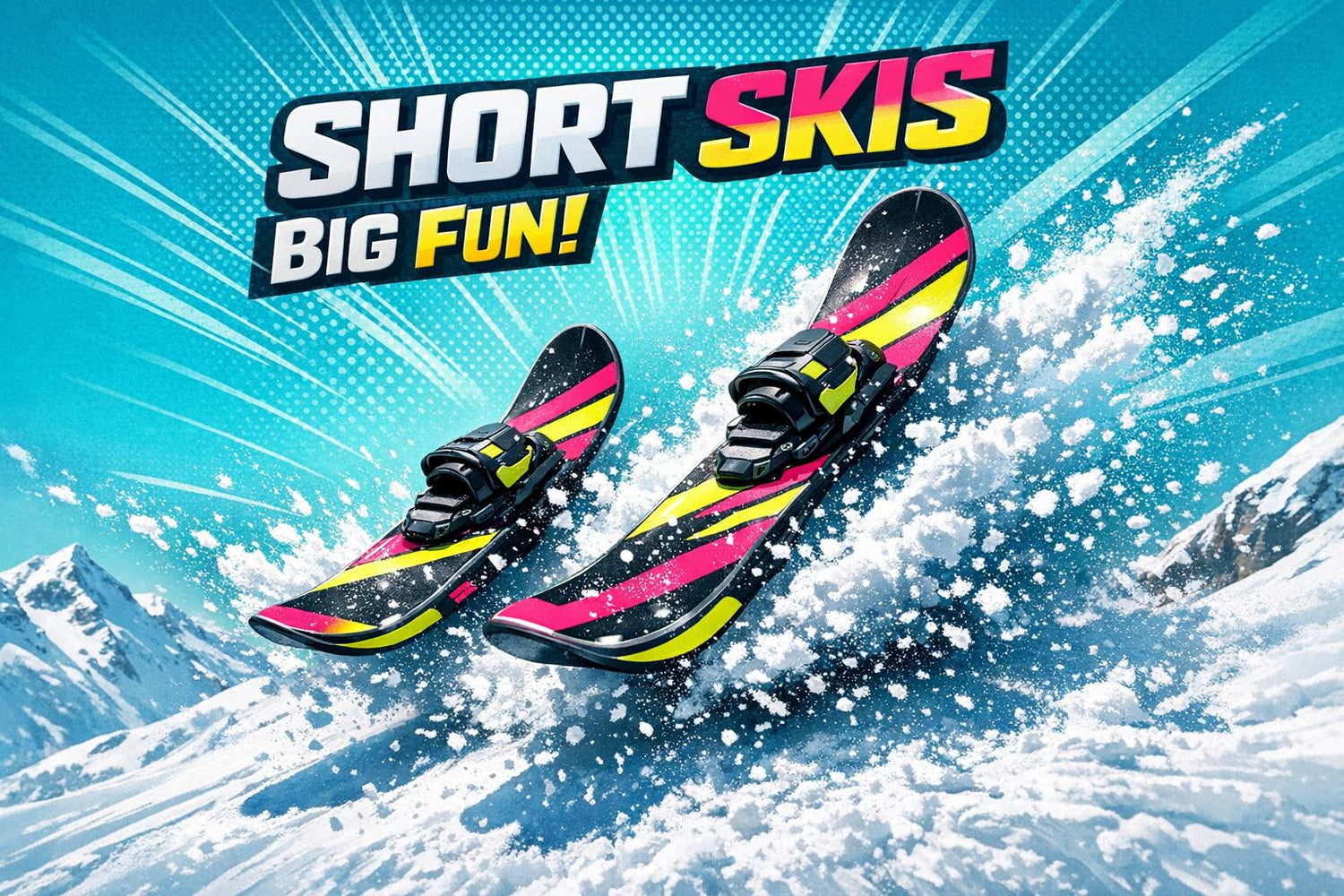
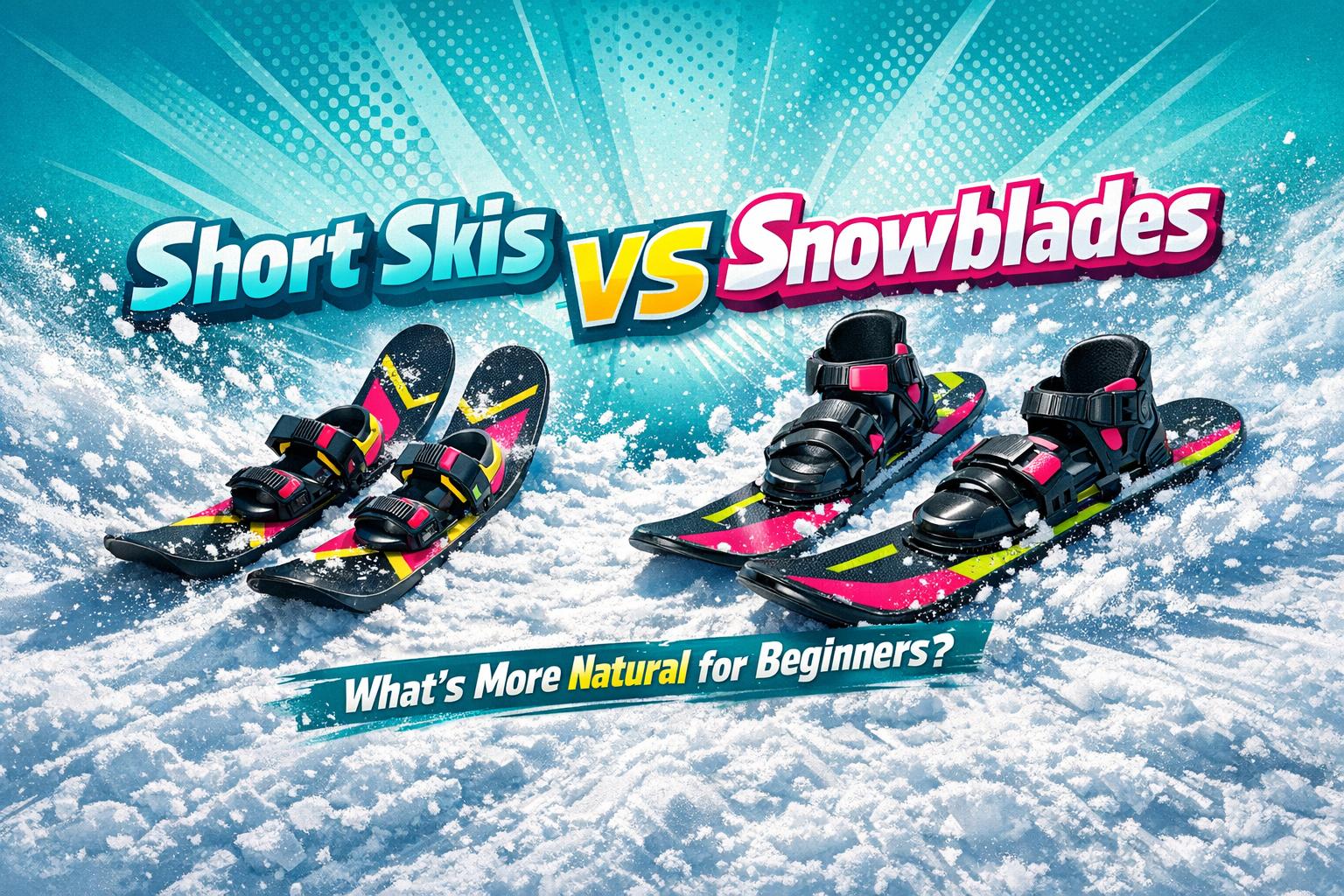
Skiing is changing, and short skis are leading the charge. Here’s why skiers across the U.S. are trading in their long skis for compact models like skiblades, skiskates, and mini ski skates:
- Easy to carry: Short skis fit in a backpack - no roof racks, oversized luggage fees, or bulky storage needed.
- Beginner-friendly: They’re lighter, easier to control, and take just minutes to learn.
- Less strain: Compact skis are gentler on knees and hips, perfect for longer days on the slopes.
- Great for tight spaces: Navigate moguls, tree runs, or crowded slopes with ease.
Brands like Snowfeet* are shaking things up with models designed for both beginners and experts. Whether you’re carving groomers, tackling powder, or trying freestyle tricks, short skis offer a fun and hassle-free alternative.
Ready to ditch the bulk and try something new? Let’s dive in.
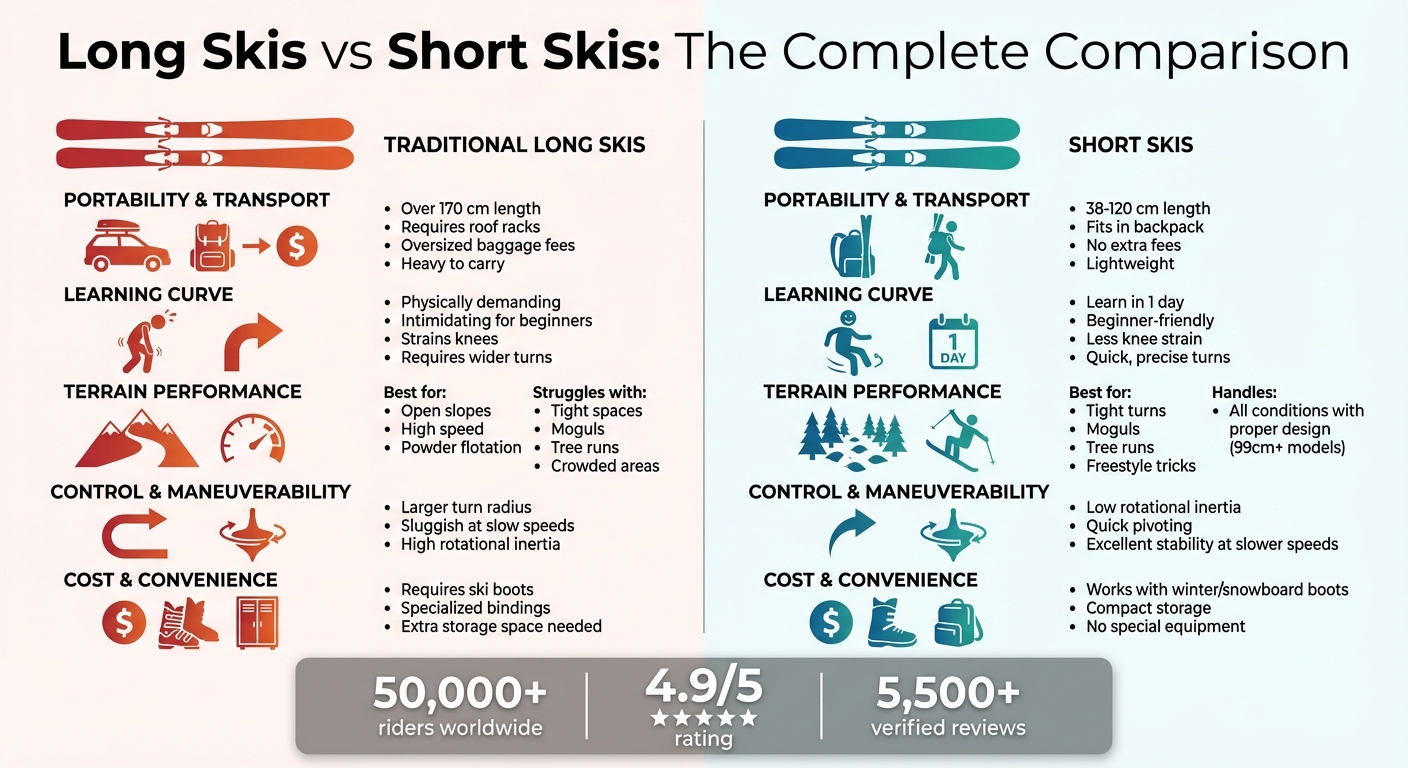
Long Skis vs Short Skis: Key Differences Comparison 2026
Problems with Traditional Long Skis
Dealing with long skis can feel like more trouble than they're worth. They're heavy, stiff, and expensive to manage. Whether you're on the slopes or just trying to get them there, they demand a lot - both physically and financially. These challenges are exactly why compact options like Snowfeet* are becoming more popular.
Difficult to Transport and Store
Transporting traditional skis is a chore. You’ll need a roof rack for your car, extra storage space at home, and be ready to pay those annoying oversized baggage fees when flying. And let’s not forget the weight - it’s no picnic carrying them around. Their higher swing weight makes them awkward to handle, whether you're loading them into your car or hauling them through a parking lot.
Here’s something many skiers don’t know: the advertised length of a ski is based on the "material length" before the ski is pressed into shape. This means your skis could end up being 1 to 3 cm longer than the number on the label. Add that to the hassle, and it's easy to see why beginners might feel overwhelmed before they even hit the slopes.
Harder for Beginners to Learn
Long skis aren’t exactly beginner-friendly. Their size and speed can be intimidating, and they’re physically demanding. As the Snowfeet team explains:
To actually maneuver the long skis is quite strenuous and it strains the knees.
Because they’re heavier and require wider turns, long skis can tire your legs out faster than shorter alternatives. Plus, their bulky feel makes learning less intuitive. Shorter skis, on the other hand, allow for a more natural "skating" motion that feels easier to pick up [2].
Poor Performance in Tight Spaces
Long skis might shine on wide, open slopes, but they’re a headache in tighter, more technical terrain. Their larger turn radius and sluggishness at slower speeds make quick adjustments nearly impossible in crowded areas, mogul fields, or tree runs.
As one review puts it:
With long skis, making those tight turns would feel cumbersome.
Instead of gliding smoothly through varied terrain, you’ll find yourself wrestling with your gear. Loulou Baylis from Dope Snow captures it perfectly:
You'd struggle on a mogul field with long, wide skis meant for fresh pow.
For anyone looking to navigate tricky spots with ease, long skis just don’t cut it.
How Short Skis Fix These Issues
Short skis tackle many of the common headaches that come with traditional skiing. They’re compact, lightweight, and designed to work naturally with your body. This makes them easier to control and a breeze to transport. Snowfeet* has embraced this concept with a product line that’s as practical as it is innovative. Their models can fit in a backpack and attach directly to winter shoes or snowboard boots - skipping the need for bulky ski boots or complicated gear setups.
Easy to Pack and Carry
Say goodbye to roof racks and those dreaded oversized baggage fees. Snowfeet* products, like the 38 cm Mini Ski Skates, are small enough to slide into a standard backpack. The 65 cm Skiblades? They fit neatly in any car trunk - even a compact sedan - without requiring extra equipment. At home, you can stash them in a closet, under a bed, or in your gear bag without eating up precious space.
But portability isn’t their only perk. Short skis also make learning a whole lot easier.
Faster Learning Curve
Beginners often get the hang of short skis in just one day. Take Snowfeet's 65 cm Skiblades, for example. With their lighter weight and tighter turning radius, they allow for quick, precise turns - no wrestling with heavy equipment required.
James Miller, an experienced skier, sums it up perfectly:
Shorter skis accelerate the learning curve - easier to control, quicker to turn, and more forgiving of mistakes.
Their design reduces strain on your knees and makes balancing simpler. The mechanics of speed control - pointing the tips together and pressing the edges - are similar to traditional skiing, but the lighter weight means less fatigue. That adds up to more time on the slopes and less time nursing sore legs.
And the benefits don’t stop there. Short skis shine when it comes to handling tricky terrain.
Better Control in All Conditions
Short skis aren’t just for beginners - they’re a game-changer in places where longer skis often fall short. Tight tree runs, moguls, and crowded slopes are no match for their agility. Thanks to their low rotational inertia, you can pivot quickly and effortlessly, making sharp turns feel like second nature.
While long skis are built for speed and floating on powder, they often sacrifice maneuverability. Snowfeet* flips the script, focusing on precision and control. Lisa Chandler from REI explains it well:
A longer ski in powder yields floatability, yet a shorter ski provides more control and maneuverability.
At slower speeds, short skis offer excellent stability and are more forgiving if you catch an edge, reducing the chance of injuries caused by harsh torque. Whether you’re carving groomers or tackling backcountry trails, Snowfeet* models deliver the kind of responsiveness that makes skiing feel effortless.
Why Snowfeet* Short Skis Stand Out
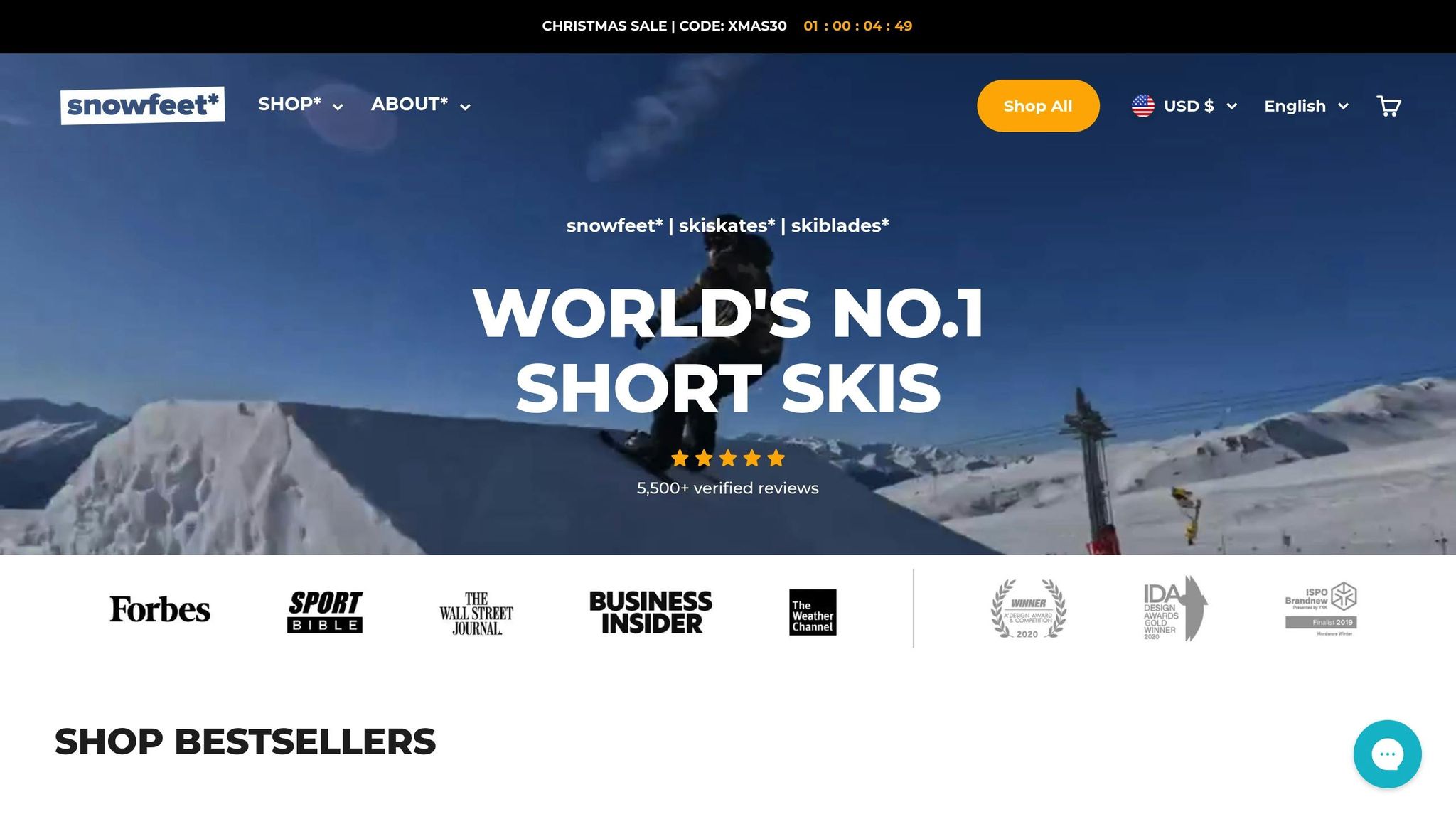
Snowfeet* is shaking up the short ski scene with a focus on versatility, portability, and just plain fun. Recognized as an innovation finalist at ISPO - the world’s largest sports equipment trade show - and a winner of the A'Design Award, Snowfeet* brings a fresh perspective to skiing. Let’s dive into what makes their gear a standout choice for skiers of all levels.
Works for Beginners and Experts
Most ski gear forces you to pick a side - beginner or expert - but Snowfeet* doesn’t play by those rules. Their lineup ranges from the ultra-compact 38 cm Mini Ski Skates to the 120 cm Short Skis, all of which work with your favorite winter or snowboard boots. For beginners, the Carbon Fiber Edition offers a slower, more controlled ride, perfect for building confidence. On the other hand, experienced riders can opt for the 44 cm Skiskates, which feature a wood core for precision and speed on groomed slopes.
Unlike traditional ski brands like Rossignol or Salomon, which often require stiff plastic boots and specialized bindings, Snowfeet* keeps things simple. You can strap on the same comfy snowboard boots you already own or even waterproof winter shoes with solid ankle support. This flexibility means the gear grows with you, whether you’re hitting the slopes for the first time or the hundredth. Plus, it’s incredibly easy to transport - no need to lug around clunky equipment.
Small, Light, and Travel-Ready
Forget the hassle of oversized skis. Traditional options from brands like K2 or Atomic can stretch over 170 cm, but Snowfeet* keeps things compact with lengths ranging from 38 cm to 120 cm [2]. The 38 cm Mini Ski Skates fit neatly into a standard backpack, while the 99 cm Skiblades slide effortlessly into a car trunk - no roof racks or special equipment required.
This lightweight design doesn’t just make life easier; it saves you money. Say goodbye to oversized baggage fees and awkward treks across parking lots with heavy gear. Whether you’re hiking to a remote trail, keeping a pair in your car for impromptu sessions, or packing them for a flight, Snowfeet* makes it all hassle-free [2]. Their compact size turns skiing into an accessible, spur-of-the-moment adventure.
Made for Freestyle and Fun
Snowfeet* takes a playful approach to skiing. The POWDER 99 cm model is perfect for deeper snow while still nimble enough for tricks [2]. Meanwhile, the Skiblades 99 cm are designed for sharp carving and terrain park jumps [2]. Their short length - often called "skates for snow" - makes it easy to transfer inline skating skills to the slopes.
Logan, a professional skater, puts it best:
I can perform all my inline moves seamlessly on these! Boxes and jumps and spins are all fresh and new but familiar enough to learn without bailing too much!
While traditional ski brands focus on speed and stability, Snowfeet* prioritizes maneuverability, creativity, and the sheer joy of riding. It’s a refreshing take that appeals to skiers who want more than just racing downhill. Whether you’re carving, jumping, or just having fun, Snowfeet* makes skiing feel accessible and exciting in any condition.
sbb-itb-17ade95
Common Myths About Short Skis
Short skis often get a bad rap, with some dismissing them as "toy skis" or assuming they force skiers to stick with clunky, oversized gear. Let’s clear up a few of these misconceptions and see how Snowfeet* is changing the game in winter sports.
Myth: Short Skis Are Just for Beginners
Think short skis are only for newbies? Think again. Advanced freestyle skiers and professional slalom racers actually love short skis for their agility. The lighter swing weight and reduced rotational inertia make tricks like spins, flips, and rail slides a breeze. Plus, short skis deliver higher edge pressure per inch, which means better grip on icy runs.
Snowfeet* proves short skis aren’t just for beginners by offering models for every skill level. Take the 44 cm Skiskates, for example. Built with a wood core, they’re rated a perfect 5.0/5 stars and start at $575. These are precision tools for advanced riders looking for speed and control. Then there’s the 99 cm Skiblades, also rated 5.0/5 stars and priced from $675. They’re playful enough for all-mountain fun but designed to reduce strain, making them a great choice for older skiers or anyone cruising at moderate speeds.
And what about the idea that longer skis are more stable? Let’s dig into that next.
Myth: Long Skis Are More Stable
Ski companies often claim that longer skis are better for high-speed stability because they reduce vibrations. But here’s the thing: short skis excel in control and responsiveness, especially in crowded areas or on technical terrain, thanks to their quick turning capabilities.
Snowfeet* uses top-notch materials and smart construction to ensure stability where it matters. For instance, the 99 cm models feature wood cores or fiberglass, which help minimize chatter during regular skiing. The 65 cm Skiblades, priced at $635 and rated 5.0/5 stars, offer fantastic edge control on groomed trails. And when it comes to racing, short skis actually have an edge (pun intended) by cutting down on drag. That’s why many professional slalom racers prefer them for precise edge control in tricky conditions.
Now, let’s tackle the myth that short skis can’t handle powder.
Myth: Short Skis Can't Handle Powder
It’s true that older mini skis (38–50 cm) struggled in powder deeper than 4 inches . But Snowfeet* has flipped the script with their POWDER 99 cm model. Thanks to a wider design and an upward-curved rocker profile, these skis stay on top of deep snow instead of sinking.
The POWDER 99 cm model, rated 5.0/5 stars and priced at $675, delivers solid performance in powder and mixed snow conditions. The rocker profile ensures the flotation you need while keeping the maneuverability that long skis (usually over 170 cm) can’t match in tight, backcountry spots . And for those epic powder days when you want even more surface area, Snowfeet* offers 120 cm Short Skis for $775. They give you the float you need without losing portability or control.
So, whether you’re shredding the slopes or exploring deep snow, short skis are anything but a compromise. Snowfeet* is leading the charge in proving that.
Conclusion
The move to short skis is shaking things up in the world of winter sports. Snowfeet* has taken the limitations of traditional skis and flipped them on their head, offering gear that’s easy to carry, simple to use, and packed with control. And it’s not just talk - riders everywhere are loving the performance and sharing rave reviews.
With over 50,000 riders globally and a stellar 4.9/5 rating from more than 5,500 verified reviews, Snowfeet* is proving that short skis aren’t just a novelty - they’re the real deal [2]. Whether it’s the ultra-compact 38 cm Mini Ski Skates for $250, the all-around 99 cm Skiblades starting at $675, or the 120 cm Short Skis built for powder at $775, there’s a model for every kind of skier. They bring together portability, versatility, and performance in a way that traditional skis simply can’t.
"I really can't see myself picking up skis ever again. They are fast and agile, convenient and light, and great for shreddage." - Logan, Verified User and Pro Skater
So, the choice is yours: stick with clunky, outdated gear or embrace Snowfeet*’s sleek, modern design. Say goodbye to the hassle and hello to fun. Check out Snowfeet*’s full lineup and see why so many skiers across the U.S. are making the switch for 2026.
FAQs
Why do short skis offer better control and easier maneuverability?
Short skis offer better control and make maneuvering a breeze. Their compact design allows for faster edge-to-edge transitions and lets you carve out sharper, more precise turns. Because they concentrate pressure directly on the edges, you’ll get excellent grip and quick responsiveness - especially handy on icy or hard-packed snow. This makes them a top pick for navigating tight spots or tackling challenging terrain with confidence.
On top of that, their lightweight build boosts agility, making them an awesome option for skiers at any skill level. Whether you're weaving through trees or handling tricky descents, short skis - like those from Snowfeet - bring a fun, intuitive, and versatile experience to the slopes.
Are short skis like Snowfeet* good for all types of terrain?
Short skis, like Snowfeet*, are a great choice for groomed trails, packed snow, and terrain parks. They’re super nimble, allowing for quick turns and precise control - perfect for hard-packed surfaces. That said, they’re not the best option for deep powder or off-piste adventures, where traditional skis offer more stability. Thanks to their compact design, these skis shine when it comes to versatility and ease of use on well-maintained slopes.
What makes Snowfeet products better than traditional skis?
Snowfeet products are all about making winter sports simpler and more enjoyable. Unlike traditional skis, they’re super lightweight and compact, which means you can easily toss them in a bag and take them wherever your adventure leads. Plus, there’s no need for specialized gear - you can strap them onto your regular winter boots. No bulky equipment, no hassle.
These are great for beginners, offering easy control and a quick learning curve. But don’t let that fool you - they’re versatile enough to keep experienced skiers entertained too. Whether you’re cruising down groomed slopes or venturing off the beaten path, Snowfeet combines convenience, performance, and a whole lot of fun.











Leave a comment
This site is protected by hCaptcha and the hCaptcha Privacy Policy and Terms of Service apply.