




















Short skis are taking over the slopes in 2026. Why? They’re lightweight, easier to handle, and way more portable. Whether you’re a beginner or just want a fun, hassle-free ride, short skis are winning hearts. Long skis still have their place for speed and deep powder, but for most skiers, short skis are the better pick.
Here’s the quick breakdown:
- Short Skis: Great for quick turns, learning, and casual skiing. Compact enough to fit in a backpack. Work with regular winter boots or snowboard boots.
- Long Skis: Better for high-speed runs and deep powder. More stable but harder to control and transport.
Quick Comparison
| Feature | Short Skis | Long Skis |
|---|---|---|
| Maneuverability | Easy for tight turns | Requires more effort |
| Terrain | Groomed slopes, parks, moguls | Deep powder, wide-open runs |
| Portability | Fits in a backpack | Bulky, needs roof racks |
| Learning Curve | Beginner-friendly | Steeper learning curve |
| Price Range | $250–$775 | $400–$1,200+ |
Short skis, like Snowfeet’s lineup, are changing the game. They’re compact, flexible, and perfect for skiers who value convenience and fun over speed. If you’re ready to ditch the hassle of long skis, short skis could be your next favorite gear.
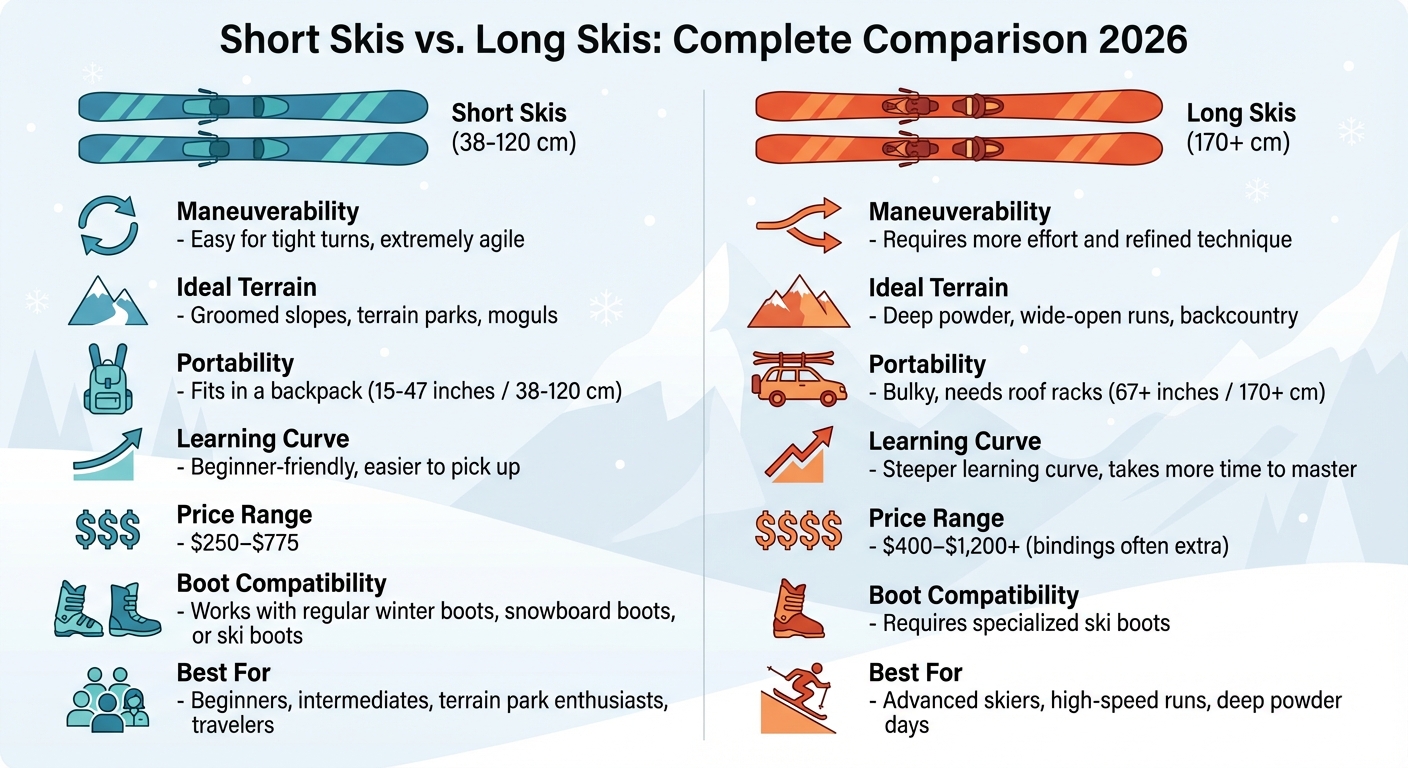
Short Skis vs Long Skis Comparison Chart 2026
Short Skis vs. Long Skis
Performance: How Short Skis and Long Skis Compare
When you're out on the slopes, the difference between short skis and long skis becomes obvious. Snowfeet* short skis offer a completely different ride compared to traditional long skis from brands like Rossignol or K2. For many skiers in 2026, this difference is a game-changer. Let’s break it down.
Maneuverability and Control
Snowfeet* short skis are lighter and far easier to handle, making quick turns a breeze for skiers of all levels. Their shorter length means sharper, faster turns are simpler to pull off, especially for beginners and intermediates who are still finding their groove.
On the other hand, traditional long skis provide more stability at high speeds but demand more effort and skill to control. Mistakes are harder to fix quickly. With Snowfeet* short skis, the learning curve is much gentler. You’ll pick up the basics faster, so you can spend more time enjoying the slopes instead of struggling to master them.
Performance on Different Terrains
Terrain is another area where these skis stand apart. On groomed runs and in terrain parks, short skis shine. Snowfeet* products are nimble and responsive, perfect for tight turns, moguls, and even jumps and rails in the park. Whether you're navigating moguls at Park City or catching air at Vail, short skis give you the edge in control and confidence.
Traditional long skis, however, dominate in specific conditions like high-speed downhill runs and deep powder. Their length offers better stability and float in those scenarios. But for the average skier who sticks to groomed trails, snow parks, and light backcountry terrain, short skis provide a more enjoyable and less exhausting experience.
Portability and Storage
One of the biggest perks of Snowfeet* short skis is how easy they are to carry and store. Standard adult skis typically measure 67 inches (170 cm) or more, while Snowfeet* skis range from just 15 inches (38 cm) for Mini Ski Skates to 47 inches (120 cm) for their longest model. This compact size means you can toss them into a backpack or a small car trunk.
"Compared to long skis, short skis are easier in all means of the word: they feel lighter on your feet, they are easy to carry around, and they are easier to master." - Snowfeet Team
Traditional long skis, by contrast, are heavy and cumbersome, often requiring roof racks or special storage solutions. Snowfeet* short skis eliminate that hassle entirely. You can pack them up and hit the road without the headache of lugging around bulky 67+ inch skis. For skiers in 2026 who value convenience and spontaneity, this portability is a total win. Combine that with their performance, and it’s easy to see why Snowfeet* is becoming the go-to choice for today’s adventurous skiers.
Snowfeet*: Leading the Short Ski Movement
As we move toward 2026, trends in skiing are shifting toward gear that prioritizes agility and fun. At the forefront of this movement is Snowfeet*, a brand that's reshaping the skiing experience with its compact and practical designs. With over 5,500 glowing reviews and an impressive 4.9/5 rating, Snowfeet* is challenging the norms of traditional skiing and offering a fresh take on how to hit the slopes.
Snowfeet* Product Range
Snowfeet* has crafted three main models, each tailored to different skiing styles and skill levels:
- Mini Ski Skates (15 inches/38 cm): These are the smallest and most portable option, easily fitting into a backpack. Perfect for quick park sessions or short rides, they're all about convenience and fun.
- Skiblades (26 inches/65 cm): A middle-ground option that balances portability with performance. These are ideal for carving groomed runs and tackling terrain park features with ease.
- Short Skis (47 inches/120 cm): The longest in Snowfeet*'s lineup, these offer added stability while still being much shorter than traditional adult skis, which typically measure 67 inches (170 cm) or more. Their compact design ensures easy handling and storage without sacrificing maneuverability.
Quick to Learn and Compatible with Multiple Boots
One of the standout features of Snowfeet* is how beginner-friendly they are. Thanks to their lightweight design, you can pick up the basics in just minutes. Plus, they work with a variety of boots - whether it's winter shoes, snowboard boots, or ski boots - so you don’t have to invest in stiff, expensive, specialized footwear. This versatility not only saves money but also eliminates the discomfort many associate with traditional ski boots.
"Far more portable and affordable than traditional skis or snowboards." - Uncrate
Why Longer Skis Aren't Always Better
While traditional skis are often praised for their stability, they can feel cumbersome on groomed runs, moderate slopes, and in terrain parks. Snowfeet* flips the script with a design that prioritizes agility and reduces fatigue, making them perfect for tricks and laid-back skiing.
The industry itself is moving in this direction. Many carving and all-mountain skis are now being made shorter and more playful, with experienced skiers often choosing skis slightly shorter than their height for everyday use. Snowfeet* takes this trend further, offering ultra-compact skis that maximize fun and versatility without the extra length. For skiers in 2026 who want gear that’s easy to handle, convenient to store, and packed with enjoyment, Snowfeet* offers a compelling alternative to traditional setups.
sbb-itb-17ade95
When Long Skis Perform Better
While Snowfeet* is shaking things up for casual skiers, there’s still a solid case for long skis in situations that demand speed and precision. Long skis, typically 67 inches (170 cm) or more, shine in areas where stability and power are key.
High-Speed Runs and Deep Powder
Long skis come into their own on wide-open slopes and in deep powder - think of the expansive terrain at Jackson Hole or Alta in the Western U.S. Their extended length provides unmatched stability when you’re flying down the mountain and helps you float effortlessly in deep snow. By spreading your weight across a larger surface, long skis keep you gliding on top rather than sinking into the powder.
"The faster you like to go (and the more open the terrain is), the more appropriate a longer ski will be." - BLISTER
For those dreamy powder days above the treeline, pairing long skis with a wider waist (115 mm or more) boosts flotation even further, making them a go-to for freeride enthusiasts.
Advanced Freeride and Big-Mountain Skiing
Beyond speed, long skis are a must for navigating steep descents and rugged backcountry terrain. Built with strong wood cores and reinforced with materials like metal, carbon, or flax, these skis are made to handle unpredictable conditions and cut through rough patches with ease.
That said, they’re not for the faint of heart. Long skis are heavier, stiffer, and demand more strength and precision to maneuver. But for taller or heavier skiers - or anyone tackling serious terrain - they offer the power and leverage needed to ski with confidence. If your plans include ungroomed backcountry adventures or pushing the limits of speed, traditional long skis remain the top choice.
How to Choose Between Short Skis and Long Skis
Deciding between short and long skis comes down to your skill level, skiing style, and how you plan to use them.
Who Should Go for Short Skis?
Short skis are a great choice for beginners and intermediate skiers. They’re easier to control, making turns less intimidating and helping you build confidence faster. If you’re just starting out, options like the Snowfeet* Mini Ski Skates (15 inches/38 cm) or the Snowfeet* PRO (20 inches/50 cm) let you focus on learning technique without the added challenge of managing heavy or unwieldy equipment.
For urban skiers or frequent travelers, short skis are a dream. They’re lightweight and compact enough to fit in your backpack or car trunk, making them perfect for quick trips to the slopes or sneaking in some skiing after work. Plus, if you’re a terrain park enthusiast who loves jumps, tricks, and quick turns, short skis bring an extra level of responsiveness and fun.
Here’s how short skis compare to traditional long skis:
Short Skis vs. Long Skis: Side-by-Side Comparison
| Feature | Snowfeet* Short Skis | Traditional Long Skis |
|---|---|---|
| Maneuverability | Extremely agile, great for quick turns | Requires more effort and refined technique |
| Ideal Terrain | Groomed slopes, terrain parks, moguls, even backyards | Deep powder, wide-open runs, backcountry adventures |
| Travel Convenience | Lightweight and fits in a backpack | Bulky; needs a roof rack or ski bag |
| Learning Curve | Easier for beginners to pick up | Takes more time and strength to master |
| Price Range | $250–$775 | $400–$1,200+ (bindings often extra) |
| Boot Compatibility | Works with regular winter boots, snowboard boots, or ski boots | Requires specialized ski boots |
If you’re thinking about making the leap from long skis to short skis, here’s what to expect.
Switching from Long Skis to Snowfeet*
Switching to short skis can feel like a breath of fresh air. They’re quicker to respond and require less effort to turn, which can even help take some strain off your knees. Many seasoned skiers find the adjustment easy, thanks to the muscle memory they’ve built on longer skis.
To get started, stick to familiar, groomed slopes and focus on making shorter, snappier turns instead of the long, sweeping carves you’re used to. With a little practice, you’ll find yourself adapting to the agility of short skis without losing control.
Conclusion: Where Skiing Is Headed in 2026
Skiing is moving toward being more accessible, adaptable, and fun for everyone. Leading this shift are short skis like Snowfeet*, which are quickly becoming a favorite among skiers of all levels.
The trend is clear: skiing is leaning into simplicity and enjoyment. While traditional long skis remain essential for deep powder days and big-mountain adventures, many recreational skiers are gravitating toward gear that’s easier to handle, lightweight, and just plain fun.
Snowfeet* brings a level of practicality that’s hard to beat. Whether you’re a beginner looking for an easy way to get started, an intermediate skier wanting more control on groomed slopes, or someone who loves exploring terrain parks and tight trails, short skis offer unmatched agility and convenience.
"For recreational skiing, short skis are a better choice. They are easier to pack and transport, you can choose the footwear you prefer, and finally, they are easy to use, so you won't end up completely exhausted." – Snowfeet Team
This quote highlights a growing trend among experts who favor shorter, more versatile designs. Advanced skiers are already opting for carving skis shorter than their height to gain better control on groomed runs. The idea that “shorter is better” is catching on as more skiers realize they can achieve top performance without oversized gear.
Looking ahead to 2026, it’s clear that more skiers will embrace the freedom and performance that Snowfeet* short skis provide. The future of skiing is all about speed, simplicity, and pure enjoyment, and Snowfeet* is right at the heart of this evolution.
FAQs
Why are more skiers choosing short skis over traditional long skis in 2026?
Short skis are stealing the spotlight in 2026, and it’s easy to see why. With their lightweight and compact design, they’re a dream to carry, store, and transport - perfect for anyone who loves to hit the slopes without the hassle of lugging around traditional long skis. Plus, they’re easier on the wallet, offering a cost-effective option without skimping on performance.
For beginners, short skis are a game-changer. Their easy maneuverability and responsive handling make learning the ropes a breeze. Turns and stops? Effortless. Advanced skiers and freestyle fans love them too, thanks to their agility for tricks and navigating tight spaces. And here’s the cherry on top: they work with regular winter boots. No need to invest in bulky, pricey ski boots.
Whether you’re carving up the slopes or venturing off-trail, short skis - like those from Snowfeet - bring a mix of convenience and fun that traditional skis just can’t match.
Why are short skis like Snowfeet* a great choice for beginners?
Short skis, like Snowfeet* Skiblades and Skiskates, make learning to ski a lot easier and more fun for beginners. Thanks to their compact size (ranging from 15 to 47 inches), they're lightweight and super easy to handle. This means new skiers can pick up basic turns in just a few hours instead of spending weeks struggling. Since they require less effort to control, beginners can focus on gaining confidence and improving balance without the physical demands of traditional long skis.
Another big perk of Snowfeet* short skis is how portable and convenient they are. Many models are small enough to fit in a backpack, and you can use them with regular winter shoes or snowboard boots - no need to invest in expensive, specialized gear. With prices ranging from $140 to $690, they’re also a budget-friendly alternative to traditional ski setups, making skiing more accessible and enjoyable for newcomers.
What are the benefits of using Snowfeet* short skis compared to traditional long skis?
Snowfeet* short skis bring a fresh twist to skiing, offering some serious perks over traditional long skis. First off, they’re lightweight and super portable. With lengths ranging from just 15 to 47 inches, you can toss them in a backpack or stash them in your car trunk - no need for those bulky ski racks. Plus, their compact size makes turning a breeze, helping beginners gain confidence faster while giving seasoned skiers the agility to nail tricks or navigate tight trails.
Another win? You don’t need specialized gear. Snowfeet* short skis work with regular winter shoes, snowboard boots, or ski boots, saving you from dropping extra cash on fancy equipment. Speaking of savings, they’re way more budget-friendly, with prices between $150 and $690, compared to long-ski setups that can easily top $1,200.
What really sets them apart is their versatility. Whether you’re cruising icy slopes or gliding through light powder, these skis handle it all. Their portability, ease of use, and affordability make Snowfeet* short skis a fun, accessible option for skiers of all levels looking to enjoy the slopes without the hassle.











Leave a comment
This site is protected by hCaptcha and the hCaptcha Privacy Policy and Terms of Service apply.