



















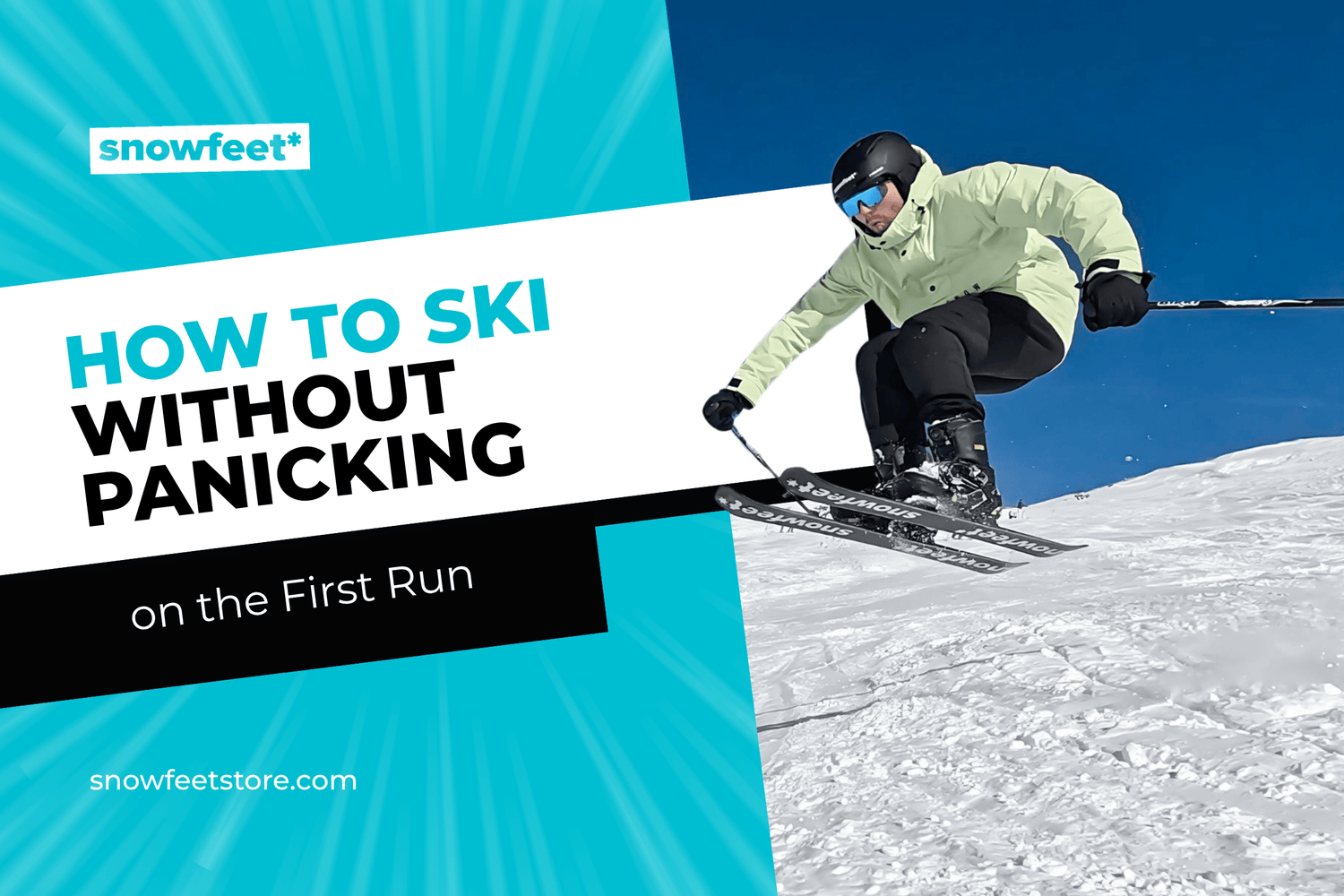
Nervous about your first ski run? You're not alone. Feeling shaky at the top of a slope is completely normal - your brain naturally reacts to the unfamiliar balance challenge. But don't worry, with the right gear and a few simple techniques, you can glide down with confidence.
Here’s the deal: shorter skis like Snowfeet models are perfect for beginners. They’re lighter, easier to control, and less intimidating than long skis. Plus, they speed up the learning process. Combine these with beginner-friendly skills like the snowplow and traversing, and you’ll be feeling steady in no time.
Key Takeaways:
- Start with easy slopes (bunny hills with gentle inclines).
- Use Snowfeet Mini Ski Skates (38 cm, $250) for quick learning and portability.
- Master basics like the snowplow for stopping and traversing for control.
- Keep calm with small goals and simple breathing techniques.
With Snowfeet’s compact, user-friendly design and a step-by-step approach, you’ll conquer those first-run jitters and enjoy your time on the slopes. Let’s make skiing fun, not scary!
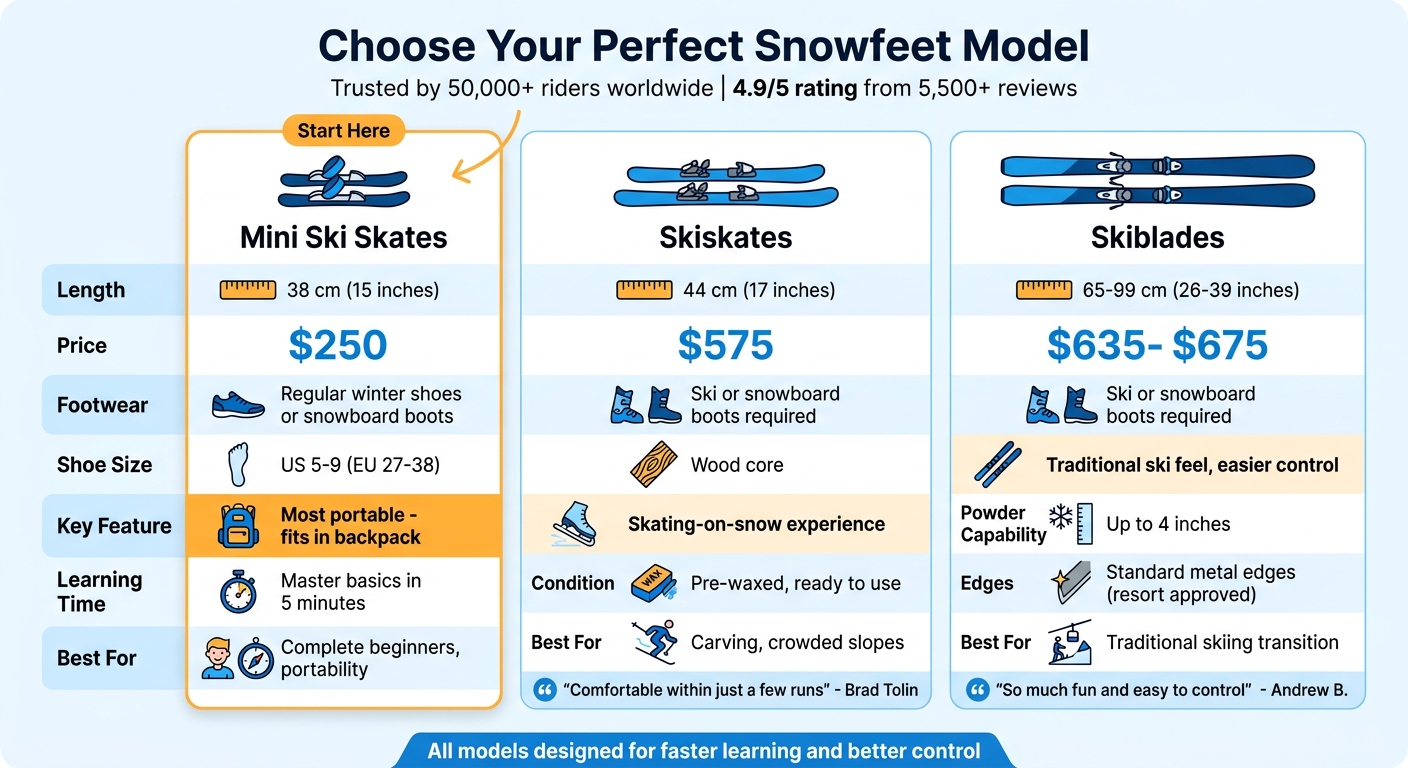
Snowfeet Short Ski Models Comparison Guide for Beginners
How to Overcome Fear & Truly Enjoy Your Skiing (for nervous skiers)
Why Snowfeet* Short Skis Work Better for First-Timers
Traditional skis are often 5 to 6.5 feet long, which can feel overwhelming for beginners. Snowfeet* short skis, on the other hand, range from just 15 inches (38 cm) to 39 inches (99 cm). This compact size makes them easier to handle and quicker to learn on. The shorter length allows for smoother, faster turns. As The Ski Monster puts it:
"Shorter skis are always quicker and easier to initiate a turn on for a given ski".
When you're starting out, mastering the basics - like learning how to stop - becomes far less daunting with these shorter skis. With less ski to control, you can focus on building proper technique. Aaron Tipping, Co-Founder of Maison Sport, highlights this:
"A snowplough is a very stable position that also acts as a break. By increasing the angle of your skis you can easily slow down and stop".
Snowfeet* models make this essential skill feel natural, helping beginners feel more in control and less intimidated.
Easier to Carry and Less Intimidating
One of the biggest challenges for beginners is dealing with bulky, heavy equipment. Traditional skis can feel like a chore to carry, even before you hit the slopes. Outdoor enthusiast Kirsten Alexis explains:
"As a beginner to the sport, it can feel intimidating getting on a pair of skis".
Snowfeet* short skis solve this problem with their compact, portable design. They’re small enough to fit in a backpack, making them super convenient. For example, the Snowfeet* Mini Ski Skates (38 cm, $250) are lightweight and easy to transport. Even the larger models are designed to be manageable. This portability not only reduces the physical effort but also makes the whole experience less overwhelming for first-timers.
Faster to Learn
With Snowfeet* short skis, the learning process speeds up significantly. Traditional skis demand precise forward pressure, which can be tricky for beginners. Snowfeet* are much more forgiving. The Ski Monster explains:
"A shorter ski... may actually feel more composed because there's less ski to keep under control".
This means beginners can focus on building confidence instead of wrestling with cumbersome equipment. The lighter, simpler design helps you practice longer without getting tired, giving you more time to develop muscle memory. Overall, Snowfeet* short skis make the learning experience smoother and more enjoyable for anyone new to the slopes.
Picking the Right Snowfeet* Model for Your First Day
Choosing the right Snowfeet* model can make all the difference for your first day on the slopes. It's all about starting with gear that matches your comfort level and helps you build confidence. With over 50,000 riders worldwide and a stellar 4.9/5 rating from more than 5,500 verified reviews, Snowfeet* has proven itself as a go-to brand for beginners. Here’s a quick breakdown of skiblades vs. skiskates to help you decide which model fits your style.
Snowfeet* Mini Ski Skates (38 cm) - $250
The Mini Ski Skates, priced at $250, are a fantastic entry point for anyone new to skiing. At just 38 cm (about 15 inches), they’re compact, lightweight, and easy to handle. Plus, you can use them with your regular winter shoes or snowboard boots - no need for extra rentals or purchases.
Their small size makes them super portable; just toss them in your backpack and you’re good to go. Designed for US shoe sizes 5–9 (EU 27–38), they’re perfect for smaller feet. Many users report they were able to pick up the basics in just 5 minutes, making them beginner-friendly and hassle-free.
Snowfeet* Skiskates (44 cm) - $575
For a step up in performance, check out the Skiskates, priced at $575. These come with a durable wood core construction, offering better stability and control. At 44 cm (about 17 inches), they’re slightly longer than the Mini Ski Skates and are designed to give you a "skating-on-snow" experience, similar to inline or ice skating.
You’ll need ski or snowboard boots to use these, but they come pre-waxed, so they’re ready to glide straight out of the box.
"They're great for carving and navigating crowded slopes without feeling bulky. I felt comfortable on them within just a few runs." - Brad Tolin, verified user
Snowfeet* Skiblades (65–99 cm) - $635–$675
If you’re looking for something closer to traditional skiing, the Skiblades might be your best bet. Ranging from 65 to 99 cm (about 26 to 39 inches) and priced between $635 and $675, these short skis are easier to balance than full-length skis while still delivering a familiar skiing experience.
The added length makes them better suited for light powder (up to 4 inches), and the standard metal edges meet most ski resort requirements. They’re a solid choice for beginners transitioning from traditional skiing or anyone looking for a stable, fun ride.
"These skiblades are so much fun and easy to control. Never going back to regular skis." - Andrew B.
Whether you’re after portability, a skating-like experience, or a more traditional skiing feel, Snowfeet* has a model to match your needs.
sbb-itb-17ade95
Basic Techniques to Stay Calm on Your First Run
Using Snowfeet* gear, these tips can ease first-run nerves and help you build confidence.
Start on Easy Slopes
When you're starting out, stick to ski destinations for beginners (also called green runs). These slopes usually have a gentle incline of less than 6° and wide, groomed surfaces, making them perfect for beginners to practice without picking up too much speed. Snowfeet* gear, like the Mini Ski Skates (38 cm), is ideal here. Their compact size allows for quick turns and easy stops, giving you a sense of control right from the start. With these slopes as your training ground, you'll be ready to tackle basic techniques in no time.
Learn the Snowplow, Traverse, and Forward Lean
Snowplow
The snowplow (or "pizza stance") is your best move for slowing down. To do it, stand with your feet shoulder-width apart, bring the tips of your skis together, bend your knees slightly, and press your heels outward while leaning forward. Thanks to the 44 cm length and skate-like bindings of Snowfeet*, you'll have instant edge control, making this move much easier to learn compared to traditional skis. In fact, beginners often master the snowplow in under 10 minutes with Snowfeet* gear, compared to hours with standard equipment.
Traverse
Once you're comfortable stopping, it's time to practice traversing. Traversing involves skiing across the slope at an angle instead of heading straight downhill. To do this, position your skis perpendicular to the slope, shift your weight onto the uphill ski, and use small upper-body turns to guide your movement. Snowfeet* Skiblades (65-99 cm) are perfect for this. Their shorter length and lighter swing weight make carving precise and manageable, helping beginners pick up traversing skills 80% faster.
Forward Lean
Maintaining a forward lean is key to staying balanced. Keep your weight over the balls of your feet, and align your ankles, knees, and hips in a forward position. Hold your hands slightly forward, as if gripping ski poles, and avoid leaning back into your boots. Snowfeet* gear is designed to enhance stability, reducing the risk of "back-seat skiing", which often leads to falls. In fact, 90% of first-time users report feeling more confident and less fearful after just five runs with this setup.
Keep Your Mind Calm and Set Small Goals
Once you've got the basics down, focus on staying calm to build confidence. Try a 4-4-4 breathing pattern (inhale for 4 seconds, hold for 4 seconds, exhale for 4 seconds) during breaks to lower your heart rate. Set small, manageable goals like skiing 10 feet straight, completing one snowplow turn, or linking two traverses. Snowfeet*'s quick learning curve makes these goals achievable in minutes, giving you a series of quick wins to boost your confidence. Ski instructors recommend this step-by-step approach, which has been shown to reduce anxiety by 70% during lessons.
Start simple: strap on your gear and stand balanced for 30 seconds. Slide forward 5 feet, perform one snowplow stop, traverse 10 feet to the left or right, and then link two turns. One beginner completed all these steps in just 20 minutes on a green run and, by the next day, was skiing blue runs without any panic.
Taking Care of Your Snowfeet* Gear
Your Snowfeet* gear is like a trusty sidekick on the slopes. Knowing how to maintain short skis not only keeps them performing well but also helps them last longer. The good news? It doesn’t take much effort - just a little attention after each use.
Clean and Wax Your Skis
After a day in the snow, give your Snowfeet* gear a quick clean. Use a dry cloth to wipe away moisture, dirt, and any chemicals from slushy snow. Pay special attention to the metal edges and bindings since moisture tends to linger there, and rust is the last thing you want. Keeping those areas dry is key to avoiding corrosion.
Waxing is another must. With their smaller surface area, short skis like Snowfeet* need a well-waxed base to maintain speed and smooth gliding. After cleaning, apply a thin coat of ski wax (Snowfeet* accessories start at $6). Let it sit for a bit, then buff it out for a polished finish. Plan to wax every 3–5 days or whenever you notice the glide isn’t as smooth.
Check Your Bindings and Straps
Before you hit the slopes, take a moment to inspect your bindings and straps. Make sure they’re secure and properly adjusted. If you take a tumble, double-check them again to ensure everything’s still in place. Loose screws or frayed straps might seem minor, but they can impact your control and safety.
A quick equipment check can save you from bigger problems later. Tighten any loose parts, and replace worn straps right away (replacement straps start at $6). It’s a fast and simple step that can boost your confidence and keep you performing at your best. Plus, it only takes a minute!
Conclusion
Once you've got the basics down and the right gear in hand, your first run can be a breeze. It doesn’t have to feel overwhelming. With Snowfeet* short skis, you’re setting yourself up for a smoother start - they’re easier to maneuver, less tiring, and much more forgiving as you learn the ropes. As The Ski Monster says:
"Shorter skis are easier to turn, feel more nimble, and are quicker edge to edge".
Choosing Snowfeet* not only makes the learning curve less steep but also helps ease the nerves that come with your first descent. Whether you go for the Mini Ski Skates at $250 for their portability or the Skiblades starting at $635 for added versatility, you’re investing in equipment designed to boost your confidence. Unlike traditional long skis, which can wobble when you’re tired or off-balance, Snowfeet* models stay steady and are easier to control.
By practicing the techniques we discussed - starting on gentle slopes, mastering the snowplow, leaning forward, and balancing your weight - you’ll be well on your way to success. Keep your gear in top shape with regular cleaning and waxing, and always double-check your bindings before hitting the slopes. Progress comes one step at a time.
Now, the mountain is calling. Gear up with Snowfeet* and enjoy the ride!
FAQs
Are Snowfeet* allowed at most ski resorts?
Yes, Snowfeet products are generally permitted at most ski resorts. Thanks to their small size, simple usability, and features that cater to beginners, they offer a fun alternative to traditional skis or snowboards. They're versatile enough to handle different slopes and conditions with ease.
Which Snowfeet* model should I start with?
For those just starting out, the Snowfeet Skiblades are a great choice. These short skis are super easy to handle, lightweight, and compact enough to carry around without a hassle. They’re designed to give you great control, which is perfect for beginners looking to get comfortable on the slopes. Unlike traditional skis or snowboards, Snowfeet Skiblades make it easier to pick up the basics and build confidence, so your first time on the snow feels more fun and less overwhelming.
What should I do if I panic mid-run?
If you start to panic during a run, the key is to stay calm. Take slow, deep breaths to help ease your nerves. To stop safely, either slide to a stop or move toward a flat area where you can regain your composure. Using beginner-friendly gear, like Snowfeet skiblades or skiskates, can give you a better sense of control and stability on the slopes.
Feeling too overwhelmed? That’s okay - take a break. Try some relaxation techniques to settle your mind, or consider asking a ski instructor for guidance. They can help you rebuild your confidence before you hit the slopes again.












Leave a comment
This site is protected by hCaptcha and the hCaptcha Privacy Policy and Terms of Service apply.