



















Learning to ski but nervous about going too fast? You're not alone - many beginners feel overwhelmed by even moderate speeds. The good news? You can build confidence and control with the right approach and gear. Short skis, like Snowfeet Skiblades and Skiskates, make skiing easier by keeping speeds manageable and turns more intuitive. Here's how to get started:
- Start Small: Use ultra-short Skiskates (44 cm) on gentle slopes to practice gliding and balancing.
- Build Skills Gradually: Transition to slightly longer Skiblades (65 cm) to refine posture and learn basic turns.
- Control Speed: Practice linked turns and speed management with 99 cm Skiblades on steeper slopes.
- Level Up: Move to 120 cm Skis for smoother runs and improved stability.
The key? Focus on mastering balance, turns, and stops before worrying about speed. Short skis are lightweight, portable, and easier to control, making them perfect for beginners. Plus, you can pair them with regular winter boots for a hassle-free experience. Take it step by step, and soon, skiing will feel less intimidating and way more fun. :)
HOW TO CONTROL YOUR SPEED WHEN SKIING | How to slow down, control your speed and remain in balance
Why Snowfeet* Skiblades and Skiskates Work Better for New Skiers
Snowfeet* products simplify skiing for beginners by addressing common challenges that can make learning intimidating. Their design prioritizes ease of use and control, making them a great choice for those just starting out.
Shorter Length Equals Easier Control
The shorter design of Snowfeet* Skiblades and Skiskates makes turning and controlling speed a breeze. These products respond quickly to movements, allowing for smooth, effortless turns. Skiskates, in particular, mimic the natural motion of skating, which feels more intuitive than traditional skis. Plus, techniques like hockey stops or heel braking are simpler to execute thanks to the lighter, more compact equipment. And if you do take a spill, the shorter length reduces leverage, which can help lower the risk of injury.
"Super easy to control, quick to turn, and way more forgiving than traditional skis. They're great for carving and navigating crowded slopes without feeling bulky." - Brad Tolin
This combination of responsiveness and ease of use helps new skiers gain confidence quickly, making the learning process smoother and less intimidating.
Lightweight and Portable
One standout feature? You can toss Snowfeet* products into a standard backpack. No need for clunky ski bags or complicated logistics - just pack them up and head out. With over 50,000 riders worldwide and more than 5,500 reviews averaging 4.9/5 stars, it's clear that their portability is a big draw for beginners.
Adaptable to Various Terrains and Snow Conditions
Snowfeet* gear works on a variety of surfaces, from ski slopes and snowparks to sledding hills - and even your backyard! Beginners are encouraged to start on groomed trails for better control, but the versatility of these products allows for experimentation as confidence grows.
- Skiskates (44–50 cm, about 17–20 inches): Perfect for portability and skating-style movements.
- Skiblades (65 cm, roughly 26 inches): Strike a balance between skating and traditional skiing.
- Longer Skiblades (99–120 cm, around 39–47 inches): Offer added stability for carving on slopes.
Another major perk? You can pair Snowfeet* with regular winter shoes, snowboard boots, or ski boots. The company even claims that beginners can grasp the basics in just 5 minutes, a stark contrast to the hours often needed with traditional skis. This adaptability and user-friendly design make Snowfeet* a fantastic option for new skiers looking for a fun, low-pressure way to hit the slopes.
How to Learn Skiing Without Fear of Speed: A Step-by-Step Method
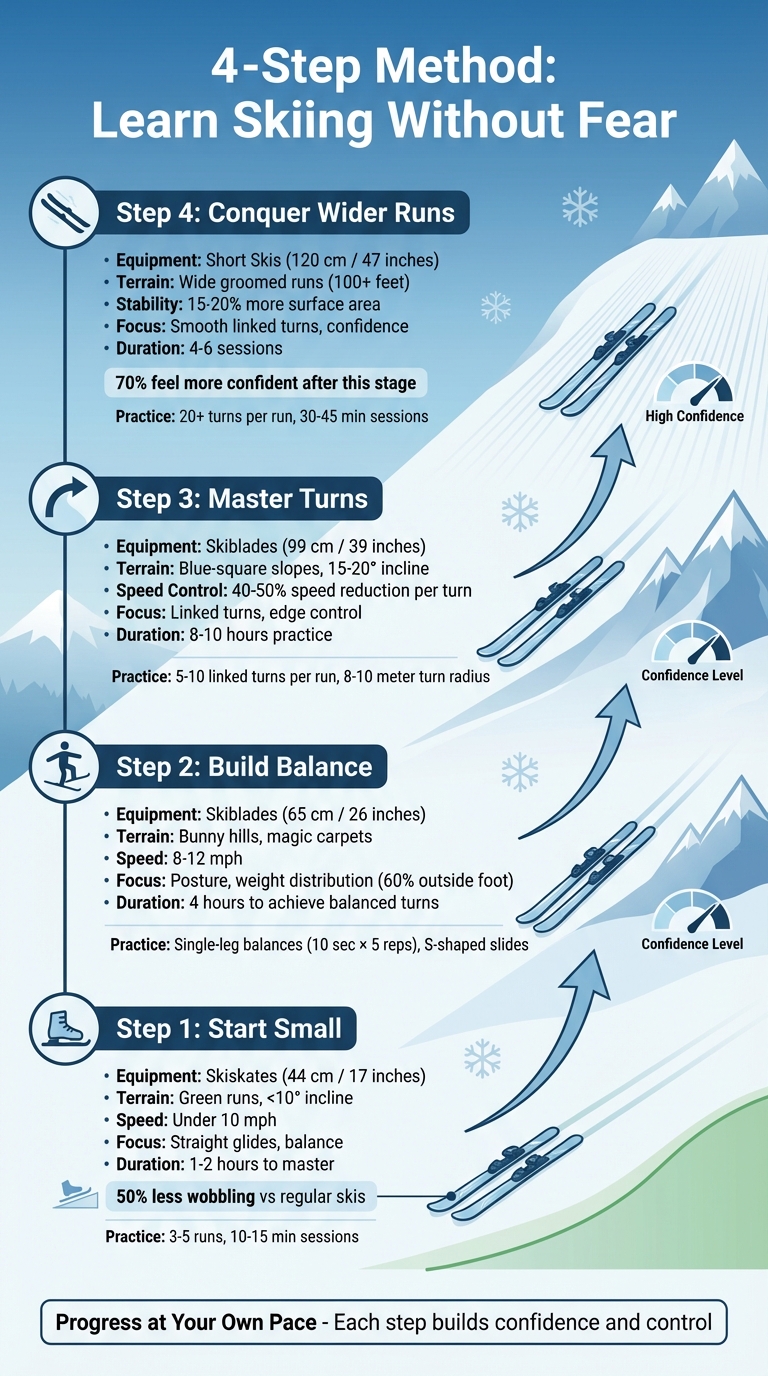
4-Step Progression Guide for Learning to Ski Without Fear Using Short Skis
If speed on the slopes makes you nervous, don’t worry - you’re not alone. Snowfeet* offers a way to ease into skiing without the overwhelm. By taking gradual steps, you can build confidence and skills at your own pace. Here’s a method to help you go from beginner to confident skier, all while keeping fear in check.
Step 1: Start Small with Snowfeet* Skiskates (44 cm)
Begin on easy, beginner-friendly slopes (green runs) with a gentle incline of less than 10°. Use Snowfeet* Skiskates, which are only 44 cm long and designed to keep your speed manageable - under 10 mph. Their short length and skate-like design create natural drag, and the wider base (4–5 inches) helps reduce wobbling by about 50% compared to regular skis.
Focus on straight glides first. Stand with slightly bent knees, arms forward, and practice sliding in a straight line without turning. Start with short, stationary slides and gradually increase to 20–30 foot runs. Aim for 3–5 runs in 10–15 minute sessions. Most beginners get the hang of this within 1–2 hours.
Once you’re comfortable gliding, it’s time to improve your balance and posture.
Step 2: Build Balance and Technique with Snowfeet* Skiblades (65 cm)
After mastering the basics, move up to the 65 cm Skiblades. These are perfect for refining your posture and balance. Keep your weight centered over your midfoot, with your hips aligned over your ankles. Face your upper body downhill and keep your hands in front for stability. When turning, shift about 60% of your weight to your outside foot.
To build muscle memory, practice single-leg balances (10 seconds per leg, 5 reps), side-to-side weight shifts on flat terrain, and slow S-shaped slides (garlands). Stick to bunny hills or use magic carpets, where speeds naturally stay between 8–12 mph. Many beginners can achieve balanced turns within about 4 hours at this stage.
Once your balance feels solid, you’re ready to tackle turning and speed control.
Step 3: Learn Turns and Speed Control with Snowfeet* Skiblades (99 cm)
Now it’s time to hit blue-square slopes with a steeper incline (15–20°). Use the 99 cm Skiblades to practice linked turns, which are key to controlling speed. To turn, rotate your upper body in the direction you want to go and tip the blades onto their edges by rolling your ankles instead of bending your knees.
For sharper turns, apply pressure to the front of the ski to carve an arc (radius 8–10 meters). If you’re going too fast, use a technique called “speed scrubbing” - release the edges to create a skid-stop, which can reduce your speed by 40–50% with each turn. Practice 5–10 linked turns per run to develop a steady rhythm. Instructors report that this method significantly reduces falls for beginners. After 8–10 hours of practice, most skiers feel ready to take on wider slopes.
Step 4: Conquer Wider Runs with Snowfeet* Short Skis (120 cm)
Finally, transition to the 120 cm Short Skis. These offer more surface area (15–20% more than the 99 cm Skiblades), improving stability and float on wider, groomed runs over 100 feet across. The rocker tips make it easier to initiate turns, and at under 5 lbs each, they’re lightweight and easy to maneuver.
Start on gentle blue runs and progress to intermediate greens, practicing linked turns for 30–45 minutes per session. Aim for 20+ turns per run to build confidence. According to Snowfeet* users, 70% feel more confident after just 4–6 sessions at this stage, and many find transitioning to traditional skis a breeze.
sbb-itb-17ade95
How to Build Confidence and Enjoy Learning to Ski
Skiing should be fun, not a source of stress. The mental game is just as important as the physical skills. Here's a cool fact: at just 10 mph, skiing can feel much faster because you're so close to the ground. Understanding this can help calm those first-time jitters. Once you're aware of this, you can use simple techniques - like controlled breathing - to stay calm and focused.
Use Breathing Techniques to Stay Calm
Your breathing has a big impact on how you feel on the slopes. Try this: breathe in for 4 seconds, hold it for 7 seconds, and then slowly exhale for 8 seconds. This type of breathing can help your body relax naturally. Whether you're about to start a run or feeling tense halfway down, this technique keeps your muscles loose and your mind clear.
Set Small Goals and Celebrate Progress
Learning to ski is more manageable when you break it into smaller steps. Instead of worrying about tackling a whole mountain, focus on specific goals like making smooth turns or stopping steadily. Celebrate small victories - like your first controlled stop or a balanced turn. These milestones will build your confidence and help you progress. Remember, the goal isn’t about going fast; it’s about mastering the basics like turning, stopping, and shifting your weight.
As your skills improve, shifting your attention to enjoying the experience will naturally boost your confidence.
Make Learning Fun with Snowfeet* Gear
Snowfeet* gear makes skiing feel less intimidating and more enjoyable. Their skiskates and skiblades are compact and designed to limit speed, so you can focus on technique and having fun. Plus, their lightweight and portable design makes it easy to move between slopes, which helps reduce fatigue and keeps the experience lighthearted. The slower pace adds an extra layer of control, making it easier to build confidence while having a great time.
Conclusion
The right gear can turn uncertainty into confidence. Learning to ski doesn’t have to be about managing fear - it’s about starting with equipment that helps you build skills at your own pace. Snowfeet* Skiblades and Skiskates are designed to give you the control you need to focus on mastering the basics: smooth turns, reliable stops, and steady balance - without worrying about runaway speed.
For beginners, even a modest 6–12 mph can feel much faster than it sounds. That’s why shorter skis can be a game-changer. Snowfeet* gear lets you zero in on the essentials without the intimidation that often comes with traditional long skis. Their compact design makes it easier to initiate turns and stop quickly, helping you build confidence as you go.
As Fitness Health wisely puts it, "Speed is thrilling, but control is paramount."
From the 44 cm Skiskates, perfect for finding your balance, to the 120 cm Short Skis for tackling wider runs, Snowfeet* helps you take control of your learning journey, one step at a time.
Lightweight and easy to carry, Snowfeet* gear isn’t just about improving your control - it’s about making skiing more accessible and enjoyable. Whether you’re switching terrains or storing your gear, the compact design makes life simpler. While traditional skis may rely on length for stability, Snowfeet* delivers a more fun, freeing experience and builds confidence faster.
With Snowfeet*, every slope becomes a place to grow, learn, and enjoy the ride.
FAQs
How do I choose the right Snowfeet* length to start with?
For those just starting out or feeling a bit unsure about speed, it's a good idea to begin with shorter Snowfeet* Skiblades, like the 65 cm or 99 cm options. These shorter lengths are easier to handle, giving you better control and helping to build your confidence. They're also a safer choice for beginners.
Once you feel more comfortable and have some experience under your belt, you might want to try the longer 120 cm Skiblades. These provide greater stability, especially when you're cruising at higher speeds. Plus, Snowfeet* products are designed to offer more control compared to traditional skis, making them perfect for learning in a more relaxed, worry-free way.
Can I use Snowfeet* with regular winter boots on resort slopes?
Snowfeet* Skiblades and Skiskates work well with standard winter boots, which makes them a solid choice for beginners. They offer more control and a safer experience compared to regular skis, particularly on easier slopes. Just make sure to double-check the rules at your ski resort to confirm they're permitted.
What should I do if I panic when I start picking up speed?
If you feel panicked when picking up speed, try to stay calm and resist the urge to stop suddenly - this can actually make your fear worse. Instead, stick to gentle slopes and use beginner-friendly gear like Snowfeet Skiblades or Skiskates. These are easier to manage and safer compared to traditional skis or snowboards. Work on finding a steady rhythm, making controlled movements, and building your confidence little by little. Over time, you'll feel more comfortable handling speed.











Leave a comment
This site is protected by hCaptcha and the hCaptcha Privacy Policy and Terms of Service apply.