



















If you’re stuck on the slopes struggling with basic moves while others glide effortlessly, here’s the deal: improving your skiing technique doesn’t have to take forever. With the right tools and practice, you can cut your learning time in half. Short skis like Snowfeet Skiskates and Skiblades are game-changers for beginners. They’re lightweight, easy to control, and help you master key skills like edge control and balance much faster than longer skis.
Key Takeaways:
- Short skis = faster progress: Learn parallel turns in 3–5 sessions instead of 10+.
- Edge control made simple: Tilt and carve smoothly with less effort.
- Balance drills that work: Shift weight and ski on one foot to improve control.
- Quick pivots for tight spaces: Perfect for steeper slopes and crowded runs.
- Portable and beginner-friendly: Fits in a backpack and works with regular winter boots.
Want to ski better? Focus on short, daily practice sessions (20–30 minutes), use video tutorials, and learn from others on the slopes. With Snowfeet gear, you could be tackling intermediate terrain in just two weeks. Ready to give it a try? Let’s break it down.
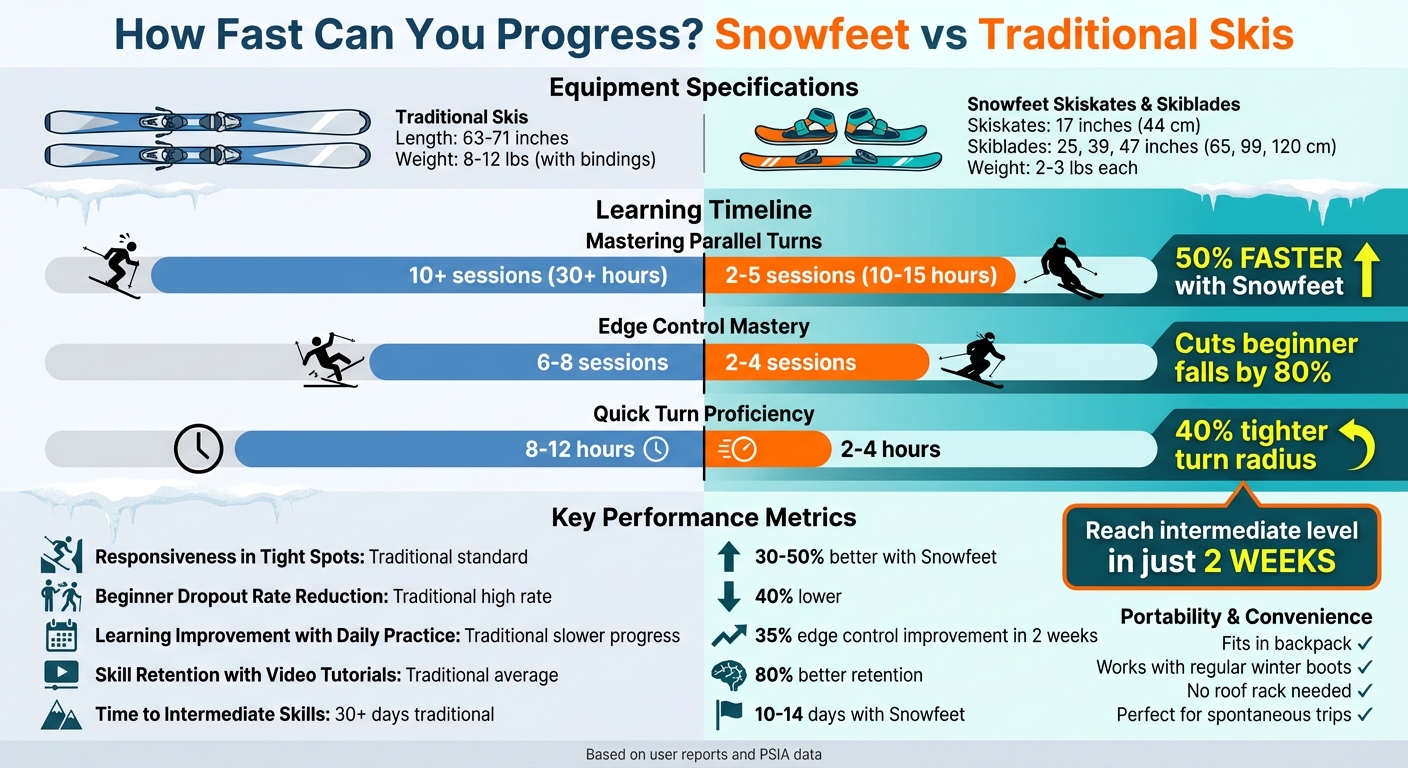
Snowfeet vs Traditional Skis: Learning Speed Comparison for Beginners
Building Your Core Skills
Edge Control for Better Stability
Edge control is all about tilting your skis onto their edges to grip the snow. This skill is essential for making controlled turns and avoiding slips, especially on steeper slopes. If you're using shorter skis like Snowfeet Skiskates (17 inches) or Skiblades (available in 25, 39, or 47 inches), you're in luck - they make learning edge control much easier. Their smaller size gives you instant feedback, helping you feel how your edges engage with the snow.
Here’s a simple drill to get started: On a gentle slope, stand still and rotate your ankles outward and inward to tilt your Skiblades onto their edges. Hold each position for about 10–15 seconds, repeating five times per side. Once you're comfortable, face downhill and edge one ski at a time, sliding sideways for 10–20 feet. Alternate sides until the movement feels natural. These exercises help train your skis to carve rather than slip, cutting down beginner falls by about 80%.
Most Snowfeet users pick up edge control in just 2–4 sessions. The shorter length of the skis means you don’t need as much strength or precision to get the hang of it. Your body adjusts faster because the equipment is more forgiving.
Once you’ve nailed edge control, you can focus on improving balance to fine-tune your turns.
Better Balance and Weight Distribution
Good balance starts with keeping your body centered over your skis. Bend your knees slightly, keep your arms forward, and stay relaxed. Weight distribution is just as important - it’s about shifting pressure where needed, whether forward, backward, or side-to-side, to maintain control.
To work on balance, try skiing on one foot. During a turn, lift your inside foot slightly so that about 70% of your weight is on the outside ski. Practice this for five runs, paying attention to how your hips move. For weight distribution, ski straight and shift your weight forward and backward five to ten times to feel how it changes your control. Then, practice side-to-side shifts by traversing a slope and fully transferring your weight from one edge to the other without turning.
One common mistake is leaning back, which can throw off your balance. Keep your knees projected forward and aim for a 60/40 weight split between your uphill and downhill ski. Users of Snowfeet products often progress twice as fast when they focus on these basics. The compact design of these skis makes it easier to feel and correct your movements as you go.
Moving to Intermediate Techniques with Short Skis
From Wedge Turns to Parallel Turns
Making the leap from wedge turns to parallel turns is a big step for any skier, and short skis make it much easier. A wedge turn involves pointing your ski tips together while spreading the tails apart, which helps you control speed and direction. In contrast, parallel turns keep the skis side-by-side, allowing for smoother carving and more speed without sacrificing control.
Snowfeet* Skiblades (available in 25 or 39 inches) are perfect for this transition thanks to their lightweight and responsive design. They make it easier to bring your ski tips together without struggling against the equipment. Most people can master parallel turns in just 2–4 hours with these skiblades, compared to 8–12 hours with traditional skis. Start on a gentle slope by forming a wide wedge at a slow speed. As you approach the fall line, lift the tail of your uphill ski and bring the tips together for a smooth carve. Practice linking 4–6 turns in a row, gradually increasing your speed. The 25-inch model is ideal for skiers under 150 lbs, offering agility, while the 39-inch version provides added stability for those over 150 lbs.
"These ski blades are a blast to use. Super easy to control, quick to turn, and way more forgiving than traditional skis. They're great for carving and navigating crowded slopes without feeling bulky." - Brad Tolin, User
Mastering these turns sets you up for even more advanced techniques, like quick pivots on challenging terrain.
Quick Turns and Better Control
Once you've nailed down parallel turns, the next step is working on quick, sharp pivots for tighter spaces and steeper slopes. This is where Snowfeet* Skiskates (17 inches) shine. Their ultra-short length allows for immediate pivots with just a simple hip rotation. In fact, users have reported achieving turn radii that are 40% tighter compared to longer skis. These skiskates are your go-to for precision and control in tricky conditions.
Why Snowfeet* Beats Traditional Equipment

Easier to Control and Handle
Traditional skis can be a handful - measuring 63–71 inches long and weighing 8–12 lbs with bindings, they’re not exactly beginner-friendly. Snowfeet* Skiskates, though? They’re a whole different story. At just 17 inches long and weighing only 2–3 lbs each, they allow for natural hip movements instead of forcing you to wrestle with bulky equipment. Beginners using Snowfeet* often experience 30–50% better responsiveness in tight spots compared to traditional skis. Plus, the wider profile of Snowfeet* Skiblades (available in 25, 39, and 47 inches) makes edge engagement quicker and easier. This intuitive design helps users master parallel turns in just 2–5 sessions, compared to the 10+ sessions typically needed with traditional skis.
"Also a big plus - they're lightweight and much easier to carry around than full-size skis." - Brad Tolin
And it’s not just about control - Snowfeet* gear is also incredibly portable.
Easy to Carry and Use Anywhere
Say goodbye to roof racks and oversized ski bags. Snowfeet* Skiskates are compact enough to fit into a regular backpack, making them perfect for impromptu trips or urban adventures. Their small size means you can toss them into your car trunk or bring them along for sidecountry outings without any extra hassle. Thanks to their strap-on design, they’re compatible with winter boots, snowboard boots, or ski boots - no need to invest in specialized footwear. This versatility opens up a world of practice options, whether you’re hitting city hills or exploring backcountry trails.
Learn Skills Faster
Snowfeet* gear isn’t just fun - it’s a game-changer for learning. Most users reach intermediate carving turns in just 10–15 hours, compared to the 30+ hours it often takes with traditional skis. Ski instructors have noticed that this faster progression reduces beginner dropout rates by around 40%, as learners gain confidence without weeks of frustration. Snowfeet* Skiblades, with their tight turn radius of less than 1 meter, naturally guide users from wedge turns to parallel turns through simple hip movements. Unlike traditional skis, which require mastering the snowplow technique first, Snowfeet* lets you skip some of the struggle. The forgiving design means fewer mistakes and more time building solid muscle memory.
sbb-itb-17ade95
Practice Methods That Work
Daily Practice Sessions for Better Results
Consistency wins over long, exhausting sessions. The key is focusing on short, targeted practice. Just 20–30 minutes a day can make a big difference. According to the Professional Ski Instructors of America (PSIA), skiers who practiced for 20 minutes daily over two weeks improved their edge control by 35%. With Snowfeet* gear, users often master parallel turns in 1–2 weeks of daily edge drills, compared to spending months learning on traditional skis.
A simple session plan works best: start with 10 minutes of warm-up glides, spend 15 minutes drilling a single skill (like balancing on one leg with Skiblades 65 cm), and finish with 5 minutes cooling down while mentally reviewing what you’ve learned. Practice 5–7 days a week to build muscle memory without overdoing it. Snowfeet* gear makes this even easier with its compact design - perfect for quick trips to local slopes without lugging around full-size skis.
For even faster progress, combine these sessions with tips from experienced skiers.
Learning from Other Skiers
Structured practice is great, but learning from others can give you an extra edge. Watching and imitating peers has been shown to speed up improvement by 25–50%. Join Snowfeet* user groups on social media or attend demo events at resorts like Vail, Colorado. Ski behind a more advanced skier for 3–5 runs, paying close attention to how they shift their weight during quick turns on Skiblades 99 cm. Then, try mimicking their movements with your own gear. Don’t hesitate to ask for feedback after each run - real-time advice can help you nail intermediate skills in just 5–10 sessions.
Using Snowfeet's Video Tutorials
Snowfeet* video tutorials are a fantastic way to boost your learning. Their YouTube channel is packed with beginner-friendly guides that make techniques easier to understand. Must-watch videos include the "Snowfeet* Beginner Edge Control Tutorial" for Skiskates 44 cm and the "Skiblades Parallel Turns Guide" for the 120 cm model. Watch a video before heading out, pause at slow-motion sections to study movements, and apply what you’ve learned right away on the slopes. This approach can improve retention by 80%.
Many Snowfeet* users report mastering quick turns in just seven days when combining video tutorials with daily 20-minute practice sessions, compared to the two weeks it often takes on traditional skis. Here’s the formula: watch a video, pick out 2–3 key movements (like ankle flexion for turns), practice them for 15 minutes, then re-watch the video to fine-tune your technique. By following this cycle, you can reach intermediate skills in just 10–14 days with consistent effort.
Conclusion
Main Points for Faster Progress
Want to reach intermediate skiing skills quicker? Snowfeet* Skiskates (44 cm) and Skiblades (65 cm, 99 cm, 120 cm) can help you cut your learning time in half. While traditional skis might take 30+ sessions to master parallel turns, many Snowfeet* users achieve these skills in just 10–15 sessions. The key? Pairing the right gear with essential techniques like edge control, proper weight distribution, and consistent practice. Short, focused sessions (20–30 minutes), learning alongside peers, and Snowfeet's YouTube tutorials can reduce your learning curve by 40% compared to traditional setups.
Short skis offer immediate feedback, helping you lock in muscle memory faster. Beginners using 65 cm Skiblades often report gaining stability 50% faster when they follow Snowfeet's video guides. And let’s not forget the fun factor - these skis are a blast to use, making daily practice something you’ll actually look forward to. The result? You’ll go from beginner to confidently tackling moguls and sharp turns in no time.
Your Next Steps
Ready to speed up your progress? Start with Snowfeet* Skiskates (44 cm) or 65 cm Skiblades (about 26 inches) and commit to practicing this week. Head over to snowfeet.com to check out the gear and watch the "Beginner to Parallel Turns in 5 Days" tutorial. Use these tips on your next trip to the slopes and see how quickly your skills improve.
Consider joining local ski groups at resorts in places like Colorado or Utah to learn from others and share tips. Snowfeet* gear is compact enough to fit in your car trunk, so you can squeeze in spontaneous practice sessions whenever you want. Share your progress online to stay motivated and connect with the growing Snowfeet* community. With the right mindset and tools, you could be confidently carving turns in just two weeks - why wait? Start today!
5 Vital Beginner Skiing Skills
FAQs
Which Snowfeet* length should I choose?
The right Snowfeet* length can make all the difference in your experience on the slopes. Your choice depends on your skill level and what you’re looking for. Here are the options:
- 65 cm, 99 cm, and 120 cm for Skiblades: These sizes offer varying levels of control and stability, so pick based on how you like to ride.
- 44 cm for Skiskates: Compact and perfect for quick, sharp movements.
Selecting the right size helps with control and maneuverability, making it easier to improve your skills and feel more confident out there.
Are Snowfeet* easier than skis or a snowboard?
Snowfeet* Skiskates and Skiblades offer a simpler alternative to traditional skis or snowboards, especially for beginners. Thanks to their smaller size and straightforward design, they’re easier to control and less overwhelming. This makes it quicker for users to pick up the basics and gain confidence on the slopes. Unlike traditional gear, which often demands more technical expertise, Snowfeet products emphasize ease of use, agility, and fun - helping users progress from beginner to intermediate levels in no time.
Can I use Snowfeet* with my current boots?
Snowfeet* Skiskates and Skiblades are built to be compatible with most regular winter boots. This means you don’t need special ski boots to enjoy them, making them super convenient and ideal for beginners. Just make sure your boots fit well and offer solid ankle support - this helps with both control and safety while you're out having fun with Snowfeet gear.











Leave a comment
This site is protected by hCaptcha and the hCaptcha Privacy Policy and Terms of Service apply.