



















Learning to ski without lessons? It’s totally doable with the right gear. The secret? Use shorter, beginner-friendly equipment like Snowfeet mini skis and skiblades. These compact options are easier to control, making skiing less intimidating and more fun for first-timers. Here’s the gist:
- Why Snowfeet Works: Unlike long skis (67+ inches), Snowfeet gear is shorter (15–47 inches), lightweight, and works with regular winter boots. This means less hassle, faster learning, and no need for pricey ski boots or lessons.
- How to Start: Begin on flat snow with Snowfeet Mini Ski Skates ($250), then progress to gentle slopes with Snowfeet PRO ($275). As you improve, try longer skiblades (65+ inches) for more stability and speed.
- Cost Comparison: Snowfeet gear costs $250–$775, while traditional skis with boots and bindings can set you back $400–$1,200+.
Want to learn faster? Focus on balance, practice stopping and turning, and always wear safety gear like a helmet and goggles. Skip the lessons, grab Snowfeet, and hit the slopes at your own pace!
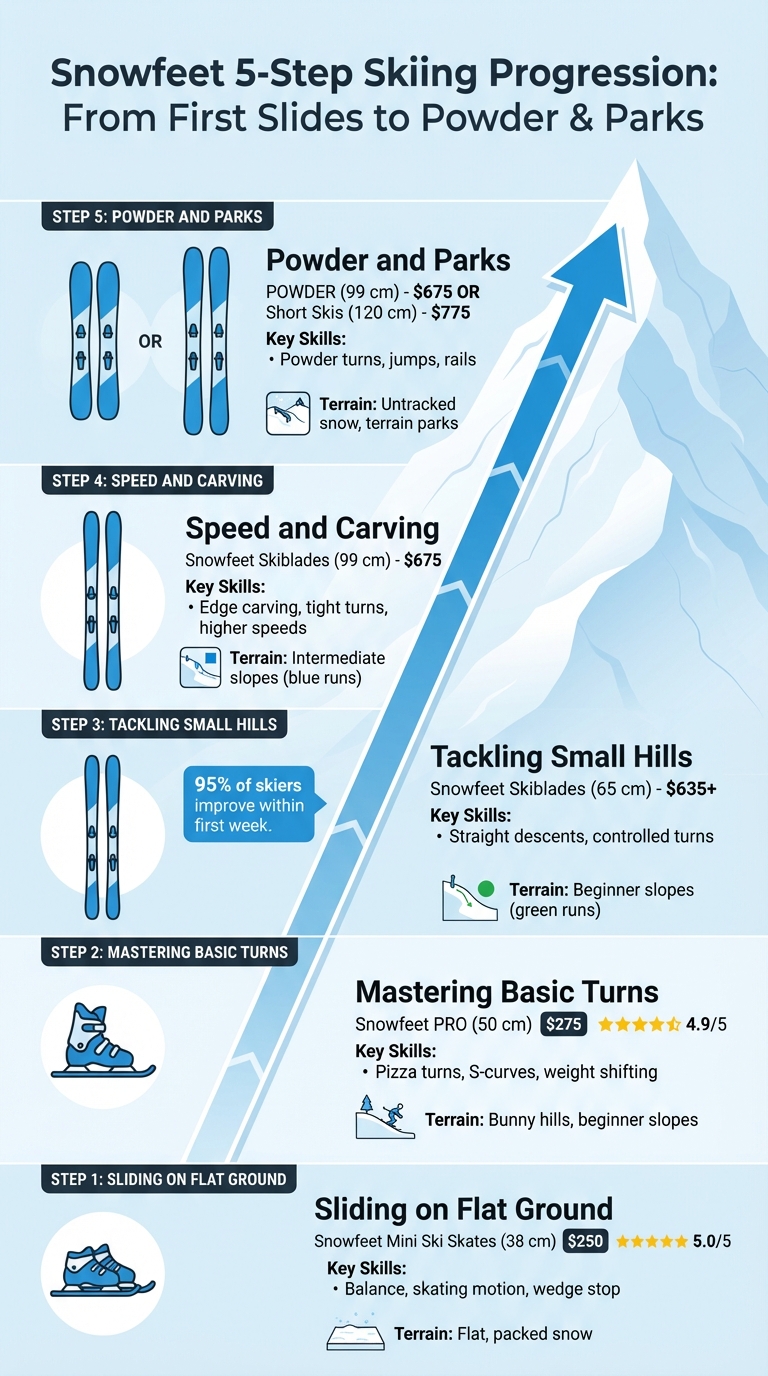
5-Step Progression Guide to Self-Taught Skiing with Snowfeet
How to Ski in One Day | Beginner Learns Basic Turns
Why Snowfeet* Products Work Best for Teaching Yourself to Ski
Teaching yourself to ski isn’t just about practice - it’s about having the right gear, too. Traditional skiing can feel overwhelming for beginners. There’s a lot to figure out: putting on specialized equipment, handling chairlifts, and learning how to stop and turn properly. Most people need a full day of lessons just to feel comfortable on green runs.
That’s where Snowfeet* comes in. These compact, user-friendly products simplify the learning process. Instead of wrestling with long, bulky skis that demand near-perfect technique, Snowfeet* lets you focus on mastering the basics without the hassle of oversized gear. Let’s break down why they’re a game-changer for beginners.
How Snowfeet* Beats Traditional Skis for Beginners
Snowfeet* offers more than just a smaller size - it’s a completely different experience. Traditional ski gear often comes with a hefty price tag: specialized boots alone can cost $200–$400, not to mention the skis, bindings, and storage solutions like roof racks or ski bags. Snowfeet*, on the other hand, works with the winter boots you already own, and the entire setup is compact enough to fit in a backpack.
Here’s a quick comparison:
| Feature | Snowfeet* Products | Traditional Skis |
|---|---|---|
| Length | 15–47 inches | 67–75 inches |
| Footwear | Regular winter boots or snowboard boots | Specialized ski boots ($200–$400) |
| Portability | Fits in a backpack | Requires ski bag or roof rack |
| Learning Curve | Quick skill gains | 2–3 days with instruction |
| Price Range | $250–$775 | $400–$1,200+ (skis + boots + bindings) |
Another perk? The compact design reduces physical strain. Falling is part of learning, but with Snowfeet*, it’s easier to get back up and keep practicing. You won’t feel weighed down by heavy, complicated gear.
What Makes Snowfeet* Easier and More Enjoyable for First-Timers
Fear is a big obstacle for many beginners. Traditional skis are long, harder to control, and require techniques like the snowplow and precise weight shifts - things that can be intimidating without an instructor.
Snowfeet* takes the edge off. Their shorter, more responsive design makes learning feel less stressful and more natural. A slight shift in your weight is all it takes to turn or stop, giving you instant feedback. This responsiveness makes it easier to build confidence and focus on having fun while you learn.
5 Steps to Learn Skiing on Your Own with Snowfeet*
Learning to ski becomes easier when you take it step by step, and Snowfeet* products make this process even more manageable. Each model caters to a specific skill level, so you can progress smoothly as you improve. Start with flat ground practice to build your balance before moving on to turns and slopes. Here’s how you can get started.
Step 1: Sliding on Flat Ground with Snowfeet* Mini Ski Skates (38 cm)
The best place to start is on flat, packed snow where you can practice without pressure. The Snowfeet* Mini Ski Skates (38 cm) are perfect for this stage because they mimic ice skating on snow. Look for a groomed trail or any flat area with consistent snow - steer clear of deep powder.
Your first focus should be balance. Keep your weight centered, knees bent, and lean slightly forward. Position one foot slightly ahead for added stability.
Next, practice the skating motion. Push off with one foot and glide, similar to how you would on inline or ice skates. Learn to stop using a wedge (pointing your toes inward) or a hockey stop if you're familiar with that technique.
The Mini Ski Skates are rated 5.0/5 and cost $250. They’re a great starting point, especially since they’re compact enough to fit in a backpack and work with regular winter boots.
Once you’ve nailed this, you’re ready for the next step.
Step 2: Mastering Basic Turns with Snowfeet* PRO (50 cm)
After getting comfortable sliding and stopping, it’s time to add turns. The Snowfeet* PRO (50 cm) is designed for better control, making it ideal for gentle slopes like bunny hills or beginner areas at ski resorts.
Start with the classic pizza turns - point your toes inward. To turn left, put more weight on your right foot; to turn right, shift your weight to your left foot.
As you improve, focus on linking your turns into smooth S-curves. The PRO model, rated 4.9/5 and priced at $275, is built to help you progress quickly. Many users report noticeable improvement after just a few practice sessions.
Once you’re turning confidently, move on to the next phase.
Step 3: Tackling Small Hills with Snowfeet* Skiblades (65 cm)
Now it’s time to take on real slopes. The Snowfeet* Skiblades (65 cm) are designed to give you more control on varied terrain, making them perfect for beginner slopes.
"As tempting as an exploration through the mountains can be, the beginners' area is the perfect place to start with your new adventure." - Christian Aigner, CSIA Level 4 Ski Instructor
Start by practicing straight descents on small hills to maintain control. Once you’re comfortable, introduce turns. The 65 cm length offers more stability than shorter models but is still easier to handle than traditional long skis. Interestingly, research shows 95% of skiers using digital coaching tools improve within their first week.
The Skiblades (65 cm) start at $635 and come in various designs. They’re lightweight yet sturdy, making them easy to carry in a backpack while being robust enough for real mountain terrain.
When you’re ready, step up to the next challenge.
Step 4: Speed and Carving with Snowfeet* Skiblades (99 cm)
Carving adds a whole new thrill to skiing. The Snowfeet* Skiblades (99 cm) provide the stability needed for higher speeds while staying responsive for tight turns.
Head to a blue (intermediate) run with a consistent slope. Practice leaning into your turns, letting the 99 cm Skiblades engage their edges to carve clean arcs. As you gain confidence, work on making your turns tighter and faster.
"Within a couple of days, everyone will be able to do some turns and enjoy the feeling of gliding on white gold - be ready to sense a feeling of real freedom (but in control!)." - Christian Aigner, CSIA Level 4 Ski Instructor
These Skiblades, priced at $675, are made with durable materials. They’re versatile enough for groomed runs, small jumps, and even light powder.
Once you’ve mastered carving, it’s time for the final step.
Step 5: Powder and Parks with Snowfeet* POWDER (99 cm) or Short Skis (120 cm)
After conquering groomed runs, it’s time to explore new terrain. For powder snow, try the Snowfeet* POWDER (99 cm). If terrain parks are calling your name, the Short Skis (120 cm) offer extra stability for jumps and rails.
Start small. In powder, practice making turns in untracked snow. For terrain parks, begin with basic jumps and gradually work your way up. Both models maintain Snowfeet*’s signature portability and ease of use, so you can keep pushing your limits.
The POWDER (99 cm) starts at $675, while the Short Skis (120 cm) cost $775. Both options are built to handle varied conditions, letting you continue your skiing journey wherever it takes you.
sbb-itb-17ade95
Gear and Accessories You Need for Safe, Fast Learning
Learning to ski with Snowfeet* can be exciting, but having the right gear is key to staying safe and improving quickly. The right equipment not only helps prevent injuries but also gives you the confidence to try new moves.
Protective Equipment for Skiing Safety
First things first: a helmet is a must. The National Ski Areas Association reports that skiers and snowboarders wearing helmets are seven times less likely to experience head injuries. Look for a snug, hard-shell helmet made from ABS or polycarbonate for solid protection.
Don’t forget goggles - these shield your eyes from snow glare and wind. A solid option like Goodr goggles (around $75) can make a big difference. Keep your hands warm and dry with waterproof Gore-Tex gloves or mittens, and dress in layers: a thermal base, a cozy fleece mid-layer, and a waterproof outer shell (like a Columbia ski jacket, roughly $200).
Using Snowfeet* gear also reduces injury risks since it limits leverage during falls compared to traditional skis.
Maintenance Products and Replacement Parts
Once you’ve got safety covered, keeping your gear in top shape is equally important. Snowfeet* products are designed to be easy to maintain while delivering consistent performance.
For fiberglass-reinforced models like the Snowfeet* PRO or Skiblades, regular waxing is essential. Without it, the base can become sticky or sluggish on the snow. Even wood-core models, like the 99 cm options that often come pre-waxed, need occasional re-waxing. Snowfeet* recommends:
"We recommend waxing the fiberglass reinforced polyamide models for extra speed and smooth glide." – Snowfeet*
Snowfeet* offers maintenance tools starting at just $6, including ski wax and replacement straps. If you’re using non-release bindings, safety leashes are a smart addition to keep your gear secure during a fall. By sticking to a regular maintenance routine, your equipment will always be ready to support your progress.
Start Your Self-Taught Skiing Journey with Snowfeet*
Learning to ski on your own is totally doable with the right gear. Snowfeet* products are designed to make the process easier by cutting down the steep learning curve that comes with traditional skis. Their shorter and lighter design helps you avoid the frustration - and bad habits - that often come with struggling to manage heavier, bulkier equipment.
The secret? Start small and practice consistently. Begin with the Snowfeet* Mini Ski Skates (38 cm), priced at $250, to work on your balance on flat ground. Once you're comfortable, follow the step-by-step progression outlined earlier. These steps provide a clear roadmap to help you build your skills from the ground up.
With your Snowfeet* gear and the safety accessories we've already covered, you're ready to progress at your own speed. Focus on maintaining proper form, stick to beginner-friendly green slopes, and always wear your helmet and goggles for safety.
As Kirsten Alexis puts it:
"Skiing is a lifelong journey of learning, growth and adventure".
Choose the Snowfeet* model that suits your current skill level and keep moving through the steps we’ve outlined. Whether you’re just getting the hang of sliding on flat terrain or carving down intermediate slopes, Snowfeet* makes the self-taught skiing experience smoother, safer, and way more fun than traditional gear ever could.
FAQs
Can I use Snowfeet with my regular winter boots?
Snowfeet products are made to work with regular winter boots, which makes them super convenient and easy to use. This means you don’t need to invest in special footwear to get started, making the learning process much simpler - especially for beginners.
Where should I practice first to learn safely?
The best place to start learning skiing is on gentle, beginner-friendly slopes or areas specifically designed for newcomers. If you're using Snowfeet products, stick to flat or slightly sloped terrain at first. This will help you focus on building balance and mastering control. Avoid heading to steeper slopes until you feel confident with the basics. Always practice in low-risk zones to keep things safe and enjoyable.
When should I switch to longer skiblades?
As your skills grow and you become more comfortable with balance, turning, and stopping on shorter skiblades, it’s a good idea to switch to longer ones. Skiblades in the 99-120 cm range provide better stability and control, especially at higher speeds or on diverse terrain. This makes them a great choice for more advanced moves. Snowfeet skiblades are crafted to support gradual skill-building, so moving to longer skiblades feels like a natural progression as you advance.











Leave a comment
This site is protected by hCaptcha and the hCaptcha Privacy Policy and Terms of Service apply.