







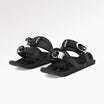












If the idea of speeding down a snowy slope makes you nervous, you’re not alone. Many beginner skiers struggle with controlling their pace, especially on steeper sections. The good news? You don’t need to master long skis or rush into high-speed runs to enjoy skiing. Snowfeet* offers compact ski gear that’s easier to control, even at slower speeds. Their shorter, lightweight designs - like skiblades and mini ski skates - help you turn, brake, and stay balanced without feeling overwhelmed.
Here’s what you’ll learn:
- Why shorter skis are easier to handle
- Simple techniques to control your speed
- How Snowfeet* gear compares to traditional skis and snowboards
- Which Snowfeet* product fits your style and comfort level
Whether you’re a beginner or just prefer a slower pace, Snowfeet* makes skiing approachable and fun. Let’s dive into how you can feel confident on the slopes without worrying about speed.
HOW TO CONTROL YOUR SPEED WHEN SKIING | How to slow down, control your speed and remain in balance
Why Snowfeet* Works Better for Slower Skiing
Traditional skis are built for speed and precision, which isn't ideal if you prefer a slower, more controlled skiing experience. Snowfeet* products, on the other hand, focus on giving you better control and ease of use. Here's how they make slower skiing a breeze.
Shorter Length Makes Turning Easier
Long skis can be a challenge to turn, requiring more effort and skill. Expert ski instructor Will Chaltas explains it best:
Softer skis initiate turns more easily, while stiff skis need more input.
Now, think about this: a standard 67-inch ski has a lot of material to flex, making it harder to maneuver. Compare that to Snowfeet* Skiblades, which are only 26 inches (65 cm) or 39 inches (99 cm) long. With less material, it takes far less energy to change direction. And if you’re using Snowfeet* Skiskates, which are just 17 inches (44 cm), you can pivot and adjust your line almost instantly. This kind of quick response is what keeps you in control, especially when you want to avoid picking up too much speed.
Lightweight Build Adds Stability
Traditional skis can be heavy, and that weight can wear you out fast. Snowfeet* products are designed to be lightweight, which not only reduces fatigue but also makes them easier to handle. Will Chaltas draws a great comparison:
A stiff ski is like a sports car - it takes skill and effort to drive... A soft ski is like a cruiser - it's easier to handle.
This lighter design allows you to focus on improving your technique, without the added strain of managing bulky equipment.
Easier for Beginners to Learn
One big downside of traditional skis is that they exaggerate small mistakes. A tiny misstep can lead to unintended speed or a loss of control. Snowfeet* products are much more forgiving, meaning those minor errors won’t throw you off. This makes it easier for beginners to build confidence and feel comfortable on the slopes. With gear that works with you instead of against you, learning feels less intimidating and a lot more fun.
How to Control Your Speed on Snowfeet*
Now that you know why Snowfeet* gear works best for slower skiing, it’s time to focus on techniques to keep your speed in check on the slopes. Snowfeet* products are designed to give you better control, but it’s up to you to use the right moves to make the most of them.
The Basic Ski Stance
Your stance is the foundation of speed control. Start by keeping your knees slightly bent and your weight centered over the middle of your Snowfeet*. This balanced position helps you stay steady and steer effectively. Relax your arms and hold them slightly forward - no flailing! Think of it like a skateboard stance: stay centered, avoid leaning too far forward or backward.
This solid stance is especially helpful when using Snowfeet* Skiblades (65 cm or 99 cm). Their shorter length already makes it easier to stay balanced, but a proper stance ensures you’re in control from the start.
C-Shaped Turns for Natural Braking
Instead of heading straight downhill, try making wide, C-shaped turns. These big arcs slow you down naturally by redirecting your momentum. As you carve out these turns, you’ll engage the sidecut of your Snowfeet*, which helps with both balance and braking. Keep your eyes forward so you can plan your next move. Thanks to Snowfeet*’s stability, you’ll find it easier to manage your speed without feeling like you’re fighting your gear.
Once you’ve got the hang of these turns, you’ll find it’s a smooth transition into more advanced stopping techniques.
The Snowplow Technique
The snowplow is a go-to move for beginners and works especially well with Snowfeet* Mini Ski Skates (38 cm). To do this, point the tips of your skates inward to form a V-shape. This creates friction, which helps you slow down gradually. The shorter length of Mini Ski Skates makes this move even easier than on traditional skis since you’re dealing with less equipment. Press gently on the inside edges of your skates to increase the braking effect, and keep your knees bent for better control.
This simple yet effective technique is perfect for slowing down without feeling overwhelmed.
sbb-itb-17ade95
Snowfeet* vs. Traditional Skis and Snowboards
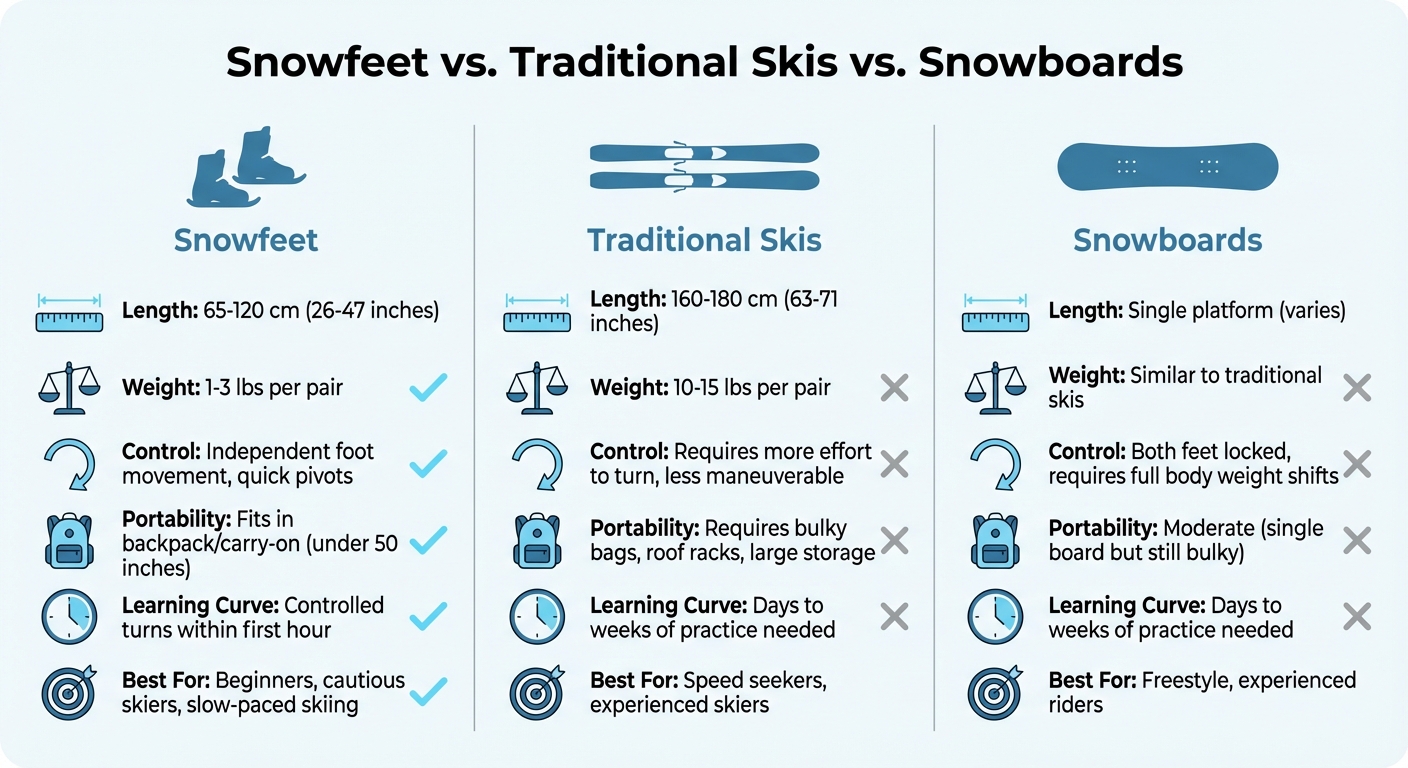
Snowfeet vs Traditional Skis and Snowboards Comparison Chart
If the thought of speeding down a mountain makes you uneasy, the gear you choose can make all the difference. Traditional skis and snowboards are often designed for thrill-seekers who crave high speeds. Snowfeet*, on the other hand, prioritize control, maneuverability, and a pace that's more approachable for those who want to take it slow.
Here’s how Snowfeet* stand out when it comes to control, handling, and learning - especially for cautious skiers.
Better Control and Easier Turns
Traditional skis, which are usually 160–180 cm long, can feel unwieldy. Snowfeet* Skiblades, ranging from 65–120 cm, are much shorter, making them easier to maneuver. This compact design allows for quick pivots and precise turns with minimal effort, giving you immediate control over your movements.
Snowboards, meanwhile, require both feet to be locked onto a single platform. Changing direction or slowing down means shifting your entire body weight and committing to the turn. Snowfeet* eliminate that rigidity. With independent foot movement, you can make small, precise adjustments. Plus, their lightweight design - just 1–3 lbs per pair compared to the 10–15 lbs of traditional skis - reduces strain on your legs, making it easier to maintain a steady, controlled pace.
Easier to Carry and Store
One of the biggest headaches with traditional skis is lugging them around. Long skis need bulky bags, roof racks, and plenty of storage space. Snowfeet* products, by contrast, are compact enough to fit in a standard backpack or carry-on. Measuring under 50 inches, they can be tossed in your car trunk, stored in a closet, or taken on weekend trips without the hassle of transporting massive gear.
This portability is a game-changer for casual skiers. No more struggling with oversized equipment in parking lots or paying extra baggage fees at the airport. Snowfeet* give you the freedom to ski without the logistical stress of traditional setups.
Easier to Learn
Traditional skis and snowboards come with a steep learning curve. Mastering them often involves days - or even weeks - of practice to get the hang of edge control, weight distribution, and handling long equipment at varying speeds. Snowfeet* simplify this process. Their shorter length and intuitive design make it possible to start making controlled turns within your first hour on the snow. Instead of wrestling with your gear, you can focus on enjoying the slopes.
For those who feel nervous about speed, this quicker learning curve combined with Snowfeet*’s portable and easy-to-use design means you can build confidence at your own pace. It’s a smoother, less intimidating way to explore the mountain.
Which Snowfeet* Product Is Right for You
Picking the right Snowfeet* product comes down to your skiing style and comfort level. For cautious skiers, shorter models offer more control, while longer ones are tailored for speed and stability. Here's a quick breakdown to help you decide which Snowfeet* model fits your needs best.
Snowfeet* Skiblades (65 cm, 99 cm, 120 cm)
Skiblades are perfect for carving and snowpark adventures, designed to handle higher speeds with ease. The 65 cm model is all about agility, making sharp turns a breeze. If you're looking for a balance between stability and speed, the 99 cm and 120 cm models are ideal for moderate-speed skiing. However, if low-speed control is your main focus, you might want to explore other options better suited for beginners or slow slopes.
- 65 cm: $635
- 99 cm: $675
- 120 cm: $775
For those who prioritize precision and control over carving speed, the Snowfeet* Skiskates might be a better choice.
Snowfeet* Skiskates (44 cm)
If you're new to skiing or prefer staying in control at slower speeds, the 44 cm Skiskates are your best bet. They’re designed for gentle slopes, offering unmatched precision and responsiveness. These skates make it easy to practice and build confidence without feeling overwhelmed by your gear. At $575, they’re ideal for mastering slow-speed techniques while maintaining full control. Their compact size ensures quick adjustments to your speed, giving you the confidence to learn at your own pace.
Snowfeet* Mini Ski Skates (38 cm)
For casual skiers or those looking for a super-portable option, the 38 cm Mini Ski Skates are a great pick. They’re lightweight, compact enough to fit in a backpack, and perfect for easygoing skiing on gentle slopes. Starting at $250, they’re also the most budget-friendly choice. Keep in mind, though, they’re not as fine-tuned for slope control as the 44 cm Skiskates. Think of them as a fun, grab-and-go option for weekend trips or casual outings rather than a precision tool for serious skiing.
Conclusion
For skiers who feel uneasy about speed, Snowfeet* offers a way to enjoy winter sports with less stress and more control. Speed anxiety doesn’t have to keep you off the slopes anymore. Snowfeet* products are designed to give you the confidence and control that traditional skis or bulky snowboards often lack - especially if you’re a beginner or prefer a slower, more manageable pace. Their shorter length makes it easier to control your turns and speed, eliminating the intimidation of handling skis that can stretch up to 6 feet long.
With options like the 44 cm (about 17 inches) Skiskates for precise control, the 65 cm (roughly 26 inches) Skiblades for a balance of agility and stability, or the 38 cm (around 15 inches) Mini Ski Skates for lighthearted fun, Snowfeet* prioritizes comfort and ease of use. These aren’t just mini versions of traditional skis - they’re a completely different way to approach winter sports, focusing on safety and enjoyment. The compact design ensures every run feels approachable and fun.
Instead of battling nerves on the mountain, you can embrace the joy of skiing. If speed has been a barrier for you, Snowfeet* provides a solution that puts control back in your hands. From your very first turn, you’ll feel the difference. The slopes are calling - take charge with Snowfeet*.
FAQs
Can I use Snowfeet* on green runs?
Yes, Snowfeet* work great on green runs. They’re built to give you more control and easier maneuverability at slower speeds, which makes them a solid choice for beginners and gentle slopes. Unlike traditional skis or snowboards, Snowfeet* are easier to pick up, helping you navigate less challenging terrain with confidence and safety.
Do I need special boots for Snowfeet*?
Nope, you don’t need special boots to use Snowfeet*. Their gear, including skiblades and skiskates, is built to work with regular winter boots. For the best results, go for boots that are sturdy, warm, and offer good support - something that fits snugly into Snowfeet’s bindings. What’s great is that, unlike traditional skis or snowboards, Snowfeet’s design makes it easier for beginners to get started and enjoy skiing at a more relaxed pace.
How do I stop safely at slow speeds?
To stop safely at lower speeds, it's all about keeping your movements steady and maintaining your balance. Snowfeet gear, like skiblades and skiskates, helps a lot with this thanks to their great maneuverability and edge control.
- Lean back slightly to ease your speed while staying balanced.
- Use wide, smooth turns to gradually slow yourself down.
- Press into the edges to create friction and bring yourself to a controlled stop.











Leave a comment
This site is protected by hCaptcha and the hCaptcha Privacy Policy and Terms of Service apply.