




















Teaching kids to ski doesn’t have to end in tears. Here’s the secret: keep it simple, fun, and stress-free. Start with lightweight gear like Snowfeet Skiskates or MINI KIDS, which are easier for little ones to handle. Practice at home or in the backyard before hitting the slopes, and turn lessons into games like “Red Light, Green Light” to keep things playful. Choose gentle terrain, end sessions on a high note, and consider professional instructors for extra support. The goal? Build confidence on the slopes, avoid meltdowns, and create happy memories on the snow.
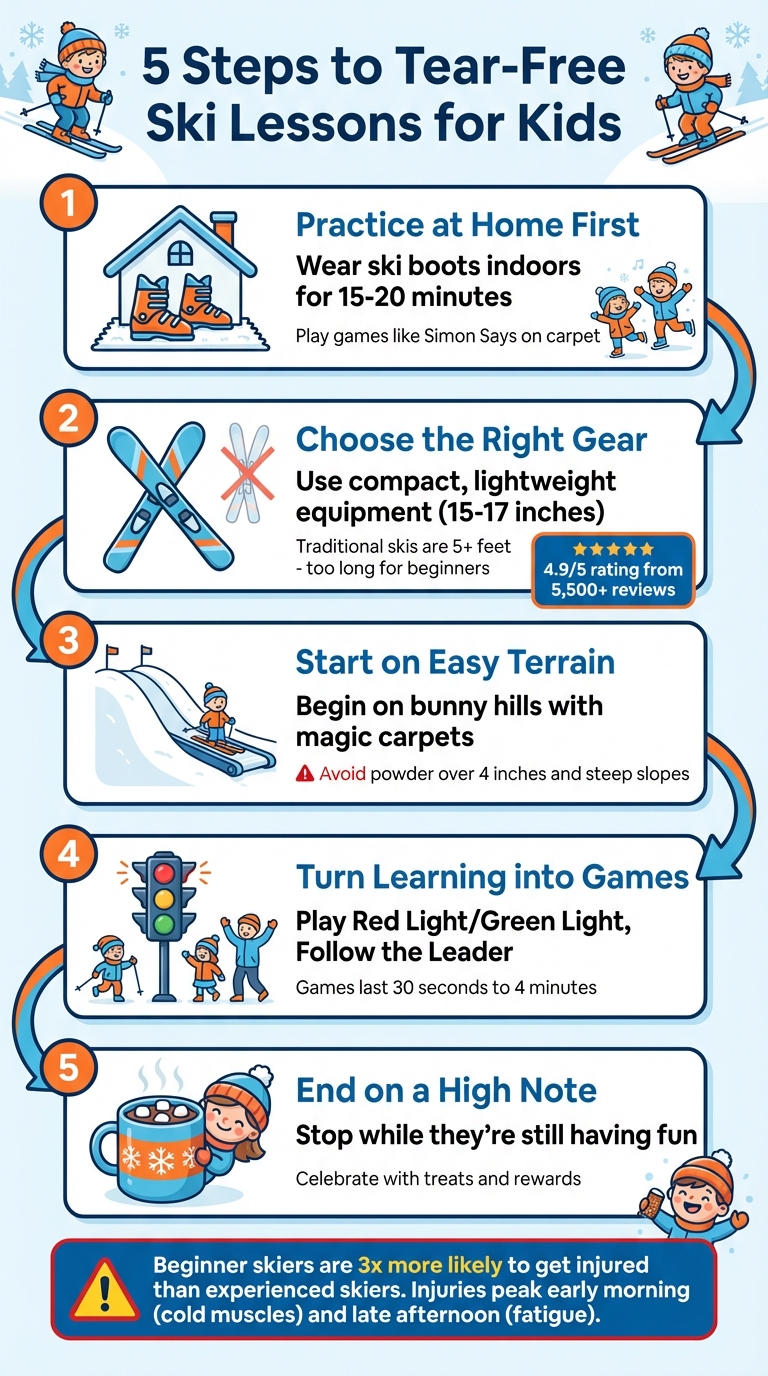
5-Step Guide to Teaching Kids to Ski Without Tears
Teach kids Skiing the RIGHT way!
Get Your Child Ready Before the Slopes
Introducing your child to ski gear for the first time on a cold mountain, surrounded by waiting skiers, can be overwhelming. Instead, start at home - where it’s warm, relaxed, and stress-free.
Practice with Gear Indoors
Start by having your child wear their ski boots or Snowfeet* Skiskates around the house for 15–20 minutes. This helps them get used to the clunky feel of the gear. Let them walk around, do simple tasks, or just play while wearing the boots. The idea is to help them build muscle memory and balance in a familiar environment, without the added challenge of cold weather or slippery snow.
Make it fun by turning practice into a game. Play "Simon Says" with commands like "Simon says lift your left ski" or "Simon says do a squat." These playful movements help kids get comfortable with the gear while keeping things lighthearted. Practicing on carpet is great because it prevents sliding, making it easier for them to focus on the basics. This indoor prep lays the groundwork for a smoother, more enjoyable transition to outdoor practice. Knowing how to choose beginner-friendly ski gear is the first step in this process.
Try Basic Movements in the Backyard
Once your child is comfortable indoors, move the practice outside to the backyard. This is a great way to introduce them to outdoor conditions without the pressure of a busy ski slope. Start by helping them repeatedly put on and take off their gear until they can do it themselves. Snowfeet* products are especially handy here - they’re lightweight and much easier for kids to manage compared to traditional skis.
Focus on basic skills like the "pizza" (wedge) stance on flat ground. Add simple exercises like squats, lunges, and high steps to strengthen their legs for skiing. According to Boston Children’s Hospital, beginner skiers are three times more likely to get injured than experienced ones. Building strength and practicing movements beforehand can make a big difference. You can even teach them how to fall safely and get back up on soft grass - this can save a lot of frustration later.
These backyard activities not only help build strength and confidence but also set kids up for a smoother and more independent experience when they hit the slopes for real.
Pick the Right Equipment for Beginners
The gear you pick can make a huge difference in your child's first skiing experience - and help avoid any early meltdowns. Traditional skis can be a bad match for kids. They're often too long, heavy, and tough to handle, especially for little ones still working on their balance and strength. Adult skis, which can be over 5 feet long, are just too much for young beginners to manage.
That’s why it’s smart to choose equipment designed specifically for kids starting out.
Why Snowfeet* Is a Better Option Than Traditional Skis

Snowfeet* gear is built to tackle the challenges that come with traditional ski equipment. Take the Snowfeet* Mini for Kids - these are only about 15 inches long, fit U.S. shoe sizes 9–5, and are much lighter than standard skis. Then there’s the Snowfeet* Skiskates, which are slightly longer at 17 inches. They offer better control and are easier to maneuver while still giving kids that classic skiing feel.
Here’s the kicker: over 5,500 reviews (with an average rating of 4.9 out of 5) show that kids can pick up the basics in just minutes. One review from Brad Tolin sums it up perfectly:
"Super easy to control, and more forgiving than traditional skis. I felt comfortable on them within just a few runs."
The lightweight design makes it easier for kids to turn, stop, and recover without getting tangled up. Plus, Snowfeet* products work with regular winter boots or snowboard boots. That means no struggling to get your child into stiff, uncomfortable ski boots - a win for everyone involved.
Once your child has the right gear, the next step is to find the perfect terrain for their first lessons.
Choose Easy Terrain for First Lessons
Start on gentle, groomed bunny hills or even sledding areas. Snowfeet* products shine on flat or slightly sloped terrain, making them ideal for helping kids build confidence. Steer clear of deep powder (anything over 4 inches), steep slopes, or bumpy areas during those first few outings. Look for spots with "magic carpet" conveyor belts instead of chairlifts - they're way less intimidating and much easier for kids to handle.
With the right gear and terrain, you're setting your child up for a fun and frustration-free start to skiing!
Turn Lessons into Games
Using playful games with Snowfeet* gear can make skiing lessons a fun, stress-free experience for kids. Instead of focusing on technical drills, kids get to play, which keeps frustration at bay and tears off the slopes. Games transform learning into something exciting, helping kids pick up new movements without feeling the pressure.
These quick, energetic games - lasting anywhere from 30 seconds to 4 minutes - are perfect for keeping your child engaged. With the lightweight and easy-to-use design of Snowfeet*, kids can jump right into the fun without feeling overwhelmed.
Games That Teach Skiing Skills
Here are a few games that sneak in skill-building while keeping things playful:
- "Red Light, Green Light": This classic game teaches stopping and speed control. Call out "green light" to let your child glide forward on their Snowfeet*. When you shout "red light", they practice coming to a stop. In just a few minutes, they’ll start mastering smooth transitions between cruising and stopping.
- "Follow the Leader": Take the pressure off navigating the slopes. Your child simply follows your tracks, focusing on movement and balance rather than figuring out where to go. It’s a fun way to practice turns and get comfortable with the natural carving motion that Snowfeet* encourages.
- "Mirror Game": For balance and body positioning, stand facing your child and make exaggerated movements - lean left, crouch, or stretch your arms. They mimic your motions, learning weight shifts and positioning in a playful 30-second burst.
- "Human Slalom": Set up markers like cones or backpacks and have your child weave around them. Snowfeet*’s compact size makes tight turns easy, so kids can focus on agility and precision without bulky equipment getting in the way.
These games naturally lead to friendly challenges, adding an extra layer of excitement and confidence-building.
Add Friendly Challenges
Introduce some light-hearted competition to keep things interesting. For example:
- "Call Out Races": Challenge your child to glide the farthest on one push. Snowfeet*’s lightweight design helps kids build momentum, making each race a chance to gain confidence and improve.
- "Turtle Tag": Turn falls into fun! If someone tumbles, they pretend to be a flipped turtle trying to roll back over. This game helps kids see falling as just part of the play, making them less likely to get upset or frustrated when it happens for real.
With these games and challenges, skiing lessons become a mix of laughter, learning, and confidence-building - all while using Snowfeet*.
sbb-itb-17ade95
Keep the Atmosphere Positive
Your mood sets the tone for the day, so keep it upbeat! Kids are like sponges - they’ll soak up any frustration you’re feeling. Staying positive, even when things get tough, can make all the difference. And here’s a tip: end the session while your child is still having fun. Wrapping up on a high note leaves them with happy memories, which is way better than pushing through tears or frustration.
Cold weather can be a buzzkill, but you can prepare for it. Dress your child in layers, toss in some hand warmers, and always bring along extra dry mittens and buffs. Frequent breaks - whether it’s in the lodge or even the car - can work wonders. It gives everyone a chance to warm up and reset. And don’t be surprised if there’s the occasional meltdown; it’s just part of the learning process. When that happens, take a breather and try again another day.
If you’re using Snowfeet*, the lightweight short skis make it easier to wrap up the day when it’s time to call it quits. From here, you might want to consider enlisting some expert help to make learning even smoother.
Consider Professional Instructors
Let’s be real: kids can be a little, uh, resistant when it comes to learning from their parents. That’s where professional ski instructors come in. Kids tend to listen to them the same way they do to teachers at school. Instructors have a knack for getting kids to push themselves further without the drama.
"Lessons with a professional ski instructor nearly always push the kid into a much higher skill level, because even good-natured kiddos are much more likely to complain or throw in the towel if they're with their own parents." – Beth Lopez, Geartrade
Group lessons can be a game-changer too. When kids are learning alongside peers, they naturally cheer each other on. If you go this route, ask about the balance between actual instruction and just supervision to make sure your child is getting the most out of it. And here’s a pro tip: step back during the lesson. Kids often focus better and progress faster when they’re not looking for your approval (or trying to impress you).
Professional instructors also know how to tailor lessons to fit each child’s personality and skill level. This includes choosing the right all-mountain skis for kids based on their ability. They turn technical drills into fun games, making the whole experience enjoyable. This approach takes a lot of the pressure off you and sets your child up for success. Plus, these lessons create moments to celebrate every little win, which helps build confidence and keeps the momentum going.
Use Rewards and Celebrate Progress
A little incentive can go a long way. Offering small rewards - like M&Ms - for completing challenges on the slopes helps set clear goals and keeps motivation high. And don’t forget to end the day with a treat, like a cup of hot cocoa. Traditions like this reinforce the positive vibes and make skiing something your child looks forward to.
With Snowfeet*’s simpler learning curve, kids can hit milestones faster than with traditional skis. That means more chances to celebrate victories, big or small, and build their confidence for the next time out.
Help Kids Become Independent Skiers
Once kids have nailed the basics and feel more confident, it’s time to help them move toward skiing on their own. Independence on the slopes not only boosts their self-esteem but also makes the experience more fun for everyone. Start by teaching them how to manage their own gear, then ease them into more challenging terrain when they’re ready.
Teach Kids to Manage Their Own Gear
One of the first steps to independence is teaching kids to handle their own equipment. Show them how to put on and take off their Snowfeet* Skiskates or MINI KIDS. These are a great option for little hands - they’re compact and easier to manage than traditional skis. Begin practicing this indoors on flat ground or carpet before heading to the slopes.
Make sure the bindings are professionally adjusted to match your child’s height, weight, and skill level. Properly adjusted bindings will release during a fall, reducing the risk of injury. Once that’s set, let them practice clipping in and out until it feels natural. Just a tip: practice this when they’re full of energy, not when they’re already worn out from skiing. Beginners tend to tire quickly, and fatigue can increase the risk of injuries by up to three times.
It’s also important to consider that kids under 13 are more likely to experience fractures because their bones are still growing. Teaching them how to handle their gear in a safe, controlled environment can make a big difference. When they can manage their equipment on their own, they’ll feel more confident and ready for the next steps.
Add Difficulty Step by Step
As they become more independent, take things slow and steady. Don’t rush into tougher trails too soon. Stick to beginner ski resorts and slopes until they’ve mastered the basics. This means they should be able to stop, turn, and handle their gear confidently before moving on to intermediate terrain. Snowfeet* gear often has a shorter learning curve compared to traditional skis, which can help speed up progress - but it’s still important not to skip any steps.
Here’s what to look for to know they’re ready: Can they control their speed? Do they stop securely without falling? Are they able to navigate around other skiers? Once they’ve got these down, you can introduce slightly steeper slopes or longer runs. Don’t forget to teach them mountain and slope etiquette, like giving the right of way to skiers ahead of them and avoiding stopping in spots with limited visibility. These little "rules of the road" are just as crucial as learning physical skills.
"As soon as they're strong enough to stop and turn, wean them off the parental braking system." – Beth Lopez, Geartrade
Another thing to keep in mind: most injuries happen either early in the day before muscles are warmed up or later in the afternoon when fatigue sets in. Encourage your child to do a quick warm-up before skiing and take regular breaks throughout the day. A gradual, patient approach helps keep things fun and injury-free, setting them up for a lifetime of enjoyment on the slopes.
Conclusion
Skiing with kids doesn’t have to be a stressful ordeal - it can actually be a blast! The key? A little preparation, the right gear, and keeping things lighthearted. Start by letting your child get familiar with their equipment at home. Whether it’s walking around in ski boots on the carpet or practicing simple movements in the backyard, this small step can help avoid those dreaded on-slope meltdowns before they even happen.
Here’s the rundown: Traditional skis can feel clunky and overwhelming for little ones. That’s where lighter options like Snowfeet* Skiskates (44 cm) and MINI KIDS come in. These make it easier for kids to focus on balance and sliding, rather than struggling with heavy, oversized gear.
Make it fun with games like "Red Light, Green Light" or "Follow the Leader" to keep them engaged and smiling. And don’t underestimate the power of ski instructors - sometimes kids respond better to a pro than to mom or dad. Plus, a group lesson gives you a chance to take a breather while your child builds confidence and skills.
Finally, end the day on a high note. Even just a few successful runs are a win. As Beth Lopez from Geartrade wisely advises:
"When the kid is really done, let them be done... a few successful runs are a few successful runs. End on a high note".
Those happy memories? They’re what will keep your little one excited to hit the slopes again and again.
FAQs
What age is best to start kids skiing?
The best age to get kids started with skiing is typically between 3 and 4 years old. At this point, they're usually ready to pick up basic skills and start building their confidence on the snow. Using kid-friendly gear, like Snowfeet Skiskates or Snowfeet MINI KIDS, can make the experience smoother and a lot more fun for little learners.
How long should a first ski session be?
For beginners, especially kids, it's best to keep the first ski session short - about 1 to 2 hours. This way, they can enjoy the experience without getting overly tired or frustrated. Using gear designed for beginners, like Snowfeet Skiskates or Snowfeet MINI KIDS, can make the learning process smoother and more enjoyable. These tools help keep things fun and boost confidence, making it easier to stay excited about skiing.
How do I know when my child is ready for a real slope?
Your child might be ready to hit the slopes if they're showing signs of interest, confidence, and physical readiness. Look for things like walking steadily in ski boots, good balance, and being at ease in their ski gear. Start them off on flat areas or gentle beginner slopes to build their comfort. Keep things lighthearted and fun - low pressure goes a long way in helping them gain confidence and enjoy the experience.













Leave a comment
This site is protected by hCaptcha and the hCaptcha Privacy Policy and Terms of Service apply.