




















Most kids are ready to start skiing between ages 3 and 5. At this age, they typically have the muscle strength, balance, and focus needed to learn. But readiness also depends on their physical development, interest, and even shoe size - most rental ski boots start at size 22/23, which usually fits kids aged 3 and up.
Here’s the quick breakdown:
- Ages 3–5: The best starting point for most kids. They’re developing coordination and can handle short lessons. Ski schools often begin at age 3.
- Under 3: Not ideal. Kids this young usually lack the strength, balance, and attention span for skiing.
- Ages 6–7: Easier to teach, but they might miss the early balance-building years.
If you’re worried about bulky gear, consider alternatives like Snowfeet, which are lightweight and attach to regular winter boots. They’re less intimidating for beginners and help build confidence faster.
Safety is key, so keep sessions short, dress in layers, and make family skiing less stressful by using proper gear like helmets and mittens. And remember, the goal is fun - no need to push too hard. :)
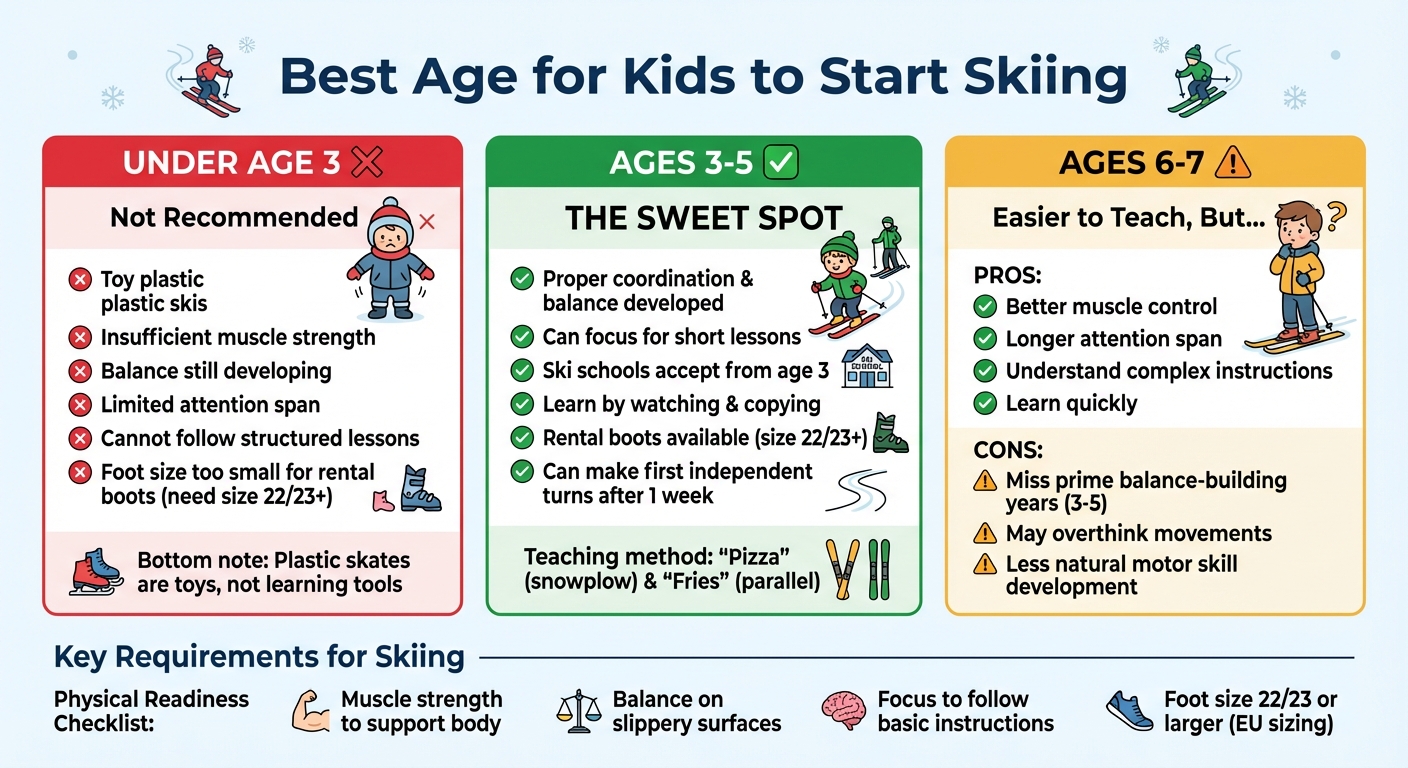
Best Age to Start Kids Skiing: Readiness Guide by Age Group
At What Age Can Your Child Start Skiing?
What Age Should Kids Start Skiing?
The quick answer: most kids are ready between ages 3 and 5. But it really depends on their physical and mental development.
To ski, kids need enough muscle strength to support themselves, balance to stay steady on slippery surfaces, and the focus to follow basic instructions. According to ski instructors Nathalie Bertholin, Corinne Mermoz, Pierre Espargiliere, and Neile Combralier:
Your child will also improve his or her concentration and develop motor skills and balance.
That said, these benefits only come when a child is ready for the challenge.
Another thing to think about is foot size. Rental ski boots for kids usually start at size 22/23, which rules out many toddlers under age 3. Traditional ski gear requires specialized boots, but Snowfeet* offers an alternative with equipment that attaches to regular winter boots.
Here’s a closer look at how different age groups typically handle skiing and what to expect on your first trip.
Ages 3-5: The Sweet Spot for Most Kids
Ages 3 to 5 are often the best time for kids to start skiing. At this age, most children hit key developmental milestones - they have the coordination and balance for skiing and can focus long enough for short lessons. Many ski schools start group lessons at age 3, and some private instructors may even work with 2-year-olds.
At this stage, kids learn best by watching and copying rather than through detailed instructions. That’s why instructors use fun, relatable terms like "pizza" for the snowplow position and "fries" for parallel skis. Some kids can even make their first independent turns after just a week of lessons.
Snowfeet* products are a great fit for this age group. They're lightweight and less intimidating than traditional skis. Plus, the shorter lengths (38 cm or 50 cm options for Snowfeet MINI KIDS) make them easier for little ones to control, which helps build confidence quickly.
Why Starting Before Age 3 Is Too Early
Kids under 3 usually aren’t ready for skiing. Their muscles aren’t strong enough, their balance is still developing, and they don’t have the attention span for structured lessons.
Some parents try plastic "skates" that strap onto regular boots, but these are more like toys than real learning tools. They don’t provide the support needed to develop proper skiing techniques. Starting too early can also lead to frustration or discomfort, which might turn kids off from skiing altogether.
Starting at Ages 6-7: Pros and Cons
There are some perks to waiting until kids are 6 or 7. By this age, they often have better muscle control, longer attention spans, and can grasp more complex instructions. These factors can help them pick up skiing quickly once they start lessons. Reviewing essential skiing tips for beginners can also give them a head start.
However, waiting too long might mean missing the prime window for developing balance and coordination, which is strongest between ages 3 and 5. Younger kids often learn motor skills naturally and dive into skiing with pure excitement, while older beginners may overthink their movements. Snowfeet*’s beginner-friendly design can help older kids get up to speed and enjoy the slopes with ease.
Safety Tips for Kids on the Slopes
Getting your kids ready for the slopes isn’t just about teaching them to ski - it’s about making sure they stay safe while having fun. A big part of that? The right safety gear. For example, high-index (category 4) lenses are great for protecting young eyes from harsh snow glare. And when it comes to comfort, many kids prefer masks over goggles because they don’t have to deal with the tightness of goggle straps.
Required Safety Gear for Kids
Here are some essentials to keep your little ones warm and safe:
- Mittens over gloves: Mittens keep hands warmer and provide a better grip.
- Layered clothing: Go for breathable layers and include dungarees (bibs) to make bathroom breaks easier.
- Neckbands: These are great for shielding kids from wind and cold.
When it comes to ski poles, hold off until your child has mastered basic turning. Poles can actually make learning harder in the early stages. And one big no-no: don’t hold your child between your legs while skiing. Experts, like the instructors at Tignes Ski Professionals, emphasize:
Holding your child between the legs is detrimental to learning!
This practice can mess with their balance, encourage poor posture, and even lead to injuries. Instead, let them find their own rhythm on the slopes.
Keep Sessions Short to Avoid Fatigue
Kids burn out fast - both physically and mentally - so keep ski sessions short. Watch for signs like cold hands, whining, or zoning out, which usually mean it’s time to take a break. A simple question like, “Did you have fun?” can help you gauge if they’re ready for another go or need to rest.
Snow Garden Programs at Ski Resorts
Once you’ve nailed down the basics of safety and pacing, snow garden programs at ski resorts are a fantastic way to introduce your child to skiing. Many resorts in the U.S. offer these programs for kids as young as 3. They use beginner-friendly tools like conveyor belt lifts (magic carpets) or rope tows, which are far less intimidating than chairlifts. Plus, these programs focus on fun activities that help kids develop balance and motor skills, rather than diving into technical lessons. It’s a great way to make their first experience on the slopes both safe and enjoyable.
sbb-itb-17ade95
Why Snowfeet* Beats Traditional Skis and Snowboards for Kids

Snowfeet* brings a fresh approach to beginner skiing gear, especially for kids, by addressing common challenges with traditional equipment.
If you’ve ever dealt with traditional ski gear for young children, you know it can be a hassle. Skis are heavy, require specialized boots that take time to break in, and often come with a steep learning curve. Enter Snowfeet*: a simpler, kid-friendly alternative.
Easy to Carry and Store
Snowfeet* Mini Kids* (available in 38 cm or 50 cm lengths) are lightweight and compact enough to fit into a backpack. Plus, they work with regular winter shoes or après-ski boots. Compare that to traditional skis, which often need a roof rack or special carriers, and you’ll see why Snowfeet* is a game-changer.
Faster Learning Curve for Beginners
Traditional skiing can overwhelm young kids with techniques like snowplough and parallel turns. Instructors often resort to metaphors like "pizza" and "fries" to make these concepts relatable. But for small children, the long, unwieldy skis can make control difficult. Snowfeet*, being shorter and easier to handle, let kids focus on basic sliding and balance skills. This makes learning more intuitive and - most importantly - more fun.
Snowfeet* vs. Traditional Skis and Snowboards
| Feature | Traditional Skis | Snowfeet* Mini Kids |
|---|---|---|
| Length | Long and cumbersome | 38 cm or 50 cm |
| Footwear | Specialized ski boots | Regular winter shoes or après-ski boots |
| Portability | Bulky; requires a roof rack or special carrier | Fits in a backpack |
| Learning Focus | Technical snowplough and parallel turns | Fun, balance, and ease of use |
Snowboarding presents its own challenges, being asymmetrical and more complex. That’s why many experts suggest waiting until kids are 6–8 years old to start. Snowfeet* eliminates this barrier with a symmetrical design that’s easy for kids as young as 3 to enjoy.
How to Get Started with Snowfeet*
Snowfeet* make skiing simpler and more approachable, especially for kids. From picking the right size to learning the basics, starting out is easier than with traditional skis. A little preparation can go a long way in making the experience enjoyable.
Picking the Right Snowfeet* Size
If you're looking for something designed specifically for kids, the Snowfeet* Mini is a great choice. It fits shoe sizes 9–5 US (27–38 EU) and works perfectly with regular winter boots, so there’s no need for specialized footwear.
For kids aged 6 and up, you’ve got two other options:
- Skiskates (44 cm): These offer a skating-like experience, similar to inline or ice skating. Perfect for kids who love tricks and playful movement.
- Skiblades (65 cm): These give a more traditional skiing feel with added stability, making them great for carving and balance.
Unlike traditional skis, Snowfeet* are sized based on shoe size and skiing style rather than height and weight. This makes choosing the right pair super straightforward - just match your child’s shoe size to the style they’ll enjoy most.
Teaching Kids the Basics
Begin on flat terrain to help your child get used to how Snowfeet* feel. Have them practice sliding forward and backward, imagining they’re skating on ice. This helps them get comfortable with the movement.
Once they’ve got the hang of it, introduce gentle turns using fun games. For example, set up small snow piles as markers and encourage them to weave between them. The shorter length of Snowfeet* makes these kinds of movements much easier than with traditional skis.
When they’re ready for a slope, start with gentle, groomed trails. Snowfeet* work best on packed snow or light powder up to 4 inches. Teach them basic stopping techniques, like a heel brake or a simple hockey stop, to help them manage their speed.
Tips for a Smooth First Experience
Here are a few tips to make your child’s first outing a success:
- Wax the skis: If you’re using fiberglass-reinforced models like the 50 cm Ski Skates, applying wax before your first outing ensures a smoother glide and better speed.
- Check the straps: Make sure the straps are snug but not too tight. A secure fit is key to preventing slipping during turns.
- Keep sessions short: Limit skiing to 45 minutes or less to avoid fatigue in cold weather. Plan for breaks with hot cocoa, snacks, and a chance to warm up.
- Layer clothing: Dress your child in several thin layers instead of one bulky jacket. This helps them stay comfortable as they move around.
- Use sun protection: Snow reflects UV rays, so apply sunscreen to their face and lips. Don’t forget goggles or sunglasses to protect their eyes from glare.
With these tips in mind, your child’s first experience with Snowfeet* is bound to be a fun and memorable one!
Conclusion
The best age for kids to start skiing is typically between 3 and 5 years old. At this stage, most children have the coordination and developmental readiness to learn safely. While some private lessons may accept kids as young as 2, most ski schools recommend starting at age 3. This is partly because properly fitting ski boots - usually available starting at size 22/23 - become accessible around this age. It’s also the perfect time for kids to enjoy beginner-friendly gear like Snowfeet.
Snowfeet offers a fresh take on learning to ski by removing some of the common hurdles. Unlike traditional skis and snowboards, Snowfeet work with regular winter boots and are compact enough to fit in a backpack. For younger kids, you can opt for the Snowfeet Mini (38 cm or 50 cm), while older beginners might prefer Skiskates (44 cm). Their shorter design makes it easier for beginners to learn how to turn and stop.
Finally, safety should always come first. Before every session, go over a few quick safety tips. Keep lessons short to prevent fatigue, dress your child in layers for comfort, and avoid holding them between your legs while skiing. Use simple and fun cues like "pizza" for stopping and "fries" for aligning to help reinforce the basics.
FAQs
How do I know if my child is truly ready to ski?
A child is ready to hit the slopes when they show excitement, can stand and balance well, and have the proper gear. Some kids begin as young as 2 or 3 years old, depending on their physical development and interest level. Using beginner-friendly equipment like Snowfeet MINI KIDS or Skiskates can make the experience less overwhelming and a lot more enjoyable than starting with traditional skis or snowboards.
What if my child’s feet are too small for rental ski boots?
If your little one’s feet are too tiny for rental ski boots, you might want to check out portable options like Snowfeet. These are specially made for young kids, fitting smaller feet while providing a safe and fun way to start skiing. Unlike traditional ski boots - which often don’t come in very small sizes - Snowfeet are lightweight and super easy to use. They’re a fantastic alternative for early learners just getting started on the slopes.
Are Snowfeet* easier and safer than traditional skis for kids?
Snowfeet* are a great option for kids, offering an easier and safer alternative to traditional skis. Thanks to their lightweight and portable design - models like the Snowfeet MINI KIDS or Skiskates - they’re less intimidating and simpler to balance on. This reduces the chance of falls and helps kids feel more confident. Unlike regular skis, which often need bulky gear and more advanced skills, Snowfeet* are beginner-friendly. They let kids start enjoying winter sports earlier while keeping things fun and safe.













Leave a comment
This site is protected by hCaptcha and the hCaptcha Privacy Policy and Terms of Service apply.