
Is learning to ski hard? It can feel overwhelming at first. Heavy boots, long skis, and the constant struggle to balance make those early runs a challenge. Add fear of falling, tense muscles, and improper technique, and it’s easy to see why beginners often feel frustrated. But here’s the good news: the right gear and a few adjustments can make skiing much easier.
Key Takeaways:
- Common beginner mistakes: Leaning back and stiff ankles make control harder.
- Long skis: Their weight and size can be tough for new skiers to handle.
- Fear factor: Anxiety tightens muscles and slows progress.
- Solution: Shorter, lighter gear like Snowfeet* products can help beginners feel more confident and in control.
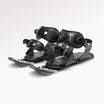
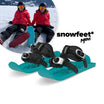
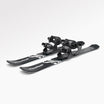
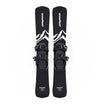
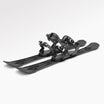
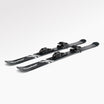
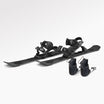
Snowfeet* offers compact ski options (15–47 inches) that are easier to balance, turn, and carry. They work with regular winter shoes, so you can skip stiff ski boots. Whether it’s their Mini Ski Skates or PRO models, these designs simplify the learning curve, letting you focus on having fun on the slopes. Let’s dive into why shorter skis make skiing a smoother ride.
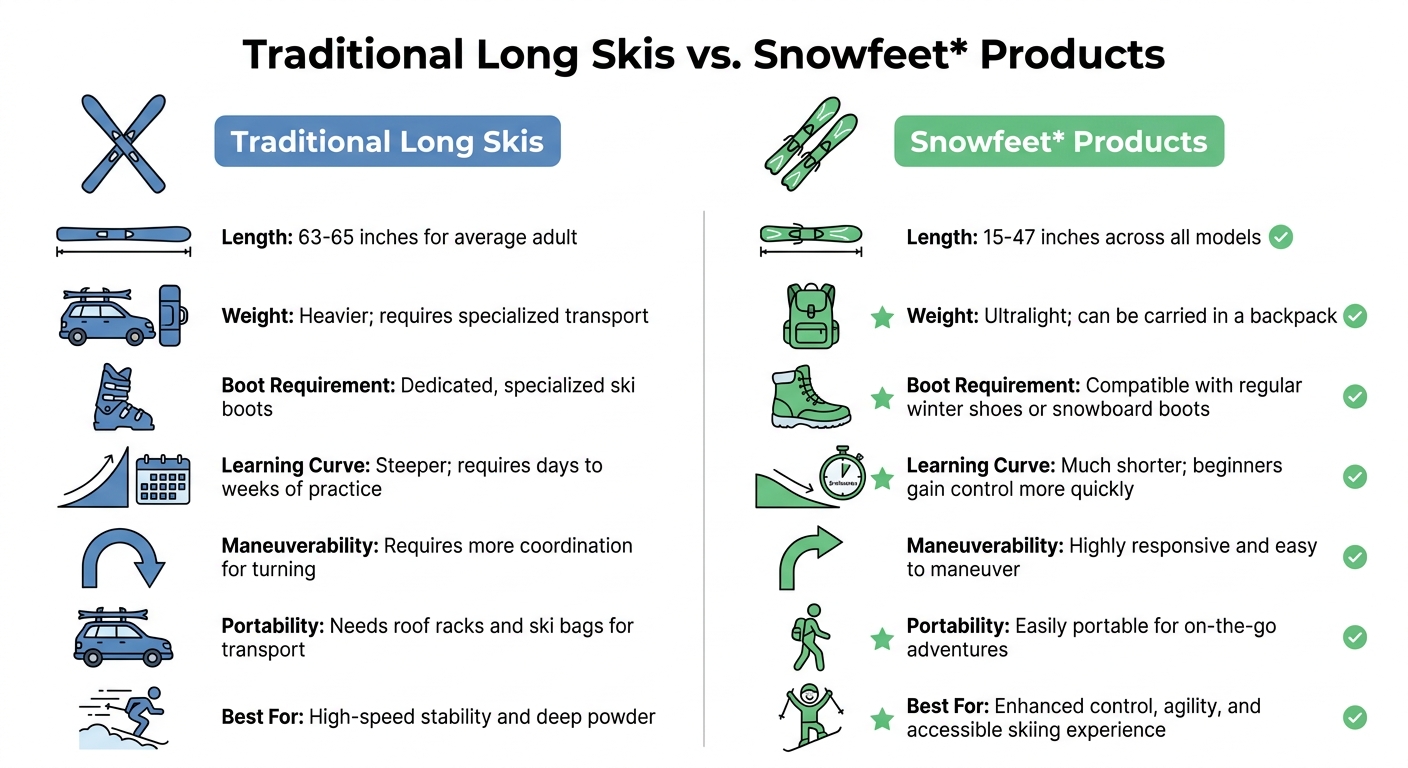
Traditional Long Skis vs Snowfeet Products Comparison Chart
Common Problems with Traditional Long Skis for Beginners
Balance and Stability Problems
Traditional long skis can be a real challenge for beginners when it comes to balance. Their added length and weight make it harder to stay upright, especially for someone just starting out. The extra weight messes with your body's ability to sense and react to changes in terrain. In simple terms, it’s harder for your brain to send those quick "save yourself" signals when you start to lose balance. This often leads to more falls, frustration, and slower progress. As Renoun points out:
"Because longer skis typically weigh more and create longer turns, they can tire legs quicker than shorter options."
Snowfeet* products, on the other hand, are lighter and designed to help beginners maintain better balance, making the learning process much smoother.
Difficulty with Coordination and Movement
For beginners, long skis can feel like trying to steer a boat when you’re used to riding a bike. The extra swing weight requires a level of coordination that most new skiers haven’t developed yet. This can lead to fatigue, sloppy movements, and poor edge control. Renoun explains:
"Your skis may be too long if you're experiencing difficulty with quick turns, excessive fatigue, or poor edge control."
Things get even trickier in tight spaces, like weaving around trees or navigating crowded slopes. Long skis naturally favor big, sweeping turns, which are tough to manage without solid technique. Beginners often end up catching an edge and losing control. In contrast, Snowfeet* are built for agility, requiring less effort to make quick, sharp turns.
Fear and Physical Exhaustion
The sheer size of traditional skis can feel overwhelming, especially for someone new to the sport. That initial fear of falling can quickly snowball into physical tension - tight muscles, shaky legs, and a general sense of unease. Handling heavy equipment doesn’t help either. Physiotherapist Joanne Pollard describes the challenge:
"The terrain is constantly changing, so learnt movement patterns need to adapt, our body needs to respond and this all requires good balance to do so!"
To minimize these issues, industry guidelines suggest beginners use skis about 6.7 inches (17cm) shorter than their height. Longer skis add weight and surface area, which can hurt edge control and lead to quicker fatigue. Once your legs get tired, the muscles supporting your knees and hips can’t do their job as well, increasing your risk of injury. Fatigue also forces your body into "survival mode", making it harder to focus on proper technique. Snowfeet* products address these challenges by being lighter and easier to handle, giving beginners a much-needed confidence boost on the slopes.
How Snowfeet* Products Make Learning Easier
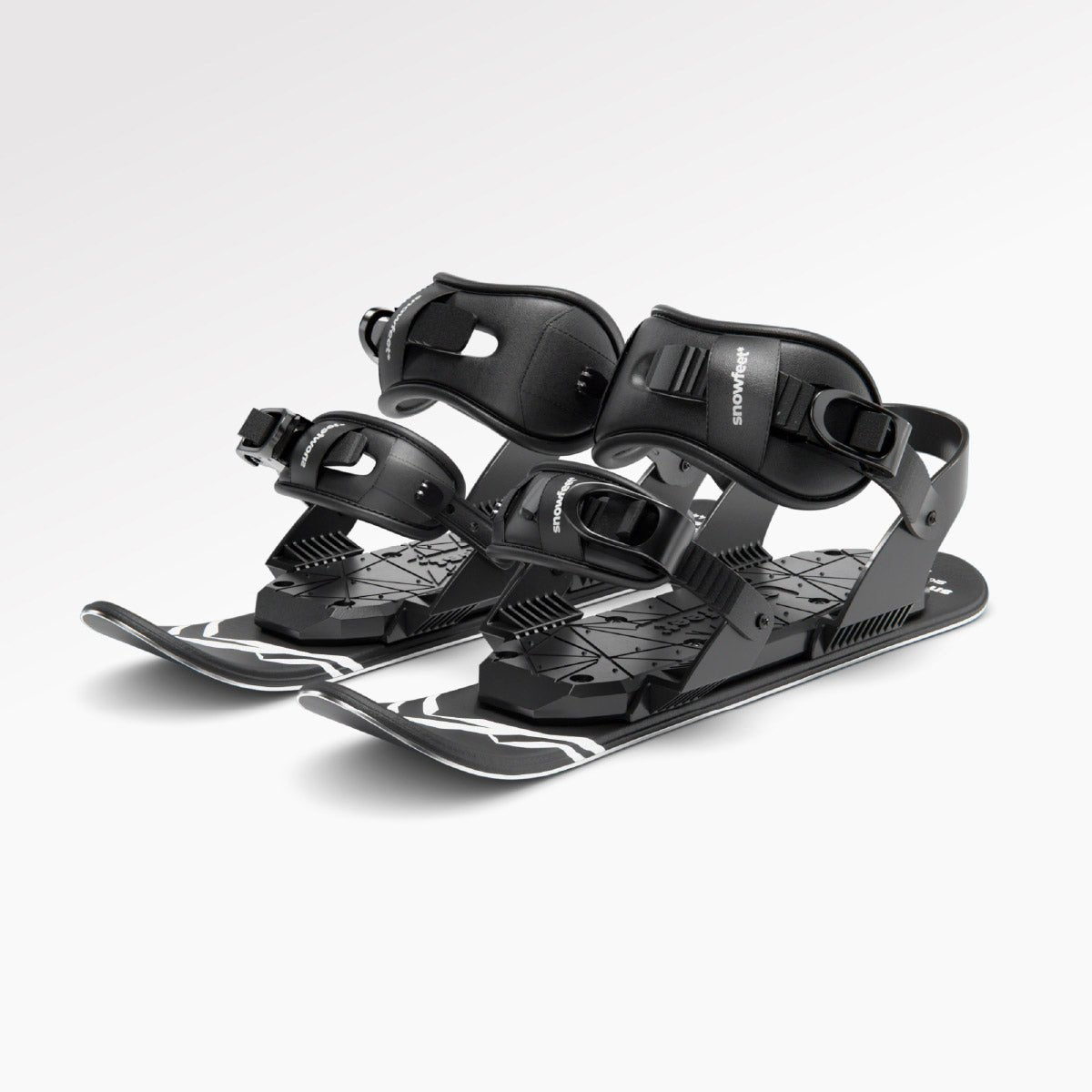
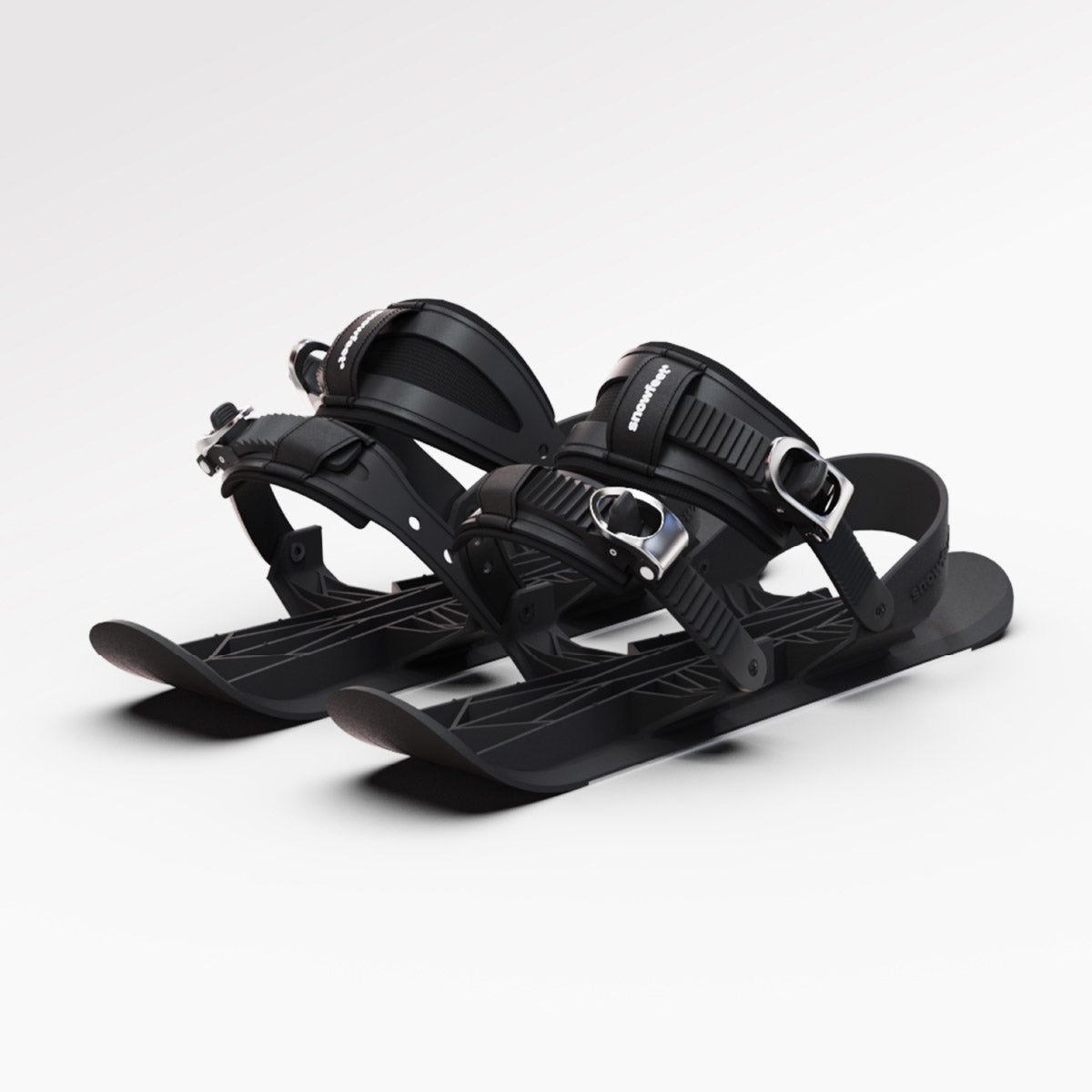
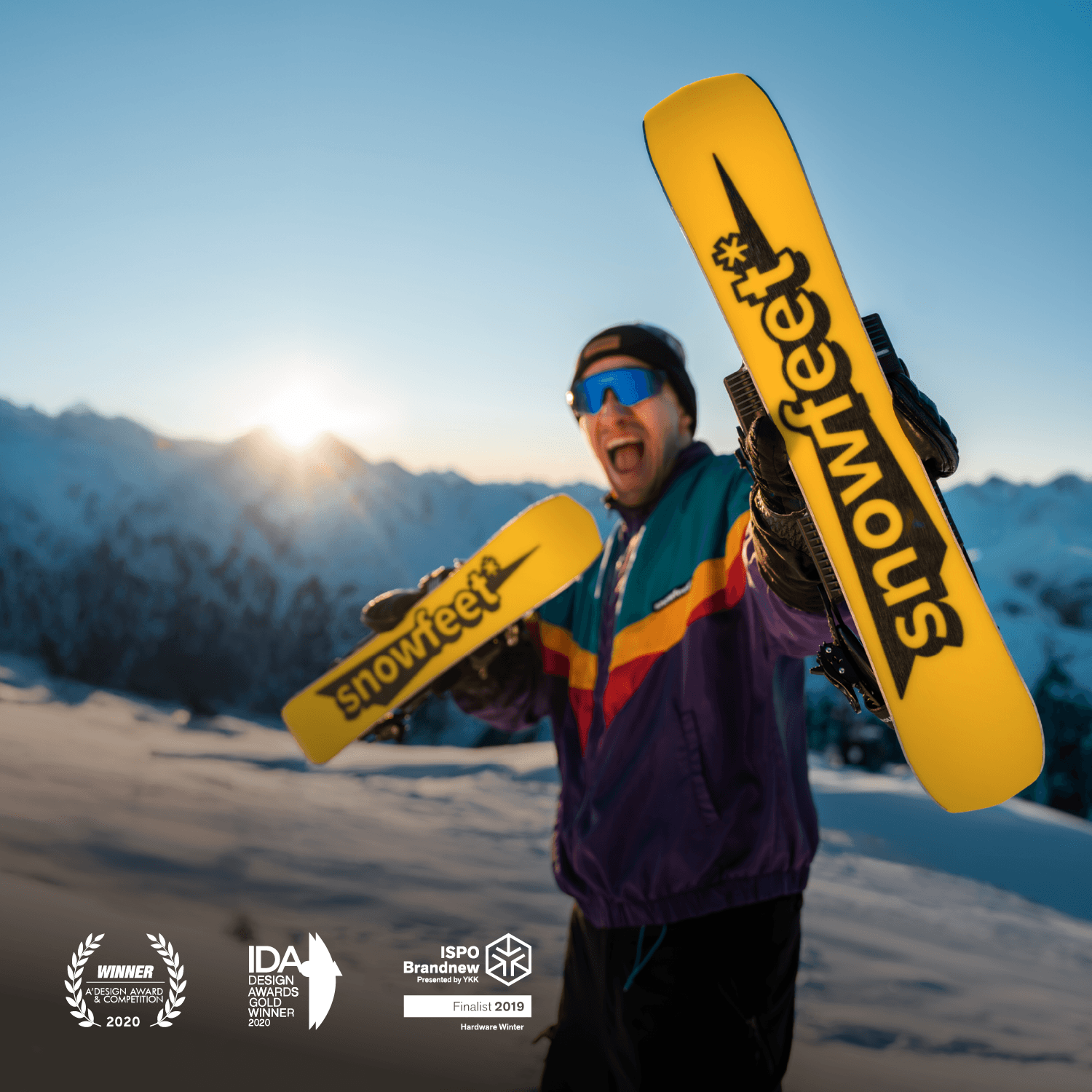
Snowfeet* Mini Ski Skates: Light and Easy to Learn
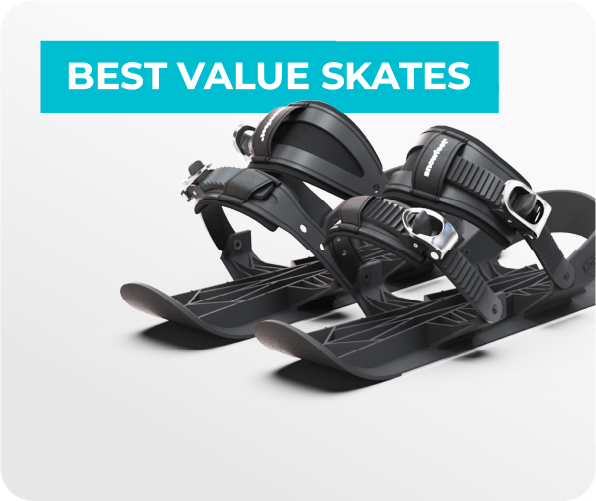
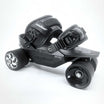
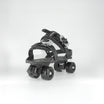
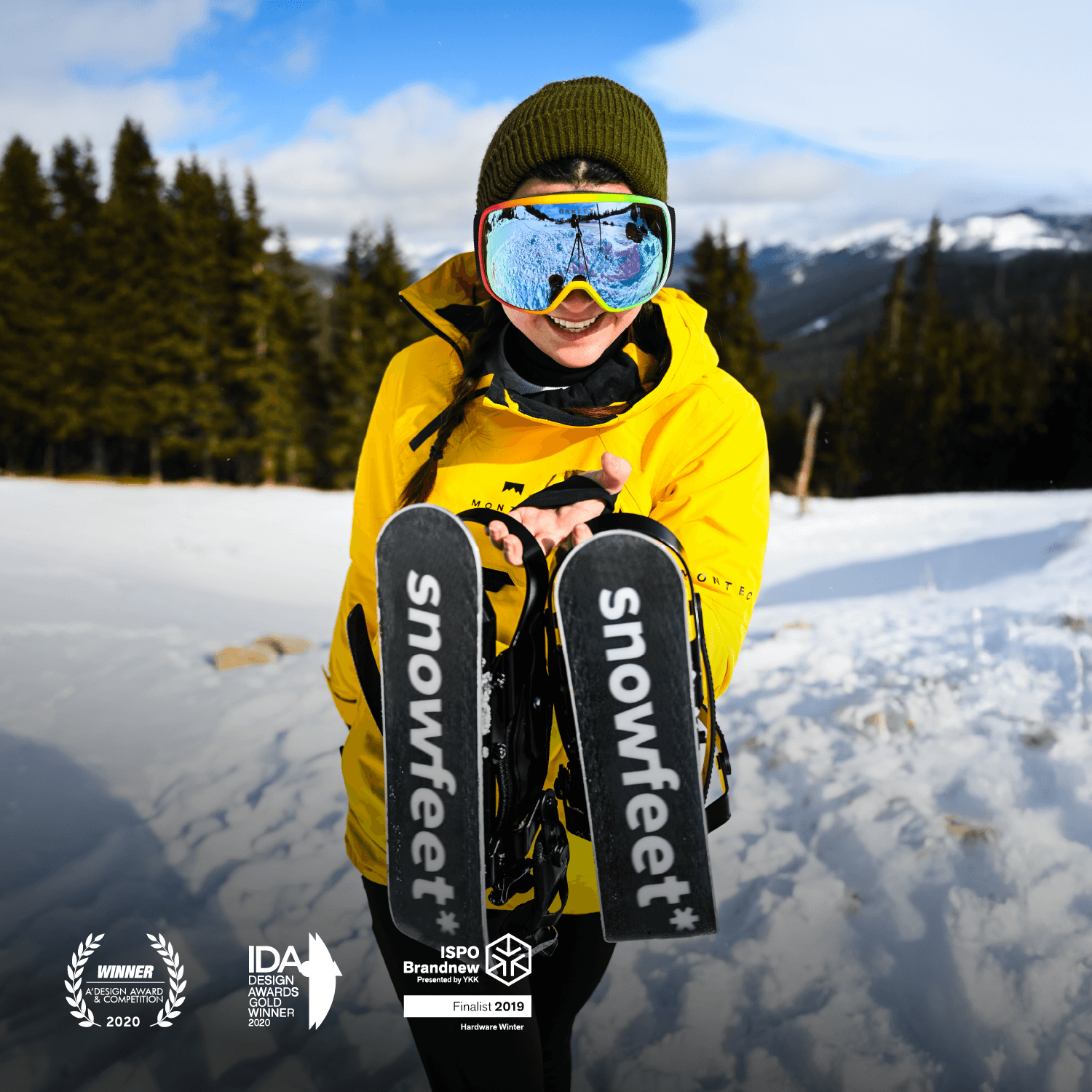
Snowfeet* Mini Ski Skates (measuring just 38 cm or about 15 inches and priced from $250) simplify the learning process compared to traditional long skis. Instead of dealing with bulky gear, you get a lightweight design that mimics the natural motion of skating on snow. If you've ever tried ice skating, hockey, or inline skating, you'll feel right at home with these. Their compact size allows for quick, responsive turns, making them perfect for beginners.
The best part? The learning curve is super short - most people can start riding confidently within just 5 minutes, even without formal lessons, though following skiing tips for beginners can help you progress even faster. Their ultralight and portable design means you won't feel bogged down before hitting the slopes. With over 50,000 riders and more than 5,500 verified reviews averaging 4.9 out of 5 stars, the popularity of these skates is undeniable. As one happy customer, Nathan F., put it: "Absolute game-changer! They're light, fast, and incredibly fun to ride." For those looking to continue improving, newer Snowfeet* models take slope control to the next level.
Snowfeet* Skiskates and PRO Models: Better Control and Easier Turning
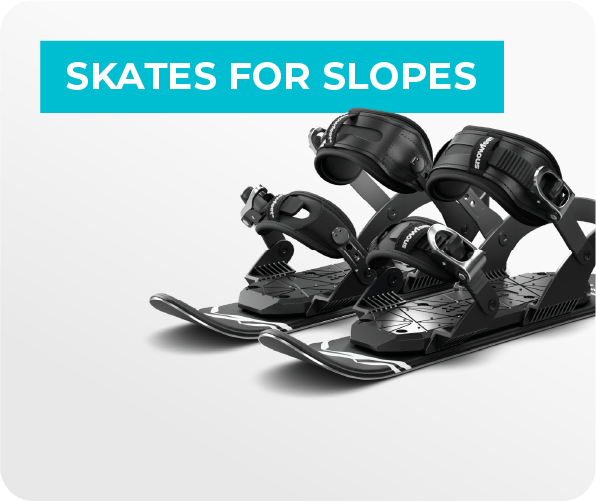
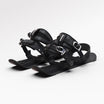
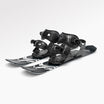
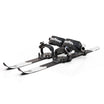
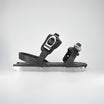
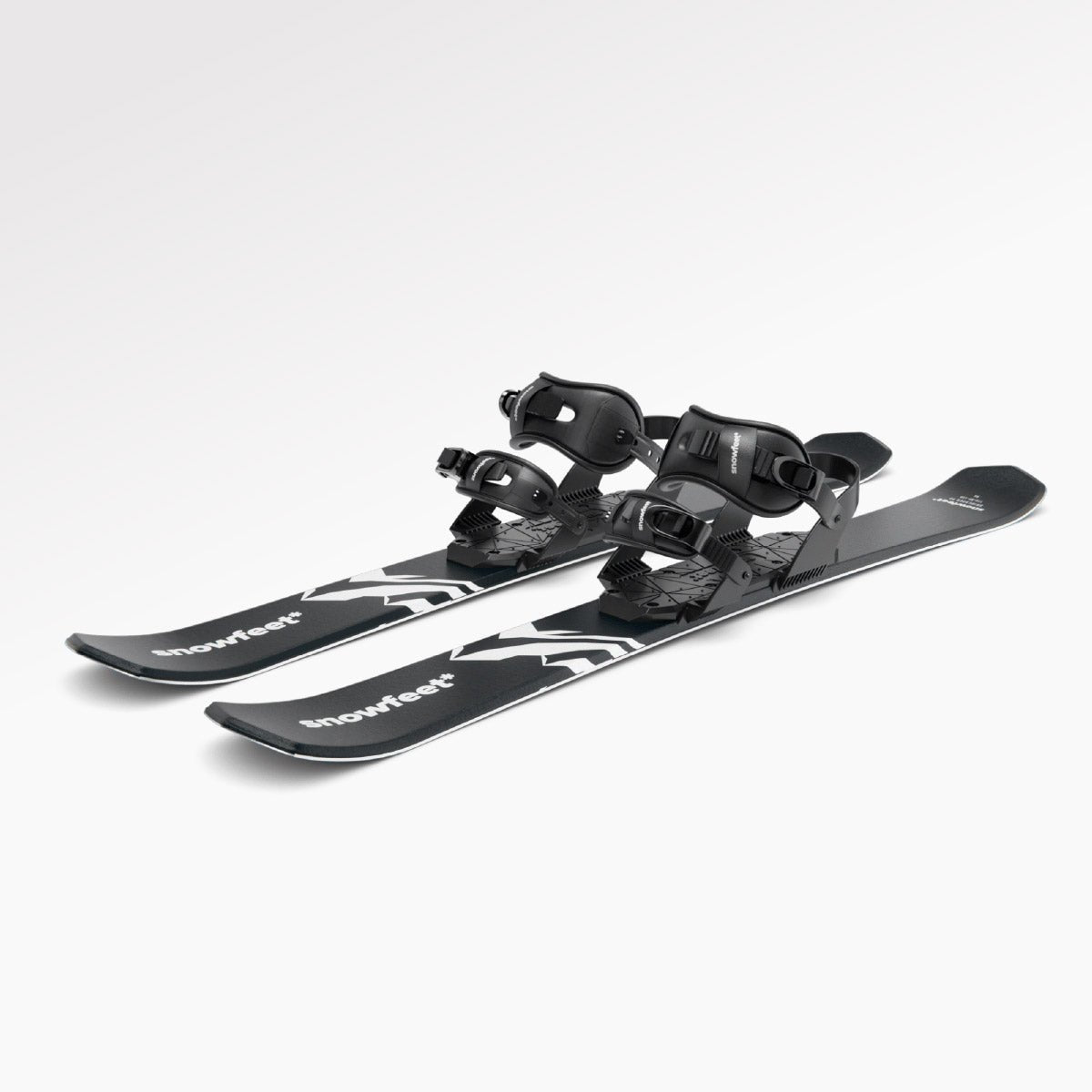
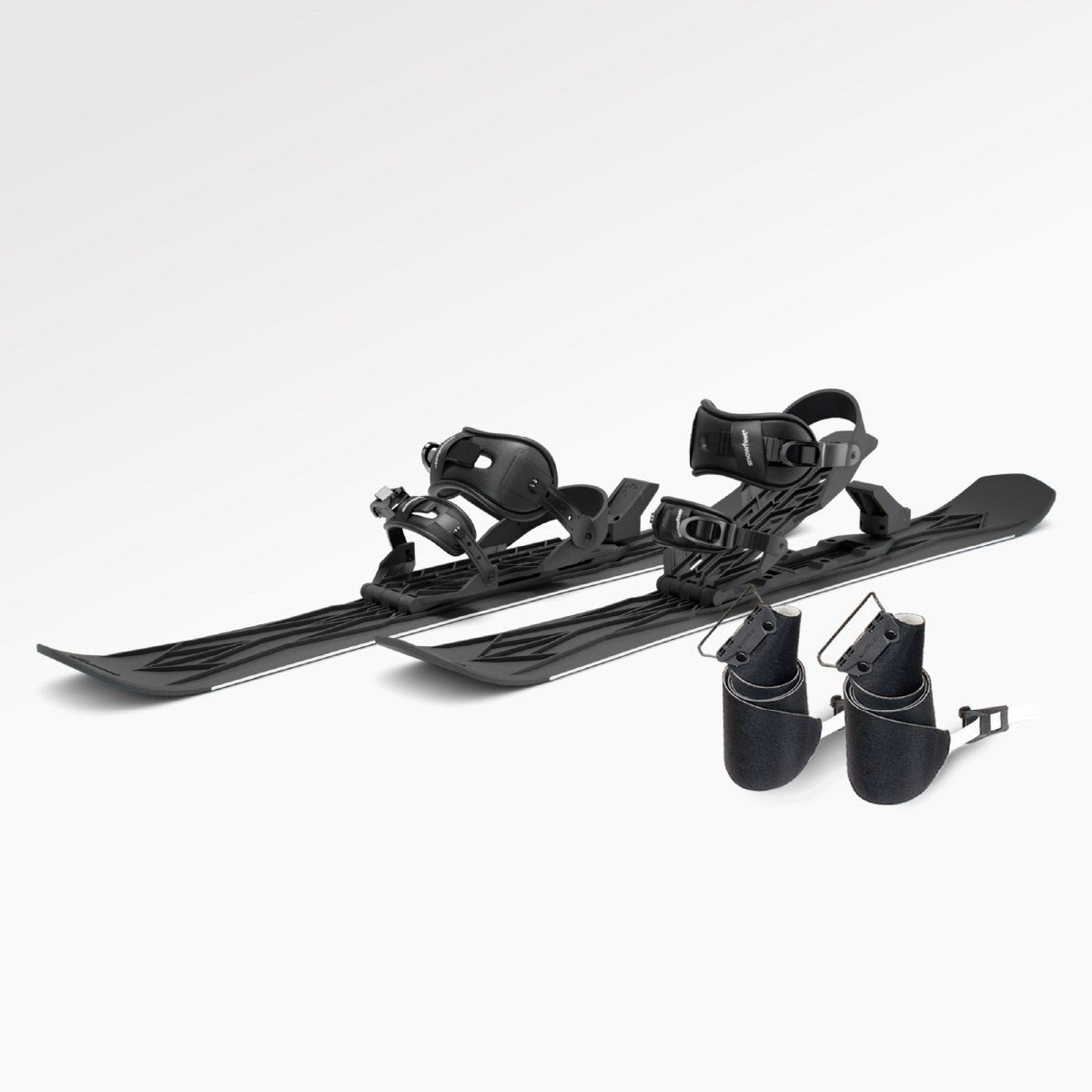
The Snowfeet* PRO model (50 cm or about 20 inches, priced at $275) is designed for better control and smoother turns. Its elevated platform makes it easier to initiate turns and carve, while the slim, ski-inspired base ensures precise control and quick responsiveness - features that traditional long skis often lack.
Both the PRO and Skiskates (44 cm or about 17 inches, starting at $575) include metal ski edges for effective stopping and a strong grip on groomed snow. They also feature an integrated heel brake for added control when slowing down. The PRO model is especially popular, with a 90% 5-star rating from over 2,283 reviews. Plus, the adjustable bindings let you use regular winter shoes or snowboard boots, so there's no need for stiff, uncomfortable ski boots. To keep them performing at their best, a quick waxing of the bottoms each day during your trip is recommended.
Snowfeet* Skiblades and Short Skis: Options for Advancing Your Skills
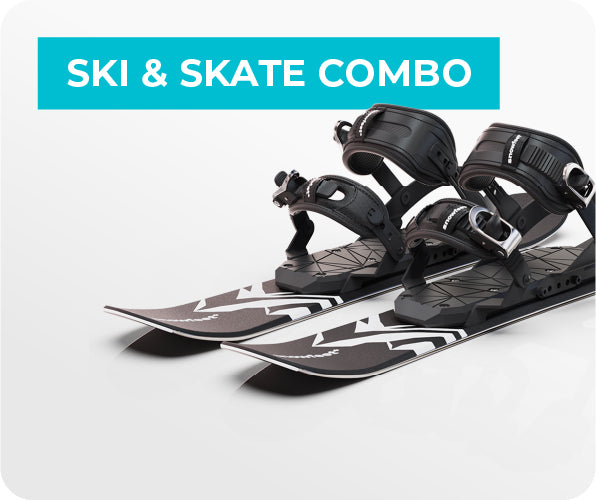
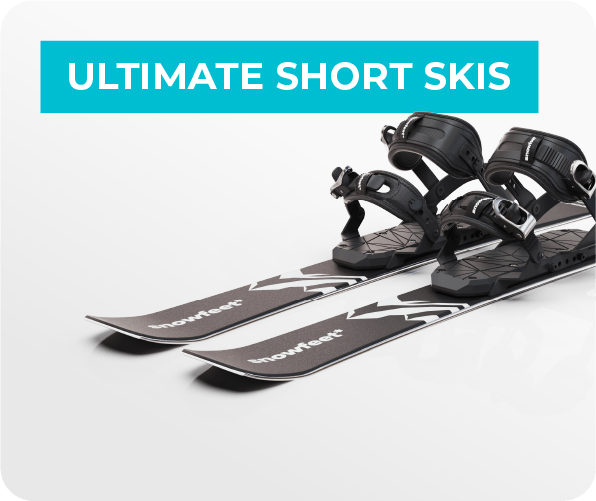
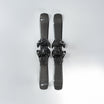
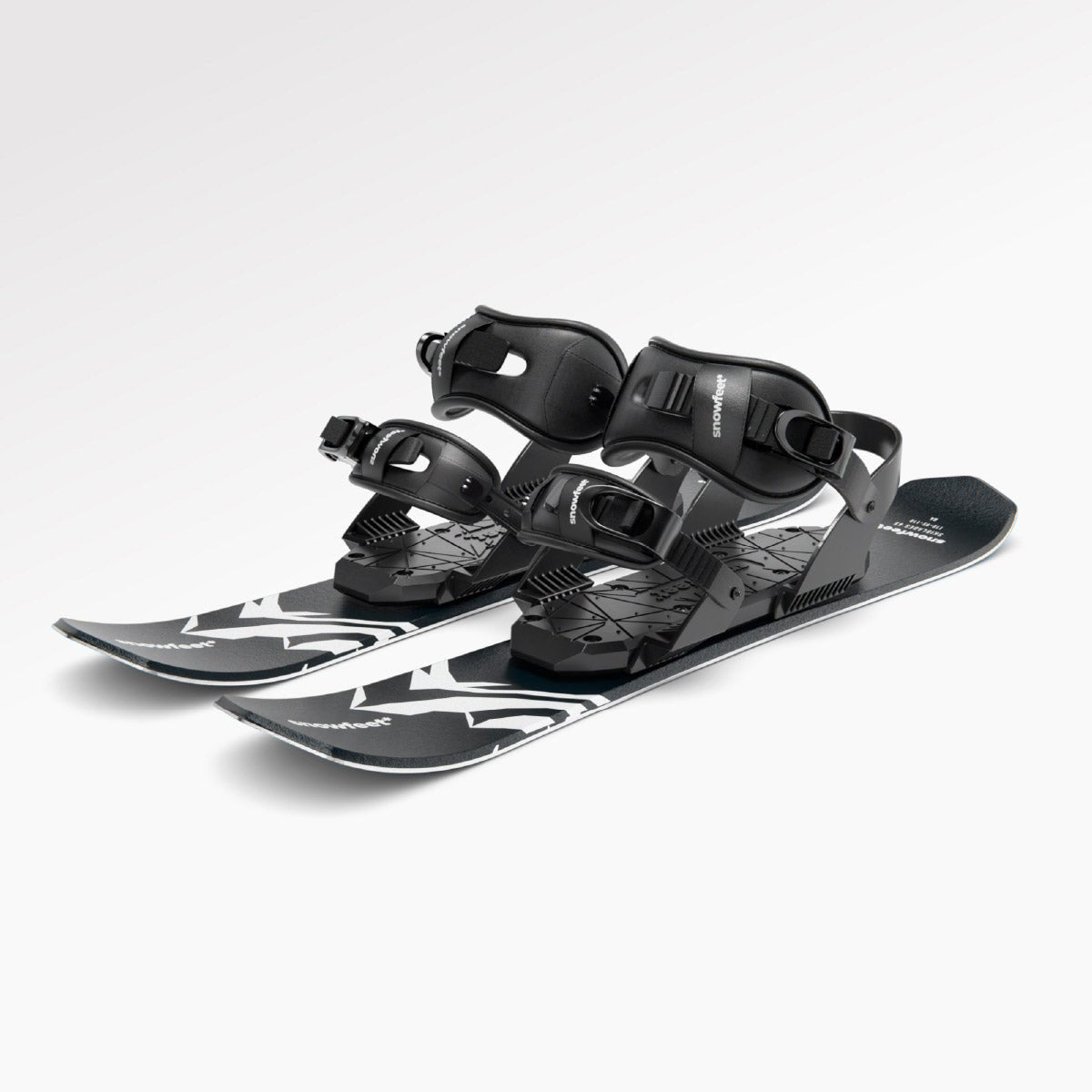
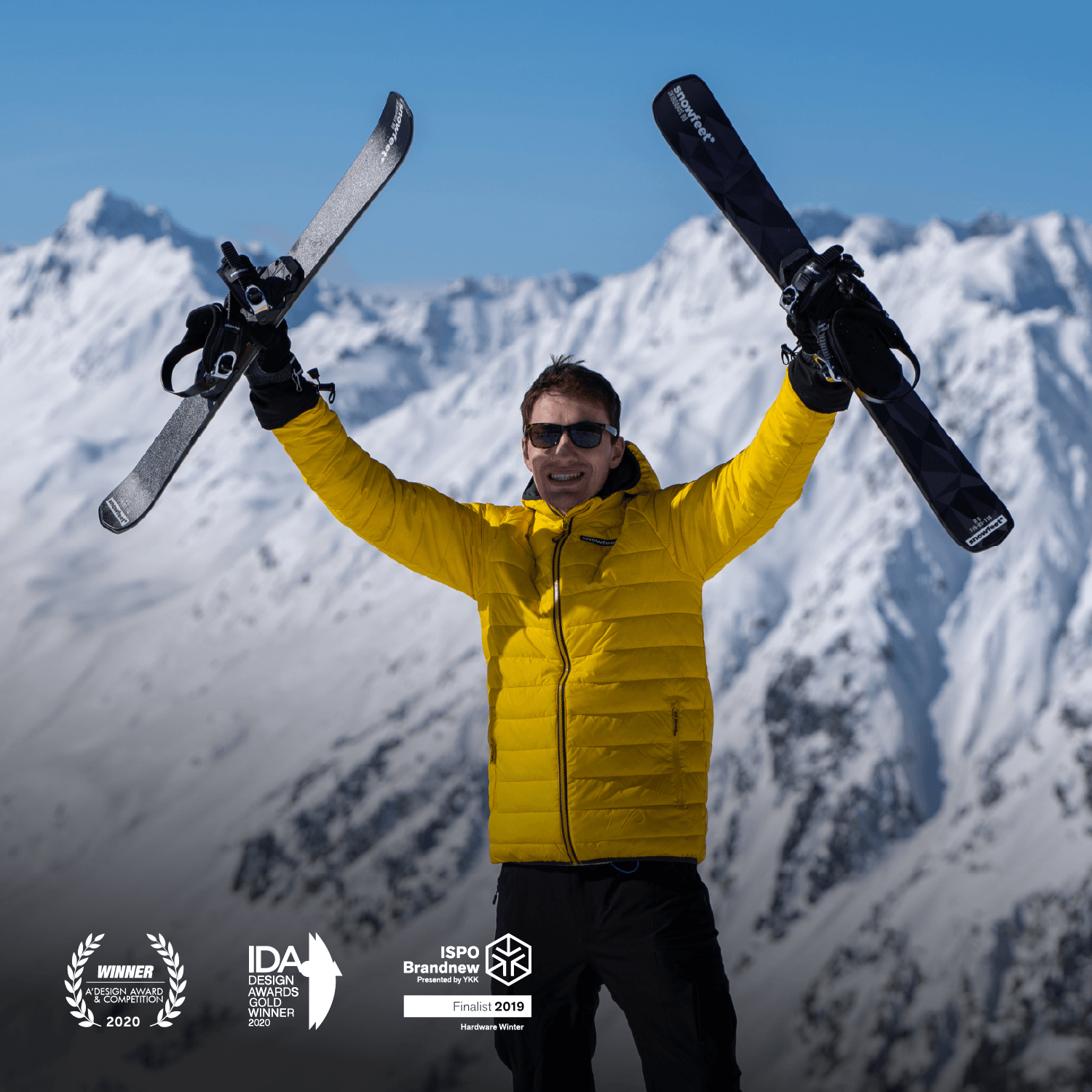
If you're ready to take your skills up a notch, Snowfeet* Skiblades (65–99 cm or about 26–39 inches, starting at $635) and Short Skis (120 cm or about 47 inches, priced at $775) offer a great step forward. Their shorter lengths provide better control and faster responsiveness, making them ideal for park tricks or navigating tight tree runs where traditional long skis can feel clunky and exhausting.
Think of these as "training wheels" that help you build confidence while refining your technique. They let you enjoy advanced skiing without the hassle of managing heavy, oversized equipment.
5 Common Beginner Ski Mistakes - and How to Fix Them!
sbb-itb-17ade95
Snowfeet* Products vs. Traditional Long Skis
When you stack Snowfeet* products against traditional long skis, the differences are pretty clear - especially for beginners who just want to dive into skiing without feeling overwhelmed. Traditional skis are usually about 90% of your height in centimeters. So, if you're 5'8" (173 cm), you'd be looking at skis around 63–65 inches (160–165 cm) long. For someone just starting out, that length can feel bulky and hard to manage.
Traditional skis are designed with longer lengths to improve stability at high speeds, and most recommendations suggest skis that reach somewhere between your chest and nose. Snowfeet* products, however, flip the script. They’re made with beginners in mind, offering much shorter options - ranging from just 15 inches (Mini Ski Skates) to 47 inches (Short Skis). These compact sizes make them easier to control, so you can focus on learning the basics without battling oversized equipment. This design makes Snowfeet* products a game-changer for simplifying the learning process.
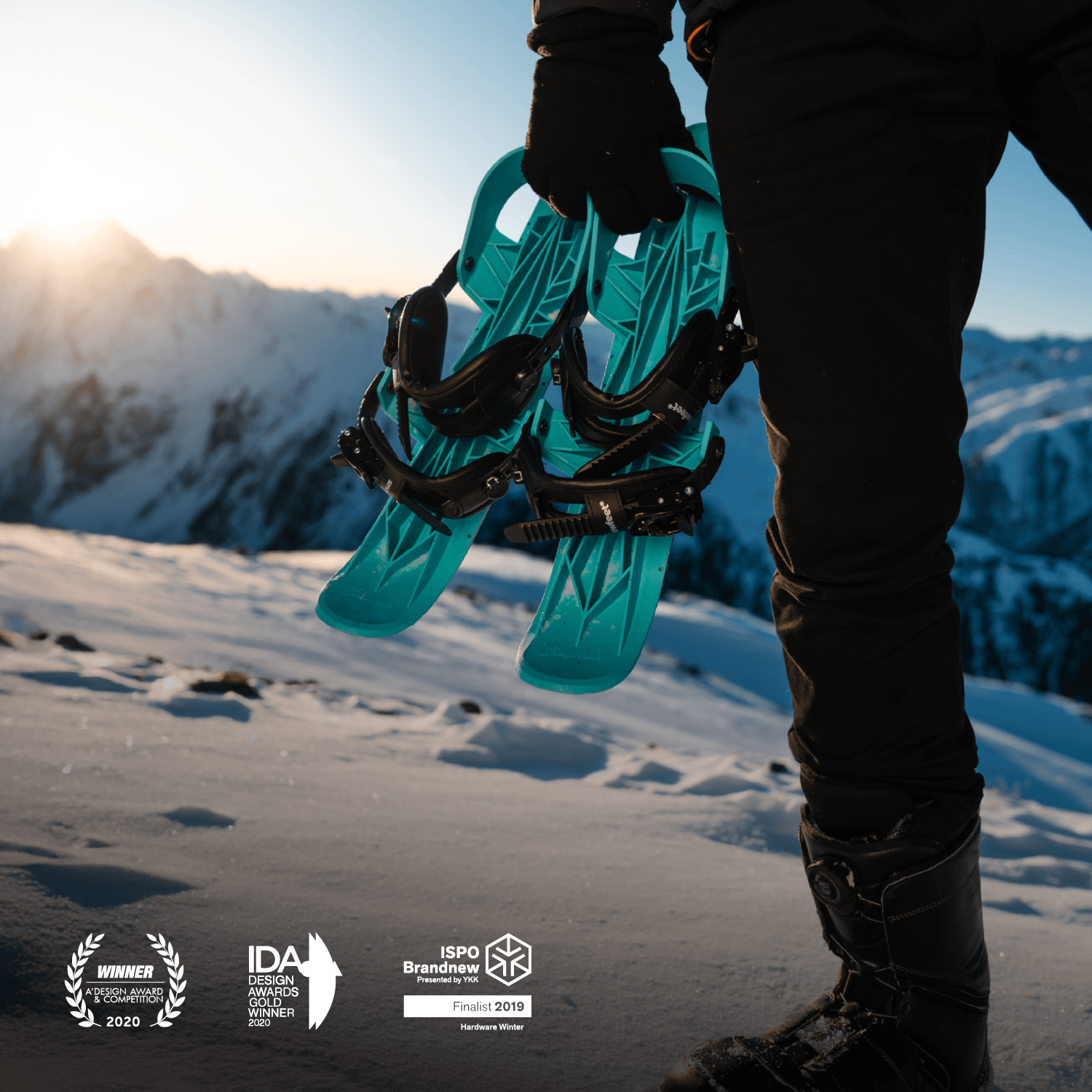
Another big difference? Traditional skis are heavy and require a lot of gear to transport - think roof racks, ski bags, and plenty of muscle. Snowfeet* products, thanks to their ultralight design, fit neatly in a backpack. They're perfect for quick trips or spur-of-the-moment outings. And instead of needing stiff, pricey ski boots that take ages to break in, Snowfeet* products work with regular winter shoes or snowboard boots. That’s a win for both your wallet and your comfort.
While traditional skis are all about speed and performance, Snowfeet* products focus on giving beginners control and agility. Here’s a quick side-by-side comparison to break it all down:
Feature Comparison Table
| Feature | Traditional Long Skis | Snowfeet* Products |
|---|---|---|
| Length | 63–65 inches for an average adult | 15–47 inches across all models |
| Weight | Heavier; requires specialized transport | Ultralight; can be carried in a backpack |
| Boot Requirement | Dedicated, specialized ski boots | Compatible with regular winter shoes or snowboard boots |
| Learning Curve | Steeper; requires days to weeks of practice | Much shorter; beginners gain control more quickly |
| Maneuverability | Requires more coordination for turning | Highly responsive and easy to maneuver |
| Portability | Needs roof racks and ski bags for transport | Easily portable for on-the-go adventures |
| Best For | Designed for high-speed stability and deep powder | Designed for enhanced control, agility, and an accessible skiing experience |
Traditional long skis are built for experienced skiers who want speed and performance, especially in deep powder. Snowfeet* products, by contrast, are all about making skiing approachable for beginners. They strip away the bulk, cost, and complexity, leaving you with a fun, easy-to-learn experience.
Conclusion: Make Skiing Easier and More Fun with Snowfeet*
Skiing doesn’t have to feel like climbing a mountain - especially for beginners. Most of the struggle comes from traditional long skis, which are built for speed and stability, not for learning the basics of balance and control. That’s where Snowfeet* products come in.
Snowfeet* flips the script with gear designed to work with you. Their shorter length gives you better control, quicker responses, and easier maneuverability - making sharp turns and adjustments a breeze. This means you can focus on learning and building confidence instead of fighting with oversized skis. Think of Snowfeet* as the perfect training partner, helping you enjoy the slopes without the usual frustrations.
From the compact 15-inch Mini Ski Skates to the versatile 47-inch Short Skis, Snowfeet* offers lightweight, portable options that make skiing more approachable. Plus, there’s a bonus: you can use your regular winter shoes, skipping the hassle (and cost) of specialized ski boots. It’s all about keeping things simple so you can focus on having fun.
While traditional skis shine for high-speed, wide turns, Snowfeet* stands out as the ideal choice for beginners. Their design makes learning smoother and more enjoyable, giving you a solid foundation to build on.
So, ditch the bulky gear, grab your Snowfeet*, and hit the slopes in your favorite winter shoes. It’s time to experience skiing gear that’s actually on your side.
FAQs
What size Snowfeet* should I start with?
Snowfeet* products are super lightweight and easy to use, making them perfect for beginners. Picking the right size is simple - just base it on your height and skill level, much like you would with regular skis. But here’s the great part: their beginner-friendly design makes learning a breeze no matter what size you choose. It’s all about having a fun and hassle-free skiing experience!
Can I use Snowfeet* with regular winter shoes?
Yes, you can use Snowfeet* with your regular winter shoes. This makes it way easier for beginners to try skiing without needing all the bulky, specialized gear that traditional skis or snowboards require. Snowfeet* are built to keep things simple while still giving you a fun and easy way to enjoy skiing.
Where can I ride Snowfeet* (slopes, parks, trails)?
Snowfeet* products are designed to be easy to use and perfect for beginners, offering a fun way to enjoy slopes, parks, and trails. Unlike bulky skis or snowboards, Snowfeet* are lightweight and super easy to handle. This makes them great for cruising down gentle slopes, practicing at beginner ski areas, or even trying out tricks and jumps in snow-covered parks. Thanks to their compact size, you can safely explore different terrains while building your skills and confidence at a pace that works for you.



Leave a comment
This site is protected by hCaptcha and the hCaptcha Privacy Policy and Terms of Service apply.