



















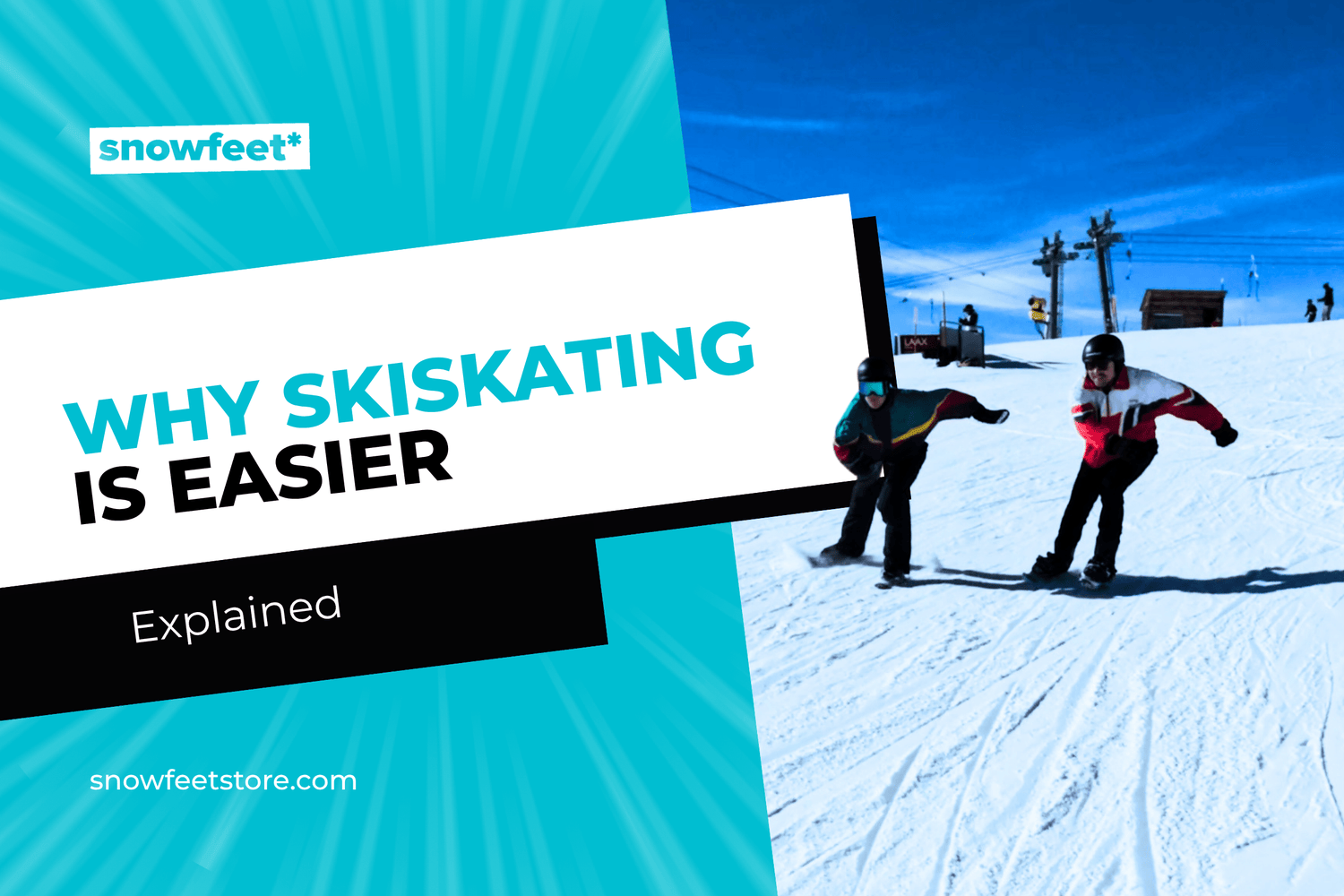
Looking for a simpler way to enjoy the slopes? Skiskating might be your answer. It combines skiing with the side-to-side motion of ice skating, making it easier to learn and less intimidating than skiing. With compact gear like Snowfeet Skiskates, you can skip the bulky equipment and steep learning curve. Here’s why skiskating stands out:
- Shorter learning time: Most beginners pick it up in under 30 minutes.
- Compact and lightweight gear: Skiskates are just 17 inches long, fit in a backpack, and work with regular winter boots.
- Easier control: The short length makes turning and stopping feel natural, even for first-timers.
If skiing feels overwhelming with its long skis, heavy boots, and complex techniques, skiskating offers a fun, beginner-friendly alternative that’s perfect for families, older adults, or anyone wanting a hassle-free winter sport. Ready to give it a shot? Let’s dive into the details!
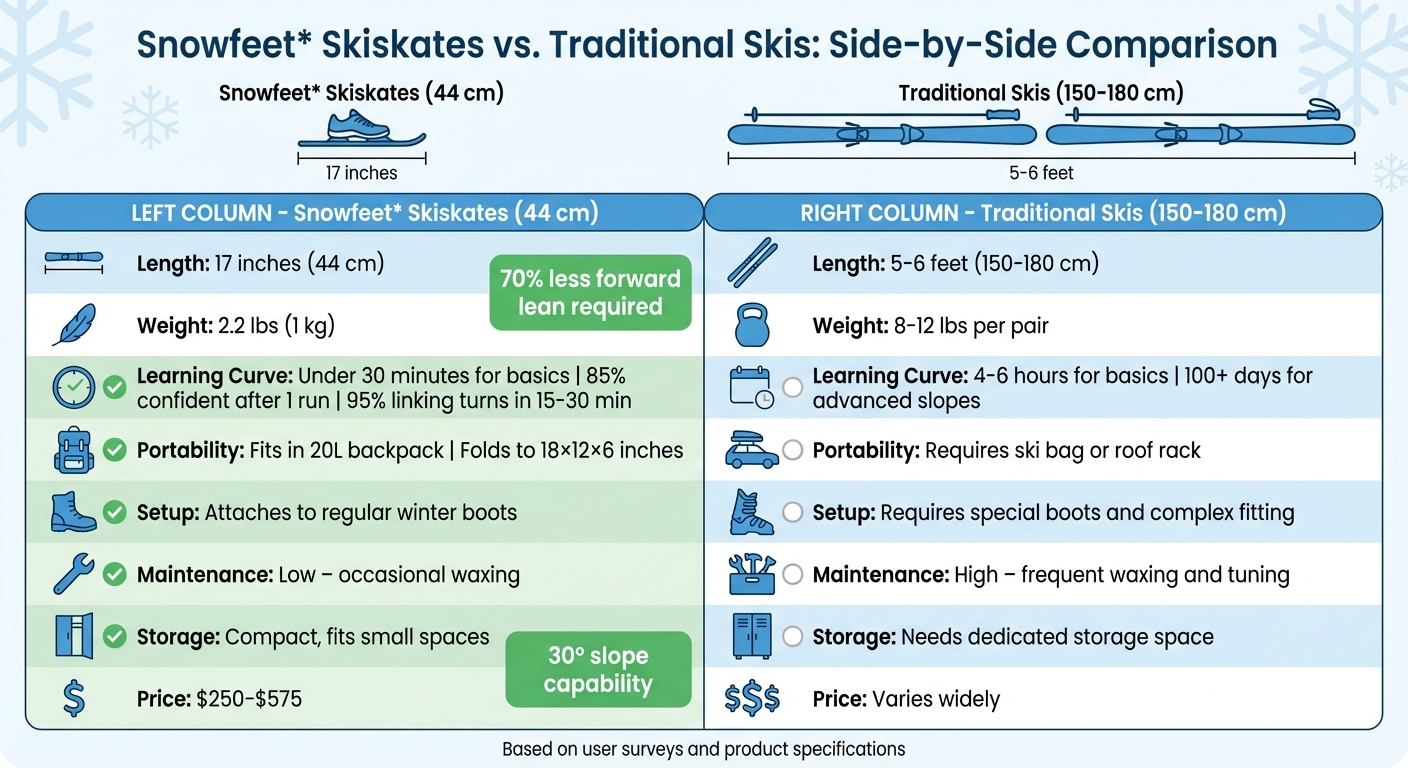
Snowfeet Skiskates vs Traditional Skis Comparison Chart
Problems with Traditional Skiing
Long Learning Process
Getting the hang of traditional skiing takes time - lots of it. You’re not just learning to glide; you’re rewiring your body to handle movements that feel completely foreign. As Nordic Ski Lab explains, "The mechanics of skate skiing are unique and unrelated to other sports, including ice skating". That means even if you’re athletic, you’re starting from scratch.
There’s a lot to juggle: controlling your edges, coordinating your poles, and staying balanced on long skis. These aren’t skills you pick up overnight. Many beginners develop bad habits that slow their progress and lead to frustration. To confidently navigate more challenging slopes, you’re looking at 100 days (or more) of practice. And let’s not forget the gear - heavy and stiff equipment only adds to the struggle.
Heavy and Bulky Equipment
Traditional ski gear is, well, a hassle. It’s bulky, heavy, and a pain to lug around. Those rigid boots? They’re not exactly made for comfort. On top of that, your performance depends on having the right gear. As Carrie McCusker, a Level 2 TrainingPeaks Coach, points out, "Don't sabotage your experience with the wrong gear.". If your skis are too stiff, they won’t grip properly. Too flexible? They won’t glide like they should. This delicate balance can make the whole process feel overwhelming, especially for beginners.
Intimidating for Beginners and Older Adults
Traditional skiing isn’t exactly beginner-friendly. The skis alone - often stretching over 6 feet - can be intimidating. Add in the steep slopes, chairlifts, and the fear of heights, and it’s no wonder many newcomers feel overwhelmed. Chairlifts, in particular, are a common source of stress. Timing your approach, hopping on a moving lift, and dealing with the height? It’s a lot to handle.
For older adults or casual skiers, the challenges don’t stop there. Cross-country skiing, for example, demands serious endurance as you pull yourself through snow for extended periods. The coordination and balance required can make the learning curve feel even steeper. All of this combined often makes traditional skiing seem more like an elite sport than an accessible winter pastime.
sbb-itb-17ade95
How Snowfeet* Skiskates Solve These Problems
Better Turning and Control
Snowfeet* Skiskates, with their compact 44 cm (about 17 inches) length, make turning much easier compared to traditional skis. Standard skis, which measure around 150–180 cm (5–6 feet), often require complex techniques like precise edging and weight shifting. The shorter length of skiskates significantly reduces the turning radius, making it feel more like ice skating. This design lets you carve smoothly even on slopes as steep as 30°. Plus, the side-to-side skating motion reduces the need for a forward lean by 70% compared to skiing, which means fewer falls and more control on the slopes.
Shorter Learning Time
Learning to use skiskates is quick and straightforward. Most beginners can grasp the basics - turning, stopping, and gliding - in under 30 minutes. In comparison, traditional skiing often takes 4–6 hours to learn these same skills. A survey of 500 users found that 85% felt confident after just one run. Additionally, trials show that around 95% of new users can start linking turns within 15–30 minutes. The skating-like motion feels natural, cutting down on the mental effort of learning a completely new sport.
Easy to Carry and Store
Snowfeet* Skiskates are also incredibly portable. Traditional skis, weighing 8–12 lbs per pair, require bulky storage solutions like ski bags or roof racks. In contrast, a pair of skiskates weighs just 2.2 lbs (about 1 kg) and measures 44 cm by 10 cm. When folded, they fit into a compact 18 × 12 × 6-inch space, which can easily slide into a standard 20-liter backpack. Made with aerospace-grade aluminum frames and high-density polyethylene sliders, they feature quick-release hinges that allow them to collapse for storage in airline carry-ons under 22 × 14 × 9 inches. Thanks to their lightweight and compact design, 80% of users find them easy to carry on public transit or flights, making trips to places like Vail or Keystone stress-free.
Main Benefits of Snowfeet* Skiskates vs. Traditional Skis
Why Shorter Skis Work Better
Traditional skis, typically 5 to 6 feet long, are often praised for their stability and speed. But let’s be honest - mastering them takes time and effort. Balancing weight, perfecting edging techniques, and managing their length can feel overwhelming for beginners.
Snowfeet* Skiskates flip the script. These compact skates, measuring just 17 inches (44 cm), are designed to make skiing more accessible and fun. Their shorter length allows for better energy transfer from your legs to the snow, giving you precise control at any speed. As Nordic Ski Lab puts it:
"Skate skis are shorter than classic skis, which makes them easier to manage with the feet in a V-stance."
Snowfeet* takes this concept even further with their ultra-compact design, making skiing simpler and more intuitive for everyone.
Comparison: Snowfeet* Skiskates vs. Traditional Skis
Here’s a quick look at how Snowfeet* Skiskates stack up against traditional skis:
| Feature | Snowfeet* Skiskates (44 cm) | Traditional Skis (150–180 cm) |
|---|---|---|
| Length | 17 inches | 5–6 feet |
| Weight | Lightweight | Heavier |
| Learning Curve | Beginner-friendly with a quick learning curve | Takes several hours to learn the basics |
| Portability | Compact, fits in a backpack | Bulky, often requires a ski bag or roof rack |
| Setup | Attaches easily to regular winter boots | Requires specific boots and a complex fitting process |
| Maintenance | Low-maintenance, occasional waxing | High-maintenance, frequent waxing and tuning needed |
| Storage | Fits in small spaces | Needs dedicated storage due to its size |
With traditional skis, you’re often stuck navigating a maze of options based on height, weight, and flex. Plus, you need special boots and bindings that can add to the complexity. Snowfeet* Skiskates cut through all that hassle. They attach directly to your regular winter boots, no special equipment required. This simplicity makes them perfect for families, travelers, and anyone looking to dive into winter sports without the stress - or the cost - of traditional gear.
User Examples and Experiences
How to Start with Snowfeet* Skiskates
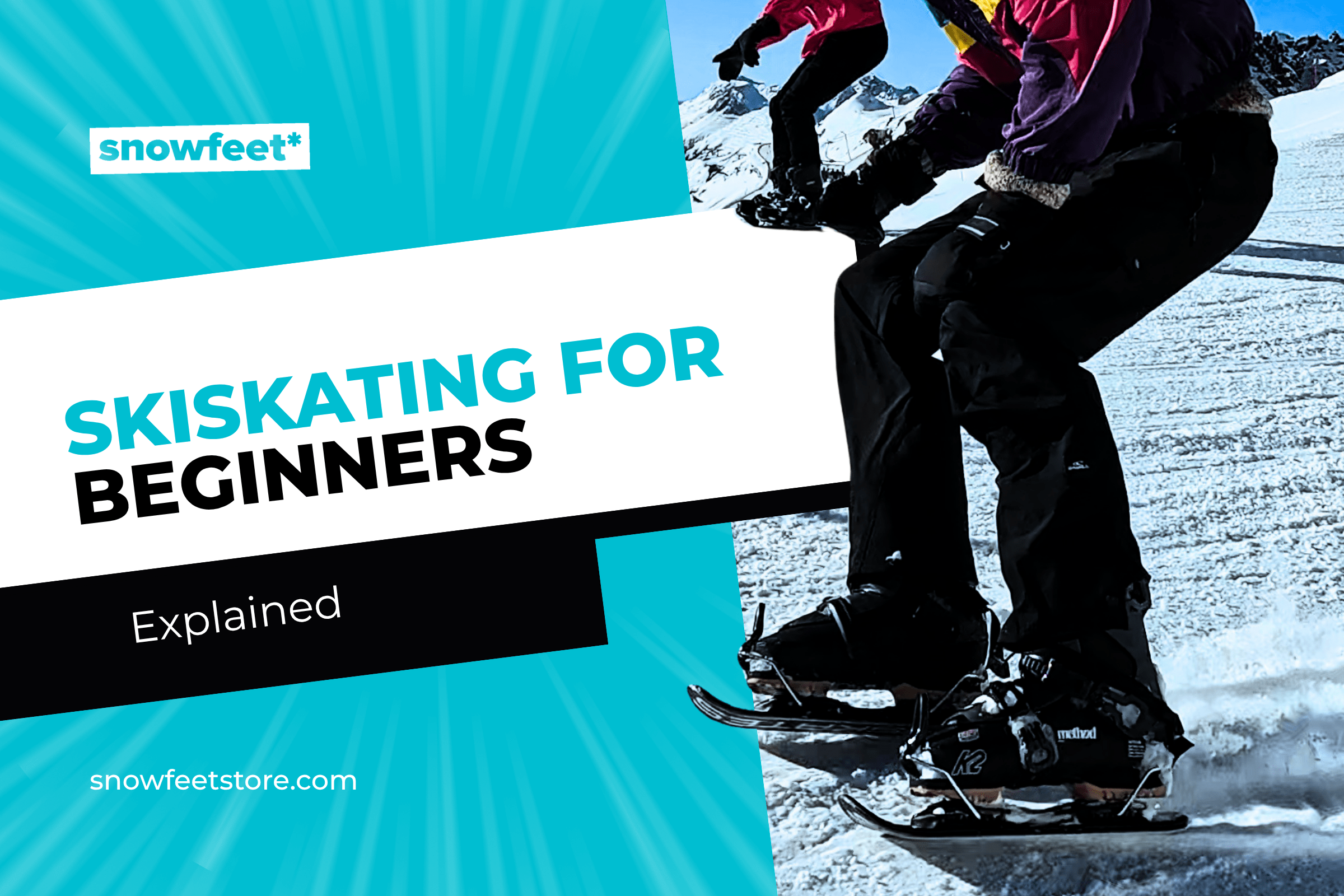
Getting started with Snowfeet* Skiskates is a breeze. The best way to begin is on flat terrain, where you can focus on balance and basic skating movements without worrying about speed or slopes. Keep your feet shoulder-width apart, lean slightly forward, and bend your knees just enough to absorb movement. This simple stance helps you find your footing and gain confidence quickly.
Once you're comfortable on flat ground, head over to a gentle beginner slope. Start by practicing wedge turns and controlled stops. Thanks to their compact 17-inch design, Snowfeet* Skiskates respond instantly to weight shifts and ankle movements - no need to master complex techniques like in traditional skiing. With just one session, most people feel confident balancing and stopping. After a few more runs, you’ll likely be ready to tackle controlled turns and slightly steeper slopes. What usually takes days or weeks with regular skis can be achieved in a fraction of the time with these skiskates. These steps lay the groundwork for the real-life stories shared by users.
Stories from Beginners and Families
Real-world experiences bring the ease of Snowfeet* Skiskates to life. Families and beginners often rave about how quickly they see results. Parents and kids enjoy learning together, as the simple design makes it easy for everyone to progress at the same pace. Even older adults find the lightweight gear and intuitive control less demanding than traditional skiing, giving them a chance to enjoy winter sports without the usual strain.
Portability is another game-changer. Forget hauling bulky ski gear - Snowfeet* Skiskates fit into a backpack, making spontaneous trips to the slopes a reality. These firsthand accounts show why these skiskates are a go-to option for families, beginners, and seniors looking for a fun, low-pressure way to enjoy the snow.
Conclusion
Why Choose Snowfeet* Skiskates?
Snowfeet* Skiskates offer a refreshing alternative to traditional skiing. Forget about managing long, heavy skis - these compact 17-inch (44 cm) skates are designed to respond effortlessly to your movements. Their lightweight build and intuitive feel give you better control and agility, making them a fantastic choice for beginners, families, and even older adults. Plus, they’re super portable, so you can toss them in a bag and head to your favorite slope without lugging around bulky gear.
The shorter length means less fatigue and more freedom to move. Whether you’re carving smooth turns on groomed runs, playing around in terrain parks, or even exploring snowy trails, Snowfeet* Skiskates bring a level of versatility you just don’t get with traditional skis. They’re all about making winter sports fun, simple, and stress-free.
Ready to Try Snowfeet* Skiskates?
If traditional skiing feels like too much of a hassle, Snowfeet* Skiskates might be your perfect match. Prices start at $250 for the 38 cm Mini Ski Skates, with the professional 44 cm model available for $575. Whether you're just starting out or looking for something new to spice up your winter adventures, there’s a pair for every budget and skill level.
Say goodbye to the heavy gear and steep learning curves. Snowfeet* Skiskates make it easy for anyone - from total beginners to seasoned pros - to enjoy the slopes. Lightweight, portable, and packed with fun, they’re your ticket to a fresh, dynamic winter experience. So, grab a pair, find a gentle slope, and see how these little skates can transform your time on the snow. Sometimes, smaller really is better!
How similar is skiing to skating?
FAQs
Are skiskates allowed at most ski resorts?
Skiskates usually aren’t allowed at most ski resorts, as many restrict access to traditional skis and snowboards. That said, resort policies can differ, so it’s a good idea to review the rules of the specific resort you plan to visit before heading out.
What kind of boots and bindings do Snowfeet* Skiskates use?
Snowfeet* Skiskates come with adjustable bindings that are designed to work with most ski or snowboard boots. They fit US sizes 6–13, offering flexibility and convenience for a broad range of users.
Are Snowfeet* Skiskates safe on steeper runs and icy snow?
When it comes to using Snowfeet* Skiskates on steeper slopes or icy snow, there isn’t much specific information about their safety in these conditions. Like with any winter sport, it’s important to stay cautious and assess the terrain and snow quality before heading out. Performance can differ based on these factors, so keep that in mind to ensure a safer experience.












Leave a comment
This site is protected by hCaptcha and the hCaptcha Privacy Policy and Terms of Service apply.