



















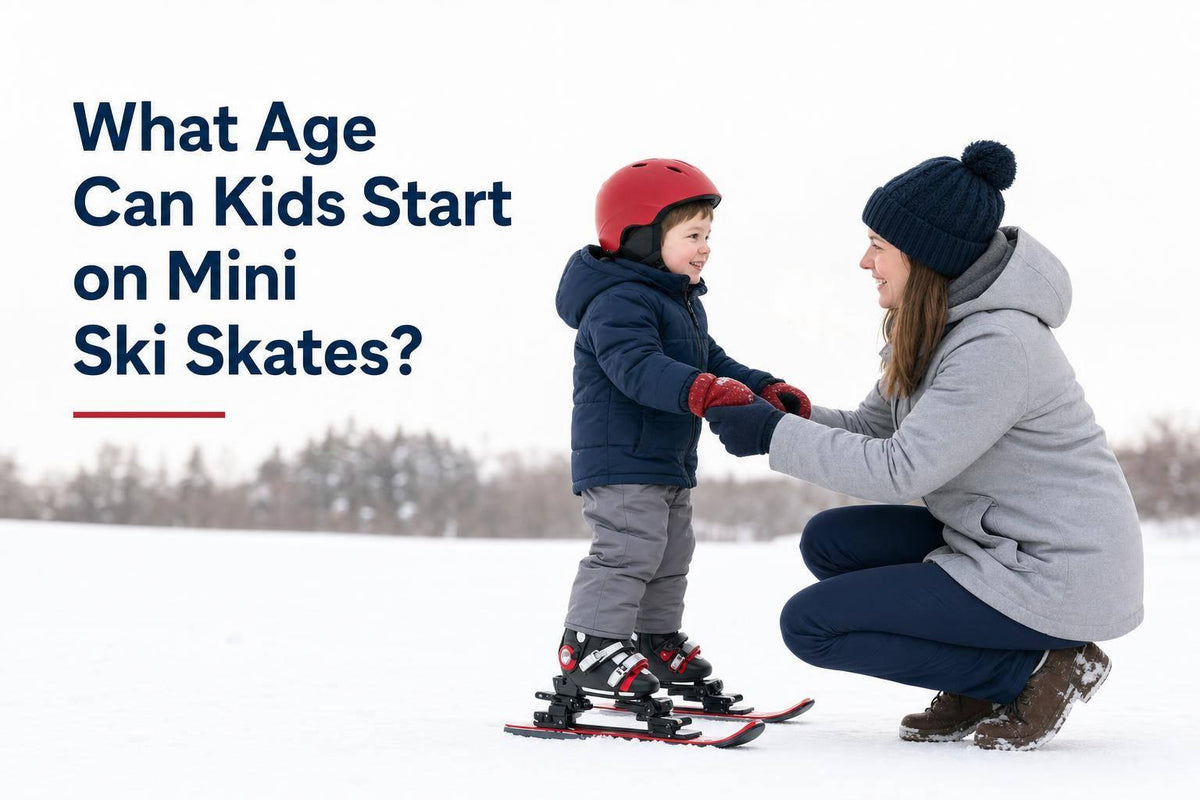
Most kids can start around ages 3 to 4, but age isn’t the main thing. I’d look at balance, listening, comfort in the cold, and how your child handles small falls before I look at their birthday.
Here’s the short version:
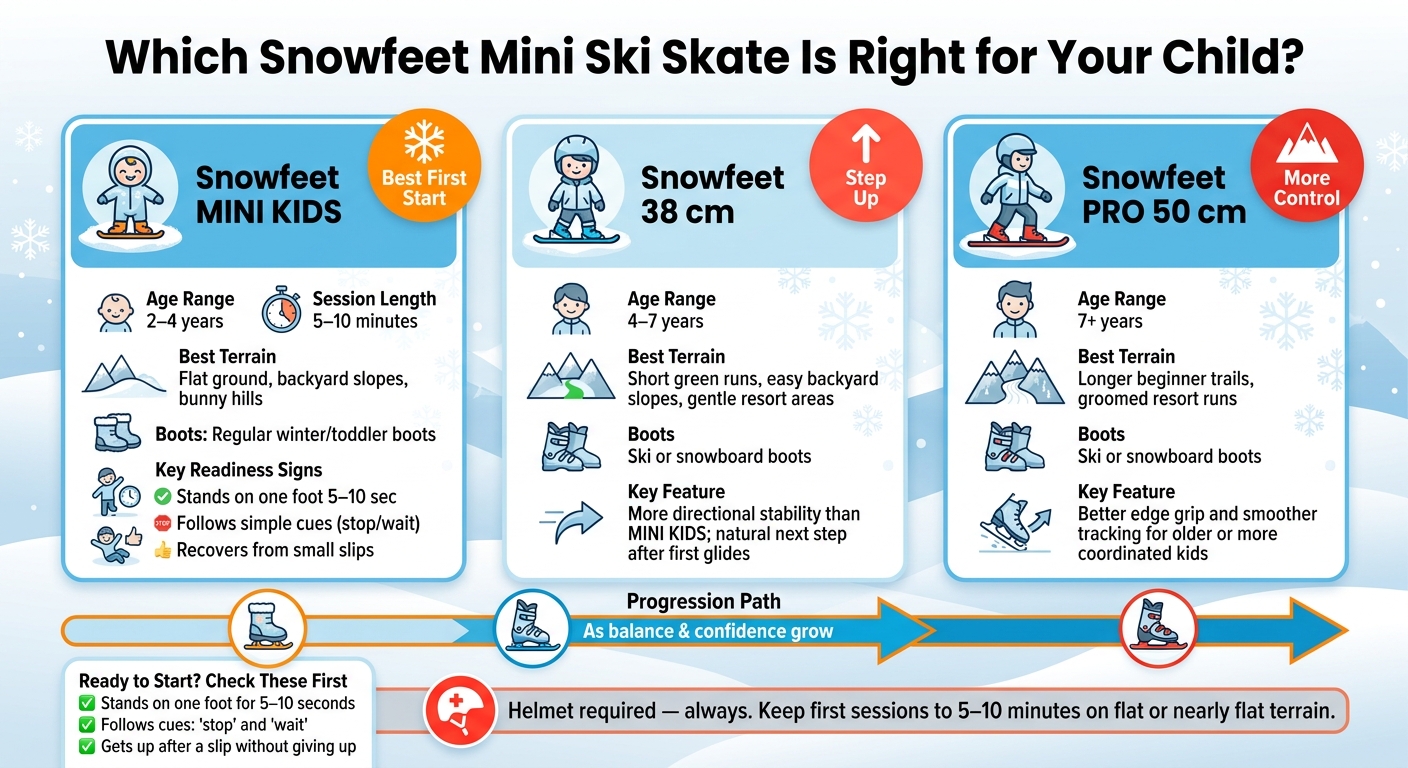
- Ages 2–3: short, parent-held tries on flat snow
- Ages 3–4: first easy glides on gentle slopes
- Ages 4–6+: more independent starts if balance is solid
- First session: keep it to 5–10 minutes
- Cold-time target: about 20–30 minutes of outdoor stamina is a good sign
- Helmet: always
- Best first terrain: flat ground, bunny slope, or a mellow backyard hill
What I’d check before day one:
- Can your child stand on one foot for 5–10 seconds?
- Can they follow simple cues like “stop” or “wait”?
- Can they get up after a slip without a full snow-pants protest? :)
If yes, they may be ready. If not, I’d wait a bit.
A simple path looks like this:
| Stage | Rough age | Best use |
|---|---|---|
| MINI KIDS | 2–4 | first tries, tiny slides, parent close by |
| 38 cm | 4–7 | easy beginner glides on gentle snow |
| PRO 50 cm | 7+ | longer beginner runs with more control |
One more thing: mini ski skates make sense for casual family snow days, short practice runs, and kids who don’t want a lot of gear. Longer kids’ skis fit better if your child is headed into ski lessons and resort-style learning.
If I had to sum it up in one line, it’d be this: start as early as your child can stay safe, listen well, and have fun.
Snowfeet Mini Ski Skates: Age Guide & Model Comparison for Kids
Snowfeet Mini hit the slopes | for Kids & Adults with small feet
How to Tell If a Child Is Ready
Age matters less than most people think. What counts more is balance, listening, and how calm your child feels on snow.
Balance, Strength, and Coordination
Start by watching how your child moves day to day. If they can stand on one foot for 5–10 seconds, go up and down stairs with control, and squat down and stand back up without tipping over, they’re ready for short, supervised sliding.
Endurance matters too. If they can stay active in the cold for 20–30 minutes without wearing out, that’s enough for a first session.
These basic skills make a big difference. They tell you if your child is ready for a first slide, or if they still need a bit more time just walking around in boots.
Listening Skills and Confidence on Snow
This part is huge. If your child can’t stop, wait, or take your hand when asked, keep them on flat, empty snow with an adult right next to them.
You’re also looking for how they react to small slips. A child who slips, gets back up, and keeps going usually has the grit that makes mini ski skates fun instead of a meltdown in snow pants. But if one small fall ends the whole outing, it’s smarter to build good snow memories first with sledding, snow play, or short walks in boots.
Those signs help you decide whether to start with MINI KIDS or wait and move up to a larger Snowfeet model.
Starting Age by Stage and Snowfeet* Model
With those readiness signs in mind, here’s the simple age-by-age breakdown. Age is just a rough guide. What matters most is readiness and a good fit.
Ages 2–3: First Slides With Snowfeet* MINI KIDS
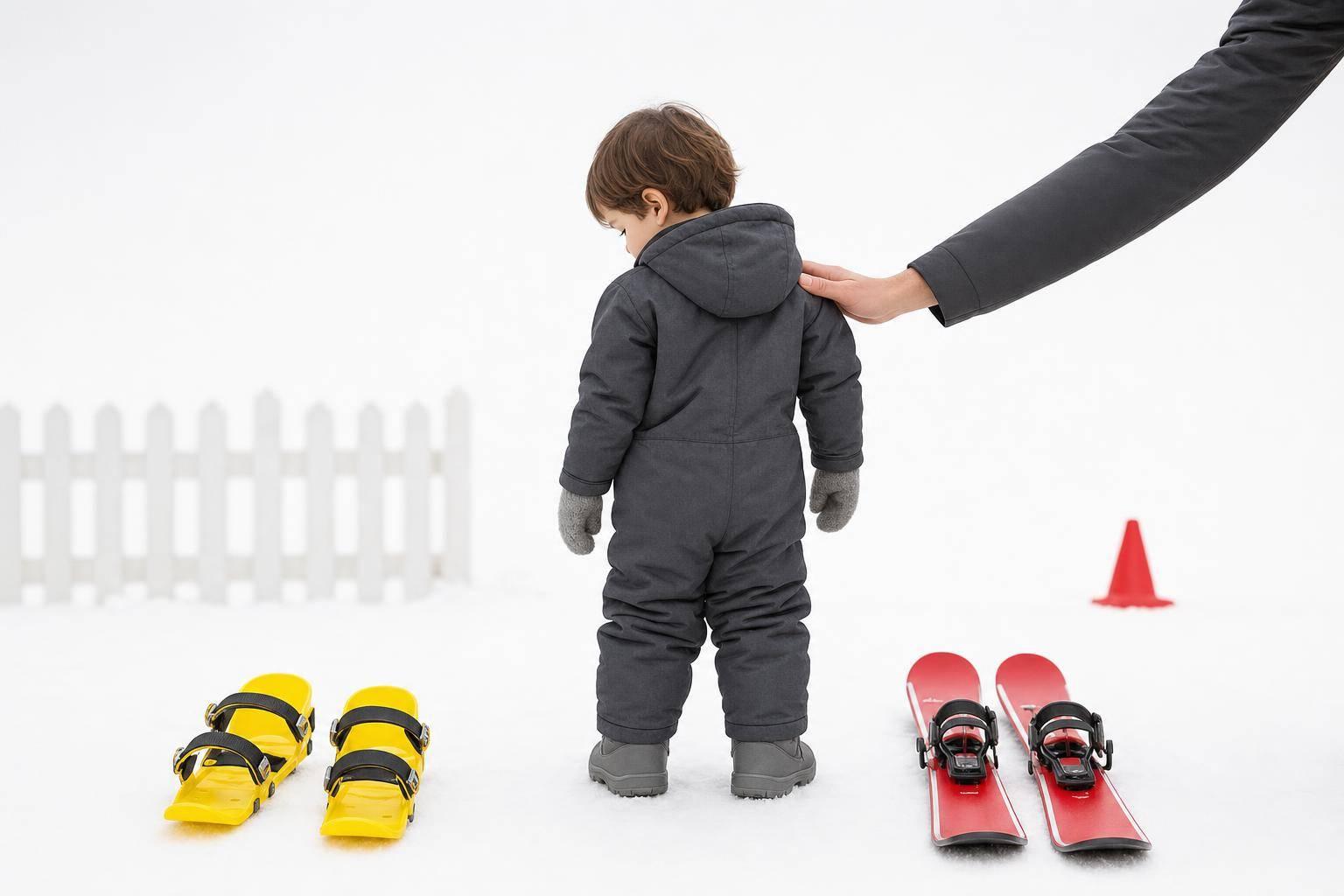
At this age, the goal is first exposure, not formal teaching. Think standing, tiny glides, and getting used to snow under their feet. Flat ground or very gently packed snow works best. Keep sessions short, often just 5–10 minutes at a time, because little kids tire out fast and balance can fall off once they do.
Snowfeet* MINI KIDS are the best match here. They’re shorter and lighter than kids’ skis, so small legs can handle them with less fuss. They also strap right onto regular toddler winter boots, which means no ski-boot drama, no long setup, and fewer chances for a meltdown in the parking lot. Stay close - close enough to catch them if needed.
Once a child can manage very short slides, you can move into gentle beginner use.
Ages 3–4: First Beginner Use on Gentle Snow
A lot of preschoolers in this age range have enough motor control for short glides and simple stopping. If your child can run, bounce back from small slips, and follow a basic cue like “bend your knees,” that’s a good sign they’re ready for easy beginner use.
MINI KIDS still work well for most preschoolers. Good spots include magic carpets, beginner hills, and quiet learning areas. Keep runs short - even 20 feet is plenty at first - and stay near enough to step in fast. Regular winter boots still make life easier, which, let’s be honest, matters a lot when you're helping a wiggly 3-year-old in the snow.
Ages 4–6 and Up: Moving to Snowfeet* 38 cm or PRO 50 cm
By this point, most kids have better leg strength, steadier balance, and a bit more freedom on snow. That’s usually the time to move up to longer Snowfeet models, with adult supervision.
As kids go from first exposure to short beginner glides, the usual path is MINI KIDS, then 38 cm, then PRO 50 cm. Each step gives more stability and straighter tracking as balance and coordination get better.
| Model | Best For | Terrain |
|---|---|---|
| Snowfeet* 38 cm | Confident younger beginners, roughly ages 4–7 | Short green runs, easy backyard slopes |
| Snowfeet* PRO 50 cm | Older or more coordinated kids, often 7+ | Longer beginner trails, groomed resort runs |
The 38 cm model gives more directional stability than MINI KIDS while still feeling light and easy to manage. It’s a natural next step for a 5-year-old who can already glide a few yards without holding your hand. The PRO 50 cm adds more edge grip and smoother tracking, so it’s a better fit for older kids who want more stability on groomed slopes.
Once you’ve matched the model to the child’s skill level, the next things to sort out are helmet, boots, and terrain.
sbb-itb-17ade95
Safety, Fit, and When Snowfeet* Make More Sense Than Long Skis
Once you’ve picked a model, fit and terrain shape the first day more than anything else. Get those right, and the session feels a lot safer and a lot more fun.
Helmet, Boots, Terrain, and Adult Supervision
Before the first glide, do a gear check. A properly fitted ski or snowboard helmet is required - the American Academy of Orthopaedic Surgeons recommends helmets for all skiers and snowboarders. The helmet should sit level on the head, not tipped back, and the chin strap should be snug enough that only one or two fingers fit underneath. Add goggles, warm gloves, and waterproof layers so your child stays warm and can focus on sliding instead of shivering.
Next up: boots. This part matters more than people think. Check the size chart before you buy. The boot needs to sit firm in the binding, with no shifting or rocking. For the 38 cm and PRO 50 cm models, ski or snowboard boots are the usual fit, so always confirm compatibility on the manufacturer's chart.
Here’s a simple at-home check:
- Strap the Snowfeet* on
- Have your child stand up
- Ask them to bend their knees
- Watch for twisting or boot movement
If the skate twists or the boot rocks, the fit isn’t safe enough yet.
For the first session, keep the terrain mellow. Flat snow or almost-flat snow is best - think backyard slopes, bunny hills, or mild beginner areas. Skip icy spots, steep slopes, narrow trails, and busy runs where faster skiers or snowboarders are zipping by. Kids on short skates don’t have much stopping control at first, so an open area with a natural stopping zone is the smart move. Stay within arm’s reach for toddlers and preschoolers, and stay close for older kids.
Snowfeet* vs Traditional Kids' Skis for Beginners
For most casual beginners, Snowfeet* are the simpler first pick. Traditional skis make more sense for ski school and lift-served days.
A quick rule of thumb: Snowfeet* are better for easy first rides. Traditional skis are better for formal instruction.
| Snowfeet* MINI KIDS | Snowfeet* 38 cm / PRO 50 cm | Traditional Kids' Skis | |
|---|---|---|---|
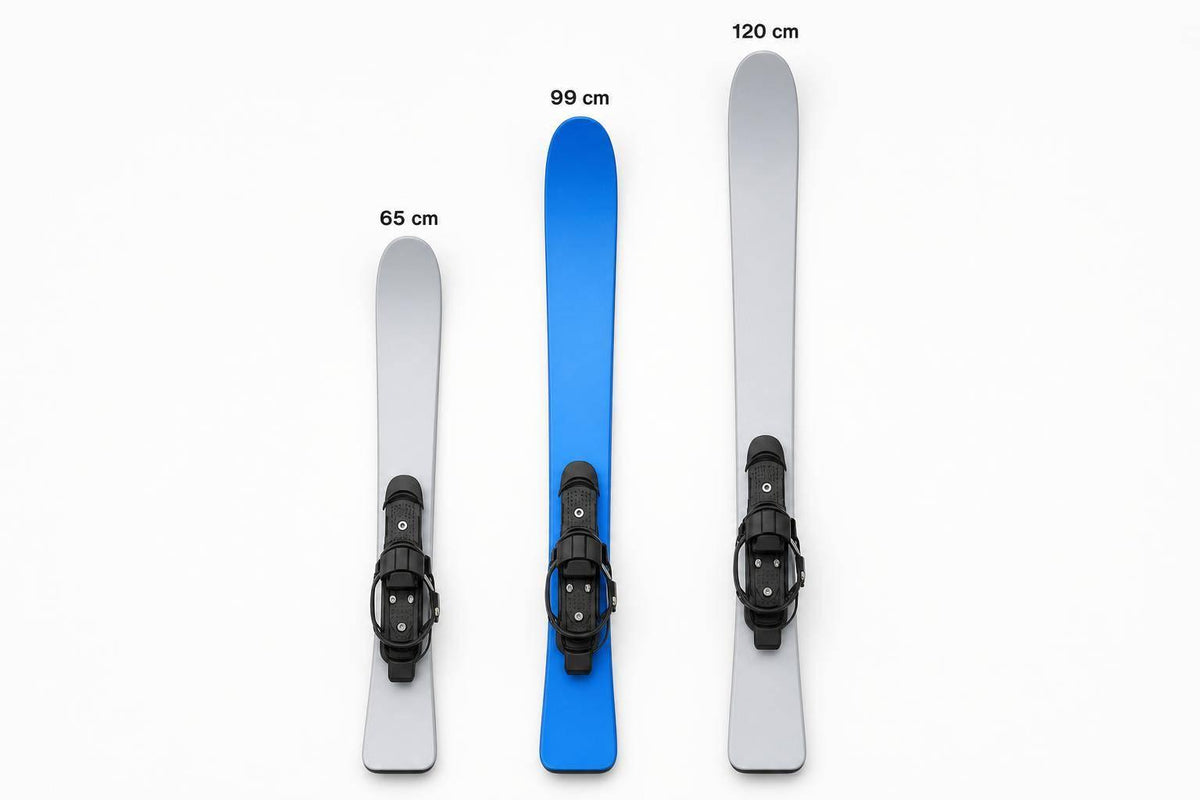
| Best fit | Roughly toddlers to early elementary, depending on shoe size and balance | Older kids with stronger balance and coordination; typically preschool and up, depending on size | Wide range; sized by height and weight |
| Boots | Sturdy winter boots with firm soles | Ski boots or snowboard boots, depending on the model | Properly fitted ski boots and bindings |
| Ease of learning | Very approachable; short length reduces intimidation and tangling | Moderate; still shorter than skis but need more control than MINI KIDS | Easier for structured ski-school technique, but longer length can feel a bit intimidating at first |
| Best terrain | Flat areas and very gentle backyard or bunny slopes | Gentle resort runs, green slopes, and larger open hills | Resort groomers, lifts, and a broad range of slopes as skills grow |
| Portability | Very compact and light; easy to carry in a bag or by hand | Compact compared with full skis; easier to store and transport than long skis | Bulkier and heavier; usually need more space to transport |
For families who hit a resort a few times each season and want a more relaxed, playful day, Snowfeet* MINI KIDS or the 38 cm model is usually the easier starting point. You’ve got less gear to carry, less fuss, and less boot drama - and if you’ve ever wrestled a cranky kid into ski boots, you know that counts for a lot :). If your child is already in a ski program and working toward longer runs and lift-served skiing, traditional skis line up better with that path.
Conclusion: Pick the Earliest Age That Still Feels Safe and Fun
There’s no single “right” age to start mini ski skates. Readiness matters more than age. When a child can walk with steady balance, follow simple directions, and stay calm on snow, that’s a good sign they’re ready to give it a try.
For most casual U.S. families, Snowfeet* mini ski skates are the easier first step than kids’ skis. They’re shorter, lighter, and less scary for a first outing. You also deal with less gear, which is nice because, let’s be honest, kids’ snow gear can turn into a whole production fast. Model choice stays simple: start small, then move up as your child gets more control. The path is clear: MINI KIDS → 38 cm → PRO 50 cm.
Start when your child is curious, feels okay on snow, and can stop when you say “stop.” Keep that first session short. 5 to 10 minutes on flat ground is plenty.
If those signs aren’t there yet, wait. Don’t force it. A good first session matters more than starting early.
Pick the earliest point that still feels safe and fun for your child. Then choose the smallest model that fits their balance, confidence, and the level of supervision you can give.
FAQs
How do I know if my child is truly ready?
Your child is ready when they can stay balanced and in control on gentle, groomed snow for a full run without getting rattled by speed or falls.
A few good signs to watch for:
- They can follow instructions
- They’re trying to turn and stop, not just slide straight downhill
- They can hold an easy stance without losing control again and again
Snowfeet* is compact, so it’s easier to handle than long skis. But size still matters. Make sure the fit is right, your child wears a helmet and other safety gear, and an adult stays close the whole time.
What boots work with Snowfeet* mini ski skates?
Snowfeet* mini ski skates and short skis work with regular waterproof winter boots, snowboard boots, and, on some models, standard ski boots. In many cases, snowboard boots are the best pick because they give you a snug fit and solid ankle support.
Boot fit depends on the model. Snowfeet MINI KIDS are made for winter shoes. Skiskates and PRO 50 cm fit many winter boots and snowboard boots.
A good rule of thumb: go with boots that have:
- a stiff or semi-stiff sole
- ankle coverage
That setup helps the skates feel more secure and easier to control on snow.
Should my child start with Snowfeet* or regular skis?
For beginners, Snowfeet* mini ski skates are often the safer, more realistic pick than regular skis. Traditional skis can feel long, heavy, and tough to steer for nervous first-timers.
Snowfeet* are small, light, and work with regular winter boots or snowboard boots. That makes the first day on snow feel a lot less intimidating.
A simple way to start: choose the right size for your child’s age and skill level. For example, MINI KIDS is a good fit for young beginners, then you can move up as their confidence builds.











Leave a comment
This site is protected by hCaptcha and the hCaptcha Privacy Policy and Terms of Service apply.