



















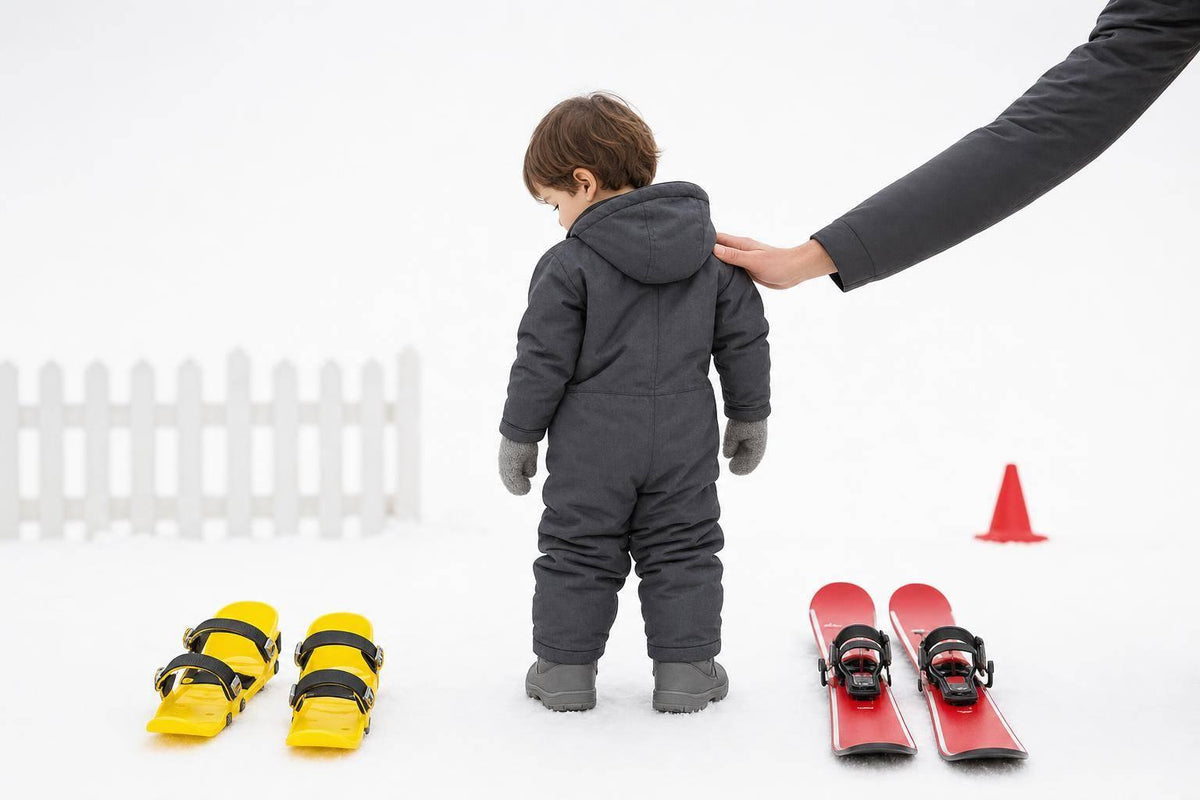
If your toddler is ages 2–5 and just starting on snow, I’d pick mini ski skates first in most cases. They’re lighter, use regular winter boots, and make more sense for short play sessions in a yard, park, or small hill. Full kids’ skis fit better once your child is closer to age 4–5, heading into ski school, and spending time at a resort.
Here’s the short answer:
- Pick mini ski skates if you want simple snow play, low speed, and less gear.
- Pick kids’ skis if you want lessons, bunny slopes, and release bindings.
- Mini ski skates cost about $170–$199.90, while a full kids’ ski setup often runs $230–$600+.
- Most group ski lessons start around age 4, so many younger toddlers do better with play than formal instruction.
I’d think about just three things:
- Age and balance - Can your child walk well on uneven ground and follow simple directions?
- Where they’ll ride - Backyard and sled hill, or ski resort?
- How much gear you want to deal with - Strap-on skates are a lot less fuss than skis, boots, and bindings.
How to Use Snowfeet* Skiskates 44 CM | Skates for Snow | Mini Ski | Snowblades | Snowskates
Quick Comparison
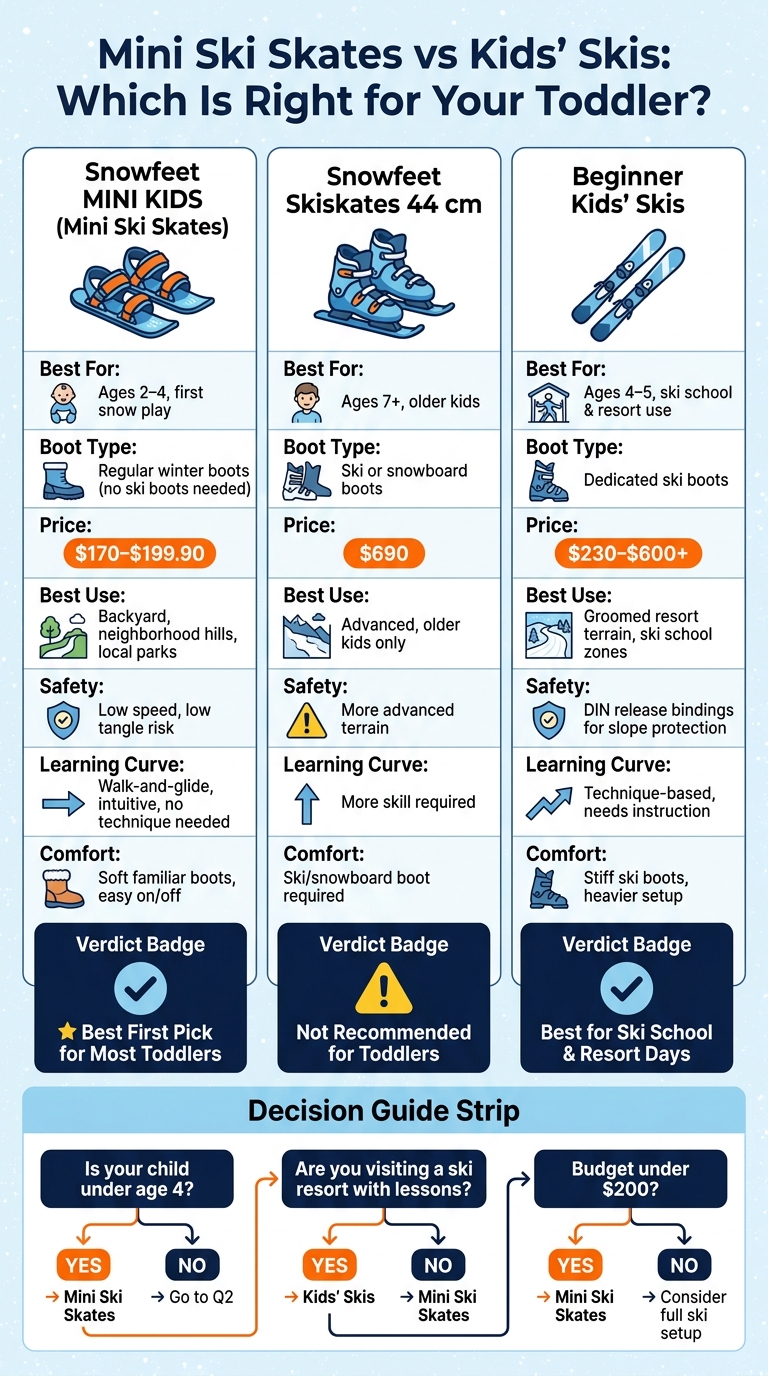
Mini Ski Skates vs Kids' Skis: Toddler Snow Gear Comparison
| Option | Best for | Boot type | Main upside | Main downside | Typical price |
|---|---|---|---|---|---|
| Snowfeet* MINI KIDS | Ages 2–4, first snow play | Regular winter boots | Light, simple, low-stress | Not made for ski school/resort progression | $170–$199.90 |
| Snowfeet* Skiskates 44 cm | Older kids, about 7+ | Ski or snowboard boots | More support and performance | Too much for toddlers | $690 |
| Beginner kids’ skis | Ages 4–5, lessons and resort use | Ski boots | Release bindings and lesson-ready setup | Heavier, stiffer, more setup | $230–$600+ |
So, if you want the plain-English version: for most toddlers, mini ski skates are the easier first step. They keep the day fun, short, and low-pressure. And with little kids, that’s half the battle :)
A couple of useful YouTube searches if you want to see gear in action:
What each option is and how it works
Mini ski skates: Snowfeet* MINI KIDS and Skiskates 44 cm
Mini ski skates are short, strap-on snow gliders made for easy, low-speed fun. Think simple movement, quick turns, and casual play on mellow snow. They’re less like full ski gear and more like a small, playful way to slide around without a big setup.
Snowfeet* MINI KIDS are the starter pick for toddlers and young preschoolers. They strap right onto regular winter boots with adjustable bindings, so you don’t need ski boots. That’s a big deal when you’re dealing with little kids who already have enough gear on :). They fit US kids' size 10 through US adult size 6 (EU 27–38), so many toddler and preschooler winter boots fall within that range.
Setup is simple: put the boot on the skate, tighten the straps, and go. They work best on gentle snow for casual use. Snowfeet* lists them at $199. That easy setup is the main thing that sets them apart from full kids' ski gear.
Snowfeet* Skiskates 44 cm are bigger and built for more advanced use. They make more sense for older kids, not toddlers. They’re included here as a comparison point. In feel and setup, they sit much closer to standard ski gear than toddler mini skates, and they aren’t recommended for children under about age 7.
Beginner kids' skis: short alpine skis for early lessons
Beginner kids' skis are a different category. These use the standard alpine setup made for lessons, not casual backyard play. That means regular kids' alpine skis with bindings and ski boots.
The big difference is the boot-and-binding system. It takes more work than strapping on a pair of MINI KIDS. Kids need dedicated ski boots, plus release bindings that are fitted and calibrated to your child's size and ability. For toddlers, that extra weight, stiffness, and setup can matter a lot. This is the normal setup for ski school and resort skiing.
| Snowfeet* MINI KIDS | Snowfeet* Skiskates 44 cm | Beginner kids' skis | |
|---|---|---|---|
| Length | Very short | 17.3 in (44 cm) | About 70–95 cm for ages 3–5 |
| Boot type | Regular winter boots | Ski or snowboard boots | Dedicated ski boots |
| Bindings | Strap-on, adjustable | Adjustable ski/snowboard bindings | DIN release bindings |
| Best age range | Toddlers and young preschoolers | Not for toddlers (7+) | About 3–5 with instruction |
| Price (Snowfeet* store) | $199 | $690 | Varies by brand or rental |
| Best use case | Gentle snow play | Advanced, older kids | Lessons and resort skiing |
sbb-itb-17ade95
Head-to-head comparison: safety, learning, comfort, and fun
| Criteria | Snowfeet* MINI KIDS | Beginner Kids' Skis |
|---|---|---|
| Safety | Lower speed, less tangling risk on gentle terrain | Release bindings add protection on resort slopes |
| Ease of Learning | Intuitive walk-slide movement, no technique required | Technique-based; needs instruction and patience |
| Comfort | Regular winter boots; soft, familiar, easy on/off | Stiff ski boots; heavier, more pressure on small feet |
| Fun & Versatility | Works in yards, parks, and hills; great for short play sessions | Best on groomed resort terrain; structured fun |
If you're picking gear for a toddler, this side-by-side view makes things pretty clear. For first-time snow play, mini ski skates usually come out ahead.
Safety and control on gentle snow
On flat yards and small hills, speed stays low. And that changes everything.
Snowfeet* MINI KIDS are short, which helps keep things simple. They’re less likely to tangle, and they’re less likely to catch on uneven snow. When falls happen, they usually happen at low speed, so they tend to be mild.
Beginner kids' skis do have release bindings. That matters on resort slopes, where a fall can put more twist on the legs. On a magic carpet or beginner run, that extra protection makes sense. In a backyard, not so much. The right pick depends a lot on where your child will actually use the gear.
Ease of learning, balance, and attention span
This is where mini ski skates feel like a breath of fresh air.
A toddler can strap them on and start moving in minutes. The motion feels familiar because it’s close to walking. There’s no wedge to hold. No big technique lesson. No long pep talk while your kid stares at a snowman and checks out mentally.
Kids just walk, slide, and play.
Mini ski skates let toddlers get moving right away with a walking motion. Kids' skis ask for more balance, more patience, and more instruction. For a small kid with a short attention span, that gap is a big deal.
Comfort, boot fit, and overall fun
Comfort can make or break the whole day. If their feet feel weird, the session is over. Fast.
Alpine ski boots are stiff, heavy, and restrictive by design. That’s how they transfer power to the ski. For a toddler, though, that same stiffness can feel awkward and tiring in a hurry.
Snowfeet* MINI KIDS work with the winter boots your child already wears outside. That means soft, insulated, familiar footwear. The gear feels normal, not like a mini version of adult equipment.
That comfort gap often keeps toddlers outside longer and in a better mood. And, honestly, mood is half the game :) If they have fun, they’ll want another run. If their boots feel like bricks, good luck getting a second lap next weekend.
For casual families, that comfort often matters more than the technical edge of ski boots.
Those trade-offs lead to the next step: figuring out which option fits your toddler’s age, terrain, and riding style.
Which option fits your toddler best
Best pick by age and coordination
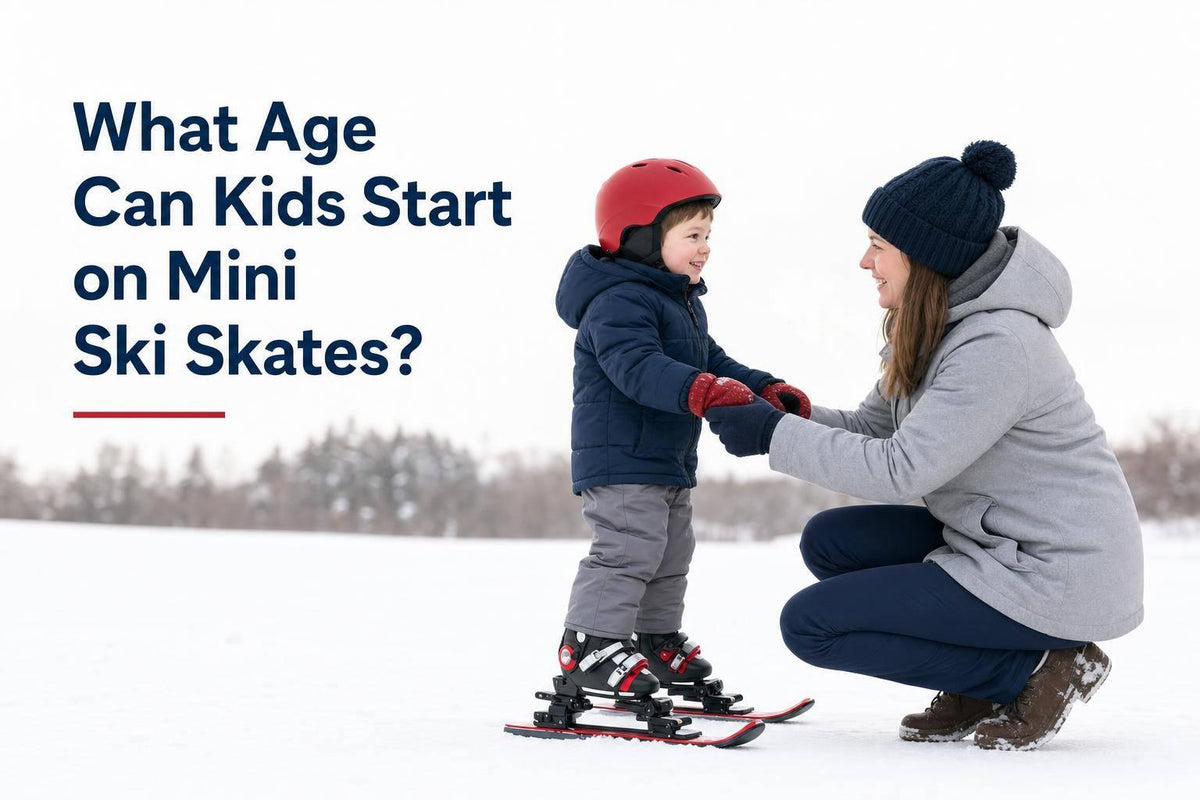
Here’s a simple gut-check: can your child walk with confidence on uneven ground, follow a two-step instruction, and stand for a moment on one leg? If not, they’re likely not ready for beginner kids’ skis yet.
For most toddlers under about 4, Snowfeet* MINI KIDS are the better place to start. The walk-and-glide motion lines up better with how most little kids move at that age. Regular skis ask for a snowplow stance and more focus, and that’s a lot for a toddler. So, for most kids, it makes sense to stick with MINI KIDS for now and move to beginner kids’ skis later, once they’re set for ski-school-style lessons.
Around age 4 and up, some kids may be ready for more. If your child can stay focused for 15 to 20 minutes, bounce back from small slips, and wear ski boots without a meltdown, beginner kids’ skis may start to make sense. This is even more true for kids who are already pumped about the mountain and feel okay in ski school.
Age matters. But where your child will ride matters just as much.
Best pick by where you will ride
This part is pretty simple: think about where the gear will get used most.
Snowfeet* MINI KIDS work best in backyards, neighborhood hills, and local parks - easy, low-stress spots where a parent can stay right next to the child. That’s where they feel more like play gear. Beginner kids’ skis lean more toward resort use. They make more sense in ski-school zones, on repeat resort days, and for kids who may work up to chairlift use.
If you’re still not sure where this is headed, money is the next good filter.
Best pick by budget and commitment level
A full toddler ski setup - skis, bindings, and boots - often costs $230 to $600+ at U.S. retailers. Snowfeet* MINI KIDS list at about $170 to $199.90, and they don’t need ski boots.
A simple way to think about it:
- Occasional snow play a few times each season, mostly close to home → MINI KIDS are the practical pick.
- A few resort visits with no clear long-term plan yet → rent skis for a trip or two before you buy.
- Regular mountain weekends with ski school in the mix → a full beginner ski package starts to make more sense.
Start small. Then move up only if your child wants more.
Those three filters - age, terrain, and budget - lead to the final pick below.
Conclusion: the better first pick for most toddlers
After looking at safety, learning, comfort, and how the gear will be used, the choice comes down to one thing: are you buying for casual snow play or for ski school?
For most toddlers, Snowfeet* MINI KIDS are the smarter first pick. They strap onto winter boots, stay light, and give little kids a fun way to slide without the pressure of ski school.
Beginner kids' skis make more sense for 4- to 5-year-olds who are ready for ski school and regular resort use.
Here’s the simple way to think about it:
- Backyard fun or the odd snow day? Go with Snowfeet* MINI KIDS.
- Ski school and steady resort trips? Beginner kids' skis are the better fit.
Match the gear to the child, not the other way around.
Verdict: For most toddlers, Snowfeet* MINI KIDS are the better first pick.
FAQs
Can my 2-year-old use mini ski skates safely?
Yes - your 2-year-old can use mini ski skates safely, especially Snowfeet MINI KIDS.
They’re made for kids ages 2–6 and feel much less scary than long skis. That matters a lot with toddlers. Shorter skis are easier to handle, so little kids often feel more in control and less overwhelmed.
Snowfeet MINI KIDS also come with built-in metal ski edges and a heel brake. That helps with stopping and speed control, which gives parents a bit more peace of mind :)
Another nice part: they attach to regular winter boots. So, for first-time riders, they can feel more natural and comfortable than stiff ski boots.
Do mini ski skates work with any winter boots?
It depends on the Snowfeet model.
Snowfeet MINI KIDS and Snowfeet PRO (50 cm) work with regular waterproof winter boots. Nice and simple.
The 44 cm Skiskates are made for ski or snowboard boots. For any model, check compatibility before you head out. Also, skip low-cut or very soft boots. They don’t give you the support you need for safe, responsive riding.
When should a toddler switch from mini ski skates to kids' skis?
A toddler should switch once they have the coordination and confidence to handle longer gear that asks for more skill and control.
Snowfeet MINI KIDS are a great fit for ages 2 to 6. They help little kids build confidence without the hassle of heavy boots or long skis. That means less frustration and more fun on the snow :)
As kids improve, usually around ages 7 to 12, they may do better with longer Skiskates or Skiblades. Even then, Snowfeet often feels easier to learn and more fun to ride for most kids.











Leave a comment
This site is protected by hCaptcha and the hCaptcha Privacy Policy and Terms of Service apply.