



















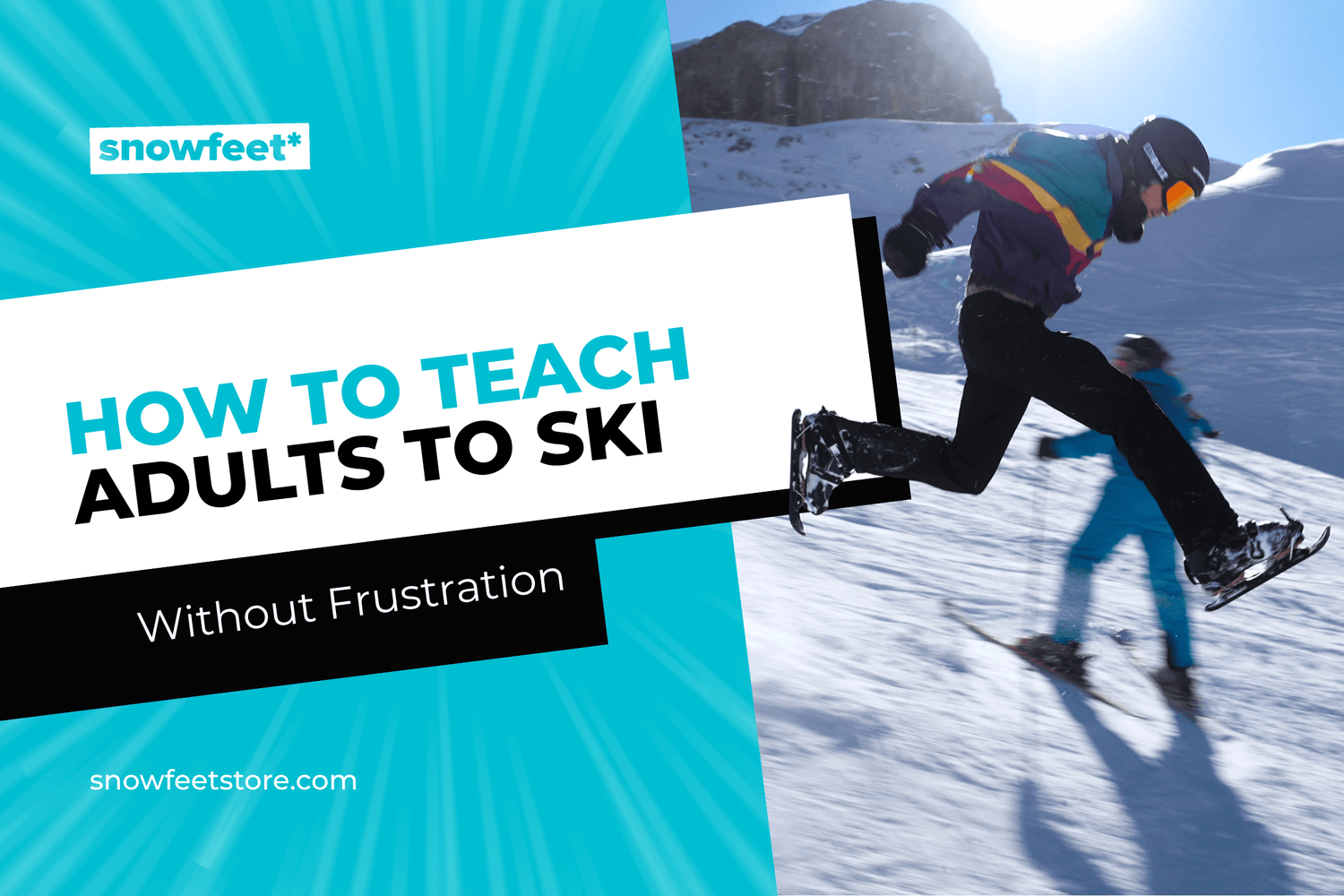
Teaching adults to ski can feel daunting, but it doesn’t have to be. The key is tackling their fears - like falling, wasting time, or getting hurt - and making the process as smooth as possible. Here’s the good news: shorter ski equipment, like Snowfeet Skiskates (17 inches) or Skiblades (26 inches), can make skiing easier and less intimidating. These compact options are lighter, simpler to control, and work with regular winter boots, cutting out a lot of the hassle.
Here’s what you’ll learn:
- Why long skis are harder for beginners and how Snowfeet simplifies learning.
- Step-by-step tips for building confidence, warming up, and practicing basic moves.
- How to progress from flat ground drills to bunny hills and eventually green slopes.
Quick Tip: Start slow, focus on balance, and use shorter skis to make the learning curve less steep. Snowfeet’s design helps beginners feel more in control, which means fewer falls and more fun. Let’s dive in!
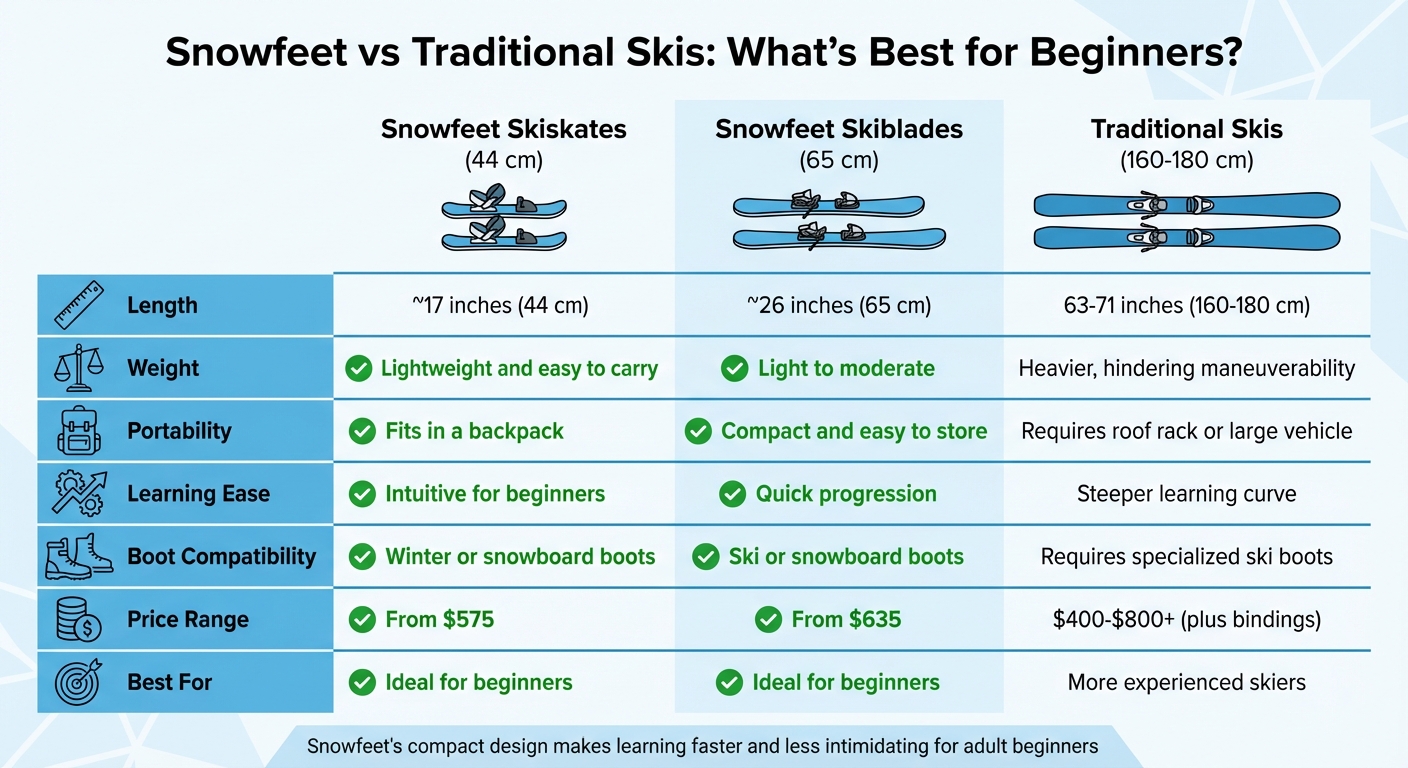
Snowfeet vs Traditional Skis Comparison for Beginner Adult Skiers
Why Traditional Skis Are Hard for Adult Beginners and How Snowfeet* Makes It Easier
Problems with Traditional Skis
Traditional skis, typically 5 to 6 feet long, can be a real challenge for adult beginners. Their length makes them tricky to control, as even small weight shifts can throw off balance. Add to that the technical setup - like mondo boot sizing and bindings that often need professional adjustments - and it’s easy to see why newcomers might feel overwhelmed. Even learning the basics, like the "pizza" wedge for stopping or figuring out how to stand up after a fall, can be exhausting. And let’s not forget the cost. Lift tickets, rentals, and lessons pile up quickly, making skiing feel like a big investment before beginners even get a chance to enjoy it.
This is where streamlined equipment can make all the difference. By simplifying the gear and setup, Snowfeet* products aim to make the learning curve less steep and the experience much more enjoyable.
How Snowfeet* Helps Beginners Learn Faster
Snowfeet* products offer a fresh approach to skiing with their compact, lightweight designs. Take the Snowfeet* Skiskates (about 17 inches long) and Skiblades (around 26 inches) - these are significantly shorter than traditional skis, making them easier to control. Their shorter length and closer-to-center balance help beginners turn and stop more naturally, reducing the risk of falling.
Another big plus? They’re lighter, which means less fatigue and easier transport. Many models are compatible with regular winter boots or snowboard boots, so there’s no need to worry about mondo sizing or breaking in stiff ski boots. This user-friendly design allows beginners to skip some of the more frustrating aspects of skiing and focus on having fun. With Snowfeet*, new skiers can move from cautious first steps to confident turns much faster.
Comparison Table: Snowfeet* vs Traditional Skis
| Feature | Snowfeet* Skiskates (44 cm) | Snowfeet* Skiblades (65 cm) | Traditional Skis (160–180 cm) |
|---|---|---|---|
| Length | ~17 inches | ~26 inches | 63–71 inches |
| Weight | Lightweight and easy to carry | Light to moderate | Heavier, hindering maneuverability |
| Portability | Fits in a backpack | Compact and easy to store | Requires a roof rack or large vehicle |
| Learning Ease | Intuitive for beginners | Quick progression | Steeper learning curve |
| Boot Compatibility | Compatible with winter or snowboard boots | Compatible with ski or snowboard boots | Generally requires ski boots |
| Price Range | From $575 | From $635 | $400–$800+ (plus bindings) |
| Best For | Ideal for beginners | Ideal for beginners | More experienced skiers |
Choosing the Right Snowfeet* Product for Beginners
Snowfeet* Models Explained
Snowfeet* has a range of models tailored to beginners, each offering something a little different. Let’s break it down:
- Mini Ski Skates (38 cm or 15 inches): Starting at $250, these are the smallest and lightest option. They’re super portable and work with regular winter boots, making them perfect for adults wanting to try skiing without splurging on special gear.
- Skiskates (44 cm or 17 inches): Priced from $575, these come with a wood core for added stability and control. They’re a great pick if you’re planning to stick to groomed slopes as you learn.
- Skiblades (65 cm or 26 inches): At $635, these are a bit longer and designed for those looking to improve carving while keeping things easy to handle. They’re compatible with both ski and snowboard boots.
- PRO (50 cm or 20 inches): Starting at $275, this model includes adjustable bindings and comes in a variety of colors, adding a bit of style to your learning experience.
The best part? Most of these models work with standard winter boots, so you don’t need to invest in ski-specific footwear. Whether you’re on a tight budget or looking for a specific feature, there’s a Snowfeet* option for you.
Why Shorter Equipment Works Better for New Skiers
Shorter skis are a game-changer for beginners, and Snowfeet* makes learning easier by focusing on compact designs. Here’s why that matters:
Short skis cut down on the physical and mental challenges that come with traditional long skis. For adults just starting out, the thought of falling or making mistakes can be nerve-wracking. Shorter gear helps ease those fears by making it simpler to pick up basic techniques, like the wedge (aka the "pizza") for controlling speed and stopping.
They’re also much easier to turn and balance on, which is a huge plus when you’re just getting the hang of things. Snowfeet* models, ranging from 15 to 26 inches, are designed to respond smoothly to your movements. And if you do take a tumble, their compact size makes getting back up a lot less of a hassle. More time practicing, less time struggling - sounds like a win, right?
Getting Adults Ready Mentally and Physically for Skiing
Building Confidence and the Right Mindset
Starting skiing as an adult can feel intimidating. Whether it’s worrying about keeping up with kids or stressing over costs and performance, those nerves are completely normal. Outdoor travel expert Renee Roaming reassures:
"It's totally normal to feel scared about learning a new skill".
The key? Face those fears directly. Write down what’s making you anxious - maybe it’s riding the chairlift or getting up after a fall. Then, watch some instructional videos that address those specific concerns before you even step onto the slopes. This simple prep work can ease a lot of that first-day anxiety.
And don’t forget: skiing is supposed to be fun. Snowfeet* helps simplify the process by cutting down on gear-related stress, letting you focus on enjoying the experience.
Another important tip? Know when to stop. Pushing yourself too hard can lead to frustration or even injury. As Roaming wisely advises:
"Call it quits before you're too tired, especially if you have a longer drive home at the end of the day".
Pace yourself. Take breaks, listen to your body, and come back the next day ready to keep improving. This approach not only keeps skiing enjoyable but also prevents burnout. Snowfeet* makes it easier to embrace this balance, so you can focus on having a good time.
Once your mindset is in the right place, it’s time to get your body on board.
Physical Warm-Up and Fitness Tips
Mental readiness is only half the equation - your body needs to be prepared too. Treat skiing like any other workout by warming up beforehand and stretching afterward. Pay special attention to your legs, hips, and lower back, as these areas carry the load when you’re learning.
The bent-knee stance is a skiing essential, and it’s even more critical when using Snowfeet*. These shorter skis behave more like skates, requiring active leg engagement and a strong sense of balance. At home, try exercises like squats and lunges to build up your leg strength and stability.
Don’t overlook the basics: hydration, nutrition, and proper layering. Bring a water bottle with electrolyte tablets and pack high-energy snacks to keep you fueled. It’s easy to miss signs of dehydration in cold weather, so stay ahead of it. And don’t skimp on sunscreen or lip balm - snow glare and windburn can sneak up on you fast.
Finally, dress smart. Proper layers keep you warm, and staying comfortable makes the learning process way easier (and more fun). Snowfeet*’s design demands less physical effort and encourages natural movement, so all that prep work translates into smoother, more enjoyable runs.
How to Ski in One Day | Beginner Learns Basic Turns
Flat Ground Exercises with Snowfeet*
With your body warmed up and ready to go, these flat ground drills will help you build the core skills needed for skiing.
How to Get Up After Falling
One of the first things to nail down is how to stand back up after a fall. Have your learner sit on flat ground and practice standing up over and over again. This repetition develops muscle memory and builds confidence in balancing and finding their edges. Snowfeet* makes this drill easier thanks to its compact design - Skiskates are just 44 cm (about 17 in) long, and Skiblades are 65 cm (about 26 in). Compared to traditional skis that can range from 67 to 71 inches, Snowfeet* are much simpler to handle. The shorter length means less risk of skis crossing or tangling when trying to stand up, which can be a big relief for beginners. Keep practicing until standing up feels second nature - this will come in handy when you're on the bunny hill.
Practicing Edging and Gliding
Once standing up becomes second nature, it’s time to move on to edging exercises. Start by having the learner use a pole to press on one ski at a time. This drill helps them feel how the edges grip the snow and lays the groundwork for turning. Begin with simple weight shifts, alternating pressure between skis, and point out how Snowfeet*’s shorter length makes it easier to control compared to traditional skis. After they’re comfortable with this, move on to gliding. Have them glide straight on flat, gentle terrain to get a feel for balance and how their skis interact with the snow. This step is perfect for building confidence without the stress of tackling a slope.
Correct Posture and Body Position
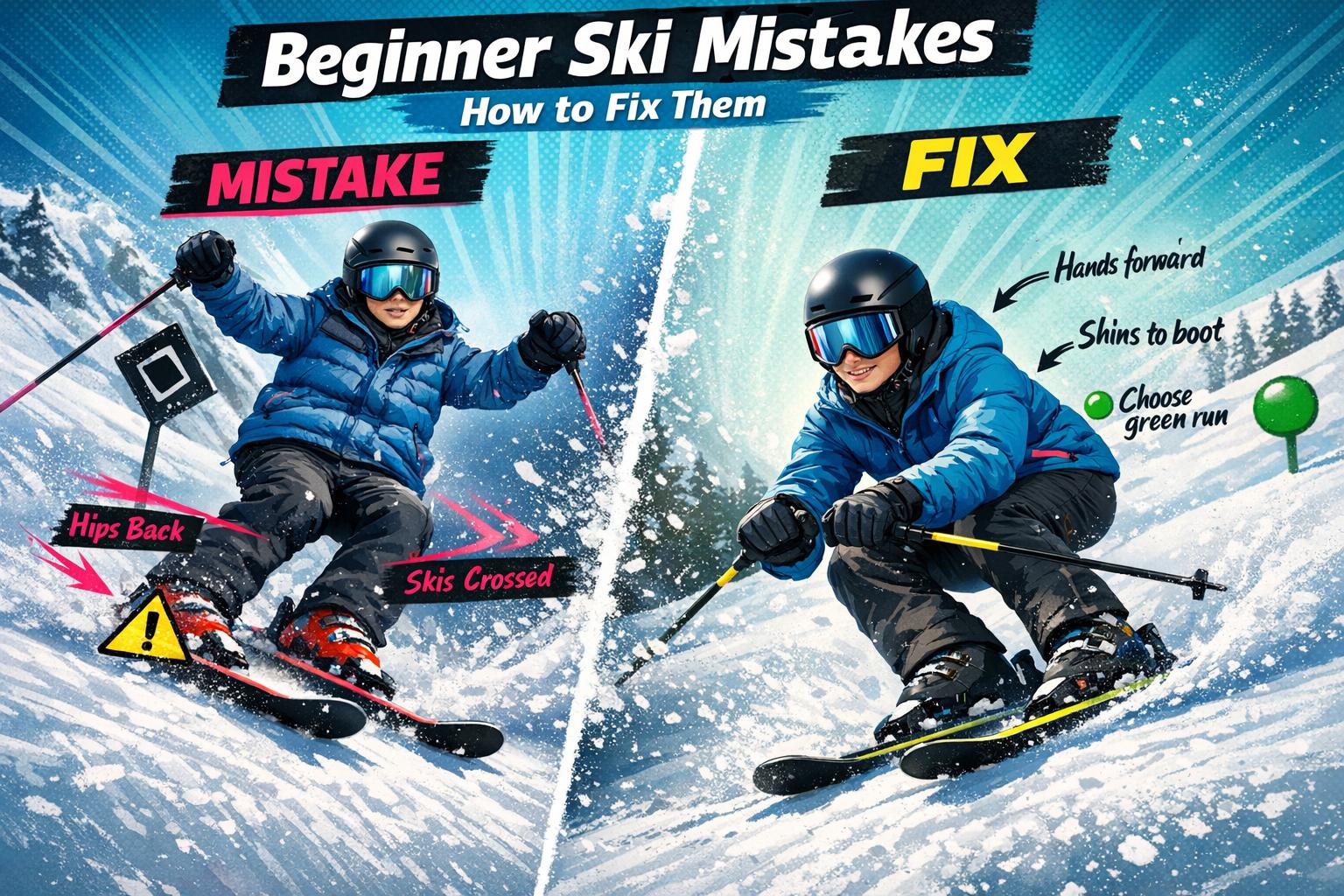
Good posture is key to efficient skiing. Make sure learners keep their weight centered over their Snowfeet*, with ankles flexed, knees soft, hips aligned over their feet, and hands held forward. Practicing on flat ground lets them focus on body alignment without worrying about speed. The shorter design of Snowfeet* naturally encourages better posture, helping avoid the forward lean that longer skis often cause. To improve stability further, try a one-ski balance drill: have the learner lift one Snowfeet* briefly while keeping the other in contact with the snow. This drill helps prepare them for the weight shifts needed when turning. These flat ground exercises are a great way to build confidence and control before moving on to slopes.
sbb-itb-17ade95
Learning the Basics on Bunny Hills with Snowfeet*
Once you’ve nailed the flat ground drills, it’s time to tackle the bunny hill! Use a magic carpet or another beginner-friendly lift to get to the top of a gentle slope. This saves your energy so you can focus entirely on perfecting your descents. The bunny hill is where you’ll start putting those balance and control skills to work on an actual slope. With Snowfeet*, this transition feels more manageable compared to traditional skis, making it easier to build confidence.
Snowplow Stops and Straight Runs
One of the first skills to master on the bunny hill is the snowplow stop - also called the "pizza" or wedge technique. It’s a simple, effective way to control your speed and come to a stop. To do it, push your heels out while bringing the tips of your Snowfeet* closer together, forming a wedge that creates friction against the snow. Thanks to Snowfeet*’s compact design, this maneuver feels more intuitive and less cumbersome than with traditional skis.
Start with short, gentle glides down the slope, practicing the wedge stop as you go. Keep your knees bent to lower your center of gravity - this helps with balance and makes it easier to respond to any changes in the snow. Repeat until transitioning from a straight run into a snowplow stop feels automatic.
Weight Shifts and First Turns
Once stopping is second nature, it’s time to work on weight shifts to prepare for turning. While practicing straight runs, try shifting your weight from one foot to the other. This helps build the muscle memory needed for smooth, controlled turns. Snowfeet*’s shorter length makes these weight shifts feel less demanding compared to longer skis.
To start turning, begin in a slight wedge position. Shift more weight onto one Snowfeet* while keeping your knees flexed. This added pressure will naturally guide you into a turn in the direction of the weighted side. Practice linking a few gentle turns together as you glide down the bunny hill. Remember to take breaks to stay hydrated and avoid overexertion - fatigue can make it harder to maintain proper form and increase the risk of mistakes or injuries.
Improving Turns and Speed Control with Snowfeet*
Once you've nailed the basics of turning, it's time to fine-tune your technique to boost agility and control. These drills focus on improving your ability to manage turns and speed on different slopes, making your movements smoother and more precise.
Garland Turns and Balance Exercises
Garland turns are a great way to sharpen coordination and edge control. They involve shifting your weight smoothly without fully committing to a turn. Snowfeet* makes this process feel natural because their shorter length (44 cm for Skiskates or 65 cm for Skiblades) responds quickly to every movement.
To maintain stability, focus on three key contact points: the big toe joint, little toe joint, and heel. As Stomp It Tutorials explains:
"Gently press the 10 toes down for better connection to the ski."
This small adjustment helps your feet guide your movements more effectively. To strengthen this connection, try the pencil grip drill - imagine gripping a pencil with your toes to engage your foot's arch. Another helpful exercise is foot scissoring, where you alternate pressure between your feet during short turns. This not only improves balance but also gives you greater control over your Snowfeet*. Thanks to their responsive design, these drills feel intuitive and help refine your turning techniques.
Controlling Speed on Gentle Slopes
Speed control can feel tricky at first, but Snowfeet*’s compact size makes it easier to get instant feedback and adjust on the fly. Start with lateral side-slipping to practice ankle rotation and build confidence. Then, adopt a balanced stance as described by instructor Leonid Feldman:
"Arms – slightly bent at the elbows, in front and slightly apart approximately 20-24 inches. Feet – 10-12 inches apart, knees slightly bent, you feel the pressure on the tongues of your boots."
Avoid leaning back with straight legs, as this disconnects your shins from the boot tongues and reduces control. If you catch yourself leaning back, try the "pushing the door" exercise: imagine you're pushing open a heavy door with your palms while skiing downhill. This helps shift your weight forward, improving control.
For stopping, focus on moving both legs together instead of relying on staggered movements. Press your downhill shin firmly into the boot and rotate both Snowfeet* simultaneously to execute a hockey stop. Their compact design lets you stop in tighter spaces - something that's much harder with traditional skis. To further improve, practice alternating between skidding and carving drills on gentle slopes. Pay attention to the snow’s feedback under your feet and adjust your movements in real time. These drills will help you feel more comfortable as you progress to faster speeds and steeper slopes.
Moving to Real Slopes with Snowfeet*
You've nailed the basics on flat ground and bunny hills, and now you're ready for the real deal - green runs. Making this leap can feel intimidating, but Snowfeet* makes the transition smoother thanks to their compact, easy-to-control design. Unlike traditional skis, they’re lighter and less cumbersome, which means you can focus on enjoying the ride.
Linking Turns on Green Runs
Before you hit the lift, make sure you’ve got the snowplow wedge down pat. Travel blogger Mansoureh shares some great advice:
"Confidence doesn't come from being brave. It comes from feeling in control. Once you trust that you can stop and turn when you need to, the fear naturally reduces."
Snowfeet* are designed to help you link turns with ease. Their responsiveness means your movements translate directly into smooth turns, making it simpler to build control and confidence.
Stick to green or easy blue runs at first. These slopes are wide, well-groomed, and perfect for learning. Avoid the temptation to tackle steeper terrain - it won’t speed up your progress. In fact, harder slopes can create tension, which messes with your technique. Instead, focus on maintaining proper form. A common mistake beginners make is leaning back, thinking it’s safer. Mansoureh experienced this too:
"The instructor immediately spotted what we were doing wrong. Like most adult beginners, we were leaning back, which feels safer, but actually makes you less stable and harder to control."
To stay balanced, keep your knees bent and your weight forward. Don’t stare down at your Snowfeet* - look 10–20 feet ahead. This helps you anticipate changes in the terrain and react smoothly. With Snowfeet*, the shorter length means less equipment to manage, so turning feels more natural.
And don’t forget slope etiquette - it’s crucial for everyone’s safety:
"The most important rule is that the downhill skier has the right of way. This means the person below you on the slope has priority."
Always check uphill for approaching skiers before starting. If you need a break, move to the side of the trail instead of stopping in the middle or just below a crest. It’s also a great idea to have a friend film your runs. Watching yourself can help you spot posture issues. And remember, stop before you’re too tired - exhaustion leads to sloppy technique and unnecessary spills.
Next, let’s look at how Snowfeet* performs across different types of terrain, making it easier to transition from beginner slopes to more varied conditions.
Using Snowfeet* on Different Terrain
Once you’ve got green runs under control, you’ll see how versatile Snowfeet* really are. Groomed runs are perfect for beginners, offering consistent snow conditions that make it easier to practice turns and stops. Snowfeet*’s compact design gives you precise control without the hassle of bulky skis.
As you gain more confidence, you’ll notice that Snowfeet* handle different snow types surprisingly well. Snow varies a lot depending on where you are - New England’s snow is different from Washington’s heavier stuff or Colorado’s powder. Long skis often require constant adjustments to deal with these changes, but Snowfeet* adapt more naturally. This means you can focus on improving your skills instead of wrestling with your gear.
Beyond groomed slopes, Snowfeet*’s lightweight design works great on powder and even backcountry trails. This flexibility gives you more opportunities to practice. The more time you spend on Snowfeet*, the quicker your muscle memory builds, and that translates to more confidence when you hit the mountain again.
Conclusion
Teaching adults to ski doesn't have to feel like pulling teeth or battling constant nerves. The real challenge isn’t about being in shape - it’s about overcoming the mental hurdles that come with learning something new later in life. Travel blogger Mansoureh sums it up perfectly:
"The truth is, most adult beginners aren't limited by fitness. They're limited by fear."
Traditional long skis often make that fear worse. Their size, the complicated techniques, and movements that don’t feel natural can make skiing seem overwhelming before you even start.
That’s where Snowfeet* changes the game. Their compact design strips away the hassle, leaving you with gear that’s simple to use and lets you focus on enjoying the slopes. You’ll spend less time wrestling with equipment and more time actually skiing. Translation: quicker progress, fewer wipeouts, and way more fun.
But it’s not just about learning faster. Snowfeet* offers something traditional skis can’t - true versatility. They’re light enough to toss in your backpack and responsive enough to help you feel in control on all kinds of terrain, from easy groomers to fresh powder. Plus, you won’t need to shell out for endless lessons just to get the hang of it.
If traditional skiing has ever felt out of reach, Snowfeet* breaks down those walls. The gear works with you, making skiing feel natural and exciting, not like a battle. Why not give them a shot this season? You might find that skiing is way more approachable - and enjoyable - than you ever thought. Snowfeet* turns the typical ski-learning struggle into a fun, practical adventure.
FAQs
Are Snowfeet* easier than long skis for adult beginners?
Snowfeet* products are often a better fit for adult beginners compared to traditional long skis. With their smaller size - Skiskates are just 44 cm long, and Skiblades are 65 cm - they're much easier to handle and control. This makes learning feel less intimidating and helps adults gain confidence faster. Plus, they’re designed to emphasize fun and simplicity, making the whole experience more enjoyable and less frustrating.
Which Snowfeet* model should a beginner start with?
Beginners should kick things off with _Snowfeet Skiskates (44 cm)* or _Snowfeet Skiblades (65 cm)*. These options are much easier to handle compared to traditional skis or snowboards. They’re perfect for boosting confidence without the usual headaches of learning something new. If you’re looking for the smoothest start, go for the Skiskates (44 cm) - their compact size and easy learning curve make them a great pick for first-timers.
Can I use Snowfeet* with my regular winter boots?
Snowfeet* skiblades and skiskates are made to work with regular winter boots, skipping the need for specialized ski boots. This makes them far more accessible compared to traditional skiing or snowboarding gear. They're easy to use, beginner-friendly, and offer better control, allowing you to dive into skiing without shelling out for pricey equipment. It’s a straightforward and fun way for adults to get started on the slopes.












Leave a comment
This site is protected by hCaptcha and the hCaptcha Privacy Policy and Terms of Service apply.