



















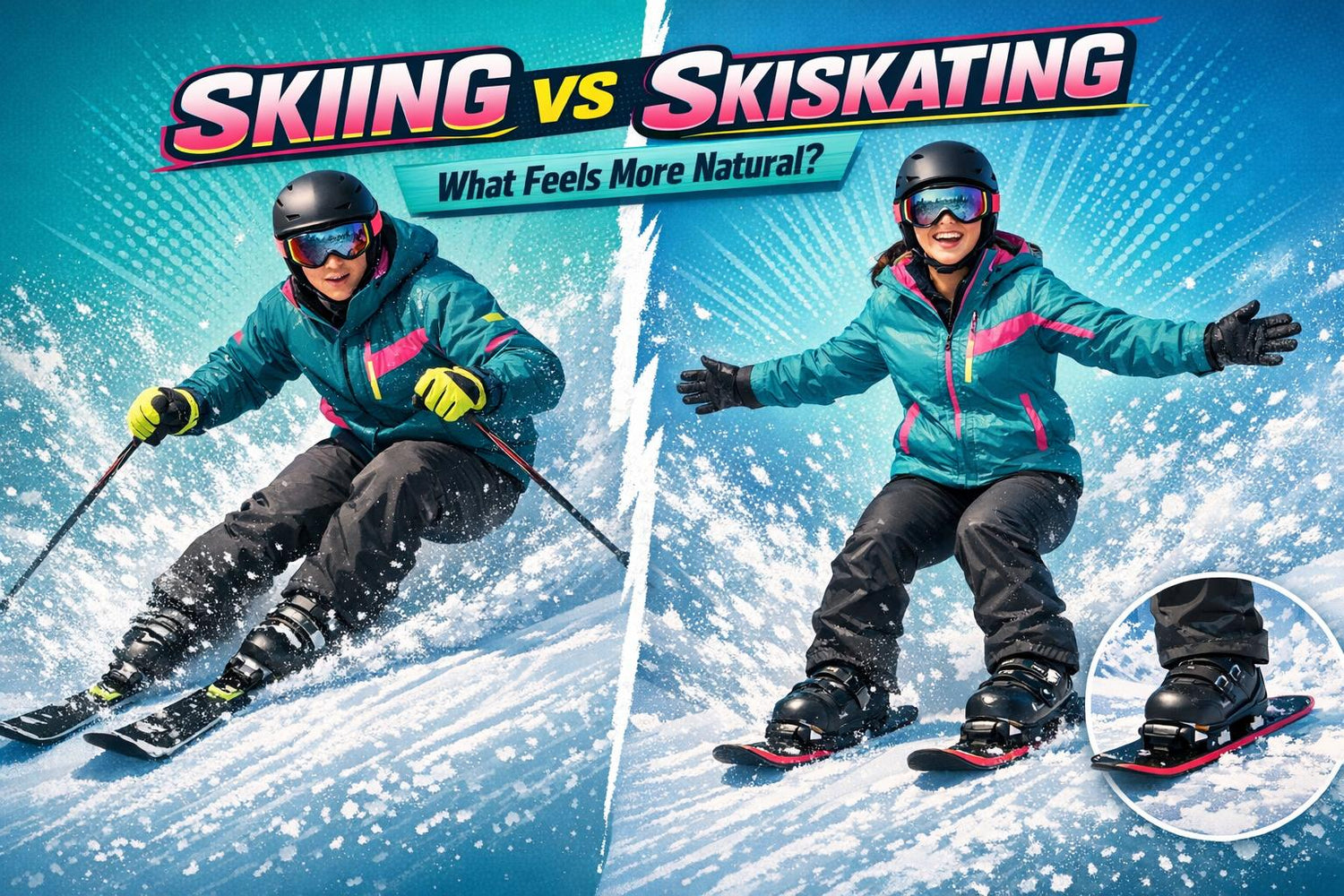
When it comes to snow sports, skiing has been the go-to for decades. But skiskating, a newer option, is shaking things up with a motion similar to ice skating. Here's the quick takeaway:
- Skiing: Uses long skis for parallel gliding. It feels smooth but takes time to master due to its length and technical gear.
- Skiskating: Mimics ice skating with short, lightweight skis like Snowfeet. Easier to learn, portable, and works with regular winter boots.
Key Differences:
- Learning Curve: Skiing takes practice; skiskating is beginner-friendly.
- Gear: Skiing requires bulky equipment; skiskating is compact and fits in a backpack.
- Control: Long skis are stable but harder to maneuver; short skates are nimble and responsive.
If you’re after simplicity, portability, and fun, skiskating might be your new favorite winter activity. Let’s break it down further.
How similar is skiing to skating?
How Movement and Technique Differ
Traditional skiing and skiskating may both involve gliding on snow, but their movements and techniques are like night and day. Let’s break down how each one works.
Traditional Skiing: Parallel Movement on Long Skis
In traditional skiing, the movement feels rhythmic and natural. Your skis stay parallel as you alternate between kicking and gliding, much like walking, but with a smoother flow. This technique relies on a cyclic kick - helped by grip wax or scale-treated areas on the skis - to propel you forward. The long, flexible skis are designed for straight-line gliding, which feels almost effortless once you get the hang of it. That said, their length can make tight turns tricky, and mastering speed control takes time and practice.
Skiskating: Skating-Style Movement on Short Skis
Skiskating shakes things up with a side-to-side motion that feels more like ice skating or rollerblading. Instead of keeping your skis parallel, you push off the inside edges of each ski in a V-shaped pattern. TrainingPeaks describes it perfectly:
"Skate skiing employs a side-to-side motion similar to ice skating. Skiers push off the inside edges of their skis, creating a V-shaped pattern." - TrainingPeaks
Snowfeet products are tailor-made for this style. Their shorter, stiffer design makes quick, lateral movements a breeze. You can zip around with ease, thanks to their lightweight build and lack of grip zones or wax. If you’ve ever skated before, the motion feels second nature, and there’s no steep learning curve like with traditional skis. Up next, we’ll look at how these techniques compare when it comes to control and stability.
Learning Curve: Long Skis vs Snowfeet Skates
Why Traditional Skiing Takes Longer to Learn
Traditional skiing isn't something most people master overnight. Sure, the diagonal stride of classic skiing feels a bit like walking or running, making it somewhat familiar. But, the tricky part? Timing. You’ve got to nail the balance between the kick (to propel yourself forward) and the glide phase. That takes practice, strength, and coordination. Then there’s skate skiing, which kicks things up a notch. It’s all about a side-to-side, V-shaped motion that demands even more coordination.
As Carrie McCusker, a Level 2 TrainingPeaks Coach, puts it:
"Classic offers a balanced, familiar motion accessible for those on the cusp of their snow experience. Skate skiing is vigorous and energetic and often appeals to children and adults who like speed and have some time to master the basics."
On top of that, using long skis means you’ve got to deal with grip zones, camber, and flex - all of which need to match your weight. These technical details make learning traditional skiing a bit of a challenge.
Why Snowfeet Products Are Easier for Beginners
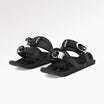
Snowfeet products? They’re a whole different story. Forget about grip wax, matching camber, or specialized boots. With Snowfeet, it’s all about simplicity. Their compact design - whether it’s the 15-inch Snowfeet Mini Ski Skates or the 47-inch Snowfeet Short Skis - makes turning and maneuvering way easier. Plus, you can strap them onto your regular winter shoes or snowboard boots and get going right away.
This no-fuss setup makes it easy to get instant feedback, helping beginners build confidence fast. Snowfeet’s straightforward design makes the experience feel natural, which is why it’s such a great option for anyone new to the snow.
Control and Stability Compared
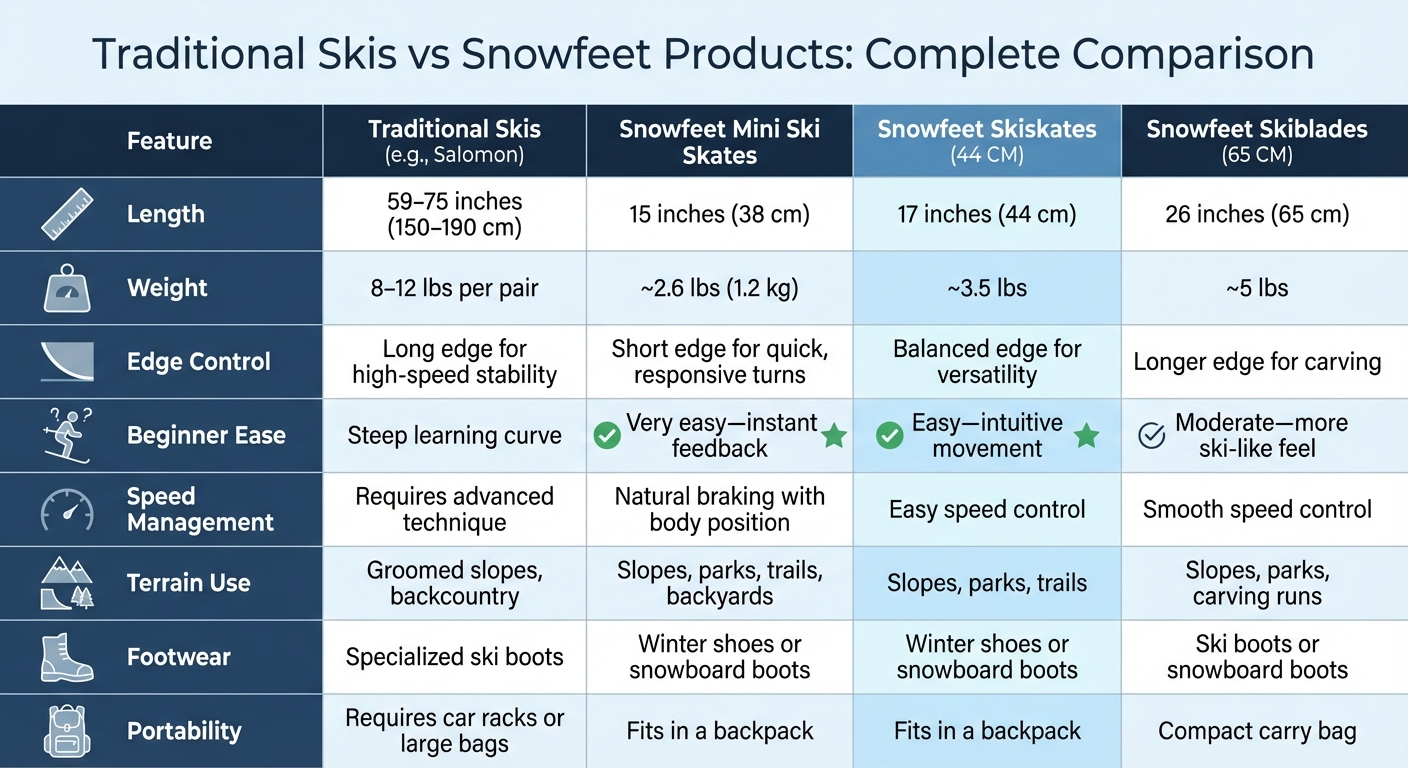
Traditional Skis vs Snowfeet Products Comparison Chart
Control and stability in skiing largely depend on factors like length, weight, and how the equipment interacts with your body movements. Traditional skis, such as those from brands like Salomon or Rossignol, are typically 59 to 75 inches (150–190 cm) long. This extra length gives them a long, continuous edge, which feels stable at high speeds on groomed trails. But, that stability comes at a cost - more weight to handle and a wider turning radius. For beginners, this can make quick maneuvers tricky and less forgiving.
Snowfeet products flip this script. Snowfeet Mini Ski Skates are compact and lightweight, making them highly responsive. Thanks to their design, they’re easy to adapt to and offer excellent control. Their smaller size means they respond instantly when you shift your weight, giving you agility and precision - perfect for tight spaces, terrain parks, or unpredictable snow conditions.
What’s more, Snowfeet gear aligns with your body’s natural movements, making them feel intuitive. Unlike traditional skis, which require you to master precise weight distribution and edge control in fixed stances like parallel or snowplow, Snowfeet lets you simply shift your weight and glide. This natural responsiveness makes them especially beginner-friendly and opens up a whole new way to enjoy the snow.
Comparison Table: Traditional Skis vs Snowfeet Products
| Feature | Traditional Skis (e.g., Salomon) | Snowfeet Mini Ski Skates | Snowfeet Skiskates (44 CM) | Snowfeet Skiblades (65 CM) |
|---|---|---|---|---|
| Length | 59–75 inches (150–190 cm) | 15 inches (38 cm) | 17 inches (44 cm) | 26 inches (65 cm) |
| Weight | 8–12 lbs per pair | ~2.6 lbs (1.2 kg) | ~3.5 lbs | ~5 lbs |
| Edge Control | Long edge for high-speed stability | Short edge for quick, responsive turns | Balanced edge for versatility | Longer edge for carving |
| Beginner Ease | Steep learning curve | Very easy - instant feedback | Easy - intuitive movement | Moderate - more ski-like feel |
| Speed Management | Requires advanced technique | Natural braking with body position | Easy speed control | Smooth speed control |
| Terrain Use | Groomed slopes, backcountry | Slopes, parks, trails, backyards | Slopes, parks, trails | Slopes, parks, carving runs |
| Footwear | Specialized ski boots | Winter shoes or snowboard boots | Winter shoes or snowboard boots | Ski boots or snowboard boots |
| Portability | Requires car racks or large bags | Fits in a backpack | Fits in a backpack | Compact carry bag |
For those new to snow sports, Snowfeet products stand out by offering unmatched control and ease of use. They provide a natural, responsive feel that makes snow adventures more enjoyable, no matter your skill level.
sbb-itb-17ade95
Portability and Use Across Different Terrains
The Size and Weight of Traditional Ski Gear
Let’s face it - traditional ski gear from brands like Salomon or Rossignol isn’t exactly travel-friendly. Skis are bulky and heavy, and when you add specialized boots, bindings, and poles into the mix, you’re looking at a serious storage and transport headache. Most skiers end up needing roof racks (which can run you $100–$300+), just to get their gear from point A to point B.
Then there’s the terrain issue. Traditional skis are built for specific conditions - think groomed slopes or backcountry powder. But what if you want to mix it up? Hike a snowy trail, mess around in your backyard after a storm, or hit a terrain park? That’s where things get tricky. Those stiff, specialized ski boots aren’t exactly made for walking, making spontaneous winter adventures a lot harder to pull off.
Compact and Lightweight Snowfeet Skates
Enter Snowfeet, the portable alternative that flips the script on traditional ski gear. Unlike bulky skis, Snowfeet skates are compact enough to fit in a backpack. No need for roof racks or extra storage space - just toss them in your bag and you’re ready to go, whether it’s to the slopes, a park, or even your backyard.
What really sets Snowfeet apart is their versatility. These skates can handle ski slopes, terrain parks, hiking trails, and more. Plus, you don’t need to invest in or endure uncomfortable ski boots. Snowfeet work with your regular winter shoes or snowboard boots, so you can walk, hike, and switch between activities with ease. It’s a level of flexibility that traditional skis just can’t offer, turning winter into your personal playground.
Real-World Experience: Skiskating with Snowfeet
Snowfeet Products in Action
Snowfeet brings a whole new vibe to winter fun. Picture this: you’re at a snowy resort, ready for adventure. Instead of lugging around heavy ski gear, you strap on your Snowfeet skates, which attach right to your winter boots, and you’re off. No hassle, no waiting - just pure, spontaneous fun on the snow. This simple setup saves time and amps up the excitement.
Snowfeet’s skating-style motion works best on flat terrain and gentle slopes. Where traditional skis from brands like K2 or Atomic might feel sluggish on level ground, Snowfeet lets you glide effortlessly, almost like ice skating or rollerblading. With compact options (38 cm and 44 cm), they’re super easy to maneuver, offering a level of control that traditional skis just can’t match. And the feedback from users? It backs all this up.
What Users Say About Snowfeet
The feedback from Snowfeet users is glowing. People love how easy it is to pick up and how quickly they gain confidence on different types of snow. Whether it’s groomed trails, backyard snow, or light powder, Snowfeet’s lightweight design makes it all feel natural. Plus, since they work with regular winter boots, you skip the discomfort of stiff, specialized ski boots. This makes every snowy outing feel like an adventure waiting to happen. It’s no wonder Snowfeet is shaking up the way we think about winter sports.
Conclusion
Choosing what feels more natural on the snow comes down to your priorities. Traditional skiing often involves a hefty price tag ($500–$1,200) and rigid ski boots that can make walking awkward and uncomfortable. While the forward-facing stance helps beginners get the hang of things on a bunny hill fairly quickly, the bulky gear and overall expense can be tough to overlook.
Enter Snowfeet - a game-changer for winter sports. Forget the heavy, cumbersome equipment. With Snowfeet, you get compact ski skates that pair with your regular winter boots. The skating-style movement feels intuitive, using your body’s natural forward motion. Plus, their lightweight design makes it easy to glide across flat terrain or cruise down gentle slopes.
And here’s the kicker: traditional ski gear struggles on flat terrain. Snowfeet, on the other hand, lets you pick up speed effortlessly, whether you’re on groomed trails, in your backyard, or even tackling some light powder.
FAQs
Can I use Snowfeet with my normal winter boots?
Yes, Snowfeet skiskates are made to pair perfectly with regular winter boots. This means you don’t need special footwear, making them a simple and hassle-free alternative to traditional skis or snowboards. They’re all about convenience and giving you a smooth, natural experience on the snow.
Are Snowfeet allowed on most ski resorts?
It’s unclear if most ski resorts allow Snowfeet on their slopes. Your best bet? Contact the resort you’re planning to visit and ask about their rules for alternative snow gear like Snowfeet. Better safe than sorry!
Which Snowfeet size should I choose (Mini, Skiskates, Skiblades)?
Choosing the right Snowfeet size comes down to your experience, how you plan to use them, and your personal preferences. Here’s a quick breakdown:
- Mini: Perfect for beginners or smaller users. They're easy to handle and great for learning the basics.
- Skiskates: A solid choice for intermediate riders who want a mix of control and fun. These are versatile and work well for most situations.
- Skiblades: Designed for advanced users. They offer excellent stability, making them great for carving, tackling snowparks, or even cruising through powder.
If you’re just starting out, go with Mini or Skiskates. For those with more experience, Skiblades are a better fit for pulling off advanced moves.











Leave a comment
This site is protected by hCaptcha and the hCaptcha Privacy Policy and Terms of Service apply.