



















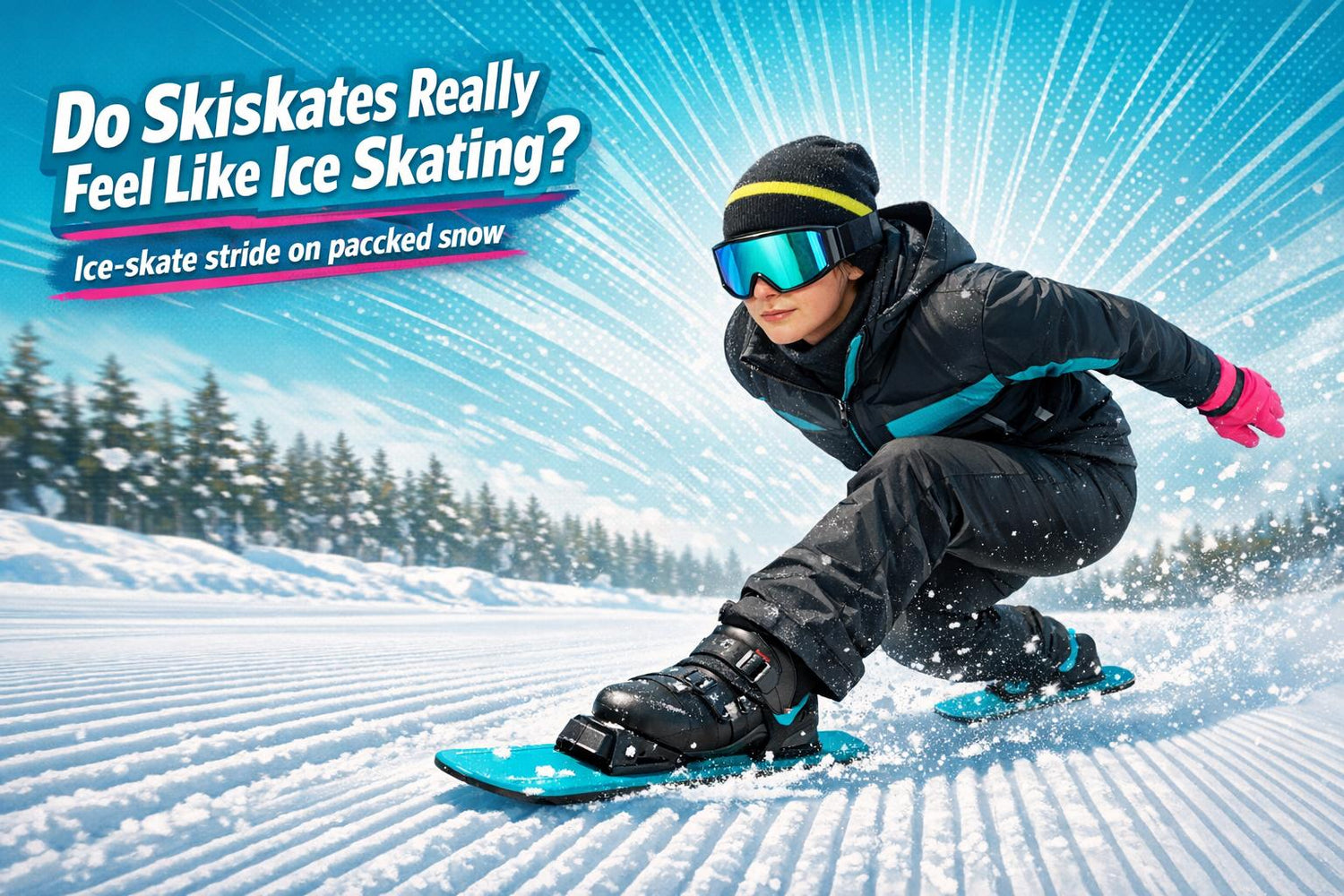
Short answer? Yes, skiskates do feel like ice skating - but with snow under your feet instead of ice. They’re compact, lightweight, and designed to mimic the side-to-side motion you know from the rink. If you’re an ice skater, you’ll feel right at home.
Snowfeet Skiskates (44 cm) let you carve, stop, and even skate backward on snow. They’re easy to pick up (most people master them in minutes) and way more portable than skis or snowboards. Plus, they work with regular winter boots, so no special gear is needed.
Here’s the deal: Skiskates are perfect for groomed runs, trails, or packed snow. They’re not great for deep powder or extreme speeds, but they’ll give you that skating-like control and freedom to explore snowy terrain beyond the rink.
Key Takeaways:
- Movement: Side-to-side skating motion, like ice skating.
- Control: Metal edges for sharp turns and quick stops.
- Ease of Use: Minimal learning curve for ice skaters.
- Portability: Fits in a backpack - no bulky gear required.
- Terrain: Best on packed snow or trails, not deep powder.
If you’re ready to take your ice-skating skills to the slopes, skiskates might be your new favorite winter toy. :)
1. Snowfeet Skiskates 44 cm
Movement
The Snowfeet Skiskates 44 cm bring the motion of ice skating to the slopes. Unlike traditional skis that rely on forward gliding, these skiskates let you push side-to-side, mimicking the skating motion you're already familiar with. Their 17-inch length is designed to keep your strides natural and prevent your tips from crossing, so you can seamlessly use hockey-style pushes and crossovers. This way, your ice skating muscle memory translates directly to snow - something traditional skis just can't offer.
Control and Turning
With metal edges, Snowfeet Skiskates provide precise control that feels similar to ice skates. You can carve, execute hockey stops, and make quick turns without the delay you'd experience with longer skis. Their short length allows for a tight turning radius, giving you the freedom to pivot and spin in ways that traditional skis simply can't match.
Unlike longer skis, which require more exaggerated movements to engage the edges, these skiskates respond instantly to subtle weight shifts. This responsiveness mirrors the feel of ice skating, where small adjustments lead to significant changes in direction.
Feel and User Experience
Most users get the hang of Snowfeet Skiskates in about five minutes, a stark contrast to the multiple lessons often needed to master traditional skiing. The movements feel closer to ice skating - you can skate backward, perform crossovers, and maintain a similar posture to what you'd use at the rink. This makes the transition from ice to snow almost effortless for seasoned skaters.
Portability adds to the appeal. These skiskates are compact enough to fit in a backpack, eliminating the hassle of roof racks or lugging around bulky gear. This convenience opens up more possibilities for winter fun, whether you're exploring hiking trails, local parks, or even your own backyard.
Versatility
Snowfeet Skiskates perform best on groomed runs, flat terrain, and trails, offering a smooth experience similar to skating on ice. While they handle varying conditions better than ice skates (which need frozen water), they're not ideal for deep powder or steep backcountry slopes. For ice skaters looking to expand their winter activities without giving up familiar movements, these skiskates provide a perfect crossover between the rink and snowy landscapes. Up next, we'll dive into how traditional ice skates compare and explore why Snowfeet Skiskates might be the better choice for diverse winter adventures.
Snowfeet* & Skiskates Complete Guide | All you need to know about Skiskating
2. Ice Skates
Compared to Snowfeet Skiskates, traditional ice skates offer a sleek and specialized experience - perfect for frozen surfaces, but that’s where their utility ends.
Movement
Ice skates glide effortlessly on a thin metal blade, giving you that smooth, flowing motion across the ice. The key is in the side-to-side pushing technique, where you use the edges of the blade to propel forward. It feels natural once you’ve built up the muscle memory, but here’s the catch: they only work on solid ice. Without a frozen surface, you’re out of luck.
Control and Turning
When it comes to sharp turns and precision, ice skates shine. The narrow blade digs into the ice, letting you carve tight corners or pull off hockey stops with ease. Every weight shift translates directly into movement, offering quick and agile control. But this precision is ice-exclusive - try using them on snow, and they’re completely useless.
Feel and User Experience
Ice skating comes with its own set of challenges. You’re tied to indoor rinks or naturally frozen spots, which means your skating time depends on rink schedules or the weather. In areas where winter ice conditions are unpredictable, finding a good spot can be tricky. This reliance on perfect ice limits when and where you can skate.
Versatility
Ice skates are built for one thing: skating on ice. Whether it’s hockey, figure skating, or casual fun, they’re great - but only if ice is involved. You can’t take them on snowy trails, parks, or slopes. This single-purpose design makes them far less flexible than Snowfeet Skiskates, which are designed to handle a mix of terrains. It’s a clear trade-off between specialization and adaptability.
sbb-itb-17ade95
Pros and Cons
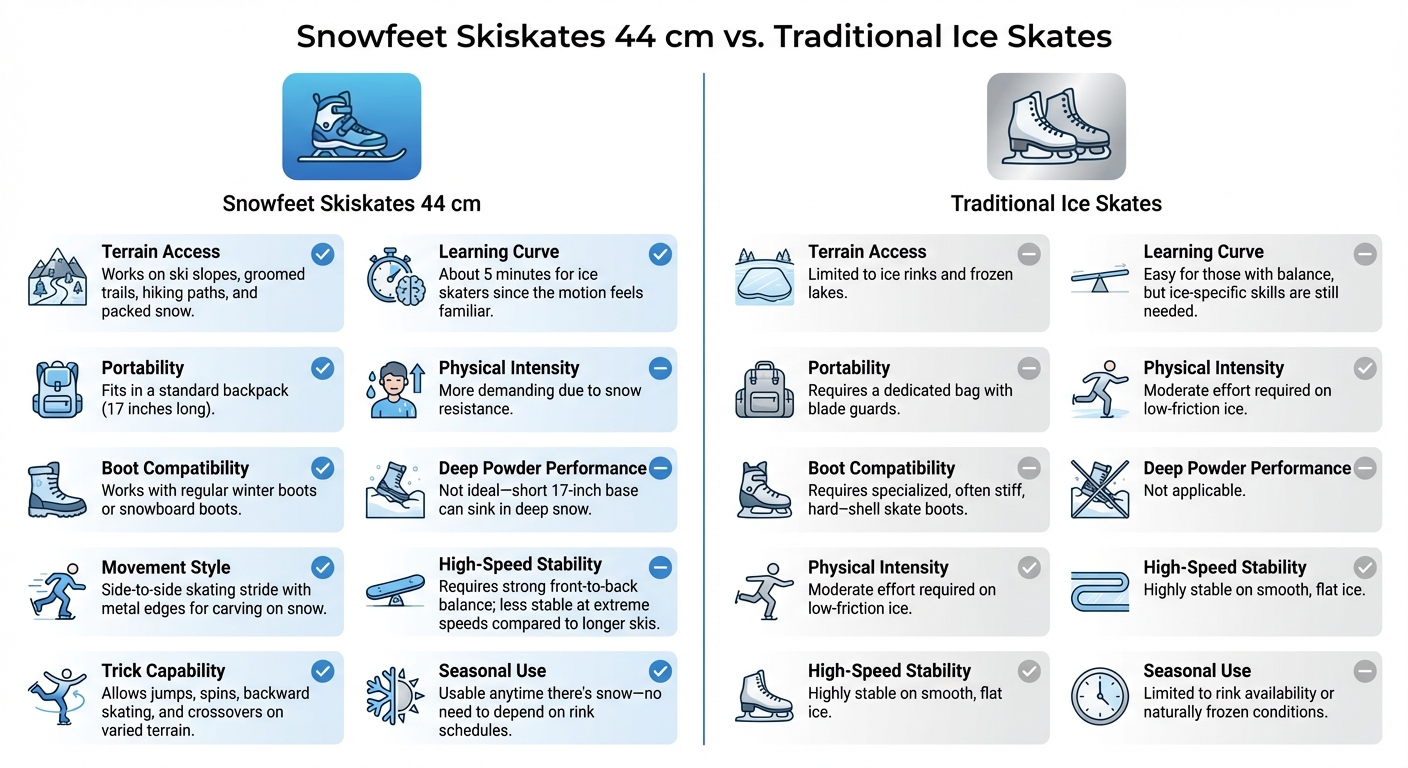
Snowfeet Skiskates vs Ice Skates Comparison Chart
Snowfeet Skiskates 44 cm vs. Traditional Ice Skates:
| Feature | Snowfeet Skiskates 44 cm | Traditional Ice Skates |
|---|---|---|
| Terrain Access | Works on ski slopes, groomed trails, hiking paths, and packed snow | Limited to ice rinks and frozen lakes |
| Portability | Fits in a standard backpack (17 inches long) | Requires a dedicated bag with blade guards |
| Boot Compatibility | Works with regular winter boots or snowboard boots | Requires specialized, often stiff, hard-shell skate boots |
| Movement Style | Side-to-side skating stride with metal edges for carving on snow | Side-to-side skating stride with steel blades for gripping ice |
| Trick Capability | Allows jumps, spins, backward skating, and crossovers on varied terrain | Great for maneuvers on smooth ice surfaces |
| Learning Curve | About 5 minutes for ice skaters since the motion feels familiar | Easy for those with balance, but ice-specific skills are still needed |
| Physical Intensity | More demanding due to snow resistance | Moderate effort required on low-friction ice |
| Deep Powder Performance | Not ideal - short 17-inch base can sink in deep snow | Not applicable |
| High-Speed Stability | Requires strong front-to-back balance; less stable at extreme speeds compared to longer skis | Highly stable on smooth, flat ice |
| Seasonal Use | Usable anytime there's snow - no need to depend on rink schedules | Limited to rink availability or naturally frozen conditions |
Snowfeet Skiskates stand out for their versatility and freedom from rink schedules. You can use them on ski slopes, trails, or even hiking paths, making them perfect for snowy adventures. While they demand better balance and aren't great in deep powder, their portability and ability to work with regular winter boots make them a convenient option. Traditional ice skates, on the other hand, excel on the ice but are confined to specific conditions, like frozen lakes or rinks. If you're looking for a way to enjoy winter beyond the rink, Snowfeet Skiskates offer a whole new level of fun.
Conclusion
Do skiskates feel like ice skating? Absolutely, skiskates bring the familiar ice-skating stride to snow. With Snowfeet Skiskates (44 cm), the side-to-side skating motion mirrors the smooth glide of ice skating, making the learning curve almost nonexistent for seasoned ice skaters. The big difference? You’re no longer limited to rinks or frozen lakes - you can now skate on ski slopes, groomed trails, or packed snow wherever winter takes you.
Snowfeet Skiskates take that well-loved ice-skating experience and expand it to new snowy terrains. They offer the same quick, agile feel ice skaters enjoy, but with the added thrill of carving down mountain slopes, spinning, or even skating backward. Traditional skis and snowboards can’t match their nimbleness. Plus, their compact size and compatibility with regular boots make them far more convenient than bulky ski gear. That’s a game-changer for anyone tired of hauling oversized equipment.
While ice skates shine on frozen surfaces, Snowfeet Skiskates let you break free from rink schedules and explore snowy mountains and trails. They provide a level of flexibility and freedom that ice skates just can’t match.
Who are they perfect for? Ice skaters ready to venture beyond the rink will love the seamless transition. Skiers and snowboarders looking for something lighter and more maneuverable will find them exciting. And if you’re over lugging around heavy skis or being tied to a rink, Snowfeet Skiskates are a breath of fresh air. They capture the smooth, gliding joy of ice skating and bring it to snowy landscapes, redefining what winter sports can be.
FAQs
Can beginners use skiskates?
Yes, beginners can absolutely use skiskates. Snowfeet skiskates are lightweight and designed with ease of use in mind, making them a great option for those new to winter sports. They work a lot like ice skates, which many people find natural and easy to pick up. Plus, they don’t demand the same level of technical skill as skiing or snowboarding. On top of that, skiskates are more budget-friendly and easier to carry around compared to traditional skis. With a bit of practice, beginners can quickly get the hang of them and enjoy the freedom and fun they offer.
What boots work best with Snowfeet Skiskates?
When it comes to pairing boots with Snowfeet Skiskates, you’ve got two solid options: regular winter boots or ski/snowboard boots.
- Winter boots are perfect if comfort and convenience are your priorities. They’re easy to wear and great for casual use.
- Ski or snowboard boots, on the other hand, offer extra stability and better performance, especially if you’re tackling more challenging slopes.
Your choice boils down to what matters most to you - comfort and flexibility or precision and control.
Are skiskates safe on steep slopes?
Skiskates can be a safe option for steep slopes when handled with the right technique and control. They allow for quick, hockey-style stops and provide solid traction on packed snow. That said, it's important to stay cautious - falls can happen, especially on more difficult terrain. Focus on safety first and take time to practice, building your skills and confidence before attempting steeper slopes.












Leave a comment
This site is protected by hCaptcha and the hCaptcha Privacy Policy and Terms of Service apply.