



















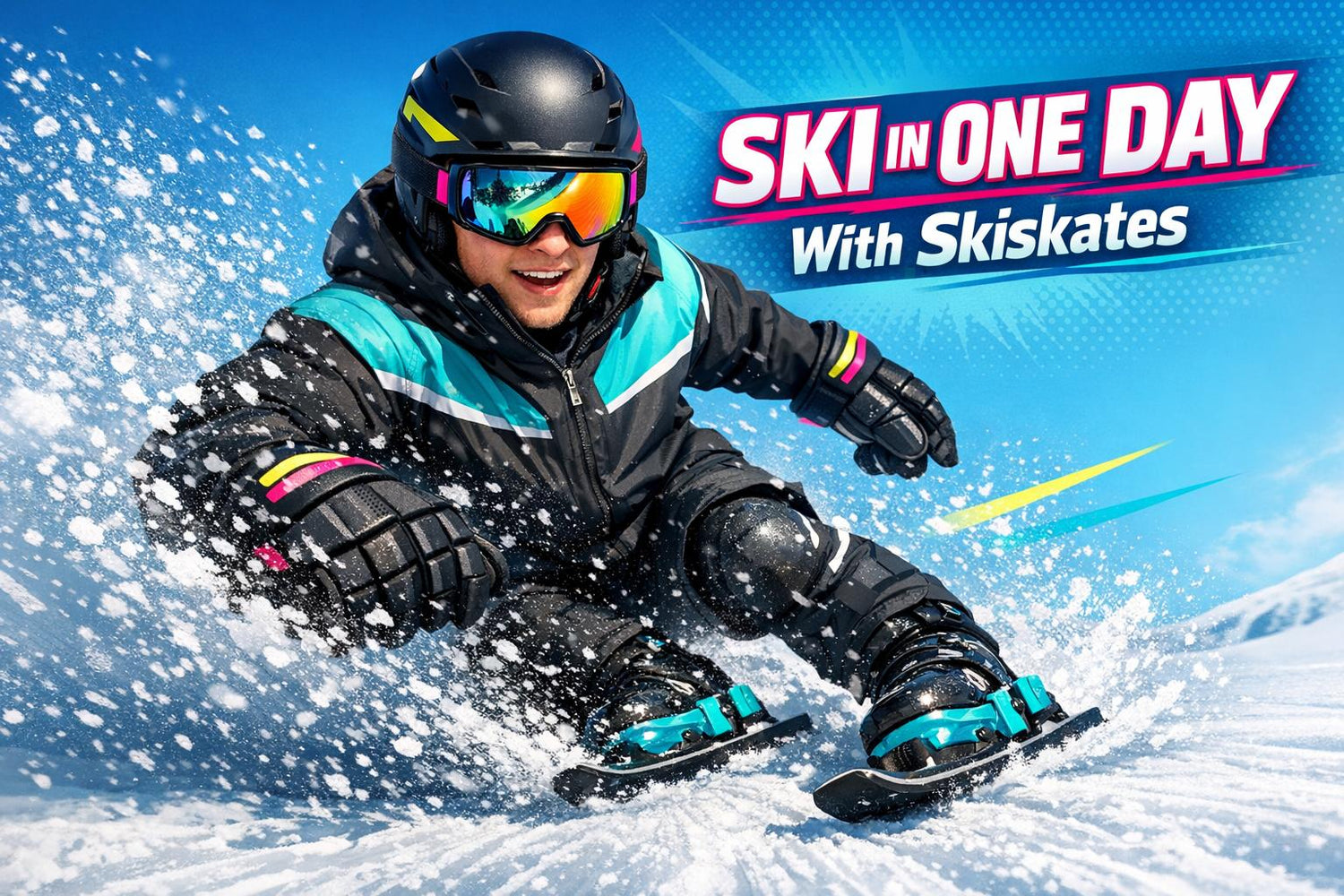
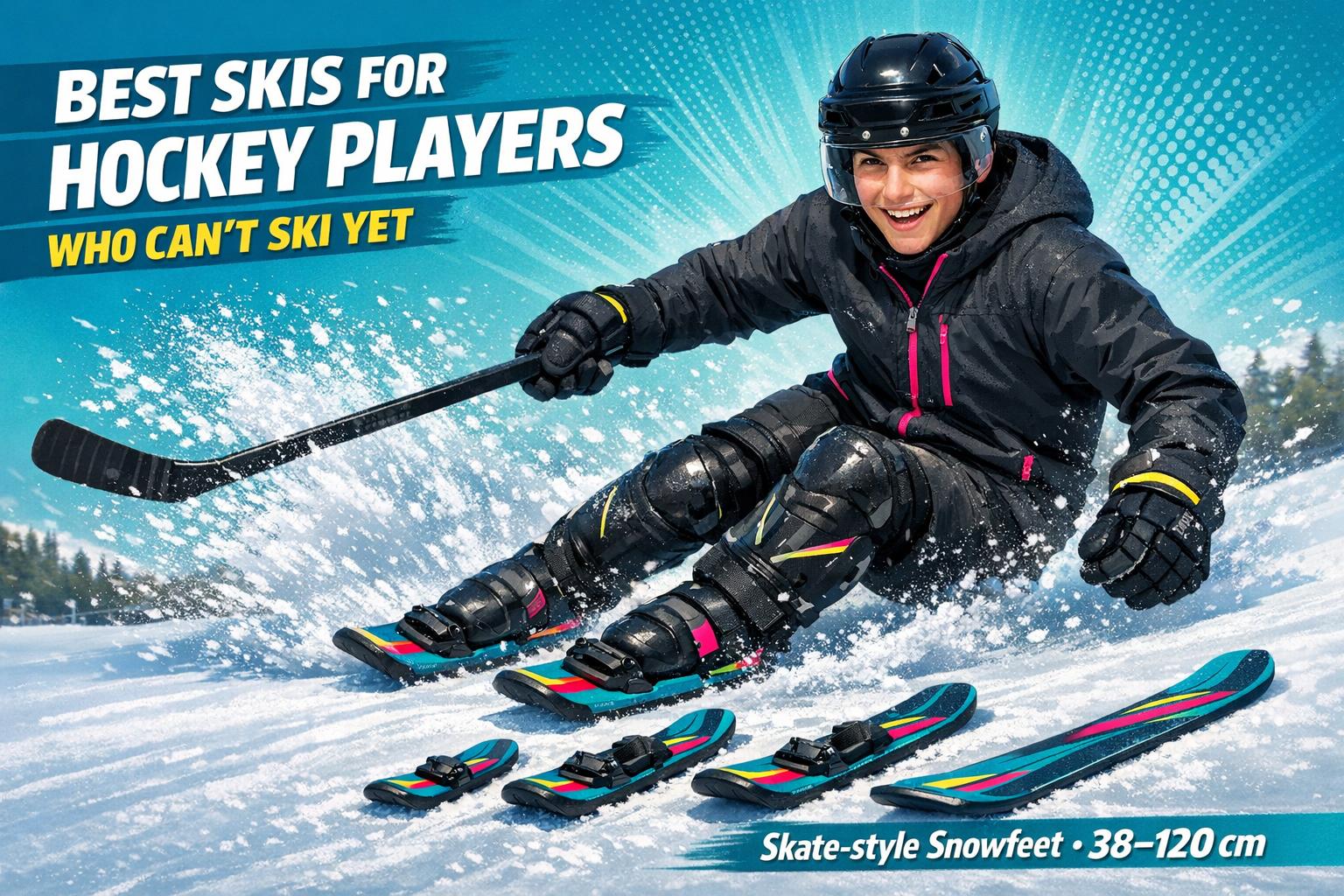
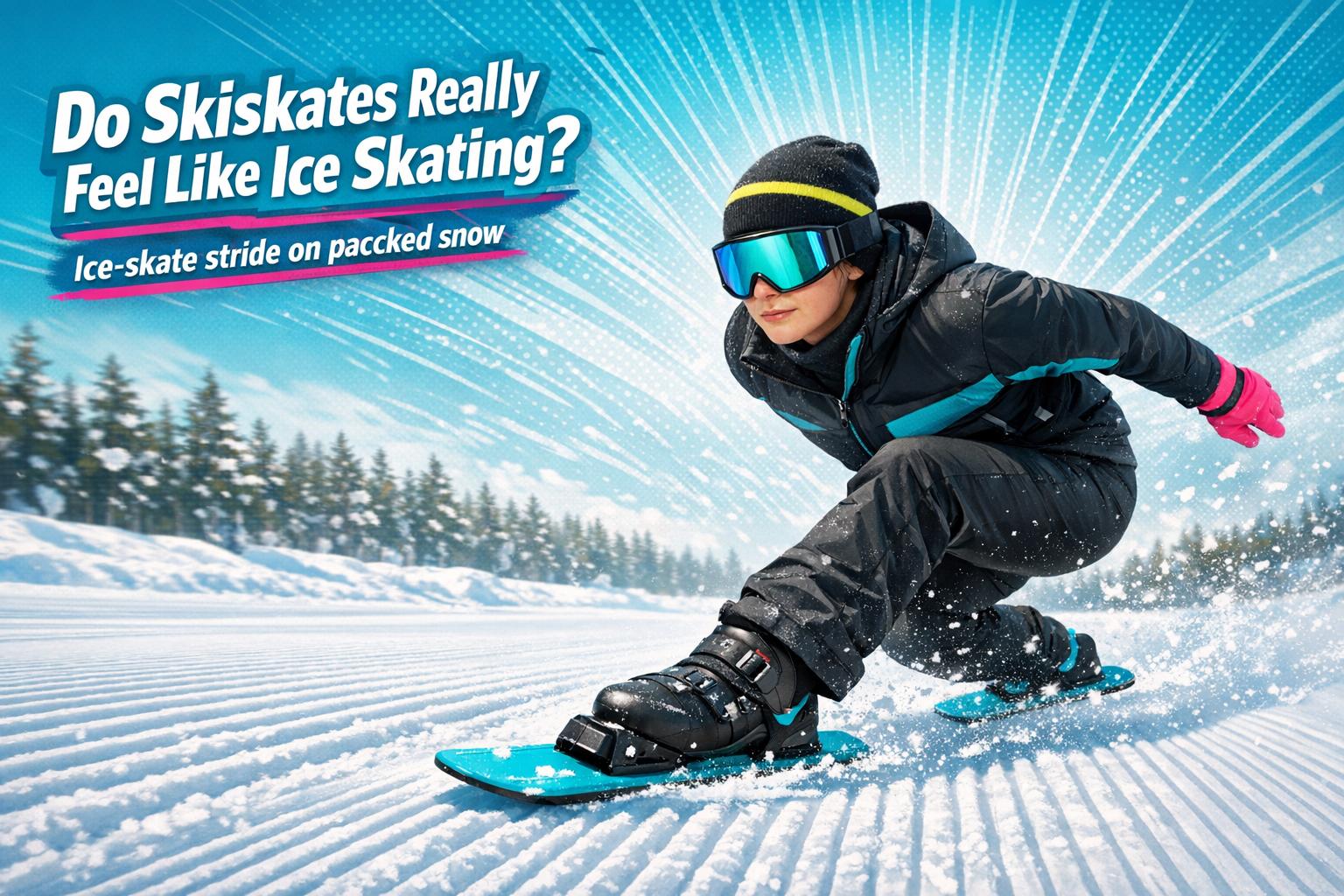
If you’re a hockey player, you already have the skills to ski - at least with Snowfeet Skiskates. These compact, 17-inch mini skis make it easy to transfer your hockey moves to the snow. Forget long skis or awkward snowboards. Skiskates let you glide, stop, and turn just like on the ice. Here’s why they work so well for hockey players:
- Compact Size: At just 17 inches long, they feel like an extension of your hockey skates.
- No Extra Gear Needed: Use your hockey skates or winter boots - no bulky ski boots required.
- Quick Learning Curve: Your balance, edge control, and agility on the ice translate directly to Skiskates.
- Portable: Toss them in a backpack - no roof racks or heavy bags needed.
With Skiskates, you can skip the steep learning curves of skiing or snowboarding. Strap them on, hit the slopes, and enjoy a new way to play in the snow - all in just one day.
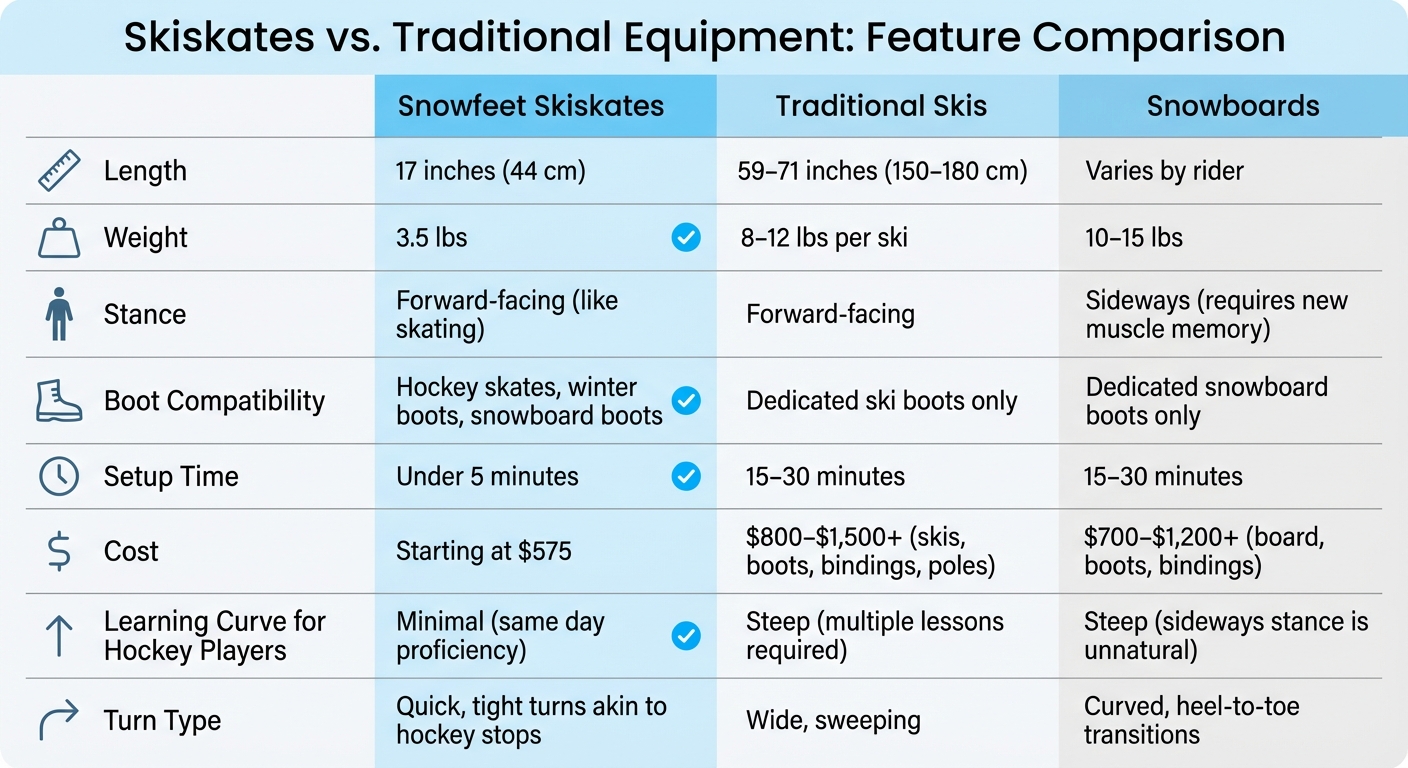
Skiskates vs Traditional Skis and Snowboards Comparison Chart
Hockey Player Tries Snowfeet* Skiskates | See What He Thinks | Skiboards | Short Ski | Mini Ski
Hockey Skills That Transfer Directly to Skiskates
If you've spent years perfecting your hockey skills, you're in luck - those same abilities transition almost seamlessly to Skiskates. The mechanics are strikingly similar. Think edge control, single-leg balance, and that low, athletic stance you're so used to. The main difference? You're trading in your hockey blades for compact skis. Let’s break down how your experience on the ice gives you a head start on the snow.
Balance: Bringing Ice Skating Stability to the Snow
On Skiskates, your balance point sits right under the middle of your foot, just like the "sweet spot" on a hockey blade. That centered stance you’ve practiced on the ice? It’s the same approach here. To stay steady, align your nose, knee, and ski tip over your supporting leg and focus on fully transferring your weight to maintain momentum.
You can even practice similar drills to sharpen your balance - try one-foot glides or figure eights. Incorporate explosive push-offs to mimic those quick starts you're familiar with. As Coach Jeremy from How To Hockey often points out, bent knees are crucial for generating power and speed. That same principle applies to Skiskates, especially when pushing off in a V‑position at a 45° angle.
Edge Control: Mastering Sharp Turns and Stops
Once you’re balanced, edge control becomes second nature. The metal edges on Skiskates function much like hockey blades, gripping the snow to give you control. To perform a hockey stop on Skiskates, flatten them out, rotate 90°, and apply edge pressure. This move uses the same lateral weight shifts you’ve already mastered on the ice.
Start with a simple wedge to slow down, then progress to full hockey stops, relying on your legs for precision. When carving turns, focus on shifting your weight onto the inside edge of your outside foot and the outside edge of your inside foot. It’s the same body lean you use for tight turns on the rink. While most ski beginners start with basic snowplow techniques, your hockey background allows you to skip ahead to advanced maneuvers.
Agility: Quick Movements and Direction Changes
At just 17 inches long, Skiskates eliminate the swing weight you’d find with traditional skis, making sharp pivots and even 360° spins a breeze. Their compact size is similar to hockey blades, so your muscle memory kicks in immediately. Crossovers, a key hockey move for accelerating through turns, translate perfectly to Skiskates because the shorter base prevents your feet from getting tangled.
To refine your agility, practice uphill herringbone steps and figure eights. Unlike traditional skis, which often require synchronized parallel movements, Snowfeet* Skiskates allow for the independent, explosive leg action you’ve already mastered. This design, unique to Snowfeet*, leverages your hockey instincts. Keep your knees bent and your weight centered to stay stable on uneven terrain and handle quick direction changes with ease - something that might trip up beginners on longer skis.
Snowfeet* Skiskates vs. Traditional Skis and Snowboards
Dragging around oversized skis or snowboards can be a real pain. Traditional skis often measure between 5 and 6 feet long, and snowboards aren’t much easier to handle. Compare that to Snowfeet* Skiskates, which are just 17 inches (44 cm) long and weigh only 3.5 lbs. They’re small enough to fit in a backpack, making them super easy to carry. Plus, their compact size means you can gear up in no time and hit the slopes hassle-free.
Compact Size and Easy Transport
The small size of Snowfeet* Skiskates is a game-changer, especially for hockey players who don’t want to deal with the bulk of traditional ski gear. Regular skis require dedicated boots, bindings, poles, and sometimes even a roof rack or oversized bag to transport everything. Snowfeet* Skiskates? Just toss them in your backpack, and you’re good to go. They work with hockey skates, winter boots, or snowboard boots, so there’s no need to lug around extra gear. Setup is a breeze - strap them on, adjust the bindings, and you’re ready to shred. No waiting in rental lines, no struggling with awkward boots.
Simple Setup and Boot Compatibility
Traditional ski bindings can be tricky, often requiring professional adjustments to get them just right. Snowfeet* Skiskates skip all that. Their adjustable straps are designed to fit a variety of boot types, so you can use your hockey skates or waterproof winter boots without any fuss. This simplicity makes the transition to snow sports much easier, especially for hockey players who already have the muscle memory for forward-facing movements. Check out the table below to see how Snowfeet* Skiskates stack up against traditional options.
Feature Comparison: Skiskates vs. Traditional Equipment
| Feature | Snowfeet* Skiskates | Traditional Skis | Snowboards |
|---|---|---|---|
| Length | 17 inches (44 cm) | 59–71 inches (150–180 cm) | Varies by rider |
| Weight | 3.5 lbs | 8–12 lbs per ski | 10–15 lbs |
| Stance | Forward-facing (like skating) | Forward-facing | Sideways (requires new muscle memory) |
| Boot Compatibility | Hockey skates, winter boots, snowboard boots | Dedicated ski boots only | Dedicated snowboard boots only |
| Setup Time | Under 5 minutes | 15–30 minutes | 15–30 minutes |
| Cost | Starting at $575 | $800–$1,500+ (skis, boots, bindings, poles) | $700–$1,200+ (board, boots, bindings) |
| Learning Curve for Hockey Players | Minimal (same day proficiency) | Steep (multiple lessons required) | Steep (sideways stance is unnatural) |
| Turn Type | Quick, tight turns akin to hockey stops | Wide, sweeping | Curved, heel-to-toe transitions |
The forward-facing stance of Snowfeet* Skiskates feels natural for hockey players, making it easy to perform quick, tight turns similar to hockey stops. On the other hand, snowboarding forces you into a sideways stance that can feel awkward and takes time to master. Traditional skiing isn’t much easier, requiring synchronized parallel movements and wide, sweeping turns that don’t come naturally to someone used to sharp, rapid pivots on the ice. Snowfeet* Skiskates let you skip the steep learning curve and start enjoying the slopes right away.
sbb-itb-17ade95
How to Learn Skiskating in One Day: Step-by-Step Guide
Step 1: Gear Up and Find Your Balance
Start on flat, groomed snow to get the hang of your Skiskates. Secure them to your boots, making sure the bindings are adjusted properly.
Adopt a hockey stance - knees bent, feet shoulder-width apart - and gently shift your weight between your toes and heels to find your balance. Unlike skis, Skiskates don’t have long platforms to catch you if you lean too far forward or backward, so nailing this balance is key.
Practice basic skating strides on the flat surface, mimicking movements you’d use on ice. This helps you get a feel for how the Skiskates glide and grip the snow. While standing still, tilt your ankles slightly to engage the metal edges with the snow - this builds the muscle memory you’ll need for turning. Keep your core engaged to manage the quick responsiveness of the short blades, which might feel a bit tricky at first. If you’re a hockey player, it’s similar to ice skating balance, though snow adds a bit more friction than ice.
Step 2: Work on Edge Control on Gentle Slopes
Once you’re comfortable balancing on flat terrain, move to a gentle slope. Here’s where those hockey stopping skills come in handy. The edge control you’ve developed on ice translates well to snow, letting you perform hockey stops to manage speed and brake effectively.
Start by gliding down a mild slope. Tilt your ankles to dig the edges into the snow, and gently stop by turning your feet perpendicular to the slope. Skiskates’ short base allows you to stay centered or lean slightly back, unlike traditional skis that require a forward-leaning stance. This familiar weight distribution makes edge control feel intuitive.
Step 3: Master Turning and Speed Control
Next, use your hockey agility to carve turns and manage your speed. Shift your weight between the edges - wider turns will pick up speed, while tighter turns will slow you down. Skiskates’ high responsiveness lets you change direction quickly and effortlessly.
Your muscle memory from skating will guide you through each turn. You already know how to balance, shift weight, and engage your edges. As Seattle Kraken goaltender Philipp Grubauer explains about warming up:
What I'm trying to accomplish is seeing the puck, tracking the puck, and just getting your body moving.
Take a similar approach - focus on tracking the terrain and feeling the snow beneath your Skiskates.
Step 4: Experiment with Spins and Advanced Moves
Once you’re comfortable with the basics, challenge yourself with spins and quick pivots. For example, try a 180° spin by shifting your weight and rotating your hips. The short design of Skiskates means there’s no long tail to snag in the snow.
Practice quick stops, starts, backward skating, and tight pivots. Warming up before tackling advanced moves can help you adjust to the snow conditions. As Matty Beniers of the Seattle Kraken puts it:
I just think it's more about doing something in the morning, getting a little sweat, feeling good.
These advanced maneuvers not only boost your confidence but also showcase how easily hockey skills translate to skiskating.
Step 5: Explore Different Terrain
Once you’ve nailed the basics and feel confident, venture onto varied terrain. From groomed slopes to moguls and snow parks, the lightweight design of Skiskates makes it easy to explore different areas.
Try small jumps, glide through powder (if conditions permit), and test yourself on steeper slopes. By the end of the day, you should be able to use lifts and handle a variety of slope conditions - what ski instructors often call reaching a "recreational standard". Don’t forget to dress warmly in waterproof clothing, long socks, and gloves to stay comfortable throughout your skiskating adventure.
Why Skiskates Work Best for Hockey Players
Building on your hockey skills, Snowfeet* Skiskates are a perfect fit for winter fun on the go.
Light Weight and Easy to Carry
At just 44 cm long, Snowfeet* Skiskates are far more compact than traditional skis, which typically measure 5–6 feet. They’re light enough to toss in a backpack, so you don’t need to deal with bulky carriers or worry about fitting them into your car. This convenience makes spur-of-the-moment mountain trips a breeze. After practice, you can grab your Skiskates and head out without dealing with the usual hassle of transporting ski gear. Plus, their compact size means less prep and more play.
Fast Learning Means More Time Having Fun
Thanks to your hockey background, picking up Skiskates is a breeze. Your muscle memory kicks in, helping you master carving turns in just a few hours. Compare that to traditional skiing, which can take days of training. With techniques you already know, you’ll spend less time learning and more time enjoying the slopes.
What Hockey Players Say About Skiskates
Hockey players rave about how natural Skiskates feel right from the start. The sharp turns, quick stops, and precise control you’re used to on the ice translate seamlessly to snow. Their hybrid design combines the smooth glide of skiing with the lateral movements of skating, making it easy to apply your edge control and balance without skipping a beat. It’s like skating, but with a snowy twist.
Conclusion: Transform Your Winter with Snowfeet* Skiskates
Your hockey skills - balance, edge control, and agility - are all you need to pick up Snowfeet* Skiskates in no time. The techniques you've honed on the ice naturally carry over to the snow, so there's no need for long lessons or the usual trial-and-error that comes with traditional skiing.
Snowfeet* Skiskates are designed to keep things simple. They’re compact, work with your regular winter boots, and ditch the need for bulky equipment. That means less hassle gearing up and more time doing what you love - making sharp turns and quick maneuvers, just like on the ice.
Why choose Snowfeet*? It’s all about convenience, portability, and how seamlessly your hockey skills transition to the slopes. With these, you're not starting fresh; you're building on abilities you already have, making it easy to dive into a new winter adventure.
Think it's time to bring your hockey moves to the mountains? Grab a pair of Snowfeet* Skiskates and turn the slopes into your new playground.
FAQs
Are Skiskates allowed at most ski resorts?
Skiskates are usually allowed at most ski resorts since they’re seen as a unique way to enjoy the snow. That said, every resort might have its own rules, so it’s smart to check their policies ahead of time. Many resorts embrace Skiskates for both training and recreational activities, offering a fun and flexible option for winter enthusiasts.
Do I need poles to use Snowfeet* Skiskates?
No, you don’t need poles to use Snowfeet* Skiskates. Thanks to their compact and user-friendly design, they’re easy to use without any extra gear. Skiskates are perfect for hockey players moving from ice to snow and great for beginners too, as they’re easy to pick up and super portable. Most users find poles unnecessary because Skiskates are built to keep things simple while still giving you control and agility.
What snow conditions are best for Skiskates?
Skiskates work best on firm, groomed, or icy snow. These conditions give you great edge control and stability, making it easier to carve smooth turns and handle maneuvers confidently. It’s a lot like ice skating, but on snow!











Leave a comment
This site is protected by hCaptcha and the hCaptcha Privacy Policy and Terms of Service apply.