



















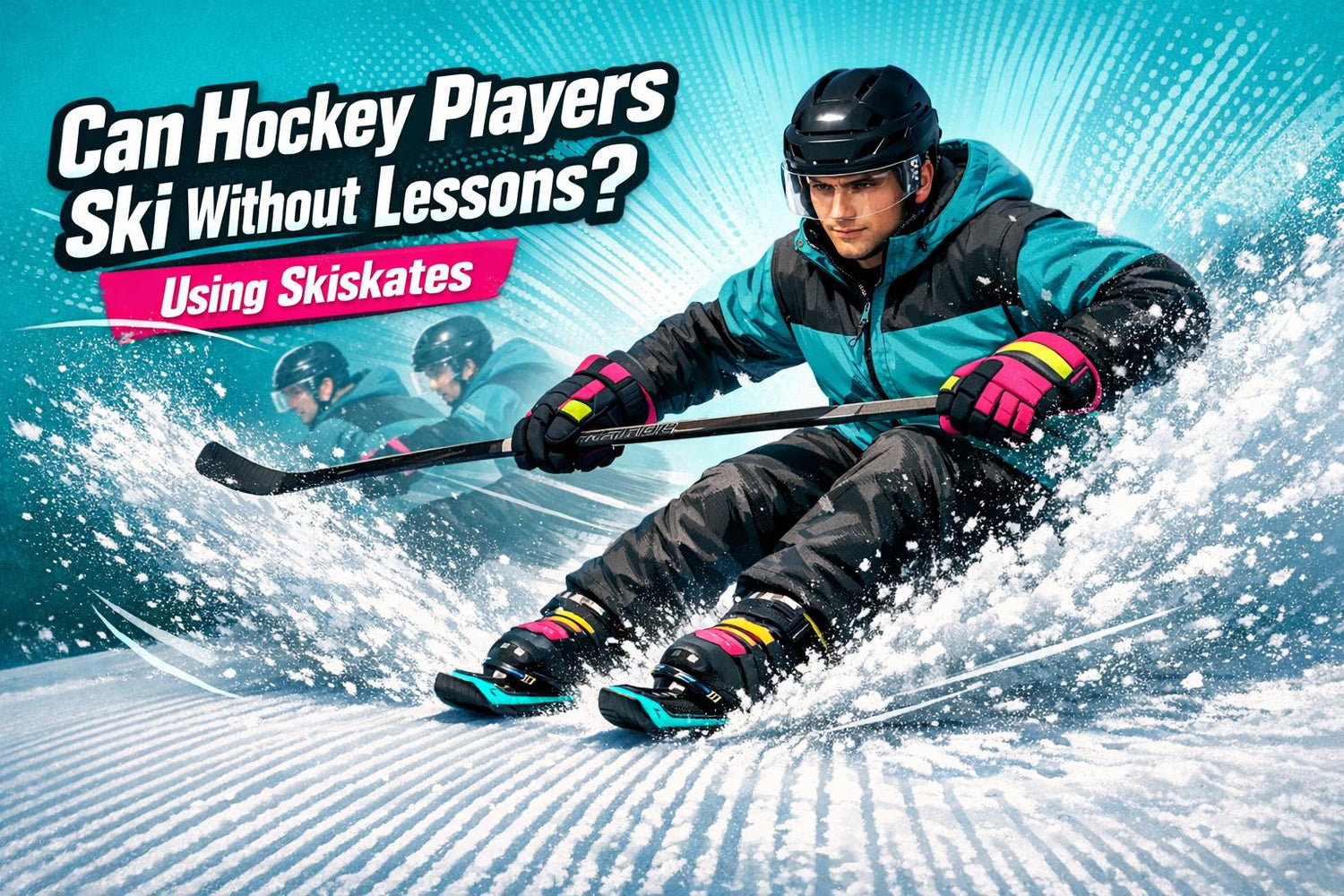
Yes, hockey players can ski without lessons if they use skiskates. These compact, 17-inch mini skis are designed to mimic ice skating, making them a natural fit for anyone with hockey experience. Your skills - like balance, edge control, and the hockey stop - translate directly to skiskating. Plus, skiskates are lightweight, portable, and work with regular winter boots, so there’s no need for bulky gear or pricey ski boots. In about an hour, most hockey players feel confident enough to take on gentle slopes.
Why Skiskates Work for Hockey Players:
- Familiar Movement: Skiskates use the same skating motion and techniques as hockey.
- Easy to Handle: At 44 cm (17 inches) long, they’re much shorter than regular skis.
- No Special Gear: Use your everyday winter boots - no need for ski-specific footwear.
- Quick to Learn: Your ice skills kick in immediately, skipping the beginner phase.
If you’ve mastered the ice, skiskates let you glide onto the snow with ease. No lessons, no hassle - just grab a pair and hit the slopes!
How Skiskating Works: Similarities to Hockey Skating
Shared Skills: Balance, Edge Control, and Turns
If you’ve played hockey, you’re already halfway to mastering skiskating. Both sports share a starting position: heels together, toes pointing outward in a V-shape. From there, you push off at just the right angle, shifting your full weight to the gliding leg. On snow, this weight transfer is key to keeping your momentum going. Thanks to muscle memory, you’ll find smooth turns, steady glides, and quick stops feel second nature.
Edge control is another area where skiskating mirrors hockey. The metal edges on skiskates grip the snow much like skate blades bite into the ice. You’ll use the same inside and outside edge pressure for stability and carving. And because skiskates are much shorter than traditional skis, those crossover moves you’ve perfected on the ice will feel just as natural. To get started, try one-foot glides and figure eights on flat terrain to build confidence before heading for steeper slopes. It’s this easy transition from ice to snow that makes skiskating such a natural fit for hockey players.
How Skiskates Work Like Ice Skates
Skiskates don’t just rely on shared techniques - they’re designed to feel like ice skates too. Snowfeet* Skiskates mimic the compact contact area of hockey skates, giving you the same agility and control. Compare that to traditional skis, which can be 60–80 inches long and often throw off your balance. With skiskates, you stay centered and nimble, making quick 360-degree pivots, smooth forward-to-backward transitions, and rapid direction changes a breeze.
Your hockey stance - knees bent, weight centered - translates perfectly to skiskating. The pivot point sits right under your feet, exactly where you’d expect it. This design not only builds on your skating skills but also explains why Snowfeet* stands out as a leader in performance and ease of use. It’s all about making the switch from ice to snow feel seamless.
How to Start Using Skiskates Without Lessons
Step 1: Choose the Right Skiskates
Go for the 44 cm Snowfeet* Skiskates. At just a quarter of the length of traditional alpine skis (which are typically 150–180 cm or 60–71 in), these are designed for maximum agility - perfect for hockey players. The bindings are adjustable without tools, so you can tweak the fit in seconds, even on the mountain. To get started, slide your boot into the binding, tighten it up, and leave about a two-finger gap behind your heel for easy adjustments.
Step 2: Practice the Basics
Head to a flat area with packed snow to get the hang of it. Start in your hockey stance - knees bent, feet shoulder-width apart, and weight centered. Push off at a 45° angle in a V-glide motion, transferring all your weight to the gliding leg. Keep your nose, knee, and the tip of the skiskate in line for balance.
When it comes to stopping, you’ve got a couple of options. Use your hockey stop by flattening the skiskates and turning 90°, or try a wedge stop by pointing your heels out, tips in, and rolling your knees inward. Most hockey players feel pretty comfortable with these basics in about an hour.
Step 3: Hit the Slopes
Once you’ve nailed stopping and turning, it’s time to take on some gentle, groomed slopes. Stick with your hockey stance - knees bent and weight centered - and you’ll be able to handle faster speeds and quick pivots with ease. Start slow and work your way up to steeper runs as your confidence builds. This smooth progression from flat ground to slopes is part of what makes Snowfeet* Skiskates such a game-changer for hockey players looking to mix things up on the snow.
Benefits of Snowfeet* Skiskates for Hockey Players

Small and Lightweight Design
Snowfeet* Skiskates are just 44 cm (17 inches) long, making them much smaller than traditional alpine skis, which usually range from 150–180 cm. This compact size means they can easily fit into a standard backpack, so no more lugging around bulky gear. Plus, they weigh only 1.5 kg (3.3 lbs) per pair, compared to the hefty 7–10 kg of a full ski setup. For hockey players used to traveling light, this portability is a total win.
The lightweight design also helps reduce leg fatigue, letting you focus on explosive power without being weighed down. Since their short length is similar to a hockey skate blade, the movement feels natural - more like skating than sliding. Most Snowfeet* models come with universal bindings that fit shoe sizes ranging from US 6–13 (EU 38–47), so they’re easy to share with teammates or family. For hockey players always on the go, this compact and portable design means you're ready for snow adventures anytime.
Easy to Use and Fast Learning
Snowfeet* Skiskates make hitting the snow a breeze, skipping the steep learning curve of traditional skiing. Moves like hockey stops, edge control, and quick turns translate seamlessly from the ice to the snow.
Another bonus? You don’t need stiff, pricey plastic ski boots. Many Snowfeet* models attach directly to standard winter boots or snowboard boots, so you keep the ankle flexibility you're used to. This setup feels familiar, like being on skates, and ensures comfort. On groomed trails, most hockey players find their footing in about an hour - no instructor needed. This ease of use means you can quickly transition from the rink to exploring snowy landscapes without missing a beat.
Works on Different Terrains
Snowfeet* Skiskates aren’t just for ski slopes. Their compact size and agility make them perfect for snowparks, forest trails, small hills, and even your backyard. You can practice your moves on almost any snowy surface, from groomed trails to tight forest paths where traditional skis would be a hassle.
For hockey players wanting to stay sharp during winter, this versatility is a big deal. You’re not tied to pricey lift tickets or resort schedules. Just grab your Snowfeet* Skiskates, find a snowy hill, and you’re ready to skate. The explosive, agile movement you rely on in games translates perfectly to snow. Whether you're carving through trails or practicing quick stops, these skates keep you in control, just like on the ice.
sbb-itb-17ade95
Skiskates vs. Regular Skis and Snowboards
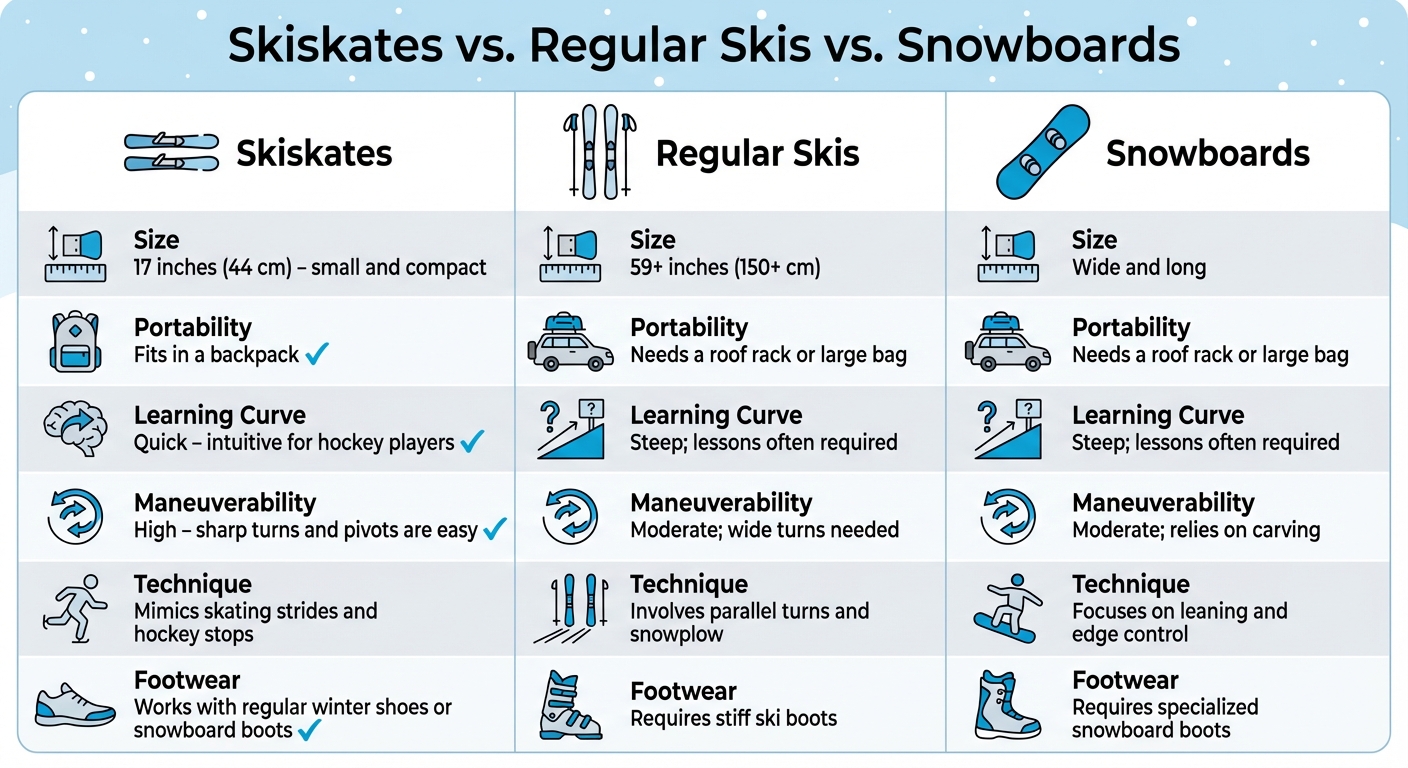
Skiskates vs Regular Skis vs Snowboards Comparison Chart
Comparison Table: Skiskates vs. Regular Skis and Snowboards
Snowfeet* Skiskates offer agility and convenience that stand out when compared to traditional skis and snowboards. Here's how they stack up:
| Feature | Snowfeet* Skiskates | Regular Skis | Snowboards |
|---|---|---|---|
| Size | 17 inches (44 cm) – small and compact | 59+ inches (150+ cm) | Wide and long |
| Portability | Fits in a backpack | Needs a roof rack or large bag | Needs a roof rack or large bag |
| Learning Curve | Quick – intuitive for hockey players | Steep; lessons often required | Steep; lessons often required |
| Maneuverability | High – sharp turns and pivots are easy | Moderate; wide turns needed | Moderate; relies on carving |
| Technique | Mimics skating strides and hockey stops | Involves parallel turns and snowplow | Focuses on leaning and edge control |
| Footwear | Works with regular winter shoes or snowboard boots | Requires stiff ski boots | Requires specialized snowboard boots |
Unlike snowboards, which lock you into a sideways stance, Snowfeet* Skiskates let you use your natural skating techniques. This design makes them a great fit for hockey players and anyone looking for a simpler way to enjoy the slopes.
Why Skiskates Are Perfect for Hockey Players
If you're a hockey player, Snowfeet* Skiskates are a game-changer. They let you take the skills you've honed on the ice - like edge control, balance, and quick turns - and apply them directly to snow. That muscle memory you've built over countless hours of practice translates seamlessly, making the transition nearly effortless. Forget about expensive lessons; with skiskates, you're ready to go right away.
Their compact size is another big win. You can toss them into your hockey bag and head straight to a snowy hill without the hassle of lugging around oversized skis or snowboards. It's like bringing the rink to the slopes, turning winter into your personal playground.
Conclusion
If you're a hockey player, you've already got what it takes to jump into skiskating - no lessons needed. The skills you’ve honed on the ice, like edge control, balance, and quick turns, translate perfectly to Snowfeet* Skiskates. Even your trusty hockey stop works here, so you can skip the awkward snowplow braking that traditional skiing often requires.
Snowfeet* Skiskates are built to feel like ice skates for snow. At just 17 inches (44 cm) long, they’re compact enough to toss in your backpack - no bulky gear to haul around. And unlike traditional skis, these skiskates work with your regular winter boots, cutting out the need for specialized equipment or lessons.
Thanks to their ice skate–like design, your muscle memory kicks in naturally. That means you can head straight to your favorite snowy hill or slope and start having fun right away, without spending extra time or money on formal training.
Whether you’re zipping down groomed runs or venturing into untouched snow, Snowfeet* Skiskates let you take your skating skills to the next level. They transform winter into your personal playground, offering the same agility and control you’re used to on the ice. Check out the full Snowfeet* lineup and see how easily you can make the leap from rink to snow!
FAQs
Are skiskates allowed at most U.S. ski resorts?
Most ski resorts in the U.S. don’t outright ban skiskates like Snowfeet. However, whether you can use them often comes down to the specific resort’s policies and safety rules. To avoid any surprises, it’s a good idea to reach out to the resort directly and confirm their guidelines before you go.
Do I need poles or any extra safety gear for skiskates?
Nope, you don’t need poles or extra safety gear to use skiskates. They’re built to be simple and user-friendly, relying on basic balance and control - kind of like hockey skating or rollerblading. If you’ve got some skating experience, you’ll likely find them easy to pick up, even as a beginner.
Can skiskates handle powder or icy snow well?
Skiskates, such as Snowfeet*, work best on groomed or packed snow. These conditions highlight their agility and ease of use. However, they face challenges in powder, where the loose, deep snow can make stability and control harder to maintain. Icy terrain also tests their edge grip. Snowfeet* skiskates are designed for quick turns and precise movements, thriving on surfaces that suit their ice-skating-inspired design.











Leave a comment
This site is protected by hCaptcha and the hCaptcha Privacy Policy and Terms of Service apply.