




















Skating on snow for the first time feels like a mix of ice skating and skiing - but lighter, simpler, and more fun. Instead of bulky skis or snowboards, you use compact gear like Snowfeet Mini Skis or Skiskates, which fit in a backpack and work with your regular winter boots. It's easy to learn (just five minutes!) and perfect for slopes, trails, or even your backyard.
Here’s why snow skating is worth trying:
- Portable and Lightweight: No roof racks or heavy gear - just toss them in your bag.
- Quick to Learn: No lessons needed; the skating motion feels natural.
- Affordable: Prices start at $250, making it an accessible way to enjoy winter sports.
- Gentle on Knees: Easier to balance and control compared to longer skis.
- Versatile: Works on light powder (up to 4 inches), groomed slopes, and more.
Snow skating combines the thrill of gliding with the freedom to explore without the hassle of traditional gear. It’s a game-changer for beginners and seasoned riders alike. Ready to give it a shot? :)
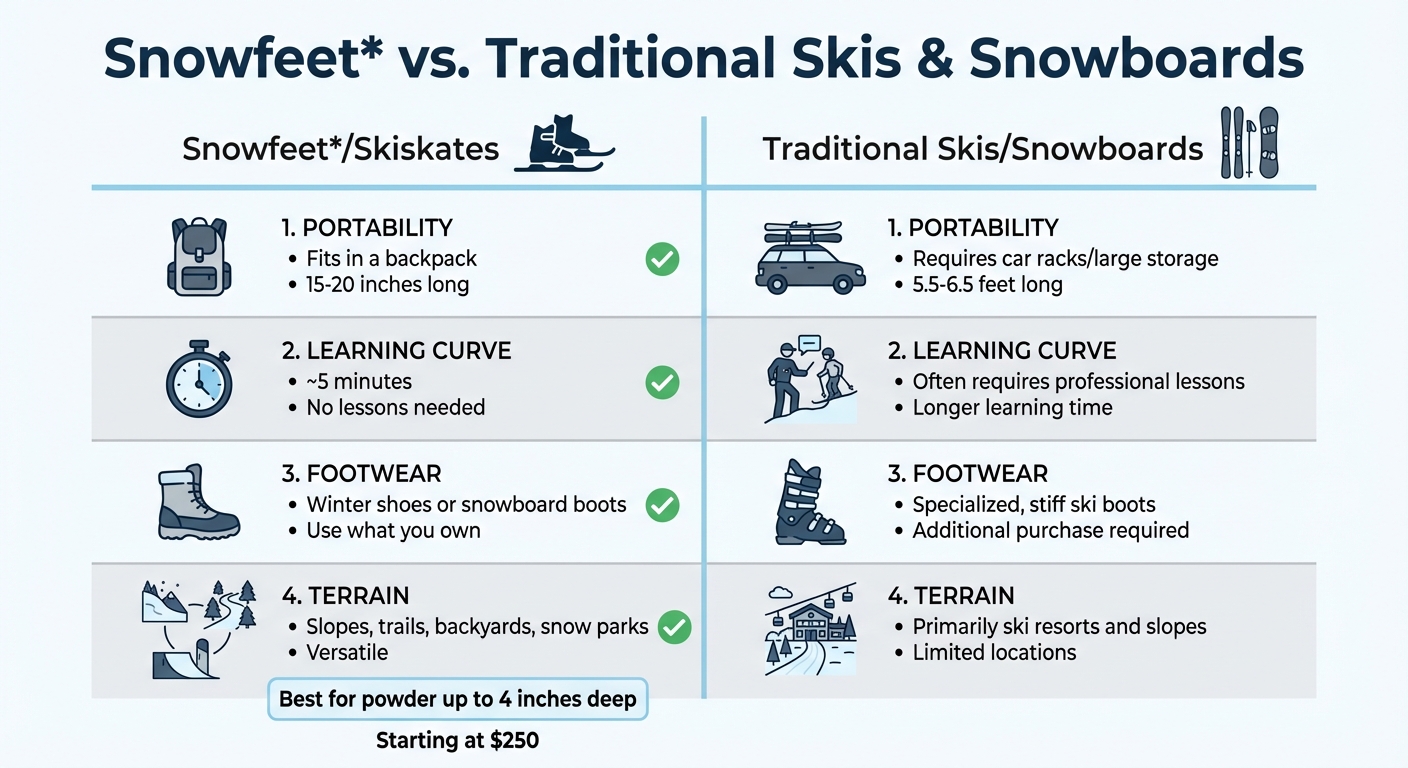
Snowfeet vs Traditional Skis Comparison Chart
What Snow Skating Feels Like: First-Time Sensations
The first time you hit the snow with Snowfeet* is like stepping into a completely new world. It’s a mix of ice skating and skiing, but somehow lighter and more playful. Your feet feel free and responsive, making every movement feel like an invitation to keep going.
Finding Your Balance on Snow
After that initial rush of excitement, the challenge of balance kicks in. The key adjustment? Learning to master your front-to-back balance. Unlike traditional skis, Snowfeet* - whether you're using the 17-inch Skiskates or the 15-inch Mini Skis - require you to center your weight. If you’ve ever ice skated or played hockey, this will feel surprisingly natural. As Cameron Asbell shared:
"I didn't get injured because with how small they are it's easier to pick them up and it doesn't put stress on your knees as much also making it easier to control and regain balance when falling."
The compact design is a game-changer. Your knees take less strain compared to traditional skis, and if you feel a wobble coming on, you can simply lift your feet to reset - something that’s nearly impossible with longer skis. This smaller size doesn’t just make balancing easier; it also gives you a level of control that larger skis just can’t match.
The Feeling of Gliding
Once you’ve got your balance down, the real fun begins - the glide. This is where snow skating truly shines. The short length of the gear lets you carve and turn with a responsiveness that feels effortless. Quick, playful turns are suddenly second nature, and there’s no battling with bulky equipment. Nathan F. captured it perfectly:
"Absolute game-changer! They're light, fast, and incredibly fun to ride."
The skating motion feels natural, so instead of wrestling with technique, you get to focus on the sheer joy of gliding across the snow. It’s the kind of experience that keeps you coming back for more.
Snowfeet* vs. Traditional Skis and Snowboards
If you've ever lugged traditional ski gear to the mountains, you know it’s no picnic. Long skis are heavy, awkward to carry, and demand lots of storage space. Snowfeet* completely changes the game, offering a lighter, more convenient way to enjoy snow sports - perfect for beginners and casual riders. Let’s see how Snowfeet* stacks up against traditional options.
Easy to Carry and Store
Traditional skis are typically 5.5 to 6.5 feet long and need roof racks or large storage solutions. Snowfeet*, on the other hand, are compact and portable, measuring just 15 to 20 inches. They’re small enough to slide into a standard backpack, making trips to the slopes or sledding hills a breeze. Plus, they’re so lightweight you can carry them around all day without breaking a sweat.
Shorter Length, Faster Learning
Snowfeet* gear comes with an incredibly short learning curve - just five minutes. Thanks to their compact size (17 inches for Skiskates and 15 inches for Mini Skis), they’re easier to maneuver, giving you more control right from the start. Forget the hassle of specialized ski boots, too. Snowfeet* works with your regular winter shoes or snowboard boots. As Andrew B. put it:
"These skiblades are so much fun and easy to control. Never going back to regular skis".
Versatile Across Snow and Terrain
Snowfeet* isn’t just easy to use - it’s versatile. Unlike traditional skis, which are often limited to groomed slopes or deep powder at ski resorts, Snowfeet* performs well on a variety of terrains. Whether you’re hitting ski slopes, snow parks, hiking trails, sledding hills, or even your backyard, these compact skates can handle it. They work best in powder up to 4 inches deep, but for deeper snow, you can opt for the longer Skiblades (39 inches).
| Feature | Snowfeet* / Skiskates | Traditional Skis / Snowboards |
|---|---|---|
| Portability | Fits in a backpack | Requires car racks/large storage |
| Learning Curve | ~5 minutes; no lessons needed | Often requires professional lessons |
| Footwear | Winter shoes or snowboard boots | Specialized, stiff ski boots |
| Terrain | Slopes, trails, and backyards | Primarily ski resorts and slopes |
sbb-itb-17ade95
Tips for Your First Snow Skating Session
Picking the Right Snowfeet* Product
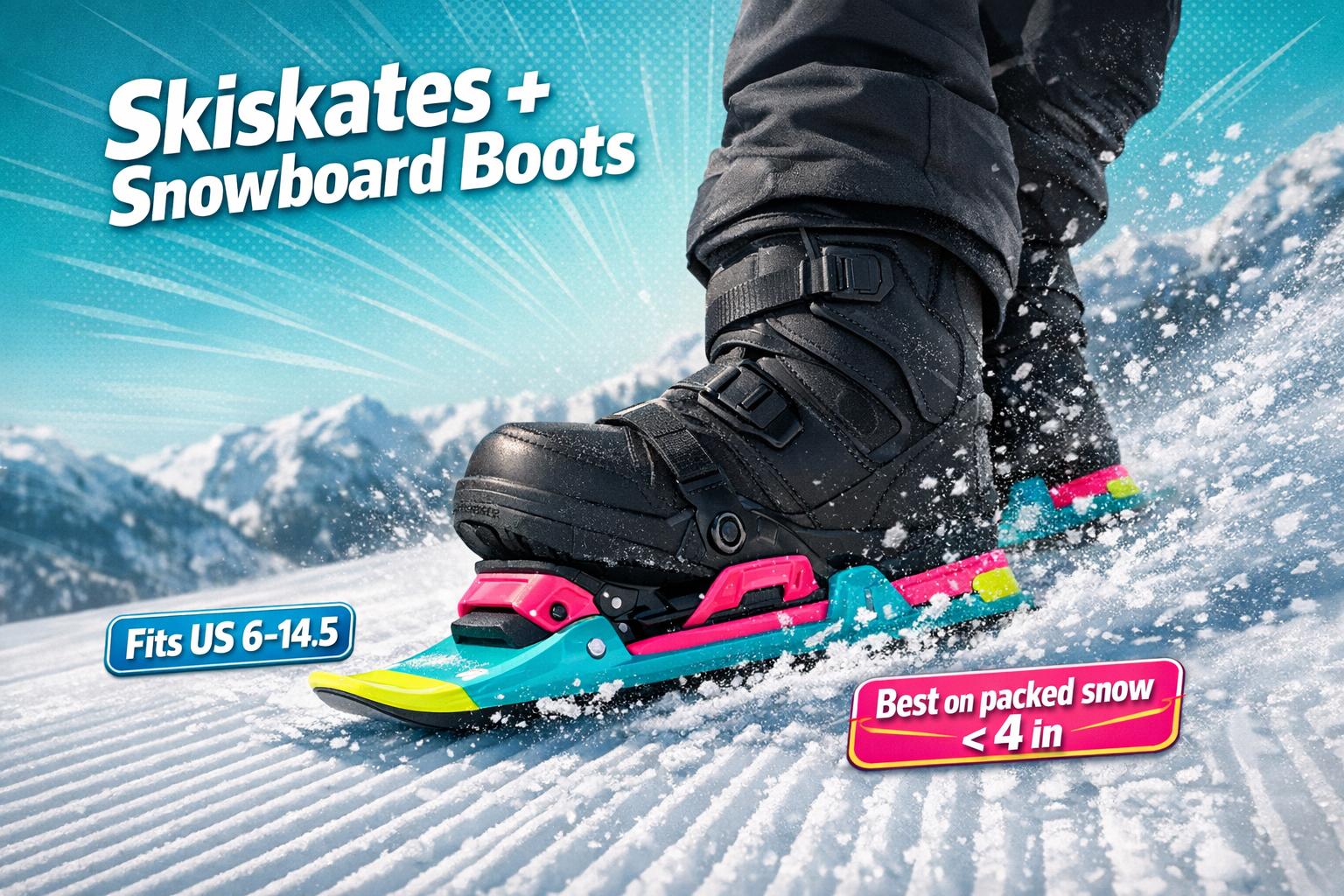
The first step in your snow skating adventure is choosing the right Snowfeet* gear. You’ve got two main options: the 44 cm Skiskates or the Mini Skis, which come in 38 cm and 50 cm sizes. If you want that “skating on snow” vibe with the freedom to pull off tricks and quick turns, go for the Mini Skis. They’re compact enough to toss in a backpack and work with your regular winter shoes or snowboard boots - no need for stiff ski boots. Between the two Mini Ski sizes, the 50 cm model gives you a bit more versatility, making it great for groomed slopes and snow parks.
On the other hand, if you’re after a little more stability while keeping things fun, the 44 cm Skiskates are a solid choice. Just remember, Snowfeet* products are best for light powder - up to about 4 inches deep. If you’re planning to hit deeper snow often, you might want to look into longer Skiblades (65–99 cm). These offer a short-ski experience that’s more about carving than skating.
Once you’ve picked your gear, learning some basic moves will help you make the most of your first session.
Learning Basic Techniques
Getting the hang of snow skating starts with mastering your balance. Keep your legs shoulder-width apart - spreading them too wide makes control harder. Stand up straight with your weight centered over the middle and back of your feet. Here’s the golden rule: don’t lean forward. Unlike traditional skis, Snowfeet* don’t have those long front tips to support you, and leaning forward could easily send you tumbling.
"Don't lean forward like you would do with skis, because you don't have the support of regular-length skis to hold you and with almost inevitable certainty, you would fall down." – Snowfeet Team
Once you’ve got your stance down, practice stopping. You can use a hockey stop by sliding your edges sideways to create friction, or make use of the built-in heel brake. The trick is keeping your weight evenly distributed over both feet - unlike skiing, where you might favor one ski. Start on flat terrain to get comfortable with the skating motion, and try placing one foot slightly ahead of the other for better balance.
Common Beginner Mistakes to Avoid
A few missteps are common for first-timers, but they’re easy to avoid with a little preparation. Stick to a shoulder-width stance - going too wide reduces control. Also, avoid deep powder; Snowfeet* are designed for light powder up to 4 inches. Groomed slopes, trails, and snow parks are your best friends for those first sessions, so steer clear of backcountry conditions.
Before heading out, take a few minutes at home to adjust your bindings with a screwdriver. This saves you from fumbling around in the cold on the slopes. And don’t forget about maintenance! Dry the metal edges after each use to prevent rust, and apply a bit of oil before storing your gear long-term. If you’re using a fiberglass model, regular waxing is key to keeping the base smooth and preventing snow from sticking. A little care goes a long way in keeping your Snowfeet* in top shape.
Conclusion: Try Snow Skating with Snowfeet*
Snow skating with Snowfeet* brings a whole new level of freedom to the slopes. Unlike traditional skis or snowboards, these compact wonders let you glide with ease while keeping things simple. Toss them in your backpack, master the basics in just minutes, and hit everything from groomed runs to your neighborhood sledding hill.
The standout perk? Accessibility. Say goodbye to clunky ski boots, expensive lessons, and oversized gear. With Snowfeet*, all you need are your regular winter boots. Strap them on, and you're ready to ride. Whether you go for the ultra-portable 38 cm Mini Skis, the versatile 50 cm model, or the stable 44 cm Skiskates, you’re choosing gear designed to work with you, not against you.
"Far more portable and affordable than traditional skis or snowboards." - Uncrate
Snowfeet* also make learning a breeze. The falls are gentler, the fun is instant, and the movement feels natural - like skating, but on snow. Just start on smooth terrain, center your weight, and avoid leaning forward like you might on regular skis.
Snowfeet* reimagine what winter adventures can be. From their portability to their ease of use, they’re a game-changer for anyone looking to try something different. Check out their full lineup and find the perfect fit for your first snow skating experience. It’s time to shake up your winter routine with Snowfeet*!
FAQs
What’s it like to try snow skating compared to traditional skiing?
Snow skating with Snowfeet Skiskates or mini skis is a whole new vibe compared to traditional skiing. Forget the bulky gear and clunky boots - these are lightweight, compact, and strap right onto your regular winter boots. That means less hassle and more freedom to move. Whether you're hitting the slopes, cruising through parks, or exploring trails, snow skating feels nimble and playful.
What’s even better? You don’t need to spend hours learning complicated techniques like you do with skiing. Snow skating is super beginner-friendly and intuitive, so you can dive into the fun almost right away. Plus, it's way easier on your wallet and way more portable - no need for oversized, pricey equipment. If you're after a fun, no-fuss way to enjoy snowy adventures, snow skating with Snowfeet could be your new favorite winter activity!
What type of snow is best for snow skating with Snowfeet?
When it comes to snow skating with Snowfeet, firm, groomed, or packed snow is your best bet. These surfaces offer great stability and a smooth glide, making them perfect for everyone - from first-timers to seasoned pros. Snowfeet gear is specially crafted to work well on terrain similar to what you'd find in skiing or snowboarding, giving you all the fun without the bulky equipment.
Steer clear of deep powder or icy patches, though. Those conditions can make controlling your movements trickier. For the best experience, stick to well-maintained trails or compact snow, and you'll be set for an awesome ride!
Can I use my regular winter boots with Snowfeet for snow skating?
Yes, you can! Snowfeet are made to work perfectly with your regular winter boots. No need to splurge on special footwear. Just ensure your boots are warm, sturdy, and fit well for a comfy ride. This makes Snowfeet super convenient and way easier to get started with compared to traditional skis or snowboards, which usually need specific boots and bindings. So, grab your boots and get ready to glide through the snow hassle-free!











Leave a comment
This site is protected by hCaptcha and the hCaptcha Privacy Policy and Terms of Service apply.