



















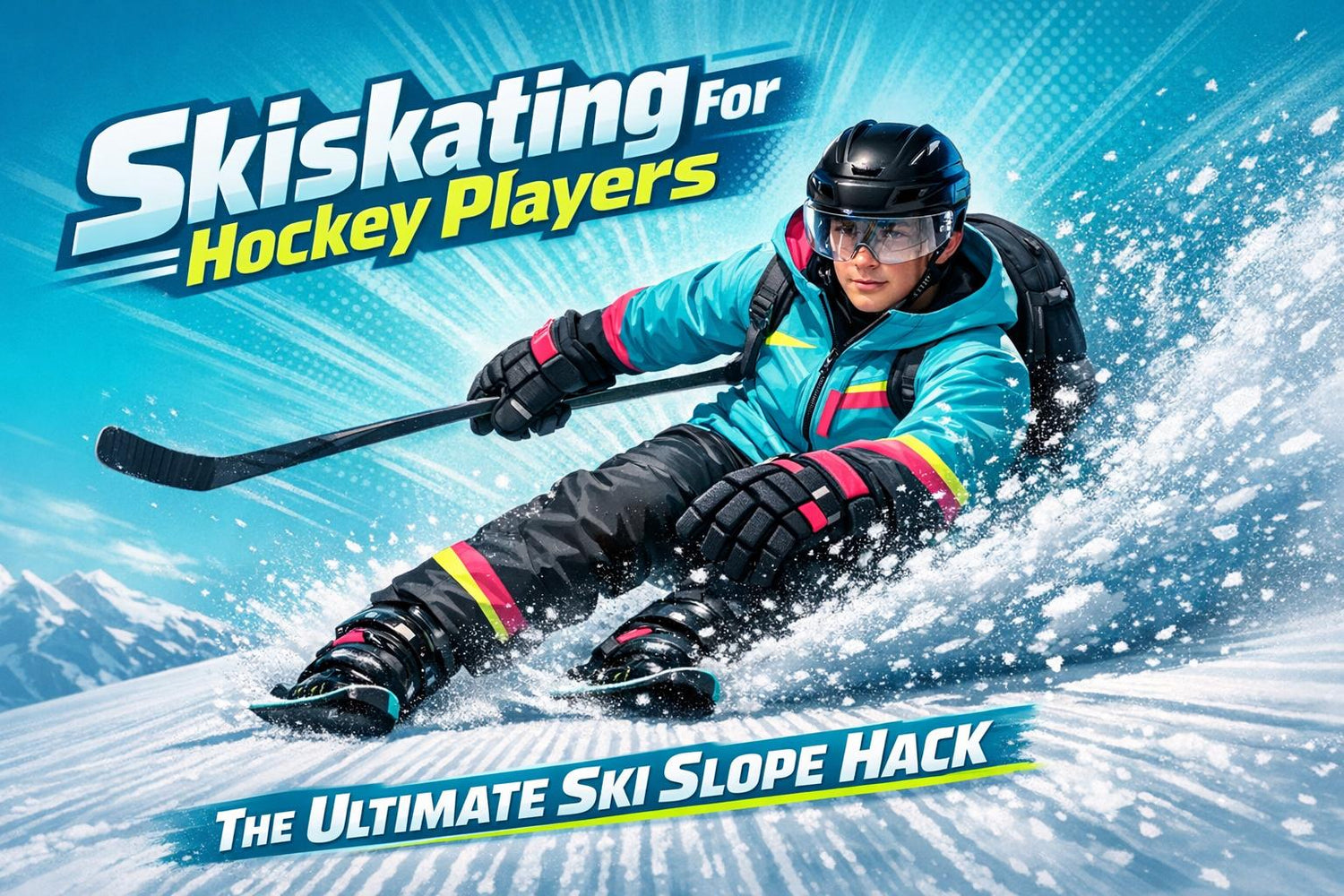
If you’re a hockey player, you already have the skills to dominate the slopes - thanks to skiskating. This snow sport uses compact skates like Snowfeet*, which attach to your boots and let you glide on snow just like on ice. Forget heavy skis or stiff boots - these lightweight skates fit in a backpack and feel as natural as skating in the rink.
Here’s why hockey players love skiskating:
- Familiar Moves: Edge control, quick stops, and sharp turns transfer easily from ice to snow.
- Easy to Learn: No steep learning curve - your hockey skills give you a head start.
- Portable Gear: At just 44 cm (17.3 inches), Snowfeet* Skiskates are easy to carry and use with regular winter boots.
- Affordable: Starting at $240, they’re far cheaper than full ski setups.
Snowfeet* Skiskates are perfect for quick runs, freestyle tricks, or just having fun on the slopes without the hassle of bulky equipment. Ready to bring your hockey game to the snow? Let’s dive in.
Why Hockey Players Excel at Skiskating with Snowfeet*
Edge Control and Agility: Bringing Your Hockey Moves to the Slopes
Hockey players spend countless hours mastering edge control - digging into the ice for those sharp turns and lightning-quick stops. The good news? Those same skills translate perfectly to Snowfeet* Skiskates. With metal edges designed for rapid stops, these skiskates mimic the precise movements you've already nailed on the rink.
At 44 cm (about 17.3 inches) in length, Snowfeet* Skiskates hit the sweet spot for hockey players. They’re “short enough to skate yet long enough to ski with quick and short turns”. Unlike traditional skis, which can stretch to 150 cm (nearly 59 inches) and require wide, sweeping turns, Snowfeet* offer a tighter turning radius. Their narrow waist and parabolic shape make turning and stopping feel natural, giving you the control and stability you're used to.
The enhanced base design works hand-in-hand with the metal edges, allowing you to "turn and stop more quickly and effortlessly". It’s like taking your ice skills to the snow - no steep learning curve required.
From Ice to Snow: A Seamless Transition for Hockey Players
Hockey players already have the balance and weight-shifting abilities that Snowfeet* demand. Years of skating on narrow blades and controlling speed with edge pressure make the transition to skiskates almost second nature. You’ll find yourself instinctively shifting weight and balancing like you’ve done a thousand times before on the ice.
Michael, a Snowfeet* user, described the experience as "like learning everything all over again, but very rewarding". For hockey players, though, it’s less about starting from scratch and more about tweaking familiar techniques. The adjustable bindings, compatible with winter shoes or snowboard boots, provide the ankle support and foot security you’re used to. This means you can focus on perfecting your moves instead of struggling with unfamiliar gear.
This easy transfer of skills is what makes Snowfeet* such a great fit for hockey players. It’s like taking your skating to a new playground - one covered in snow instead of ice.
Hockey Player Tries Snowfeet* Skiskates | See What He Thinks | Skiboards | Short Ski | Mini Ski
Snowfeet* Skiskates vs Traditional Skis and Snowboards
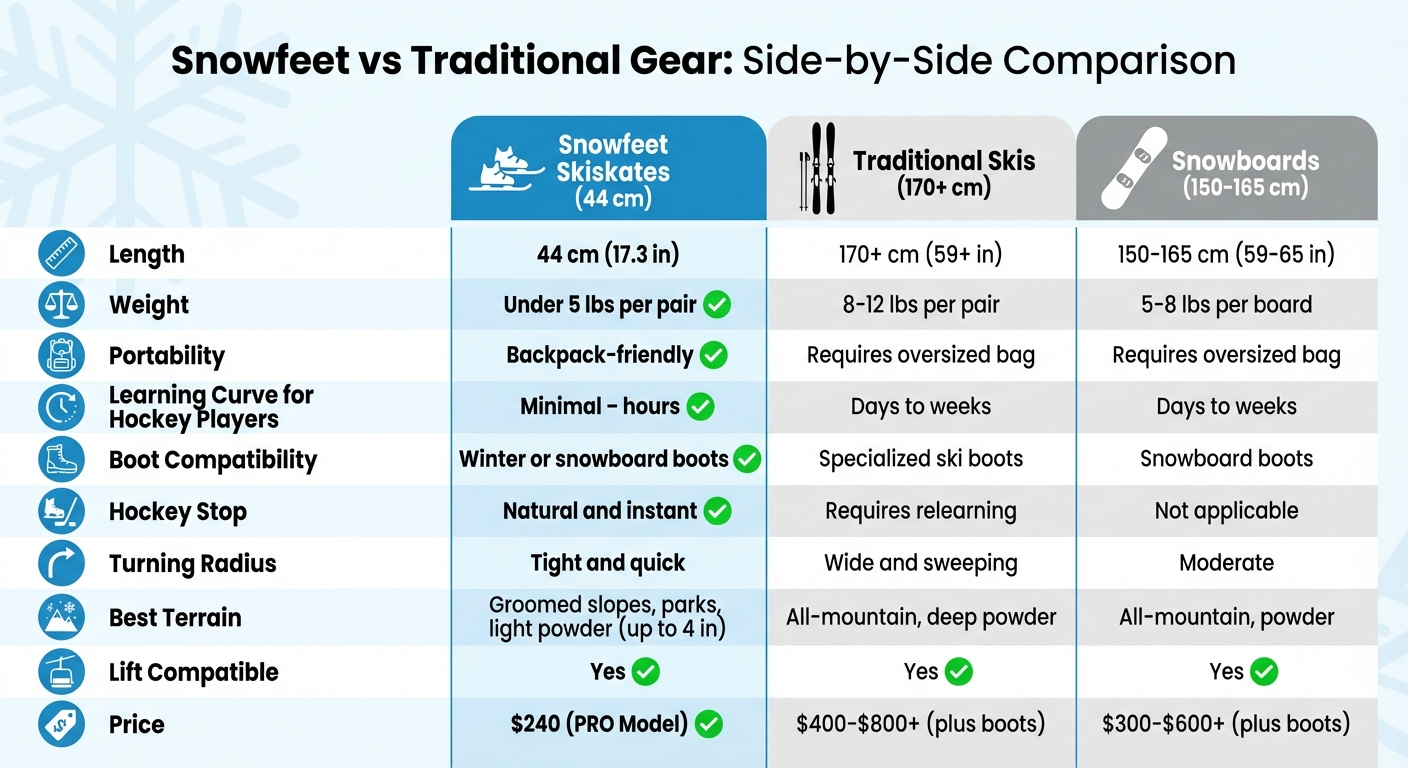
Snowfeet Skiskates vs Traditional Skis and Snowboards Comparison
Let’s break down how Snowfeet* Skiskates compare to traditional skis and snowboards when it comes to practicality, learning curve, and overall experience.
Traditional skis and snowboards are big, heavy, and need oversized bags or roof racks for transport. Snowfeet* Skiskates, on the other hand, are just 44 cm (17.3 in) long and light enough to fit in a regular backpack. Compare that to traditional skis, which are over 170 cm long and weigh 4–6 lbs each, or snowboards that measure 150–165 cm and weigh 5–8 lbs. For hockey players heading to the slopes after practice or squeezing in a quick session on a trip, Snowfeet* are a game-changer in terms of portability.
What’s more, hockey players already have the skills - edge control, quick stops, and weight shifting - that make using Snowfeet* feel natural. There’s no steep learning curve here. In contrast, traditional skis and snowboards require extra time to master balance and adjust to new techniques. Plus, Snowfeet* work with regular winter or snowboard boots, so there’s no need to invest in heavy, rigid ski boots that traditional skis demand.
Comparison Table: Snowfeet* vs Traditional Gear
| Feature | Snowfeet* Skiskates (44 cm) | Traditional Skis (170+ cm) | Snowboards (150–165 cm) |
|---|---|---|---|
| Length | 44 cm (17.3 in) | 170+ cm (59+ in) | 150–165 cm (59–65 in) |
| Weight | Under 5 lbs per pair | 8–12 lbs per pair | 5–8 lbs per board |
| Portability | Backpack-friendly | Requires oversized bag | Requires oversized bag |
| Learning Curve for Hockey Players | Minimal – hours | Days to weeks | Days to weeks |
| Boot Compatibility | Winter or snowboard boots | Specialized ski boots | Snowboard boots |
| Hockey Stop | Natural and instant | Requires relearning | Not applicable |
| Turning Radius | Tight and quick | Wide and sweeping | Moderate |
| Best Terrain | Groomed slopes, parks, light powder (up to 4 in) | All-mountain, deep powder | All-mountain, powder |
| Lift Compatible | Yes | Yes | Yes |
| Price | $240 (PRO Model) | $400–$800+ (plus boots) | $300–$600+ (plus boots) |
Snowfeet* Skiskates make it easy to translate your hockey skills into fun, portable adventures on the slopes. They’re compact, user-friendly, and perfect for quick sessions or hitting the slopes without the hassle of traditional gear.
sbb-itb-17ade95
Getting Started: Gear Up with Snowfeet* Skiskates
Ready to hit the slopes? Snowfeet* Skiskates make it simple to dive into winter fun. They’re designed to work with the winter boots you likely already own, and the setup takes just five minutes at home - no hassle, no delays.
Let’s explore what makes these skiskates easy to use and packed with performance features.
Snowfeet* Skiskates Features and Specifications
The 44 cm (17.3 in) Skiskates are compact, with a wood core and durable metal edges. This smart design means they’ll fit right into your backpack. Whether you’re cruising groomed slopes, hitting snow parks, or tackling light powder (up to 4 inches deep), these skiskates are up for the challenge.
The bindings are adjustable to fit US sizes 4.5–14.5 for ski boots and US sizes 6–14.5 for snowboard boots. Hockey players often lean toward snowboard boots for their flexibility and comfort, especially when pulling off tricks or quick movements. On the other hand, ski boots offer more stability, making them ideal for sharp carving.
"I love them. They are very easy to handle and control, especially if you have experience on roller skates or ice skates."
- Ingrid, Verified User
Before heading to the slopes, set up your bindings at home using a screwdriver and the boots you plan to wear. It’s a quick, five-minute process that saves you time at the resort. To keep your skiskates in top shape, dry the metal edges and wax the base after each session. This simple maintenance prevents rust and keeps your skates fast and smooth.
Looking for even better performance? Check out the PRO model below.
Why Choose the PRO Model for Better Performance
The standard 44 cm model is a fantastic choice, but if you’re after more versatility, the Snowfeet* PRO (50 cm) model might be your match. Priced at $299, the PRO offers some exciting upgrades.
With a narrowed base and raised platform height, the PRO makes turning easier and more precise. It also features a higher tip and tail, which improves control in terrain parks and on ungroomed snow. The extra length adds balance and stability while still keeping that skating-like feel. Made from fiberglass-reinforced material, the PRO handles light powder just as well as the standard version.
With a stellar 4.9/5 rating from over 2,200 reviews, it’s clear the PRO delivers. It’s especially great for hockey players and skaters looking to refine advanced techniques, like freestyle moves or park tricks. Both the 44 cm and PRO models eliminate the need for pricey ski boots or bulky rental gear, making them a smart investment for anyone wanting to keep their movements fluid and their performance sharp.
Skiskating Techniques for Hockey Players
If you're a hockey player, you're in luck - your skills on the ice translate almost perfectly to Snowfeet* Skiskates. With their compact 44 cm design, these skiskates mimic the feel of ice skating, letting you carve, stop, and maneuver just like you're used to. The techniques you've already mastered in hockey provide a solid foundation for tackling snow-specific moves with confidence.
How to Do a Hockey Stop on Snowfeet*
Stopping on Snowfeet* feels a lot like doing a hockey stop on ice - just with a slight twist. The trick is to push the edges sideways into the snow, but here's where it gets different: weight distribution is key. Instead of favoring one side, you'll need to evenly distribute your weight across both feet.
"Stopping is a little bit harder with Snowfeet* so distribute your weight evenly over both feet." - Snowfeet Team
Start by standing with your feet shoulder-width apart and your body upright. Focus your weight on the middle and back of your feet - leaning forward can throw you off balance. If you're feeling unsteady, try staggering your stance slightly, with one foot just ahead of the other. Practice on flat terrain first to get comfortable with how the metal edges grip the snow. And don’t forget to keep those edges sharp - use a sharpening stone or have them tuned professionally to maximize their stopping power.
Carving and Crossovers for Better Turns
Carving on Snowfeet* will feel second nature if you're used to tight, controlled turns on the ice. To engage the metal edges, push them sideways into the snow. The movement is almost identical to a skating stride - smooth, precise, and responsive.
"The best way to start your ride is to skate like a hockey player." - Snowfeet Team
Keep your feet shoulder-width apart, with your weight centered over the middle and back of your skiskates. Standing upright helps you maintain balance. For crossovers, shift your weight fluidly from one foot to the other while keeping both edges engaged. To improve speed and avoid snow buildup, wax the base before you ride. Regular edge maintenance will also ensure you have the control you need to make those sharp, clean turns that hockey players love.
Once you've nailed the basics, you'll be ready to experiment with freestyle moves and park tricks.
Park Tricks and Freestyle Moves
Thanks to their lightweight and agile design, Snowfeet* are perfect for hockey players looking to try park tricks. Start simple with toe spins - shift your weight to the front of the skiskates and use your balance to create rotation. Another great move to try is the Grapevine: glide while weaving your feet in and out, crossing them alternately in front and behind using both the inside and outside edges.
For spins and rotations, keep your knees slightly bent and your upper body straight to stay balanced. Once you’re comfortable with these basics, you can start building up to more advanced tricks. Remember to gear up with a helmet, knee pads, and wrist guards - yes, even if you’re a seasoned hockey player. Safety first when you’re learning something new.
"Freestyle skating also allows for more personal expression, athleticism, and creativity through coming up with new tricks and techniques." - PolyGlide Ice
The 5.0/5 rating on the 44 cm Skiskates speaks for itself - they’re built for action. Hockey players love the freedom to adapt their skills to the snow, turning every slope into their own personal playground.
Conclusion: Why Snowfeet* Works Best for Hockey Players
If you're a hockey player aiming to own the slopes, Snowfeet* Skiskates might just be your ultimate winter gear. With a compact 44 cm (17.3 in) design, these skates strike the perfect balance - short enough to skate, long enough to ski. The metal ski edges offer precise carving and stopping power, while their portable size means you can toss them in your backpack. Forget roof racks or hauling bulky equipment; these are made for convenience.
What makes Snowfeet* a standout choice? They let you bring your hockey moves - like crossovers, sharp stops, and quick turns - straight to the slopes. No need to learn entirely new techniques. With a stellar 5.0/5 rating on the 44 cm Skiskates, it's clear hockey players aren't just getting by - they're excelling.
For skaters, the learning curve is a breeze. Unlike awkward snowboard stances or unwieldy 6-foot skis, Snowfeet* let you hit the ground running - or rather, carving. You can dive into spins, park tricks, or groomed runs right away. And with prices starting at $250 for the Mini Ski Skates and $275 for the PRO model, they’re a far cry from the $500+ investment of traditional ski setups.
Snowfeet* bring your hockey skills to life on a lightweight, portable platform. Whether you're perfecting hockey stops on the slopes or trying freestyle tricks in the park, these skates are built for the quick, agile movements hockey players love. They're not just gear - they're a way to expand your game into a whole new environment.
Your hockey moves are your secret weapon. Ready to take them to the snow?
FAQs
Are Snowfeet Skiskates easier to learn than traditional skis?
Yes, Snowfeet Skiskates are much easier to pick up than traditional skis, especially for beginners. Their compact size - measuring up to 18 inches - and lightweight build make balancing and turning a breeze. Even better, they’re designed to work with regular winter boots, so you can skip the hassle of investing in bulky, specialized ski gear. Most people can feel comfortable and confident using them after just a few hours of practice.
On the other hand, traditional skis are a different story. They’re much longer - often over 59 inches - and require you to balance across a larger surface area, which can be tricky for newcomers. Plus, you’ll need specialized boots and bindings, adding another layer of complexity to the learning process. If you’re a hockey player or have skating experience, Snowfeet Skiskates offer a natural and fun way to dive into snow sports without the steep learning curve that traditional skiing demands.
What kind of boots work best with Snowfeet Skiskates?
Snowfeet Skiskates are made to pair with most winter shoes or snowboard boots, as long as they offer solid ankle support. To make the most of your time on the slopes, go for waterproof shoes - they’ll keep your feet dry and snug. A secure fit not only boosts comfort but also gives you better control while you glide.
Can I use Snowfeet Skiskates in deep powder snow?
Snowfeet Skiskates are built to shine on hard-packed or groomed snow. They’re not the best choice for deep powder since their shorter length makes it tough to stay on top of really deep snow. To get the most out of them, stick to slopes with firmer snow or well-kept trails.












Leave a comment
This site is protected by hCaptcha and the hCaptcha Privacy Policy and Terms of Service apply.