



















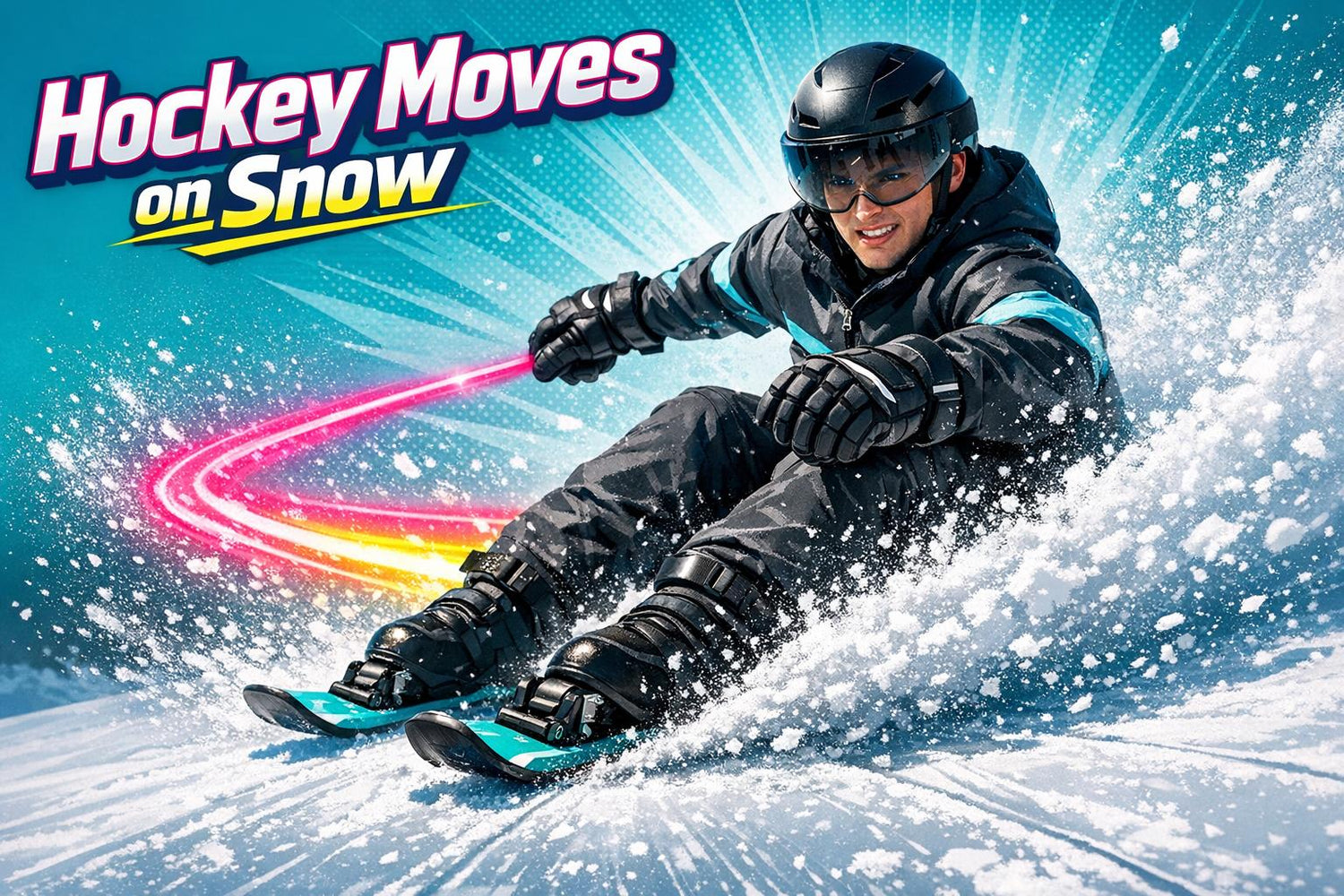
Love hockey? You’re going to love skiskating. Imagine taking the quick stops, sharp turns, and lateral moves from the rink and bringing them to the slopes. That’s skiskating in a nutshell. Instead of long skis, you wear compact Snowfeet Skiskates (just 17.3 inches long), giving you the freedom to skate on snow just like you do on ice.
Why Skiskating Is Perfect for Hockey Players:
- Same Movements: The muscle memory from hockey translates directly to skiskating.
- Easy to Learn: If you can skate, you can skiskate. Most people pick it up in minutes.
- Compact & Portable: Fits in a backpack - no bulky skis or gear needed.
- Affordable: Starting at $190, it’s way cheaper than traditional ski gear.
Whether you’re sprinting, stopping on a dime, or weaving through turns, skiskating feels natural for anyone with hockey experience. Plus, it’s a fun, lightweight alternative to skiing. Let’s dive into how it works and why it’s gaining traction with over 50,000 riders worldwide.
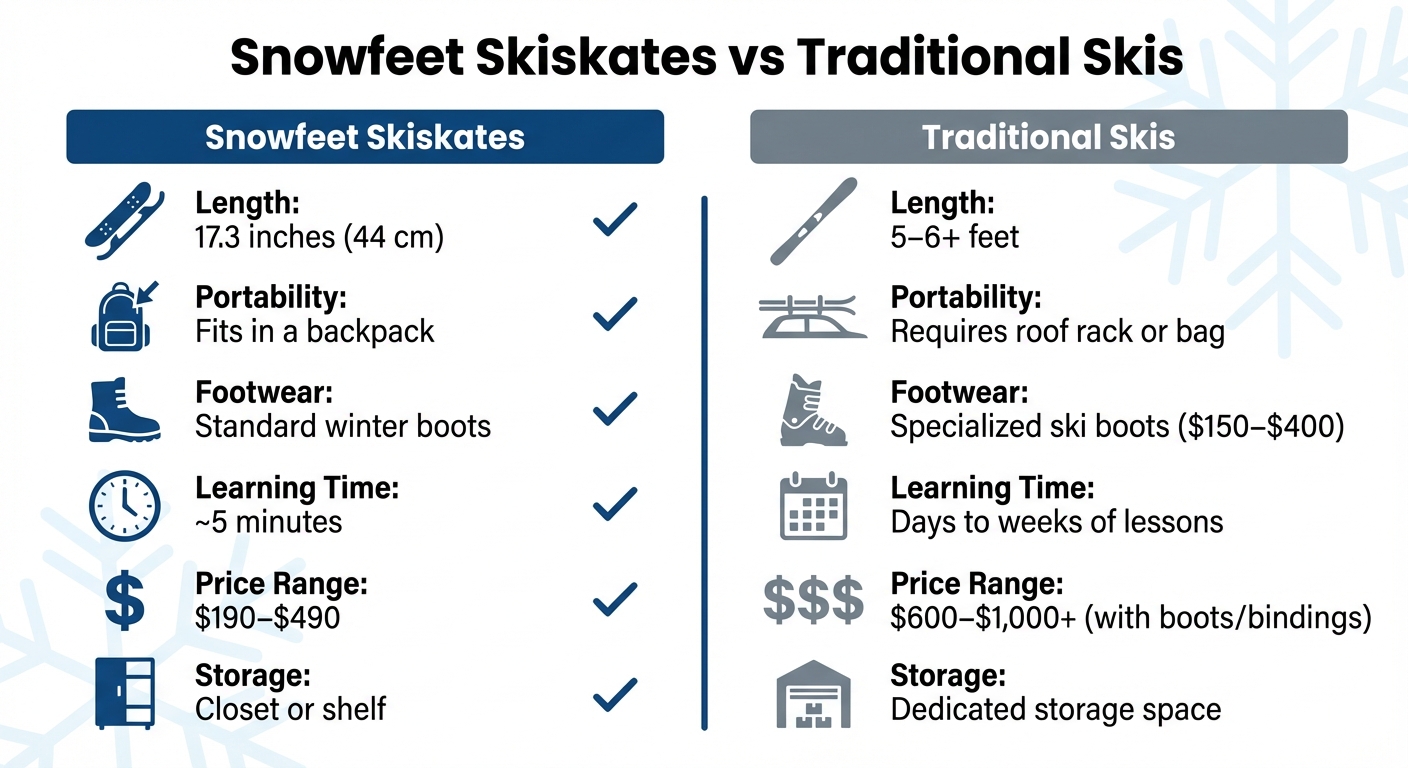
Snowfeet Skiskates vs Traditional Skis Comparison Chart
Snowfeet* Skiskates TUTORIAL - Skiskating Technique & Tricks
How Skiskating Replicates Ice Hockey Techniques
What makes skiskating so impressive is how seamlessly it mirrors the skills you use in ice hockey, but on snow. The same techniques - like edge control, lateral movement, and quick stops - that help you dominate on the rink translate almost perfectly to Snowfeet* Skiskates. Let’s dive into how these movements carry over.
Edge Control and Quick Turns
Edge control is the bread and butter of both ice hockey and skiskating. Snowfeet* are designed with 17.3-inch metal edges placed right under your center of gravity, making sharp turns feel just as natural as they do on ice. You can lean into those tight curves with the same body mechanics you’ve already mastered on the rink. The edges grip the snow firmly, and the compact design keeps everything familiar - your edges engage directly under your feet, just like your skates.
Now, compare that to traditional skis, which are 5–6 feet long. Their length forces you into wide, sweeping arcs that feel nothing like hockey. With Snowfeet* Skiskates measuring just 44 cm, you can easily practice quick cuts and tight directional changes, whether you’re on a groomed slope or flat terrain. This kind of precise edge control naturally carries over to the dynamic lateral moves that are crucial in hockey.
Lateral Movement and Crossovers
If you play hockey, you know lateral movement is a game-changer. Crossovers - where one leg pushes off while the other crosses over for momentum - demand precise coordination from your hips, knees, and ankles. The good news? That same movement works seamlessly on Snowfeet* Skiskates.
Thanks to their compact 44 cm length, skiskates let you perform fast, fluid crossovers without the drag of long, bulky equipment. You can weave, change directions on a dime, and react quickly, all while building the same agility that makes you a force on the ice. Training with skiskates sharpens your lateral movement, giving you better control and speed when you’re back on the rink.
Fast Stops and Direction Changes
Stopping power is another area where Snowfeet* Skiskates shine. Just like on ice, you stop by turning your feet perpendicular to your direction and using the metal edges to create friction. This method feels natural and efficient, unlike traditional skis, which require a completely different technique - shifting your weight to the inner ski and using unfamiliar body mechanics.
The short 44 cm length of Snowfeet* gives you unmatched control for quick stops. Whether you’re sprinting, stopping on a dime, or making sudden direction changes, you’re reinforcing the same motor skills that make you explosive on the ice. Hockey players can cover the length of a rink in about six seconds, and that kind of acceleration and deceleration translates directly to skiskating. Practicing these movements on snow helps you fine-tune the speed and agility that set you apart on the rink.
Why Snowfeet* Beats Traditional Skis and Snowboards
If you've ever wrestled with lugging around bulky 6-foot skis, you know the hassle of transporting and storing traditional gear. Snowfeet* Skiskates offer a refreshing alternative with hockey-like agility on snow. Let’s explore how their design, ease of learning, and affordability stack up against traditional skis and snowboards.
Compact and Lightweight Design
Snowfeet* Skiskates shine when it comes to portability. Measuring just 17.3 inches (44 cm) in length, they easily fit into a regular backpack - no need for roof racks or oversized gear bags like you’d need for 5–6 foot skis. This compact size also makes storing them a breeze; a closet or shelf will do the trick, unlike traditional skis that often require dedicated storage space.
Quick and Easy to Learn
Learning to ski can take days, even weeks, with traditional equipment. Snowfeet* Skiskates, however, are designed to mimic the natural movements of ice skating or hockey. Most users can pick up the basics in just 5 minutes. Their shorter length and flexible ankle movement make turning and stopping intuitive, so you can hit the slopes without spending hours (or cash) on lessons. This simplicity doesn’t just save time - it saves money too.
A More Affordable Option
Traditional ski setups can be a hefty investment. Between skis, bindings, boots, and poles, you’re looking at $600 to $1,000 or more. Snowfeet* Skiskates, on the other hand, start at $190 for the 38 cm model and go up to $490 for the 44 cm version. Plus, you don’t need specialized boots - your regular winter or snowboard boots work just fine. Add in free priority shipping to the US, Canada, Japan, and most of Europe, and it’s clear how much you can save.
| Feature | Snowfeet* Skiskates | Traditional Skis |
|---|---|---|
| Length | 17.3 inches (44 cm) | 5–6+ feet |
| Portability | Fits in a backpack | Requires roof rack or bag |
| Footwear | Standard winter boots | Specialized ski boots ($150–$400) |
| Learning Time | ~5 minutes | Days to weeks of lessons |
| Price Range | $190–$490 | $600–$1,000+ (with boots/bindings) |
| Storage | Closet or shelf | Dedicated storage space |
Snowfeet* Skiskates combine portability, ease of use, and affordability, making them a standout choice for snow enthusiasts.*
sbb-itb-17ade95
Snowfeet* Skiskates vs Traditional Winter Sports Gear
Snowfeet* Skiskates bring a fresh twist to winter sports, offering versatility, portability, and a great bang for your buck. Let’s see how these compact 17.3-inch (44 cm) skates stack up against traditional skis and snowboards.
Performance on Different Terrains
Snowfeet* Skiskates turn just about any snowy surface into your personal playground. Whether it’s groomed slopes, snow parks, hiking trails, or even your backyard, they’re ready to go. On the other hand, traditional skis are more limited - they need specific conditions and are best suited for resort riding. Sure, performance skis shine when carving at high speeds on hardpack snow, but their stiffness can feel restrictive compared to the freedom you get with Snowfeet*.
These 44 cm Skiskates handle light powder up to 4 inches deep, but they’re at their best on groomed runs, where their quick and nimble design really stands out. In deeper powder, traditional all-mountain skis might perform better, but you lose out on the ability to pull off jumps, twists, and the agile skating moves that Snowfeet* make possible. Plus, most ski resorts welcome Snowfeet* since their metal ski edges meet standard safety regulations.
This kind of agility, reminiscent of hockey moves, is what sets Snowfeet* apart from traditional skis and snowboards. But that’s not all - they’re also incredibly easy to carry around.
Portability and Travel Convenience
Snowfeet* Skiskates are small enough to fit in a standard backpack. Thanks to their fiberglass-reinforced build, they’re lightweight but still tough, making it easy to grab them for an impromptu snow adventure.
Traditional skis, on the other hand, can be a hassle. Measuring 5–6 feet in length, they need dedicated storage space and often rack up extra luggage fees when you’re traveling. With Snowfeet*, you can skip all of that - no roof racks, no oversized gear bags, and no surprise airline charges.
And when it comes to value, Snowfeet* keep the advantages coming.
Price Comparison
On Snowfeetstore.com, the Snowfeet Mini Ski Skates (38 cm) start at $190, while the Skiskates (44 cm) are priced from $490. Compare that to traditional ski setups, which usually run between $600 and $1,000 or more.
The savings don’t stop there. You won’t need pricey ski boots - your regular winter or snowboard boots work perfectly, saving you an extra $150–$400. Add in the money you save on transportation (no roof racks or oversized luggage fees), and it’s clear how much you’re getting for your investment.
With over 50,000 riders worldwide and a glowing 4.9/5 star rating from more than 5,500 verified reviews, Snowfeet* Skiskates make a strong case as a fun, affordable alternative to traditional winter sports gear.
How to Start Skiskating: Tips and Product Guide
Picking the Right Snowfeet* Product
Choosing your first pair of Snowfeet* comes down to where you plan to ride and your skating experience. If you're looking for that classic hockey-style glide, go for the Snowfeet Skiskates (44 cm, $490). These come with a premium wood core and a pre-waxed base for smooth performance. Want something more budget-friendly? Check out the Snowfeet Ski Skates (50 cm, starting at $207). They’re lightweight, durable, and built with a fiberglass-reinforced core, though they’ll need regular waxing to stay fast. For younger riders or anyone with shoe sizes below 6 US, the Snowfeet Mini Ski Skates (38 cm, $190) are a great pick.
The best part? All models fit standard shoe sizes from 6 to 13 US and work with your everyday winter boots or snowboard boots - no pricey ski boots required. Once you’ve got your gear, it’s time to hit the snow and learn the basics.
Basic Techniques for New Skiskaters
Start out on flat, groomed terrain. Keep your knees bent, your feet shoulder-width apart, and lean slightly forward. To get moving, mimic a hockey stride by pushing off with controlled C-cuts to build momentum.
"The best way to start your ride is to skate like a hockey player."
Here’s a tip: Don’t shift your weight onto your toes like you would with skis. Instead, keep your weight centered over the middle of your foot.
"Don't place your weight over your toes as you would with skis, because you will fall. Instead, place your weight over the middle or back of your feet."
When it’s time to stop, try a hockey-style maneuver. Turn your skates perpendicular to your path and bend your knees to slow down.
"Stopping is a little bit more difficult with Snowfeet so distribute your weight evenly over both feet to make you stop easier and slower."
Once you’re comfortable moving forward, practice weaving to work on edge control and agility. These drills will help you feel more in control and ready for dynamic movements. Now that you’re skating like a pro, don’t forget to take care of your gear.
Caring for Your Snowfeet* Skiskates
Keeping your Snowfeet* skates in great shape is simple. Wax them every few sessions to maintain speed. After each use, dry the metal edges right away to avoid rust. Sharpen them occasionally with a tuning tool or sharpening stone to keep that edge crisp. If the bindings feel loose, grab a screwdriver to adjust them at home. You can also trim any extra strap length to keep everything neat and secure.
With the right gear, a little practice, and some basic maintenance, you’ll be ready to make the most of your skiskating adventures!
Conclusion
If you're an ice hockey player looking to stay sharp during the off-season - or just want to try something new and exciting - Snowfeet* Skiskates might be exactly what you need. These compact skates let you bring your ice skills to the snow. The side-to-side motion, hockey stops, and edge control you’ve mastered on the rink translate seamlessly to the slopes. Plus, unlike traditional skis that can feel bulky, Snowfeet* products are lightweight and give you that familiar freedom of movement.
One of the best parts? You don’t need pricey ski boots or hours of practice to get started. With prices starting at $190 for the Mini Ski Skates and going up to $490 for the premium wood core Skiskates, they’re an affordable alternative to traditional ski gear. Even better, they work with your regular winter footwear and fit neatly into a backpack, making them super easy to carry around.
Whether you're cruising down groomed slopes or venturing onto snowy trails, skiskating opens up a whole new way to enjoy winter. And for hockey players, the learning curve is practically nonexistent - you’ll feel at home within minutes since the movements are so similar to what you already know.
FAQs
How do Snowfeet Skiskates perform compared to traditional skis on different terrains?
Snowfeet Skiskates bring a fresh twist to snowy adventures, offering a ride that feels a lot like ice hockey on the slopes. At just 17 inches (44 cm) long, these compact skates are built for quick turns, sharp lateral moves, and fast stops - perfect for those who love agility over speed. Unlike traditional skis, which are longer and designed for stability and speed on groomed trails, Snowfeet Skiskates shine on trails, hills, and uneven snow, giving you unmatched control and flexibility.
While traditional skis dominate wide-open runs and high-speed descents, Snowfeet Skiskates focus on fun and maneuverability. They’re easier to pick up, with a movement style that mirrors skating, making them a great option whether you’re new to the snow or an experienced athlete. If you’re into ice hockey or just want a playful, versatile way to explore the snow, Snowfeet Skiskates could be your next go-to gear!
How does skiskating benefit hockey players on snow?
Skiskating gives hockey players a fresh way to work on their skills in the snow, closely mirroring the movements they use on the ice. With Snowfeet Skiskates, players can practice essentials like quick turns, sharp stops, and lateral agility - all while honing edge control, balance, and body positioning. These short, lightweight skates are crafted to mimic the feel of ice hockey, making them a great training option for snowy conditions.
What sets Snowfeet Skiskates apart from traditional skis or snowboards is their unmatched maneuverability. They let hockey players fine-tune their skating techniques with precision, even when the rink isn’t an option. Skiskating isn’t just a fun way to enjoy winter - it’s also a smart way to stay sharp and ready for the next season.
Can beginners without ice skating experience use Snowfeet Skiskates?
Snowfeet Skiskates are a great option for beginners - even if you've never set foot on ice before. They’re simple to learn, with a learning curve that feels a lot like skiing or inline skating. Most people find they can get the hang of it pretty quickly with a little practice.
What makes them stand out is their small, lightweight build, which gives you excellent control and easy maneuverability. Whether you’re brand new to winter sports or switching over from skiing or snowboarding, Snowfeet Skiskates make hitting the slopes a fun and approachable adventure.












Leave a comment
This site is protected by hCaptcha and the hCaptcha Privacy Policy and Terms of Service apply.