




















Skiskating is shaking up hockey training. Imagine skating on snow instead of ice - no rink needed. Using short, lightweight skis like Snowfeet Skiskates, you can practice hockey moves like stops and strides on any snowy surface, from your backyard to a local hill. It’s simple, portable, and mimics the feel of ice skating without the hassle of bulky gear or expensive ice time. With over 50,000 users and rave reviews, it’s clear this isn’t just a trend. Whether you’re a player looking to stay sharp or a coach seeking better off-ice training options, skiskating offers a practical way to improve balance, agility, and performance. Ready to learn more? Let’s dive in.
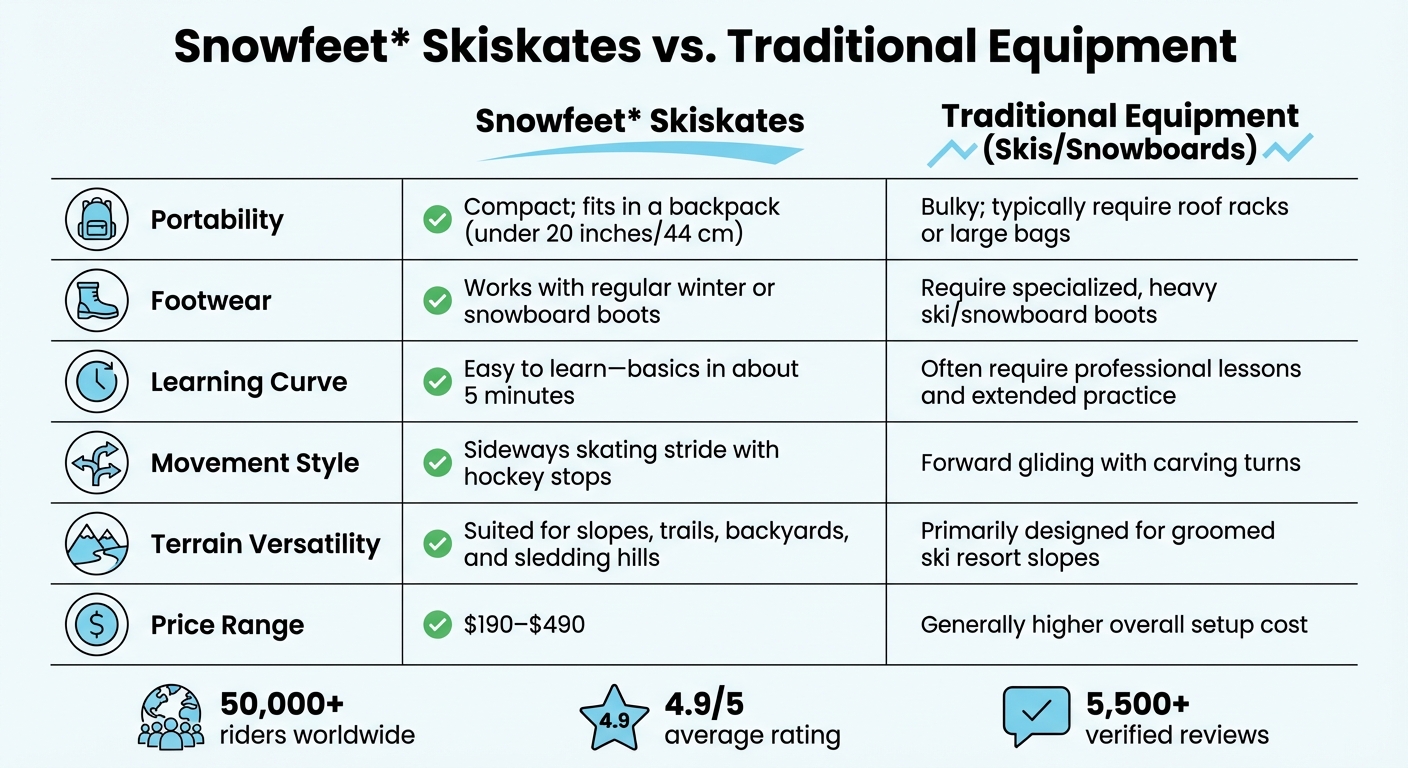
Snowfeet Skiskates vs Traditional Winter Sports Equipment Comparison
The Problem: What's Wrong with Traditional Hockey Off-Ice Training
Heavy and Expensive Equipment
Let’s face it - traditional hockey gear is a hassle. It’s heavy, bulky, and downright expensive. Whether you’re lugging gear to the rink or trying to manage specialized dryland equipment, the sheer weight and size make regular training inconvenient. And don’t even get started on skis - they’re not just heavy and awkward but also require ski boots that are only useful for one thing. This lack of portability ties your training to specific places like rinks or ski resorts, eating up your time and limiting how often you can train. Plus, maintaining all this gear adds another layer of cost and effort, making the whole process even more of a drain.
Poor Simulation of Ice Conditions
Here’s the kicker: most off-ice training just doesn’t feel like skating. According to Dominik Novák, Ph.D., from Charles University's Department of Sport Games:
"On-ice movements are very specific to the use of skates (boots with a 3 mm skate blade) and motor tasks based on a slide with push-off, which does not appear in any conventional movement off-ice."
Off-ice methods miss the mark when it comes to replicating the gliding, edge work, and balance control you need on the ice. And the numbers back this up - on-ice training improves reactive agility by 3.1%, while off-ice training only manages 1.7%. Without the sliding surface or the unique mechanics of skating, you’re essentially practicing movements that won’t fully translate to real game situations.
High Costs and Time Requirements
Then there’s the cost and time sink. Ice time is pricey and tough to schedule. Between rink fees, travel, and coordinating practice times, just getting on the ice can feel like a full-time job. And with traditional gear being so bulky, spontaneous practice is pretty much out of the question. You’ve got to plan, pack, and dedicate a big chunk of your day for a single session. For players trying to stay sharp in the off-season or between games, these hurdles mean less practice and slower progress. In the end, you’re spending more money and time for training that’s not even as effective as hitting the ice.
These challenges make it clear: hockey players need a smarter, more efficient way to train that actually mimics on-ice conditions.
How Skiskating Fixes Hockey Training Problems
Mimicking On-Ice Movements
Skiskating with Snowfeet* closely mirrors the push-off mechanics of ice skating, which are crucial for hockey. Unlike running or soccer drills, which can't replicate these movements, skiskating nails the front-to-back balance needed for ice skating. At just 17 inches (44 cm) long, these skiskates feel natural for hockey players, making it easier to transition between snow and ice. Plus, you can practice key skills like hockey stops, carving, twists, and even jumps - right on the snow. Research from Charles University backs this up, showing that Snowfeet* successfully simulates the friction and lateral push of skate blades, helping to sharpen reactive agility. This means better technique and, bonus, they’re super portable.
Lightweight and Easy to Use
Aside from their technical benefits, Snowfeet* Skiskates are incredibly practical. Forget lugging around heavy, pricey gear - these skiskates fit in a standard backpack. You don’t even need specialized boots; just grab your waterproof winter or snowboard boots, and you’re good to go. This portability means you can train almost anywhere there’s snow, from your backyard to local sledding hills or even ski slopes.
Backed by Science for Physical Gains
The physical perks of skiskating aren’t just hype - they’re backed by research. Studies show that off-ice training with tools like skiskates, which feature a 3 mm blade simulation, can significantly improve on-ice agility and sprint performance. By mimicking the critical movement patterns of skate blades, skiskating helps develop muscle power, balance, and speed control - all key ingredients for excelling on the ice. It’s a proven way to step up your game while reinforcing the skills you need for hockey success.
Snowfeet* Skiskates vs. Traditional Skis and Snowboards
Easier to Carry and Learn
Measuring just 17 inches (44 cm), Snowfeet* Skiskates are compact enough to fit into any standard backpack. Forget about lugging around bulky gear bags or messing with roof racks - these skiskates are all about convenience. Plus, they’re compatible with your regular waterproof winter boots or snowboard boots, so you can skip the heavy, specialized ski equipment. Whether you're heading to a ski resort, a local sledding hill, or even just your backyard, Snowfeet* are easy to grab and go. Their portability even makes them a handy tool for on-the-go hockey training.
Learning to use Snowfeet* is straightforward and doesn’t require professional lessons like traditional skiing often does. If you’ve ever ice skated, rollerbladed, or played hockey, the movements will feel natural. One user summed it up perfectly:
"I never skied before but I Inline-skate my whole life. So I hoped for something similar in snow and this absolutely nailed it." – Falk, Verified User
Better for Hockey-Specific Skills
Snowfeet* aren’t just convenient - they’re purpose-built for dynamic, hockey-like movements. While traditional skis are designed for forward gliding and carving turns, Snowfeet* replicate the mechanics of ice skating. You can execute quick pivots, twists, and hockey stops with ease. The metal edges allow you to push sideways and stop sharply, helping develop the muscle memory and agility needed for hockey. This makes Snowfeet* a fantastic training tool for hockey players aiming to refine their skills off the ice.
Comparison Table: Snowfeet* vs. Traditional Equipment
| Feature | Snowfeet* Skiskates | Traditional Equipment |
|---|---|---|
| Portability | Compact; fits in a backpack (under 20 inches) | Bulky; typically require roof racks or large bags |
| Footwear | Works with regular winter or snowboard boots | Require specialized, heavy ski/snowboard boots |
| Learning Curve | Easy to learn - basics in about 5 minutes | Often require professional lessons and extended practice |
| Movement Style | Sideways skating stride with hockey stops | Forward gliding with carving turns |
| Terrain Versatility | Suited for slopes, trails, backyards, and sledding hills | Primarily designed for groomed ski resort slopes |
| Price Range | $190–$490 | Generally higher overall setup cost |
With a community of over 50,000 riders worldwide and an average rating of 4.9/5 from more than 5,500 verified reviews, Snowfeet* has carved out a niche as a practical alternative to traditional winter sports gear. For hockey players especially, they offer a smarter, more efficient way to train while enjoying the snow.
sbb-itb-17ade95
How to Add Snowfeet* Skiskates to Your Hockey Training
Start in Your Backyard or Local Area
Snowfeet* Skiskates let you practice hockey skills just about anywhere there's snow - your backyard, a park, or even a sledding hill. To get started, find a flat, snowy spot where you can get used to the feel of these skiskates. The motion is similar to skating on ice: push your legs sideways in that classic hockey stride, keeping your weight centered or slightly toward your heels. Be careful not to lean too far forward onto your toes, as this could cause the tips to catch in the snow.
Stand with your feet shoulder-width apart and position one foot slightly ahead to help with balance. Start by practicing basic moves like gliding, turning, and hockey stops. These drills will help you develop muscle memory. At home, make sure the bindings are adjusted properly to fit your waterproof winter or snowboard boots - this usually just takes a screwdriver. For safety, wear a hockey helmet, padded knee and elbow guards, waterproof gloves, and warm layers. Before jumping into training, warm up with 5-10 minutes of light exercise to get your muscles ready.
Once you're comfortable on flat terrain, you can step it up and try some sloped areas for a greater challenge.
Move to Slope Training
After spending 2-4 weeks mastering the basics on flat ground, it’s time to take your training to the next level by hitting the slopes. Start with gentle slopes (around 5-10°) and keep your sessions short - about 20-30 minutes. Focus on uphill strides to build strength and endurance, and practice downhill turns to improve agility.
If you’re feeling confident, advanced training on steeper slopes can really push your skills. Try 30-second uphill sprints followed by quick downhill pivots. This mimics the bursts of speed and sharp directional changes you encounter during a hockey game. Plus, it’s a killer workout for your quads, hamstrings, and glutes. Thanks to the metal edges on Snowfeet*, you can carve tight turns and perform hockey stops just like you would on the ice, making slope training a fantastic way to sharpen your game.
Train Year-Round in Any Snow
Once you’ve nailed your slope skills, you can keep training all winter long. Snowfeet* work best on groomed snow or light powder (up to about 4 inches), so you’re not limited to rink time. Aim for 1-2 sessions per week to build your conditioning, core strength, and balance. To keep your skiskates in top shape, remember to wax the base regularly and dry the metal edges after each use. This will ensure they stay smooth and ready for action.
Conclusion: Why Snowfeet* Is the Best Choice for Hockey Training
How Skiskating Changes Hockey Training
Skiskating with Snowfeet* brings the feel of real ice movements to snowy surfaces. It replicates the sideways pushes, sharp hockey stops, and balance required for peak on-ice performance. Whether you're gliding in your backyard or on a sledding hill, this off-ice training method has been shown to boost agility and reactive speed. In short, skiskating with Snowfeet* is a direct way to sharpen your game-day skills.
Why Snowfeet* Stands Out
Snowfeet* is tailor-made for hockey training. Trusted by over 50,000 riders with an impressive 4.9/5 rating from 5,500+ reviews, it’s a favorite for a reason. Unlike traditional skis, which demand bulky roof racks and stiff boots, Snowfeet* is lightweight, compact enough to fit in your backpack, and works seamlessly with your winter or snowboard boots.
The 44 cm Skiskates model is built to last, featuring a tough wood core and a patented design that’s earned accolades like being an ISPO Finalist and an A’Design competition winner. Plus, with prices ranging from $190 to $490, you’re getting equipment designed for hockey-specific training without breaking the bank.
"Absolute game-changer! They're light, fast, and incredibly fun to ride." – Nathan F.
Ready to Elevate Your Training?
With its proven benefits and award-winning design, Snowfeet* is changing how hockey players train. Head over to Snowfeetstore.com to check out their full lineup. For serious hockey training on groomed slopes, the 44 cm Skiskates are a perfect fit. If you’re new to skiskating or want extra stability, the 50 cm PRO model (starting at $207) is a great choice. Whether you're training on a snowy hill or a backyard slope, Snowfeet* makes it easy to get started - with just a 5-minute learning curve for experienced skaters. Grab your pair today and take your hockey skills to the next level.
FAQs
How does skiskating help hockey players improve their on-ice skills better than traditional off-ice training?
Skiskating is a game-changer for hockey training because it mirrors the exact movements of skating on ice - sideways push-offs, edge control, and those all-important weight shifts. By using Snowfeet Skiskates - compact, 17-inch mini skis - hockey players can fine-tune their balance, agility, and lateral transitions while gliding on snow. This kind of training hits the same muscles and coordination skills needed on the ice, helping players improve agility, stride technique, and edge control for game situations.
Sure, traditional off-ice drills like sprints and strength training are great for general fitness, but they don’t quite capture the low-friction feel or the precise mechanics of skating. That’s where Snowfeet Skiskates shine. They’re portable, fun, and incredibly effective, making them a smart way for hockey players to see quicker, more direct gains in their on-ice performance.
Can you skiskate anywhere, or are specific snow conditions required?
Skiskating is versatile and works in most snowy conditions, but it truly shines on compact, groomed snow - think ski slopes or well-packed trails. While you can skiskate on other surfaces, deep, loose powder can make things trickier, impacting both performance and control. For the smoothest ride, stick to well-maintained, packed snow areas.
What makes Snowfeet Skiskates better than traditional winter sports gear for hockey training?
Snowfeet Skiskates bring a fresh twist to hockey training, offering a lightweight, compact, and easy-to-carry alternative to traditional skis or snowboards. Measuring just 17–20 inches in length, these skiskates are super portable, making them ideal for quick practice sessions or for athletes on the go. No bulky gear, no hassle - just grab them and hit the snow.
What sets Snowfeet Skiskates apart is how they mimic the motion of ice skating, delivering an on-snow experience that feels much like being on the ice. This makes them perfect for honing essential hockey skills like agility, balance, and quick direction changes - skills that can make all the difference on the rink. Built tough but designed to stay lightweight, they’re a versatile training tool that’s both fun and durable. If you’re serious about stepping up your hockey game off the ice, Snowfeet Skiskates are a no-brainer.













Leave a comment
This site is protected by hCaptcha and the hCaptcha Privacy Policy and Terms of Service apply.